Key takeaways
- Free AI rank trackers are useful for a one-off reading of whether AI engines mention or cite your domain. They are weak at trend tracking.
- Free tiers usually stop at the same places: one locale, no URL-level citations, no competitor share of voice, little exports, and no handling for noisy answers.
- "Rank" in AI search is not one number. It is whether an answer appears, whether you are named, and whether you are cited.
- Use free checkers to baseline, then move to a paid platform once you need repeated runs, many prompts and action steps.
- Pricing and limits change often. Confirm each vendor's pricing page before you commit.
What "rank" means in AI search
Classic rank tracking gives you one number: position 4 for a keyword. AI search does not work like that. An answer can cite ten sources, mention your brand without a link, or leave you out entirely and then include you tomorrow.
One vendor write-up on free AI Overviews trackers, from Omnia, splits "rank" into three checks:
- Does an AI answer appear for the query at all?
- Is your brand mentioned in it?
- Is your domain, or a specific URL, cited?
A free tool that only answers the second question is telling you a third of the story. Keep that in mind when you compare them.
The same write-up makes a point I agree with: AI answers are probabilistic. Their example is a brand showing up in 55% of checks one month and 25% the next, with no content change. So the honest metric is a presence rate across repeated runs, not a single position. Free tools mostly give you a single run.
Why a single check tells you so little
Promptwatch's own data explains why. In its ChatGPT unique domains per response report (Sep 28 to Oct 4, 2026), 47.6% of ChatGPT responses with citations cite 10 or more unique domains, and 66.1% cite at least 8. For organic prompts with no brand named, 52.5% cite 10 or more. That is a crowded answer. One prompt checked once tells you very little about where you sit.
Source counts also differ by engine. According to Promptwatch's average sources per response data, ChatGPT cites about 5 sources per web-search answer, while Google AI Overviews and Perplexity sit near 10. Microsoft Copilot swung from under 2 sources to nearly 17 within weeks, which makes it a poor thing to optimize against with confidence.
There is also the fan-out problem. Promptwatch's query fan-out data shows ChatGPT averaging 2.15 searches per response in early December 2025 and about 1.84 by early March 2026. The queries it runs are not the prompt you typed. A tracker that only replays your prompt list never sees them.
And baselines move when models change. Average citations per response dropped across GPT-5.3, GPT-5.4 and GPT-5-Mini around the March 4, 2026 rollout. A free check from before that date is not comparable to one after.
The best free AI search rank trackers in 2026
I have not hand-verified every free-plan limit below, and vendors change them often. Treat the notes as a starting point and check each pricing page.
Quick comparison
| Tool | What the free option gives you | Where it stops |
|---|---|---|
| Promptwatch | Free AI Visibility Report plus a free Explore plan (1 project, 10 prompts, ChatGPT only) | One engine and 10 prompts on the free plan |
| Mangools AI Search Grader | Visibility percentage and average ranking, reportedly across 8 models | No source URLs on the free tier |
| Frase AI Visibility Checker | Reads your domain and names engines citing it, no card | A snapshot, not tracking |
| Omnia AI Visibility Checker | Prompt-by-prompt answers for ChatGPT and Google AI Mode | Limited to those engines, one-off |
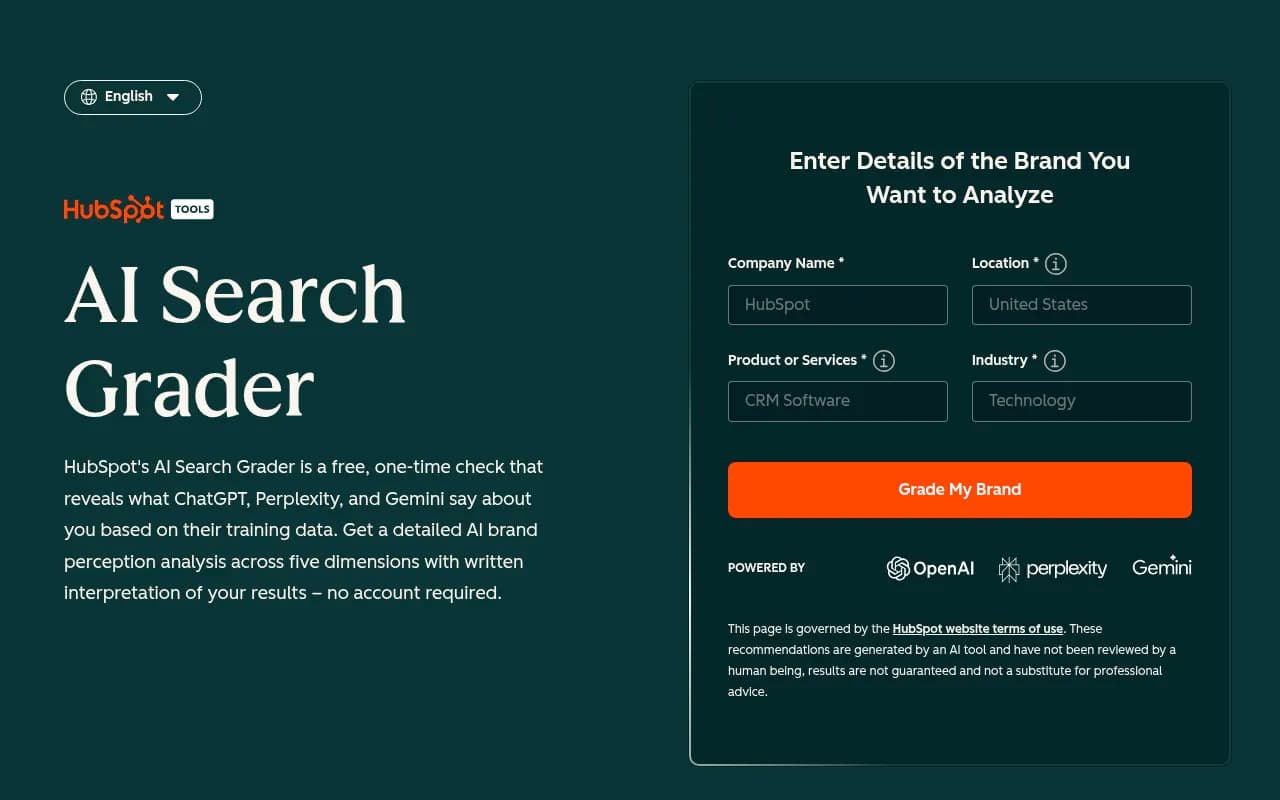
| HubSpot AEO Grader | Free one-off grader for answer engine visibility | One-off scan |
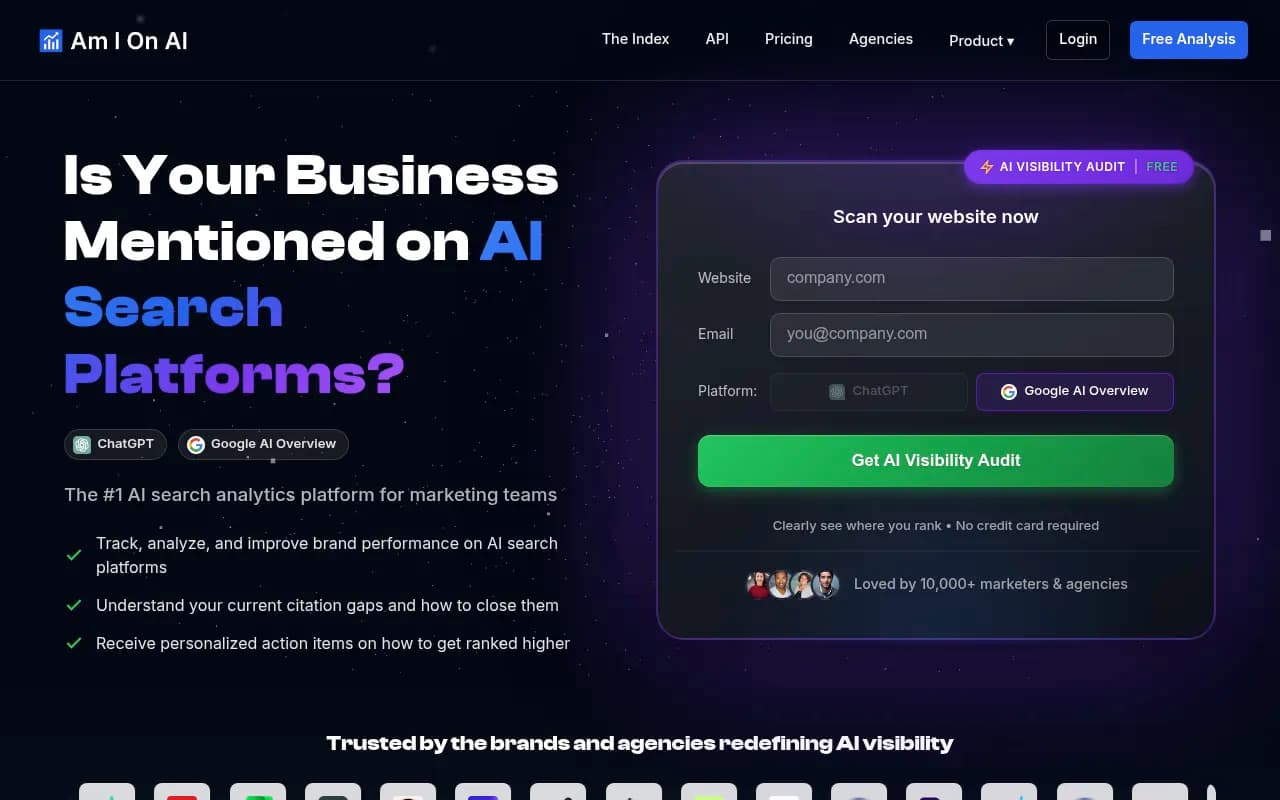
| Am I on AI? | Entry-level visibility check | Entry-level depth |
Promptwatch free tools and Explore plan
Promptwatch has two free entry points. The no-login AI Visibility Report scans how ChatGPT, Gemini and Perplexity talk about your brand. The free Explore plan gives you one project and 10 prompts tracked on ChatGPT, which is enough to learn what a monitor feels like.

Promptwatch also ships free utilities that help before you pay for anything: an Agentic Readiness Check, an AI Crawler URL Inspector, a Robots.txt Generator for AI, an LLMs.txt Generator, and a free Chrome extension called GEO Inspector that shows ChatGPT fan-outs and fetched versus cited sources. Those cover the technical "can AI even read my site" question that most trackers skip.
The ceiling: Explore is ChatGPT only. Every paid plan, starting at $95 a month for Essential, unlocks all active models plus crawler logs, visitor analytics and content tools. See promptwatch.com/pricing for the current numbers.
Mangools AI Search Grader
This one is the most generous on coverage. According to a roundup on Data-Mania, it is free and covers all 8 models on a free account. You get a visibility percentage and an average ranking.
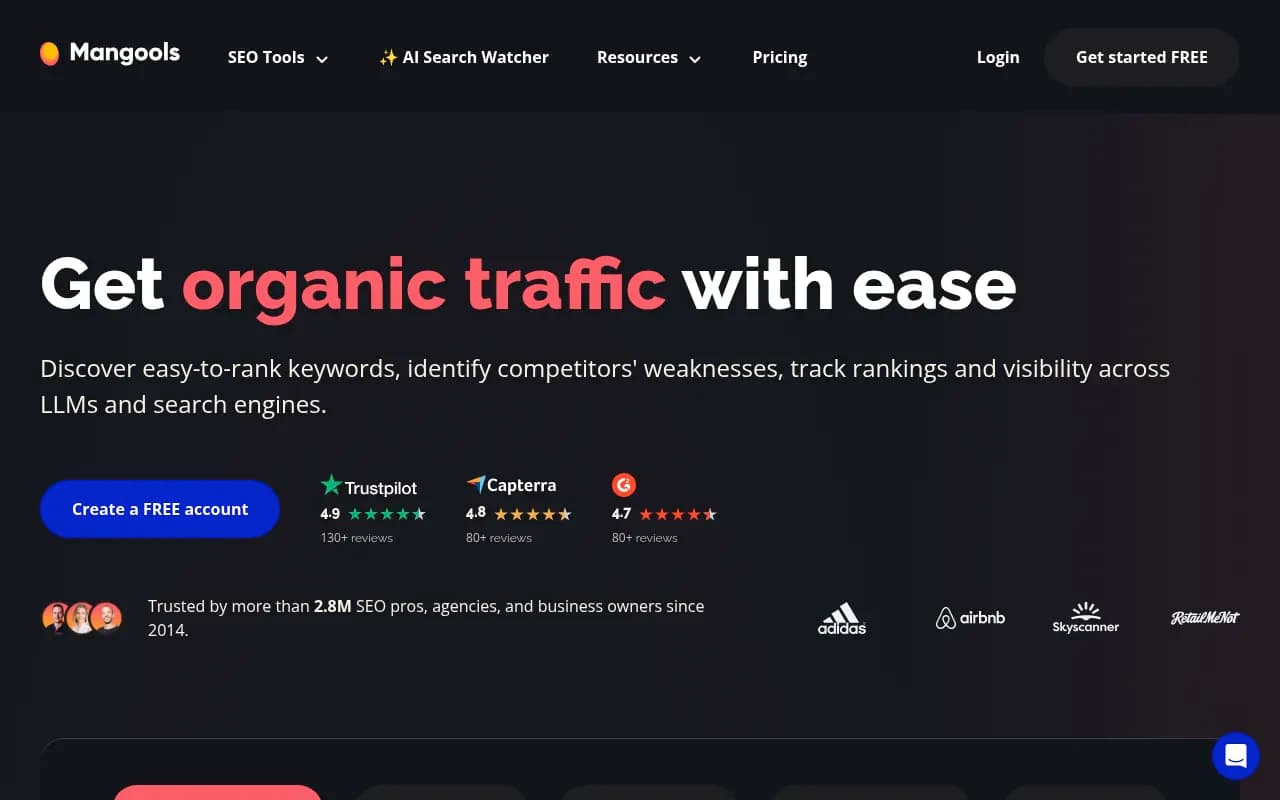
The catch is in the same write-up: no source URLs on the free tier. You learn that you appear, but not which of your pages was cited, and that is the part you need to act on.
Frase AI Visibility Checker
Frase offers a free checker that reads your domain and names the engines citing it, with no card required. It is a quick sanity check.
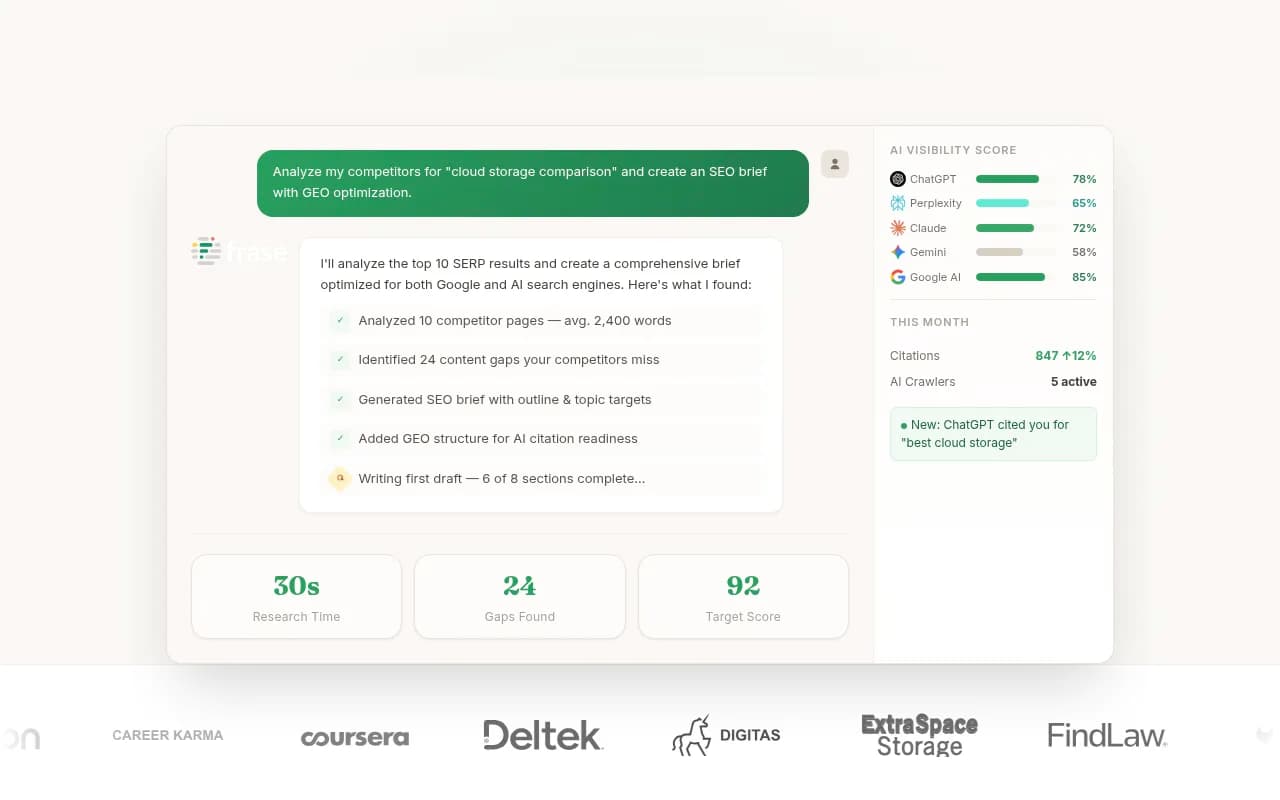
Frase publishes a roundup of monitoring tools too, but it ranks itself first, so read the ordering with that in mind. The free checker itself is a fair starting point.
Omnia AI Visibility Checker
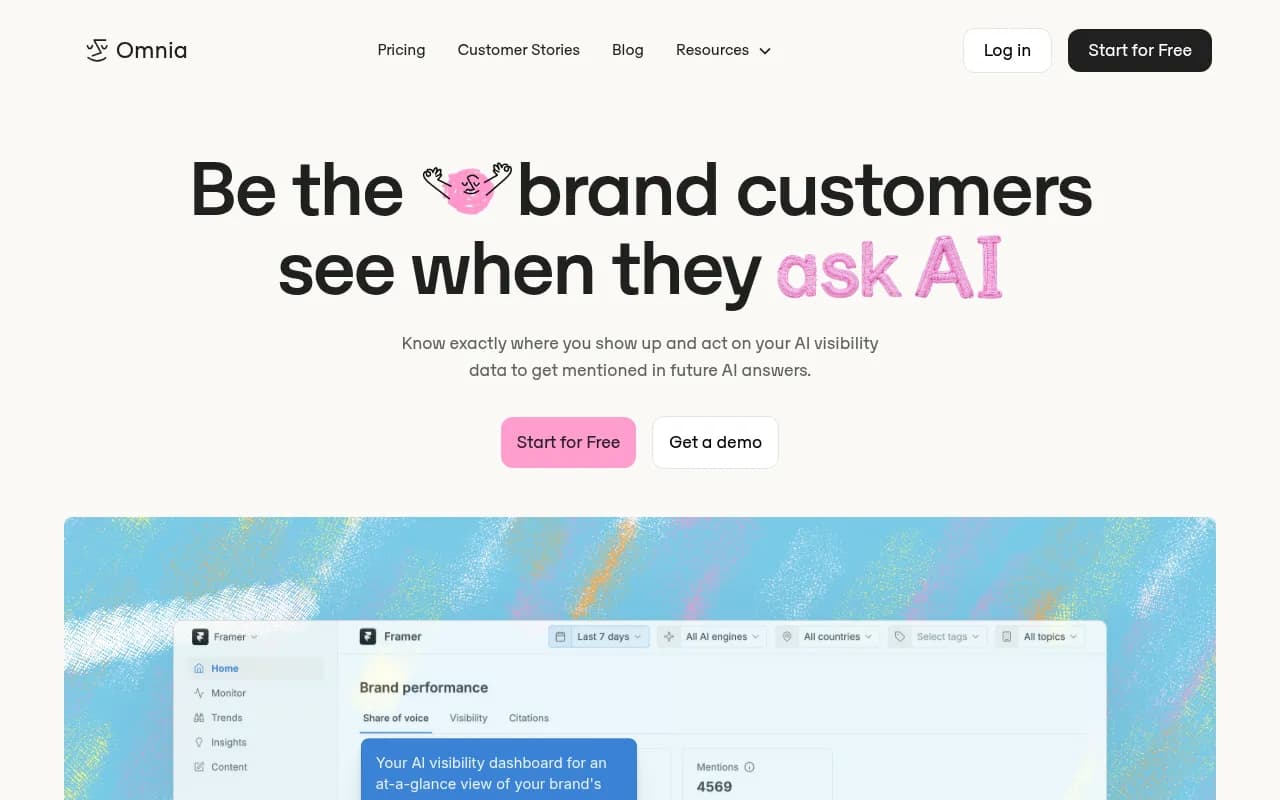
Omnia's free checker shows prompt-by-prompt answers for ChatGPT and Google AI Mode. Seeing the full answer text is more useful than a score, because you can read how you are framed.
HubSpot AEO Grader
A free one-off grader for answer engine visibility. If you are already in the HubSpot world it is a painless way to get a first score.
Am I on AI?
An entry-level checker. It answers the simplest question, are you in there at all, and nothing deeper.
Cheap paid tools if free is not enough
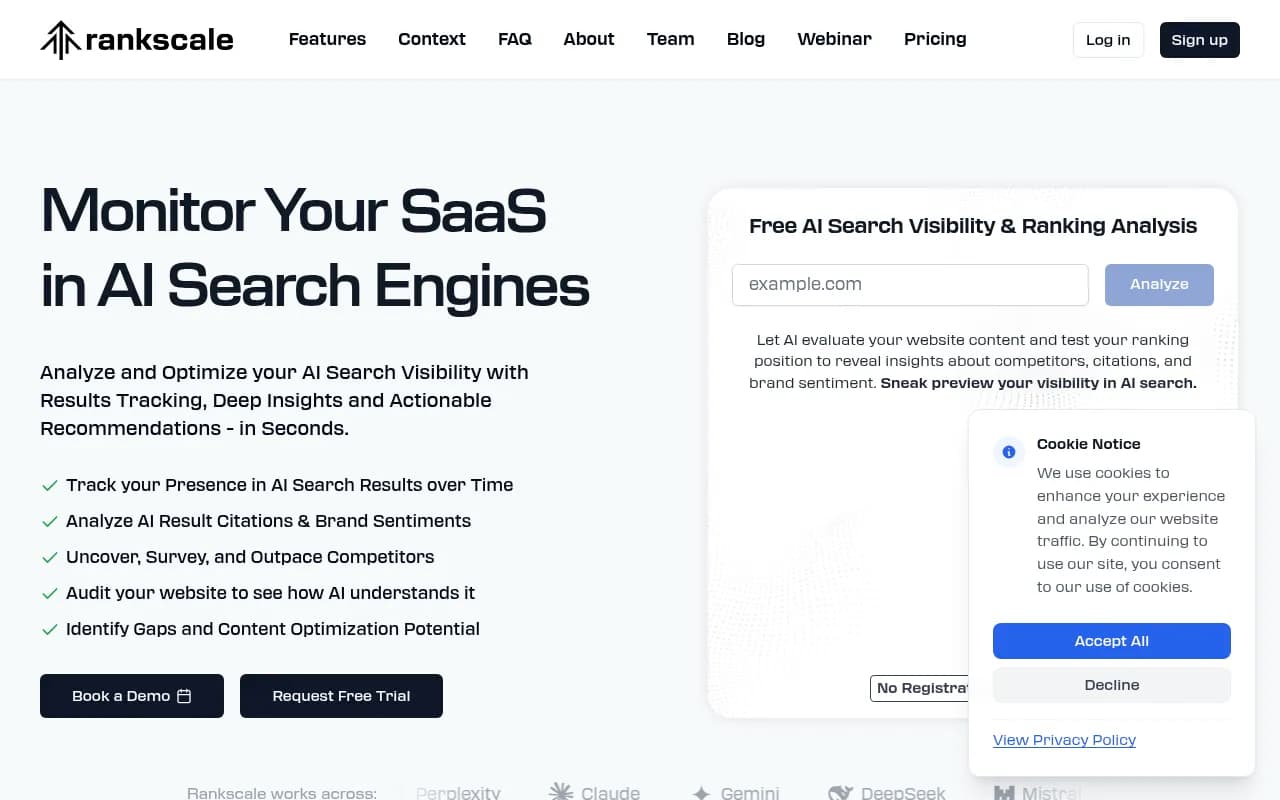
If you outgrow the checkers but are not ready for a full platform, the budget end of the market includes Otterly.AI, which one third-party roundup lists from $29 a month, plus Peec AI and Rankscale. Check current pricing before you decide.


Where the free tier stops
Across the free options, the same walls show up. Omnia's breakdown of where free tiers hit their ceiling matches what I see:
| Limit | Why it matters |
|---|---|
| No SERP or answer snapshots | You cannot audit what the engine actually said, when, in which locale and on which device |
| Domain-level citations only | You know the site was cited, not which page, so you cannot fix anything |
| Single locale | A UK brand checked from a US locale gets misleading results |
| No volatility handling | One run on a probabilistic answer is noise |
| Limited exports and reporting | Hard to share results or build a trend line |
| No competitor share of voice | A mention rate means little without a comparison set |
Two more limits are not on most lists. First, free tools almost never show crawler data. If GPTBot or OAI-SearchBot gets a 403 on your pages, a visibility score will say you are missing without saying why. Second, they stop at monitoring. Knowing you are absent is half the job.
How to get real value from free tools
You can learn a lot without paying if you are disciplined about it.
Build a small, honest prompt set
Pick 15 to 25 prompts across three types: organic prompts with no brand, brand-specific prompts, and competitor comparisons. Promptwatch's data shows these behave differently. Brand-specific ChatGPT answers most often cite 5 domains, while organic and comparison prompts routinely cite 10 or more. Mixing them stops you from reading too much into one type.
Run the same prompts several times
Run each prompt a few times on different days and note presence as a rate. If you appear in 3 of 10 runs, say so. Do not write "we rank number 2".
Record the full answer
Screenshot or paste the full response, with date, country and engine. Free tools rarely keep snapshots for you, so keep your own in a spreadsheet.
Check crawl access separately
Before blaming content, confirm the AI crawlers can fetch your pages. A free check like Promptwatch's AI Crawler URL Inspector or its Agentic Readiness Check takes a minute.
Read the sources, not just the score
When you can see cited sources, look at the content types. Promptwatch's content type data shows product pages at 22.4% of ChatGPT citations (Sep 28 to Oct 4, 2026), followed by landing pages and listicles. If your category is dominated by listicles and you have none, that is a gap you can fix without any paid tool.
Also be careful where you spend effort. According to Promptwatch Data on social citations, ChatGPT drew just 0.46% of its citations from social platforms between Sep 28 and Oct 4, 2026, while Google AI Overviews drew 12.2%. A Reddit-heavy plan pays off differently by engine.
When to move to a paid platform
Stay on free tools if you are a small site checking a handful of prompts monthly. Move up when any of these is true:
- You need more than a few dozen prompts, tracked daily
- You work across countries or languages
- You need page-level citations to decide what to edit
- You report to a client or a boss who wants a trend, not a screenshot
- You want to know whether AI traffic converts
The paid market splits roughly into three groups.
| Group | Examples | Strength | Limit |
|---|---|---|---|
| Budget trackers | Otterly.AI, Peec AI, Rankscale | Cheap, simple prompt tracking | Mostly monitoring, light on crawler and traffic data |
| SEO suite add-ons | Semrush, SE Ranking, Ahrefs Brand Radar | Fits your current workflow | AI tracking is a bolt-on |
| End-to-end GEO platforms | Promptwatch, Profound | Tracking plus analysis and action | Higher cost than a basic tracker |


If you go the platform route, Promptwatch is the one I would test first. It monitors the real interfaces of ChatGPT, Google AI Overviews, AI Mode, Gemini, Perplexity and others, shows IP-verified AI crawler logs, ties AI traffic to conversions, and then has the Content Agent and Action Board turn gaps into published pages. Most competitors stop at telling you that you are missing. You can start with the free Explore plan or the 7-day trial on monthly Essential and see whether it fits.
For wider comparisons, the directories at bestgeosoftware.com and ai-rank-tools.com list far more options than fit here.
A word on vendor roundups
Nearly every "best AI visibility tools" list you will find was written by a vendor who ranks itself first. The KIME and Frase lists are examples. They are still useful for feature tables, but I would not take their rankings at face value.
The same goes for this guide. I included Promptwatch because it is the platform 1001 SEO Media uses and recommends, and I have tried to be specific about what it does and does not do on the free plan.
Bottom line
Free AI search rank trackers answer one question well: are we visible at all, right now? They do not answer why, how often, on which pages, against whom, or what to do next. Use two or three of them to baseline, keep your own log of full answers, and test crawl access separately. When you catch yourself manually rerunning prompts every week, you have hit the free ceiling.