Key takeaways
- Copy.ai's pricing page now says "power your GTM with AI". Its cheapest plan is $29/mo for chat, and workflow plans start at $1,000/mo. If you came for blog posts and ad copy, you are no longer the target customer.
- The right replacement depends on your bottleneck: brand voice (Jasper), SEO optimization (Surfer, Frase), workflow and publishing (AirOps), or AI search visibility (Writesonic, Promptwatch).
- Short-form copy is a poor fit for AI search. Promptwatch Data shows product pages, landing pages, listicles, how-tos and comparisons earn most ChatGPT citations, not ad snippets.
- Pricing across this category changed a lot in 2026. Check each vendor's pricing page before you commit.
Why teams are leaving Copy.ai
Copy.ai used to be the default answer to "I need a hundred product descriptions by Friday." Visit the homepage now and you get a GTM platform for sales and marketing automation. One of the comparison articles in our research, from Spike, ties the shift to its acquisition by Fullcast and argues that writing features stagnated while the roadmap moved to sales workflows.
That is a reasonable reading, though I would treat it as one vendor's opinion of a competitor. What you can verify yourself is the pricing page:
| Copy.ai plan | Price | What you get |
|---|---|---|
| Chat | $29/mo monthly, $24/mo annual | 5 seats, unlimited chat words, OpenAI, Anthropic and Gemini models |
| Growth | $1,000/mo (billed $12,000/yr) | 75 seats, 20K workflow credits per month |
| Expansion | $2,000/mo (billed $24,000/yr) | 150 seats, 45K workflow credits |
| Scale | $3,000/mo (billed $36,000/yr) | 200 seats, 75K workflow credits |
| Enterprise | Custom | API access, 20+ integrations, dedicated team |
There is a huge gap between a $29 chat plan and a $1,000 workflow plan, and nothing in between for a three-person content team. One competitor article quotes $249/user/month for Copy.ai, but that does not match the current pricing page, so I would ignore that figure.
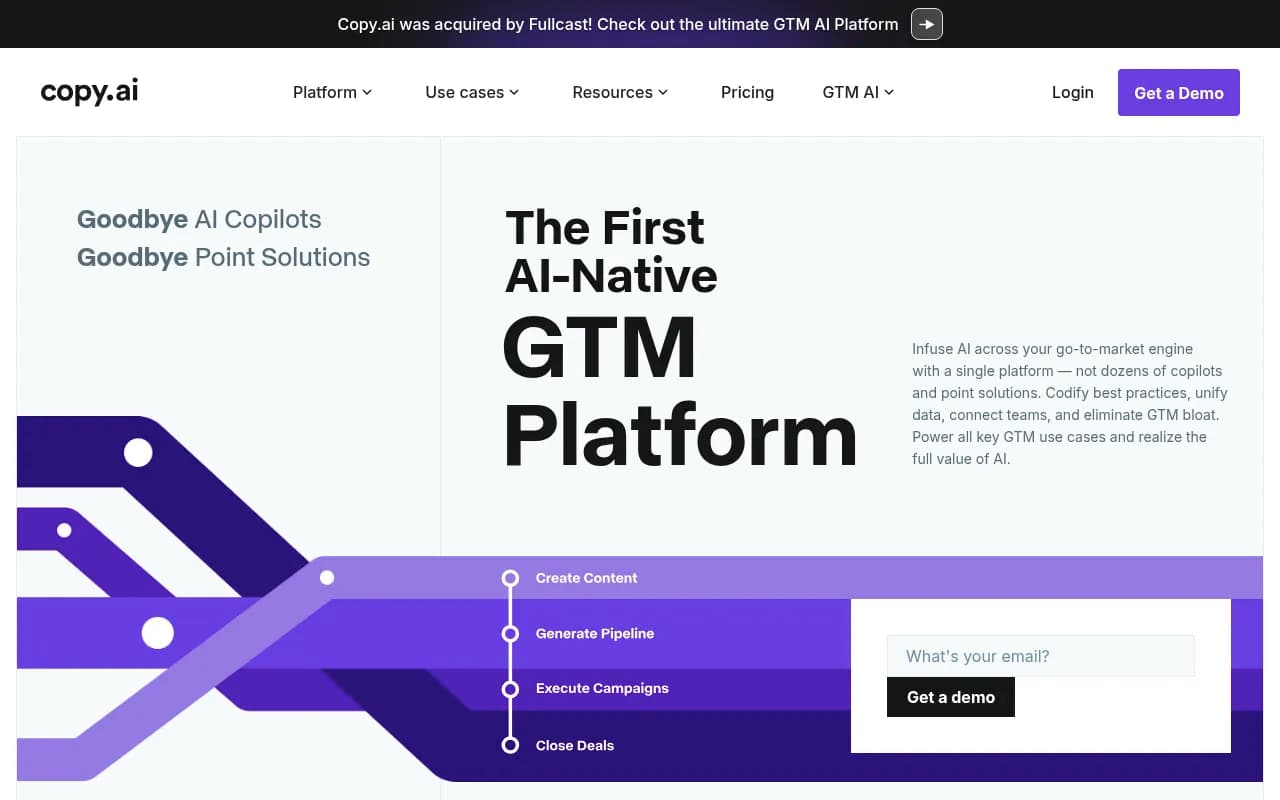
The common complaints in the sources are consistent: generic voice, no real brand voice training, no publishing or CMS connection, and no view into how content performs in ChatGPT, Gemini or Perplexity. The last one matters more than it used to.
What "beyond short-form" means in 2026
Short-form copy (headlines, ad variants, product blurbs) is easy to generate and easy to commoditize. The harder jobs are long articles, comparison pages, docs and landing pages that have to be accurate, on-brand and findable.
Promptwatch Data gives a useful steer here. In its report on which content types ChatGPT cites most (Sep 28 to Oct 4, 2026), product pages were the top type at 22.4% of classified citations, landing pages followed at 16.8%, and listicles at 13.6%. How-tos got 8.7%, comparisons 5.9%, documentation 7.5% and FAQ pages 3.3%.
For commercial prompts like "best X tools", product pages, landing pages, listicles and comparisons made up almost 70% of citations. Social posts barely registered outside branded prompts.
Longevity matters too. Promptwatch's content half-life data shows news losing about half its cited pages within roughly 5 weeks, while landing pages and docs stay cited for months. So the writing tool you pick should help you build and maintain durable, structured pages, not churn out disposable snippets.
How to choose: match the tool to your bottleneck
The Spike article makes a point I agree with: the real cost of an AI writing tool is the total cost of editing. A cheap tool that produces generic drafts costs you senior editor hours. Ask these questions before comparing price lists:
- How much editing does a typical draft need before it sounds like us?
- Does it connect to our CMS, or do we copy and paste?
- Does it use search data (SERPs, keywords) or only a language model?
- Can we see whether published pages get cited by AI engines?
- What happens to cost when the team grows from 3 to 10 people?
If your real problem is prioritization, approvals and shipping cadence, no writing tool fixes that. You need a workflow system around it.
Quick comparison
| Tool | Best for | Main strength | Watch out for |
|---|---|---|---|
| Jasper | Brand voice at scale | Brand IQ, governance, agents | Per-seat cost grows with team size |
| Writesonic | Teams focused on AI search visibility | Article generation plus prompt tracking | Entry pricing is no longer "cheap" |
| AirOps | Content engineering and workflows | Brand kit, workflows, AI search data | More setup than a simple writer |
| Frase | SERP-driven briefs and optimization | Research and GEO optimization | Pair with a human editor |
| Surfer SEO | On-page optimization | Content scoring against SERPs | Optimizer, not a full workflow |
| Anyword | Performance-driven copy | Predictive scoring | Better for ads and email than long-form |
| Rytr | Cheap short-form | Low-cost templates | Not built for long-form or governance |
| Promptwatch | Closing the loop on AI visibility | Gap analysis, Content Agent, citation tracking | Not a general copywriter |
Jasper: best for brand voice and governance
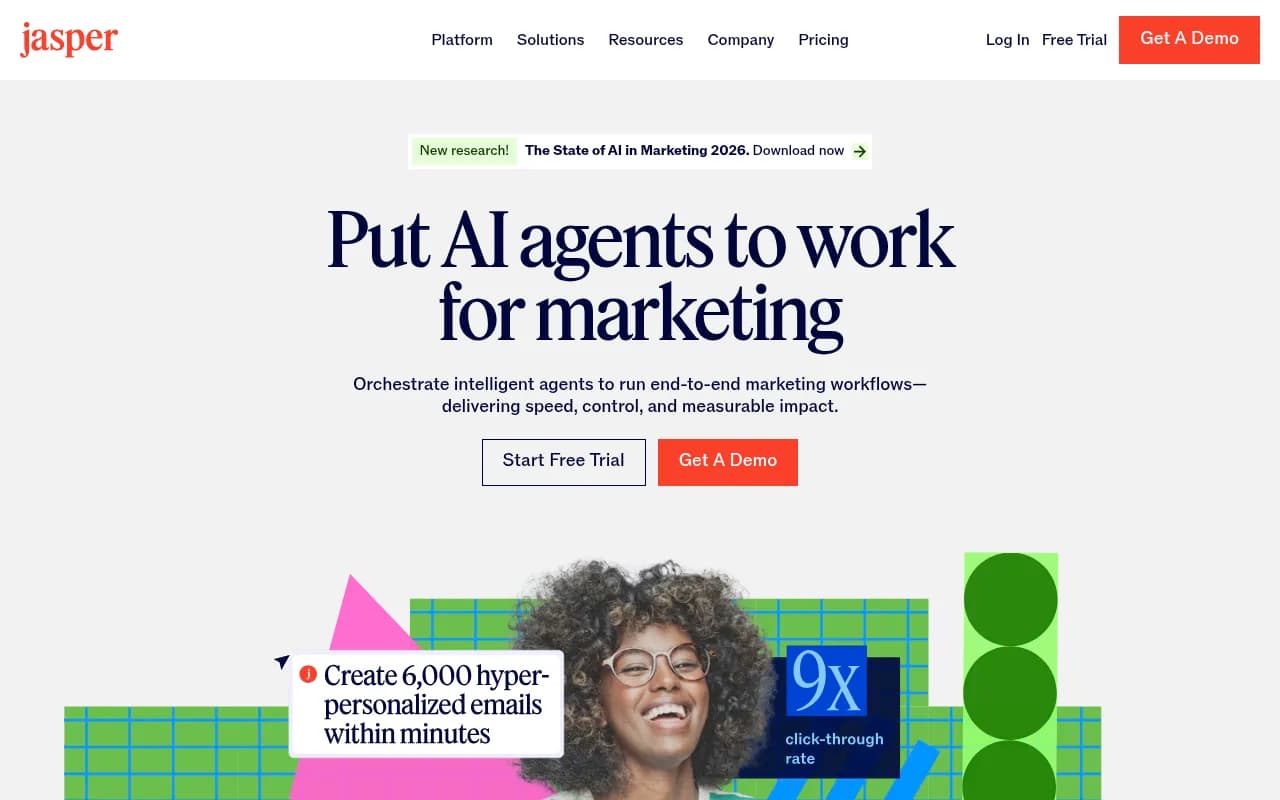
Jasper is the closest spiritual successor to the old Copy.ai for marketing teams, and it has grown up. Its site now lists Agents (including GEO, Research and Translation agents), Content Pipelines, Canvas, Grid, and Jasper IQ, which covers Brand Voice, Style Guide, Visual Guidelines, Knowledge and Governance. It also offers a Brand Compliance Diagnostic and a free GEO diagnostic.
The pricing page lists Pro and Business plans with a 7-day free trial. I could not verify exact figures from the page, and a third-party article quotes $49 to $69 per seat per month, so confirm on jasper.ai/pricing. If that range holds, per-seat pricing gets expensive past about three users, and the advanced campaign workflows have a steeper learning curve than template-style tools.
Best for mid-market B2B teams where brand voice drift is the biggest risk.
Writesonic: now an AI search visibility platform
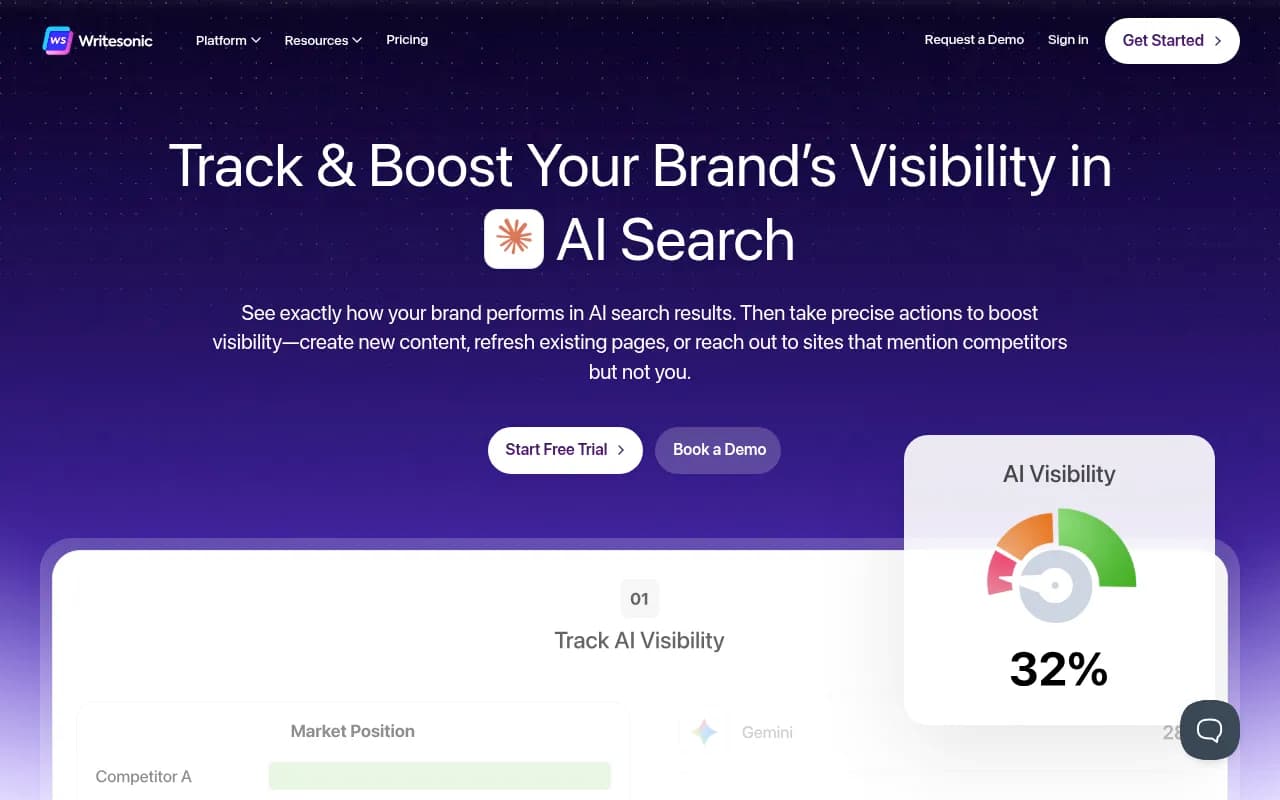
If your memory of Writesonic is "cheap SEO article writer", update it. The current pricing page leads with AI search visibility tracking, with article generation alongside:
| Plan | Price (billed annually) | Users | Articles/mo | Prompts tracked |
|---|---|---|---|---|
| Starter | $79/mo | 1 | 15 | 50 |
| Basic | $199/mo | 2 | 25 | 100 |
| Growth | $399/mo | 3 | 50 | 200 |
| Enterprise | Custom | Custom | Custom | 9 AI platforms |
The page header also says "Self-serve from $99/mo", which conflicts with the $79 Starter price, probably a monthly versus annual billing difference. Check before you budget.
It suits teams that want writing and basic visibility tracking in one tool, and are fine with a smaller prompt allowance.
AirOps: best for content engineering and workflows
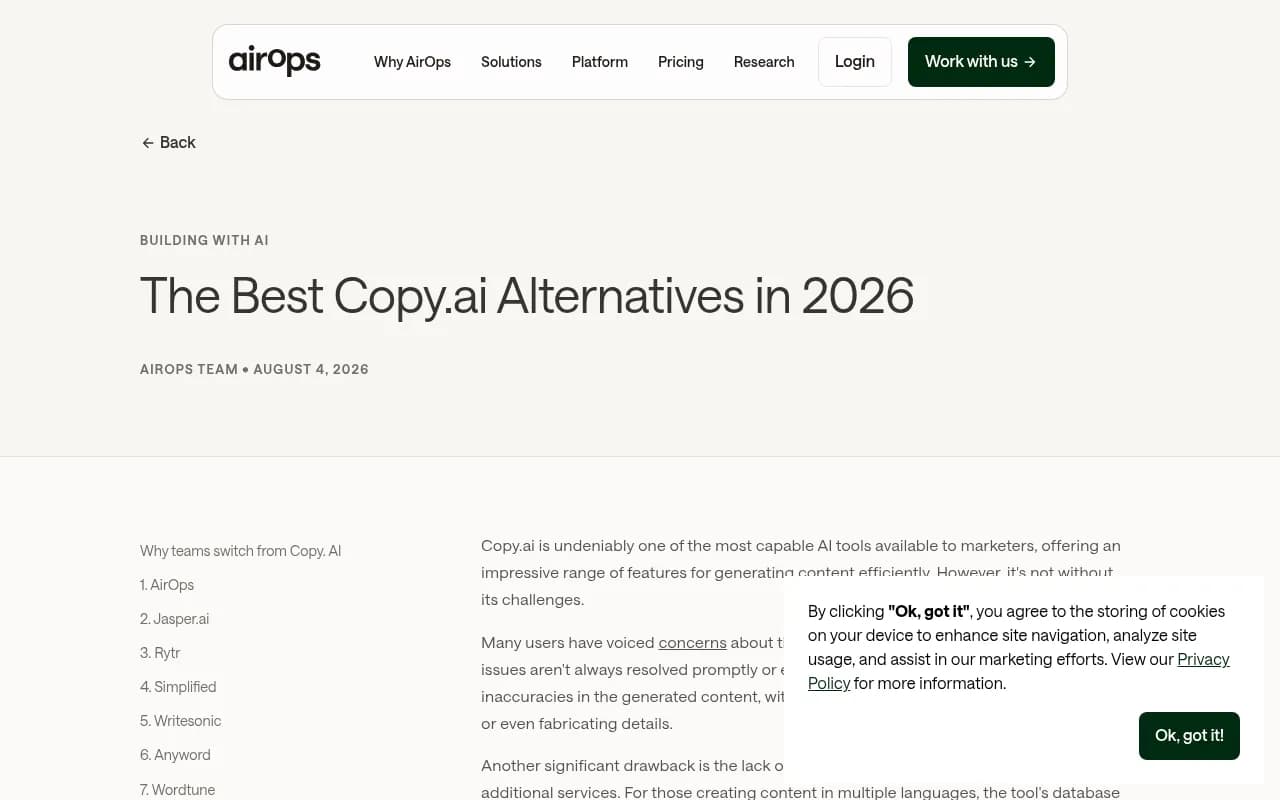
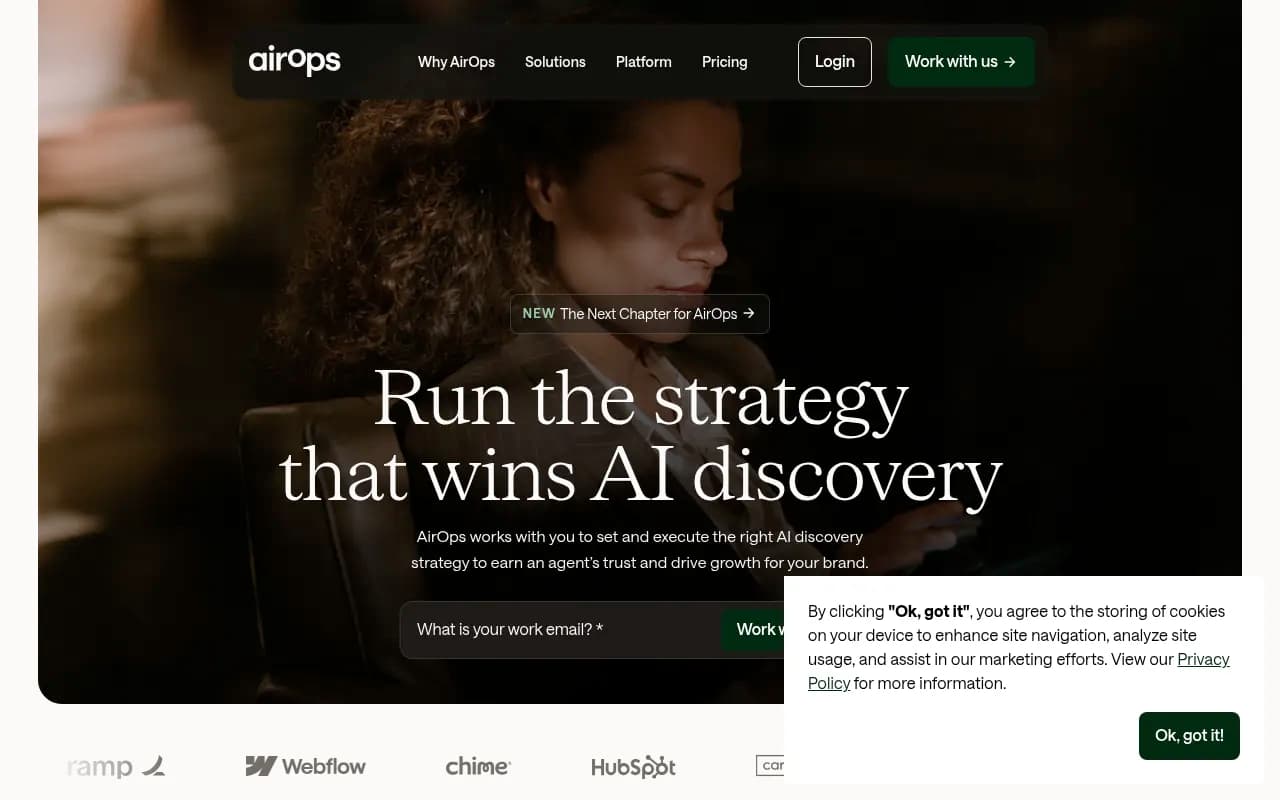
AirOps pitches itself as a content engineering platform tied to AI search discovery. The features that matter for ex-Copy.ai users are Growth Templates, Grid, a Brand Kit for voice, and technical SEO and e-commerce optimization. Its own comparison article names itself the best Copy.ai alternative, which you should read with the obvious bias in mind. Still, the workflow angle is real: connecting generation to brand voice, search performance data and publishing is the gap Copy.ai's old product left open.
I could not verify AirOps pricing from the research, so get a quote.
Frase and Surfer SEO: the optimization layer
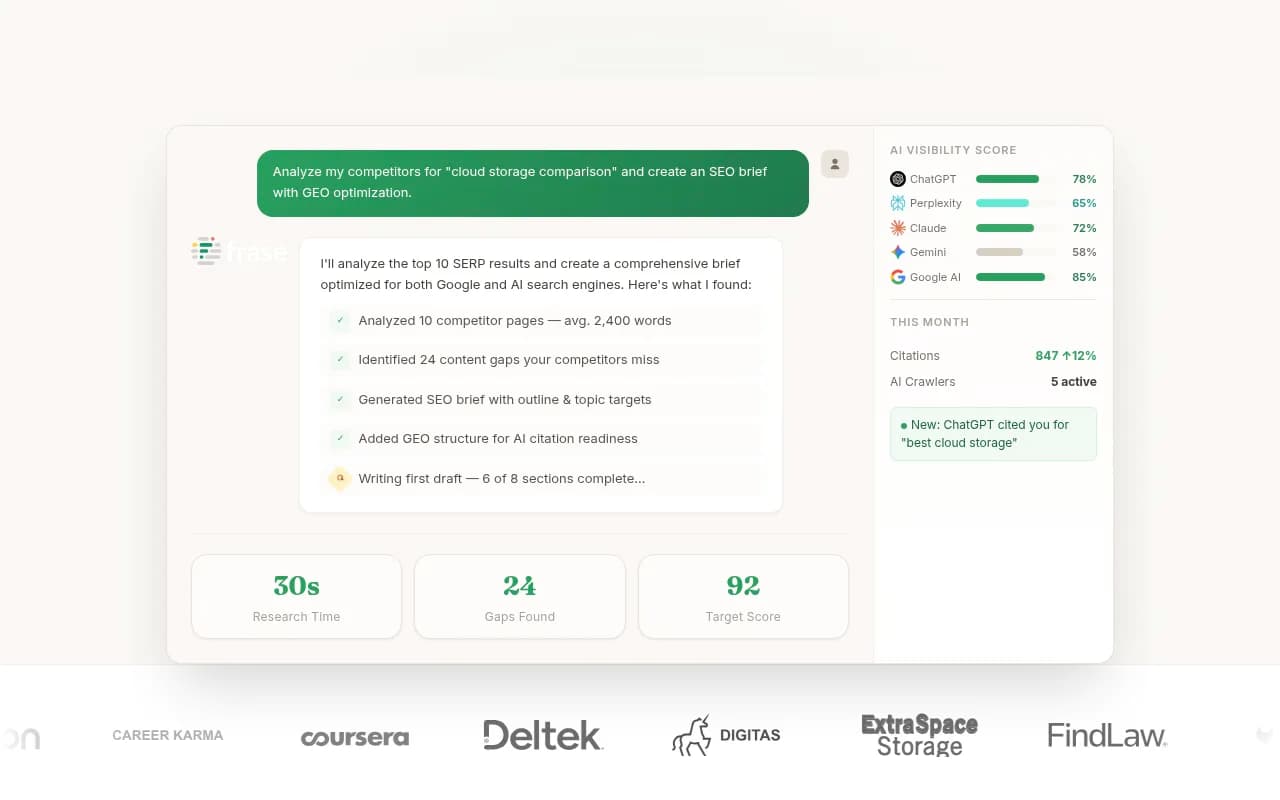
Some teams do not need to replace Copy.ai's drafting. They need something that makes drafts perform. Machined's hands-on comparison, where each tool wrote a long-form article on cold plunge therapy, specifically suggests Frase for teams who want to complement an existing writer with SERP-driven optimization.
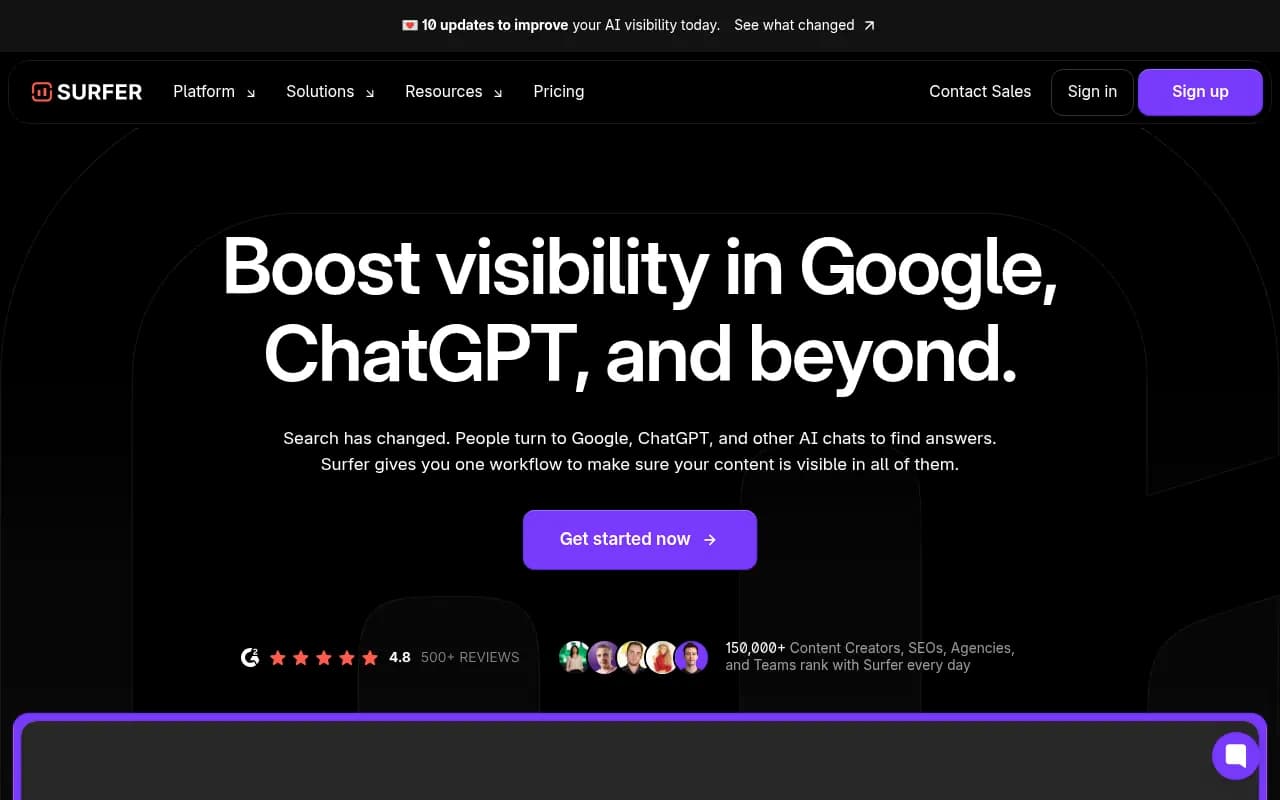
Frase researches, writes and optimizes with both SEO and GEO in mind. Surfer SEO scores your content against what already ranks and is the safer pick if you already have good writers and just want an on-page guardrail.
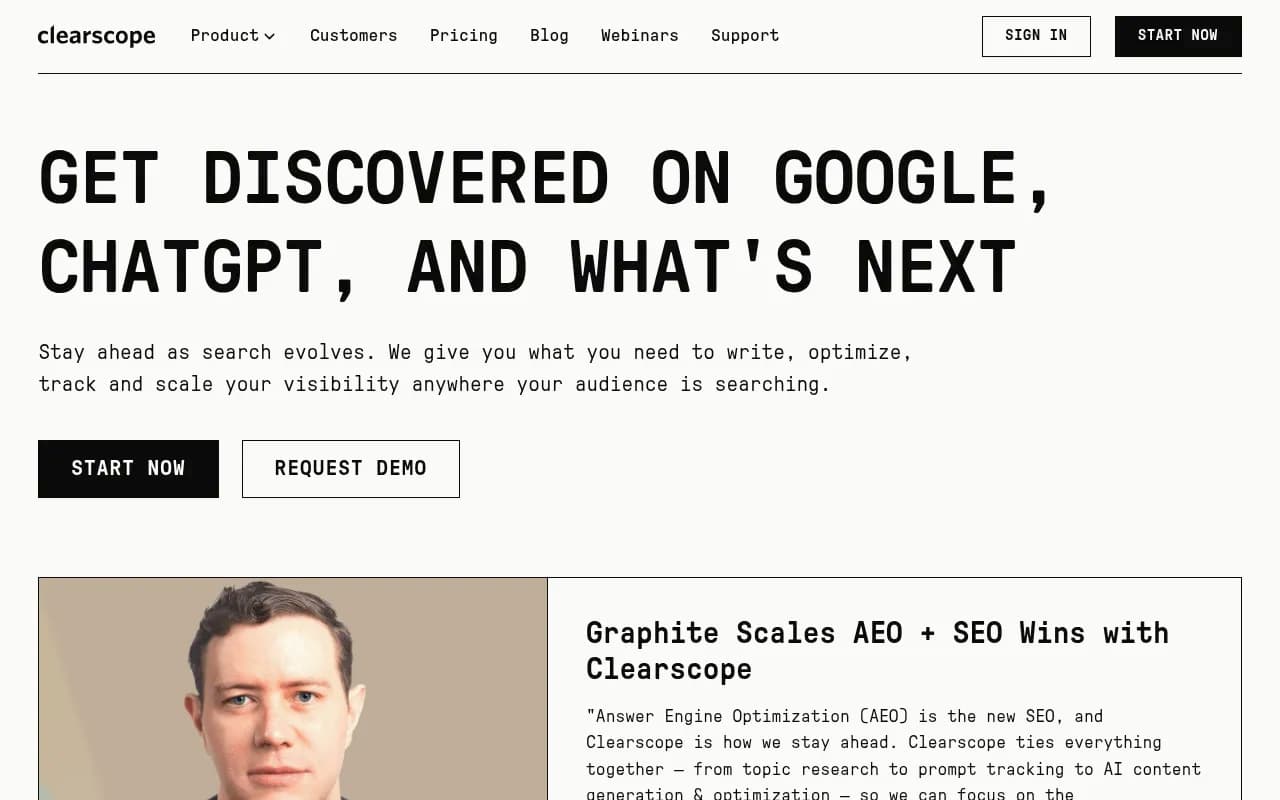
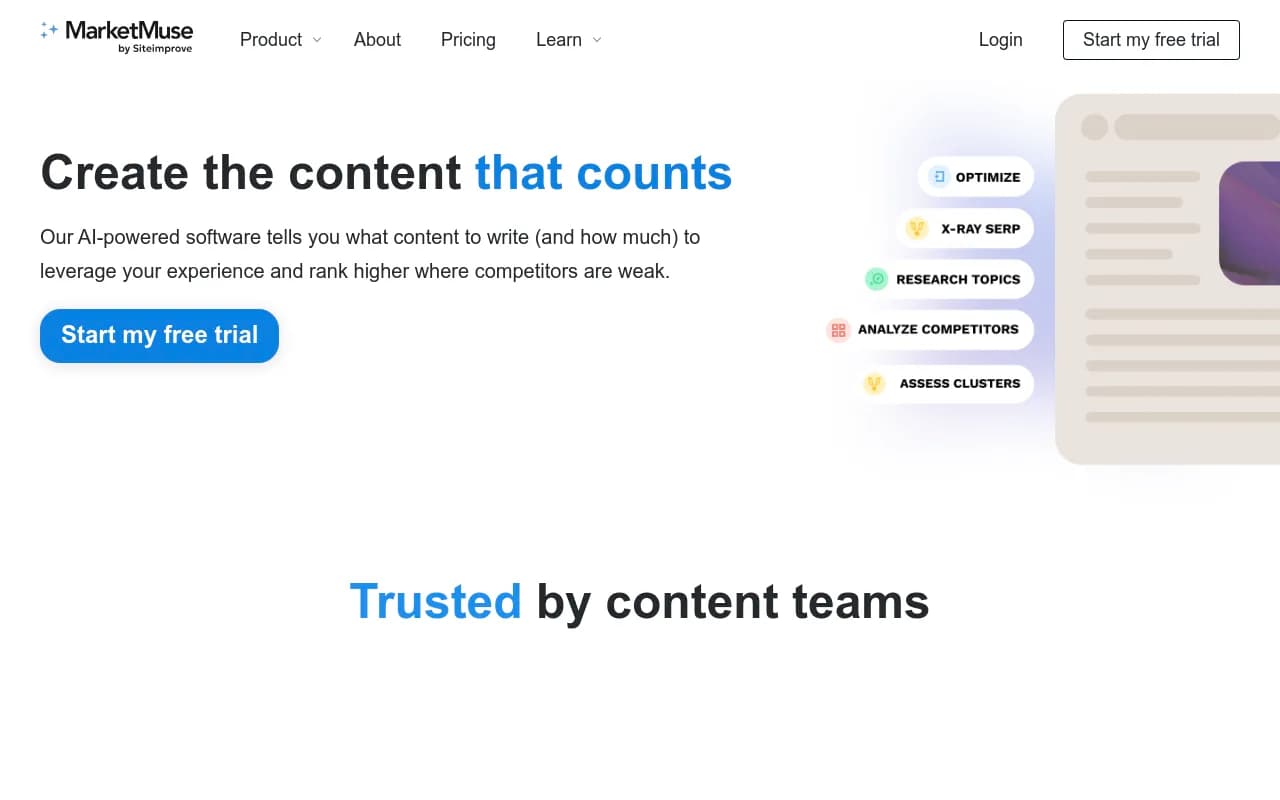
In the same lane, Clearscope and MarketMuse are worth a look if you want content planning or optimization with a more editorial bent.
Anyword and Rytr: if you still want short-form
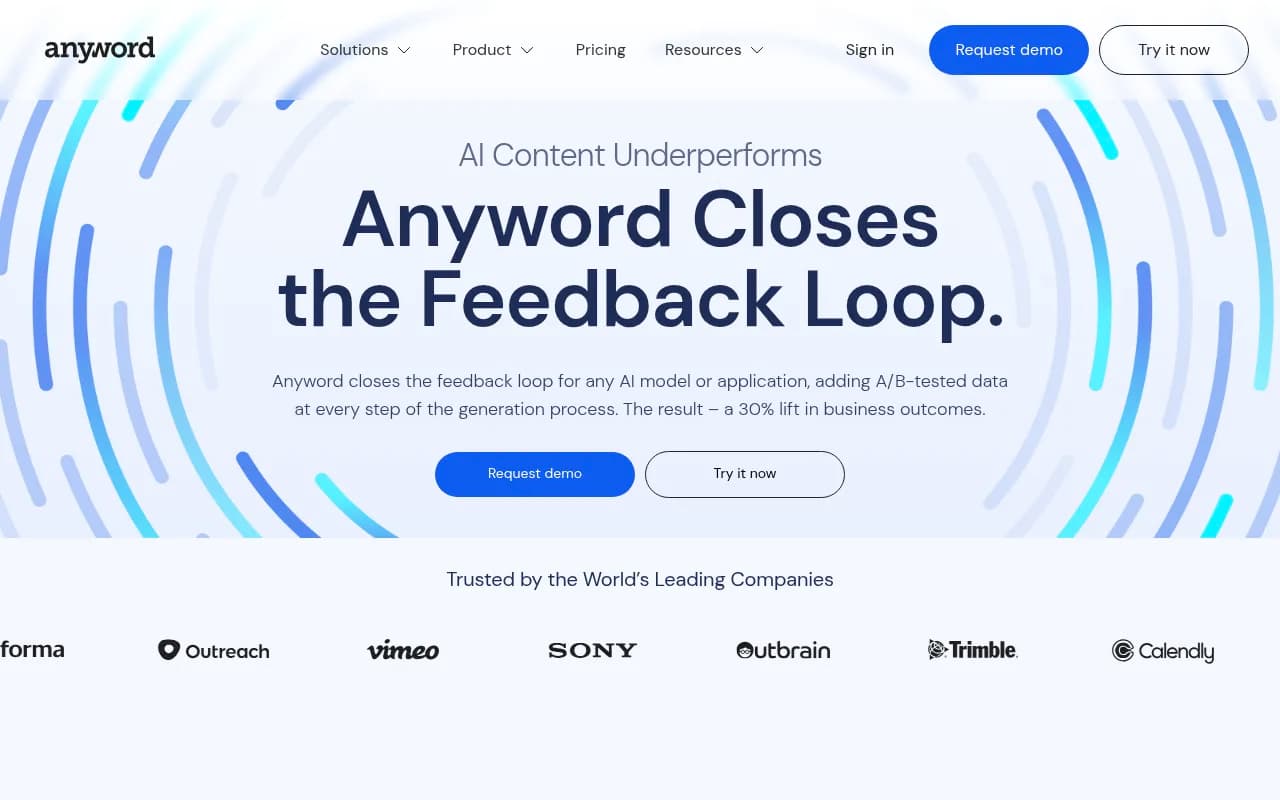
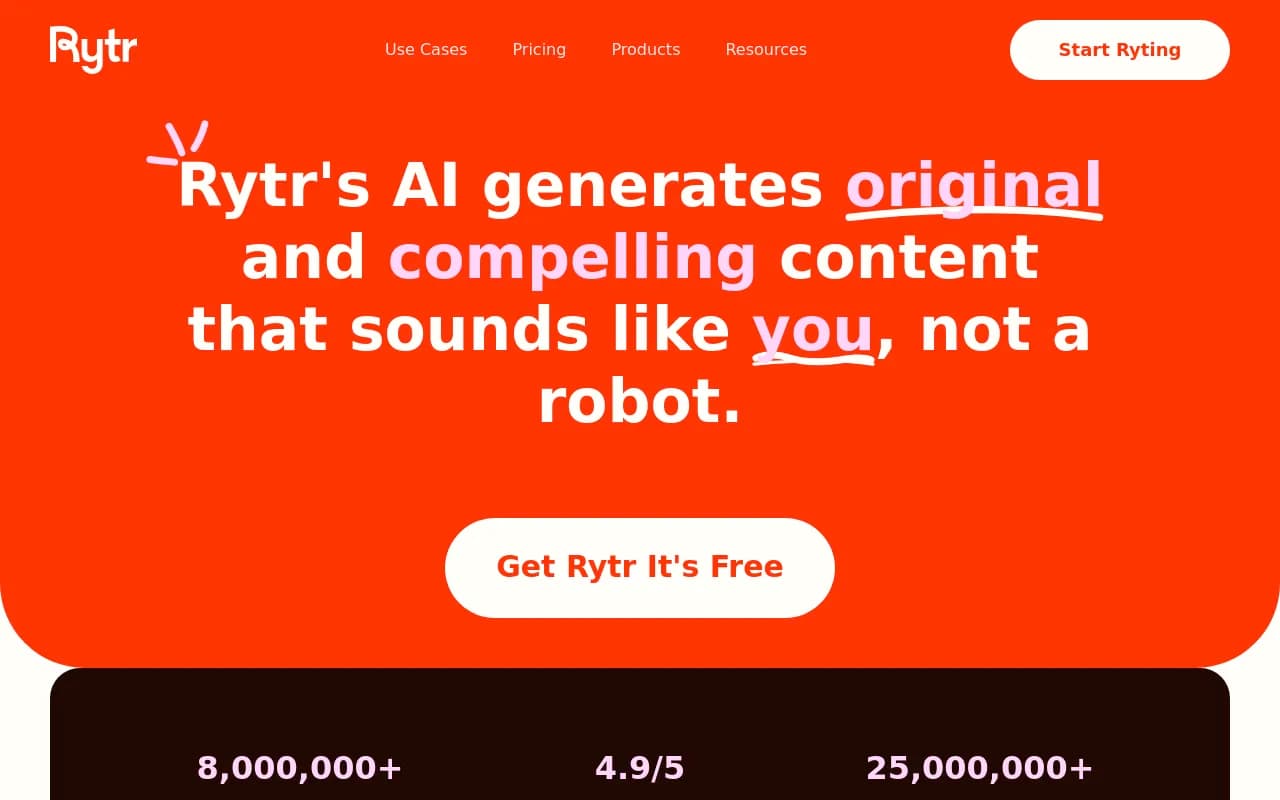
Not everyone should leave short-form behind. Anyword scores copy for predicted performance, which makes it handy for ad and email variants. Rytr is a low-cost assistant for short-form content in many styles. Neither is where I would build a blog engine.
Closing the loop on AI search visibility
Here is the part most Copy.ai alternative lists skip. A writing tool can produce an article. It cannot tell you whether ChatGPT, Gemini or Perplexity ever cites it, which prompts you are missing, or whether AI crawlers can even read your site.
This matters because Promptwatch Data shows almost half of ChatGPT responses cite 10 or more unique domains (Sep 28 to Oct 4, 2026), so there is room for many sources per answer, but only if your page is the kind of page AI cites.
Promptwatch is the pick I would add on top of a writing tool, or use as the content engine itself if AI search is your priority. It finds the prompts where competitors are cited and you are not, then its Content Agent plans, writes and publishes articles to WordPress, Webflow or Framer. Afterwards it tracks whether each page gets crawled, cited and clicked, using IP-verified AI crawler logs and visitor analytics. Most monitoring-only trackers stop at the dashboard. Paid plans start at $95/mo (Essential), and the Content Agent automation arrives on Business at $579/mo, so check promptwatch.com/pricing for current details.

If you want to explore more options, the GEO software directory at bestgeosoftware.com lists many of the visibility tools in this space.
A practical migration plan
- Export your best Copy.ai outputs and flag which ones you actually published unedited. That is your quality baseline.
- Write down your brand voice rules and three sample pieces. Any tool you trial should get the same inputs.
- Run the same brief through two or three tools. Time how long each draft takes to edit to publishable.
- Test the publishing path. If a tool cannot push to your CMS, count that manual step in its real cost.
- Check your AI visibility before and after. Track a small set of commercial prompts so you can tell whether new content gets cited.
- Rebuild your content mix around durable formats: comparisons, how-tos, docs, landing pages and FAQs.
If you would rather hand this to specialists, an SEO and GEO agency like 1001 SEO Media can handle strategy and production, though that is a different decision from picking software.
Which one should you pick?
- Brand-safe content across channels with a team of 3 to 10: Jasper.
- Writing plus AI visibility tracking in one subscription: Writesonic.
- Workflow-heavy content operations: AirOps.
- Already have writers, need SERP guidance: Frase or Surfer SEO.
- Need to know if AI engines cite what you publish, and automate fixing the gaps: Promptwatch.
- Short ad and email variants on a budget: Anyword or Rytr.
Pricing in this category moved a lot this year, and several vendors have rewritten their positioning. Run a real brief through your top two choices and let editing time decide.