Key takeaways
- The best platform for a pitch is one that lets you show a prospect their real AI visibility on a call, then turns that pitch into a live client account without rebuilding anything.
- Monitoring-only tools are fine for reporting, but they leave you with a diagnosis and no delivery engine. Agencies that sell results need content and tracking in the same place.
- Pitch environments exist at several vendors, including Promptwatch, Profound, Peec AI, Writesonic and AthenaHQ. Verify the limits on each before you commit.
- Segment prompts by intent. Promptwatch Data shows product and landing pages take almost 70% of commercial-prompt citations in ChatGPT, so a prospect's gaps look different by prompt type.
- Most vendor comparison articles rank their own product first. Treat every list, including this one, with that in mind and run a two-week trial.
Why pitching with AI visibility data works
An SEO pitch used to be a keyword gap and a traffic estimate. An AI visibility pitch is better because it is a live demonstration. You type the prospect's category prompts into a tool, and the prospect watches their competitor get recommended while they get ignored. That is hard to argue with.
But it only works if the tool can do three things quickly: run a credible audit before the meeting, present it in a client-friendly format, and convert into an ongoing workspace. Many tools handle the second and third poorly, or lock pitch features behind enterprise contracts.
I would also be careful about the data you show. Not every engine behaves the same way. According to Promptwatch Data on sources per response, ChatGPT cites about 5 sources per web-search answer while Google AI Overviews and Perplexity cite about 10. A prospect who is cited in one engine can be absent in another, so a pitch audit that covers only one engine misleads.
What to look for in a platform for agencies
Pitch workspaces that convert
The feature that separates agency-grade tools from generic trackers is a pitch environment: a sandbox where you can run a prospect's audit, share it, and promote it to a client account when they sign. Profound, Peec AI, Writesonic and AthenaHQ all claim some version of this, and Promptwatch's agency plans include pitch projects too. Limits differ, so ask how many pitch projects you get, whether prompts count against your quota, and whether history carries over.
Engine and region coverage
ChatGPT, Google AI Overviews and Perplexity are the baseline. Gemini, Google AI Mode, Copilot and Claude matter depending on your clients' buyers. Also check whether the tool tracks the real consumer interface or only API output. User-facing answers and citations can differ from API responses, which matters when you tell a prospect they are invisible.
Prompt intelligence
A prospect will ask "which prompts matter?" You want volume and difficulty estimates, not a guess. Segmenting by intent is the useful part. In Promptwatch's ChatGPT citation data by content type (Sep 28 to Oct 4, 2026), product pages took 26.0% and landing pages 20.6% of commercial-prompt citations, while how-to guides and documentation did better on informational prompts. Branded prompts cited reviews at 5.6%, more than three times their share overall. If your tool cannot split prompts that way, your pitch will be generic.
Execution, not just monitoring
This is where I have the strongest opinion. A dashboard tells a client they have a problem. It does not fix it. If you are selling retainers, you either build a content pipeline yourself, or you buy a platform that includes one. Tools that combine gap analysis, content generation and publishing save real hours across a roster.
Reporting and pricing model
White-label PDFs, client portals, Looker Studio connectors, and unlimited seats all reduce friction. Credit-based pricing can punish you for tracking more engines, so model your expected usage before committing.
Platform comparison
| Platform | Pitch workspace | Content execution | Agency pricing signal | Best for |
|---|---|---|---|---|
| Promptwatch | Yes, pitch projects on agency plans | Content Agent, CMS publishing, Action Board | Kick-off $199/mo, Growth $399/mo, Scale $799/mo | Agencies that sell results, not just reports |
| Profound | Yes, Agency Mode | Agents for content | Agency Growth from $99/mo (tight limits), enterprise custom | Larger agencies with enterprise clients |
| Peec AI | Yes | None | From $245/mo, tiered by project count | Mid-sized agencies wanting clean reporting |
| Writesonic | Yes, Agency Starter for pitches | Built-in content suite | $200/mo Agency Starter | Agencies wanting monitoring plus writing |
| Otterly.AI | Partner program, workspaces | Briefs and audits, no generation | Premium $489/mo | Boutique agencies starting out |
| AthenaHQ | Yes | Action Center | Custom | Agencies wanting lead referrals |
| Semrush One | No dedicated pitch mode | Limited | From about $248/mo (Pro+) | SEO-first agencies on Semrush |
Pricing figures come from vendor-adjacent comparison articles published in 2026 and change often. Confirm on each vendor's site.
The platforms, one by one
Promptwatch
Promptwatch is the one I would shortlist first for an agency that wants to pitch and then deliver. The agency plans give unlimited projects and prompts, pitch projects, 10 seats and white-label reporting. More important for the sales conversation, it covers the real UIs of ChatGPT, Google AI Overviews, AI Mode, Gemini, Perplexity and Copilot, so what you show a prospect matches what their buyers see.
After the pitch is where it separates from monitoring-only tools. Content gap analysis shows which prompts a client loses, the Content Agent writes and publishes to WordPress, Webflow or Framer, and IP-verified crawler logs plus visitor analytics show whether AI engines read the new page and whether it drives traffic. Crisp reported 2x higher conversion rates from AI traffic compared to other channels using this loop, and agency Monks uses the Answer Gap Report to build roadmaps for enterprise clients.

The agency tiers are Kick-off at $199/mo, Growth at $399/mo and Scale at $799/mo, with a 7-day trial on monthly Kick-off and Growth. Check promptwatch.com/pricing for current numbers.
Profound
Profound has the most developed agency story in the market. Agency Mode gives you client workspaces and pitch environments, and a pitch can be promoted to a live account. Its enterprise tier tracks around ten engines. The catch, according to an Exploding Topics review, is that the $99/mo Agency Growth plan is tight: 20 prompts per brand, three platforms and one language. It fits agencies where AI visibility is already a funded service line. Medium-sized shops often find pricing high.

Peec AI
Peec AI has some of the cleanest agency pricing: four tiers by project count, and unlimited users and client seats. Its pitch workspace lets you benchmark a prospect and convert it. Two caveats: it uses a credit model, so tracking more engines reduces the number of prompts, and it has no content generation. Good for agencies that already have a content team and want reliable client dashboards.

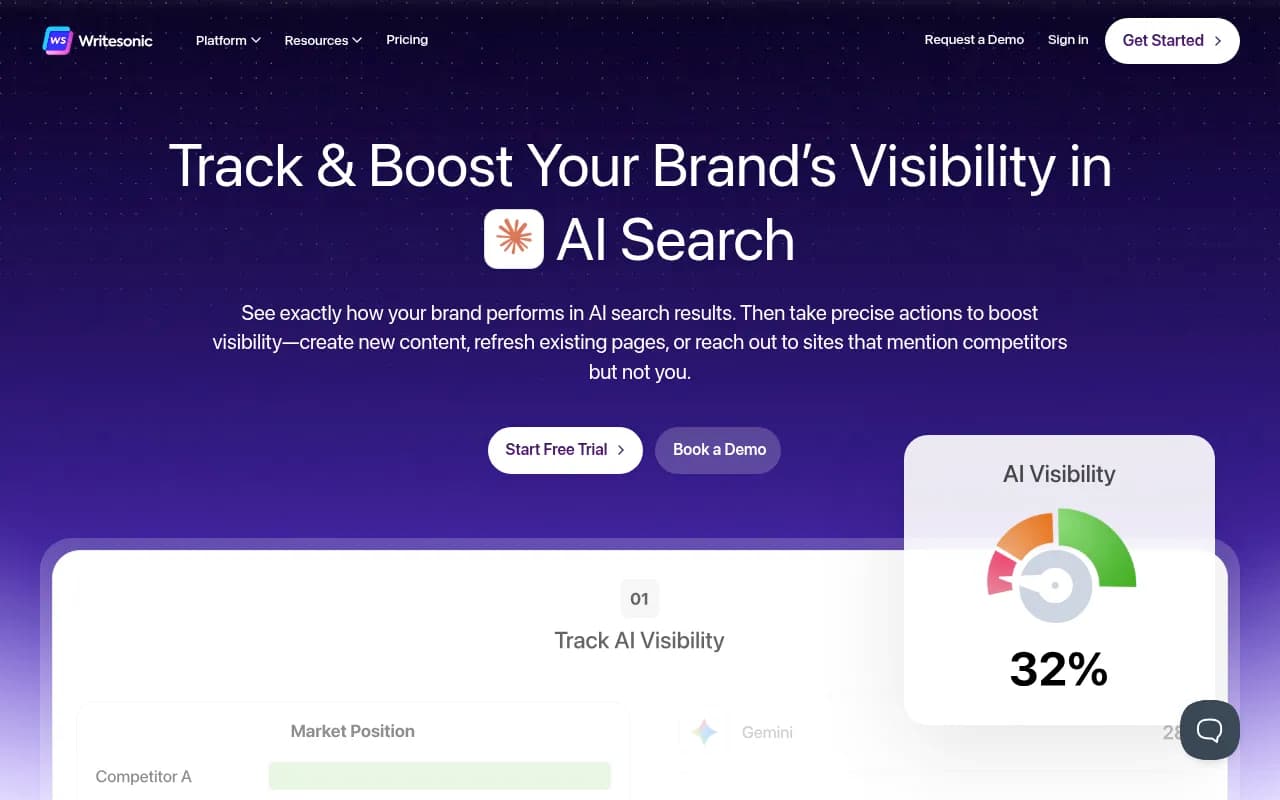
Writesonic GEO
Writesonic started as a writing tool, and it shows, in a useful way: you can brief, draft and publish from the same platform where you found the gap. The $200/mo Agency Starter is pitch-only, with shareable audits across nine AI platforms. White-label reporting and the full Action Center require the enterprise tier.
Otterly.AI
Otterly is a sensible first step for a boutique agency. The Premium plan at $489/mo includes unlimited workspaces, unlimited brand reports, Looker Studio, API and MCP access, and a high 10,000 GEO URL audits per month. Google AI Mode and Gemini are paid add-ons, so the real price is higher than it looks.

AthenaHQ
AthenaHQ's Action Center turns visibility data into next steps, and its partner program refers qualified leads to agencies by focus area. That inbound channel is unusual. Prompt volume estimates rely on a model the vendor does not fully disclose, so treat volume numbers as directional.
Semrush One
If your team already lives in Semrush, adding AI visibility is the lowest-friction path. You get an AI Visibility Score, prompt research, competitor benchmarking against up to four named competitors, and an AI search site audit. Extra subusers cost $99 each. It lacks a dedicated pitch-to-client flow, and coverage is narrower than specialist tools.
Others worth a look
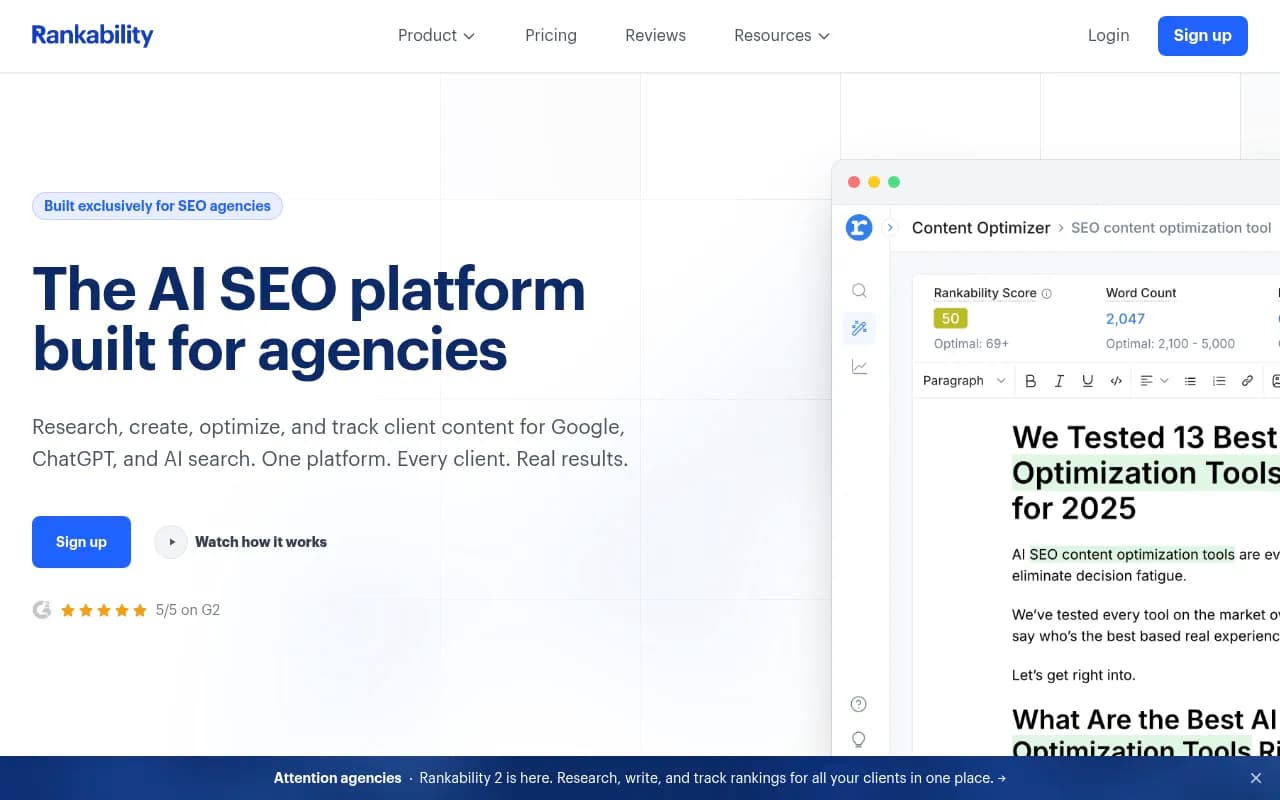
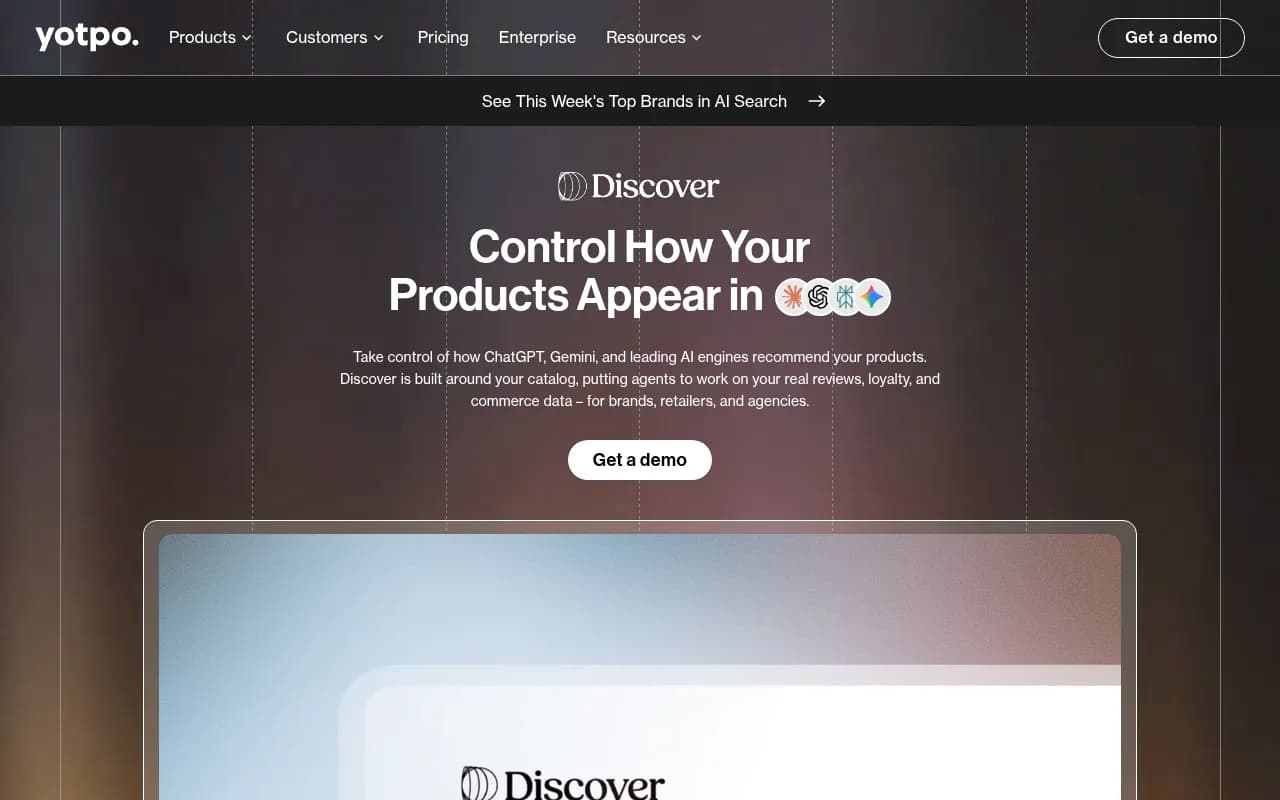
Scrunch is known for referral economics and AI bot traffic analytics. Rankability bundles SEO with AI visibility for agencies. Wellows, Cairrot and OpenLens are newer entries positioned at multi-client delivery. Yotpo Discover is the pick for DTC and e-commerce clients specifically, though it is strongly commerce-focused.
For a wider view, the GEO software directory at bestgeosoftware.com lists dozens more.
A note on vendor comparison articles
Most of the lists out there, including those from Profound, Yotpo and Frizerly, rank their own product first. Profound's list claims a GR0 case where one client went from $1,000 to over $100,000 monthly revenue attributed to AI answers. That is a vendor-supplied case study, not independent data. Use these articles to build a shortlist, then verify pitch features, limits and pricing yourself.
How to run a pitch with these tools
- Pick five to ten category prompts the prospect's buyers would actually use, split across commercial, informational and branded intent.
- Run them across at least ChatGPT, Google AI Overviews and Perplexity. Different engines cite different numbers of sources, so do not generalize from one.
- Capture who gets recommended instead, and which pages and content types get cited. Product pages and landing pages lead in ChatGPT, so check whether the prospect even has them.
- Show the gap, then show the fix: a content plan tied to those prompts, not a generic audit.
- Promote the pitch workspace to a client account on signing so the baseline carries over. That baseline is what makes your month-three report credible.
Questions to ask before you buy
- How many pitch projects are included, and do prompts count against my quota?
- Does the tool track real consumer interfaces or API output?
- Can I white-label reports and give clients portal access?
- Is there content generation and CMS publishing, or do I need another tool?
- Does it show AI crawler activity and AI-referred traffic, so I can prove business impact?
- What happens to pricing if I add engines, regions or clients?
Which one should you pick?
| Your situation | Start with |
|---|---|
| You want to pitch, deliver and prove results in one place | Promptwatch |
| Enterprise clients with governance needs | Profound |
| You have a content team and want clean reporting | Peec AI |
| Already on Semrush | Semrush One |
| First AI visibility offering, tight budget | Otterly.AI |
| Mainly DTC e-commerce clients | Yotpo Discover |
If you are still deciding whether to add this as a service line at all, or you need senior help with the SEO and GEO work itself, an agency like 1001 SEO Media runs this kind of program for brands and uses Promptwatch internally. For browsing more trackers, the AI rank tools directory is a good next stop.
My honest recommendation: trial two platforms side by side for two weeks on a real prospect. The one that produces the pitch you would actually send is the one to buy.