Key takeaways
- A GEO agency sells execution (strategy, content, PR, technical fixes). A platform sells measurement and, at the better end, automation. They solve different problems.
- Published ranges are wide: software from roughly $29 to $199+ per month in the budget tier, agencies from $1,500 to $50,000+ per month (GoodFirms figures, not verified by us). Promptwatch's own plans run $95 to $579 per month for most teams.
- Pick based on your bottleneck. If you can't ship content or fix your site, you need hands. If you can ship but can't see what's working, you need data.
- Citations decay and AI answers shift constantly, so whatever you choose has to include ongoing monitoring and refreshes, not a one-off project.
- For many teams the answer is a hybrid: a platform as the system of record, plus an agency or freelancer for the pieces you can't do in-house.
The actual question
Most "agency vs software" articles are written by an agency or a software vendor, so read them with that in mind. This one is published by a network that runs on an SEO agency, 1001 SEO Media, which also uses a GEO platform. I'm telling you that up front so you can discount accordingly. I'll try to be useful anyway.
The question isn't really "which is better." It's "what is stopping us from showing up in ChatGPT, Perplexity, Gemini and Google AI Overviews answers, and who is going to fix it?" Software can tell you the answer to the first half. Only people (or increasingly, agents) can do the second half.
What each option actually gives you
What a GEO agency does
A generative engine optimization agency helps brands appear inside AI-generated answers. In practice that means some mix of:
- Diagnosing where and why you are missing from answers
- Producing or restructuring content (comparison pages, FAQs, use-case pages, evidence pages)
- Digital PR and third-party placements, since AI tools often cite publishers, listicles and forums rather than your own site
- Technical work so AI crawlers can read and render your pages
- Reporting
The appeal is capacity and experience. The discipline is new, and an agency that runs it across many clients has seen more patterns than a single in-house hire has. One agency roundup I read made the point bluntly: for most B2B teams, the discipline is moving too fast for one new hire to have meaningful reps yet. That's a vendor-published list, so take the conclusion with salt, but the underlying logic is reasonable.
What an AI visibility platform does
Platforms run your prompts against AI engines on a schedule and report whether you are mentioned, cited, ranked early or late, and how you compare to competitors. The cheaper ones stop there. They are trackers.
The more complete ones add the layer that explains the result: which pages AI crawlers actually read, which of your pages get cited, what traffic that sends, and what to do next. A few go further and write and publish content for you.
Promptwatch sits in that last group. It has real-UI prompt tracking, IP-verified AI crawler logs, visitor analytics, content gap analysis, and a Content Agent that publishes to WordPress, Webflow or Framer, then tracks whether the new pages get crawled and cited.

Budget reality check
The ranges below come from a GoodFirms comparison and an agency pricing roundup. I did not independently verify agency pricing, so treat them as ballparks.
| Model | Typical monthly cost | Best for | What you are really paying for |
|---|---|---|---|
| Entry-level tracker | $29 to $199+ | Teams with in-house content and analytics | Monitoring, plus your own time to act on it |
| Full AI visibility platform | roughly $95 to $800 (Promptwatch plans) | Teams that want data, diagnosis and some automation | Tracking, crawler logs, traffic attribution, content tooling |
| Boutique GEO consultancy | from about $2,500 to $3,000 for audits and advising | B2B and SaaS teams needing strategy | Senior advice, roadmap, case-study experience |
| Full-service GEO agency | $1,500 to $50,000+ | Teams wanting strategy, execution and reporting in one place | Content, schema, PR, technical work, tracking |
The thing nobody says out loud: the software line item is rarely the real cost. Someone on your team has to read the data and act. If nobody has the hours, a $95 dashboard is a $95 screenshot generator.
Match the bottleneck, not the trend
The most useful framing I found came from an agency guide that maps each bottleneck to the kind of help it needs. I've adapted it here.
| Bottleneck | What it looks like | Best fit |
|---|---|---|
| Missing from trusted third-party sources | AI cites publishers, Reddit, listicles and competitors instead of you | PR or publisher-led agency |
| Hard to crawl or render | JavaScript-heavy pages, faceted navigation, headless CMS | Technical SEO or engineering-led agency, plus crawler log data |
| Unclear brand narrative | AI describes you inconsistently or compares you to the wrong competitors | Positioning and content strategy help |
| No owned answer assets | No comparison pages, FAQs, use-case pages | Content-led agency, or a platform with a content agent |
| Incomplete product data | Shopping agents can't read specs, availability, GTINs | Ecommerce and schema specialist |
| Only need visibility tracking | Team can already execute | Platform |
Notice that three of the six rows start with a diagnosis you can only make with data. That is the argument for owning a platform even if you hire an agency.
Why data needs to stay in your hands
GEO is probabilistic. A Reddit thread on choosing an agency made the point well: answers vary with the prompt, the subscription tier, the location and the model's training cutoff. So a screenshot in a monthly deck proves very little. You want repeatable tracking across engines, and you want the raw numbers.
Engines also behave differently. According to Promptwatch's average sources per response data (page dated Sept 2025, covering 26B+ data points), ChatGPT cites about 5 sources per web-search answer, Google AI Overviews about 10, and Perplexity almost exactly 10 every day. Copilot swung from under 2 to nearly 17 within weeks. Fewer slots means ChatGPT is the most contested engine, and it means any report that lumps engines together is hiding something. Ask any agency or tool to report per engine.
Then there is decay. In Promptwatch's ChatGPT content half-life study, which tracked pages cited on July 6, 2026 for 90 days:
- 78% of landing pages and 76% of docs were still cited after 30 days; 69% and 67% after 60 days.
- Product pages, reviews and how-tos had about 55% still cited at day 60, reaching half-life at 74 to 77 days.
- News decayed fastest: half of cited news pages were gone after 36 days.
The practical read: landing pages, docs and pricing pages are long-term assets, comparison pages and listicles are worth investing in, and news or PR is for short bursts. It also means GEO is a maintenance job. Whatever you buy has to include refreshes, either as a retainer deliverable or as something you can do yourself with a tool that shows which pages are fading.
When an agency is the better call
Go agency-first if most of these are true:
- You have no content or SEO headcount, or they are fully booked
- Your main gap is off-site: PR, publisher mentions, third-party listicles
- You need a strategy and a roadmap, not just numbers
- Your site has deep technical problems and no engineering time
- You would rather pay for outcomes than manage tooling
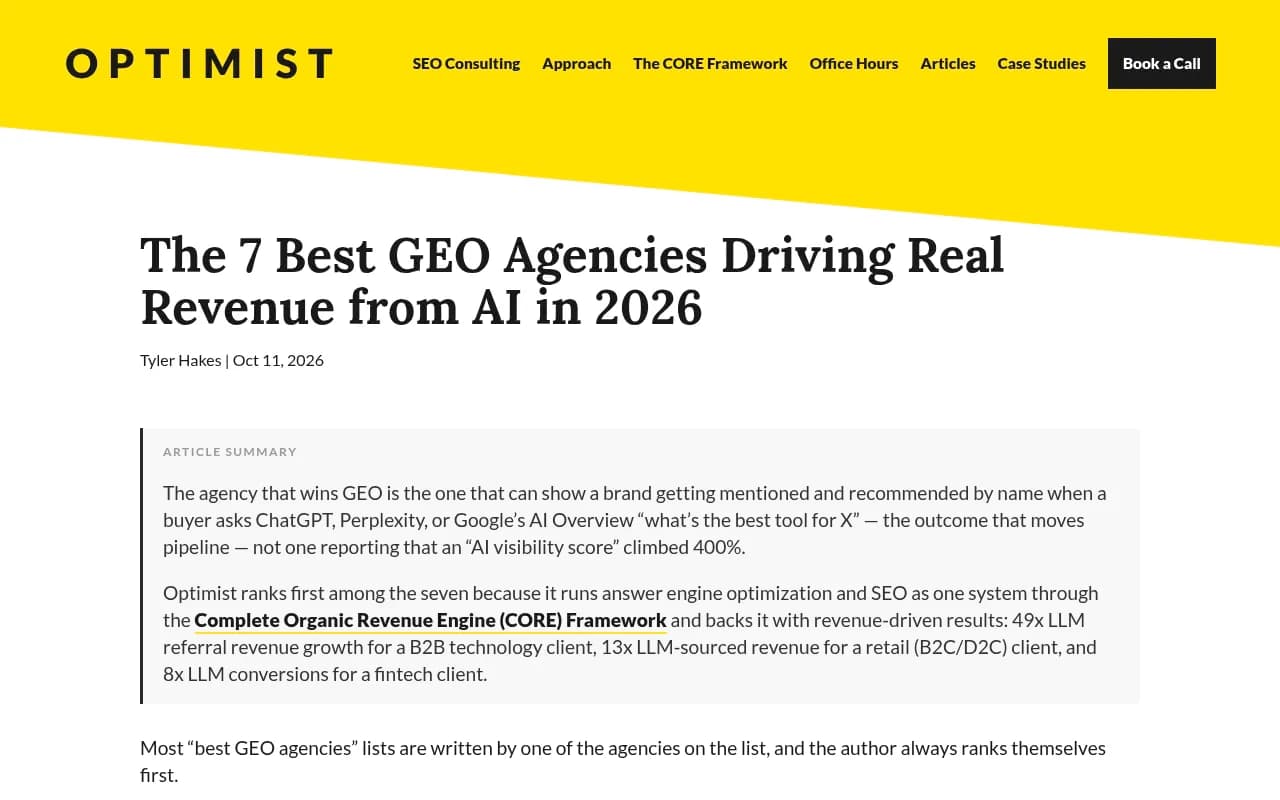
The agency market is crowded and uneven. Different lists name Graphite for full-service work, Directive for enterprise B2B, Animalz for expert-driven content, iPullRank and Onely for technical problems, and Omniscient Digital for content-led programs. Almost every list is published by an agency on it, one even admits the author ranked themselves first. Use them to build a shortlist, never to make the decision.
Red flags when hiring
- Guaranteeing a number one ranking in ChatGPT. No agency controls the model. One agency FAQ I read admits this itself: no one can guarantee a brand appears in a specific AI answer.
- Reporting only an invented "AI visibility score" that climbed 400% with no link to pipeline or revenue
- Talking about GEO entirely in terms of tools and dashboards, with no description of the work
- No published case studies that connect visibility to traffic, leads or revenue
- Refusing to give you access to the underlying tracking data
- Long lock-in contracts for a discipline that changes monthly
Questions worth asking
- Which prompts will you track, and can I see the raw responses?
- What did you ship for a similar client, and what happened to AI-referred traffic or revenue?
- How do you handle refreshes when citations decay?
- Who does the work, and are they senior?
- What do I own when we stop?
When a platform is the better call
Buy software first if:
- You already have writers and an SEO person who can act on findings
- You need to prove the problem to leadership before spending retainer money
- You run many brands or markets and want in-house control
- You are an agency yourself and need white-label reporting
- Your budget is under a few thousand dollars a month
Trackers vs platforms that act
This split matters more than any feature checklist. A tracker answers "were we mentioned?" A fuller platform answers "why not, where does AI find content like ours, what does it send us, and what should we fix?"
A quick map of tools from our catalog:
| Tool | Type | Fit |
|---|---|---|
| Promptwatch | Full platform with crawler logs, traffic attribution, content agent | Teams that want to measure and fix in one place |
| Profound | Monitoring-heavy enterprise platform | Larger budgets that mostly need tracking |
| Peec AI | Prompt tracker | Lightweight multi-language monitoring |
| Otterly.AI | Prompt tracker | Affordable monitoring for small teams |
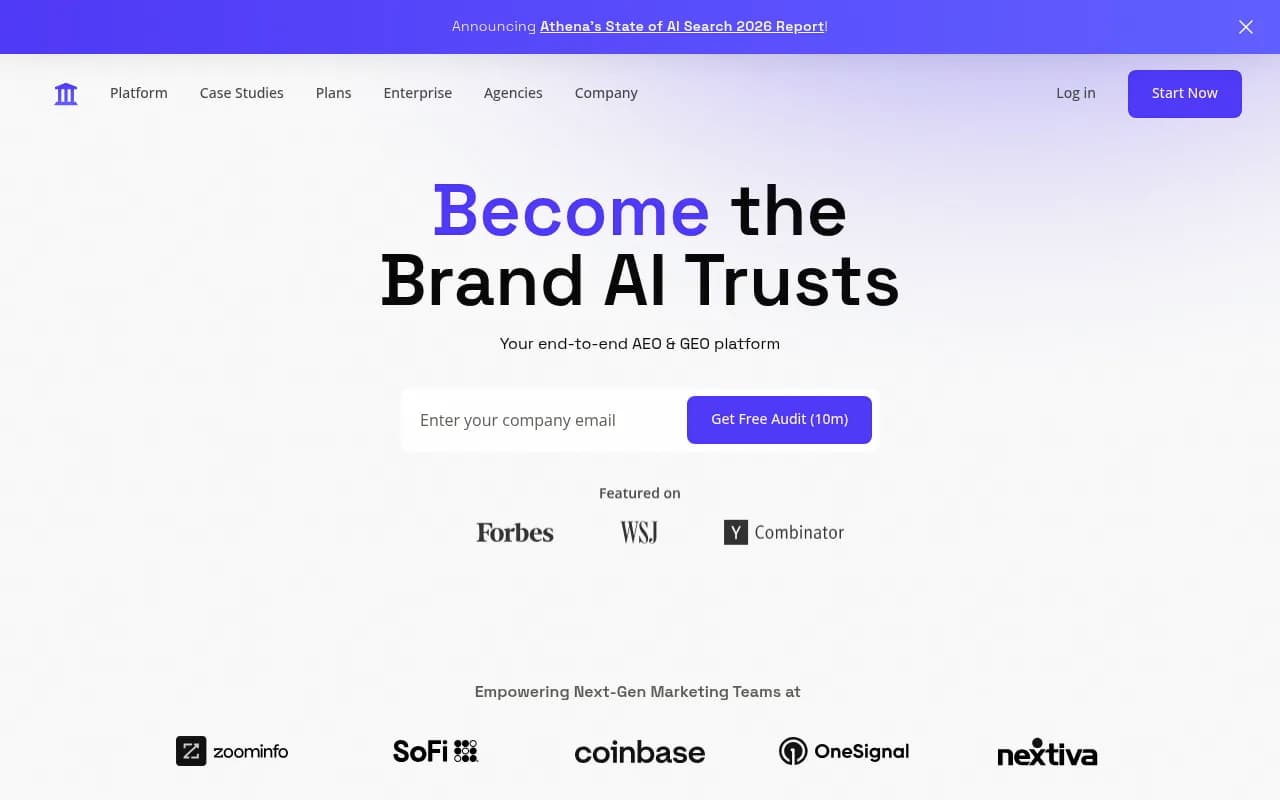
| AthenaHQ | Monitoring-focused | Tracking across multiple AI engines |
| Semrush One | SEO suite with AI tracking added | Teams already living in Semrush |
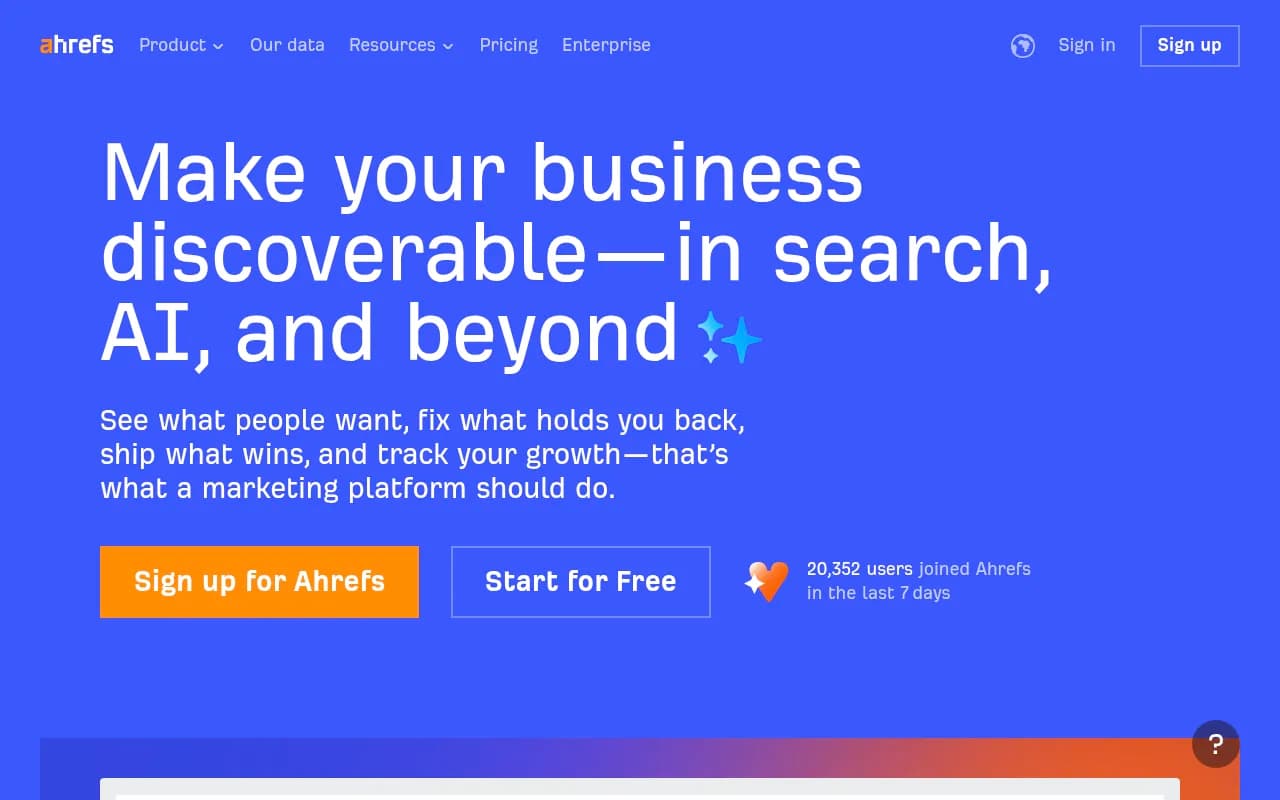
| Ahrefs Brand Radar | Brand mentions in AI results | Ahrefs users wanting a quick read |



In my view, the trackers are fine for a first month. After that you hit the same wall: you know you are invisible and you still don't know why. Crawler logs, per-page citation data and traffic attribution are what turn a number into a to-do list. If you want to see more options, the GEO software directory at bestgeosoftware.com lists far more tools than I can cover here.
The hybrid model most teams end up with
The honest answer for many teams is both, but in a specific order.
- Run a platform for 30 to 60 days. Get the baseline: which prompts matter, which engines cite you, which competitors win, whether AI crawlers can even read your site.
- Use that diagnosis to decide what to outsource. If the gap is content volume, a content agent or writers. If it is off-site mentions, PR. If it is crawlability, an engineer or technical agency.
- Keep the platform as the system of record, so agency reports can be checked against your own data.
This also fixes the incentive problem. An agency that reports on itself will always look good. One that is measured against data you control has to earn the renewal.
A decision table
| Your situation | Recommended route |
|---|---|
| Small team, one or two writers, limited budget | Platform with content tooling |
| No in-house SEO or content capacity | Agency or managed service, with data access |
| Strong SEO team, new to AI search | Platform first, selective freelancers |
| Enterprise with many markets and complex site | Platform plus technical agency |
| Agency serving clients | White-label platform |
| Need to convince leadership | Free visibility scan, then platform trial |
If you want a cheap first step, Promptwatch has a free AI Visibility Report that needs no login, and monthly plans come with a 7-day trial. Check promptwatch.com/pricing for current plans before you commit.
A note on managed options
There is a middle path between self-serve software and a classic retainer. Some platforms now run the work with agents: Promptwatch's Agentic AI Search Optimization has its agents monitor, plan, write and publish continuously, included on the Business plan. Others in our catalog, like Passionfruit Labs, are agencies that lean on AI-native workflows. These aren't right for everyone, but they are worth pricing against a $5,000 monthly retainer.
What I would do
If I were running marketing at a 20-person SaaS company today, I would sign up for a platform this week, spend a month finding out whether the problem is content, crawlability or third-party mentions, and only then decide whether to hire anyone. I would avoid any contract longer than three months and any agency that would not share raw tracking data.
If I had no SEO capacity whatsoever and some budget, I would hire an agency but still insist on read access to the same platform. Paying for work you can't verify is how teams end up with a 400% score increase and no pipeline.
For agency help with technical SEO, content, and AI search, 1001 SEO Media offers audits and ongoing work with no long-term contracts. For a wider look at tools by category, surferstack.com has reviews and comparisons.