Key takeaways
- Most AI search ranking tools are monitoring dashboards -- they show you where you stand but don't help you close the gap
- A smaller group of platforms (Promptwatch, Relixir, Whitebox) goes further by generating content or automating fixes
- The tools that move the needle combine visibility tracking, content gap analysis, and some form of optimization workflow
- Traditional SEO tools like Semrush and Ahrefs have added AI search features, but they're bolt-ons, not core capabilities
- Choosing the right tool depends on whether you need monitoring, optimization, or a full end-to-end workflow
There's a real problem with the AI search ranking tool market right now: almost every platform calls itself an "AI visibility solution," but most of them stop at showing you a dashboard. You see your brand mentioned 12 times in ChatGPT responses last week. Great. Now what?
The tools that actually move you up AI search results don't just report the score -- they help you change it. That distinction matters more than any feature list.
This guide breaks down the best platforms in 2026, what they actually do, and which ones are worth paying for depending on where you are in your AI search journey.
Why AI search ranking is a different problem than traditional SEO
In traditional SEO, ranking is mostly about backlinks, technical health, and on-page optimization. The signals are well-understood and the feedback loop is relatively fast -- publish a page, wait a few weeks, check rankings.
AI search works differently. When someone asks ChatGPT or Perplexity a question, the model synthesizes an answer from its training data and live retrieval. Whether your brand gets cited depends on whether you've published content that directly answers the question, whether that content has been crawled and indexed by AI systems, and whether your domain has enough authority for the model to trust it.
The feedback loop is slower and less transparent. You can't just "optimize for the algorithm" the same way. You need to know which prompts are driving AI responses in your category, which competitors are getting cited for those prompts, and what content you're missing that would make you the obvious answer.
That's why the tool category has exploded. As of early 2026, there are dozens of platforms claiming to solve this problem. Most of them are monitoring tools. A handful are optimization platforms. Very few are both.
The two types of tools (and why the difference matters)
Before getting into specific tools, it's worth being clear about what these platforms actually do:
Monitoring-only tools track where your brand appears in AI responses. They run prompts across ChatGPT, Perplexity, Gemini, and others, then report back on how often you're mentioned, what sentiment the model uses, and how you compare to competitors. This is genuinely useful data -- but it's a starting point, not a solution.
Optimization platforms take that data and help you do something with it. They identify which prompts you're losing, what content you'd need to create to win them, and sometimes generate that content for you. The loop closes: track, fix, track again.
Most tools on the market are in the first category. A growing number are trying to be in the second. Here's how the major players stack up.
The best AI search ranking tools in 2026
End-to-end optimization platforms
These are the tools that go beyond tracking and help you actually improve your AI search visibility.
Promptwatch is the most complete platform in this category. It monitors 10 AI models (ChatGPT, Perplexity, Claude, Gemini, Grok, DeepSeek, Copilot, Meta AI, Google AI Overviews, and Google AI Mode), but the core value is what happens after the monitoring. The Answer Gap Analysis shows you exactly which prompts competitors are being cited for that you're not -- specific questions, specific content gaps. Then the built-in AI writing agent generates articles, listicles, and comparisons grounded in 880M+ citations analyzed, so the content is engineered to get cited rather than just written to exist. Crawler logs show you which AI bots are hitting your site and what errors they're encountering. It's the only platform in a 2026 comparison of 12 GEO tools rated as a "Leader" across all categories.

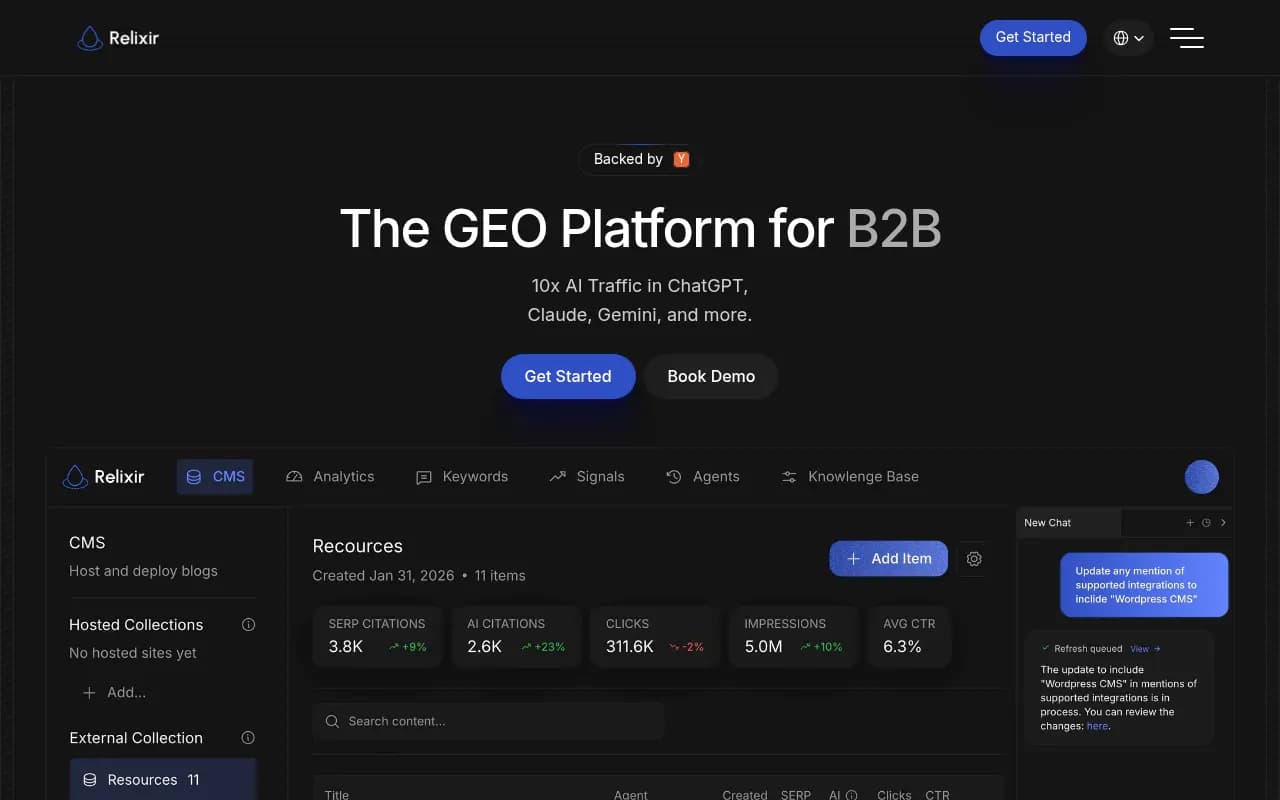
Relixir takes a similar approach with an AI-native CMS that lets you create and publish content directly from within the platform. It's worth a look if your team wants tighter integration between content creation and visibility tracking.
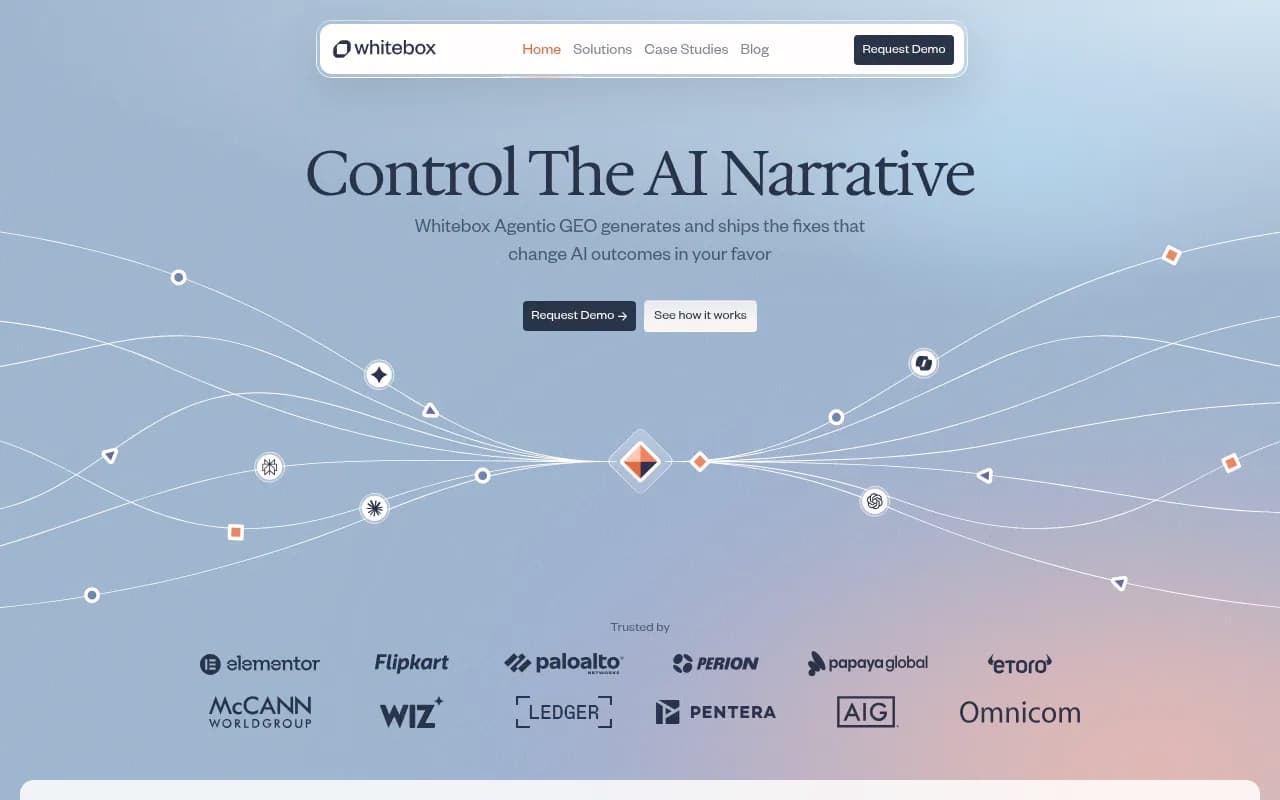
Whitebox is interesting because it goes even further -- it's described as an "agentic GEO platform" that generates and ships AI narrative fixes automatically. Less hands-on control, but potentially faster iteration for teams that want to automate the optimization loop.
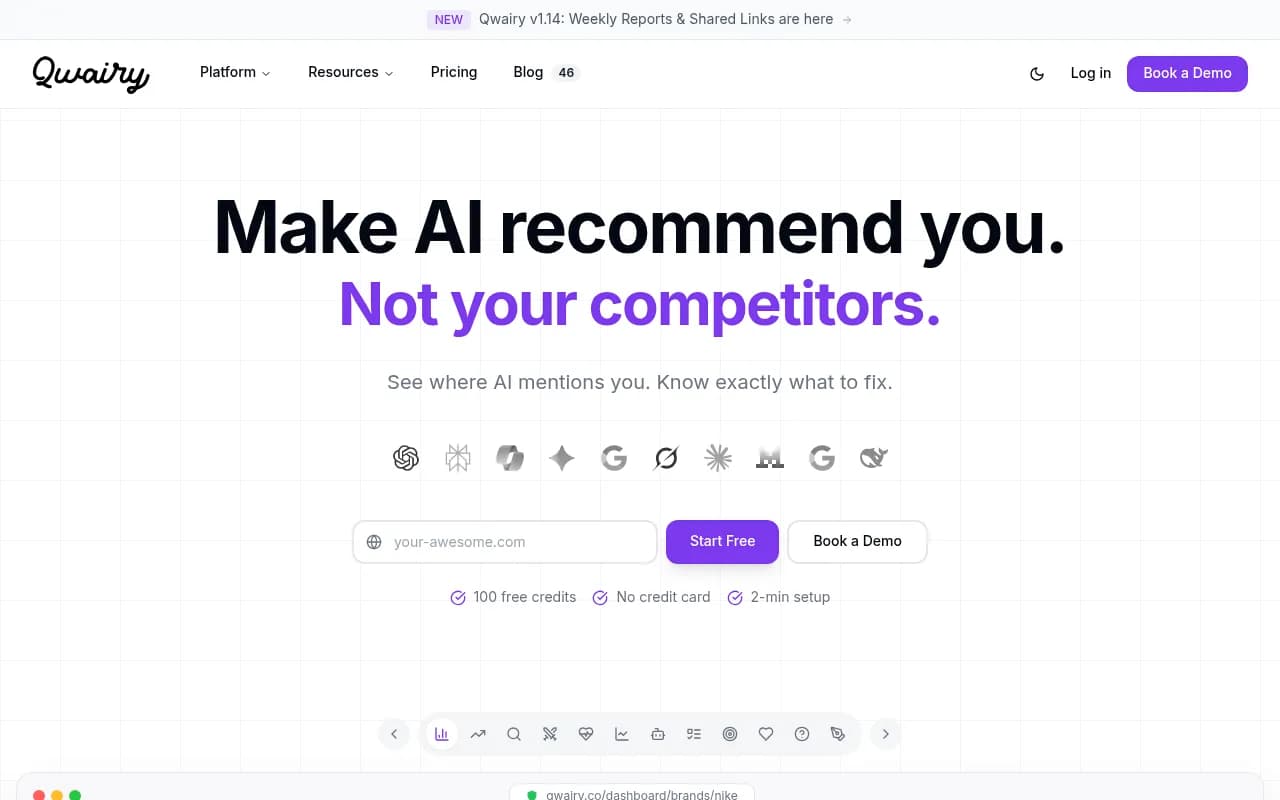
Qwairy positions itself as a GEO strategy platform, with tools for identifying which prompts to target and how to structure content around them.
Strong monitoring platforms
These tools do the tracking job well. They're worth using if you need solid data and are comfortable handling the content strategy side yourself.
Profound is frequently cited as one of the more thorough monitoring platforms, particularly for enterprise teams. It covers the major AI models and provides detailed reporting. The tradeoff is price -- it's built for teams with dedicated analysts, not lean marketing teams who need to move fast.

AthenaHQ tracks visibility across 8+ AI search engines and provides competitive benchmarking. Solid monitoring, but limited on the optimization side.

Otterly.AI tracks six major platforms (ChatGPT, Google AI Overviews, Perplexity, Google AI Mode, Gemini, and Microsoft Copilot) using API-based querying. It's one of the more affordable options in the monitoring category, which makes it a reasonable starting point for smaller teams.

Peec AI is worth mentioning for multi-language and multi-region tracking -- useful if your brand operates across markets.

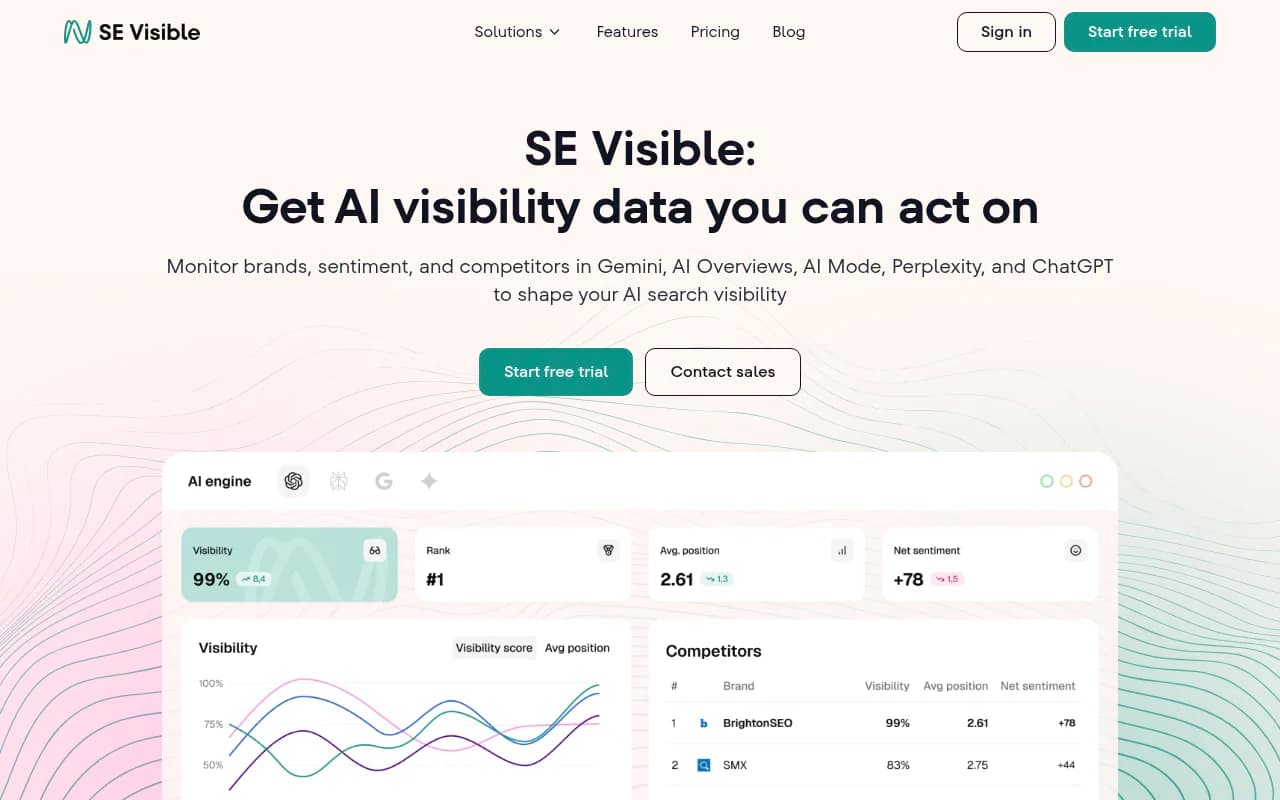
SE Visible (from SE Ranking) is a user-friendly entry point for teams already in the SE Ranking ecosystem.
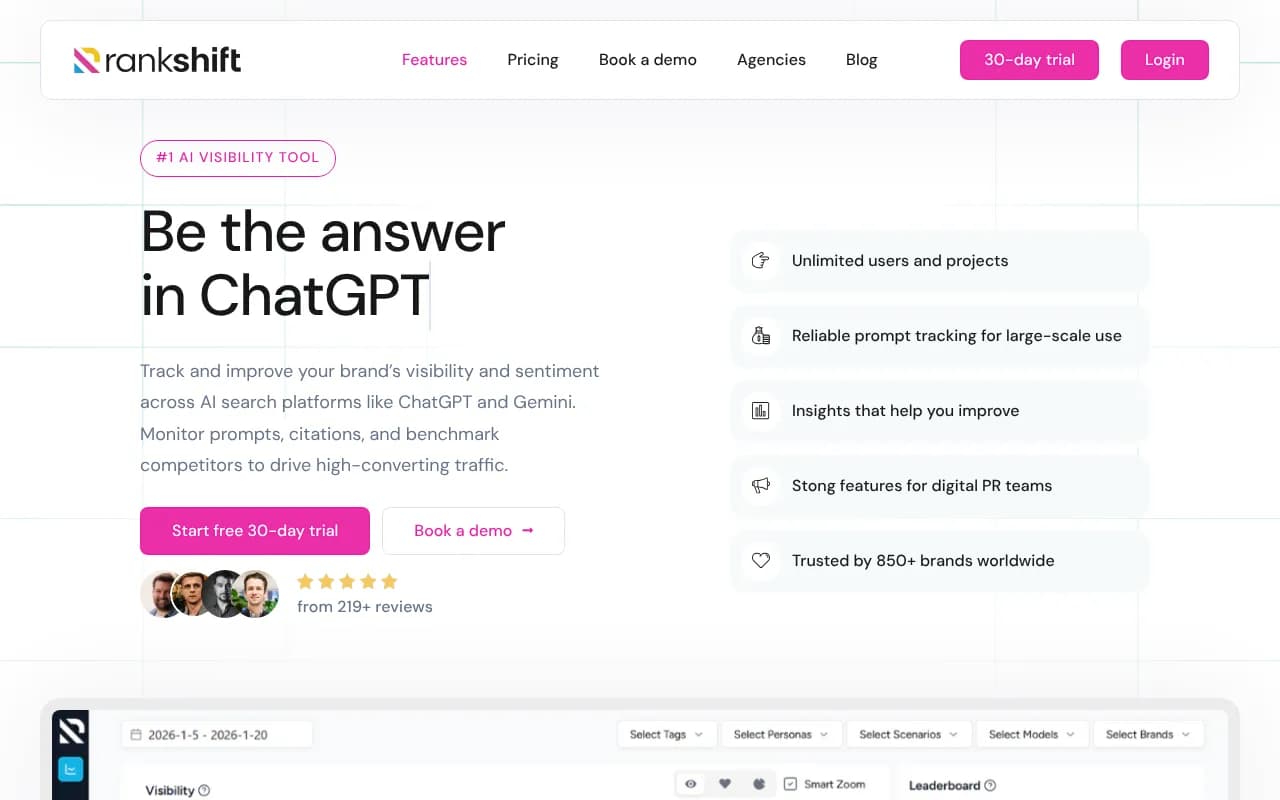
Rankshift focuses specifically on LLM tracking for GEO and AI visibility, with a clean interface that's easier to get started with than some enterprise platforms.
Traditional SEO tools with AI search features
These are platforms most SEO teams already know. They've added AI search monitoring, but it's not their core product.
Semrush has integrated AI visibility tracking into its broader platform. The advantage is that you get traditional SEO data and AI search data in one place. The limitation is that the AI search features use fixed prompts, which means you're tracking a preset list rather than the prompts that actually matter to your business.
Ahrefs Brand Radar tracks brand mentions in AI search results. Similar story -- useful if you're already an Ahrefs user, but the AI search features lack depth compared to dedicated platforms. Fixed prompts and no AI traffic attribution are the main gaps.
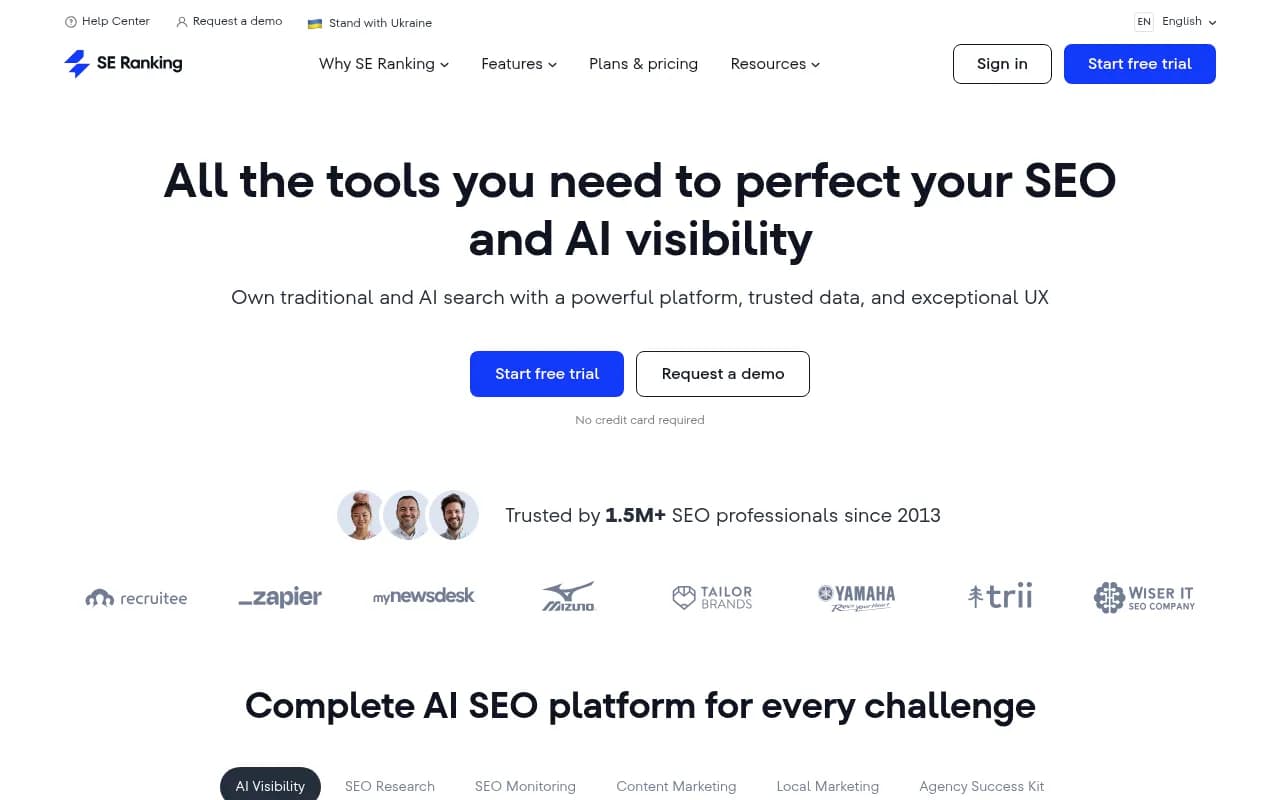
SE Ranking has built out a more substantial AI visibility toolkit than most traditional SEO platforms. It's a reasonable middle ground if you want one tool for both traditional and AI search.
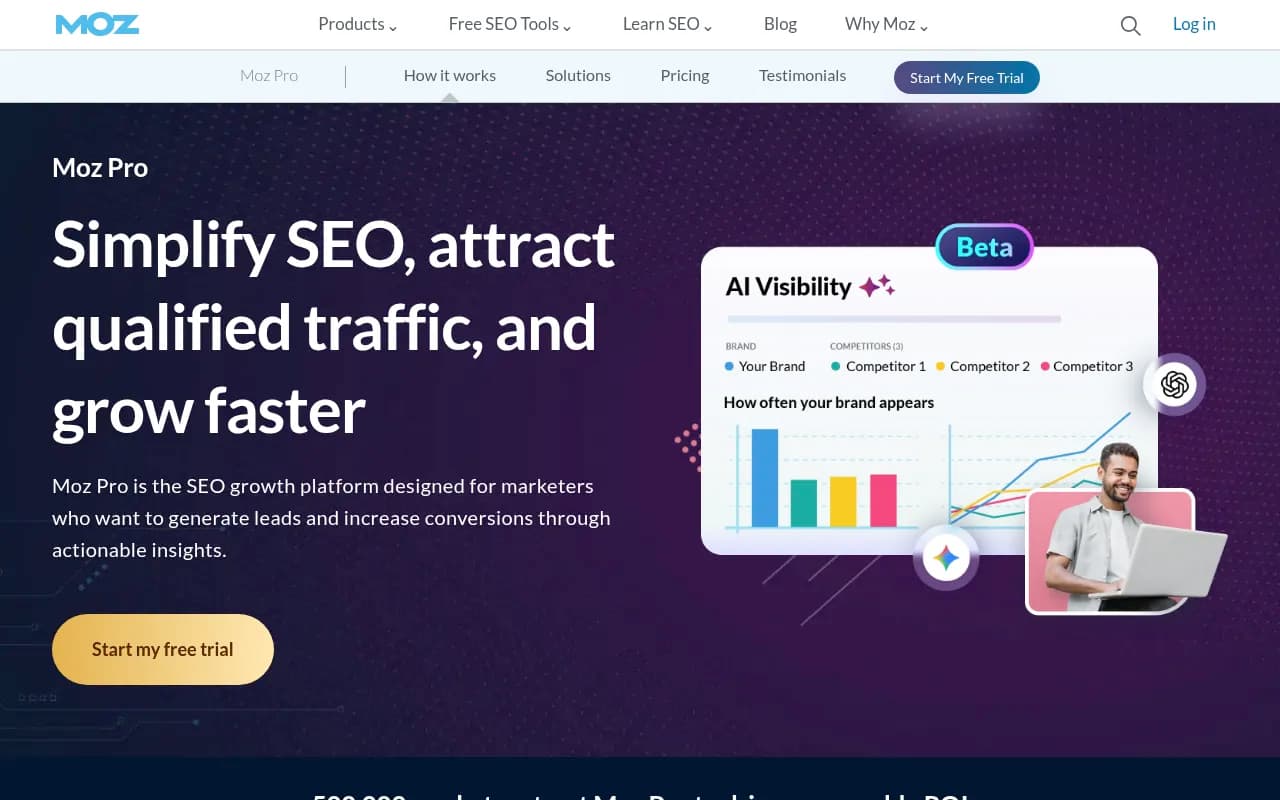
Moz Pro has started adding AI search features, though it's still primarily a traditional SEO platform.
Niche and emerging tools
A few tools worth knowing about for specific use cases:
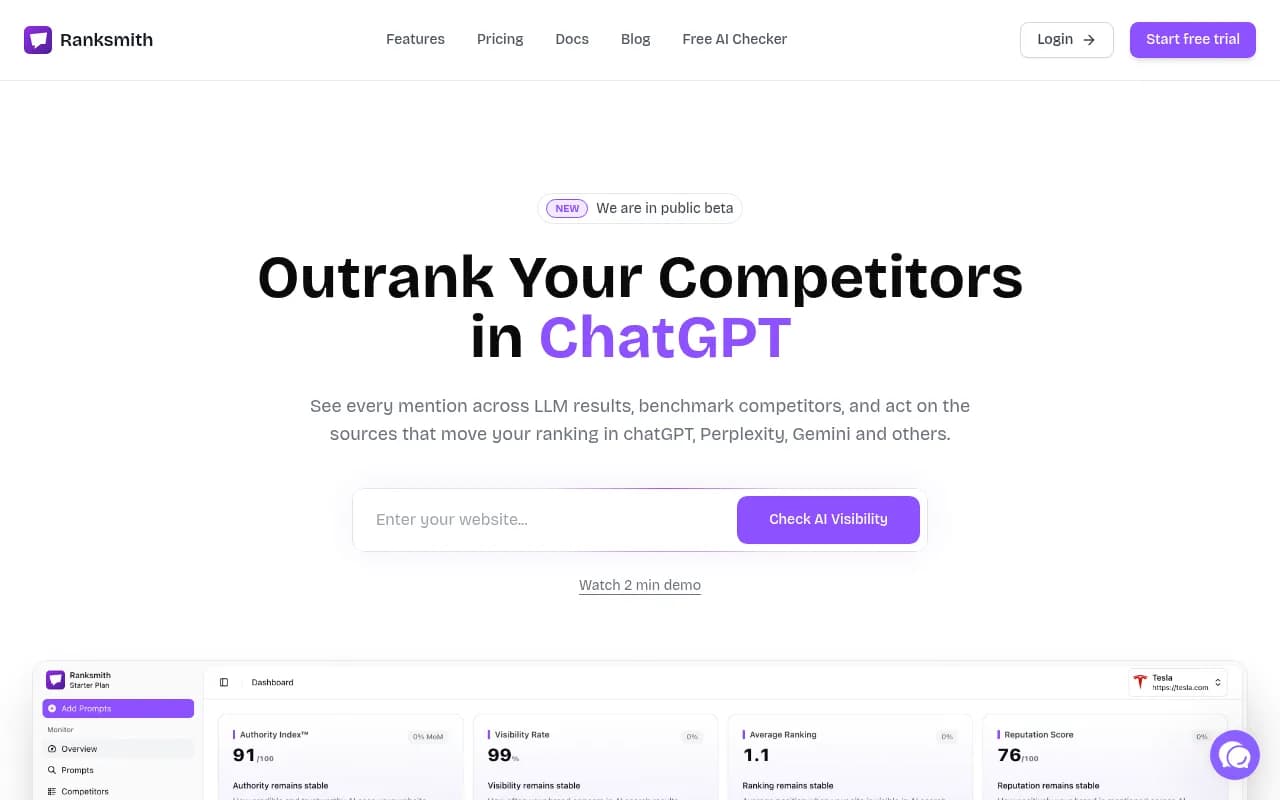
Ranksmith focuses on actionable insights rather than raw data -- useful if you find most dashboards overwhelming.
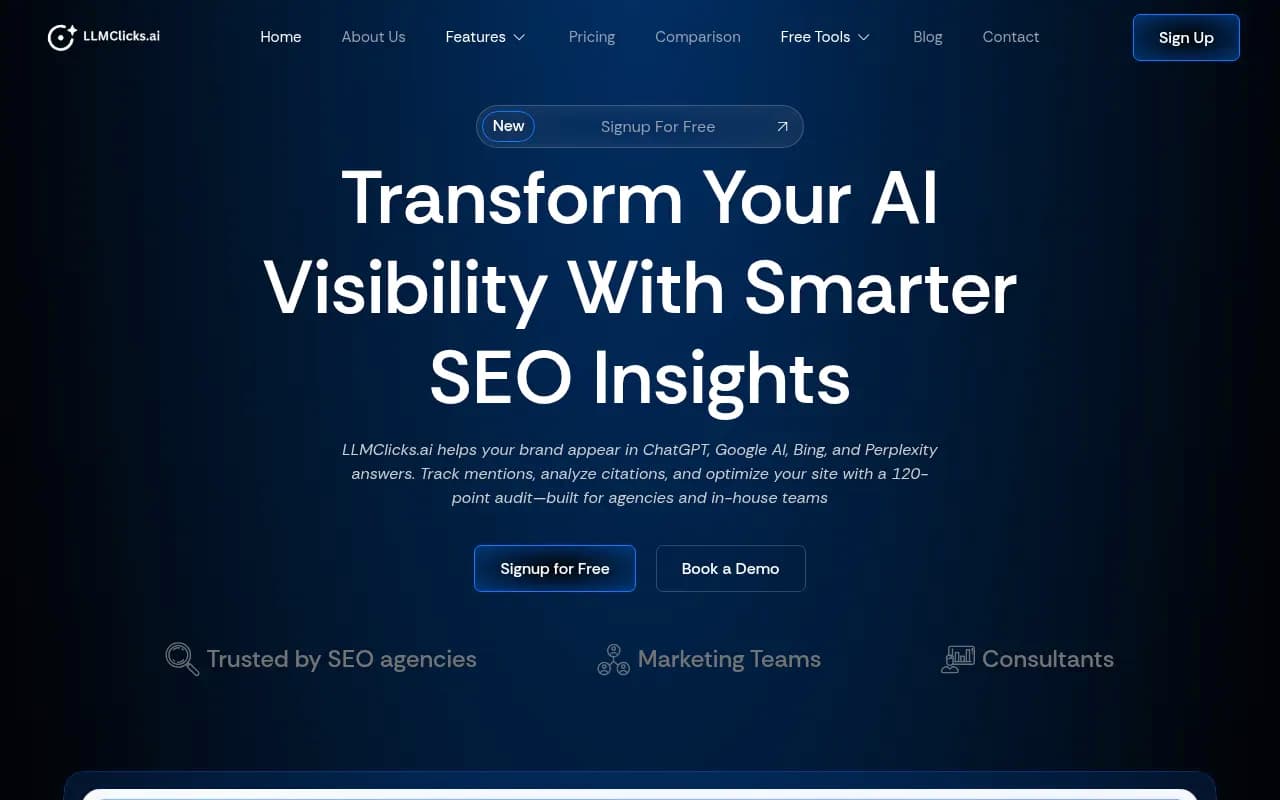
LLM Clicks specializes in citation tracking, helping you understand which of your pages are actually being cited in AI responses and how often.
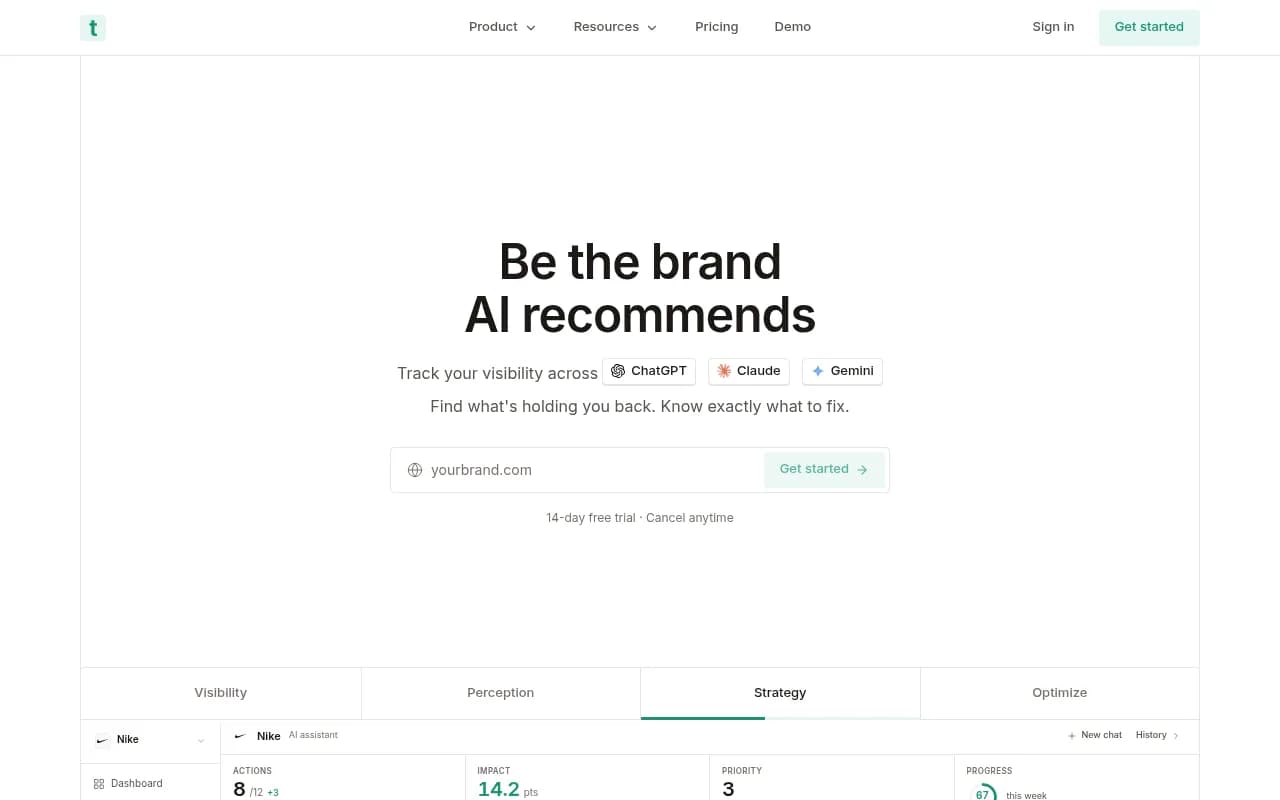
Trakkr.ai tracks brand visibility across ChatGPT, Claude, and Perplexity with a straightforward interface.
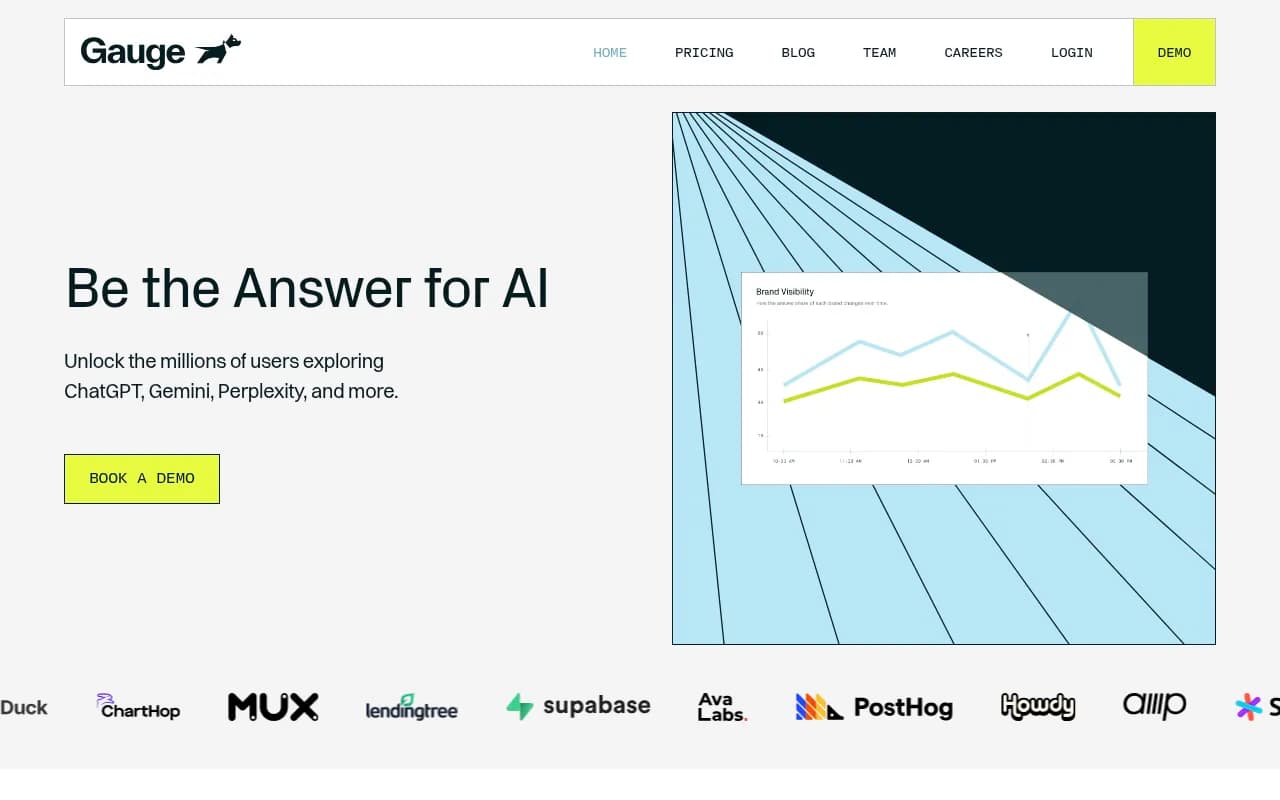
Gauge focuses on competitive intelligence -- useful if your primary goal is benchmarking against specific competitors rather than optimizing your own content.
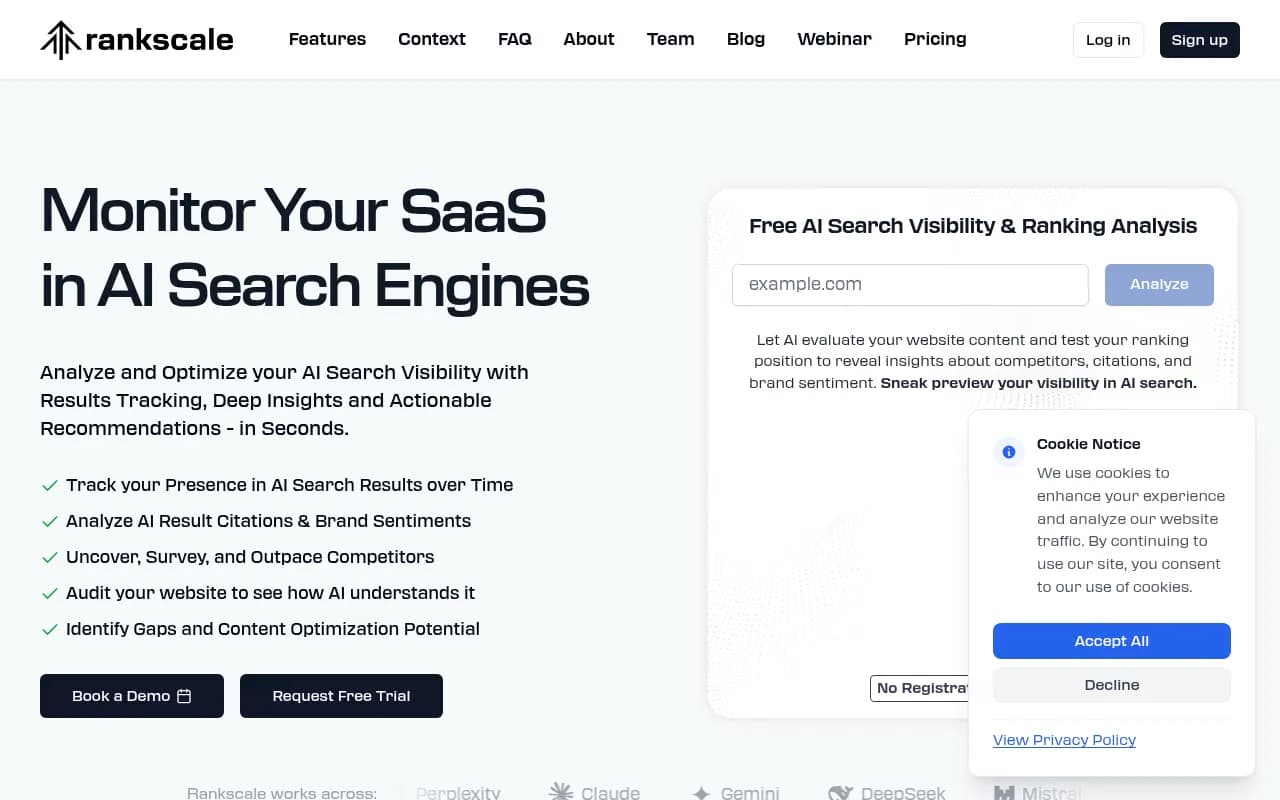
Rankscale covers AI search ranking and visibility with a focus on tracking rank changes over time.
How the major platforms compare
| Tool | Monitors AI models | Content gap analysis | Content generation | Crawler logs | Pricing starts at |
|---|---|---|---|---|---|
| Promptwatch | 10 models | Yes | Yes (built-in agent) | Yes | $99/mo |
| Profound | 6+ models | Limited | No | No | Custom |
| AthenaHQ | 8+ models | Limited | No | No | Custom |
| Otterly.AI | 6 models | No | No | No | ~$49/mo |
| Relixir | Multiple | Yes | Yes | No | Custom |
| Semrush | Limited | No | Via ContentShake | No | $139/mo |
| Ahrefs Brand Radar | Limited | No | No | No | Bundled |
| SE Ranking | Multiple | Limited | Limited | No | $65/mo |
| Peec AI | Multiple | No | No | No | ~$49/mo |
| Whitebox | Multiple | Yes | Yes (automated) | No | Custom |
The pattern is clear: the tools that do more than monitor are fewer, and they're generally either newer (and still building out features) or more expensive. Promptwatch sits at an unusual position -- it's the most complete platform in the category while still having transparent, accessible pricing.
What to look for when choosing a tool
Prompt coverage and customization
Fixed prompt libraries are a real limitation. If a tool only tracks a preset list of 50 prompts, you might be monitoring questions nobody in your category actually asks. Look for platforms that let you define your own prompts based on how your customers actually search.
Which AI models are covered
ChatGPT and Perplexity get most of the attention, but Google AI Overviews is driving significant traffic for many brands. If you're in e-commerce, ChatGPT Shopping is increasingly relevant. Make sure the tool covers the models your customers actually use.
The gap between data and action
This is the most important question. When the tool shows you that a competitor is getting cited for a prompt you're not, what happens next? Does the platform help you understand why, and what content you'd need to create? Or does it just show you the gap and leave you to figure out the rest?
Traffic attribution
Visibility scores are useful, but revenue is what matters. Some platforms can connect AI search visibility to actual website traffic and conversions -- through a code snippet, Google Search Console integration, or server log analysis. This closes the loop and lets you justify the investment.
Crawler log access
Knowing that AI bots are crawling your site (and which pages they're reading, and what errors they're hitting) is genuinely valuable data that most platforms don't surface. If you're serious about AI search optimization, this is worth having.
The honest take on the market
Most of the tools in this category are useful for understanding where you stand. Very few help you change where you stand. That's not a knock on monitoring -- you need to know the baseline before you can improve it. But if you're paying for a tool month after month and your AI search visibility isn't moving, the tool isn't doing its job.
The platforms that actually move brands up AI search results share a few traits: they identify specific content gaps (not just general "you're less visible than competitors"), they help create content that's engineered for AI citation rather than just written for humans, and they track whether that content is working.
For most marketing teams, the practical path is: start with a tool that gives you solid monitoring data, identify the highest-value prompts you're losing, create content that directly answers those prompts, and track the results. The tools that support all four of those steps in one workflow are the ones worth investing in.
The market will keep consolidating. Several of the smaller monitoring-only tools will either add optimization features or get acquired. The platforms that have built the full loop -- track, identify gaps, create content, measure results -- are the ones that will still be relevant in 2027.
For now, the clearest recommendation is to pick a tool that does more than show you a dashboard. The data is only useful if it tells you what to do next.