Key takeaways
- Searchable, Promptwatch, and Gauge each take a different approach to AI visibility: Searchable focuses on monitoring and content tools, Gauge on strategic competitive intelligence, and Promptwatch on a full action loop from gap analysis to content creation to traffic attribution.
- If you need to not just track AI visibility but actually improve it, Promptwatch is the only one of the three with built-in AI content generation grounded in real citation data.
- Gauge is worth a look if your primary need is competitive benchmarking and strategic reporting, especially for larger teams.
- Searchable sits in the middle -- more capable than a basic tracker, but not as deep as Promptwatch on the optimization side.
- All three monitor multiple LLMs (ChatGPT, Claude, Perplexity, Gemini, etc.), but differ significantly in what they do with that data.
Why competitive intelligence in AI search is different now
A year ago, most marketing teams were still treating AI search as a curiosity. Now it's a real traffic channel. ChatGPT, Perplexity, Claude, and Google's AI Overviews are actively routing purchase decisions, research queries, and brand comparisons -- and the brands that show up in those answers are getting the clicks.
The problem is that traditional SEO tools weren't built for this. Ranking #3 on Google doesn't tell you whether ChatGPT is recommending your competitor instead of you. That's a completely different data problem, and it's why a new category of tools has emerged to address it.
But here's the thing: not all AI visibility tools are the same. Some just show you a dashboard. Others actually help you do something about what you find. That distinction matters a lot when you're trying to make a business case for your AI search strategy.
This guide focuses on three tools that come up frequently in 2026 comparisons: Searchable, Gauge, and Promptwatch. They're aimed at similar audiences -- marketing teams, SEO leads, and agencies -- but they solve the problem in meaningfully different ways.
What each tool is actually trying to do
Before getting into features and pricing, it helps to understand the core philosophy behind each platform. These aren't interchangeable.
Searchable
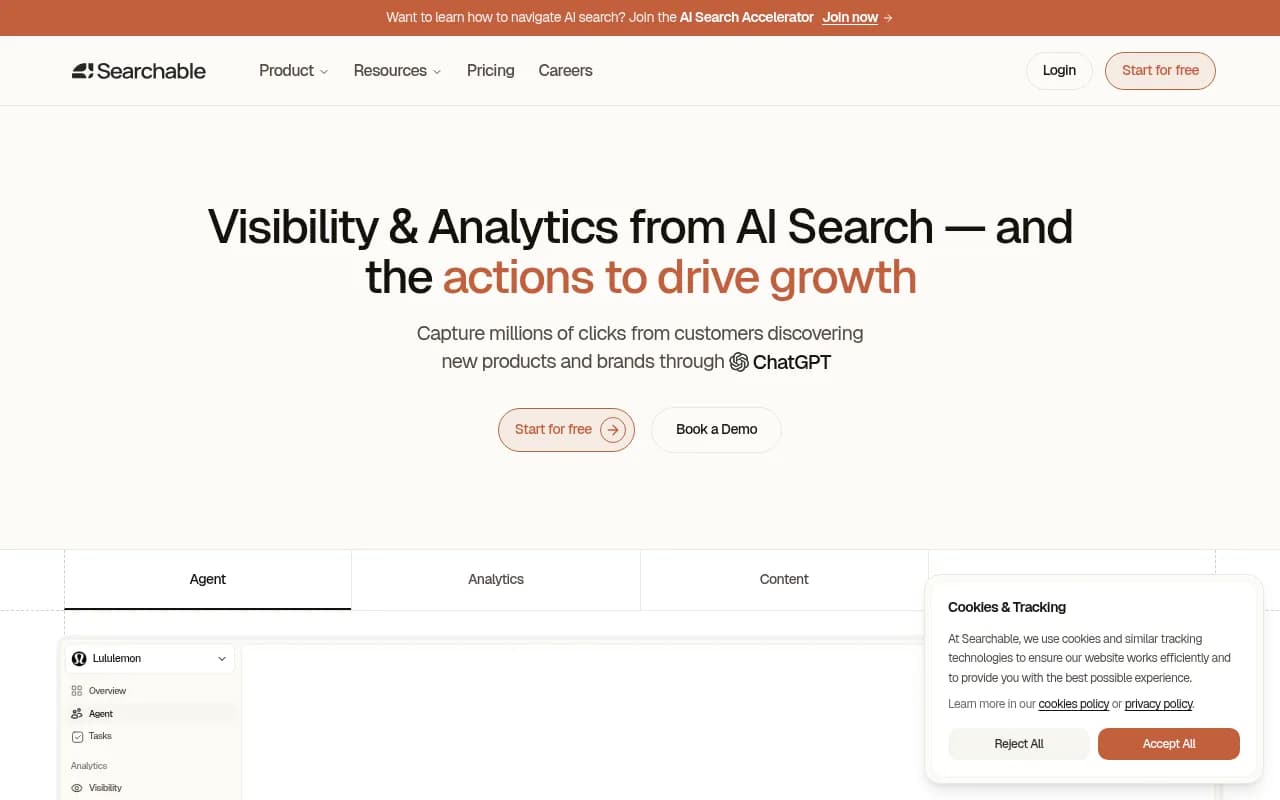
Searchable is an AI search visibility platform that combines monitoring with some content optimization capabilities. It tracks how your brand appears across major LLMs and provides reporting on citation frequency, sentiment, and competitor comparisons. The content tools help you identify gaps and create material that's more likely to be cited.
Gauge
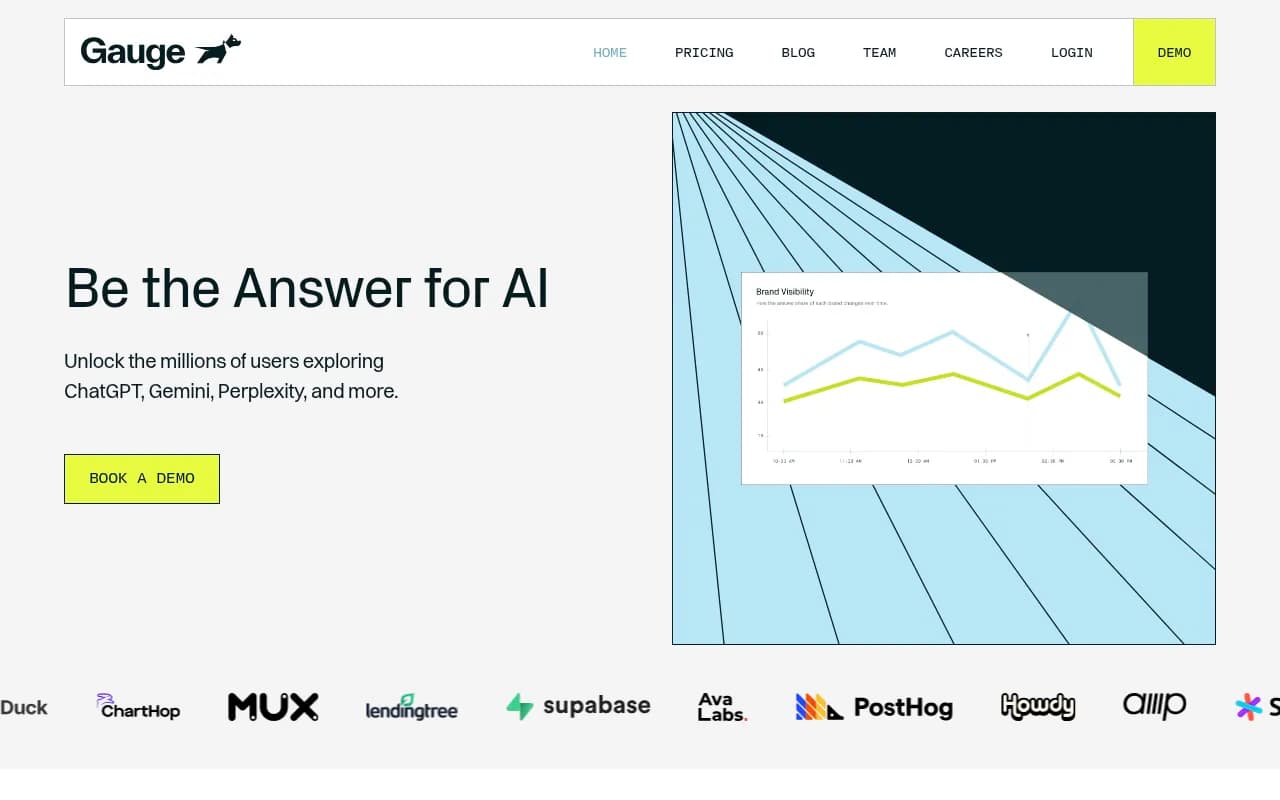
Gauge positions itself as a strategic competitive intelligence tool for AI visibility. The emphasis is on understanding the competitive landscape -- who's winning for which prompts, how your share of voice compares to rivals, and where the market-level opportunities are. It's built for teams that need to present AI visibility data to stakeholders and make strategic decisions based on it.
Promptwatch
Promptwatch is built around what it calls the "action loop": find the gaps, create content that fills them, then track whether that content actually gets cited. It's the most complete of the three in terms of going from data to output. The platform includes an Answer Gap Analysis that shows exactly which prompts competitors rank for but you don't, a built-in AI writing agent that generates content grounded in 880M+ citations analyzed, and traffic attribution tools that connect AI visibility to actual revenue.

Feature-by-feature comparison
Here's how the three tools stack up across the capabilities that matter most for competitive intelligence:
| Feature | Searchable | Gauge | Promptwatch |
|---|---|---|---|
| LLMs monitored | Multiple | Multiple | 10 (ChatGPT, Claude, Perplexity, Gemini, Grok, DeepSeek, Copilot, Meta AI, Mistral, Google AI Overviews) |
| Competitor tracking | Yes | Yes (core focus) | Yes, with heatmaps |
| Answer gap analysis | Basic | Yes | Deep (prompt-level gaps vs competitors) |
| AI content generation | Yes | No | Yes (grounded in citation data) |
| AI crawler logs | No | No | Yes |
| Prompt volume/difficulty scores | Limited | Limited | Yes |
| Reddit & YouTube tracking | No | No | Yes |
| ChatGPT Shopping tracking | No | No | Yes |
| Traffic attribution | Limited | No | Yes (GSC, code snippet, server logs) |
| Multi-language/region | Limited | Limited | Yes |
| API access | Limited | Limited | Yes |
| Starting price | Contact | Contact | $99/mo |
A few things stand out here. Gauge is genuinely strong on competitive benchmarking -- that's its core product -- but it stops there. You get the intelligence, but you're on your own when it comes to acting on it. Searchable adds content tools but they're not as deeply integrated with citation data. Promptwatch is the only one of the three where the competitive data feeds directly into content creation, which then feeds back into tracking.
Where Gauge actually wins
Gauge deserves credit for what it does well. If your primary job is to understand the competitive AI landscape and communicate it to leadership or clients, Gauge's reporting and benchmarking features are genuinely useful. The strategic framing -- share of voice, prompt-level competitive breakdowns, trend analysis -- makes it easier to build a narrative around AI visibility data.
For agencies that need to show clients where they stand relative to competitors, or for in-house teams that need to justify investment in AI search optimization, Gauge's output is presentation-ready in a way that raw monitoring dashboards often aren't.
Where it falls short is the "now what?" question. Gauge tells you that Competitor A is getting cited for 40% of prompts in your category and you're getting cited for 12%. That's useful. But it doesn't tell you what content to create, which pages to fix, or how to close that gap. You need another tool (or a lot of manual work) to act on the intelligence.
Where Searchable fits in
Searchable occupies a middle position. It monitors AI visibility, provides competitive comparisons, and includes content tools to help you respond to what you find. For teams that want a single platform that covers both monitoring and basic content optimization, it's a reasonable choice.
The content capabilities are real -- you can identify gaps and generate material to fill them. But the content generation isn't as tightly coupled to citation data as Promptwatch's approach. The difference matters: content written based on what AI models are actually citing tends to perform better than content written based on general gap analysis.
Searchable also lacks some of the more advanced features that matter as your AI search program matures: AI crawler logs (which show you how ChatGPT and Claude are actually crawling your site), Reddit and YouTube tracking (which influence AI recommendations more than most teams realize), and deep traffic attribution.
The case for Promptwatch
The honest reason Promptwatch stands out in this comparison is the action loop. Most AI visibility tools are built around a monitoring dashboard. Promptwatch is built around a workflow: you find the gaps, you generate the content, you track whether it works.
The Answer Gap Analysis is genuinely useful for competitive intelligence. It doesn't just show you that you're less visible than a competitor -- it shows you the specific prompts where they're getting cited and you're not, with prompt volume estimates so you can prioritize. That's actionable in a way that share-of-voice percentages aren't.
The AI writing agent generates articles, listicles, and comparisons based on what AI models are actually citing (880M+ citations analyzed). This isn't generic SEO content -- it's content designed to get picked up by ChatGPT, Claude, and Perplexity. The difference in approach shows in the output.
And then there's the tracking side. Page-level citation tracking shows which of your pages are being cited, by which models, and how often. The traffic attribution tools (Google Search Console integration, a code snippet, or server log analysis) connect that visibility to actual clicks and revenue. That's the loop closed.
A few features that don't have equivalents in Searchable or Gauge:
- AI crawler logs showing real-time activity from ChatGPT, Claude, and Perplexity crawlers on your site
- Reddit and YouTube tracking to surface discussions that influence AI recommendations
- ChatGPT Shopping tracking for brands that appear in product recommendation carousels
- Query fan-outs showing how a single prompt branches into sub-queries
- Competitor heatmaps comparing your visibility vs rivals across all 10 LLMs
Promptwatch is used by 6,700+ brands and agencies including Booking.com and Center Parcs, and its data has been cited in the Wall Street Journal. That's not a claim you'll see from Searchable or Gauge.
Pricing reality check
Gauge and Searchable both use contact-for-pricing models, which makes direct comparison harder. This isn't unusual for competitive intelligence tools -- they often price based on the number of competitors tracked, prompts monitored, and seats needed.
Promptwatch publishes its pricing:
- Essential: $99/month (1 site, 50 prompts, 5 articles)
- Professional: $249/month (2 sites, 150 prompts, 15 articles, crawler logs, city/state tracking)
- Business: $579/month (5 sites, 350 prompts, 30 articles)
- Agency/Enterprise: custom pricing
There's a free trial available, and annual billing comes with a discount. For most mid-sized marketing teams, the Professional tier is where the competitive intelligence features really open up -- you get crawler logs, more prompts to track, and enough article credits to run a meaningful content program.
If you're evaluating Gauge or Searchable, the contact-for-pricing model means you'll need to go through a sales conversation to get comparable numbers. Worth doing, but factor in the time cost.
Which tool for which team
The right choice depends on what you actually need to do with AI visibility data.
Choose Gauge if: Your primary need is competitive benchmarking and strategic reporting. You need to present AI share-of-voice data to executives or clients, and you want a tool built around that narrative. You're less focused on content creation and more focused on understanding the landscape.
Choose Searchable if: You want a single platform that covers monitoring and basic content optimization without a lot of complexity. You're earlier in your AI search program and don't yet need the depth of crawler logs, Reddit tracking, or deep traffic attribution.
Choose Promptwatch if: You need to actually improve your AI visibility, not just measure it. You want to find specific content gaps, generate content designed to get cited, and track whether it's working. You're running a serious AI search program and need the full stack -- monitoring, competitive intelligence, content creation, and attribution.
For most marketing teams in 2026, the question isn't whether to track AI visibility -- it's whether your tool helps you do something about it. That's where the gap between monitoring-only platforms and optimization platforms becomes real.
Other tools worth knowing
If none of these three are quite right, here are a few others in the AI visibility space worth evaluating:
Profound is strong on enterprise AI visibility and prompt research, with good depth on competitive analysis.

Otterly.AI is one of the most affordable entry points for AI visibility monitoring, good for smaller teams or those just getting started.

Peec AI offers flexible multi-model tracking with solid multi-language support.

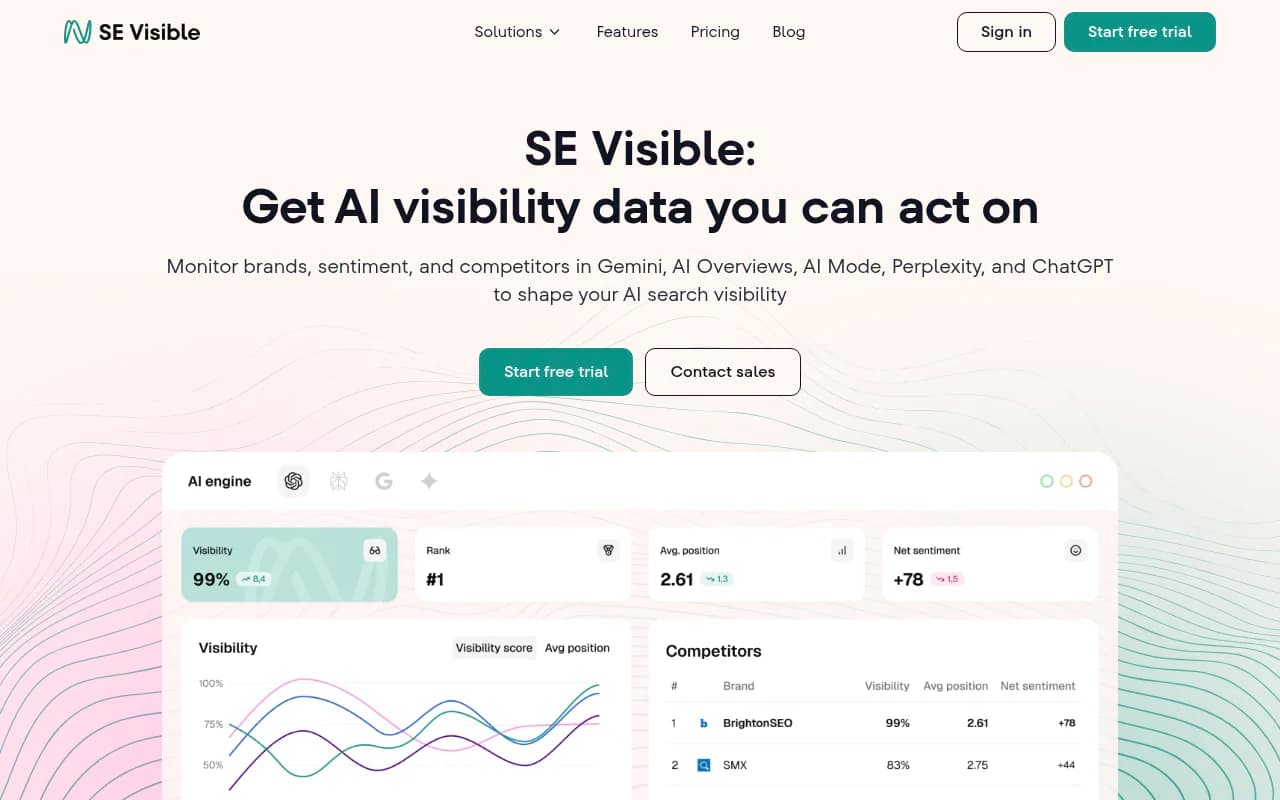
SE Visible from SE Ranking covers AI Mode tracking and is worth a look if you're already in the SE Ranking ecosystem.
AthenaHQ is monitoring-focused with coverage across 8+ AI search engines.

The bottom line
Searchable, Gauge, and Promptwatch are all legitimate tools for AI visibility and competitive intelligence. They're not equally capable, and they're not built for the same use case.
Gauge is the strongest pure competitive intelligence platform of the three. If that's your only job, it's worth a serious look. Searchable is a reasonable all-rounder for teams that want monitoring plus basic content tools in one place. Promptwatch is the most complete option if you need to move from intelligence to action -- finding gaps, creating content, and tracking results in a single workflow.
The AI search channel is real and growing. The brands that will win aren't the ones with the best dashboards -- they're the ones that use the data to publish better content, faster. That's the distinction that matters most when choosing between these tools.