Key takeaways
- Rankscale is a solid monitoring tool with strong evidence trails and citation tracking, but it stops at showing you data.
- Searchable offers AI visibility tracking with some content tooling, though its feature depth is narrower than it appears at first glance.
- Promptwatch is the only one of the three that closes the full loop: find gaps, generate content, and track results -- all in one platform.
- If your GEO campaign needs more than a dashboard, Promptwatch is the clearest choice for teams that want to act on what they find.
- All three offer free trials, so there's no reason not to test them against your actual prompts before committing.
GEO campaigns in 2026 have a data problem. There are more AI rank trackers than ever, but most of them tell you the same thing: here's your share of voice, here are your citations, here's how you compare to competitors. Then they stop.
That's fine if you already know what to do with that information. But most marketing teams don't just need a dashboard -- they need to know what to fix and how to fix it. That gap between "monitoring" and "optimization" is where the real differences between tools show up.
This guide compares three tools that come up constantly in GEO conversations: Searchable, Rankscale, and Promptwatch. They're not identical products, and the right choice depends heavily on what you're actually trying to accomplish.
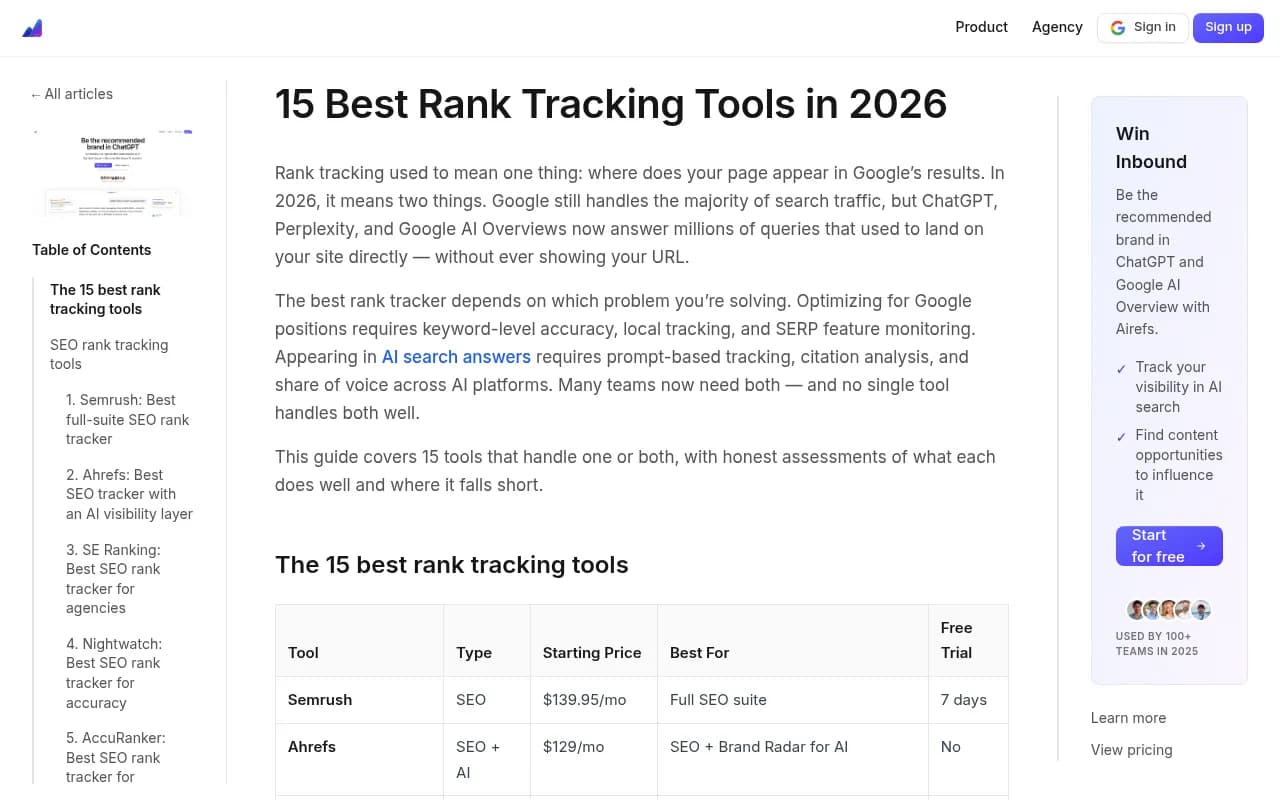
What GEO tracking actually requires in 2026
Before comparing tools, it's worth being specific about what a GEO campaign actually needs from a tracker.
At minimum, you need to know whether your brand is being cited when someone asks a relevant question in ChatGPT, Perplexity, Claude, or Gemini. That's table stakes. But "monitoring" alone doesn't move the needle.
A useful GEO tracking setup in 2026 should answer:
- Which prompts are your competitors visible for that you're not?
- Which pages on your site are being cited, and which are being ignored?
- Are AI crawlers actually visiting your site, and are they hitting the right pages?
- When you publish new content, does your visibility actually improve?
- Is any of this translating into real traffic?
Most tools answer the first question reasonably well. Very few answer all of them. That's the lens through which to evaluate Searchable, Rankscale, and Promptwatch.
Searchable
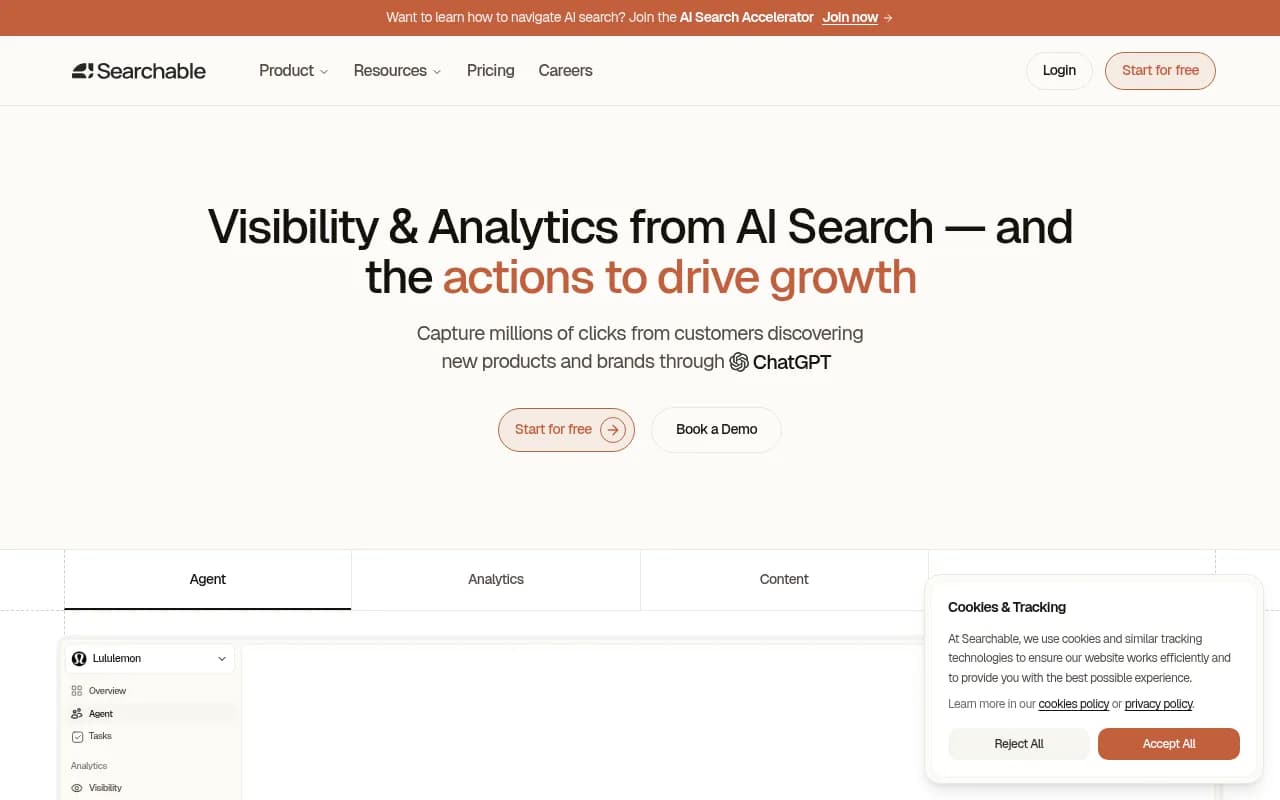
Searchable positions itself as an AI search visibility platform with both monitoring and content tools. It tracks brand mentions and citations across major AI models and gives you a share-of-voice view across prompts.
The monitoring side is functional. You can set up prompts, see where your brand appears, and track changes over time. The interface is clean and the onboarding is relatively quick.
Where Searchable gets more interesting is the content angle -- it does offer some guidance on what content to create based on visibility gaps. But in practice, the content generation capabilities are more limited than what you'd get from a platform built specifically around that workflow. It's more of a "here's what's missing" signal than a full content production system.
A few things Searchable doesn't do well: it lacks deep prompt intelligence (volume estimates, difficulty scoring, query fan-outs), and its coverage of AI models is narrower than competitors. There's also no AI crawler log visibility, which means you can't see whether AI engines are actually reading your pages -- a surprisingly important piece of the puzzle when you're trying to figure out why certain content isn't getting cited.
For smaller teams that want a clean, focused monitoring tool with some content direction, Searchable is reasonable. For teams running serious GEO campaigns across multiple clients or sites, it tends to feel thin.
Rankscale
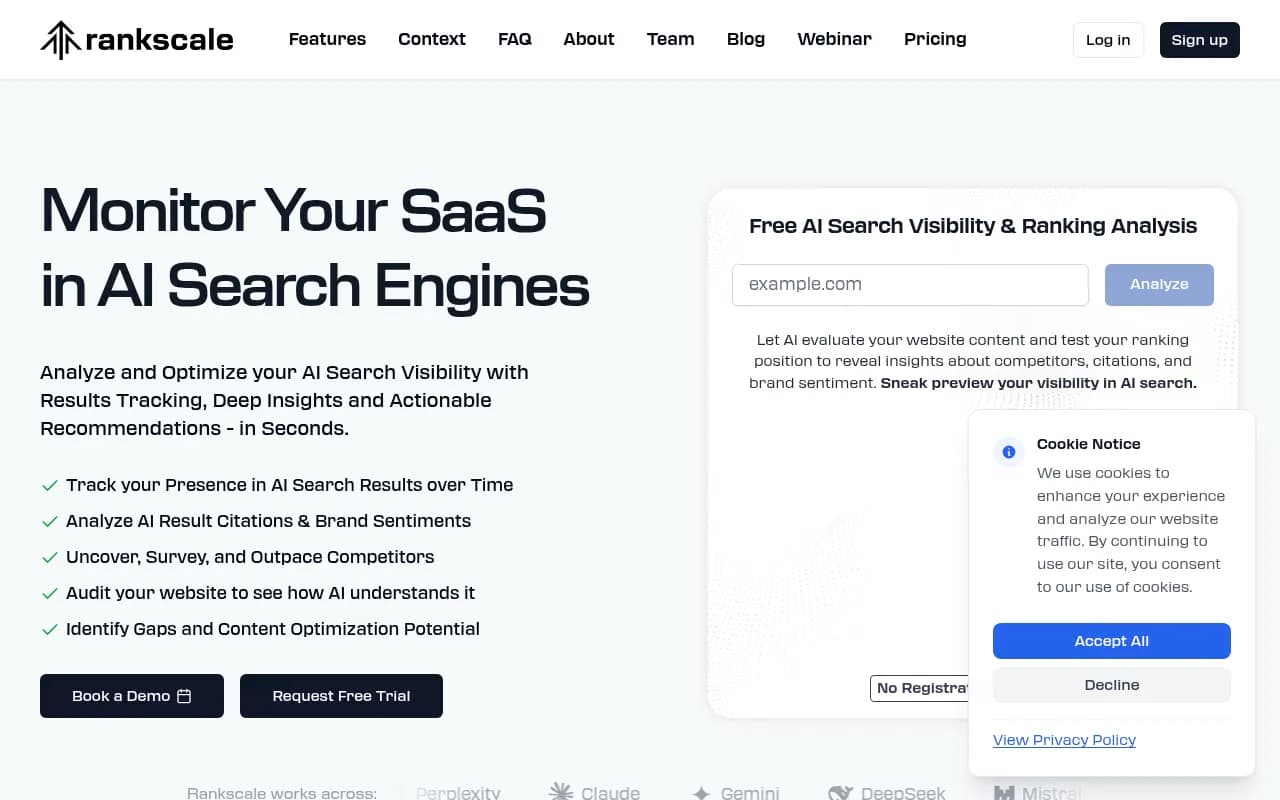
Rankscale has built a reputation as one of the more technically rigorous AI rank trackers. Coalition Technologies called it the standout tool in their comparison, specifically citing its coverage, accuracy, and evidence trails. That reputation is earned in some respects.
The evidence trail feature is genuinely useful -- it shows you the actual AI responses that cite (or don't cite) your brand, so you can see exactly what the model said and where your content appeared in the answer. That's more transparency than a lot of tools offer.
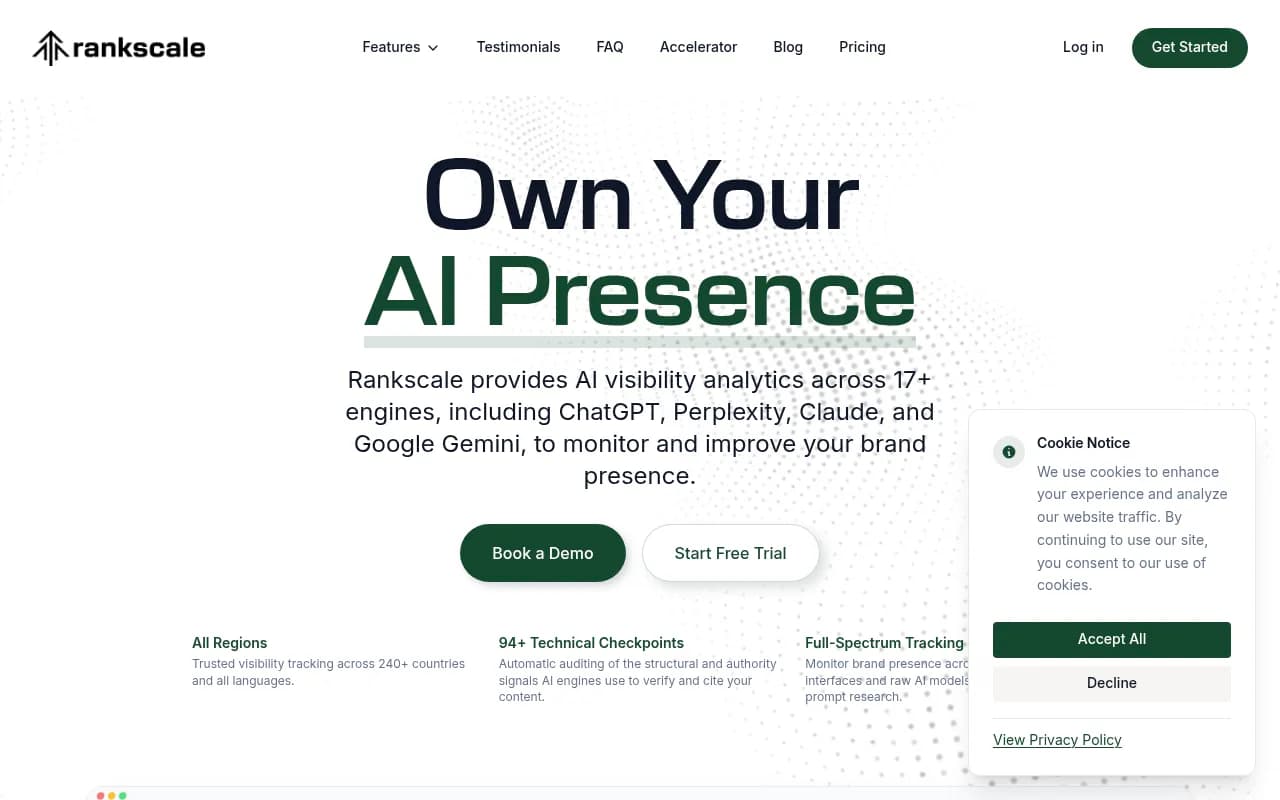
Rankscale also does a decent job on citation source analysis, showing which pages and domains are being referenced in AI responses. If you want to understand the competitive citation landscape, it gives you something to work with.
The limitation is that Rankscale is fundamentally a monitoring and analysis tool. It's good at telling you what's happening. It doesn't help you do much about it. There's no built-in content generation, no answer gap analysis that feeds directly into a writing workflow, and no traffic attribution to connect your visibility scores to actual revenue. You get the data; you're on your own for the next step.
Pricing is also on the higher end for what you get. Teams that need to act on their GEO data -- not just observe it -- will find themselves exporting to other tools and stitching workflows together manually.
Promptwatch
Promptwatch takes a different approach. Where Searchable and Rankscale are primarily monitoring platforms, Promptwatch is built around a full optimization loop: find the gaps, create content to fill them, and track whether that content actually improves your visibility.

The answer gap analysis is the part that sets it apart most clearly. It shows you exactly which prompts your competitors are visible for that you're not -- not just as a list, but with prompt volume estimates, difficulty scores, and query fan-outs that show how one prompt branches into related sub-queries. That's the kind of prioritization data that turns a vague "we should create more content" directive into a specific action plan.
The built-in AI writing agent then generates articles, listicles, and comparisons grounded in real citation data. This isn't generic content -- it's written to match what AI models actually cite, based on analysis of over 880 million citations. The difference between content that gets cited and content that doesn't often comes down to structure, specificity, and topical coverage, and Promptwatch's writing agent is calibrated for exactly that.
On the monitoring side, Promptwatch covers 10 AI models: ChatGPT, Perplexity, Claude, Gemini, Google AI Overviews, Google AI Mode, Meta/Llama, DeepSeek, Grok, Mistral, and Copilot. That's broader than either Searchable or Rankscale. Page-level tracking shows which specific pages are being cited and by which models, so you can see the direct impact of new content you publish.
Two features that most competitors don't have at all: AI crawler logs and traffic attribution. The crawler logs show you in real time which AI bots are visiting your site, which pages they're reading, and whether they're hitting errors. Traffic attribution connects your visibility scores to actual site traffic via a code snippet, Google Search Console integration, or server log analysis. That's the piece that lets you answer "is this GEO work actually driving revenue?" -- a question that most tools leave completely unanswered.
Pricing starts at $99/month for the Essential plan (1 site, 50 prompts, 5 articles), with Professional at $249/month (2 sites, 150 prompts, 15 articles, crawler logs) and Business at $579/month (5 sites, 350 prompts, 30 articles). A free trial is available.
Head-to-head comparison
| Feature | Searchable | Rankscale | Promptwatch |
|---|---|---|---|
| AI models tracked | Limited | Moderate | 10 (ChatGPT, Perplexity, Claude, Gemini, Grok, DeepSeek, Copilot, Meta AI, Google AIO, Google AI Mode) |
| Citation tracking | Yes | Yes (with evidence trails) | Yes (page-level) |
| Answer gap analysis | Basic | No | Yes (with prompt volumes + difficulty) |
| Query fan-outs | No | No | Yes |
| Built-in content generation | Limited | No | Yes (AI writing agent, 880M+ citations) |
| AI crawler logs | No | No | Yes (Professional+) |
| Traffic attribution | No | No | Yes (snippet, GSC, server logs) |
| Reddit/YouTube tracking | No | No | Yes |
| ChatGPT Shopping tracking | No | No | Yes |
| Competitor heatmaps | Basic | Yes | Yes |
| Multi-language/region | Limited | Limited | Yes |
| Starting price | Varies | Higher | $99/mo |
| Free trial | Yes | Yes | Yes |
The table makes the gap visible. Searchable and Rankscale are both monitoring tools with different strengths -- Searchable is cleaner and more accessible, Rankscale has stronger evidence trails and citation depth. But neither closes the loop from "here's your visibility data" to "here's how to improve it."
Which tool fits which situation
The honest answer is that the right tool depends on what stage your GEO program is at and what you need to do with the data.
If you're just starting out and want to understand your current AI visibility before committing to a full platform, Rankscale's evidence trails are useful for building an initial picture. Seeing the actual AI responses that do or don't mention your brand is a good way to understand the problem concretely.
If you're running a GEO campaign and need to produce content that actually improves your citations, Searchable won't give you enough to work with, and Rankscale will leave you doing the content work elsewhere. Promptwatch is the only one of the three that handles the full workflow.
If you're an agency managing multiple clients, Promptwatch's multi-site plans and white-label reporting options make more sense than either alternative. The ability to show clients not just their visibility scores but the specific content gaps and the traffic impact of fixing them is a meaningful differentiator in client conversations.
For enterprise teams that need deep prompt intelligence -- knowing which prompts are high-volume and winnable before investing in content -- Promptwatch's prompt difficulty scoring and query fan-outs are features that neither Searchable nor Rankscale offer.
A note on what "tracking" actually means now
One thing worth saying directly: the GEO tool market has a lot of products that call themselves "AI rank trackers" but are really just dashboards that poll AI models on a schedule and report back what they find. That's useful, but it's not optimization.
The distinction matters because GEO is not a passive activity. AI models update their training data, citation patterns shift, and competitors are actively publishing content designed to get cited. A monitoring-only tool tells you when you're losing ground. It doesn't help you win it back.
That's the core reason Promptwatch comes out ahead in this comparison -- not because its monitoring is dramatically better than Rankscale's, but because monitoring is only one part of what a GEO campaign needs.
Other tools worth knowing about
If you're evaluating the broader GEO tracking landscape beyond these three, a few others are worth a look depending on your specific needs.
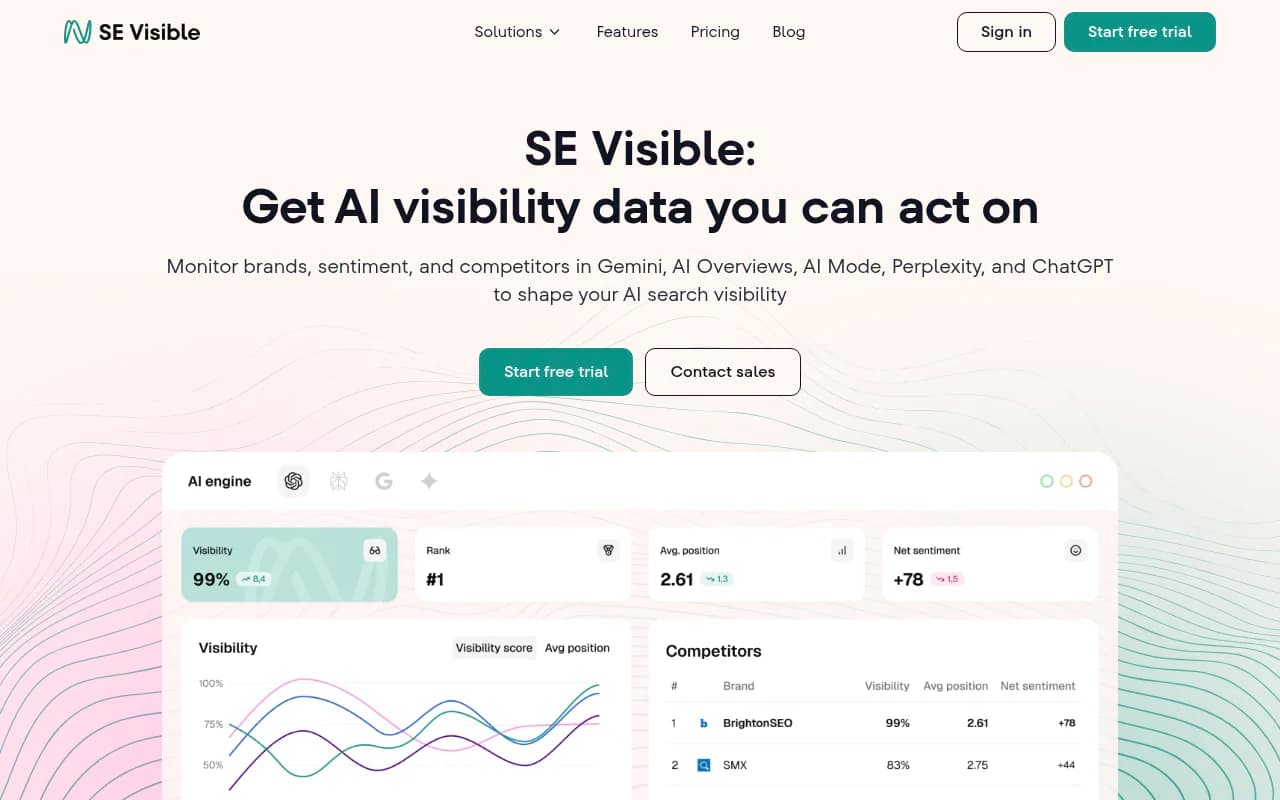
For teams that want AI visibility tracking alongside traditional SEO rank tracking in one place, SE Ranking's AI visibility module (SE Visible) is worth testing.
For agencies that need multi-language coverage at scale, Peec AI covers 115+ languages and has strong enterprise features.

For teams that want a lighter-weight, more affordable entry point into AI visibility monitoring, Otterly.AI is a reasonable starting point.

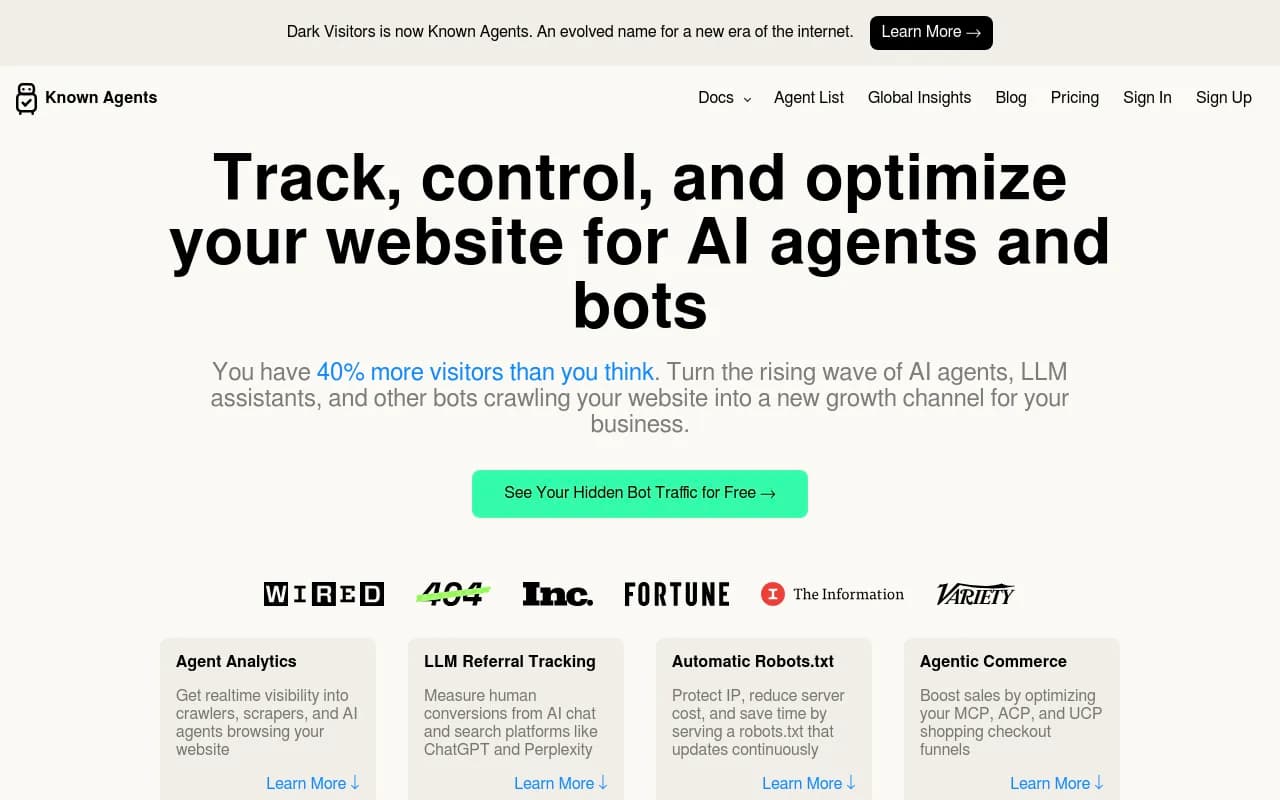
And for teams focused specifically on understanding how AI crawlers interact with their site -- independent of the broader GEO tracking question -- DarkVisitors is a useful complement to any of the above.
The bottom line
Searchable, Rankscale, and Promptwatch are all legitimate tools, but they're not equivalent. Rankscale is the strongest pure monitoring option of the three, with evidence trails that give you real transparency into what AI models are saying. Searchable is cleaner and more accessible but thinner on depth. Promptwatch is the only one that turns monitoring data into action -- and in 2026, that's the difference between a GEO dashboard and a GEO program.
All three have free trials. The most useful thing you can do is take your actual target prompts, run them through each platform, and see which one gives you something you can act on.