Key takeaways
- Searchable covers basic AI visibility monitoring but lacks the depth B2B SaaS teams need for niche, long-tail prompts specific to their category
- The best alternatives in 2026 go beyond tracking -- they help you find content gaps, generate optimized content, and attribute AI traffic to revenue
- For teams selling into specialized verticals (cybersecurity, fintech, devtools, logistics), prompt specificity matters more than broad brand monitoring
- Platforms like Promptwatch, Profound, and AthenaHQ each serve different parts of this need -- the right choice depends on whether you need monitoring, optimization, or both
- B2B SaaS teams should prioritize tools with prompt volume data, competitor visibility heatmaps, and content generation tied to real citation data
If you've been using Searchable and hitting walls, you're not alone. The platform does a decent job of showing where your brand appears in AI responses -- but for B2B SaaS teams, "decent" often isn't enough.
The problem is specificity. B2B SaaS buyers don't search the way consumers do. They ask things like "what's the best contract lifecycle management software for mid-market legal teams" or "which devops monitoring tools integrate with PagerDuty." These are niche, intent-heavy prompts. If your AI visibility tool can't track them, generate content around them, or tell you why competitors are winning them, you're flying blind.
This guide breaks down the best Searchable alternatives in 2026 for B2B SaaS teams -- with a focus on platforms that actually handle the niche prompt problem.
Why Searchable falls short for B2B SaaS
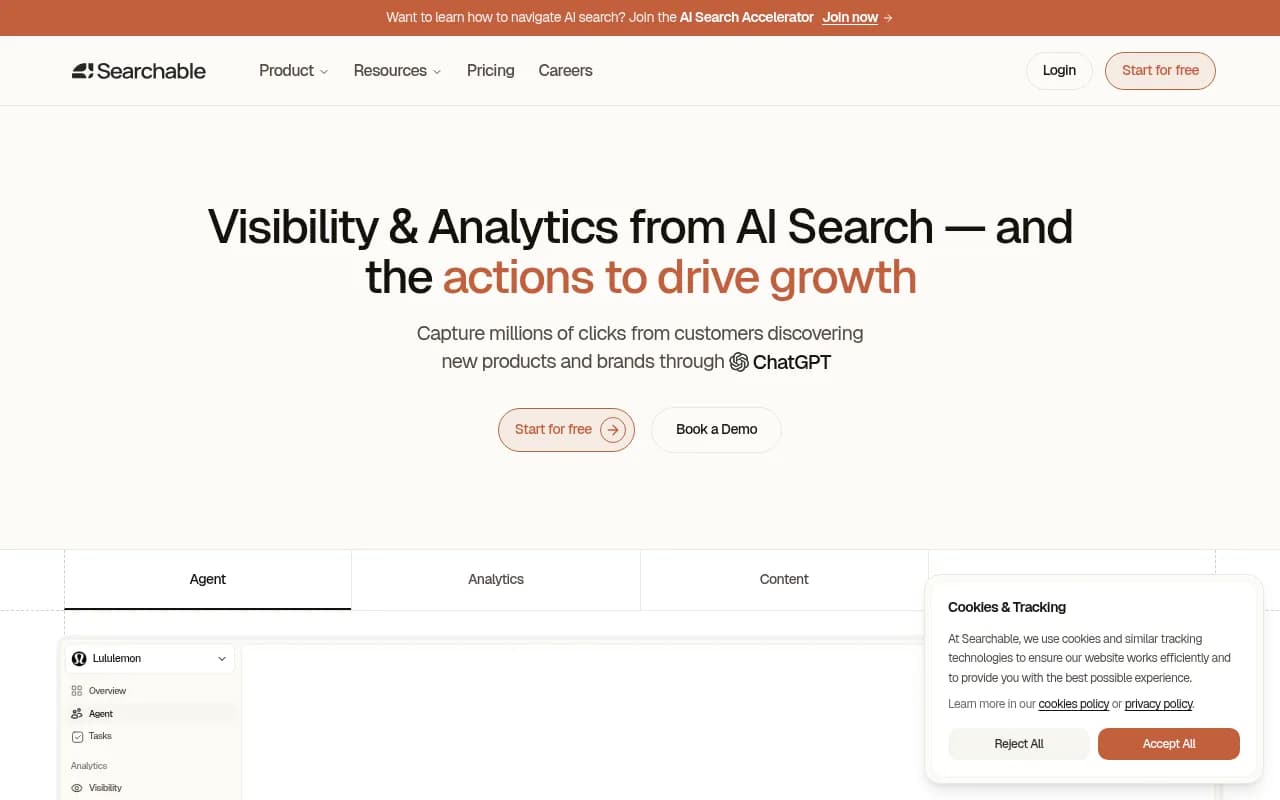
Searchable positions itself as an AI search visibility platform with monitoring and content tools. For general brand tracking, it's serviceable. But B2B SaaS teams run into a few recurring frustrations:
- Prompt libraries tend toward broad, consumer-style queries rather than the specific, technical questions B2B buyers actually ask
- Limited ability to customize prompts around your ICP (ideal customer profile) or buying persona
- No meaningful content gap analysis -- you can see where you're missing, but not what to do about it
- Weak attribution: hard to connect AI visibility improvements to pipeline or revenue
For a SaaS company selling to, say, security operations teams or logistics software buyers, these gaps compound quickly. You need a tool that speaks your buyer's language, not a generic "best software for X" template.
The best Searchable alternatives in 2026
1. Promptwatch -- best for the full optimization loop
Promptwatch is the platform that comes up most often when B2B SaaS teams outgrow monitoring-only tools. The core difference is that it doesn't stop at showing you where you're invisible -- it helps you fix it.
The Answer Gap Analysis feature is particularly relevant here. It shows you exactly which prompts competitors are getting cited for that you're not. For a B2B SaaS team, that means seeing the specific questions your buyers are asking AI models -- and which competitor's content is getting pulled into the answer. You can then use the built-in AI writing agent to generate content engineered around those gaps, grounded in real citation data from over 880 million citations analyzed.
For niche prompt coverage, Promptwatch also gives you prompt volume estimates and difficulty scores, so you can prioritize the high-value, winnable queries rather than chasing broad terms with entrenched competitors. The query fan-out feature shows how one prompt branches into sub-queries -- useful for mapping out a full content strategy around a single topic cluster.
It monitors 10 AI models including ChatGPT, Perplexity, Claude, Gemini, Google AI Overviews, and DeepSeek. Crawler logs show which AI bots are hitting your pages and what errors they're encountering. Traffic attribution connects AI visibility to actual sessions and revenue via a code snippet, GSC integration, or server log analysis.
Pricing starts at $99/month for the Essential plan (1 site, 50 prompts, 5 articles). The Professional plan at $249/month adds crawler logs, city/state-level tracking, and 150 prompts.

2. Profound -- best for enterprise-grade monitoring depth
Profound has built a strong reputation for tracking AI visibility at scale. It's a good fit for larger B2B SaaS companies that need robust monitoring across multiple markets and models.
Where Profound shines is in the breadth of its tracking -- you can monitor a large prompt set across multiple AI engines and get detailed breakdowns of where your brand appears, how it's described, and what sources are being cited. The reporting is polished, which matters when you're presenting to a CMO or a board.
The limitation is that Profound is primarily a monitoring platform. It shows you the data well, but the path from "we're not visible here" to "here's the content we need to create" is something you have to figure out yourself. For teams with dedicated content resources who just need better signal, that's fine. For leaner teams, it can feel like half a solution.

3. AthenaHQ -- best for tracking across 8+ AI engines
AthenaHQ tracks brand and category visibility across more AI engines than most competitors -- eight or more at last count. For B2B SaaS teams that care about visibility in less mainstream models (Grok, Mistral, Meta AI), that breadth is genuinely useful.
The platform is clean and the onboarding is fast. You can get a solid picture of your competitive standing across models within a day or two of setup. It's a monitoring-first tool, so like Profound, it won't generate content for you -- but the visibility data it surfaces is reliable and detailed.

4. Scrunch AI -- best for teams that want simplicity
Scrunch AI takes a more streamlined approach. The interface is approachable, the setup is quick, and it gives you a clear view of your AI search visibility without a steep learning curve. For B2B SaaS teams that are just starting to think about AI visibility and don't need enterprise-grade features yet, it's a reasonable entry point.
The trade-off is depth. Scrunch AI doesn't offer the prompt customization, content generation, or attribution capabilities that more mature platforms provide. Think of it as a good starting point, not a long-term solution for teams serious about GEO.
5. Otterly.AI -- best budget option for small SaaS teams
Otterly.AI is one of the more affordable options in the space. It covers the basics: brand monitoring across major AI models, some competitor tracking, and a reasonably clean dashboard. For a small SaaS team with a tight budget that just wants to know whether they're showing up in ChatGPT or Perplexity, it does the job.
What it doesn't do: crawler logs, visitor analytics, content generation, or any meaningful prompt intelligence. It's a monitoring dashboard, nothing more. That's fine if monitoring is all you need right now -- just go in with clear expectations.

6. Rankscale -- best for AI search ranking focus
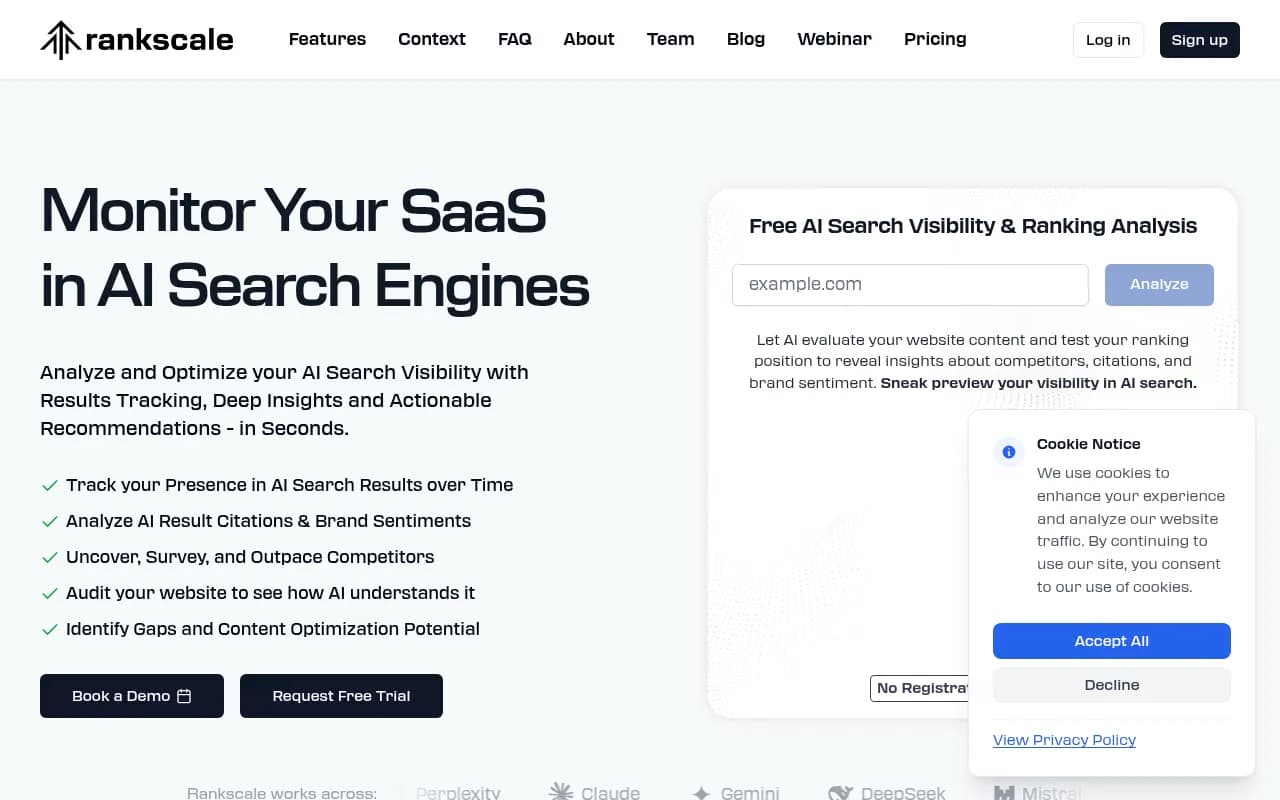
Rankscale focuses specifically on AI search ranking and visibility. It's built around the idea that ranking in AI responses is a discipline in its own right, separate from traditional SEO. For B2B SaaS teams that have already done the SEO work and want to specifically optimize for AI answer engines, Rankscale offers a focused toolkit.
7. GetCito -- best for tracking and optimization in one
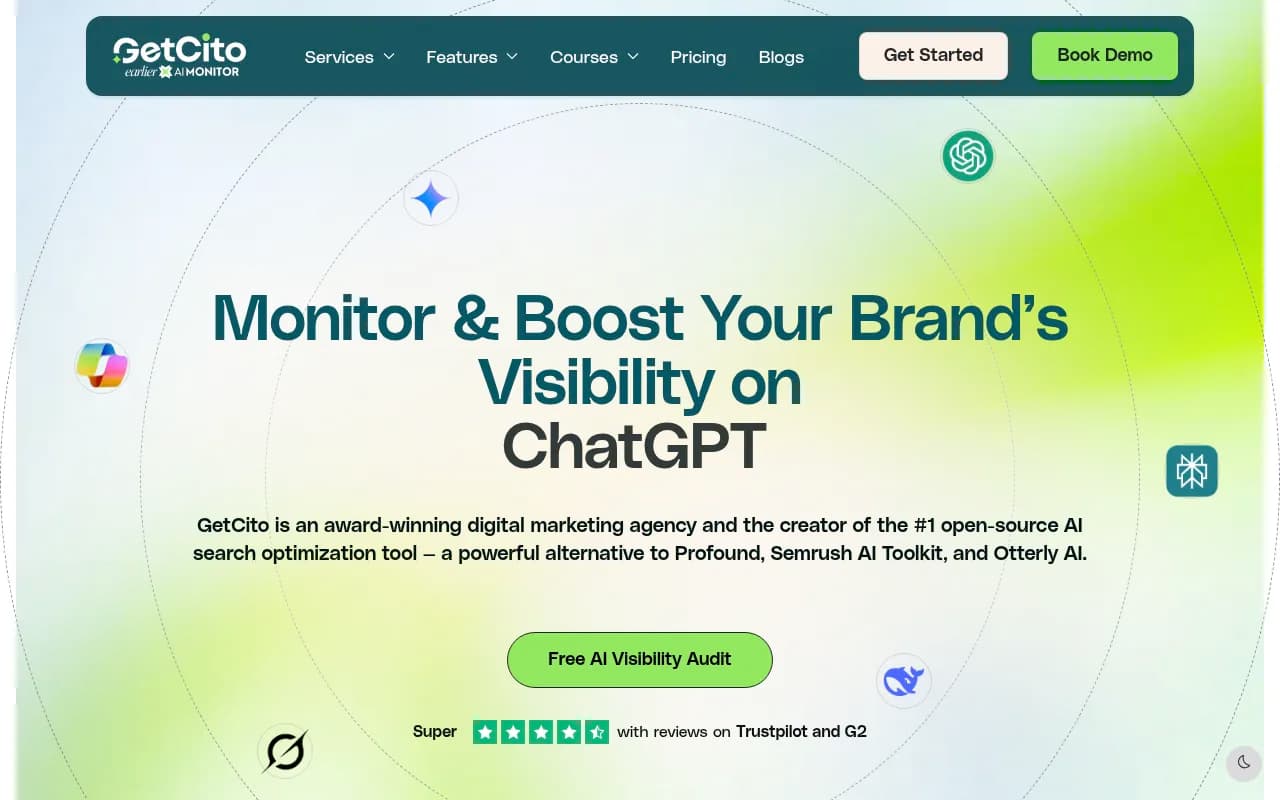
GetCito combines AI visibility tracking with optimization guidance. It's positioned as a platform that helps you both understand your current visibility and take steps to improve it -- which puts it in a similar category to Promptwatch, though with a smaller feature set and a simpler interface.
For B2B SaaS teams that want a lighter-weight version of the full optimization loop, GetCito is worth evaluating.
Feature comparison
Here's how the main alternatives stack up across the dimensions that matter most for B2B SaaS teams:
| Platform | Niche prompt customization | Content generation | Crawler logs | Attribution | AI models tracked | Starting price |
|---|---|---|---|---|---|---|
| Promptwatch | Yes (persona + ICP targeting) | Yes (AI writing agent) | Yes | Yes (GSC, snippet, logs) | 10 | $99/mo |
| Profound | Limited | No | No | Limited | 6+ | Higher |
| AthenaHQ | Moderate | No | No | No | 8+ | Mid-range |
| Scrunch AI | Limited | No | No | No | 4-5 | Low |
| Otterly.AI | Basic | No | No | No | 4-5 | Low |
| Rankscale | Moderate | No | No | No | 5+ | Mid-range |
| GetCito | Moderate | Partial | No | No | 5+ | Mid-range |
| Searchable | Basic | Partial | No | No | 4-5 | Mid-range |
What to actually look for when evaluating these tools
Prompt customization that matches your ICP
Generic prompts like "best CRM software" tell you almost nothing useful if you sell to, say, mid-market construction companies. The tools worth your time let you define prompts that match how your actual buyers talk -- including job title, industry, use case, and buying stage.
Promptwatch's persona targeting is the most developed version of this I've seen. You can configure prompts around specific buyer profiles and track how visibility shifts across those segments.
Content gap analysis, not just visibility gaps
There's a difference between knowing you're invisible and knowing what to do about it. Most tools show you the former. Very few help with the latter.
Answer Gap Analysis -- the kind Promptwatch offers -- goes further: it surfaces the specific topics and questions where competitors are getting cited and you're not, then gives you a path to creating content that fills those gaps. For B2B SaaS teams with limited content bandwidth, that prioritization is genuinely valuable.
Attribution that connects to revenue
AI visibility scores are interesting. Revenue impact is what actually matters. Look for tools that can connect AI-driven traffic to pipeline -- whether through a tracking snippet, Google Search Console integration, or server log analysis. Without this, you're optimizing in the dark.
Crawler log access
This is underrated. Knowing which AI crawlers are hitting your site, which pages they're reading, and what errors they're encountering tells you a lot about how AI models are discovering (or failing to discover) your content. Most tools don't offer this. Promptwatch does, starting at the Professional tier.
A note on the B2B niche prompt problem
The reason this matters so much for B2B SaaS specifically is that your buyers are asking AI models highly specific questions before they ever visit your website. A security operations team evaluating SIEM tools might ask Perplexity something like "which SIEM platforms have the best integration with Splunk for mid-market companies." If you're not in that answer, you don't exist for that buyer in that moment.
Traditional SEO tools aren't built to track this. They're built around keyword rankings in Google, which is a different signal entirely. The platforms in this guide are built for the AI search era -- but the ones that handle niche B2B prompts well are the ones that let you define the prompts yourself, score them by volume and difficulty, and then create content specifically engineered to get cited.
That's a short list. Promptwatch is at the top of it. Profound and AthenaHQ cover the monitoring side well. The rest are useful for specific situations or budget constraints.
How to choose
Start with your actual workflow. If you have a content team and just need better signal about what to write, Profound or AthenaHQ might be enough. If you're a lean team that needs the full loop -- find gaps, create content, track results -- Promptwatch is the more complete solution.
If budget is the primary constraint and you just want to know whether you're showing up in ChatGPT, Otterly.AI or Scrunch AI will get you started without a large commitment.
The one thing I'd avoid: picking a monitoring-only tool and assuming that's the whole job. Knowing you're invisible is step one. The teams that will win AI search in 2026 are the ones that treat it as an optimization discipline, not a reporting exercise.