Key takeaways
- Promptwatch is the only platform of the three with a full action loop: gap analysis, AI content generation, and traffic attribution in one place.
- Searchable covers monitoring basics well but lacks the depth of crawler logs, prompt intelligence, and content tooling that larger teams need.
- Qwairy positions itself as an all-in-one GEO suite with a free tier, making it a reasonable starting point for smaller brands or solo practitioners.
- If your goal is to understand your AI visibility and then actually fix it, Promptwatch is the clearest path. If you're just getting started and want to explore without paying, Qwairy's free plan is worth a look.
The GEO tool market went from "niche experiment" to "crowded category" faster than most people expected. In 2024 you had maybe a handful of platforms tracking AI citations. By mid-2025 there were dozens, and by now the question isn't whether to use one -- it's which one is actually worth your time and budget.
Three names that come up repeatedly in this conversation: Searchable, Promptwatch, and Qwairy. They all promise to help you understand and improve how your brand appears in AI search engines like ChatGPT, Perplexity, and Gemini. But they approach the problem very differently, and the gap between "monitoring dashboard" and "optimization platform" turns out to matter a lot.
This guide breaks down what each platform actually does, where each one falls short, and which type of team should use which tool.
What we're actually comparing
Before getting into the tools, it's worth being clear about what "GEO platform" means in practice. The category splits into two very different things:
- Monitoring tools that show you data: where you appear, how often, which models cite you, sentiment scores.
- Optimization platforms that help you act: content gap analysis, AI-native content generation, crawler log analysis, traffic attribution.
Most tools in 2025 were monitoring tools. A few tried to bridge into optimization. That distinction is the most important thing to understand when evaluating any platform in this space.
Searchable: solid monitoring, limited optimization
Searchable is an AI search visibility platform that covers the monitoring fundamentals reasonably well. You can track brand mentions across major LLMs, see how often you appear in responses, and get a sense of your share of voice versus competitors.
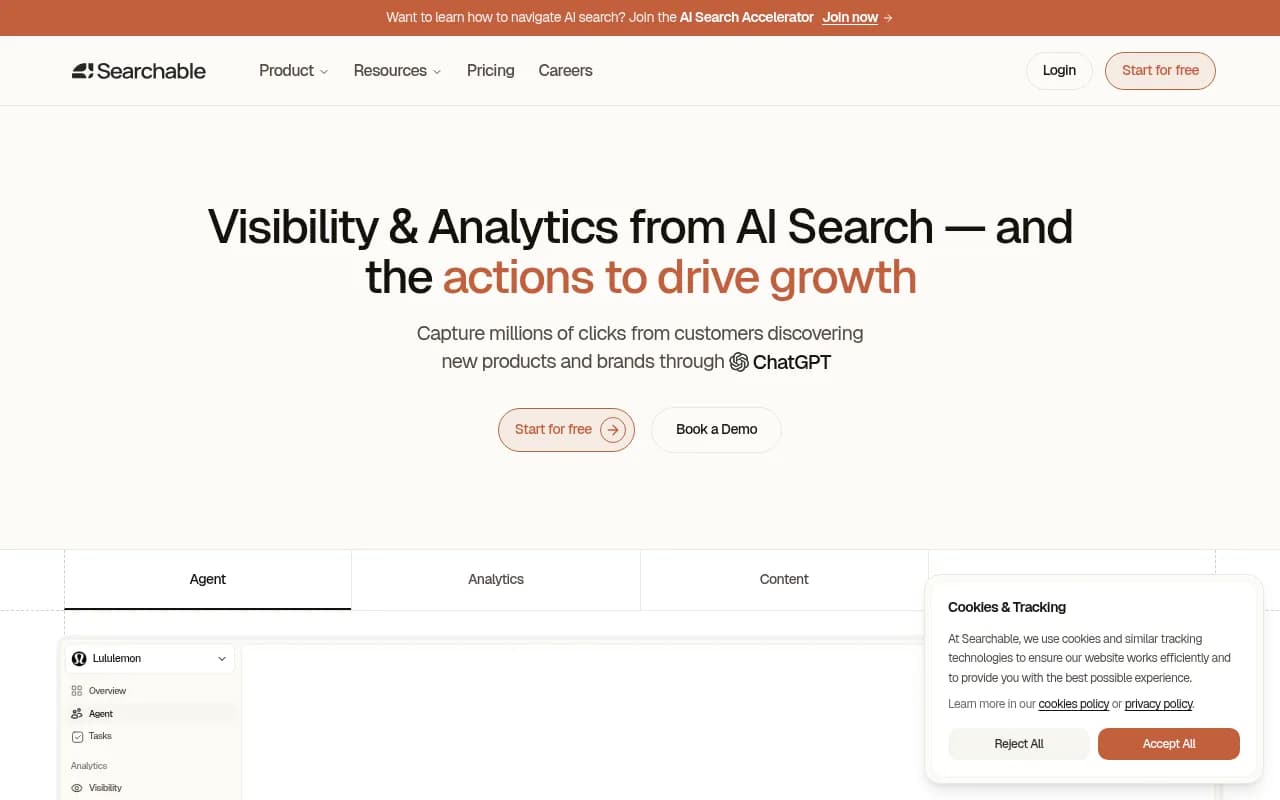
Where Searchable runs into limits is on the action side. There's no built-in content generation, no crawler log analysis to show you which pages AI bots are actually reading, and no prompt intelligence that tells you which queries are worth targeting. You get a clear picture of where you stand -- but the platform largely leaves it to you to figure out what to do about it.
For teams that already have strong content operations and just need visibility data to inform their editorial calendar, that's fine. For teams that want the platform to help close the loop, it's a gap.
Searchable also doesn't appear to have deep Reddit or YouTube tracking, which matters more than it might seem. A significant portion of what AI models cite in their responses comes from community discussions and video content, not just brand websites. Missing that channel means your picture of the competitive landscape is incomplete.
Qwairy: a strong entry point with a generous free tier
Qwairy pitches itself as an all-in-one GEO suite, and for the price point it covers a lot of ground. The platform tracks visibility across 7 core LLMs plus 3 premium models, includes log file support (GSC and GA4), and has a free forever plan that makes it accessible for smaller teams or individuals testing the waters.
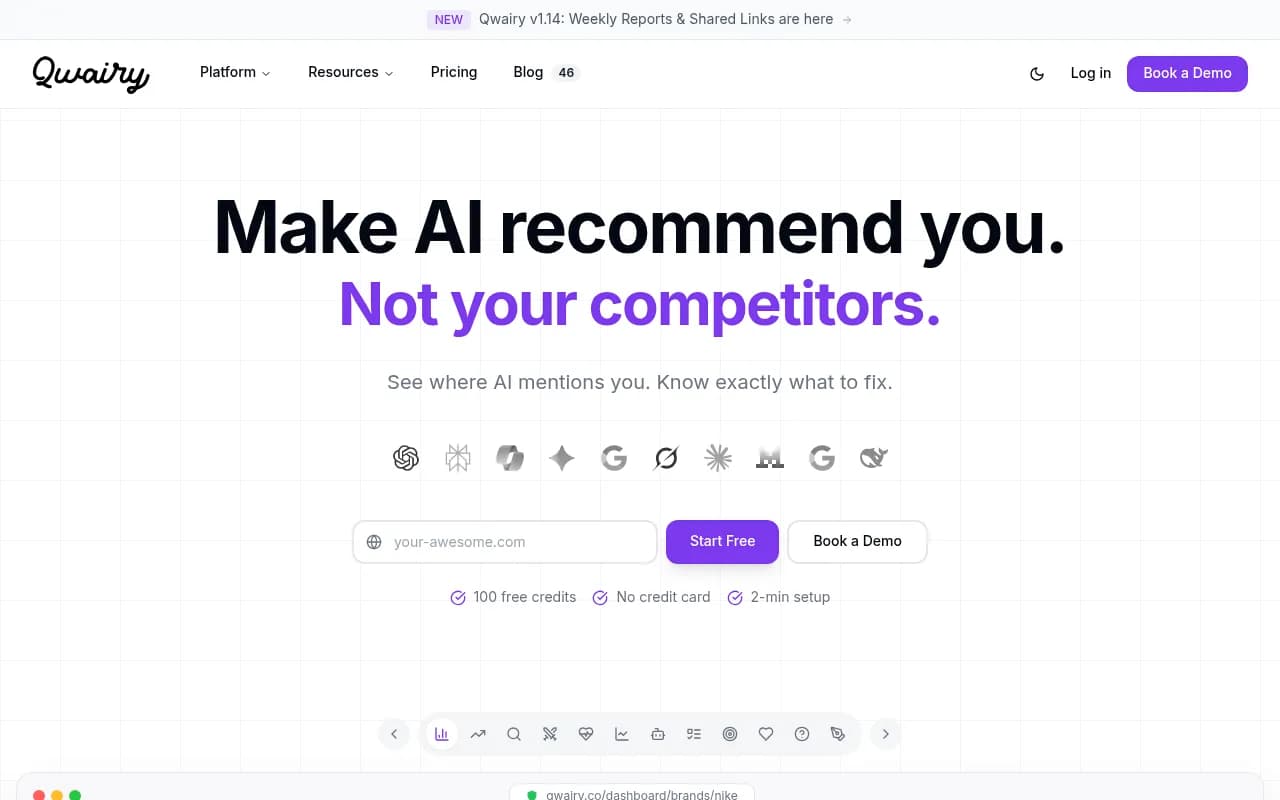
The free plan is genuinely useful, not just a teaser. You can track a meaningful number of prompts and get a real sense of your AI visibility before committing to a paid tier. The paid plans start at €59/month, which is one of the more affordable entry points in the category.
Qwairy's optimization tooling is more developed than Searchable's. There's content guidance and some audit functionality. But it's still primarily a monitoring and reporting platform at its core -- the content generation capabilities aren't as deep as what you'd find in a platform built specifically around the create-and-track loop.
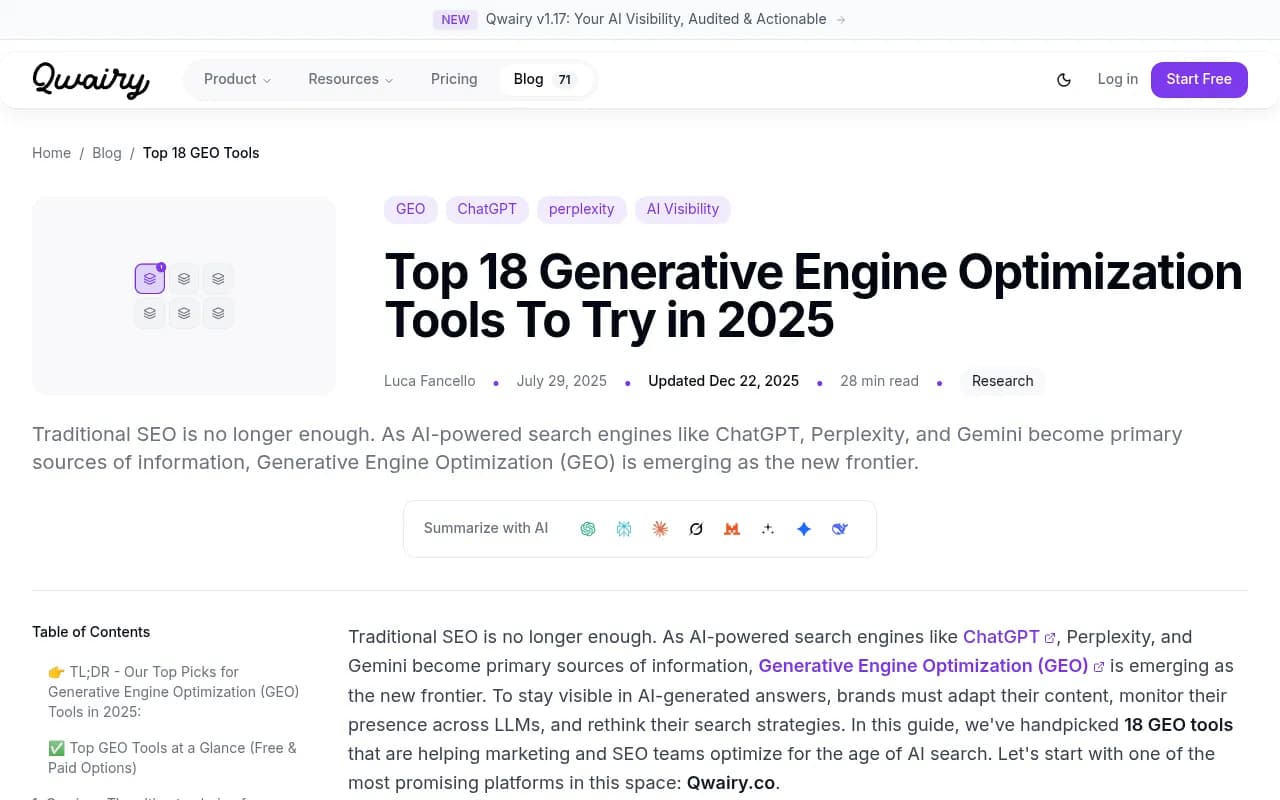
One honest note: Qwairy's own blog lists itself as the top pick in its "best GEO tools" roundup, which is worth keeping in mind when reading their self-published comparisons. That said, the platform has real users and real traction, and the free tier makes it easy to evaluate on your own terms.
Promptwatch: the full optimization loop
Promptwatch takes a different approach from the start. The platform is built around a three-step cycle: find the gaps, create content that fills them, then track whether that content actually gets cited.

The Answer Gap Analysis is what makes the first step concrete. Instead of just showing you where you appear, it shows you the specific prompts where competitors are getting cited and you're not -- with enough detail to understand what content is missing from your site. That's a different kind of insight than a visibility score.
The second step is where Promptwatch separates itself most clearly from monitoring-only tools. There's a built-in AI writing agent that generates articles, listicles, and comparison pages grounded in citation data from over 880 million analyzed citations. The content isn't generic SEO filler -- it's engineered around the specific prompts and angles that AI models are actually responding to.
The third step closes the loop with page-level tracking and traffic attribution. You can connect visibility improvements to actual traffic via a code snippet, Google Search Console integration, or server log analysis.
Beyond the core loop, Promptwatch has a few capabilities that most competitors simply don't have:
- AI Crawler Logs that show you in real time which pages ChatGPT, Claude, Perplexity, and others are reading on your site, how often they return, and what errors they encounter.
- Reddit and YouTube tracking that surfaces the community discussions influencing AI recommendations.
- ChatGPT Shopping tracking for brands that appear in product recommendation carousels.
- Prompt Intelligence with volume estimates, difficulty scores, and query fan-outs showing how one prompt branches into sub-queries.
The pricing reflects the depth: $99/month for the Essential plan (1 site, 50 prompts, 5 articles), $249/month for Professional (2 sites, 150 prompts, 15 articles, crawler logs), and $579/month for Business (5 sites, 350 prompts, 30 articles). There's a free trial available.
Side-by-side comparison
| Feature | Searchable | Qwairy | Promptwatch |
|---|---|---|---|
| AI visibility monitoring | Yes | Yes | Yes |
| LLMs tracked | Major models | 7 core + 3 premium | 10 models |
| Competitor comparison | Yes | Yes | Yes (heatmaps) |
| Prompt volume & difficulty | No | Limited | Yes |
| Answer gap analysis | No | Partial | Yes |
| AI content generation | No | Limited | Yes (full agent) |
| AI crawler logs | No | Partial (GSC/GA4) | Yes (real-time) |
| Reddit & YouTube tracking | No | No | Yes |
| ChatGPT Shopping tracking | No | No | Yes |
| Traffic attribution | No | Partial | Yes (3 methods) |
| Multi-language/region | Limited | Yes | Yes |
| Free plan | No | Yes (free forever) | Free trial |
| Starting price | Not public | €59/month | $99/month |
| Best for | Basic monitoring | SMBs, solo practitioners | Marketing & SEO teams wanting full optimization |
Which platform actually moved the needle in 2025?
The honest answer is: it depends on what "moving the needle" means to your team.
If you define it as "I now know where I appear in AI search," all three platforms can get you there. Searchable and Qwairy both give you a reasonable visibility picture.
If you define it as "my AI visibility actually improved because of the platform," the story changes. Improving visibility requires creating content that AI models want to cite. That means understanding which prompts to target, writing content that answers those prompts better than competitors, and then verifying that the content is being discovered and cited.
That's a workflow, not a dashboard. And in 2025, the platforms that helped teams execute that workflow -- rather than just observe their situation -- were the ones that produced measurable results.
Promptwatch is the clearest example of a platform built around that workflow. The combination of gap analysis, content generation grounded in real citation data, and attribution tracking gives teams a repeatable process for improving AI visibility rather than just measuring it.
What to consider before choosing
A few practical questions worth asking before committing to any of these platforms:
How mature is your GEO strategy? If you're just starting out and want to understand the basics before investing, Qwairy's free tier is a low-risk way to get oriented. You'll see where you stand, learn the vocabulary, and get a feel for which prompts matter to your category.
Do you have a content team? Monitoring tools are only useful if someone acts on the data. If your team can take visibility insights and turn them into content independently, Searchable or Qwairy might be sufficient. If you want the platform to accelerate that process, Promptwatch's content agent is worth the higher price.
Do you need to prove ROI? Traffic attribution is the piece that connects AI visibility to business outcomes. If you need to show leadership that GEO investment is driving traffic and revenue, you need a platform with attribution built in. That currently points to Promptwatch.
Are you an agency? All three platforms have some agency capability, but Promptwatch has the most developed multi-site and white-label infrastructure. Qwairy is also worth evaluating for smaller agency setups given the pricing.
Other platforms worth knowing about
These three aren't the only options. A few others that come up in serious GEO conversations:

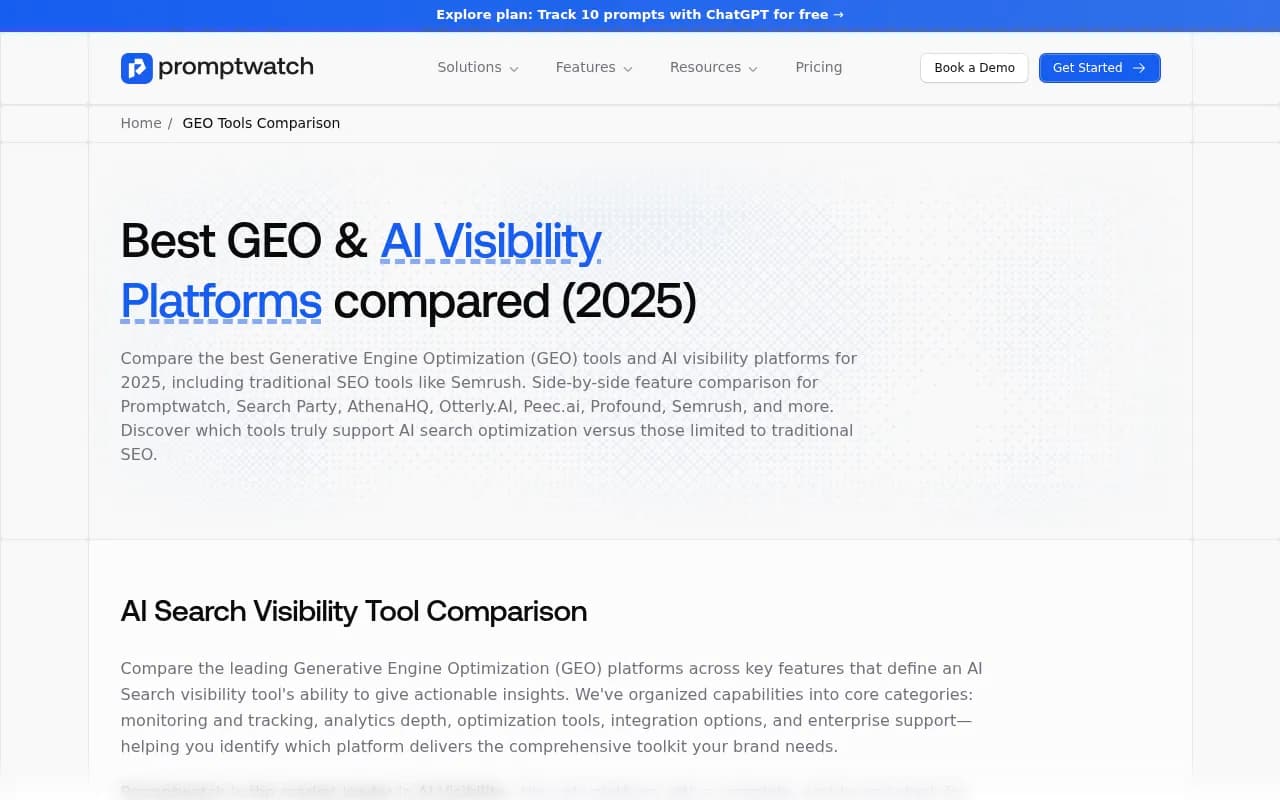
Profound has strong enterprise analytics and solid prompt tracking, but starts at $499/month and lacks the content generation capabilities of Promptwatch.

Otterly.AI is a clean, affordable monitoring tool ($29/month) that's good for sentiment analysis and real-time tracking. It's monitoring-only, but it's honest about that.

Peec AI covers multi-language visibility tracking well and has a free tier. Like Otterly, it's primarily a monitoring platform.

AthenaHQ is enterprise-grade with deep benchmarking and competitive analytics, but at $545/month it's positioned for large organizations, and it doesn't have content generation.
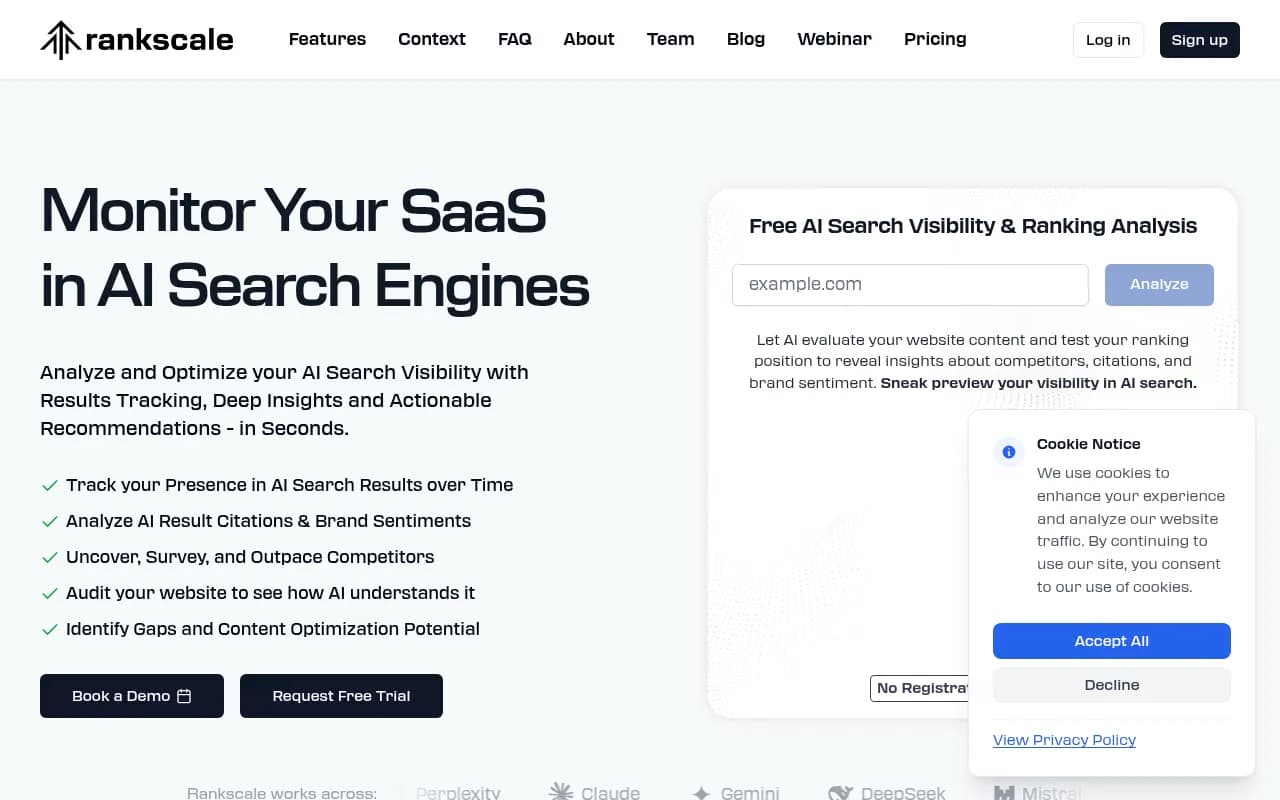
Rankscale is worth a look for teams focused on entity optimization and AI benchmarking, with an accessible entry price around €20/month.
The bottom line
Searchable, Qwairy, and Promptwatch each occupy a different position in the GEO market.
Searchable is a monitoring tool for teams that want visibility data and will handle optimization themselves. Qwairy is a more complete entry-level platform with a genuinely useful free tier and growing optimization features. Promptwatch is the platform for teams that want to close the full loop -- from understanding where they're invisible to creating content that fixes it and tracking the results.
The GEO category is still maturing, and all three platforms will likely look different a year from now. But the fundamental question -- do you want to observe your AI visibility or improve it -- is already the right one to ask. The answer to that question should drive your platform choice.