Key takeaways
- Agentic GEO platforms go beyond monitoring: their agents plan content from real visibility data, write it, and publish it to your CMS. Of the 50+ tools now claiming AI search visibility capabilities, only a handful close that loop.
- The three most complete stacks in 2026 are Promptwatch, Profound, and Writesonic. The other six here win specific jobs: enterprise brand accuracy, budget content production, narrative repair, hands-off blogging.
- Entry pricing runs from about $45/mo (Frase) to $99/mo (Profound), with Promptwatch offering a free tier and paid plans from $95/mo. Prices verified in May 2026.
- Hallucination risk is the hidden cost. In Neil Patel's survey of 565 marketers, 36.5% had AI-fabricated content go live publicly. Demand draft-only publishing and a review inbox from whatever you buy.
- Eight of nine free trials in this category now require a credit card. Run a focused two-week evaluation and calendar your cancellations.
Why monitoring stopped being enough
Ask ChatGPT which GEO platform to buy and it won't hand you a list to sort through. It gives you a recommendation, maybe two, and moves on. That's the market now: more than 50 tools claim to track AI search visibility, and the engines answering your customers compress all of them into a single cited answer.
The numbers behind the land rush are loud. ChatGPT passed 800 million weekly users in late 2025. Around 60% of Google searches end without a click, 77% on mobile. McKinsey projects $750 billion in US revenue flowing through AI-powered search by 2028 and warns that unprepared brands could see traditional search traffic fall 20 to 50%. Meanwhile, only 16% of brands systematically track how they perform in AI answers.
Most of those 50+ tools are trackers. They answer "was my brand mentioned?" with a dashboard and stop there. A tracker tells you the house is on fire. An agent is supposed to put it out: find the prompts you're losing, plan the content that wins them, write it, publish it, then check whether citations actually moved. The checking matters, because AI Overview citations can shift every few hours, with up to half replaced when a new answer is generated. A monthly PDF about that is close to useless.
This guide covers the second category: nine platforms whose agents plan, write, and publish, ranked by how much of that loop they genuinely close. Where a tool quietly hands a verb back to you, I'll say so.
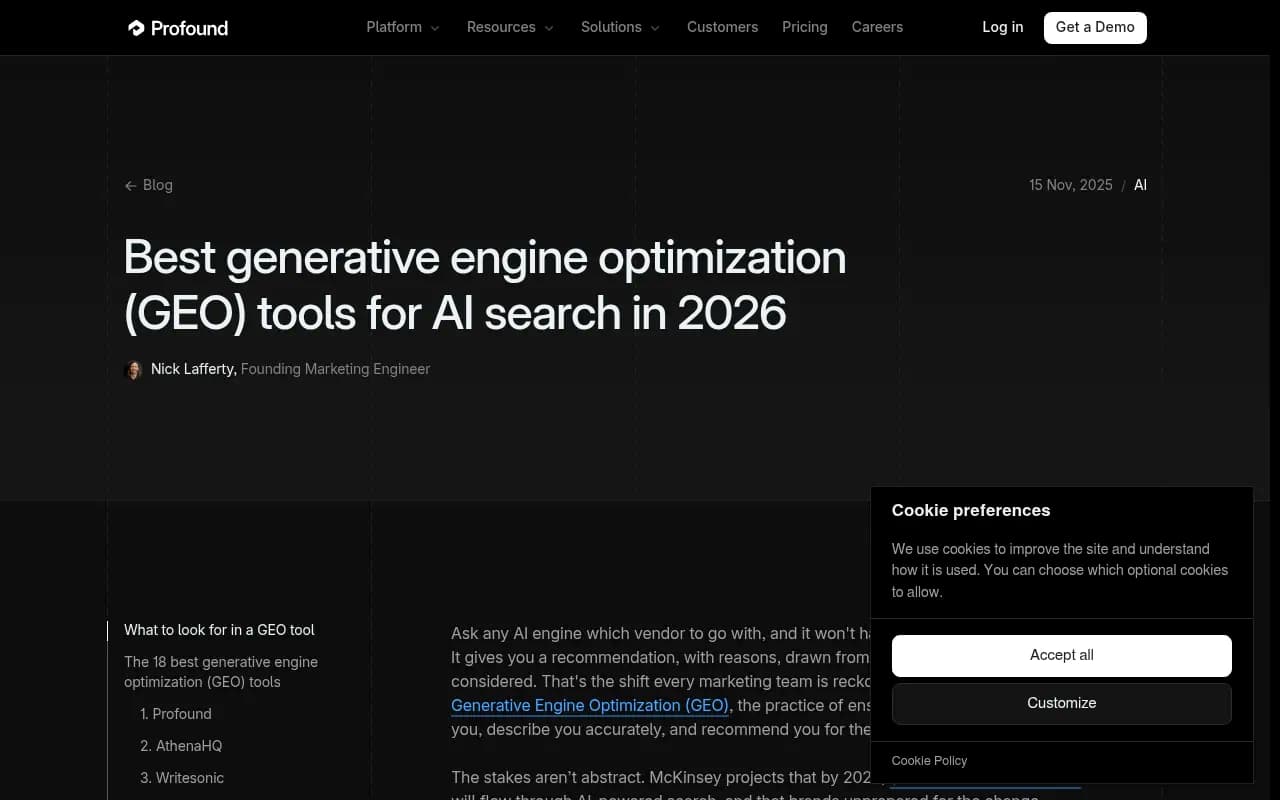
One honesty note first. Most roundups in this space are vendor-published: Profound's list of 18 tools ranks Profound first, Writesonic's test of 10 ranks Writesonic first, Bluefish's top 10 ranks Bluefish first. I've drawn on those roundups for facts and pricing, and I'll be explicit about trade-offs, including for tools this site recommends.
The three-verb test: plan, write, publish
An AI writing tool takes a prompt and returns text. A prompt tracker takes a keyword list and returns mention counts. An agentic GEO platform takes a goal and executes across steps: it decides what to create based on citation and crawler data, produces the page, ships it, and measures what changed.
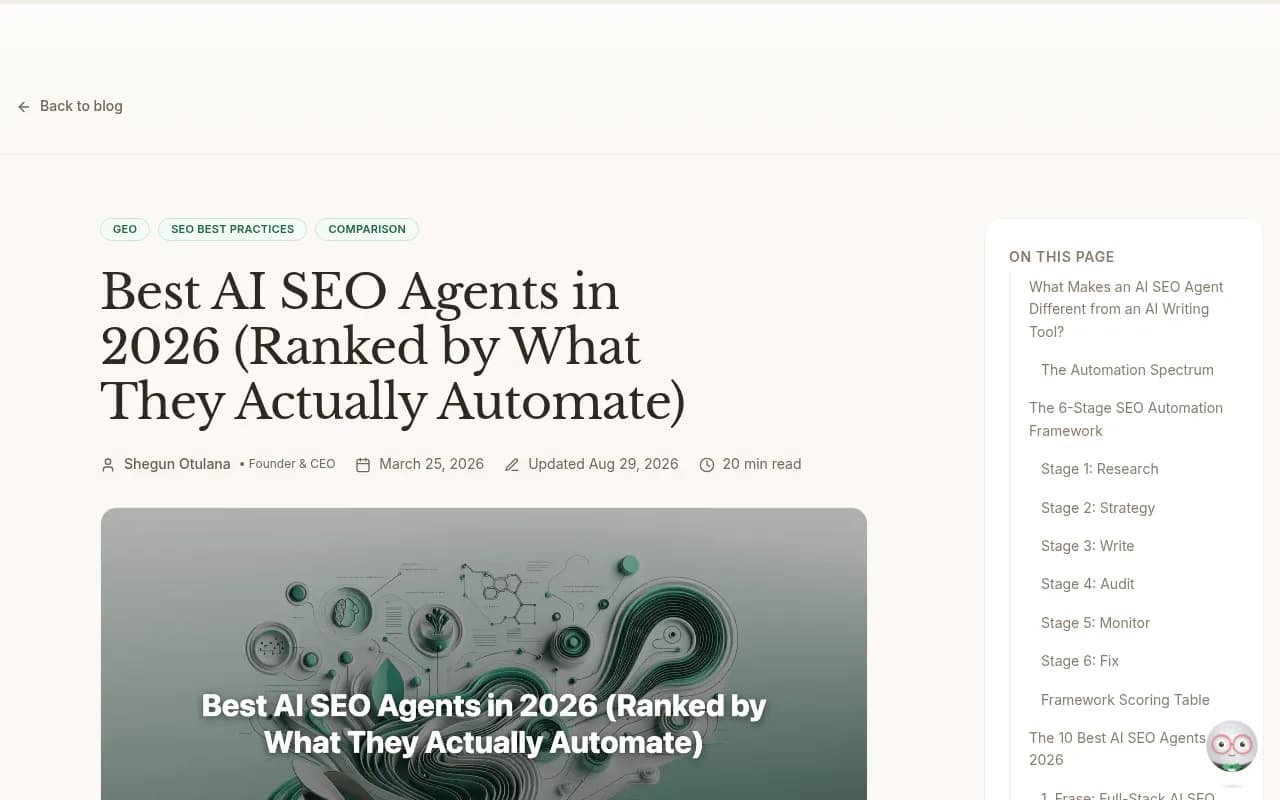
Frase frames this as six pipeline stages (Research, Strategy, Write, Audit, Monitor, Fix) and scored 10 tools against them; by their count, nothing else automated more than three. Self-serving, sure, but the framework is a solid lens. Here's the simpler version I use:
| Capability | Prompt tracker | AI writer | Agentic GEO platform |
|---|---|---|---|
| Shows where you're invisible, and why | Yes | No | Yes |
| Plans content from citation and crawler data | No | No | Yes |
| Writes GEO-optimized pages | No | Yes | Yes |
| Publishes to your CMS with review controls | No | Rarely | Yes |
| Measures impact after publishing | No | No | Should, though many don't |
That last row is where the market is thinnest. One independent comparison by Discovered Labs found that none of Profound, Peec, or Otterly link AI citations to pipeline metrics yet. Publishing is easy to demo. Proving the published page changed your visibility is the hard part, and it's the part worth paying for.
The nine best agentic GEO platforms in 2026
Quick scan first, details after. Prices were verified in May 2026 where a number appears; this market reprices often, so double-check before budgeting.
| Platform | What the agents do | Publishes to | Engines tracked | Entry price |
|---|---|---|---|---|
| Promptwatch | Plan, write, publish, prioritize | Webflow, Framer, WordPress | 12+, incl. AI Overviews and AI Mode | Free tier; $95/mo |
| Profound | Research, draft, stage for review | Webflow (as drafts) | Up to 10 on Enterprise | $99/mo |
| Writesonic | Ranked tasks, high-volume writing | WordPress and integrations | 10 on Enterprise | $79/mo |
| Frase | Research, brief, write, audit, refresh | WordPress and integrations | Limited AI tracking | ~$45/mo |
| Whitebox | Detect and fix false AI narratives | Your site, automatically | Main assistants | Custom |
| Relixir | Autonomous content in a built-in CMS | Its own AI-native CMS | Main assistants | On request |
| SearchAtlas | Conversational audits and content | Via integrations | Google + major LLMs | Varies |
| Evertune | Topic gap detection, Content Studio | Drafts ready to publish | Main assistants | Custom |
| Blogged | Fully autonomous blogging | Its managed blog | Google + AI engines | Varies |
1. Promptwatch: the most complete loop
Promptwatch pioneered what it calls agentic AI search optimization, and it has the most complete version of it.

The Amsterdam company launched in April 2025, passed EUR 2M in ARR within about a year, and closed a EUR 6M seed round in July 2026, so think fast-moving challenger rather than incumbent. What sets it apart is the loop. Crawler logs track 400+ AI crawlers, ingestible through Cloudflare, Vercel, Fastly, and other CDNs, and show when ChatGPTBot or ClaudeBot hit your pages, what they read, and which errors they hit. That explains why you're invisible before anyone writes a word. Content Agents then plan, write, and publish GEO-optimized articles to Webflow, Framer, or WordPress on a schedule you control, through a review inbox or on full autopilot. Unified Actions turns visibility, citation, and crawler data into a prioritized task list, and Agent Chat lets you interrogate the data conversationally, including from Slack.
The dataset behind it: 4.5 billion citations, clicks, and prompts analyzed (26.5B+ data points, 100M new ones per day) across 5,500+ connected sites, with 1,840+ customers including Duolingo, Yelp, Typeform, and agencies like Monks and WPP, rated 4.7/5 on G2. Promptwatch's own comparison of 21 GEO platforms found it was the only one with a complete end-to-end stack. Vendor-published, so weigh it accordingly, but the feature matrix is public and checkable. It also tracks things most competitors skip entirely: Reddit and YouTube citations, ChatGPT Shopping results, and sponsored placements in AI search through the Ads Radar.
Proof point I like: Crisp saw 2x conversion rates from AI traffic versus traditional channels and scaled to 5-10 articles a day with the Content Agent.
Pricing: free Explore tier (10 prompts, ChatGPT only), Essential at $95/mo with a 7-day free trial, Professional at $245/mo, Business at $579/mo, and agency plans from $199/mo with unlimited projects and prompts. Annual billing gets you 12 months for the price of 10.
Caveats: the company is a year and a half old, so if procurement wants a decade of vendor history, Profound wins that check. And because it monitors real interface data rather than just APIs, coverage of brand-new models arrives as they're added rather than on day one.
2. Profound: the enterprise default

The tool most Fortune 500 teams shortlist first. Founded in New York in 2024, $155M raised, unicorn valuation after a $96M Series C led by Lightspeed in February 2026. SOC 2 Type II, SSO, RBAC: the procurement checklist items that eliminate half this market.
Its Agents feature is a node-based, drag-and-drop builder that needs no engineering. Agents run from topic discovery through drafting to staging articles and landing pages in Webflow, where everything routes to draft status and publishes only after human review. Around the agents sit Answer Engine Insights, prompt volumes, shopping visibility, and Agent Analytics for crawler traffic.
Pricing, verified May 2026: Starter is $99/mo but limited to ChatGPT, 50 prompts, and 1,500 responses. Growth at $399/mo adds three engines, 100 prompts, and 9,000 responses. Enterprise is custom, up to 10 engines, with a dedicated specialist on a 24-hour SLA. Agencies pay $99/mo plus $399/mo per client workspace. The seven-day trial requires a credit card.
The critique worth knowing: Writesonic's competitive testing found Profound's agents stop short of closing the loop. No third-party outreach surface, no author contact data, no ranked task list, no impact tracking after changes ship. Prompt volumes are clickstream-panel estimates rather than verified counts. Since AI engines pull 90%+ of their citations from third-party sources, a platform that only fixes your own domain leaves most of the gap untouched.
3. Writesonic: the budget workhorse
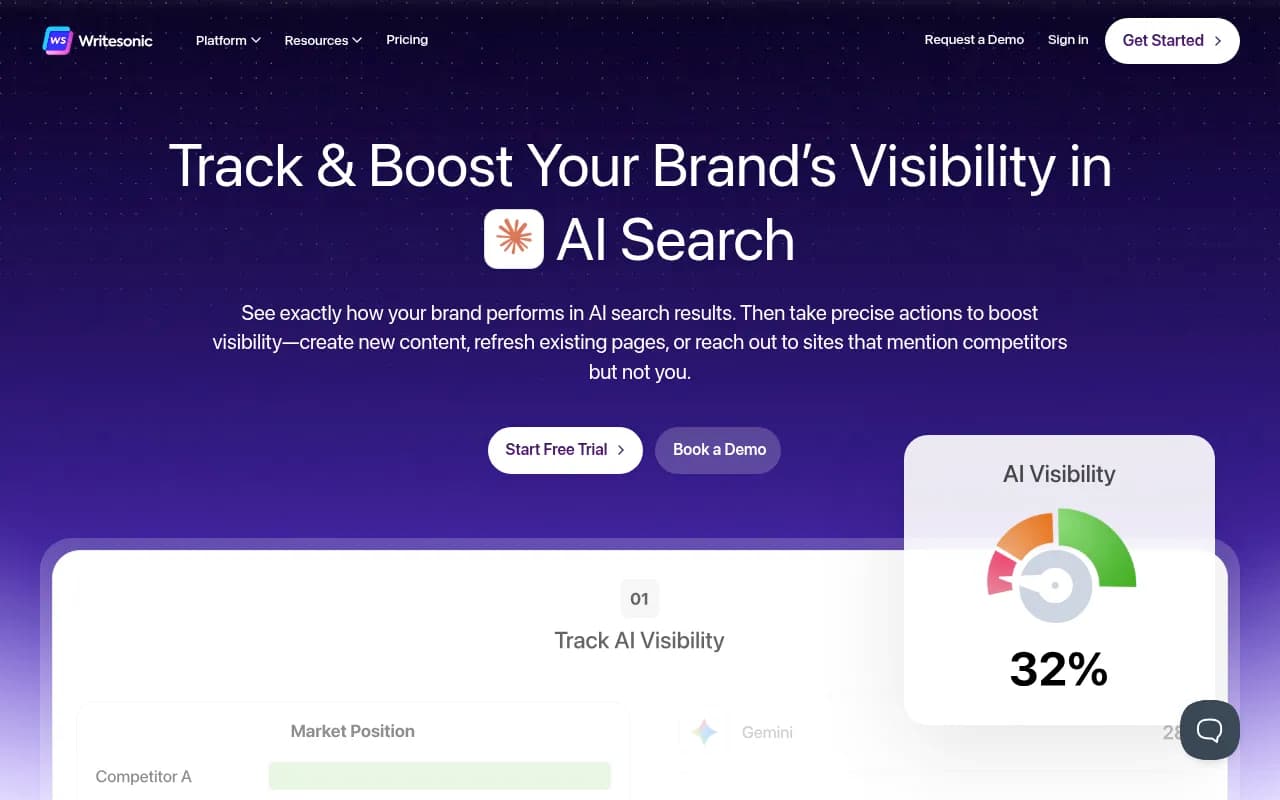
The cheapest credible entry into agentic GEO. Article Writer handles research, internal linking, and FAQ generation at serious volume, and the Action Center (Growth tier and up) is the agentic layer: ranked tasks running from gap detection through outreach to impact measurement. Writesonic's own testing of 10 tools claims it's the only one that closes that full loop, third-party outreach included, down to author contact data.
Profound's roundup says the opposite: SEO methodology, no real prompt-demand data, no loop between monitoring and creation. Two vendors, two contradictory claims about each other. My read after sitting with both: Writesonic is a genuinely strong content engine with useful visibility features, and the deepest loop claims live at the Enterprise tier. Test the loop specifically during your trial week.
Pricing: Starter $79/mo, Basic $199/mo, Growth $399/mo, Enterprise custom. Prompt tracking is gated (100 prompts a month at Professional, 200 at Advanced, unlimited at Enterprise). Seven-day trial.
4. Frase: the content pipeline
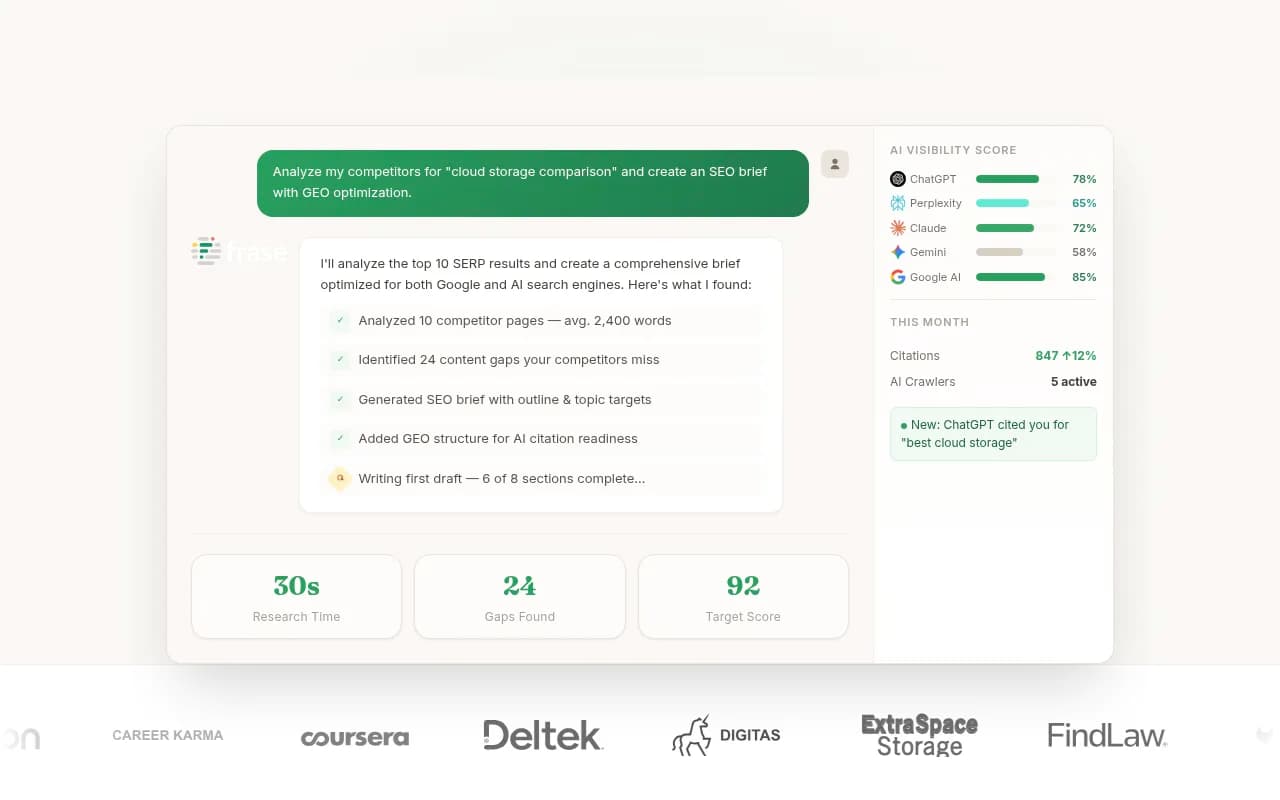
Frase thinks in pipelines rather than dashboards. Its six stages, Research, Strategy, Write, Audit, Monitor, Fix, cover the full content lifecycle, and by its own scoring no other tool automates more than three. Discount the self-ranking as much as you like; the pipeline is real. You get research and briefs, answer-first optimization aimed at AI Overviews and chat answers, audits, monitoring, and a Fix stage that proposes refreshes for decaying pages.
The caveat is symmetrical with Writesonic's: Frase is an SEO platform first. Its AI visibility monitoring is lighter than the specialists, so if you buy it for the pipeline, pair it with a dedicated tracker for measurement. Plans start around $45/mo, the cheapest paid tier on this list.
5. Whitebox: agents that fix what AI says about you
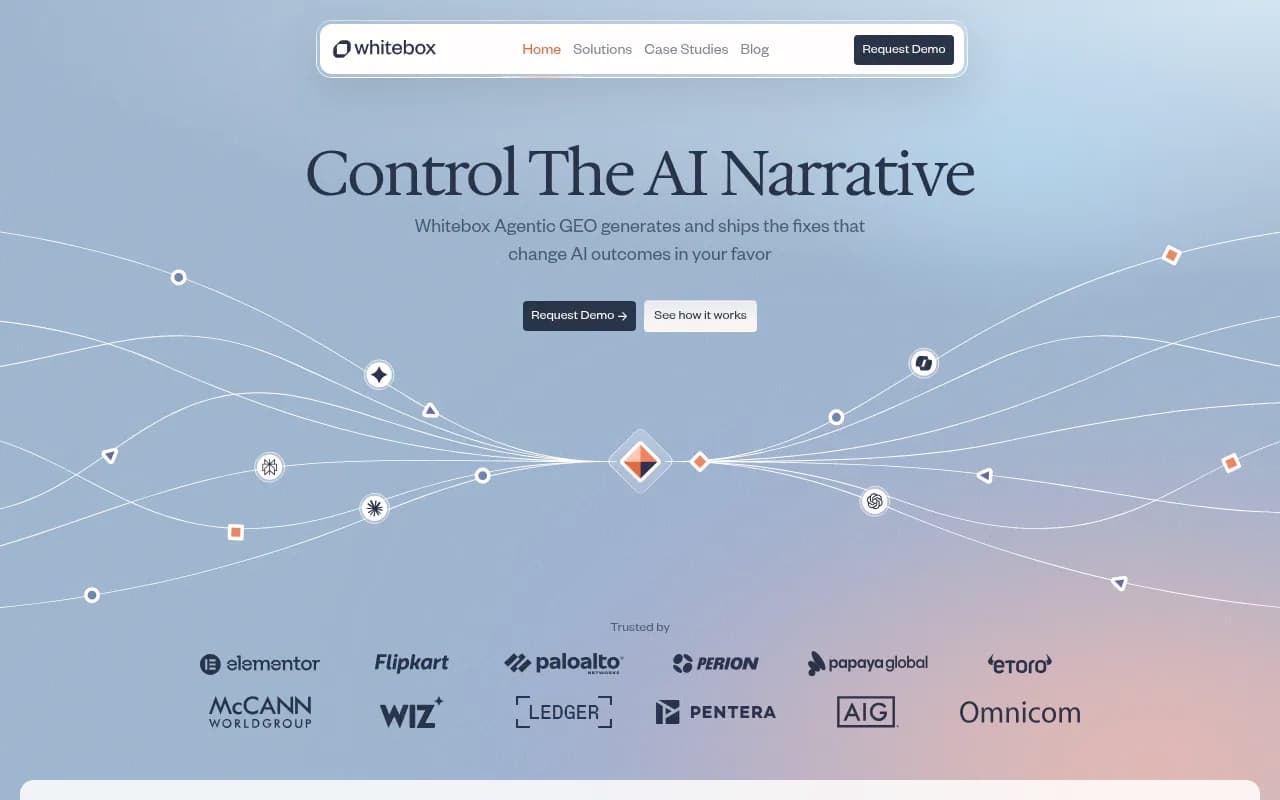
Narrow, and interesting because of it. Whitebox focuses on narrative: what AI engines say about your brand. When ChatGPT describes your pricing wrong, or Gemini keeps repeating a claim you retired in 2024, Whitebox detects the discrepancy, generates the corrective content, and ships it automatically. Shipping is the verb that earns it a place here; most sentiment and narrative monitors stop at an alert and leave the fix as an exercise for the reader.
Best for brands being actively misdescribed. The limitation is scope: this won't run your content program, it runs damage control. Pricing is custom, demo required.
6. Relixir: GEO with the CMS built in
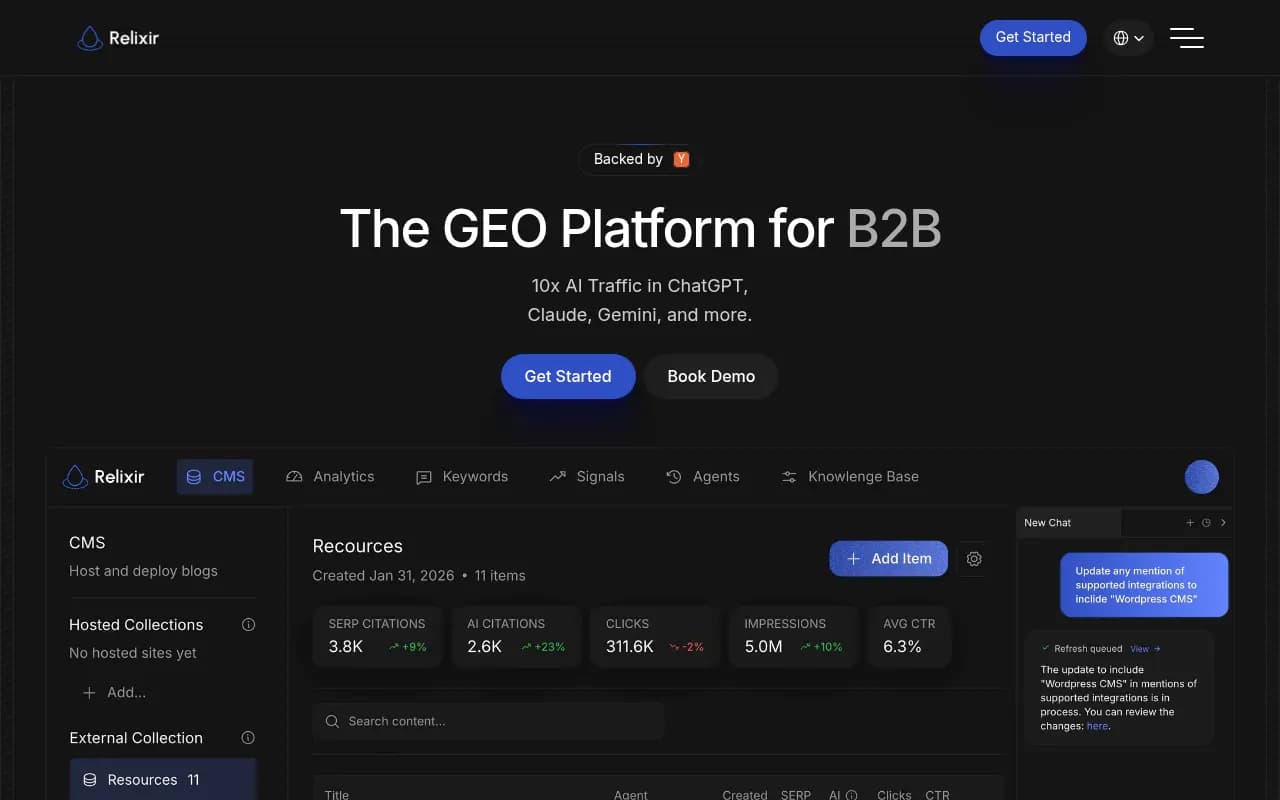
Relixir bundles GEO monitoring with an AI-native CMS, so its agents create and publish inside the platform itself. That removes the integration tax the rest of this list imposes: no connecting a tracker to WordPress to a writing tool to a CDN log pipeline. One vendor, one bill, content and measurement in the same place.
The trade-off is the obvious one for younger all-in-ones: fewer public case studies, and less depth in any single module than the specialists. Ask for references in your vertical before committing. Pricing on request.
7. SearchAtlas: an agent you can talk to
SearchAtlas pairs its LLM visibility module with a conversational agent. You talk, it runs: site audits, content generation, task automation across your properties. For SEO teams that already think in rankings, audits, and fixes, the conversational interface is the lowest-friction entry into agentic work. No node graph to learn, no workflow to build.
The honest limit: the agent is a generalist SEO agent, and the LLM visibility data runs shallower than the specialist platforms. A good bridge from traditional SEO into GEO, not the deepest well in either.
8. Evertune: brand accuracy at scale
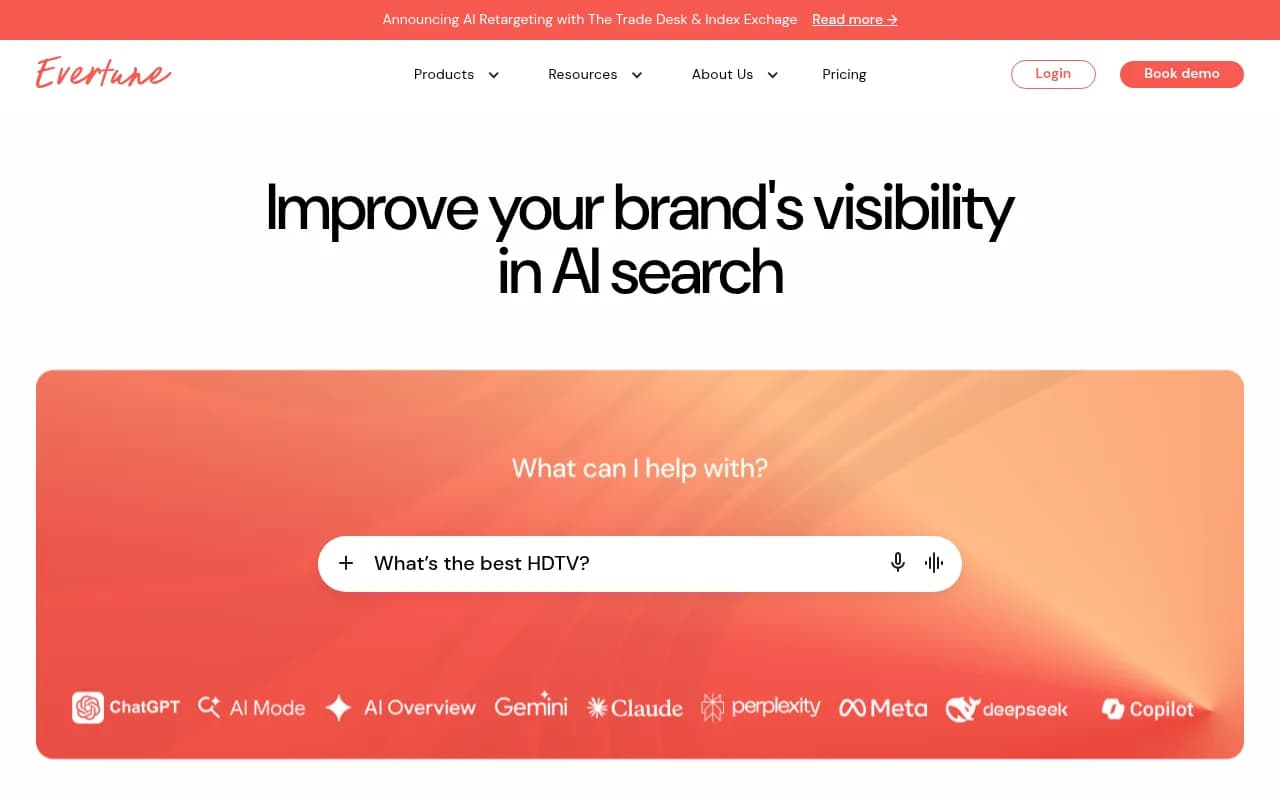
Evertune monitors brand accuracy on a 25-million-person consumer panel, a different data source than most of this list, and its Content Studio drafts ready-to-publish posts when it finds gaps. Two flags: tracking is topic-level rather than prompt-level, so you lose prompt-level precision, and there's no published SOC 2 Type II yet, which matters if you're regulated. For Fortune 500 brands that need to know what AI says about them at scale, the panel approach is a real differentiator. Publishing, though, is the one verb it hands back to you: Content Studio gets you to "ready to publish," and the last mile is yours.
9. Blogged: blogging on autopilot
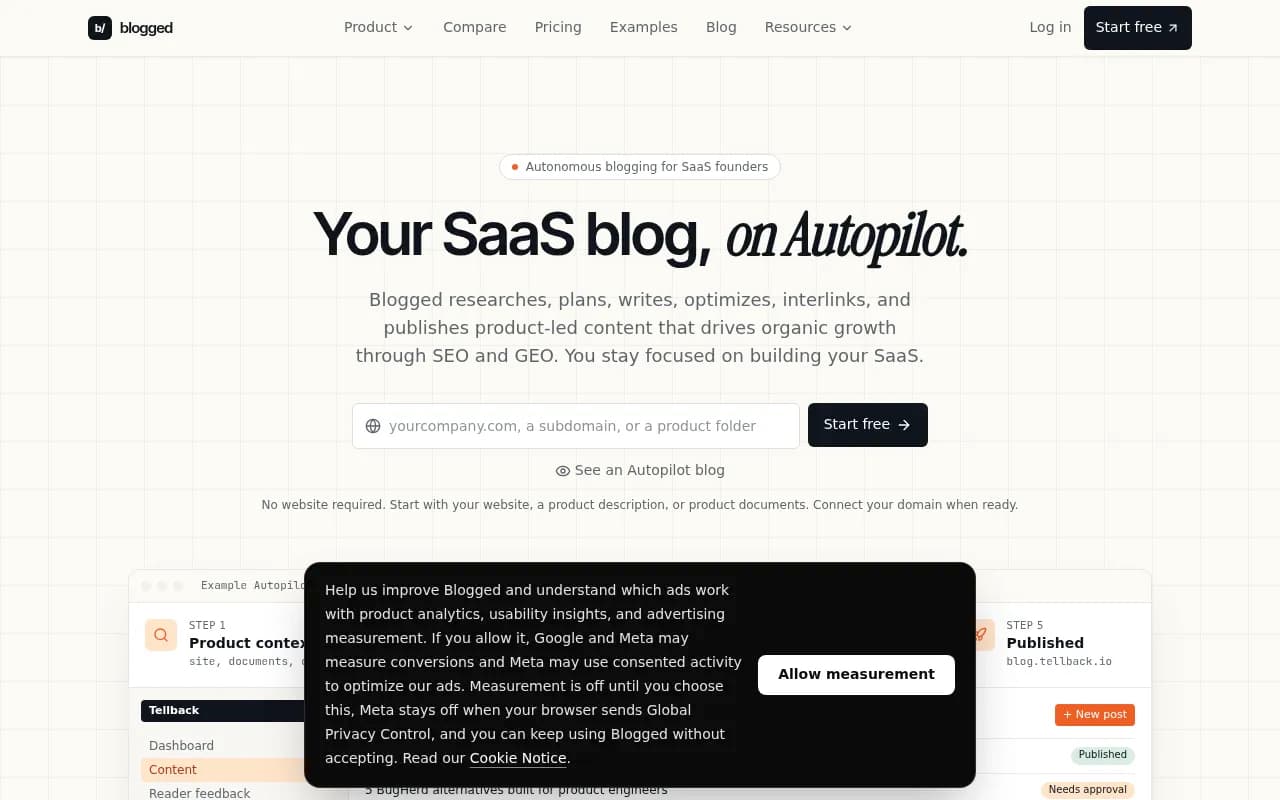
The most hands-off option here. Blogged runs autonomous SEO and GEO blogging for SaaS: agents plan the editorial calendar, write the posts, and publish without you. For a startup with no content team, that's an entire function for the price of a tool.
The caution writes itself: fully automated publishing plus the hallucination numbers below is a risky combination. If you go this route, keep a human reviewing at least weekly and be ruthless about factual claims.
Tools that didn't make the cut
Scrunch AI has the cleverest idea that missed: an Agent Experience Platform that serves AI-optimized pages to AI crawlers without touching your human-facing site. But content generation isn't shipped yet, and its prompts are configured rather than drawn from real conversations. Entry at $250/mo.
Otterly.AI and Peec AI are solid, affordable trackers. Otterly sets up in minutes and does content briefs; Peec starts at €89/mo with strong multi-language support. Neither generates content, so both fail the three-verb test. As pure monitoring on a budget, either works.


Semrush's AI Visibility Toolkit is a $99/mo add-on (25 prompts, 3 engines) on top of a paid subscription, updated weekly, with no Claude, Copilot, Grok, Meta AI, or DeepSeek coverage. ContentShake AI writes content in a separate product. Two halves, no loop.
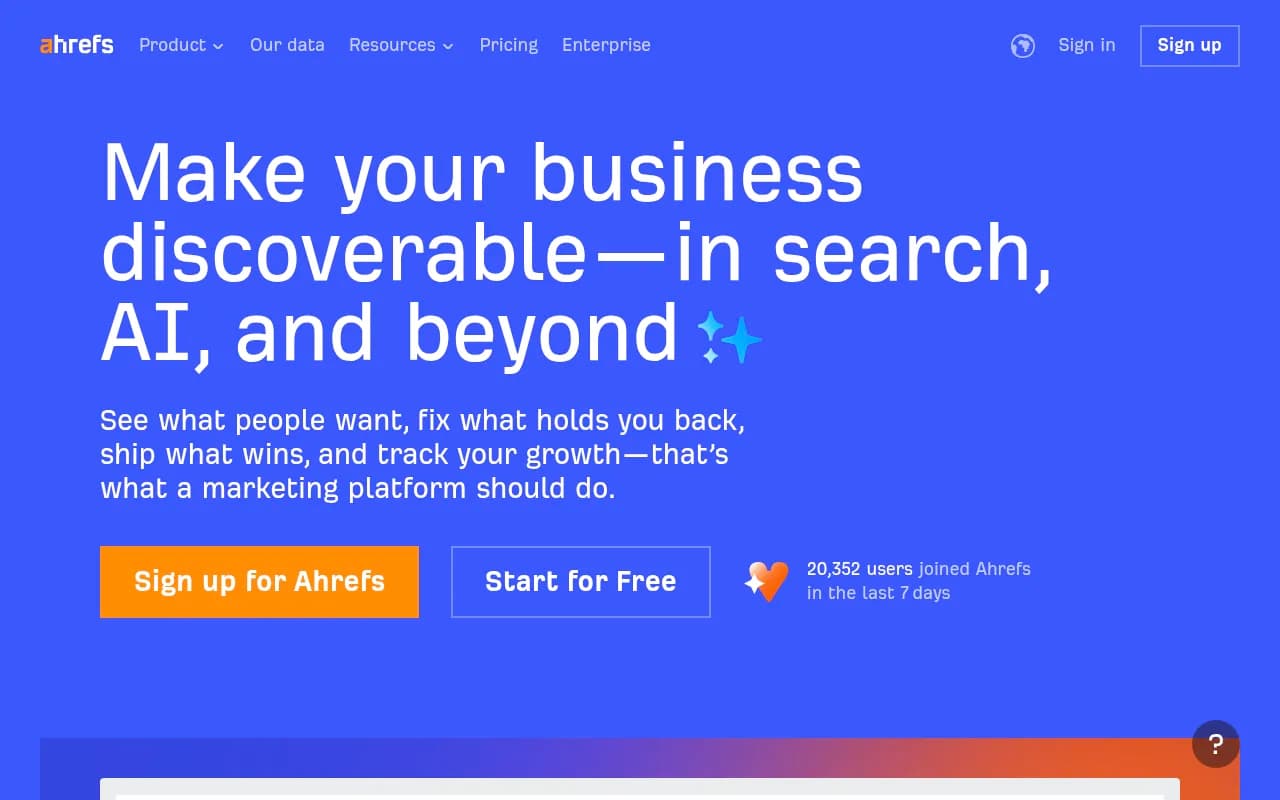
Ahrefs Brand Radar uses the same front-end collection approach as Profound, but prompts are keyword-derived and most chatbot platforms refresh monthly. The monitoring depth isn't there yet for agentic work.
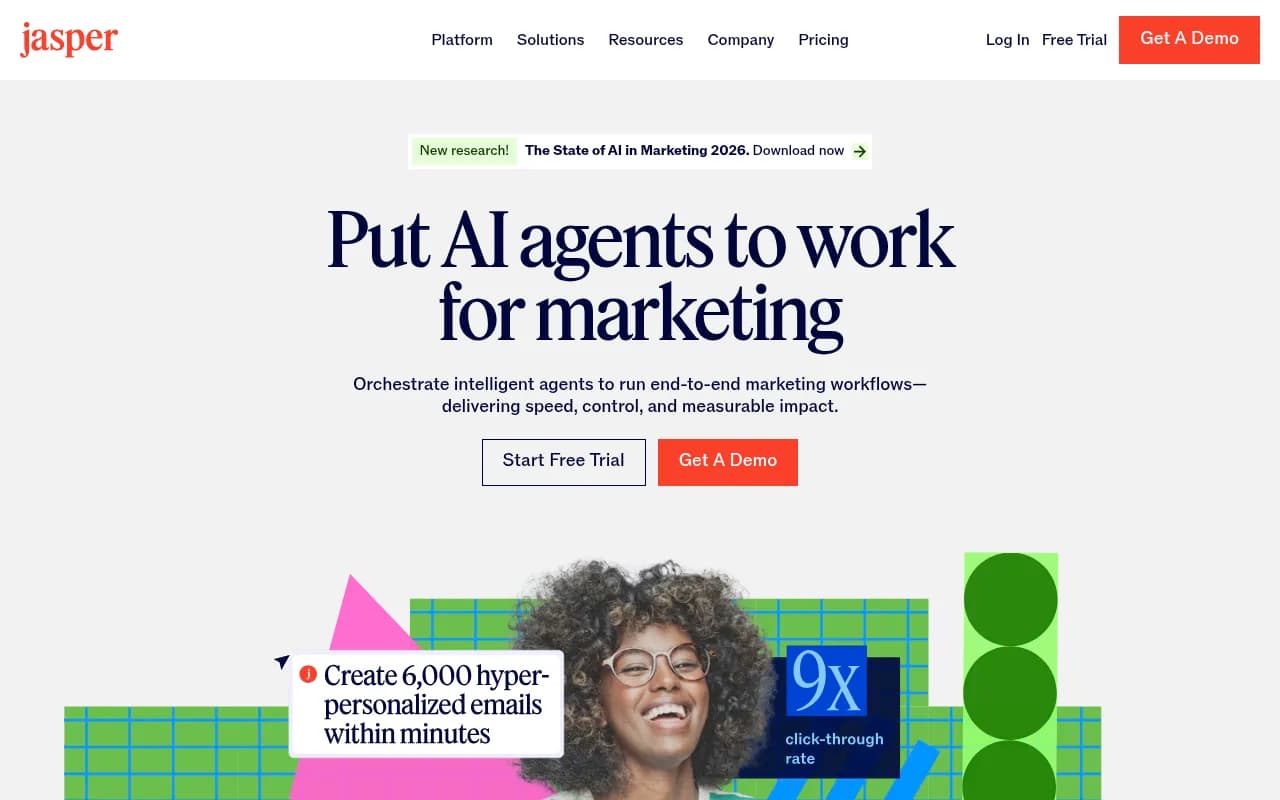
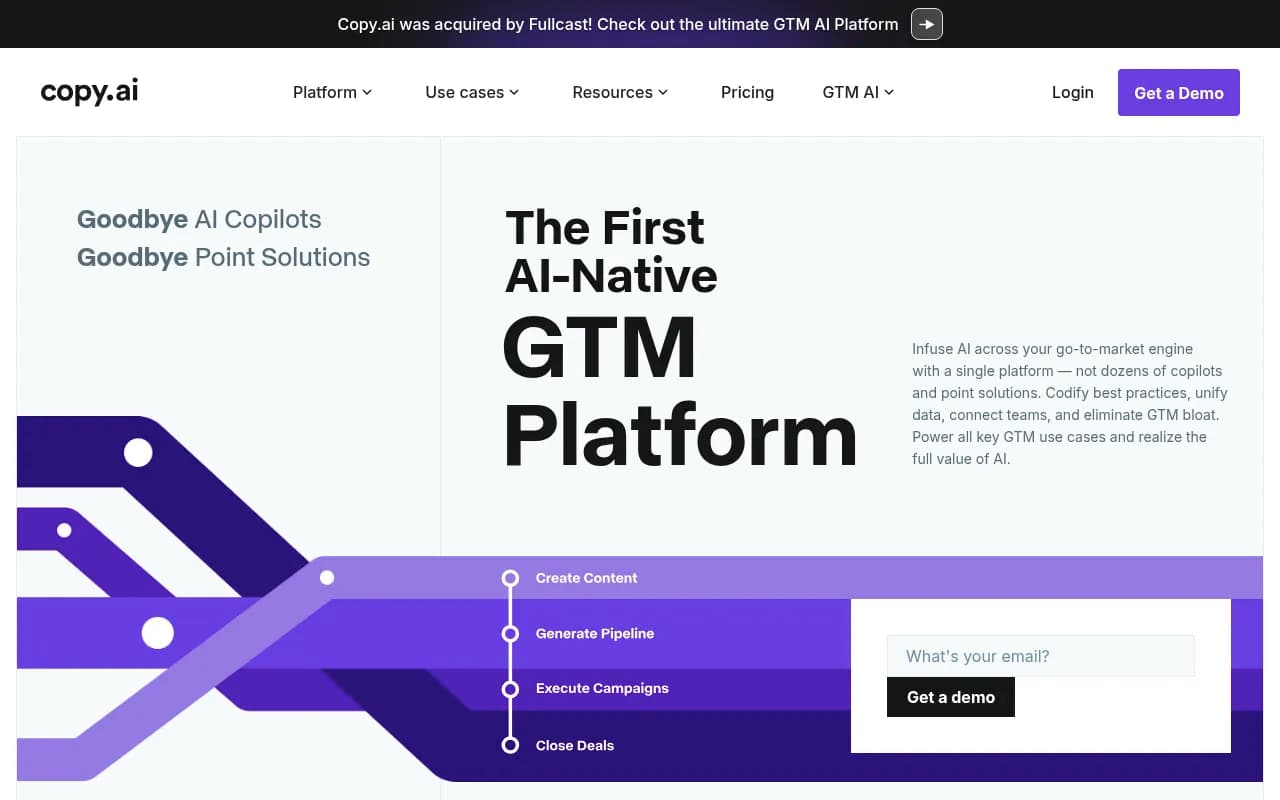
Jasper and Copy.ai run real agents across real marketing workflows, with no visibility data to ground them. Frase's scoring put Jasper at one of six stages. Both are fine writers; pair either with a tracker.
AirOps deserves a mention even without a full review: powerful grids that run content workflows across hundreds of URLs at once, with reusable Power Agents. But the learning curve is steep, output needs cleanup, and engine coverage sits around five. Worth a look if you have content-ops muscle and patience.
The hallucination tax
Agentic GEO means AI writing about your brand and publishing it. Sit with the safety numbers before you hand over the keys.
Neil Patel's team surveyed 565 marketers and tested 600 prompts. 47.1% encounter AI inaccuracies several times a week. More than 70% spend one to five hours a week fact-checking. 36.5% have had hallucinated content go live publicly. Only 23% trust AI output without review, and in their accuracy test, the best performer, ChatGPT, scored 59.7%. That's an F on most grading scales.
The 2026 paradox makes this trickier. Simple-task hallucination rates have fallen to roughly 0.7% on Gemini and 0.8% on OpenAI models, but the reasoning models now writing long-form content drift more on complex tasks, and GEO content is complex. The money is real too: hallucinations cost businesses an estimated $67.4B in 2024, and the Air Canada ruling established that companies are legally liable for what their chatbots say.
Safeguards, whichever tool you buy:
- Keep publishing in draft mode at first. Promptwatch's review inbox and Profound's Webflow drafts exist for exactly this reason. Full autopilot is something you earn after months of clean output.
- Treat the agent as a junior assistant. Humans own the final version, always.
- Fact-check the dangerous categories specifically: pricing, dates, competitor claims, statistics. That's where hallucinations do damage.
- Be suspicious of copy that reads too clean. In my experience, the confident, frictionless paragraph is often the fabricated one.
How to choose
| Your situation | Start with | Why |
|---|---|---|
| Enterprise, procurement-heavy | Profound | SOC 2 Type II, SSO, RBAC, dedicated specialist on a 24-hour SLA |
| Enterprise that wants execution, not dashboards | Promptwatch | Most complete end-to-end stack; Content Agents publish to three CMSs |
| Agency | Promptwatch or Profound | Promptwatch agency plans from $199/mo with unlimited projects and a white-label portal; Profound charges $399/mo per client workspace |
| Startup or SMB | Writesonic or Frase | Real content output from $79/mo and about $45/mo |
| Brand being misdescribed by AI | Whitebox or Evertune | Automatic narrative fixes, or 25M-person panel accuracy monitoring |
| SEO team moving into GEO | SearchAtlas | Conversational agent, familiar SEO vocabulary |
Two buying realities to plan around. First, regulated buyers in healthcare and financial services can eliminate six of the ten leading GEO tools immediately, because HIPAA alongside SOC 2 Type II is a hard requirement most platforms don't meet. Ask in the first call, not the last. Second, Writesonic's testing noted that the no-card trial era ended quietly between Q1 and Q2 2026: eight of nine tools with free trials now require a credit card. Calendar your cancellations.
One more thing worth internalizing: closing an AI visibility gap takes four streams of work, new on-page content, page refreshes, third-party outreach, and UGC engagement. Since AI engines pull 90%+ of citations from third-party sources, tools that only fix your own domain, however elegantly, address a minority of the problem. Pick a platform that at least shows you the offsite half.
The bottom line
If you want one platform that measures why you're invisible and then fixes it, Promptwatch has the most complete stack and competitive pricing among the leaders. If procurement runs your life, Profound is the safe answer, and its Agents builder is genuinely good. On a budget, Writesonic and Frase will produce real content for under $100/mo.
Whatever you pick, run a 30-day pilot: one prompt set, a baseline citation count, agents publishing with review, then measure the delta. The tool that earns your subscription is the one whose output you're comfortable letting near your brand. In 2026, that's the whole evaluation.