Key takeaways
- Most AEO tools are monitoring dashboards. They show you visibility scores and citation data, but stop short of helping you do anything about it.
- The tools worth paying for in 2026 connect gap discovery directly to content creation -- so you can move from "we're not being cited for this prompt" to "here's the article that fixes it" in the same workflow.
- A handful of platforms have genuinely built this loop end-to-end. Most have bolted on a basic AI writer and called it content generation.
- The gap between a monitoring tool and an optimization platform is real, and it shows up in results. Tracking your visibility score going down is not a strategy.
- If you're serious about AI search, look for: answer gap analysis, content generation grounded in citation data, page-level tracking, and traffic attribution. That's the full loop.
There's a version of AEO that a lot of teams are doing right now: they've set up a monitoring tool, they're watching their visibility scores, and they're filing reports. That's not nothing. But it's also not optimization.
The question worth asking in 2026 is: what happens after you find a gap? If your tool shows you that a competitor is being cited for "best project management software for remote teams" and you're not -- what do you do next? If the answer is "open a Google Doc and start writing," you're doing this the hard way.
This guide is specifically about the platforms that have built the second half of the workflow. Not just the tracking, but the content creation engine that sits on top of it. The tools that let you go from "here's a prompt we're losing" to "here's the published page that fixes it."
Why most AEO tools stop at monitoring
The monitoring-only model made sense when this category was new. In 2023 and early 2024, just knowing whether ChatGPT mentioned your brand was valuable intelligence. Teams were still figuring out what AI search even meant for their traffic.
That phase is over. AI Overviews now appear on a significant share of Google queries. ChatGPT's e-commerce traffic converts at a 31% higher rate than traditional organic search, according to Yotpo's 2026 ecommerce research. Paid click-through rates on queries with AI Overviews have dropped 68%. The stakes are real, and "we're tracking it" is no longer a sufficient response.
The problem is that most tools in this space were built to answer one question: "Are we visible?" They weren't built to answer the follow-up: "What do we publish to become visible?"
That's the gap this guide addresses.
What "built-in content generation" actually means
Before getting into specific tools, it's worth being precise about what separates real content generation from the feature-checkbox version.
A lot of platforms have added an "AI writer" button. You click it, it generates a generic article, you publish it, nothing changes. That's not what we're talking about.
Genuine content generation for AEO has a few specific requirements:
It has to be grounded in citation data. The content needs to reflect what AI models actually cite -- the topics, angles, formats, and sources that get pulled into responses. Generic SEO content doesn't cut it. The writing agent needs to know what ChatGPT, Perplexity, and Claude are actually rewarding.
It has to start from a gap, not a blank page. The workflow should begin with a specific prompt or topic where you're invisible, then generate content designed to close that specific gap. Not "write me an article about project management" but "write me content that addresses this exact query where our competitor is being cited and we're not."
It has to be trackable after publication. You need to see whether the content you published actually improved your visibility for that prompt. Without that feedback loop, you're guessing.
Tools that meet all three criteria are rare. Let's look at what's actually available.
The platforms that genuinely close the loop
Promptwatch
Promptwatch is the clearest example of a platform built around the full optimization cycle rather than just monitoring.

The workflow starts with Answer Gap Analysis -- you see the specific prompts where competitors are being cited and you're not. Not just "your visibility is lower than competitor X" but the actual queries, with volume estimates and difficulty scores, so you can prioritize which gaps are worth closing first.
From there, the built-in AI writing agent generates content grounded in 880M+ citations analyzed across 10 AI models. The articles, listicles, and comparisons it produces are engineered to match what AI models actually cite -- not generic SEO filler. It factors in prompt volumes, persona targeting, and competitor analysis before writing a word.
After you publish, page-level tracking shows exactly which pages are being cited, how often, and by which models. Traffic attribution (via code snippet, GSC integration, or server log analysis) connects visibility improvements to actual revenue. That's the full loop: find the gap, create the content, track the results.
A few capabilities worth noting that most competitors lack entirely: AI Crawler Logs show you in real time which pages ChatGPT, Claude, and Perplexity are reading on your site and what errors they're hitting. Reddit and YouTube tracking surfaces discussions that directly influence AI recommendations. ChatGPT Shopping tracking monitors when your brand appears in product recommendation carousels.
Pricing starts at $99/month for the Essential plan (1 site, 50 prompts, 5 articles). Professional is $249/month and adds crawler logs, state/city tracking, and 15 articles. Business is $579/month for 5 sites and 30 articles. Agency and enterprise pricing is custom.
Relixir
Relixir takes an interesting approach: it's positioned as an AI-native CMS with autonomous content capabilities. The idea is that the platform doesn't just help you write content -- it actively manages the content lifecycle for AI search visibility.
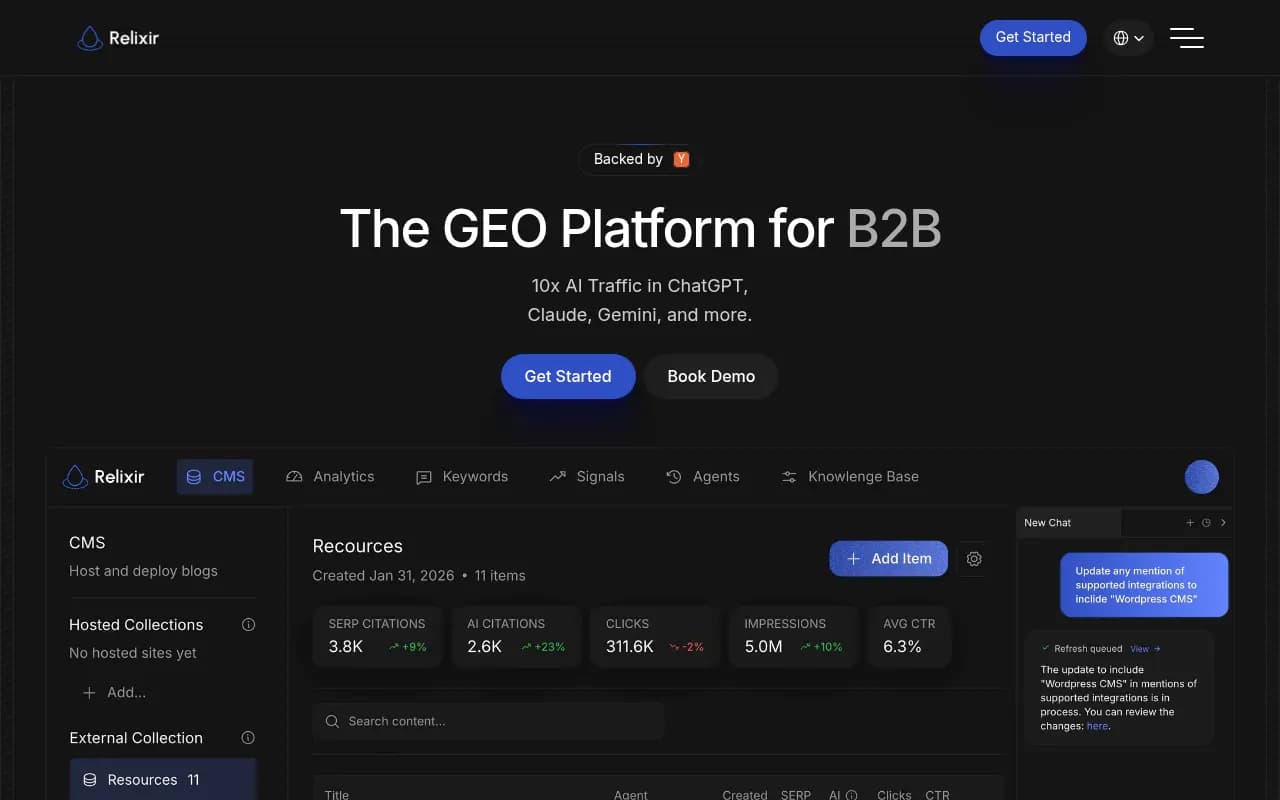
It's worth evaluating if you want a more autonomous, hands-off approach where the platform is doing more of the content decision-making. The tradeoff is control -- some teams want to be in the loop on every piece of content, others are happy to let the system run.
Whitebox
Whitebox calls itself an "agentic GEO platform" -- it generates and ships AI narrative fixes automatically. The pitch is that it identifies where your brand narrative is weak in AI responses and rewrites it without requiring manual intervention.
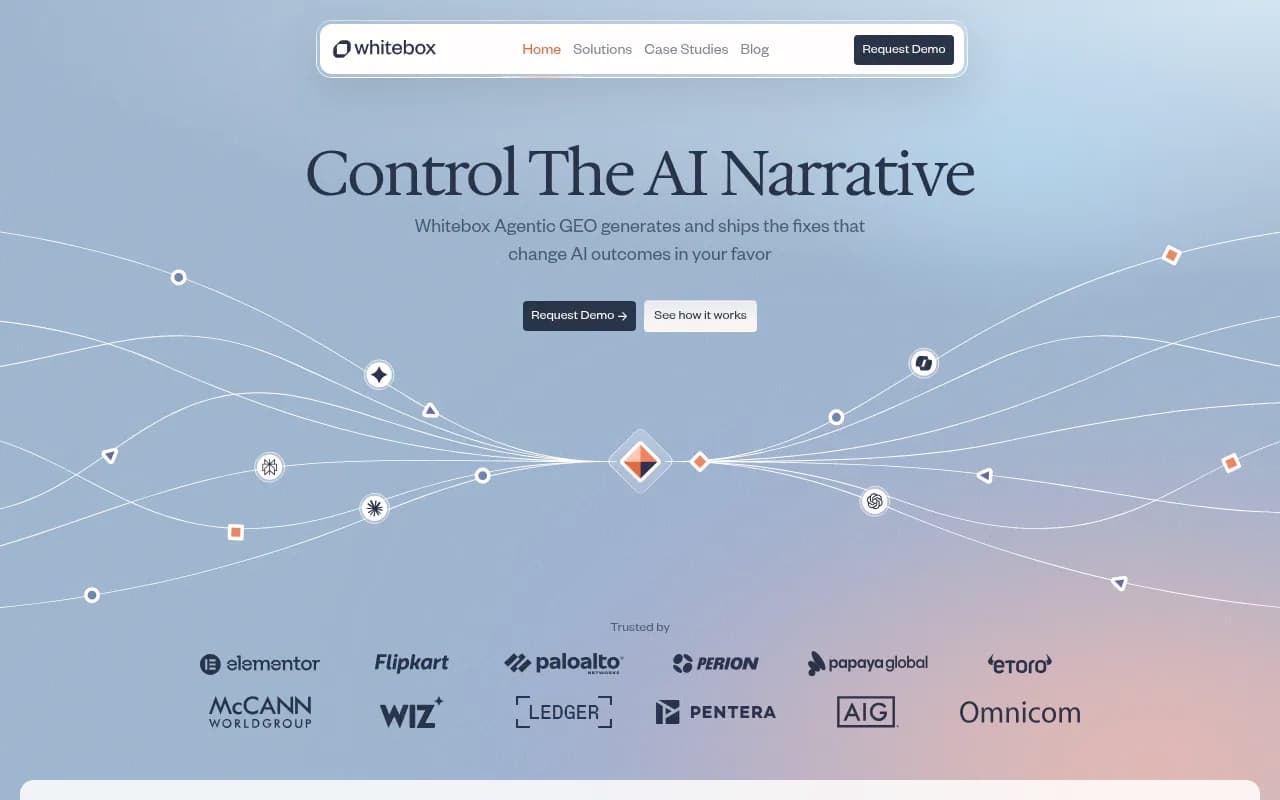
This is compelling for teams that are resource-constrained and want the platform to handle more of the execution. The question is whether the automated outputs match your brand voice and quality standards. Worth a trial to find out.
Searchable
Searchable sits in the middle ground -- it has both monitoring and content tools, though the content generation capabilities are less deeply integrated than Promptwatch's.
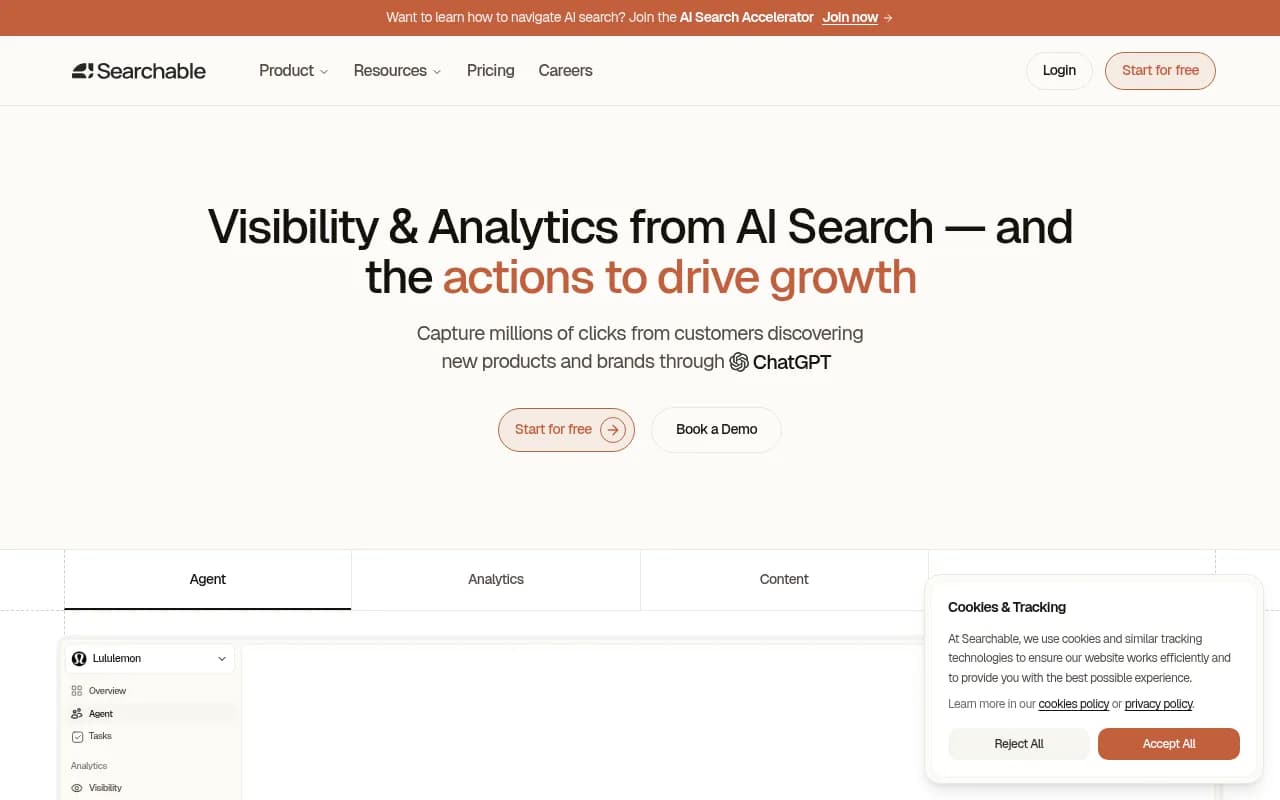
It's a reasonable option for teams that want a single platform covering both sides without committing to a more specialized tool.
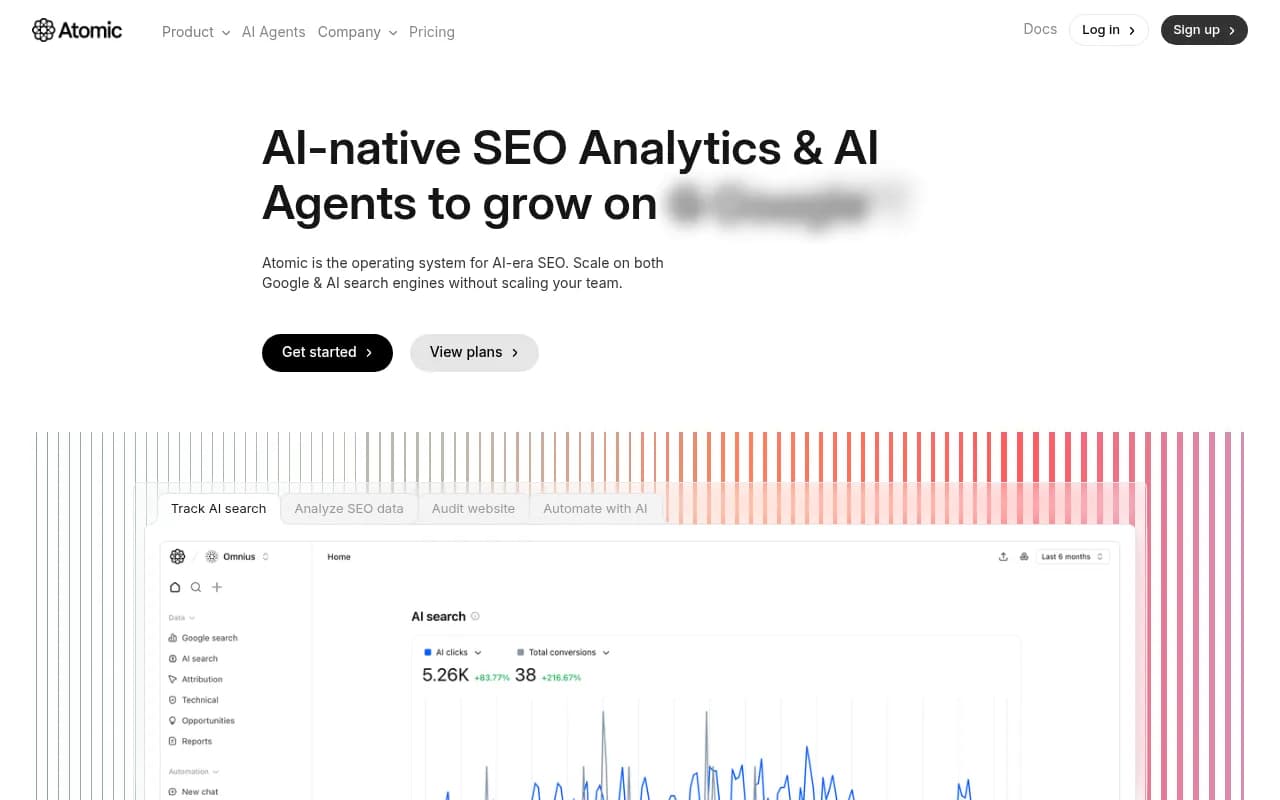
Atomic AGI
Atomic AGI tracks both Google and LLMs and includes automated content capabilities. The dual focus on traditional search and AI search is useful if you're managing both channels and don't want separate tools.
Tools that are strong on monitoring but light on content generation
These platforms are worth knowing about, but they're primarily tracking tools. If you need content generation, you'll need to pair them with a separate writing workflow.
Profound
Profound has solid visibility tracking and a clean interface. The prompt monitoring is detailed and the competitive analysis is useful. Content generation is not its strength.

AthenaHQ
AthenaHQ covers 8+ AI search engines and has good monitoring depth. Like Profound, it's monitoring-focused and doesn't have a meaningful content creation layer.

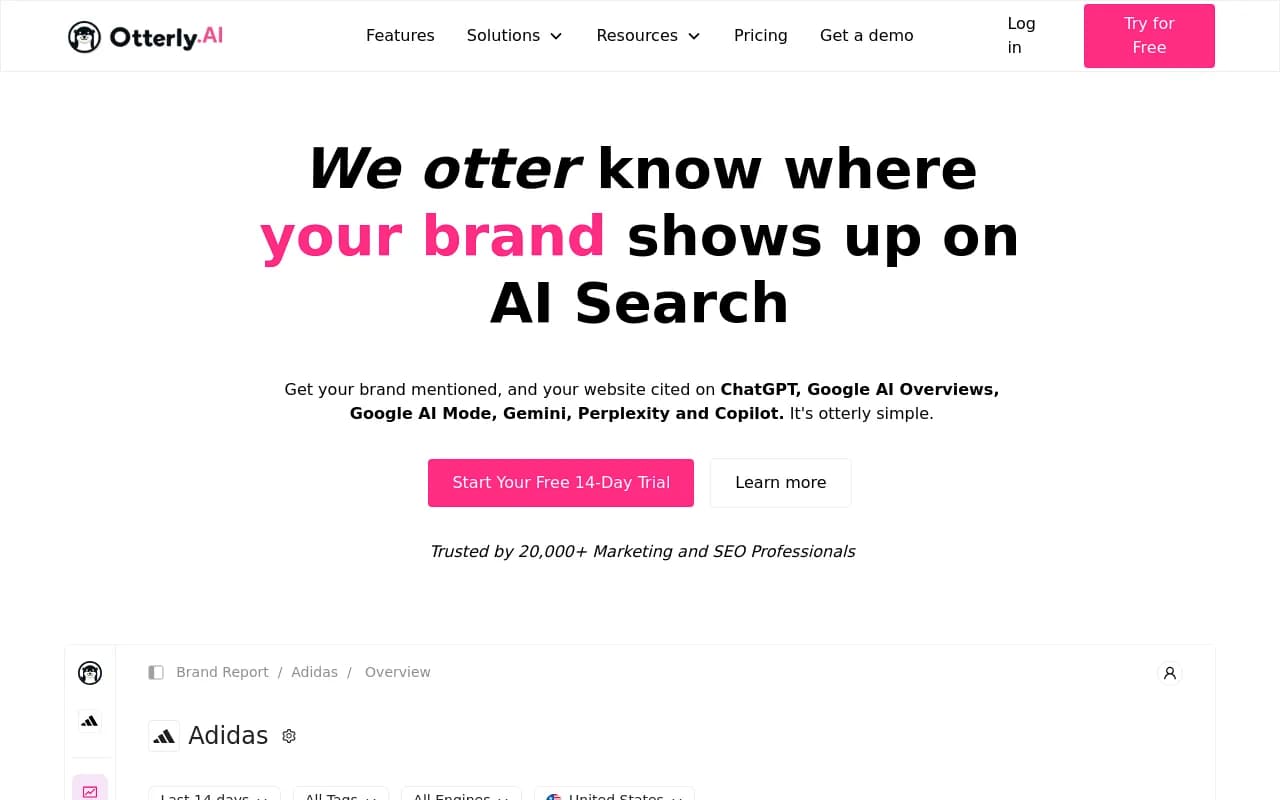
Otterly.AI
Otterly.AI is one of the more affordable options in the monitoring category. Good for teams that are just starting to track AI visibility and don't yet need the full optimization workflow.
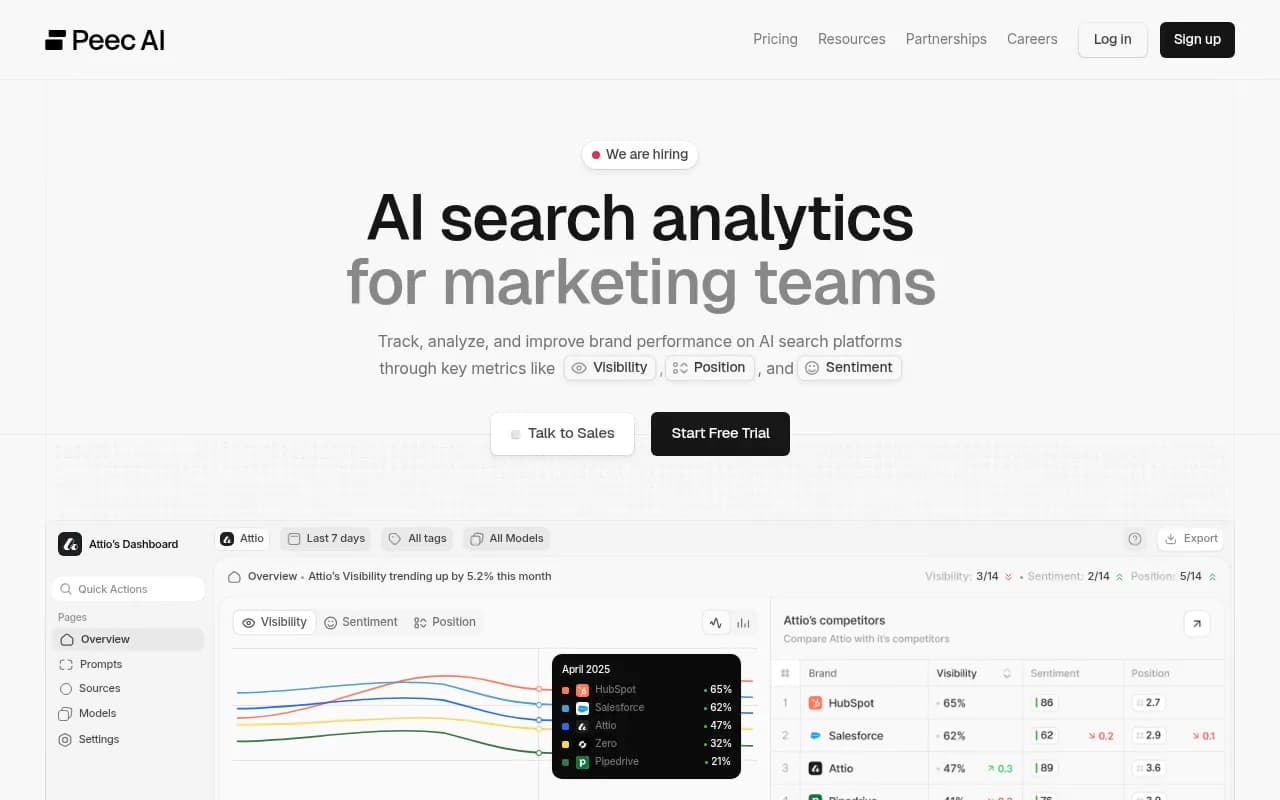
Peec AI
Peec AI has multi-language tracking, which is genuinely useful for international brands. The monitoring is solid. Content generation is minimal.
SE Ranking
SE Ranking is an all-in-one SEO platform that has added AI visibility tracking. If you're already using it for traditional SEO, the AI monitoring features are a reasonable addition. Don't expect deep content generation capabilities.
Tools with content creation that aren't AEO-specific
A few tools deserve mention because they're strong on content generation but aren't built around AI search visibility specifically. They can be useful as part of a broader workflow, but they won't tell you which gaps to close.
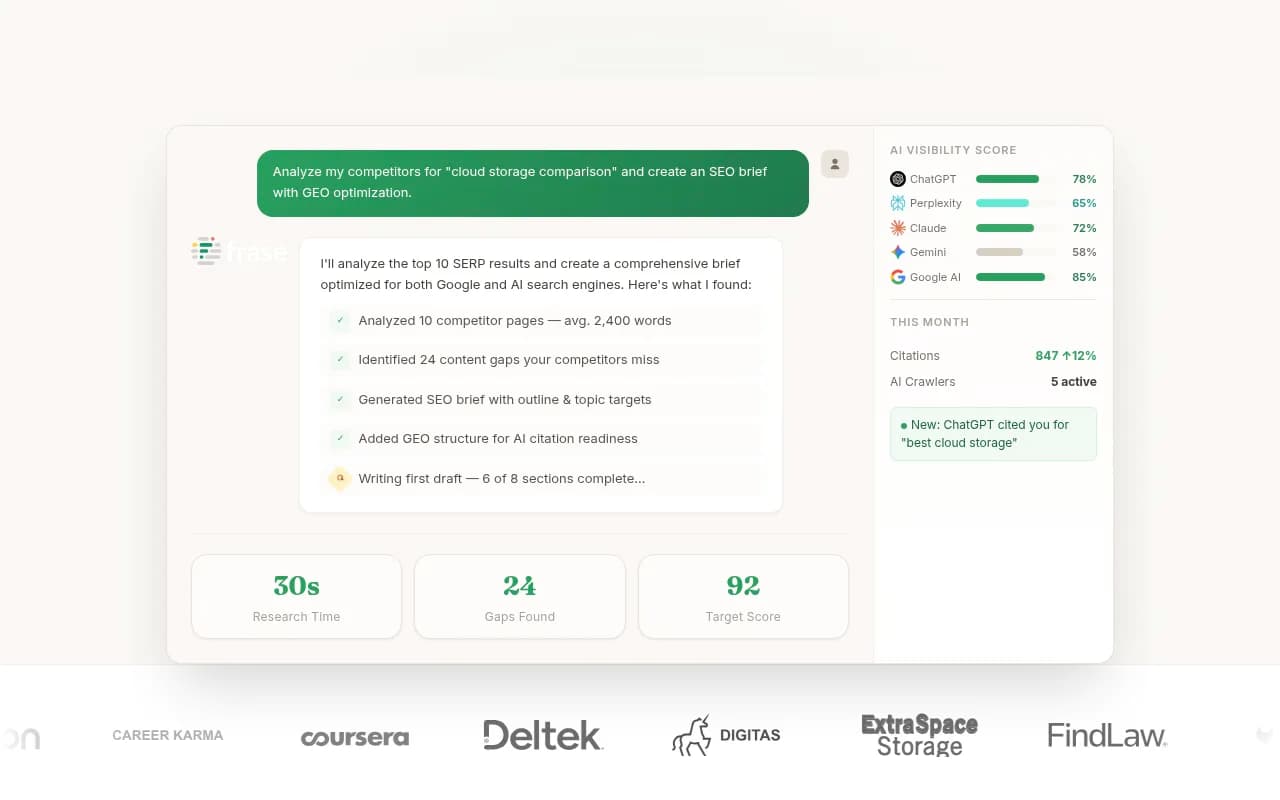
Frase
Frase researches, writes, and optimizes content with an SEO focus. It's good at content briefs and drafts. It doesn't track your AI search visibility or tell you which prompts to target.
Surfer SEO
Surfer SEO is excellent for content optimization against Google rankings. Its AI search capabilities are newer and less developed than its core product.
MarketMuse
MarketMuse does content planning well and has some visibility tracking. The gap analysis is more traditional SEO-oriented than AEO-specific.
How to evaluate any AEO tool with content generation claims
When a platform says it has "built-in content generation," here are the questions to ask before signing up:
Where does the content brief come from? If the answer is "you enter a keyword," that's a generic AI writer, not an AEO tool. The brief should come from specific gap analysis -- a prompt where you're losing visibility, with data on why.
What citation data informs the writing? The content needs to reflect what AI models actually cite. Ask the vendor: how many citations have you analyzed? Which models? How recent is the data?
Can you track the impact of published content? After you publish, does the platform show you whether that specific page is being cited more? If there's no feedback loop, you can't learn what's working.
Does it cover the AI models you care about? Some platforms only track one or two models. If your audience is using Perplexity and the tool only monitors ChatGPT, you're missing the picture.
What's the content quality actually like? This sounds obvious, but test it. Generate a few articles and read them. Generic, keyword-stuffed content won't get cited by AI models regardless of what the platform claims.
Comparison table: AEO tools with content generation
| Tool | Gap analysis | Content generation | Citation-grounded writing | Post-publish tracking | AI crawler logs | Pricing from |
|---|---|---|---|---|---|---|
| Promptwatch | Yes (Answer Gap Analysis) | Yes (AI writing agent) | Yes (880M+ citations) | Yes (page-level) | Yes | $99/mo |
| Relixir | Yes | Yes (autonomous) | Partial | Yes | No | Custom |
| Whitebox | Yes | Yes (agentic) | Partial | Partial | No | Custom |
| Searchable | Yes | Partial | No | Yes | No | Custom |
| Atomic AGI | Yes | Yes | Partial | Yes | No | Custom |
| Profound | Yes | No | No | Yes | No | Custom |
| AthenaHQ | Yes | No | No | Yes | No | Custom |
| Otterly.AI | Yes | No | No | Partial | No | ~$49/mo |
| Frase | Partial | Yes | No | No | No | $15/mo |
| Surfer SEO | No | Yes | No | No | No | $89/mo |
The practical workflow: what it looks like when it works
Here's what the gap-to-published-page workflow actually looks like when a platform has built it properly.
You start by reviewing your Answer Gap Analysis. You see that a competitor is being cited for "best CRM for small law firms" across ChatGPT, Perplexity, and Google AI Overviews. You're not cited at all. The prompt has meaningful volume and a difficulty score that suggests it's winnable.
You click into that prompt and see what the AI models are actually saying -- which sources they're citing, what angles they're covering, what your competitor's cited page looks like.
You trigger the content generation workflow. The writing agent produces a draft article targeting that specific prompt, structured around the angles and formats that AI models reward, with the depth and specificity that generic AI writers skip.
You review, edit to match your brand voice, and publish.
Two weeks later, you check page-level tracking and see that the new page is being cited in Perplexity responses for that prompt. A month later, you see a small but measurable uptick in AI-referred traffic in your attribution dashboard.
That's the loop. It's not magic -- it requires good content judgment and editorial review. But it's a workflow, not a guessing game.
What to watch for in the second half of 2026
A few trends worth tracking as this category evolves:
Query fan-outs are becoming more important. One prompt branches into dozens of sub-queries. Platforms that show you this branching structure help you prioritize content that covers multiple related prompts, not just one.
Reddit and YouTube are increasingly influential. AI models cite community discussions and video content heavily. Tools that track what's being cited from these platforms -- not just from branded websites -- give you a more complete picture of where to publish.
ChatGPT Shopping is a separate channel. For e-commerce brands, appearing in ChatGPT's product carousels is distinct from appearing in text responses. Only a handful of platforms track this specifically.
Traffic attribution is still the missing piece for most teams. Visibility scores are useful, but connecting AI citations to actual revenue requires proper attribution. Platforms that offer this -- whether through a code snippet, GSC integration, or server log analysis -- are ahead of the curve.
The tools that will matter in 12 months are the ones building toward this complete picture: gap discovery, content creation, citation tracking, and revenue attribution. Monitoring-only dashboards will keep losing relevance as teams demand more from their AEO investment.