Key takeaways
- Most AEO tools stop at monitoring. They show you where competitors appear in ChatGPT or Perplexity, but don't help you create the content that would get you cited instead.
- The tools worth paying for in 2026 close the full loop: find gaps, generate content grounded in real citation data, and track whether that content actually improves your AI visibility.
- A handful of platforms have built genuine content generation into their AEO workflow. The rest either bolt on a generic AI writer or leave content entirely to you.
- For teams that need to act on insights at scale, the gap between a monitoring-only tool and a full optimization platform is significant -- in time, output, and results.
There's a version of AEO tooling that's genuinely useful, and a version that's just a dashboard with a lot of red numbers.
The useful version tells you: "Here are the prompts your competitors are appearing for in ChatGPT. Here's what's missing from your site. Here's the article that would fix it." The dashboard version tells you your visibility score is 12% and leaves you to work out what to do next.
In 2026, the market is flooded with tools in the second category. Monitoring platforms, citation trackers, brand mention dashboards -- they've multiplied fast, and most of them are genuinely good at what they do. But "what they do" is show you a problem, not solve it.
This guide focuses specifically on AEO tools that include built-in content generation -- platforms where you can go from "I'm invisible for this prompt" to "I have a published article targeting this gap" without switching tools. That's a much shorter list, and the differences between them matter.
Why content generation belongs inside your AEO platform
The typical AEO workflow without built-in generation looks like this: run your visibility analysis, export a list of gaps, brief a writer or paste the gaps into ChatGPT, write something, publish it, wait a few weeks, check your visibility again. Each handoff loses context. The writer doesn't know which AI models you're trying to rank in, which competitors are winning for that prompt, or what citation patterns look like for that topic.
When content generation lives inside the same platform as your visibility data, the output is different. The article knows which prompts it's targeting. It's informed by what AI models actually cite for that topic -- not just what ranks on Google. It can be calibrated to the personas your customers use when they search.
That's the core argument for integrated content generation. It's not about convenience. It's about the content being better because it's built on the right data.
The tools that actually close the loop
Promptwatch
Promptwatch is the most complete implementation of this idea I've come across. The platform monitors your visibility across 10 AI models (ChatGPT, Claude, Perplexity, Gemini, Grok, DeepSeek, Copilot, Meta AI, Mistral, and Google AI Overviews), then uses that data to power a content generation workflow that's directly connected to what it finds.
The Answer Gap Analysis is the starting point: it shows you exactly which prompts competitors are appearing for that you're not. Not just "you're missing coverage in this topic area" -- specific prompts, with visibility data attached, so you can prioritize by impact. From there, the built-in AI writing agent generates articles, listicles, and comparisons grounded in 880M+ citations analyzed across those models. The content is engineered to get cited, not just to rank on Google.
What makes this different from bolting a generic AI writer onto a monitoring tool is the data layer. The writing agent knows what AI models cite for the prompts you're targeting. It knows which competitors are winning and why. It produces content that's calibrated to the actual citation patterns of ChatGPT or Perplexity, not just keyword density.
The loop closes with page-level tracking: once you publish, you can see which pages are being cited, by which models, and how often. Traffic attribution (via code snippet, GSC integration, or server log analysis) connects visibility to actual revenue.
Pricing starts at $99/month for the Essential plan (1 site, 50 prompts, 5 articles), $249/month for Professional (2 sites, 150 prompts, 15 articles, plus crawler logs and city-level tracking), and $579/month for Business (5 sites, 350 prompts, 30 articles). A free trial is available.

Relixir
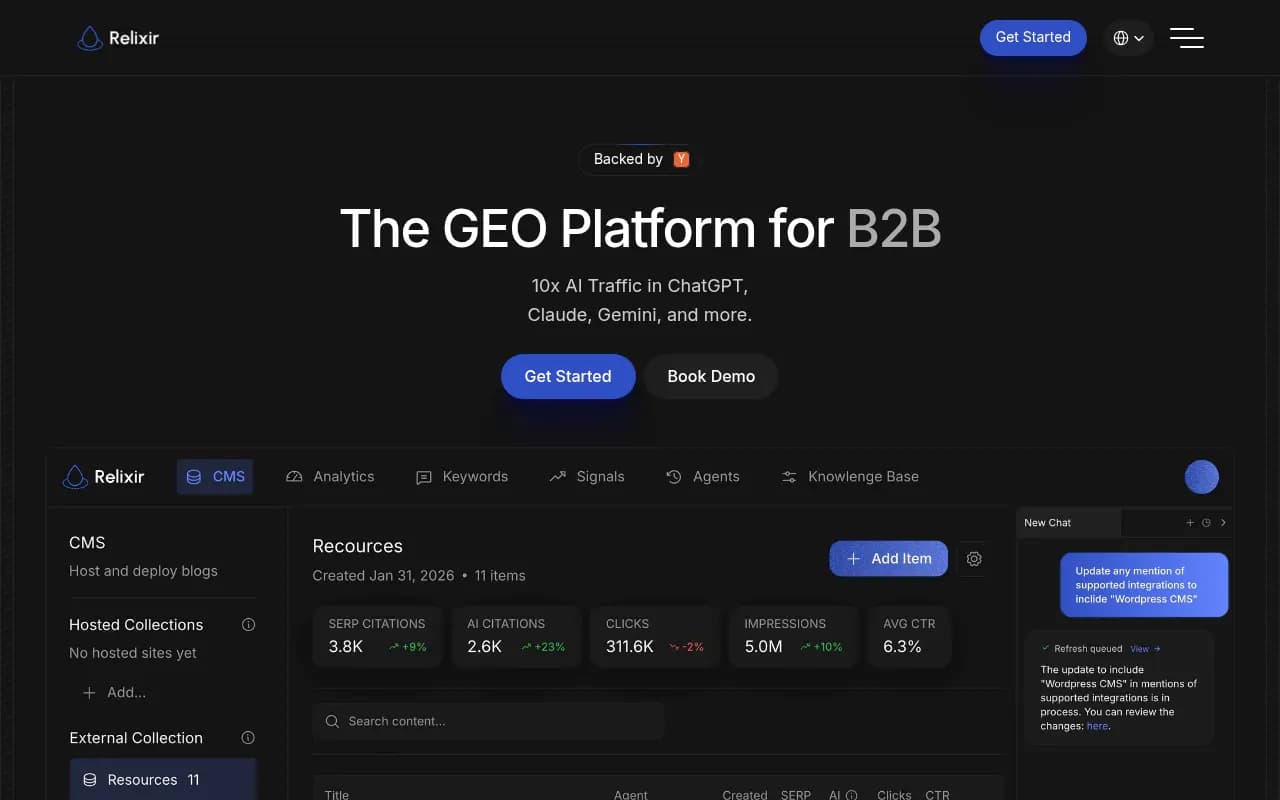
Relixir takes a more autonomous approach. It's built around what it calls an AI-native CMS -- the idea being that content creation for AI search should be managed differently from traditional CMS workflows. The platform identifies gaps, generates content, and can publish it without requiring manual intervention at each step.
It's a good fit for teams that want high-volume output with minimal bottlenecks. The tradeoff is that autonomous publishing requires trust in the output quality, and the citation data layer isn't as deep as Promptwatch's.
Whitebox
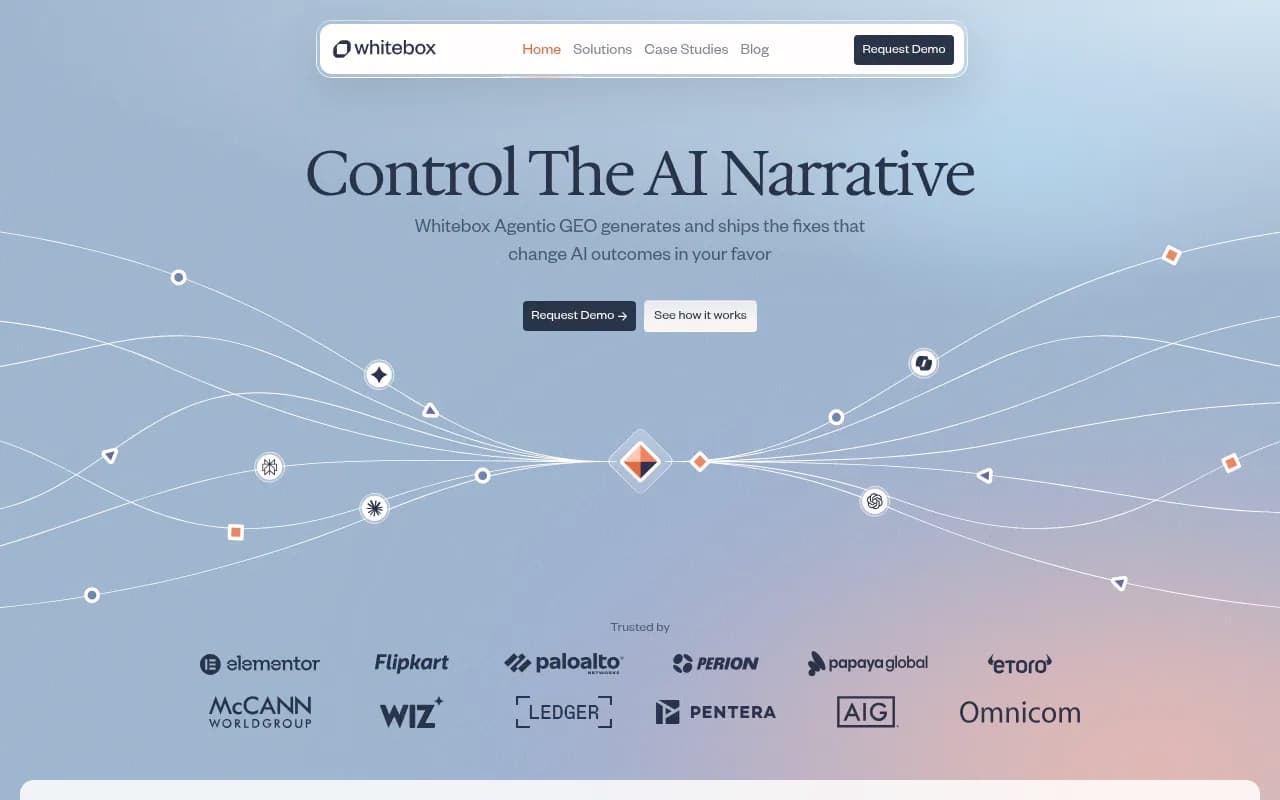
Whitebox describes itself as an "agentic GEO platform" -- it generates and ships AI narrative fixes automatically. The focus is on what it calls narrative gaps: places where AI models describe your brand or category in ways that don't match your positioning, or where competitors have claimed the framing.
It's more opinionated than most tools about what "fixing" AI visibility means. Rather than just generating articles, it targets the specific language patterns and framing that AI models use when they discuss your category. Interesting approach, though it's more specialized than a general-purpose content generation workflow.
SearchAtlas LLM Visibility
SearchAtlas has been building out its LLM visibility features alongside its existing SEO automation suite. The content generation side is powered by its conversational agent, which can take visibility gaps and turn them into content briefs or full drafts.
The advantage here is that SearchAtlas users already have a lot of traditional SEO data in the platform, so the content generation can draw on both AI citation patterns and conventional keyword research. Useful if you're running parallel SEO and AEO programs and want them in one place.

Atomic AGI
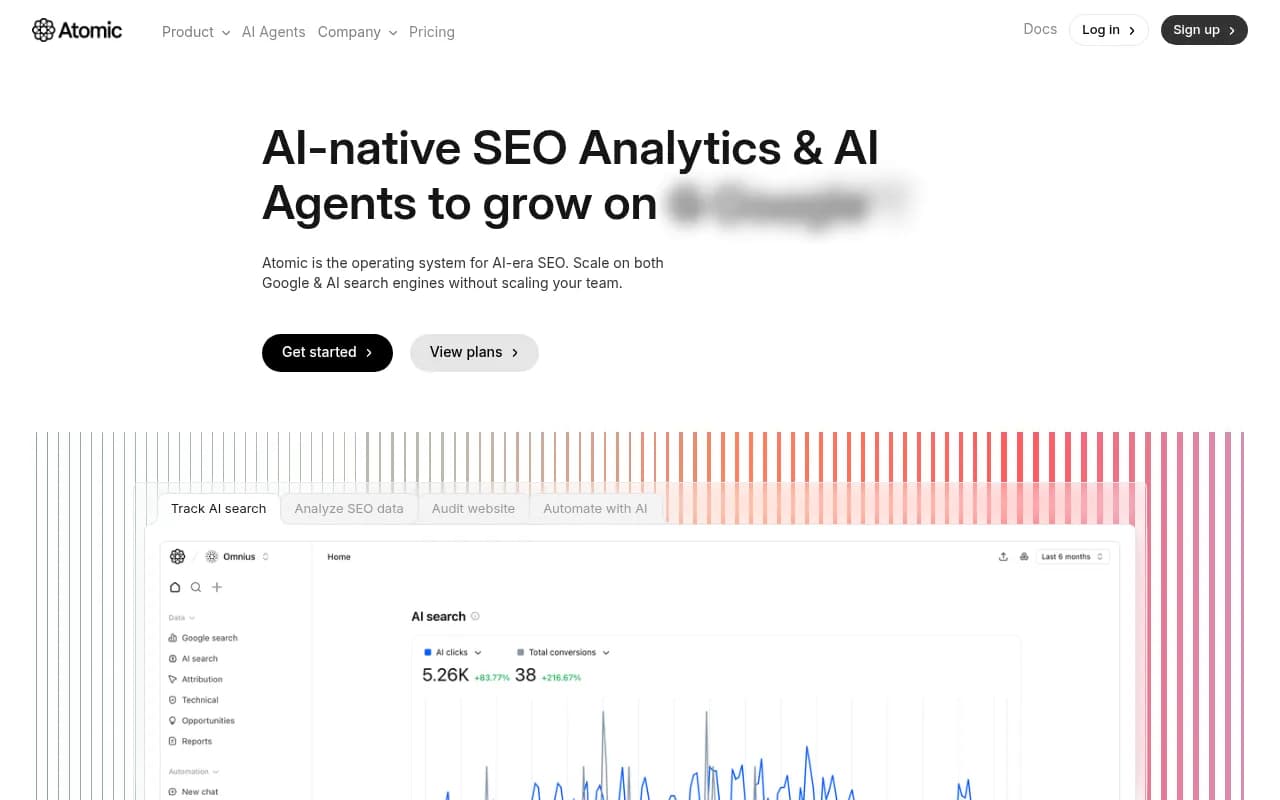
Atomic AGI tracks visibility across Google and LLMs simultaneously and includes automated content generation as part of its optimization workflow. It's positioned as an AI-native SEO platform, meaning it treats AI search and traditional search as one unified problem rather than separate channels.
The content generation is tightly integrated with its ranking analysis, which is useful for teams that don't want to think about "SEO content" and "AEO content" as separate things.
Tools that monitor well but don't generate content
These platforms are worth knowing about because they're strong at the tracking side. If you're pairing a monitoring tool with a separate content workflow, these are the ones to consider.
Profound is one of the more capable enterprise monitoring platforms. Deep visibility data, good prompt coverage, solid competitor analysis. No content generation built in, but the data quality is high enough that it's useful as a research layer even if you're writing elsewhere.

AthenaHQ tracks visibility across 8+ AI engines and has strong competitive intelligence features. Monitoring-focused, but the data is actionable enough that teams with dedicated writers can work from it effectively.

Otterly.AI is a lightweight, affordable option for teams that just need basic monitoring without the complexity of a full platform. Good starting point, but you'll quickly outgrow it if you're serious about optimization.

Peec AI has solid multi-language tracking, which makes it useful for international brands. No content generation, but the coverage across languages is better than most.

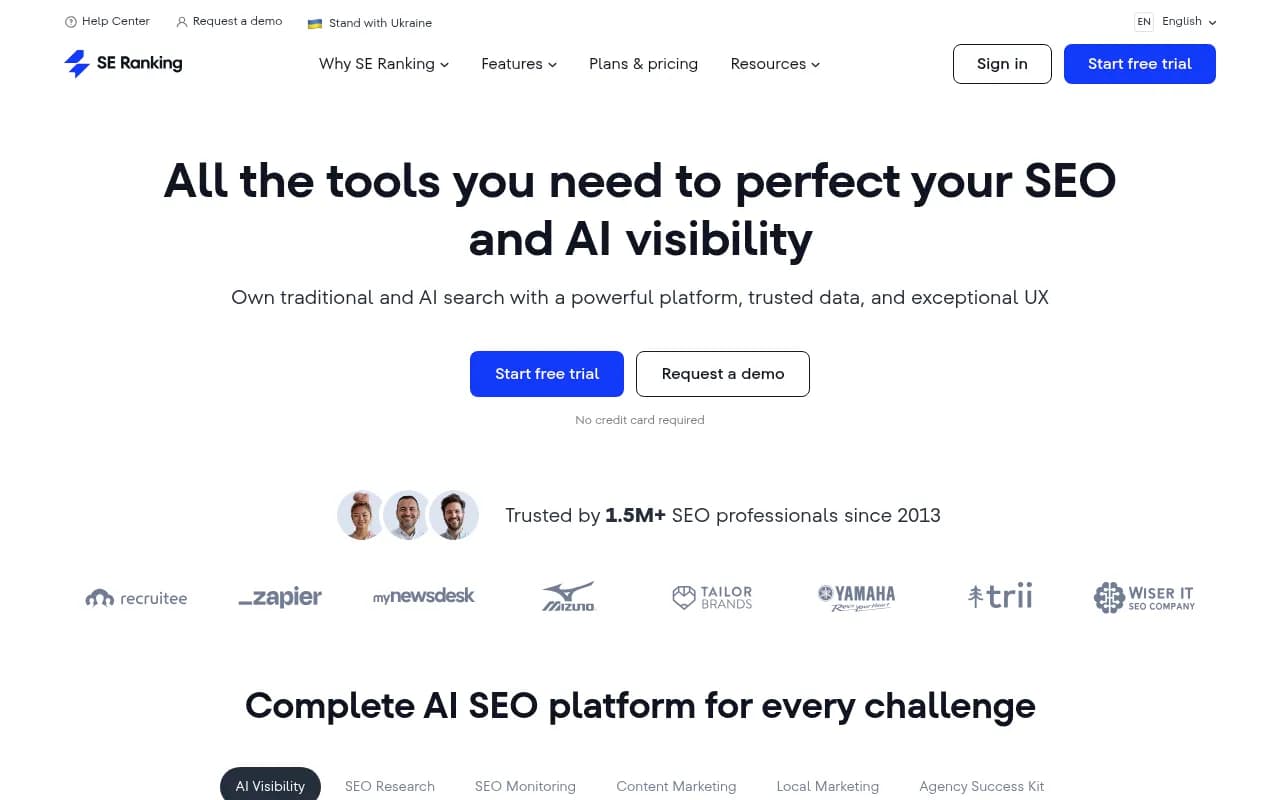
SE Ranking has been building out its AI visibility toolkit alongside its existing SEO platform. More of a traditional SEO tool with AI monitoring added, but the combination is useful for teams already in the SE Ranking ecosystem.
Comparison: AEO tools with and without content generation
| Tool | Content generation | Gap analysis | Citation tracking | AI models covered | Starting price |
|---|---|---|---|---|---|
| Promptwatch | Yes (AI writing agent) | Yes (Answer Gap Analysis) | Yes (880M+ citations) | 10 | $99/mo |
| Relixir | Yes (autonomous) | Yes | Yes | 6+ | Custom |
| Whitebox | Yes (narrative fixes) | Yes | Partial | 5+ | Custom |
| SearchAtlas | Yes (conversational agent) | Yes | Yes | 6+ | $99/mo |
| Atomic AGI | Yes (automated) | Yes | Yes | 5+ | Custom |
| Profound | No | Yes | Yes | 6+ | $199/mo |
| AthenaHQ | No | Yes | Yes | 8+ | $199/mo |
| Otterly.AI | No | Limited | Yes | 5+ | $29/mo |
| Peec AI | No | Limited | Yes | 5+ | $49/mo |
| SE Ranking | No | Limited | Partial | 4+ | $52/mo |
What to look for in a content generation workflow
Not all built-in content generation is equal. A few things worth checking before committing to a platform:
What data is the content based on? Generic AI writing tools generate plausible text. AEO-specific content generation should be grounded in actual citation data -- what AI models cite for the prompts you're targeting, which competitors are being referenced, what topics are covered in cited sources. If the platform can't tell you this, the content generation is just a convenience feature, not a strategic one.
Does it track whether the content works? Publishing an article is step one. Knowing whether that article actually improved your visibility in ChatGPT or Perplexity is step two. Platforms that close this loop -- showing you page-level citation data after publication -- are significantly more useful than ones that stop at generation.
How does it handle prompt targeting? The best content generation workflows let you specify which prompts you're targeting and generate content calibrated to those prompts. If the tool just generates "SEO content" without connecting it to specific AI search queries, you're not getting the full benefit.
What's the volume limit? Content generation at the article level is expensive to run, which is why most platforms cap it. Promptwatch's Essential plan includes 5 articles per month, Professional includes 15, Business includes 30. That's a reasonable range for most teams, but enterprise teams running large-scale programs will want to check limits carefully.
The monitoring-only trap
It's worth being direct about something: monitoring tools are easy to buy and hard to act on.
You get a dashboard showing your visibility score, your competitors' scores, and a list of prompts where you're not appearing. Then what? Most teams either export the data and try to brief writers manually, or they look at the dashboard for a few weeks and then stop checking it because nothing is changing.
The platforms with built-in content generation force a different behavior. The gap analysis leads directly to a content brief, which leads directly to a draft, which leads directly to publication. The workflow is shorter, the context is preserved, and the feedback loop is tighter.
That's not to say monitoring-only tools are useless. If you have a strong content team and a clear process for turning visibility data into content briefs, a monitoring tool like Profound or AthenaHQ can work well. But for most marketing teams, the integrated approach produces more output with less friction.
Who should use which type of tool
You need monitoring only if: you have a dedicated content team that can take visibility data and run with it, you're primarily using AEO data for strategic decisions rather than content production, or you're in an early research phase and not ready to publish at volume.
You need integrated content generation if: you want to move from gap identification to published content without multiple tool handoffs, your team doesn't have bandwidth to manually brief and write AEO content, or you want the content to be directly calibrated to AI citation patterns rather than general SEO best practices.
You need enterprise-grade tooling if: you're managing multiple brands or sites, you need multi-language and multi-region coverage, or you need to connect AI visibility data to revenue attribution. Promptwatch's Business and Agency tiers, along with platforms like Profound and BrightEdge, are built for this scale.
The practical starting point
If you're new to AEO and want to understand where you stand before investing in a full platform, a few lighter-weight tools can give you a quick read:
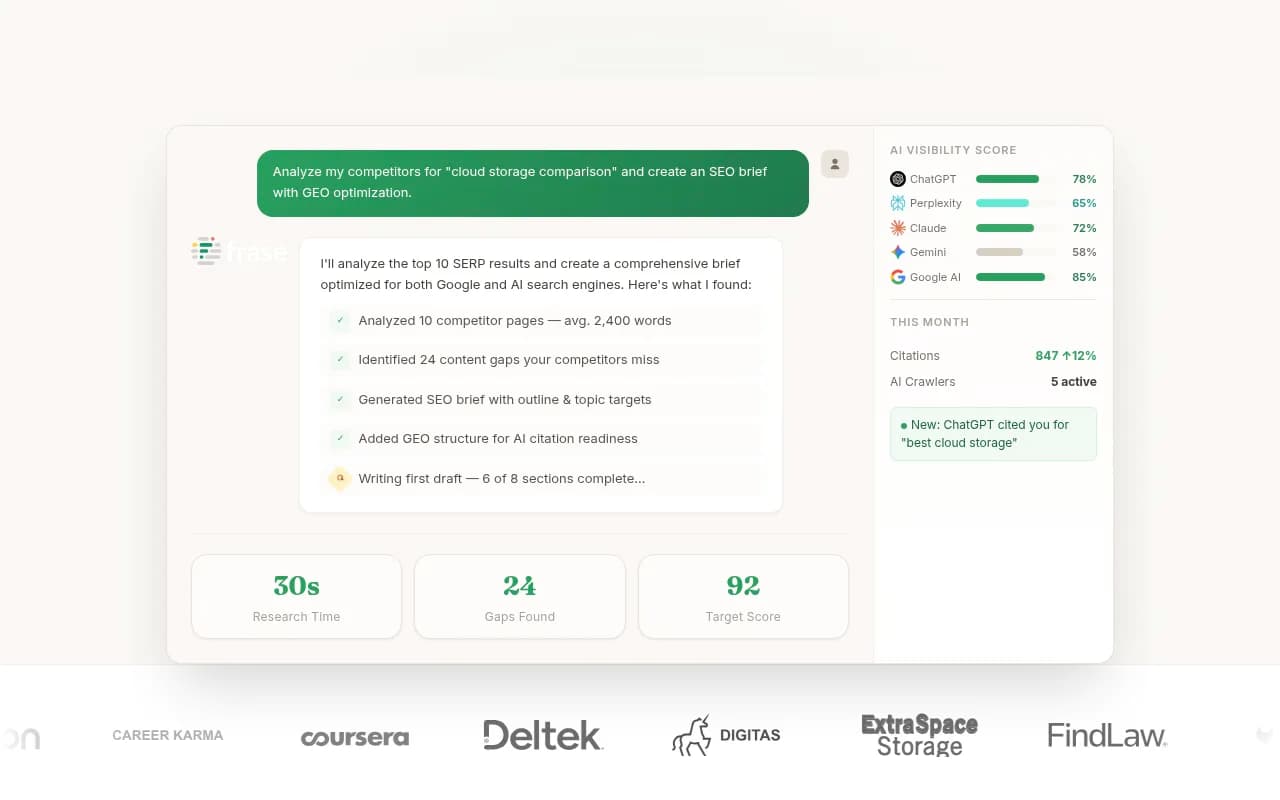
Frase is useful for understanding what questions AI models are likely to answer for your topic area, even if it's not a dedicated AEO platform.
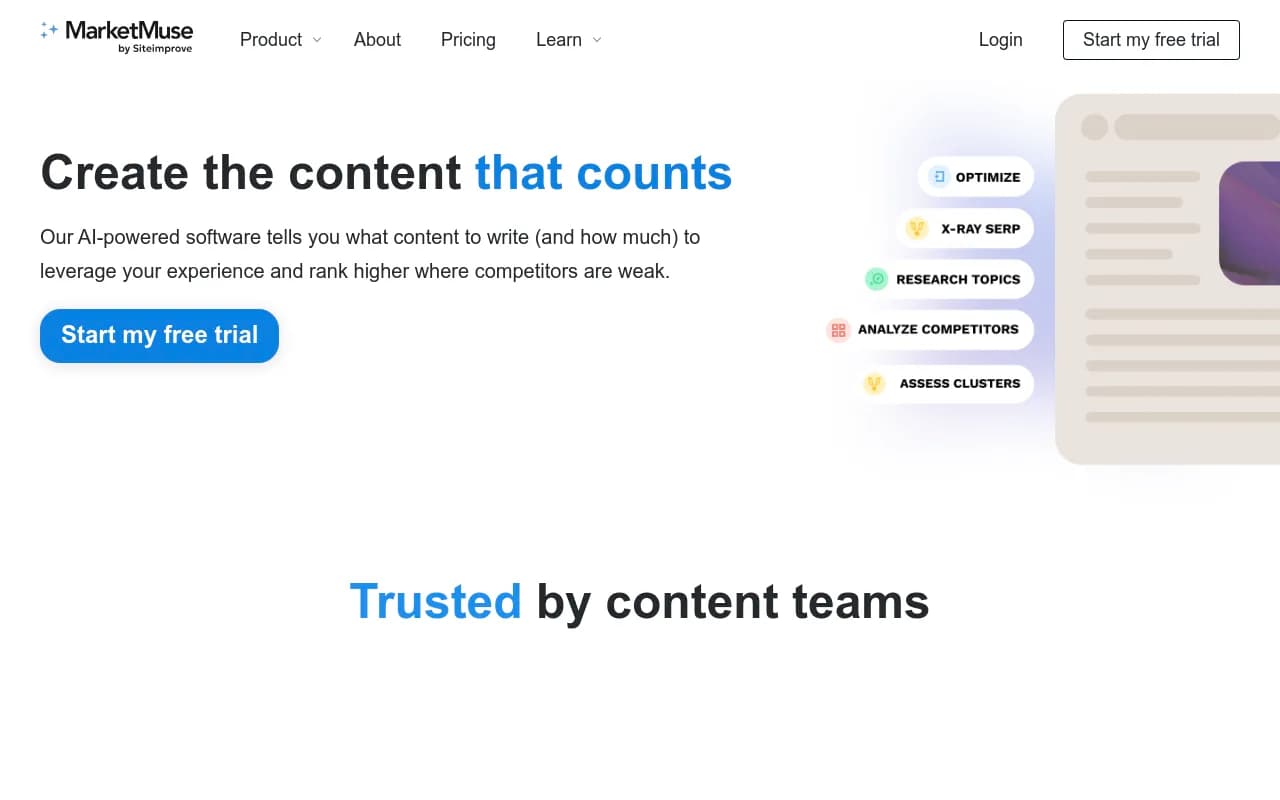
MarketMuse has content planning features that overlap with AEO gap analysis, particularly around topic coverage and content depth.
But if you're serious about AI search visibility as a growth channel -- and the data suggests you should be, given that 42% of buyers now use AI search in their evaluation process -- the lightweight tools will get you oriented but won't get you results. The platforms that combine gap analysis, content generation, and visibility tracking are where the actual work happens.
The question isn't whether to invest in AEO tooling. It's whether you want a tool that shows you the problem or one that helps you fix it.