Key takeaways
- AEO (Answer Engine Optimization) is no longer optional -- 42% of buyers now use AI search as part of their evaluation process, and ChatGPT-referred traffic converts 31% higher than traditional organic search.
- Most AEO tools are built for enterprise teams with enterprise budgets. But there are solid options starting at $0-$99/month that cover the basics for small businesses.
- The biggest mistake small teams make: picking a monitoring-only tool and calling it done. Tracking visibility is step one. You also need to know what content to create and whether it's working.
- Free tools can get you started, but they cap out fast. A paid tool in the $50-$150/month range is the sweet spot for most small businesses.
- For teams that want to go beyond monitoring into actual optimization -- content gap analysis, AI-targeted writing, and traffic attribution -- Promptwatch is worth a look at $99/month.
Why small businesses can't ignore AEO anymore
A year ago you could argue that AI search visibility was a "nice to have." That argument is getting harder to make.
According to HubSpot's own research, 42% of buyers now use AI search as part of their evaluation process. Paid click-through rates on queries with AI Overviews have dropped 68%. And a 2025 Ahrefs study found that only 12% of URLs cited by ChatGPT, Gemini, and Copilot also rank in Google's top 10 for the same prompt. The two surfaces have genuinely decoupled.
For a small business, this creates a real problem. You've spent years building Google rankings. Now there's a parallel search layer -- ChatGPT, Perplexity, Claude, Google AI Overviews -- where your brand may be completely invisible, and your traditional SEO tools won't tell you.
The good news: you don't need a $2,000/month enterprise contract to fix this. The AEO tool market has matured enough that small businesses have real options. The bad news: a lot of those options are monitoring dashboards that show you a problem without helping you solve it.
This guide cuts through that. Here's what actually matters, what to avoid, and which tools are worth your money at a small-business budget.
What AEO tools actually do (and what most don't)
Before comparing tools, it helps to be clear about what the category covers.
At minimum, an AEO tool should:
- Track how often your brand appears in AI-generated answers across major models (ChatGPT, Perplexity, Gemini, Claude, Google AI Overviews)
- Show you which competitors are appearing for prompts you're not
- Identify which pages on your site are being cited (and which aren't)
- Give you some signal on what content to create or fix
Most tools do the first two. Far fewer do the last two. And almost none of the cheaper options help you actually create content that gets cited -- they hand you a dashboard and leave you to figure out the rest.
The best AEO workflow for a small business looks like this:
- Find where you're invisible (which prompts, which models)
- Understand why (missing content, weak authority, wrong format)
- Create content that fills the gap
- Track whether it worked
Most tools only cover step one. Keep that in mind as you evaluate options.
The real cost of "free" and "cheap" AEO tools
Free tools exist and some are genuinely useful for getting started. But they come with real limitations:
- Prompt limits (often 5-10 prompts per month, which tells you almost nothing at scale)
- Single-model coverage (tracking only ChatGPT, for example, misses Perplexity, Gemini, Claude, and others)
- No historical data, so you can't see trends
- No content recommendations -- just raw visibility scores
- No traffic attribution, so you can't connect AI citations to actual revenue
For a solo founder or a very early-stage business, free tools are fine as a starting point. For anyone running a real marketing operation -- even a small one -- you'll hit the ceiling fast.
The sweet spot for small businesses is roughly $50-$150/month. At that price point, you get meaningful prompt coverage, multi-model tracking, and at least some actionable recommendations. Let's look at what's available.
Best AEO tools for small businesses in 2026
Promptwatch -- best overall for small businesses that want to optimize, not just monitor
At $99/month (Essential plan), Promptwatch covers 1 site, 50 prompts, and 5 AI-generated articles per month. That's enough for most small businesses to get meaningful signal and start acting on it.
What separates it from the monitoring-only tools in this price range: the Answer Gap Analysis shows you exactly which prompts competitors are visible for that you're not, and the built-in AI writing agent generates content engineered to get cited -- not generic SEO filler. It tracks 10 AI models including ChatGPT, Perplexity, Claude, Gemini, Google AI Overviews, and others.
For small businesses that want to close the loop from "where am I invisible" to "here's the content that fixes it," this is the most complete option at this price point.

Otterly.AI -- best for budget-conscious monitoring
Otterly.AI is one of the more affordable entry points for AI visibility tracking. It's a monitoring-focused tool -- you get brand mention tracking across AI models without a lot of the optimization features. For a small business that just wants to know whether ChatGPT is mentioning them (and what it's saying), it's a reasonable starting point.
The limitation is that it stops at monitoring. There's no content gap analysis, no AI writing, no crawler logs. But if your only goal right now is awareness, it's a low-cost way to get there.

Peec AI -- best for competitive intelligence on a small-business budget
Peec AI is specifically positioned for growing businesses that need competitive intelligence without enterprise pricing. It tracks AI citations and gives you a view of how competitors are performing across AI search engines.
It's more monitoring-focused than optimization-focused, but the competitive benchmarking is useful if you're in a crowded category and want to understand who's winning the AI visibility game in your space.

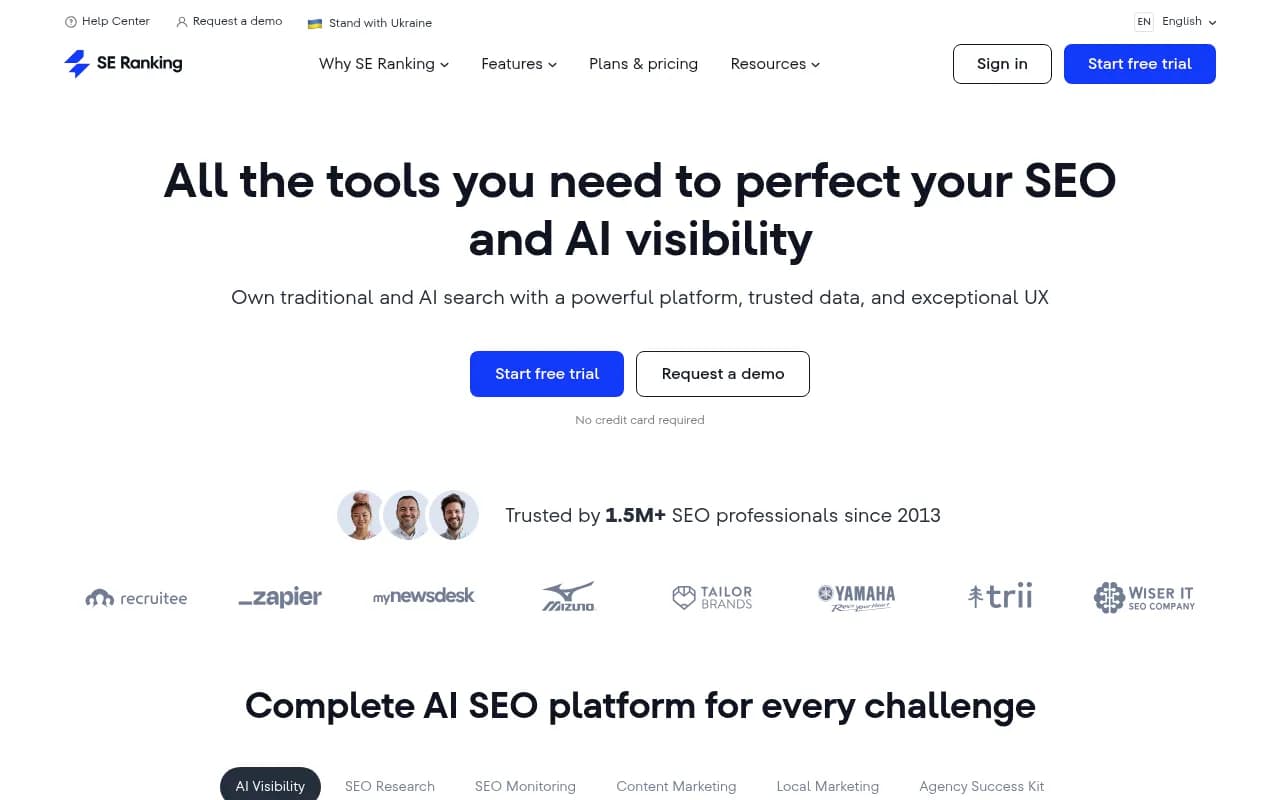
SE Ranking -- best for teams that already use traditional SEO tools
SE Ranking is an all-in-one SEO platform that has added an AI visibility toolkit. If you're already paying for traditional SEO features (rank tracking, site audits, keyword research), the AI visibility layer comes bundled in, which makes the effective cost very low.
The AI visibility features aren't as deep as dedicated AEO tools, but for a small business that doesn't want to manage multiple subscriptions, it's a practical choice.
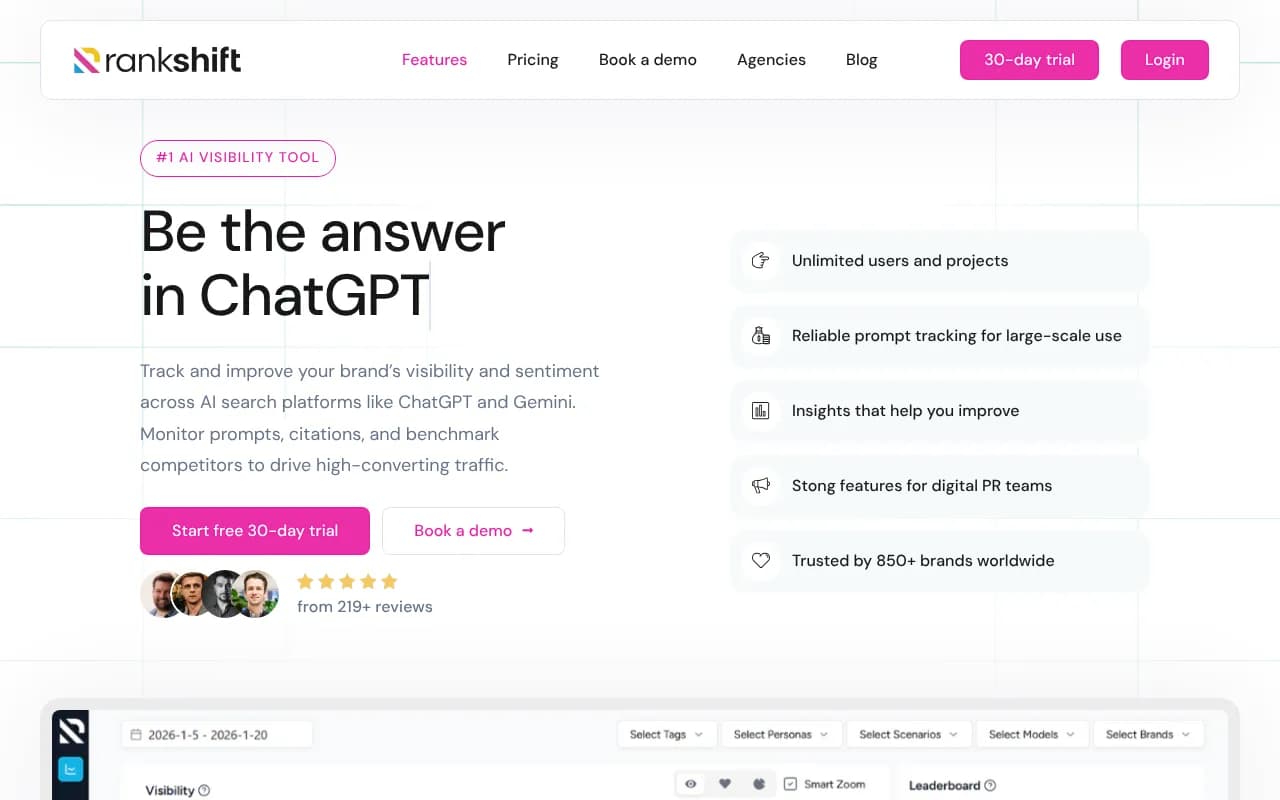
Rankshift -- best for straightforward LLM tracking
Rankshift is a focused LLM tracking tool for GEO and AI visibility. It's simpler than the full-featured platforms, which is actually a feature for small teams that don't want to spend hours learning a complex dashboard. You set up your prompts, it tracks your visibility across models, and you get clean reporting.
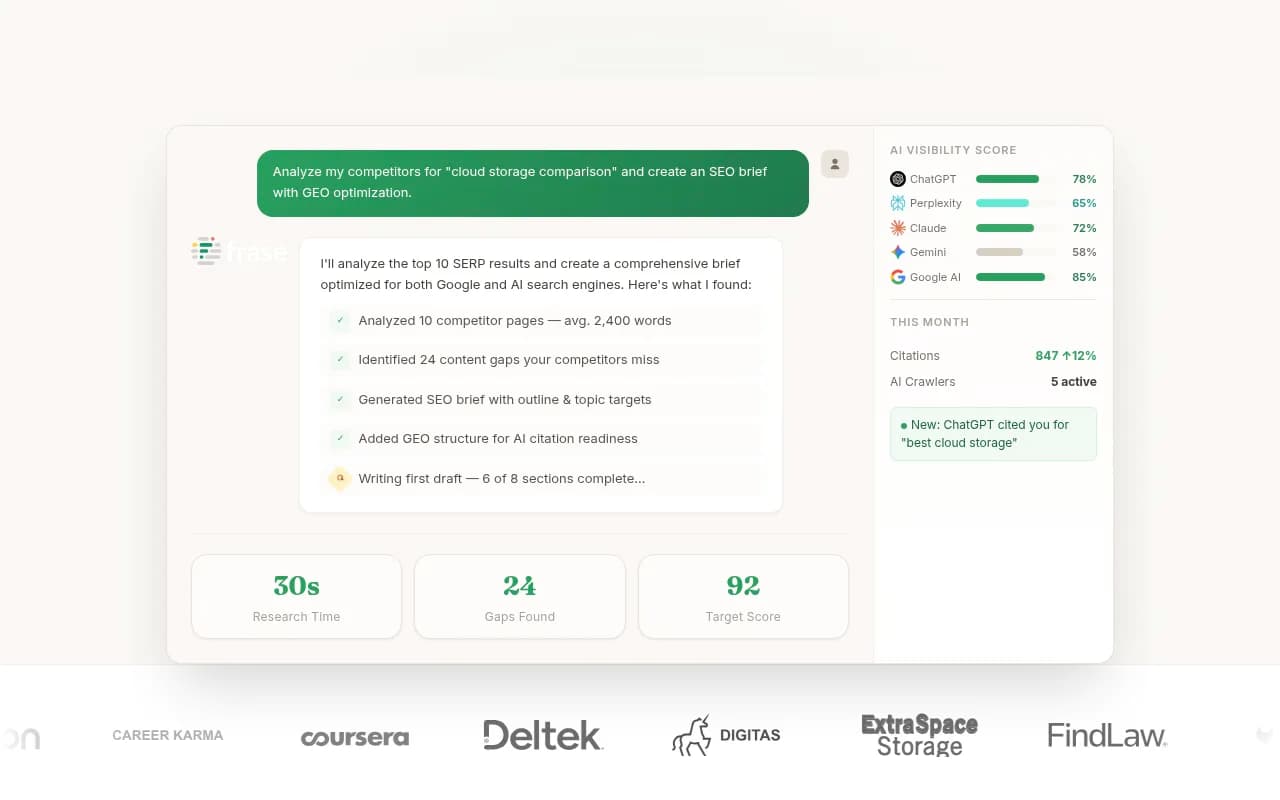
Frase -- best for content teams that want to act on AEO data
Frase takes a different angle: it's primarily a content optimization platform that has built AEO tracking into its workflow. The pitch is that it closes the loop from citation tracking to autonomous fixes that republish across CMS providers.
For small businesses with an active content team, Frase is worth considering. It's less about raw visibility monitoring and more about making sure your content is structured to get cited.
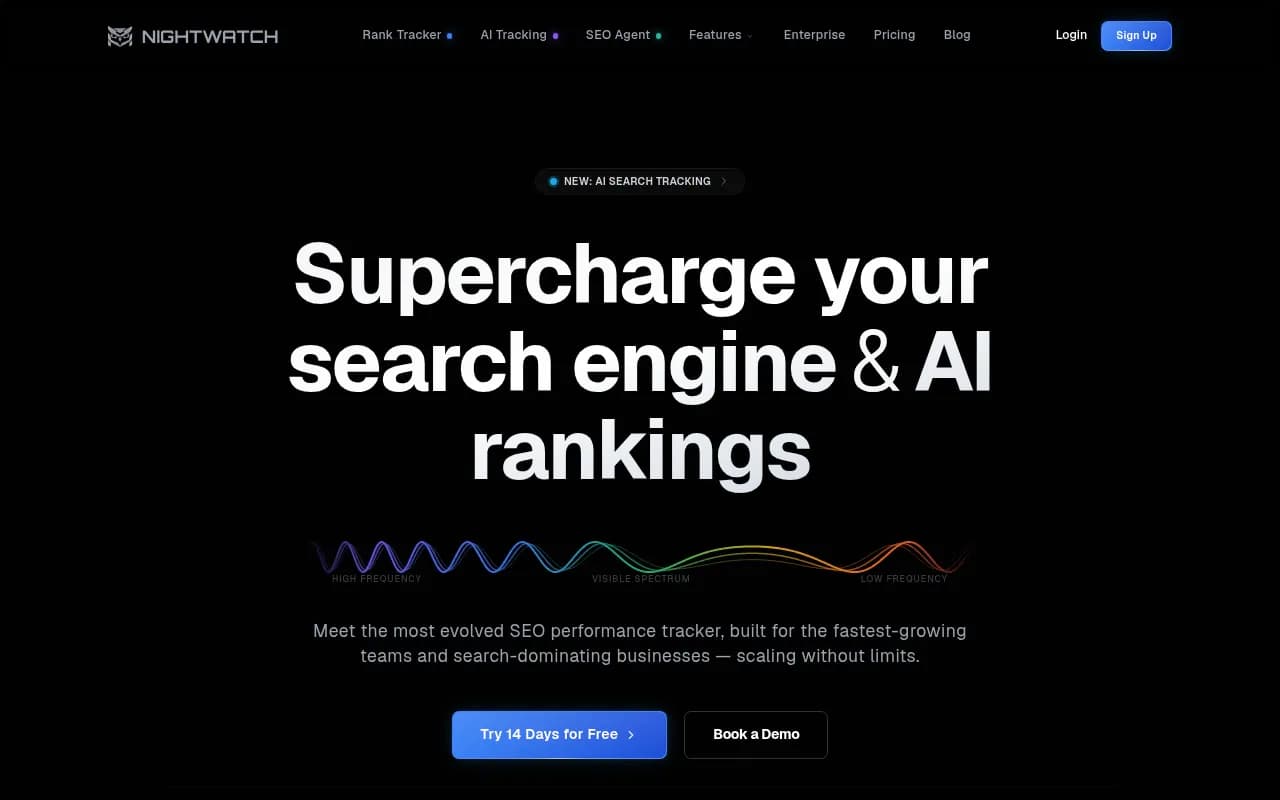
Nightwatch -- best for marketers who want simple AI search monitoring
Nightwatch has been a solid rank tracking tool for years and has added AI search monitoring. It's clean, reliable, and not overwhelming. For a small business marketer who wants one tool that handles both traditional rankings and AI visibility without a steep learning curve, it's a good fit.
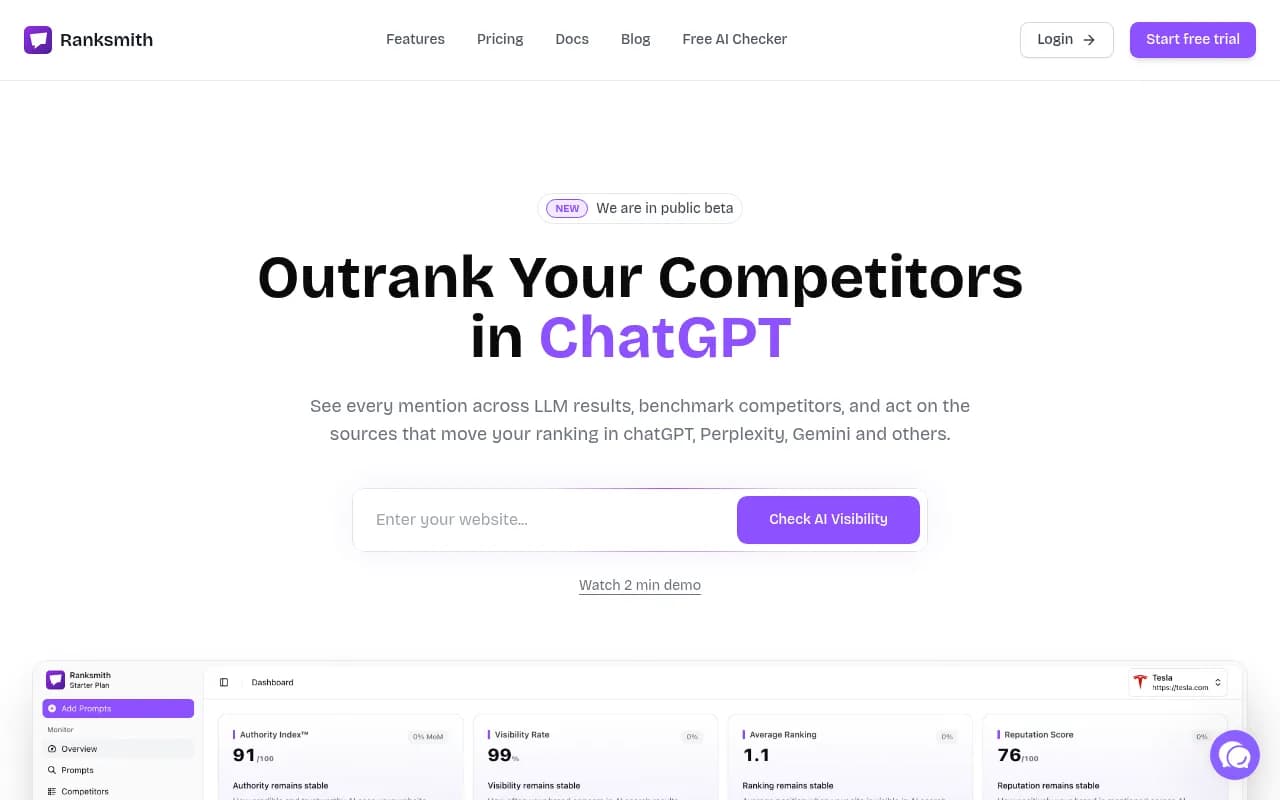
Ranksmith -- best for actionable insights without the noise
Ranksmith focuses on giving you actionable AI visibility insights rather than drowning you in data. For small teams where the person doing AEO is also doing five other things, a tool that surfaces "here's what to fix" rather than "here's 47 charts" is genuinely valuable.
Tool comparison: AEO options for small businesses
| Tool | Starting price | Multi-model tracking | Content gap analysis | AI content generation | Best for |
|---|---|---|---|---|---|
| Promptwatch | $99/mo | Yes (10 models) | Yes | Yes (5 articles/mo) | Full optimization loop |
| Otterly.AI | Low/free tier | Yes | No | No | Basic monitoring |
| Peec AI | Affordable | Yes | Limited | No | Competitive intelligence |
| SE Ranking | ~$65/mo | Yes (bundled) | No | No | Teams already using SEO tools |
| Rankshift | Low | Yes | No | No | Simple LLM tracking |
| Frase | ~$45/mo | Yes | Limited | Yes | Content-focused teams |
| Nightwatch | ~$39/mo | Yes | No | No | Simple monitoring |
| Ranksmith | Low | Yes | Yes (basic) | No | Actionable insights |
What to look for when choosing an AEO tool
Model coverage
At minimum, your tool should track ChatGPT, Perplexity, and Google AI Overviews. These three account for the majority of AI search volume right now. Claude and Gemini are growing fast. Tools that only track one or two models give you an incomplete picture.
Prompt flexibility
Some tools let you define your own prompts ("best [your category] for [your use case]"). Others use fixed prompt sets. Fixed prompts are easier to set up but may not reflect how your actual customers search. For a small business, custom prompts are worth paying for.
Actionability
This is the big one. A visibility score is useful. A list of prompts where competitors outrank you is more useful. A specific piece of content you can create to close that gap is most useful. Before you commit to any tool, ask: "What do I do with this data?"
Traffic attribution
The holy grail for small businesses is connecting AI citations to actual website traffic and revenue. Some tools offer this through code snippets, Google Search Console integration, or server log analysis. If you're going to justify the spend to yourself (or a boss), attribution matters.
Ease of setup
Enterprise tools often require weeks of onboarding. For a small business, you need something you can set up in an afternoon and start getting value from immediately. Check for free trials and look at how quickly you can get your first prompts tracked.
Free AEO tools: what's actually useful
If you're not ready to pay yet, a few free options are worth knowing about:
Google Search Console doesn't track AI citations directly, but it does show you which queries are driving traffic. As AI Overviews become more common, GSC is adding more signals. It's a free baseline.
Manual prompt testing -- just asking ChatGPT, Perplexity, and Gemini about your category and noting whether your brand appears -- is free and surprisingly informative. It doesn't scale, but it tells you immediately whether you have a visibility problem.
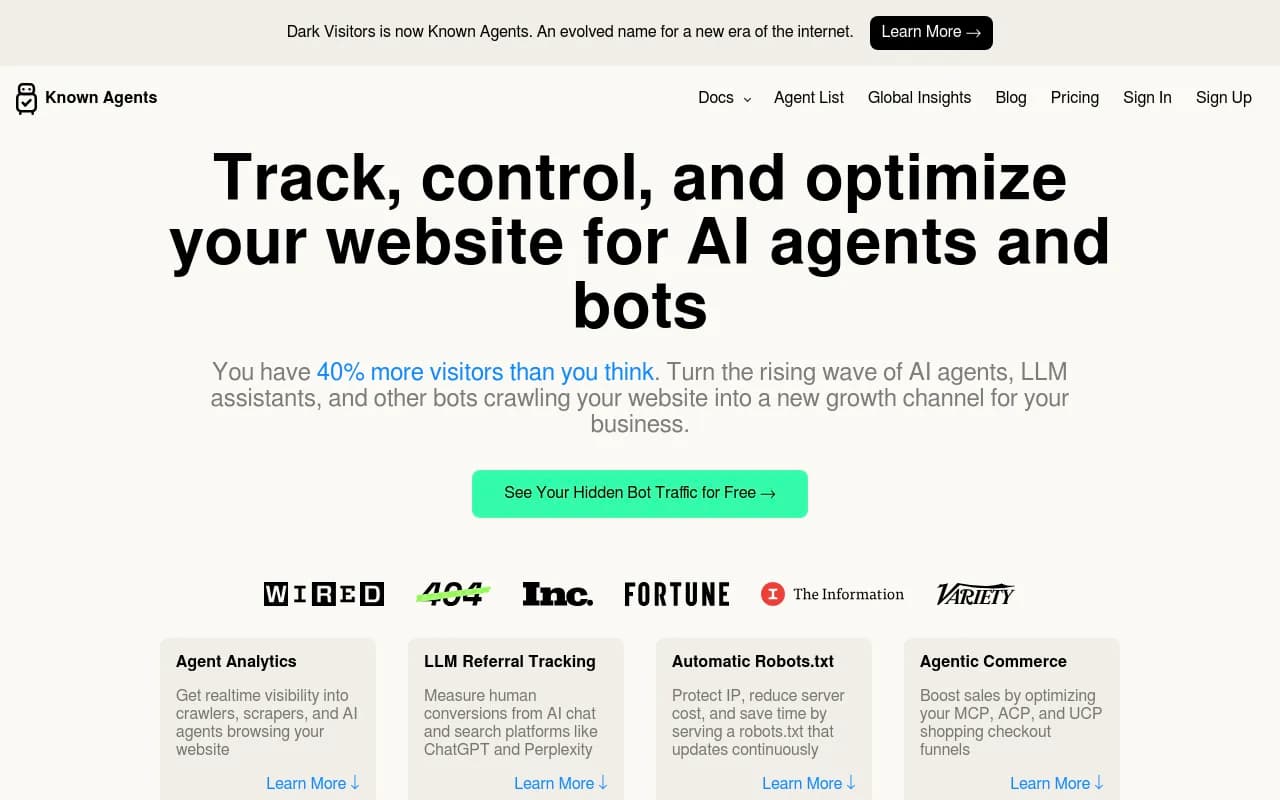
DarkVisitors tracks which AI crawlers are hitting your site. It's free and tells you whether AI models are even discovering your content -- which is a prerequisite for being cited.
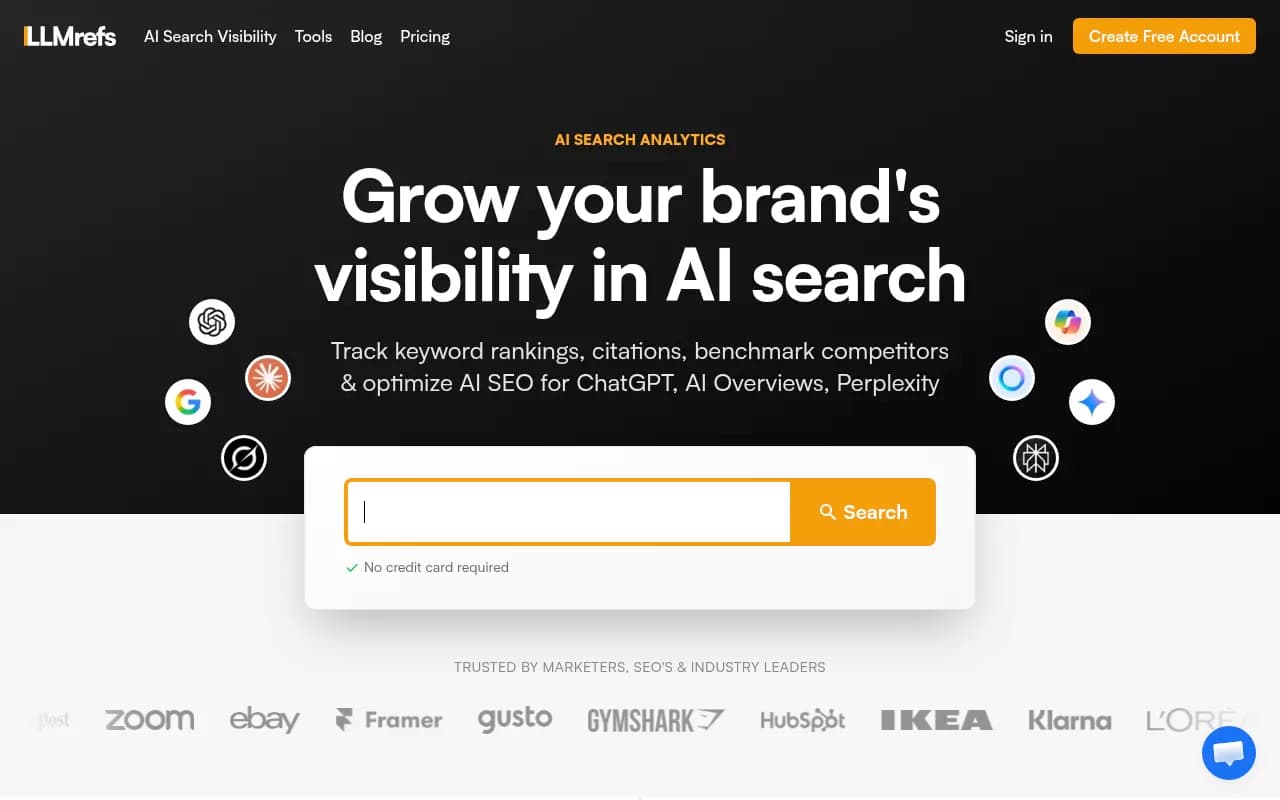
LLMrefs offers a free tier for basic citation tracking across a handful of models.
The honest assessment: free tools are good for diagnosing whether you have an AEO problem. They're not good for systematically fixing it. Once you've confirmed the problem exists, you need a paid tool to do anything meaningful about it.
Common mistakes small businesses make with AEO
Tracking too few prompts. Five prompts won't tell you much. You need to cover the full range of how customers in your category search -- informational queries, comparison queries, purchase-intent queries. Most small businesses underinvest here.
Optimizing for one model. ChatGPT gets the most attention, but Perplexity drives a lot of research traffic, Google AI Overviews affects your existing search traffic, and Claude is growing fast in professional contexts. Coverage across models matters.
Treating AEO as separate from content strategy. The content that gets cited by AI models is usually the same content that answers questions clearly, demonstrates expertise, and covers a topic thoroughly. Good AEO and good content strategy overlap significantly. You don't need a completely separate workflow.
Ignoring technical basics. AI crawlers need to be able to access and read your content. If your site has crawl errors, slow load times, or content behind login walls, AI models may not be indexing it at all. Tools like DarkVisitors can show you whether AI crawlers are even visiting your site.
Waiting for perfect data before acting. You'll never have complete information. Pick a tool, set up your core prompts, see where you're invisible, and start creating content. Iterate from there.
How to get started in a weekend
If you're a small business owner reading this on a Friday and want to have something set up by Monday, here's the fastest path:
-
Spend 30 minutes manually testing 10-15 prompts in ChatGPT, Perplexity, and Google AI Overviews. Note which competitors appear and whether your brand shows up at all.
-
Sign up for a free trial of a paid tool (Promptwatch, Frase, or Nightwatch all offer trials). Set up your top 20 prompts.
-
Look at the gap analysis. Which prompts are competitors winning that you're not? Pick the two or three where you have the most credibility to compete.
-
Create one piece of content specifically designed to answer those prompts. Structure it clearly, answer the question directly in the first paragraph, and include specific data or examples that make it citable.
-
Track for 2-4 weeks and see if your visibility improves.
That's the whole loop. It's not complicated -- it just requires actually doing it.
The bottom line
AEO isn't a trend that's going away. AI search is becoming a primary discovery channel, and small businesses that ignore it are handing visibility to competitors who don't.
The good news is that you don't need an enterprise budget to compete. A $99-$150/month tool, a clear set of target prompts, and a consistent content operation will get you further than most of your competitors who are still treating this as optional.
The key is picking a tool that helps you act, not just observe. Monitoring dashboards are useful. Monitoring dashboards that tell you what content to create and whether it worked are much more useful.
Start with a free trial, get your first prompts tracked, and go from there.