Key takeaways
- Generative AI platforms now drive over 2 billion referrals to transactional sites each month, and traffic from ChatGPT converts at a 31% higher rate than traditional organic search.
- AEO for e-commerce goes well beyond ChatGPT Shopping -- you need visibility across Perplexity, Gemini, Claude, Google AI Mode, and more.
- The most effective AEO strategy combines structured product data, citation-worthy content, and authentic review signals that AI models can actually use.
- Most AEO tools only monitor. The ones worth paying for help you act on what they find -- closing the gap between "you're invisible here" and "here's what to publish."
- Google's Universal Content Protocol (UCP) is accelerating structured data adoption; early movers have a real advantage before AI surfaces get crowded.
Shoppers have quietly changed how they buy things. Instead of opening Google, typing "best running shoes for flat feet," and clicking through five tabs, they're asking ChatGPT or Perplexity directly -- and getting a short list of recommendations with reasons attached. If your brand isn't in that list, you're not losing a ranking. You're losing the sale entirely.
This is the core problem that Answer Engine Optimization (AEO) solves for e-commerce. And in 2026, it's no longer optional.
The shift is real and measurable. According to Similarweb's 2025 Generative AI Landscape report, generative AI platforms now drive over 2 billion referrals to transactional sites each month. Paid click-through rates on queries that trigger AI Overviews have dropped 68%. That's not a blip -- it's a structural change in how product discovery works.
This guide breaks down what AEO actually means for e-commerce, what separates good tools from bad ones, and which platforms are worth your time in 2026.
What AEO means for e-commerce (it's different from B2B)
Most AEO content is written for SaaS companies or publishers trying to get mentioned in "what is X" answers. E-commerce is messier.
Your products need to show up in comparison queries ("what's the best air fryer under $100"), use-case queries ("what should I use to clean a cast iron pan"), and intent-heavy queries ("I need a gift for a runner who just finished their first marathon"). These aren't informational -- they're transactional, and the AI engines handling them are actively making recommendations.
That creates a few specific challenges:
- You have hundreds or thousands of SKUs, not one brand narrative
- Product attributes matter as much as brand reputation
- Review data, ratings, and social proof directly influence AI recommendations
- Inventory and pricing signals can affect whether AI confidently recommends you
- ChatGPT Shopping is one surface, but Perplexity's shopping cards, Google AI Mode, and Gemini's product carousels are equally important
The tools that work for e-commerce AEO need to handle this complexity. A generic "track your brand mentions in LLMs" dashboard isn't enough.
The three layers of e-commerce AEO
Before getting into tools, it helps to understand what you're actually optimizing. E-commerce AEO works across three layers:
Structured data and product feeds
AI engines need clean, machine-readable information about your products. This means proper schema markup (Product, Offer, Review, FAQPage), well-structured product descriptions that answer specific use-case questions, and feeds that AI crawlers can actually parse. Google's Universal Content Protocol (UCP) is pushing this further -- it gives retailers a standardized way to push structured product data directly into AI systems, and early adopters are already seeing visibility gains.
Content that earns citations
AI models cite sources. If your product pages, buying guides, and comparison content are thorough, specific, and well-structured, they become citation candidates. Thin product descriptions with just specs don't cut it. You need content that answers the questions buyers actually ask -- "is this waterproof?", "how does it compare to [competitor]?", "what size should I get?" -- with enough detail that an AI can extract a confident answer.
Brand authority signals
LLMs don't just read your website. They synthesize information from reviews, Reddit threads, YouTube videos, press coverage, and third-party mentions. Your star ratings on Google, your presence in relevant subreddits, and what customers say on Trustpilot all feed into whether AI confidently recommends you. This is why authentic review volume matters so much for AEO -- not just for conversion, but for AI visibility.
What to look for in an AEO tool for e-commerce
Not all AEO tools are built for commerce. Here's what separates the useful ones from the dashboards that just make you feel informed:
| Capability | Why it matters for e-commerce |
|---|---|
| Prompt-level tracking | See which product queries you appear in vs. competitors |
| ChatGPT Shopping monitoring | Track product carousel appearances specifically |
| Multi-model coverage | Perplexity, Gemini, Claude, Grok -- not just ChatGPT |
| Citation source analysis | Know which pages and third-party sources AI is pulling from |
| Content gap analysis | Find the queries where competitors appear but you don't |
| AI crawler logs | See which product pages AI bots are actually reading |
| Review/sentiment integration | Connect review data to AI visibility signals |
| Content generation | Turn gaps into published content, not just a to-do list |
The last two points are where most tools fall short. Monitoring is easy to build. Acting on what you find is harder.
The best AEO tools for e-commerce in 2026
For end-to-end AI visibility and optimization
Promptwatch is the most complete platform for e-commerce teams that want to go beyond tracking. It monitors 10 AI models (ChatGPT, Perplexity, Gemini, Claude, Grok, DeepSeek, Google AI Overviews, Google AI Mode, Meta AI, Copilot), tracks ChatGPT Shopping appearances specifically, and -- critically -- includes an Answer Gap Analysis that shows you the exact prompts where competitors are visible but you aren't. The built-in AI writing agent then generates content grounded in 880M+ citations analyzed, so you're not guessing what to write. For e-commerce teams that need to close the loop between "we're invisible here" and "we published something that fixes it," this is the platform to start with.

For product-specific AI visibility
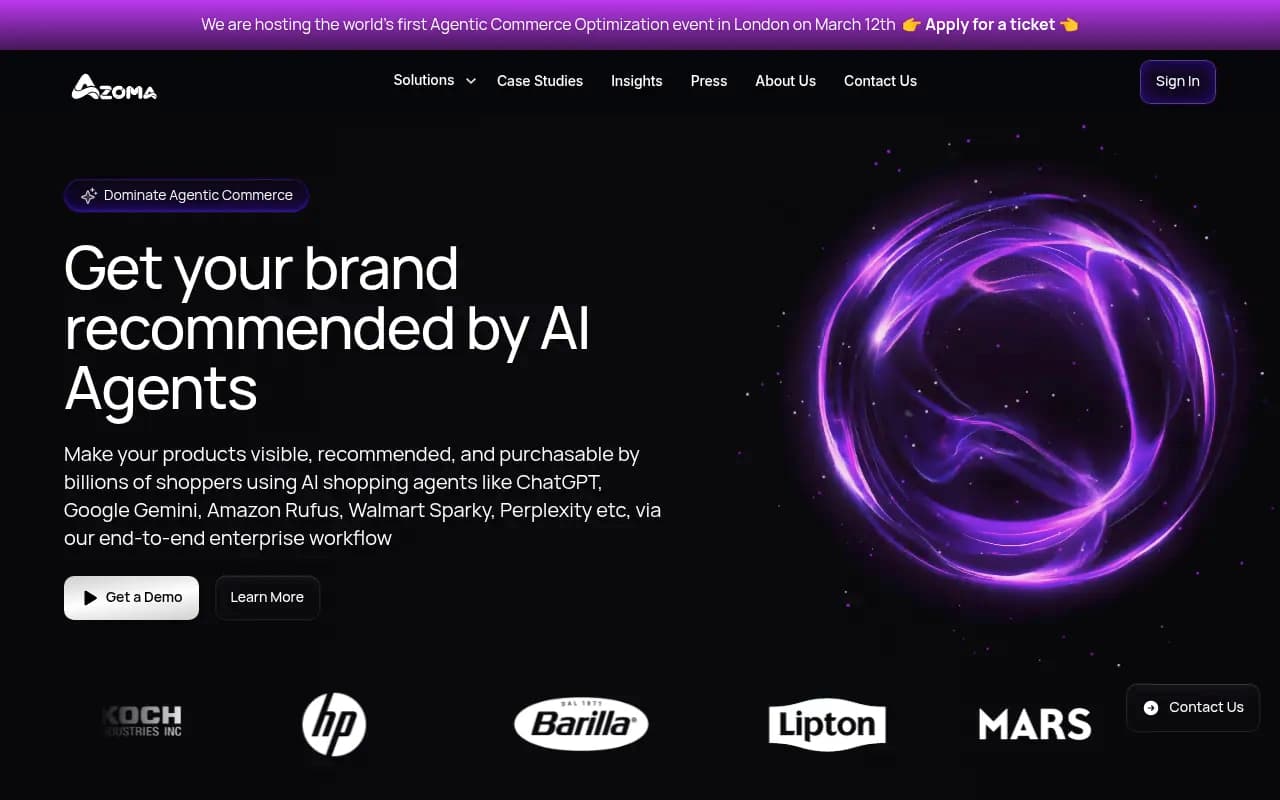
Azoma is built specifically for e-commerce AI optimization, covering ChatGPT, Amazon's Rufus, and other shopping-oriented AI surfaces. If you sell on Amazon and want to understand how Rufus is recommending (or not recommending) your products alongside your broader AI visibility, it's worth evaluating.
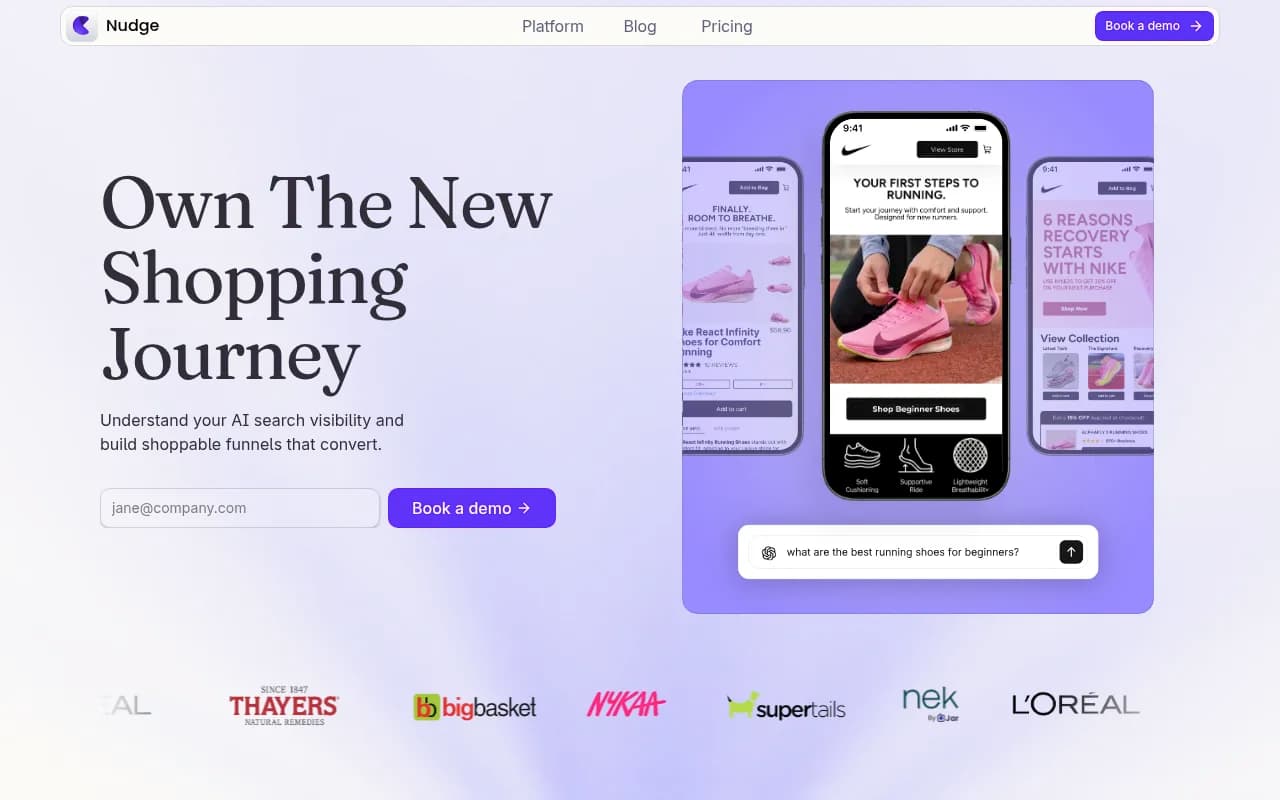
Nudge focuses on AI discovery and conversion for commerce brands. It's designed around the specific challenge of getting products recommended in conversational AI responses, with attention to use-case content and structured product data.
For monitoring across multiple AI models
AthenaHQ covers 8+ AI search engines and gives you visibility scores across models. It's a solid monitoring platform, though it's primarily focused on tracking rather than optimization.

Profound offers strong brand tracking across AI engines with good competitive benchmarking. It works well for understanding your share of voice across LLMs.

Otterly.AI is a more affordable entry point for teams that need basic AI mention monitoring without a large budget.

Peec AI is worth noting for international e-commerce -- it handles multi-language AI visibility tracking better than most.

For technical SEO and AI crawlability
Getting AI crawlers to actually read your product pages is a prerequisite for everything else. Two tools help here:
Screaming Frog remains the standard for technical SEO audits. Use it to identify crawlability issues, schema errors, and structural problems that might prevent AI bots from indexing your product pages correctly.
DarkVisitors tracks which AI agents and bots are hitting your website, what they're reading, and how often they return. This is genuinely useful for understanding whether ChatGPT's crawler has found your new product pages.
For content creation and optimization
Surfer SEO handles content optimization with AI search in mind -- useful for writing product category pages and buying guides that are structured to earn citations.
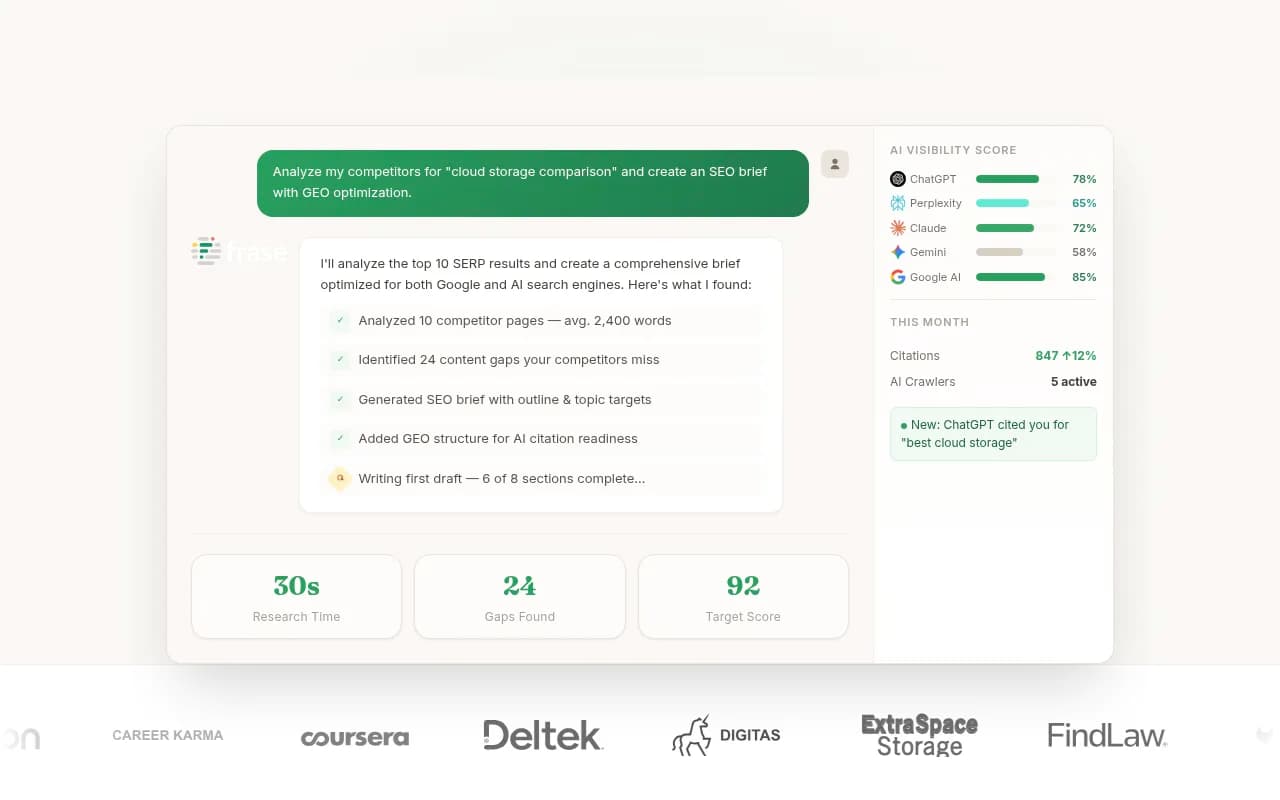
Frase combines research and writing for SEO and GEO, helping you build content that answers the specific questions AI models are looking for.
Clearscope is strong for content optimization, particularly for teams that want to ensure their buying guides and comparison pages cover the topics AI models expect to see.
For review and sentiment signals
Since LLMs actively synthesize review data to validate brand credibility, managing your review presence is part of AEO strategy. Brand24 tracks brand mentions across 25M+ sources in real time, giving you visibility into the off-site conversations that influence AI recommendations.
Tool comparison: e-commerce AEO platforms at a glance
| Tool | Multi-model tracking | ChatGPT Shopping | Content generation | AI crawler logs | E-commerce focus | Starting price |
|---|---|---|---|---|---|---|
| Promptwatch | 10 models | Yes | Yes (AI agent) | Yes | General + commerce | $99/mo |
| Azoma | Yes | Yes | No | No | E-commerce native | Custom |
| Profound | Yes | No | No | No | General | Custom |
| AthenaHQ | 8+ models | No | No | No | General | Custom |
| Otterly.AI | Limited | No | No | No | General | ~$49/mo |
| Peec AI | Yes | No | No | No | General | ~$49/mo |
| Nudge | Limited | No | No | No | Commerce | Custom |
Practical AEO strategy for e-commerce teams
Start with prompt research, not keywords
The mental model shift from SEO to AEO is moving from "what keywords do people search?" to "what questions do people ask AI, and what does AI need to answer them confidently?" For a cookware brand, that means mapping out questions like "what's the safest non-stick pan for high heat?" or "what pan do professional chefs use at home?" -- and then making sure your product pages and supporting content actually answer those questions with specificity.
Tools like Promptwatch's Prompt Intelligence feature give you volume estimates and difficulty scores for these prompts, so you can prioritize the winnable ones rather than going after queries where established brands have locked up all the citations.
Fix your structured data first
Before worrying about content, audit your schema markup. Product schema, Offer schema (with current pricing and availability), Review schema, and FAQPage schema are all signals AI engines use to understand and recommend products. A technical audit with Screaming Frog will surface missing or broken schema quickly.
Google's UCP is worth implementing now if you're on a major e-commerce platform. It's a standardized feed format that pushes your product data directly to AI systems -- think of it as a product feed for LLMs, similar to what Google Shopping feeds do for traditional search.
Build citation-worthy content around use cases
Generic product descriptions don't get cited. Specific, helpful content does. For each major product category, build a page that answers the top 5-10 questions buyers ask AI about that category. Not "our blender has 1200 watts" but "is 1200 watts enough for frozen smoothies?" with a real answer. These pages become citation candidates for exactly the queries that drive purchase intent.
The Reddit angle matters here too. AI models heavily cite Reddit discussions, and Promptwatch's Reddit insights surface the specific threads that are influencing AI recommendations in your category. If a r/BuyItForLife thread is driving ChatGPT to recommend a competitor's product, you need to know that.
Track which pages AI is actually citing
Page-level citation tracking tells you something keyword ranking never could: not just whether you appear in AI responses, but which specific pages are being cited, how often, and by which models. This is how you identify your highest-performing content and replicate what's working.
It also reveals gaps. If your product pages are getting zero citations but a competitor's buying guide is getting cited constantly, that's a clear signal about what content format AI prefers for your category.
Connect visibility to revenue
AI visibility without revenue attribution is just vanity metrics. The full loop requires connecting your citation data to actual traffic and conversions -- either through a tracking snippet, Google Search Console integration, or server log analysis. This is what separates AEO as a real channel from AEO as a reporting exercise.
The agentic commerce angle
One thing worth planning for now: agentic commerce. AI agents that autonomously browse, compare, and complete purchases on behalf of users are moving from experiment to reality. When an AI agent is doing the shopping, your product data needs to be machine-readable, your checkout needs to support programmatic access, and your brand signals need to be strong enough that the agent trusts your products.
This isn't science fiction -- it's where the major AI platforms are investing heavily. The brands that build clean product data infrastructure and strong AI citation signals now will be the ones agents recommend when autonomous shopping goes mainstream.
Where to start
If you're an e-commerce team that hasn't started on AEO yet, the practical starting point is:
- Run a technical audit to fix schema and crawlability issues
- Map out the top 20-30 prompts buyers use to find products in your category
- Identify which of those prompts you're currently visible for (and which competitors are winning)
- Build content that answers the gaps -- use-case guides, comparison pages, FAQ content
- Track citations at the page level and connect visibility to traffic
Most teams get stuck between steps 3 and 4. The gap analysis exists, but turning it into published content takes time. This is where a platform that combines monitoring with content generation -- rather than just handing you a dashboard -- actually changes what's possible.
The e-commerce brands that figure this out in 2026 will have a meaningful head start before AI shopping surfaces get as competitive as Google's first page became.