Key takeaways
- AirOps is a content operations platform, not a dedicated AI visibility tracker -- it helps you produce content at scale but has limited native monitoring of how that content performs in ChatGPT, Perplexity, or Gemini.
- Its core strength is workflow automation: building repeatable pipelines for content creation, SEO briefs, and brand-aligned outputs across large teams or agencies.
- Citation tracking inside AI search engines requires a separate tool -- AirOps points users toward external testing methods rather than providing real-time citation data itself.
- For teams that want to close the loop between content creation and AI visibility, pairing AirOps with a dedicated GEO monitoring platform makes more sense than relying on AirOps alone.
- Pricing is enterprise-oriented, which makes it hard to justify for smaller teams that haven't already scaled their content operations.
There's a question that keeps coming up in marketing Slack channels and subreddits in 2026: "We're publishing more content than ever -- why aren't we showing up in ChatGPT?"
AirOps gets mentioned a lot in these conversations. It's one of the more prominent platforms in the AI content space, used by companies like Webflow, Ramp, and Carta. But the reviews are mixed in a specific way: people love it for workflow automation, but they're less sure whether the content it helps produce actually earns citations in AI search engines.
That's the question this review tries to answer honestly.
What AirOps actually is
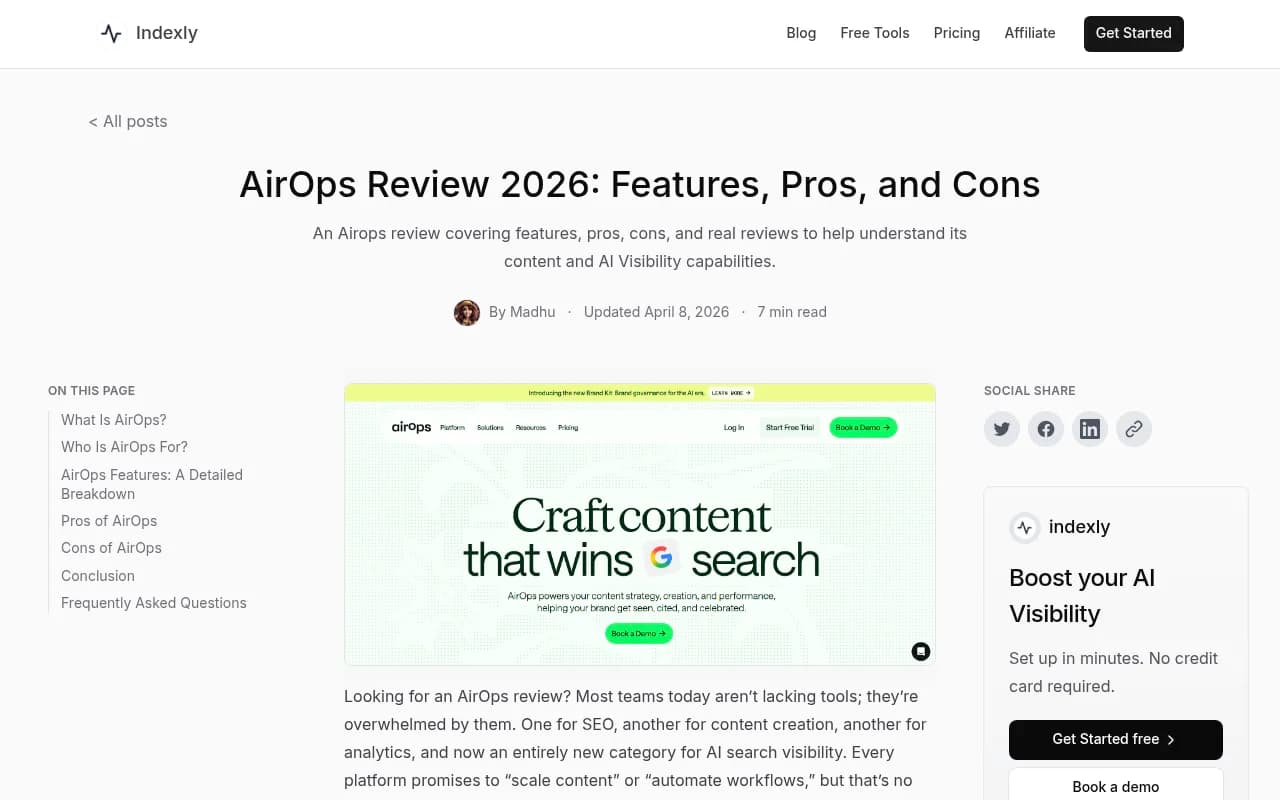
AirOps describes itself as an AI-driven content operations platform. The pitch is that it combines content creation, SEO, and AI search visibility into one system -- so teams don't have to stitch together five different tools.
In practice, it's built around three layers:
- Insights: analyzing your current visibility and competitive positioning in AI search
- Actions: building and running AI-powered content workflows
- Context: feeding the platform your brand voice, internal knowledge, and guidelines so outputs stay consistent
The "context" layer is genuinely useful. A lot of AI content tools produce generic output because they have no idea who you are. AirOps lets you upload brand documentation, style guides, and product information so the generated content sounds like it came from your company, not a template.
The workflow builder is the other standout feature. You can create multi-step pipelines that pull from your data sources, run prompts through different AI models, apply quality checks, and push outputs to your CMS. For teams managing hundreds of pages, that kind of automation is real time savings.
Who it's built for
AirOps is not a beginner tool. It's built for teams that already have a content strategy and want to scale it, not teams still figuring out what to write about.
The sweet spot is:
- SEO teams managing large content libraries (hundreds of pages, not dozens)
- Content-led growth teams that need to move fast on competitive opportunities
- Agencies handling multiple clients with different brand voices
- Enterprise marketing teams that need structured workflows and consistent outputs
If you're a startup with a small blog and a two-person marketing team, AirOps will feel like overkill. The setup time and cost are calibrated for organizations with more complexity.
The citation question: does AirOps content actually get cited?
This is where things get complicated, and where most reviews gloss over the details.
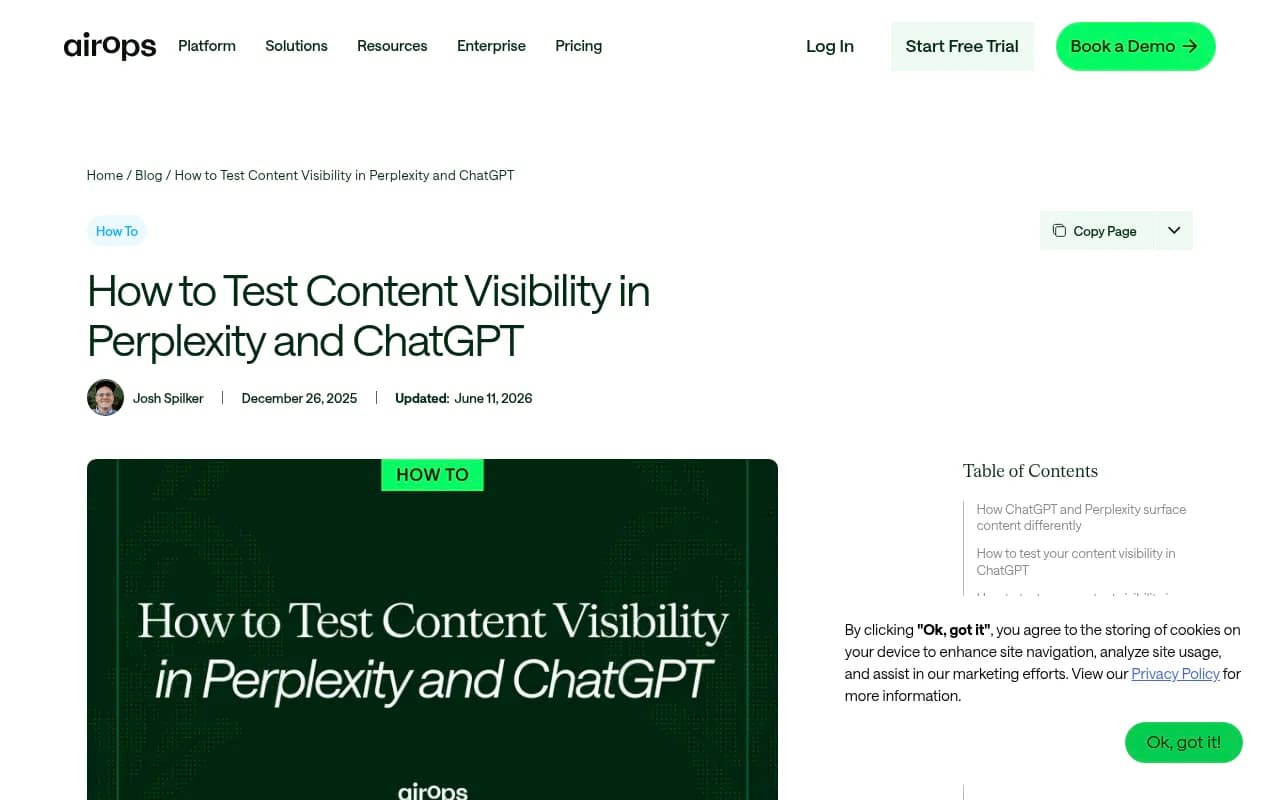
AirOps does have an "Answer Engine" diagnostic feature that evaluates how your content performs in AI search results across ChatGPT, Perplexity, and Google AI Overviews. It can show you which pages are being cited and which aren't. AirOps also published a guide on their own blog about how to test content visibility in Perplexity and ChatGPT -- which is useful, but also tells you something: the testing process isn't fully automated inside the platform. A lot of it still involves running prompts manually and interpreting what you see.
The honest answer is: AirOps helps you create content that is structured to earn citations -- with clear answers, proper formatting, topical depth, and brand authority signals. Whether that content actually gets cited depends on factors AirOps can influence but not control: how AI models index your site, whether your domain has enough authority, whether you're covering topics that AI models are actively pulling sources for.
What AirOps doesn't give you is real-time, automated citation tracking across AI models. You can't log in and see a dashboard showing "ChatGPT cited your /blog/pricing-guide page 47 times this week." That level of monitoring requires a dedicated AI visibility platform.
A Reddit thread from the r/DigitalMarketing community captured this frustration well: teams were getting cited in ChatGPT and Perplexity but had no way to see it in any tool. AirOps helps you create the content -- but the tracking gap is real.
What AirOps does well
Content at scale without losing brand voice
The context layer genuinely works. When you feed AirOps your brand documentation, the outputs are noticeably more on-brand than generic AI writing tools. For agencies managing multiple clients, this is a real differentiator -- you're not manually editing every piece to sound right.
Workflow automation
The pipeline builder is flexible. You can create workflows that pull competitor data, generate content briefs, draft articles, run SEO checks, and push to your CMS -- all without manual handoffs. For teams that have been doing this with a patchwork of Zapier automations and spreadsheets, it's a meaningful upgrade.
SEO integration
AirOps connects traditional SEO signals (keyword research, topical authority, internal linking) with AI search optimization. The idea is that content that performs well in Google is more likely to get cited in AI search engines too -- which is mostly true, though not always.
Answer Engine diagnostic
The free Answer Engine diagnostic is a useful starting point. It gives you a snapshot of how your content currently performs in AI search, which prompts you're visible for, and where the gaps are. It's not deep monitoring, but it's a reasonable first look.
Where AirOps falls short
Citation monitoring is thin
This is the biggest gap. AirOps helps you create content optimized for AI search, but it doesn't give you robust, ongoing tracking of whether that content is actually being cited. You can run diagnostics, but you're not getting real-time data on citation frequency, which AI models are citing you, or how your visibility changes over time.
For teams that want to close the loop -- create content, then verify it's working -- this is a problem.
Steep learning curve
AirOps is powerful, but it takes time to set up properly. Building workflows, loading context, connecting data sources, and training the system on your brand takes weeks, not hours. Teams without dedicated ops resources often find it hard to get full value quickly.
Price point
AirOps is enterprise-oriented in its pricing. Smaller teams or agencies that haven't already scaled their content operations will find it hard to justify the cost, especially when the citation tracking capabilities are limited compared to dedicated monitoring tools.
Not a replacement for AI visibility monitoring
Multiple reviews from competitors like Profound have pointed this out: AirOps is a content workflow tool that has added some AI visibility features, not a purpose-built AI visibility platform. If your primary goal is understanding and improving how you appear in ChatGPT, Perplexity, and Gemini, AirOps alone won't get you there.

How AirOps compares to other tools
Here's a practical comparison of AirOps against tools that overlap with its positioning:
| Tool | Primary strength | Citation tracking | Content generation | Best for |
|---|---|---|---|---|
| AirOps | Content workflow automation | Basic diagnostic | Yes, at scale | Large content teams |
| Profound | AI visibility monitoring | Strong | No | Enterprise brand tracking |
| Promptwatch | Full GEO action loop | Real-time, multi-model | Yes, AI-grounded | Teams wanting monitoring + content |
| Jasper | AI writing quality | None | Yes | Marketing copywriting |
| Surfer SEO | On-page SEO optimization | None | Yes (briefs) | SEO content teams |
| Clearscope | Content optimization | None | No | Editors and writers |
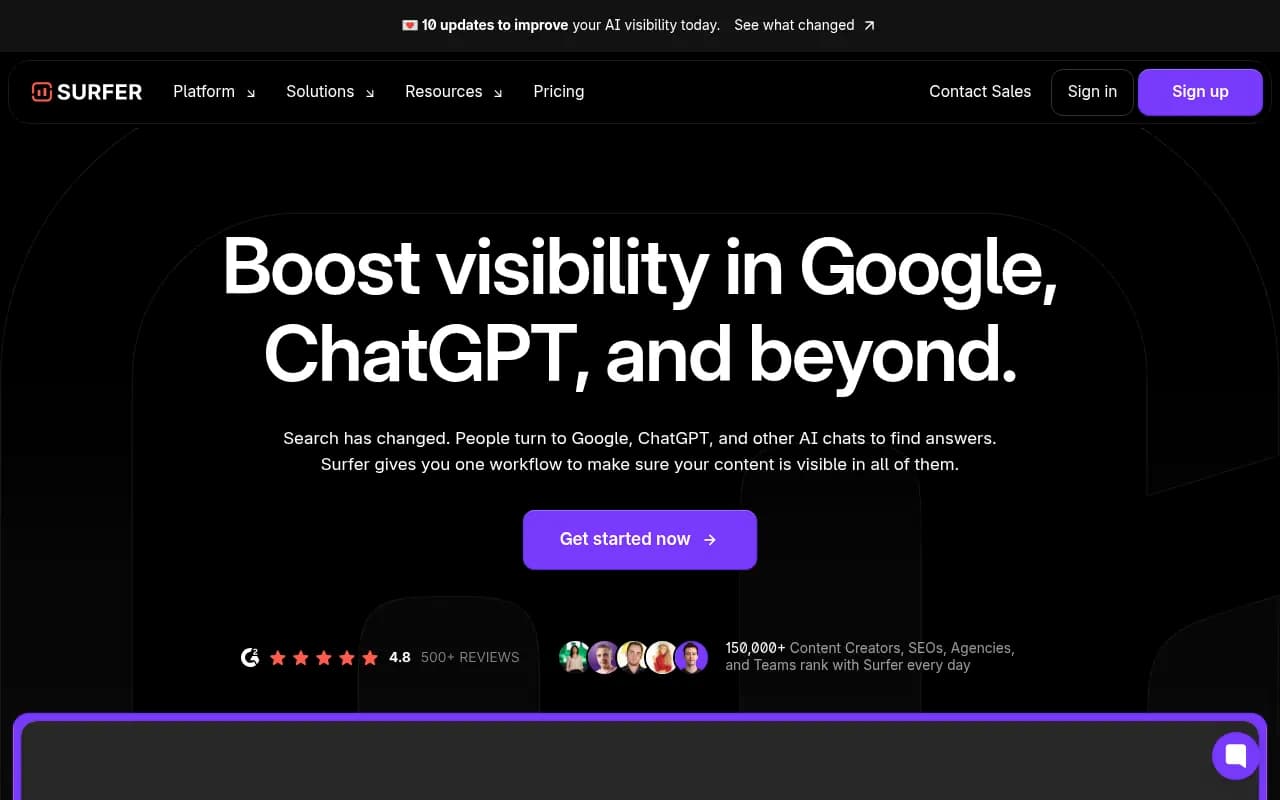

The gap that stands out in this table: most tools either monitor AI visibility or help you create content. Very few do both in a way that connects the two. AirOps leans toward creation with some monitoring; Profound leans toward monitoring with no creation. Promptwatch is one of the few platforms that runs the full loop -- find the gaps, generate content to fill them, then track whether citations improve.

The citation gap problem: why monitoring matters as much as creation
Here's the thing that gets lost in most AirOps discussions: creating AI-optimized content is only half the job. The other half is knowing whether it's working.
AI search engines don't behave like Google. They don't show you a ranking position. They cite sources in conversational answers, and those citations shift based on how models are updated, what competitors publish, and how your content is structured. Without monitoring, you're publishing into a black box.
A team using AirOps to produce 50 articles a month might be getting cited in Perplexity for 10 of them and completely invisible for the other 40 -- and have no idea which is which. That's not a content production problem; it's a visibility intelligence problem.
Tools built specifically for AI citation tracking give you that visibility. Some focus on monitoring alone:



Others, like Promptwatch, go further by connecting citation data back to content creation -- showing you exactly which prompts competitors are visible for that you're not, then helping you generate content to close those gaps.
Who should use AirOps
AirOps makes sense if:
- You have a large content operation (50+ pages/month) that needs workflow automation
- You have dedicated ops or technical resources to set it up properly
- You're already doing content strategy well and want to scale execution
- You're okay using a separate tool for AI citation monitoring
It's probably not the right fit if:
- You're primarily trying to understand and improve your AI search visibility
- You want real-time citation tracking across ChatGPT, Perplexity, and Gemini
- You're a small team without the resources to implement a complex workflow system
- You need to show ROI quickly
Alternatives worth considering
If citation tracking is your priority, these tools are worth evaluating alongside or instead of AirOps:
For AI visibility monitoring with content generation:
For monitoring-focused teams:
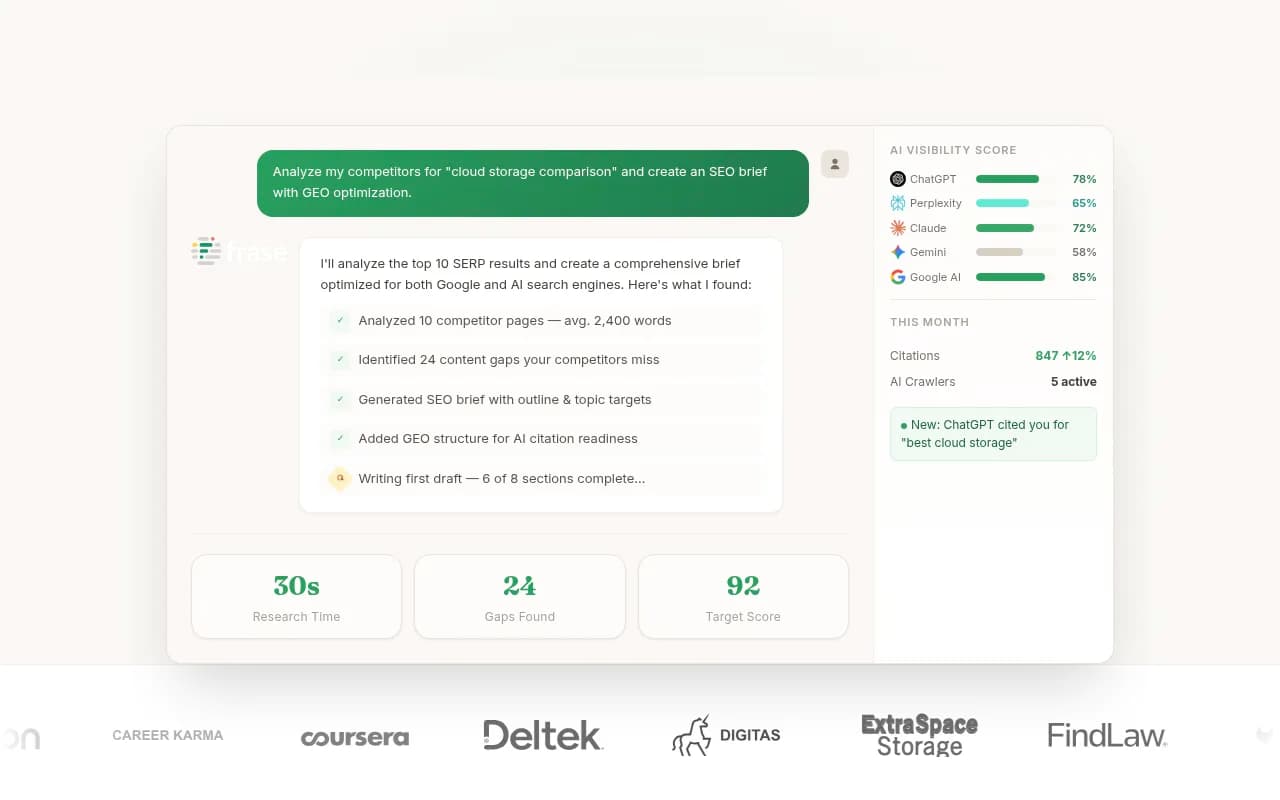
For content creation with SEO grounding:
The bottom line
AirOps is a genuinely capable platform for teams that need to scale content operations. The workflow automation is real, the brand context features work, and the Answer Engine diagnostic gives you a useful starting point for understanding AI search performance.
But "starting point" is the key phrase. AirOps helps you create content that should earn citations -- it doesn't give you the ongoing monitoring to know whether it actually does. For teams serious about AI search visibility in 2026, that gap matters.
If you're already running a large content operation and need better workflow tooling, AirOps is worth evaluating. If your primary goal is improving how you appear in ChatGPT and Perplexity, you'll need to pair it with a dedicated monitoring platform -- or choose a tool that handles both sides of the equation from the start.