Key takeaways
- Most GEO strategies fail silently -- traffic looks fine, rankings hold, but AI models never mention your brand
- The biggest mistake is treating GEO as a monitoring exercise rather than an optimization loop
- Structural content problems (no definitions, no FAQs, no clear entity signals) are the most common root cause of AI invisibility
- Competitor visibility gaps are measurable -- if rivals show up in AI answers and you don't, that's a fixable content problem
- Fixing GEO isn't a one-time project; it requires tracking, iterating, and publishing content grounded in actual prompt data
Here's a frustrating situation a lot of marketers find themselves in right now: your traditional SEO metrics look fine. Rankings are holding. Organic traffic is steady. But when you ask ChatGPT, Perplexity, or Gemini about your category, your brand doesn't come up. Competitors do.
That gap -- between looking fine in Google and being invisible in AI search -- is exactly what a broken GEO strategy looks like. The problem is that most of the warning signs are invisible unless you know what to look for.
This guide covers 10 specific signs your GEO strategy isn't working, and for each one, a concrete fix.
Sign 1: You've never actually checked what AI says about your brand
This sounds obvious, but a surprising number of teams have a "GEO strategy" that consists entirely of publishing content and hoping for the best. They've never manually queried ChatGPT, Perplexity, Claude, or Gemini with the prompts their customers actually use.
If you haven't done this, you don't have a GEO strategy. You have a wish.
What to do: Start with 10-15 prompts that represent real buying intent in your category. Things like "best [tool category] for [use case]" or "what's the difference between [your product] and [competitor]." Run them across at least three AI models. Screenshot the results. Note who gets cited and who doesn't.
This is your baseline. Everything else builds from here. Tools like Promptwatch can automate this at scale across 10+ AI models, but even a manual audit beats flying blind.

Sign 2: Your brand appears in AI answers but always gets the details wrong
Getting mentioned is good. Getting mentioned with wrong pricing, outdated positioning, or misattributed features is arguably worse than not being mentioned at all. It erodes trust with prospects who've already been primed by an AI answer before they reach your site.
This happens when AI models are pulling from stale third-party sources -- old review sites, outdated listicles, cached forum posts -- rather than your own authoritative content.
What to do: Audit what sources AI models are actually citing when they mention you. Are they pulling from your website, or from a 2022 G2 review? Update your own pages with clear, current, factual statements about what your product does and costs. Structured data (schema markup) helps AI models parse your content accurately. And consider whether your Wikipedia entry, Crunchbase profile, or major review listings need refreshing -- these are common citation sources.
Sign 3: Your content has no definitions, no FAQs, and no direct answers
AI models are essentially answer machines. They're optimized to find content that directly answers a question and quote it back. If your content is written in a narrative, thought-leadership style with no scannable definitions or FAQ sections, it's hard for LLMs to extract a clean, citable answer.
As the Kontent.ai GEO guide notes, LLMs tend to reproduce content formats that show up frequently in their training: definitions, comparisons, and FAQs. These formats get quoted. Long-form essays often don't.

What to do: Go through your most important pages and add a "Frequently Asked Questions" section at the bottom. Add a clear definition of your product or service near the top of key pages. Use headers that are literally questions ("What does [product] do?" "How much does [product] cost?"). This isn't dumbing down your content -- it's making it machine-readable without making it worse for humans.
Sign 4: Competitors show up in AI answers for prompts you should own
This is one of the clearest signals that something is broken. If a competitor consistently appears when someone asks about your category, your use case, or even your own product name in comparison queries, you have a content gap problem.
The Reddit SEO community has been pretty direct about this: comparison and alternative pages are the strongest content play for AI visibility right now. People asking "X vs Y" or "best alternatives to Z" are high-intent queries, and AI models love citing structured comparison content.
What to do: Map out which prompts your competitors are winning. Then look at what content they have that you don't. Usually it's comparison pages, "alternatives to" pages, or detailed use-case content that directly addresses the prompt. Build those pages. This is the core of what's called answer gap analysis -- finding the specific questions AI models want to answer but can't find on your site.


Sign 5: You're tracking rankings but not AI citations
Traditional rank tracking tells you where you appear in Google's blue links. That's still useful. But it tells you nothing about whether you're being cited in AI-generated answers, which is increasingly where buying decisions start.
These are different data sets. A page can rank #3 on Google and never get cited by ChatGPT. A page can have mediocre Google rankings but get cited constantly by Perplexity because it's structured well and answers a specific question clearly.
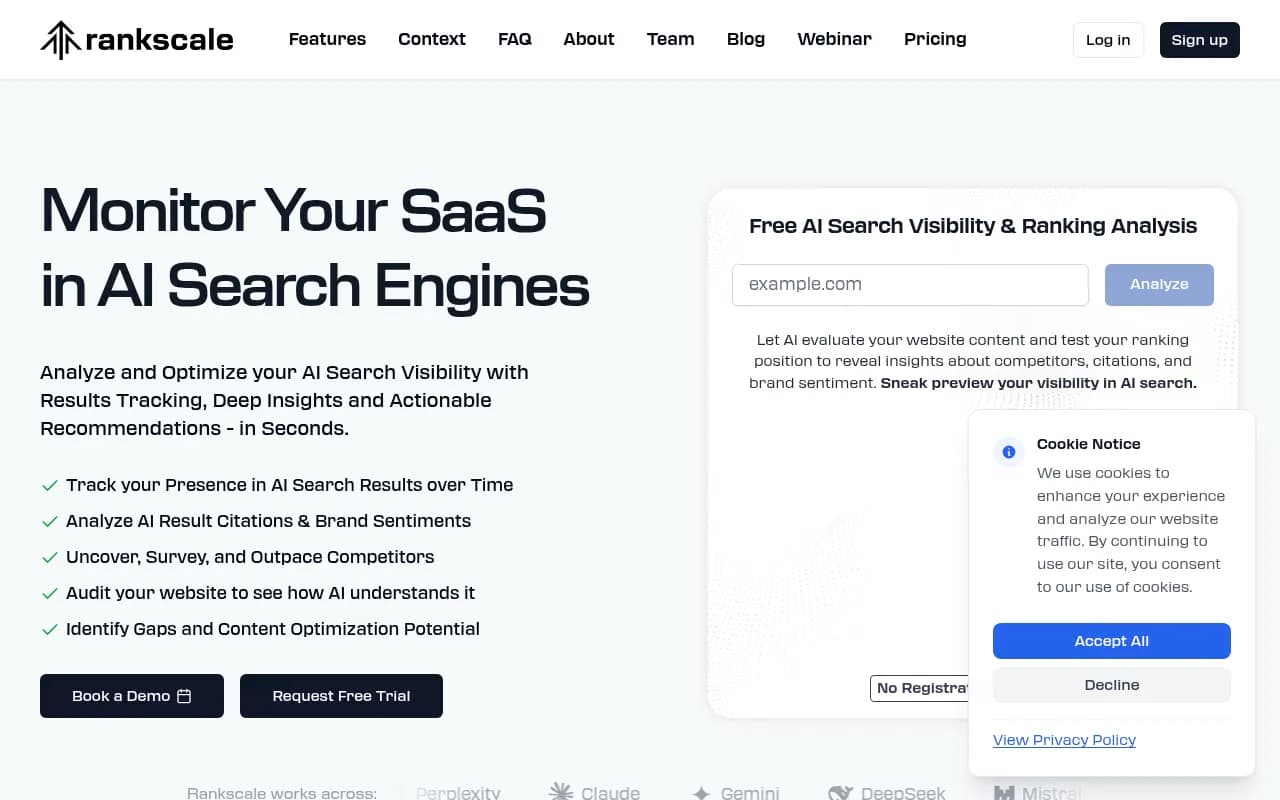
What to do: Add AI citation tracking to your measurement stack. You need to know which of your pages are being cited, by which AI models, and for which prompts. Page-level citation data is what tells you whether your GEO work is actually moving the needle. Several platforms now offer this -- the difference between them is mostly depth and whether they also help you act on what they find.


Sign 6: AI crawlers are hitting your site but not citing your content
This one is subtle and most teams miss it entirely. AI crawlers from OpenAI, Anthropic, Perplexity, and others are almost certainly visiting your website. The question is whether they're successfully reading and indexing your content, or running into errors, blocked paths, and slow load times that prevent them from doing so.
If crawlers are visiting but you're not getting cited, the problem might be technical -- not content.
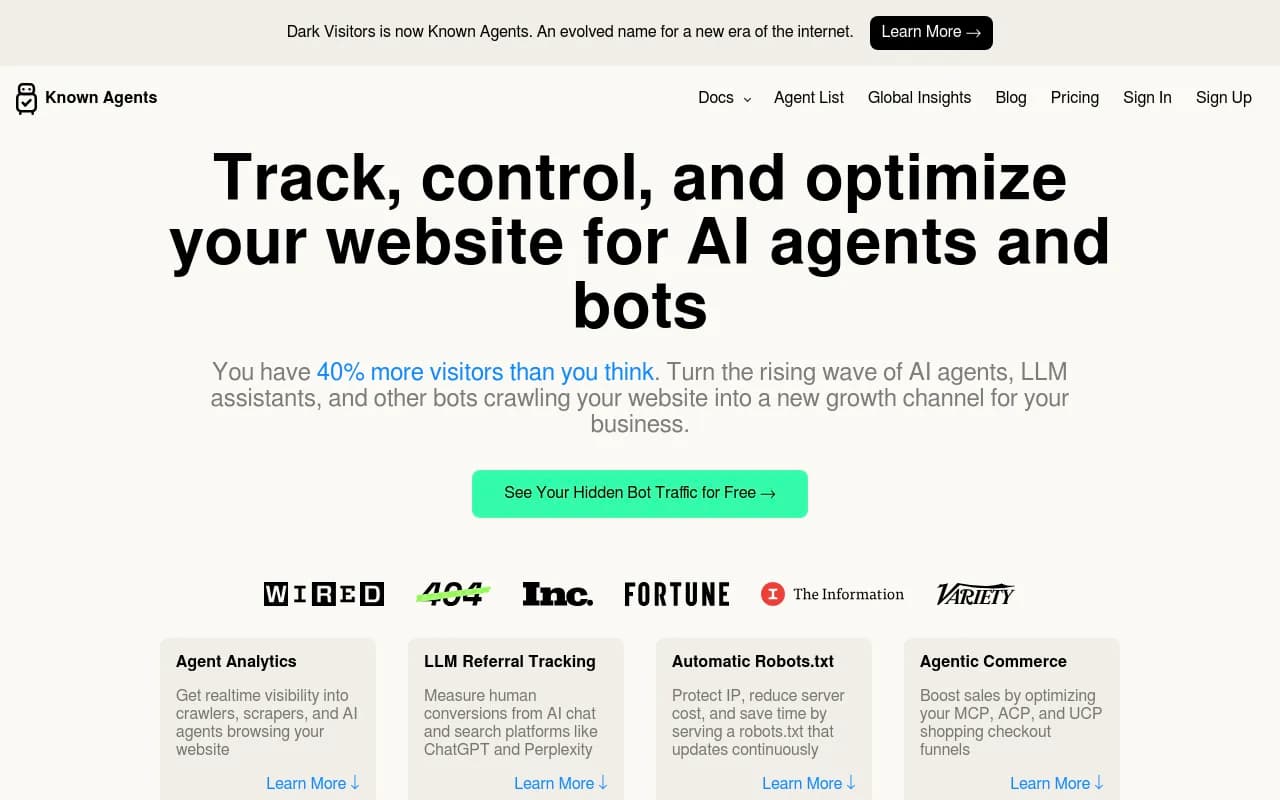
What to do: Check your server logs or use a tool that surfaces AI crawler activity specifically. Look for crawl errors, pages that return 404s or 500s to AI agents, and whether your robots.txt is accidentally blocking AI crawlers. Some AI models respect specific directives; others don't. You need visibility into what's actually happening at the crawl layer, not just the content layer.
Sign 7: Your GEO content is generic and not grounded in real prompts
A lot of teams respond to GEO pressure by publishing more content. More blog posts, more landing pages, more "ultimate guides." But if that content isn't written around the specific prompts real users are typing into AI search engines, it's mostly noise.
Generic content about broad topics doesn't win AI citations. Specific content that directly answers a specific question does.
What to do: Before writing anything, look at actual prompt data. What are people asking AI models in your category? What's the search volume for those prompts? Which ones are high-intent but underserved by existing content? This is prompt intelligence -- and it's what separates GEO content that gets cited from GEO content that just exists.
Sign 8: You're only monitoring one or two AI models
ChatGPT gets the most attention, but your customers are using Perplexity, Google AI Overviews, Gemini, Claude, Grok, and others. Different models have different citation behaviors, different training data emphases, and different tendencies to recommend specific brands. A strategy that only monitors ChatGPT is missing most of the picture.
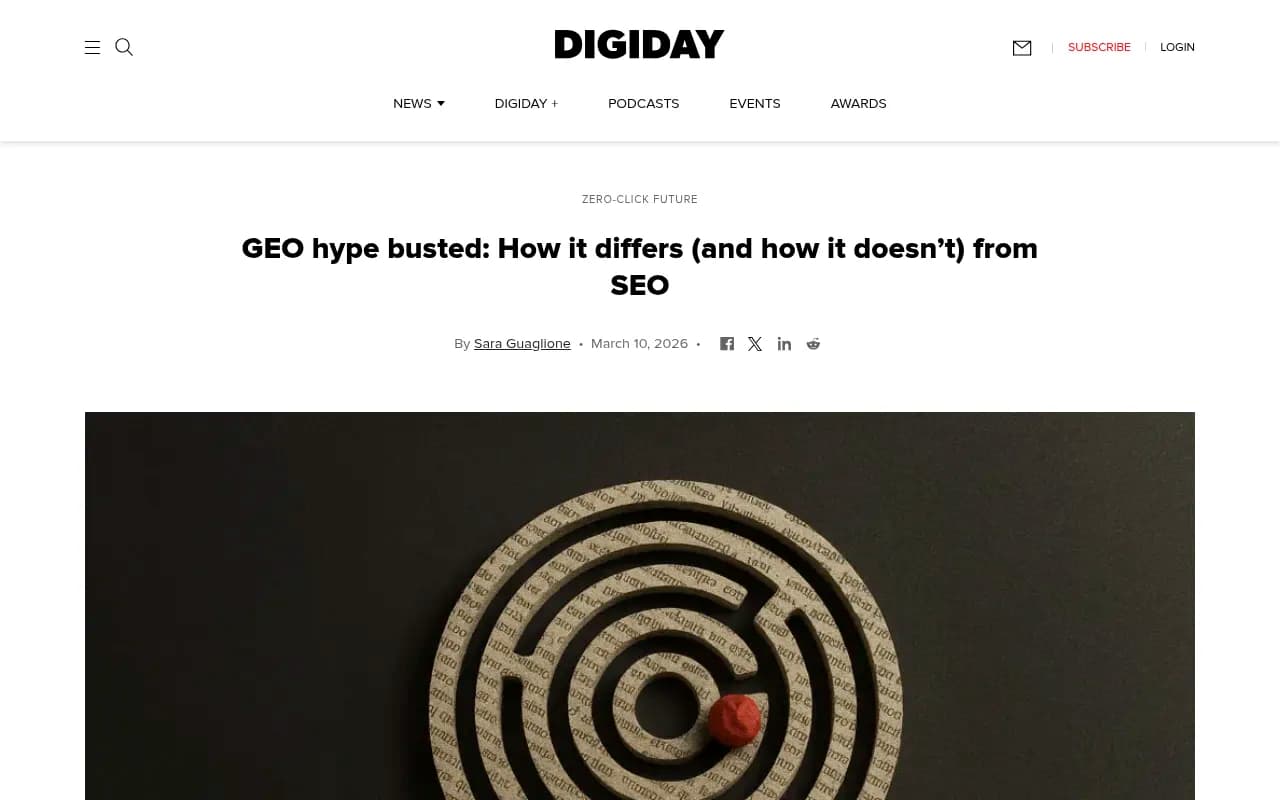
A Digiday piece from March 2026 noted that GEO is often treated as more revolutionary than it is -- but one genuinely new requirement is the need to optimize across multiple AI surfaces simultaneously, each with different behaviors.
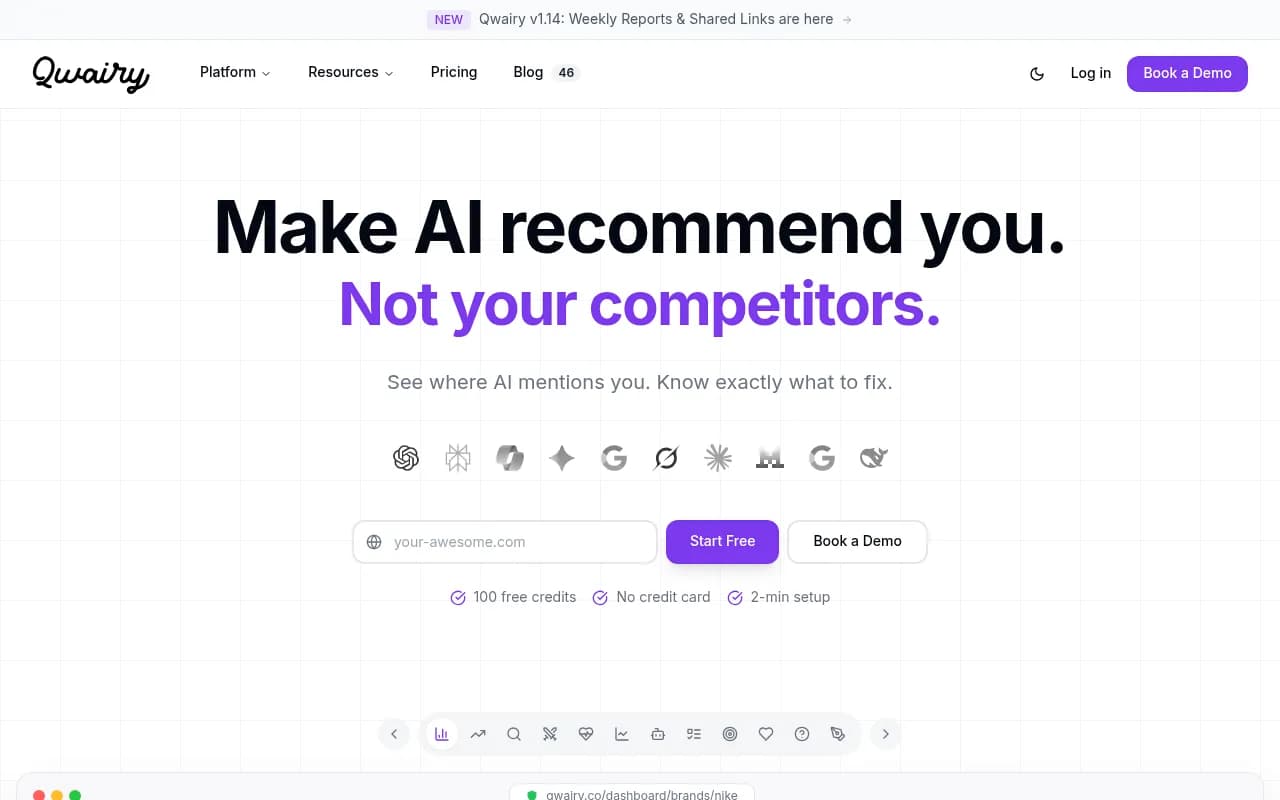
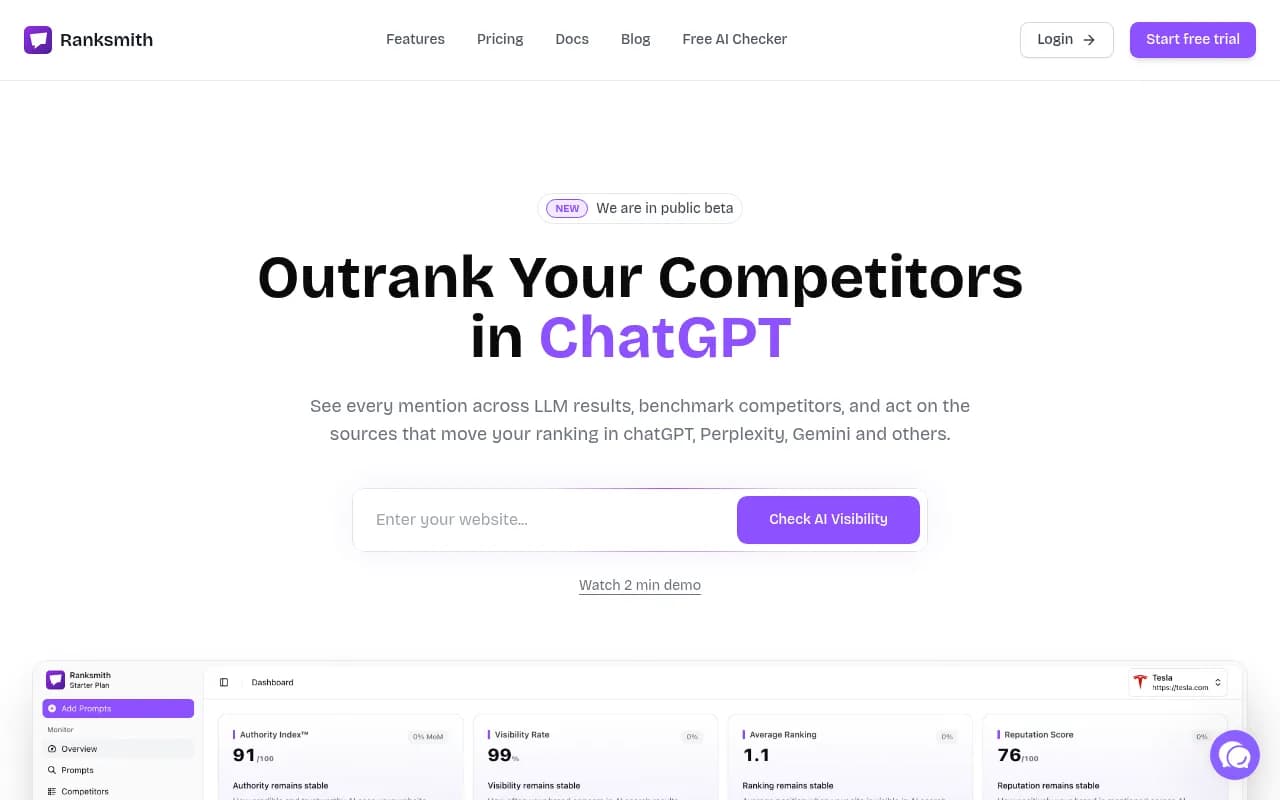
What to do: Expand your monitoring to cover at least the major models: ChatGPT, Perplexity, Google AI Overviews, Gemini, and Claude. Ideally you'd also track Grok, DeepSeek, and Meta AI. Use a platform that monitors all of them from a single dashboard rather than manually querying each one. The goal is to see your visibility heatmap across models -- where you're strong, where you're absent, and where competitors are beating you.
Sign 9: You have no offsite presence in the places AI models trust
Your own website is only one citation source. AI models heavily weight third-party content: Reddit discussions, YouTube videos, review sites, industry publications, and authoritative listicles. If your brand has no presence in these places, you're invisible to AI models even if your own site is perfectly optimized.
This is one of the most underappreciated parts of GEO. You can have technically perfect on-site content and still lose to a competitor who has 50 Reddit mentions, a few YouTube reviews, and appearances in every major "best of" listicle in your category.
What to do: Audit where AI models are actually pulling citations from in your category. Are they citing Reddit threads? Which subreddits? Are they citing YouTube reviews? Which channels? Are they citing specific publications or listicles? Once you know the citation sources, you can build a presence there -- through PR, community engagement, partnerships with reviewers, and outreach to listicle owners. This is offsite GEO, and it's just as important as onsite.
Sign 10: You're measuring GEO success without connecting it to revenue
This is the sign that a GEO strategy has matured into a reporting exercise rather than a business function. If your GEO metrics are "brand mentions in AI" and "citation count" but you can't connect those numbers to traffic, leads, or revenue, you can't justify the investment or improve it intelligently.
AI visibility that doesn't drive traffic or conversions is vanity. The goal is to appear in AI answers that lead to clicks, visits, and purchases -- and to know which content is doing that.
What to do: Set up traffic attribution that captures AI referral traffic specifically. Some AI models send referral traffic with identifiable source strings (Perplexity is the clearest example). Others don't. You need a measurement setup that captures as much of this as possible and ties it back to conversions. Page-level tracking that shows which cited pages drive actual visits closes the loop between GEO activity and business outcomes.
How the signs connect
Most failing GEO strategies have multiple problems at once. Here's a quick reference for diagnosing which issues you're dealing with:
| Symptom | Root cause | Fix |
|---|---|---|
| Brand never mentioned in AI answers | No monitoring, no content strategy | Start with a manual audit, then add tracking |
| Brand mentioned with wrong info | Stale third-party citations | Update owned content, refresh review listings |
| Content not getting cited | Wrong format (no FAQs, no definitions) | Add structured Q&A sections to key pages |
| Competitors winning your prompts | Content gaps | Build comparison and alternative pages |
| No visibility into what's working | Tracking rankings, not citations | Add AI citation tracking |
| Crawlers visiting but not citing | Technical crawl issues | Audit AI crawler logs, fix errors |
| Content not matching real prompts | Generic content strategy | Use prompt data to guide content creation |
| Gaps across AI models | Only monitoring ChatGPT | Expand to 5+ models |
| Losing to competitors with offsite presence | No third-party citations | Build Reddit, YouTube, and listicle presence |
| Can't justify GEO investment | No revenue attribution | Connect citation data to traffic and conversions |
The underlying problem with most GEO strategies
Most GEO strategies fail for the same reason: they're monitoring exercises, not optimization loops. Teams set up a dashboard, watch their citation counts, and feel like they're doing GEO. But watching a number go up and down isn't a strategy.
The teams that are actually winning in AI search right now are doing three things in sequence: finding the specific prompts where they're invisible, creating content that directly addresses those gaps, and tracking whether that content gets cited. Then repeating.
That cycle -- find gaps, create targeted content, measure results -- is what separates GEO that works from GEO that just looks like work. If your current strategy doesn't include all three steps, you've identified your real problem.