Key takeaways
- Offsite citations (Reddit, YouTube, third-party listicles, review sites) often drive more AI visibility than your own website -- most brands are measuring the wrong thing.
- Tracking where AI engines pull your brand mentions from requires different tooling than traditional rank trackers or web analytics.
- The best tools in this space go beyond simple mention counts: they show which external sources are actively being cited, how often, and by which AI model.
- A few platforms (notably Promptwatch) combine offsite citation tracking with onsite gap analysis and content generation, so you can act on what you find.
- Most monitoring-only tools will show you the problem but leave you to solve it yourself.
When people talk about AI search visibility, they usually mean: "Does ChatGPT mention my brand when someone asks a relevant question?" That's the right question. But the follow-up question -- "Why does or doesn't it mention me?" -- is where most brands get stuck.
The answer is rarely just about your website. AI models like ChatGPT, Perplexity, and Google AI Overviews pull from a much wider pool of sources: Reddit discussions, YouTube videos, third-party comparison pages, review aggregators, industry listicles, and news articles. A single well-placed Reddit thread can drive more AI citations than a dozen pages on your own domain.
That's the offsite citation problem. And it's why tracking your own website's performance in AI search is only half the picture.
This guide covers the six best tools for tracking offsite brand citations in AI search in 2026 -- what they do well, where they fall short, and which one is right for your situation.
What "offsite citation tracking" actually means
Before getting into tools, it's worth being precise about what we're measuring.
An offsite citation is any time an AI model cites a source that isn't your own website when mentioning (or failing to mention) your brand. That includes:
- Reddit threads where your brand is discussed or recommended
- YouTube videos reviewing or comparing your product
- Third-party listicles ("Best X tools for Y")
- Review platforms like G2, Capterra, or Trustpilot
- News articles and press coverage
- Industry blogs and comparison sites
The reason this matters: AI models use these sources as evidence. If Perplexity is recommending a competitor over you, it's often because a Reddit thread or a comparison article is making the case for them -- not because their website is better optimized.
Tracking offsite citations means knowing which of these external sources are being pulled into AI responses, which ones mention your brand positively, and which ones are helping competitors while ignoring you.
The 6 best tools for tracking offsite brand citations
1. Promptwatch
Promptwatch is the most complete option here, and the reason is simple: it doesn't just show you which external sources are being cited -- it connects that data to a workflow for doing something about it.

The offsite citation analysis in Promptwatch surfaces which Reddit threads, YouTube videos, third-party pages, and external domains are appearing in AI responses for your tracked prompts. You can see which sources are driving visibility for competitors that aren't driving it for you, and which external mentions of your brand are actually getting picked up by AI models versus which ones are being ignored.
What separates it from the monitoring-only tools below is the action loop. Once you know a competitor is getting cited because of a specific comparison article or Reddit discussion, Promptwatch's content agents can help you create content that fills that gap -- whether that's a new page on your site, a brief for outreach, or a content angle you haven't covered. The Answer Gap Analysis shows exactly which prompts competitors are visible for that you aren't, grounded in real citation data.
It also tracks across 10 AI models (ChatGPT, Perplexity, Google AI Overviews, Claude, Gemini, Grok, DeepSeek, Meta AI, Copilot, Mistral), so you're not flying blind on any major platform. The Reddit and YouTube tracking specifically is a channel most competitors don't cover at all.
Pricing starts at $99/month for the Essential plan. The Professional plan at $249/month adds crawler logs, which show you in real time when AI agents are hitting your site and which pages they're reading -- useful context when you're trying to understand why certain offsite sources are winning over yours.
2. Profound
Profound is a solid enterprise-grade option for teams that need deep prompt tracking and competitor share-of-voice data. Its citation analysis shows which sources are appearing in AI responses, and the interface makes it reasonably straightforward to see how your brand is being positioned relative to competitors.

Where Profound works well: large teams that need structured reporting, historical trend data, and the ability to track a high volume of prompts across multiple AI platforms. The prompt ideation features are genuinely useful for building out a comprehensive tracking setup.
Where it falls short for offsite citation work specifically: it doesn't have the Reddit and YouTube tracking depth that Promptwatch offers, and like most enterprise tools, it's more oriented toward monitoring and reporting than toward generating the content or outreach strategy that would actually improve your offsite citation footprint. It's also priced at the higher end, which can be a barrier for smaller teams.
3. Peec AI
Peec AI focuses on multi-language AI visibility tracking, which makes it one of the better options if you're operating in non-English markets where offsite citation sources look very different.

The platform tracks brand mentions and citations across major AI models and surfaces which external sources are contributing to your visibility. For international brands, the ability to monitor AI responses in different languages and regions is genuinely valuable -- most tools default to English-only tracking and miss a significant portion of the picture.
The limitation is depth. Peec AI is primarily a monitoring tool. It will show you what's happening with your offsite citations, but the path from "I see this competitor is being cited on this French comparison site" to "here's what I should do about it" is largely left to you.
4. Otterly.AI
Otterly.AI is one of the more accessible entry points into AI visibility monitoring, with a clean interface and straightforward setup. For teams that are just getting started with tracking AI citations -- including offsite ones -- it's a reasonable starting point.

It covers Google AI Overviews, ChatGPT, and Perplexity, and shows brand mentions and citation sources across those platforms. The pricing is competitive, which makes it viable for smaller teams or agencies managing multiple clients on a budget.
The honest limitation: Otterly.AI is a monitoring dashboard. It shows you citation data but doesn't have crawler logs, Reddit/YouTube-specific tracking, or content generation capabilities. If your goal is to understand your offsite citation landscape at a surface level, it works. If you want to diagnose why specific external sources are driving competitor visibility and build a strategy around it, you'll hit the ceiling quickly.
5. AthenaHQ
AthenaHQ tracks brand visibility across eight or more AI search engines and has a reasonably strong competitor analysis layer that's useful for offsite citation work.

The platform's strength is in showing you the competitive landscape -- which brands are appearing in AI responses for your target prompts, and which sources are being cited in those responses. For teams doing competitive intelligence work, that's genuinely useful context.
Like most tools in this space, AthenaHQ is monitoring-focused. It doesn't have content generation or gap-filling capabilities, so the workflow after you identify an offsite citation gap is manual. It also lacks the Reddit and YouTube-specific tracking that matters for understanding where AI models are actually pulling their "community consensus" signals from.
6. Brandlight
Brandlight is an AI-powered brand visibility tracking solution that covers citation monitoring across AI search engines and surfaces which external sources are contributing to your brand's presence.
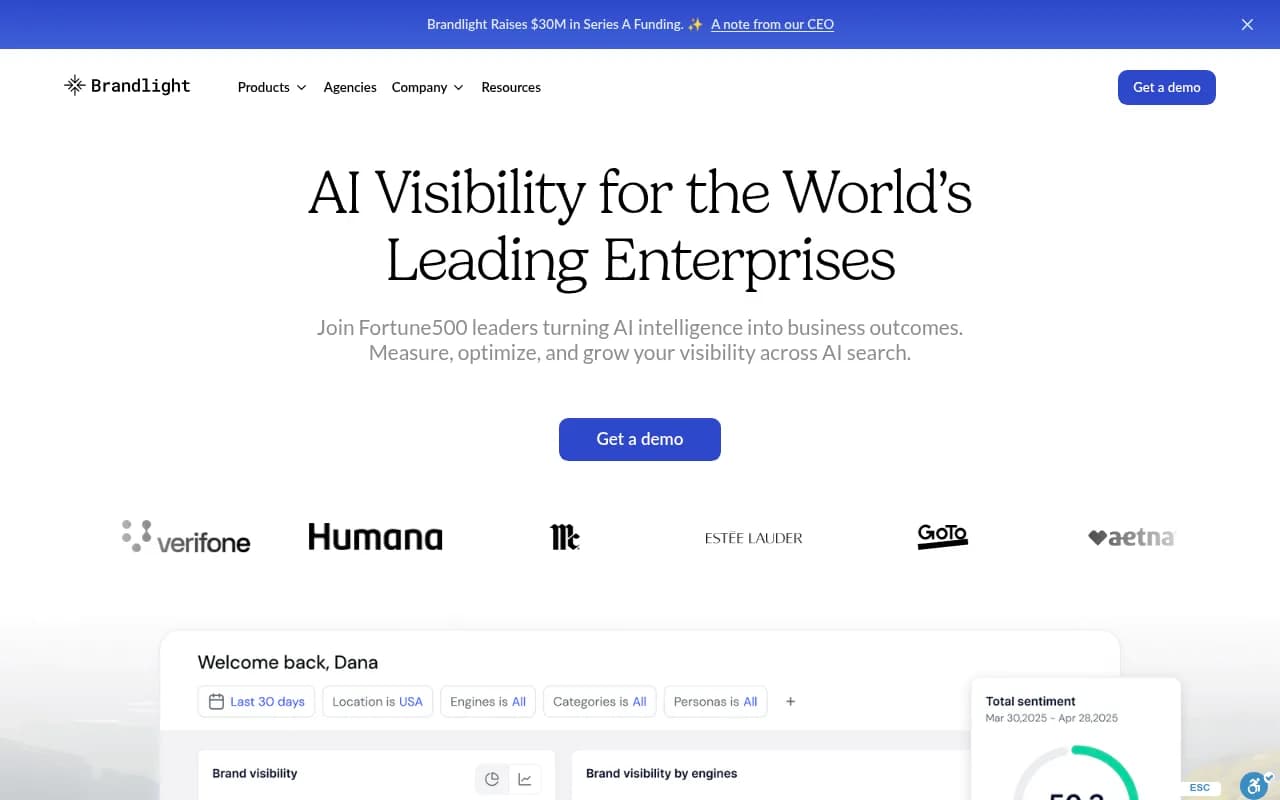
It's worth including here because it has a reasonably focused approach to brand monitoring rather than trying to be a full SEO suite. For teams whose primary concern is brand reputation and citation tracking (rather than content optimization), the narrower focus can be an advantage -- less noise, more signal on the specific question of "where is my brand being mentioned and cited?"
The trade-off is the same as most monitoring-only tools: strong on visibility, limited on actionability. You'll know which offsite sources are driving citations, but building a response to that data requires other tools or manual effort.
How the tools compare
| Tool | Offsite citation tracking | Reddit/YouTube tracking | Content generation | Crawler logs | Multi-model coverage | Starting price |
|---|---|---|---|---|---|---|
| Promptwatch | Yes | Yes | Yes | Yes (Pro+) | 10 models | $99/mo |
| Profound | Yes | Limited | No | No | Multiple | Higher |
| Peec AI | Yes | No | No | No | Multiple | Mid-range |
| Otterly.AI | Basic | No | No | No | 3 models | Low |
| AthenaHQ | Yes | No | No | No | 8+ models | Mid-range |
| Brandlight | Yes | No | No | No | Multiple | Mid-range |
What to actually look for when evaluating these tools
A few things worth checking before you commit to any platform:
Source-level citation data. Some tools tell you your brand was mentioned in an AI response. Better tools tell you which external source the AI cited when it mentioned you (or your competitor). That second level of detail is what makes offsite citation tracking actually useful.
Reddit and YouTube coverage. According to citation analysis data from Ziptie.dev, Reddit, Stack Exchange, and Hugging Face are among the most frequently cited sources in AI-generated search results. If a tool doesn't track these channels specifically, it's missing a significant portion of the offsite citation picture.
Competitor citation data. Knowing which external sources are citing your brand is useful. Knowing which external sources are citing your competitors -- but not you -- is more useful. Look for tools that show you the gap, not just your own position.
What happens after you find a gap. This is the question most marketing teams don't ask until they've been using a monitoring tool for three months and realized they have a lot of data and no clear path to improving their numbers. If the tool can't help you create content, brief outreach, or identify specific fixes, you're adding a reporting layer without adding a capability.
The offsite citation channels that matter most in 2026
Based on how AI models actually behave, these are the external source types that have the most influence on whether your brand gets cited:
Reddit. AI models treat Reddit as a proxy for authentic community opinion. Threads where your brand is recommended, compared favorably, or discussed in depth carry significant weight. A competitor with strong Reddit presence will often outperform a competitor with a better website.
Third-party comparison and listicle pages. "Best [category] tools" articles on sites like G2, Capterra, Zapier, and independent blogs are heavily cited. Being absent from these lists, or being listed without strong positioning, directly affects AI citation rates.
YouTube reviews and comparisons. Perplexity and ChatGPT increasingly pull from YouTube content, particularly for product reviews and how-to queries. A well-ranked YouTube review can drive AI citations even if your own website content is strong.
News and press coverage. Recent coverage from credible publications signals to AI models that your brand is active and relevant. This is one of the more actionable channels -- a PR push can move AI citation rates faster than most content changes.
Review aggregators. G2, Trustpilot, and Capterra ratings appear in AI responses for brand and product queries. The volume and recency of reviews matters, not just the average score.
Which tool should you use?
If you're serious about offsite citation tracking and want to connect what you find to an actual improvement strategy, Promptwatch is the most complete option. The combination of offsite citation analysis, Reddit and YouTube tracking, competitor heatmaps, and content generation in one platform means you're not stitching together three different tools to get from "I see a gap" to "here's what I'm publishing to close it."
If you're at an enterprise with a large team and need deep historical data and structured reporting, Profound is worth evaluating -- just go in knowing you'll need separate tools for the content and outreach side.
If you're in a non-English market, Peec AI's multi-language coverage is a genuine differentiator.
If you're just getting started and want to understand the basics of your AI citation landscape before investing in a full platform, Otterly.AI is a low-cost way to get oriented.
The honest summary: most tools in this space are good at showing you the problem. Fewer are built to help you fix it. That gap matters more as AI search becomes a larger share of how people discover brands -- because monitoring a visibility problem you can't act on is just expensive anxiety.