Key takeaways
- AI search engines like ChatGPT, Perplexity, and Google AI Overviews recognize brands as "entities" -- named things with attributes, associations, and trust signals -- not just as websites with backlinks
- Entity-optimized brands see up to 70% more accurate AI-generated descriptions, according to research cited by Onely
- Unlinked brand mentions now carry real weight in AI search, because LLMs build semantic associations from text, not just link graphs
- Entity tracking means monitoring how AI models describe your brand, what attributes they associate with you, and whether those descriptions are accurate
- The practical fix involves building a consistent entity footprint: a clear "entity home," structured data, corroborating mentions across trusted sources, and content that answers the specific questions AI models are already being asked
If you've typed your brand name into ChatGPT or Perplexity lately and gotten back a description that was slightly wrong -- or worse, didn't mention you at all -- you've already encountered an entity problem. The AI didn't "rank" a competitor above you. It just didn't know you well enough to include you.
That's the shift that makes entity tracking matter in 2026. Search used to be about pages. AI search is about things -- specifically, about recognized, trusted things that a model can confidently describe and cite. Your brand either exists as a well-defined entity in the AI's understanding of the world, or it's a blur.
This guide explains what entity tracking actually is, why it's become a core discipline for marketing and SEO teams, and what you can do about it.
What is an entity in AI search?
An entity is any distinct, identifiable thing: a brand, a person, a product, a concept, a place. Search engines and AI models don't just read words -- they extract entities from text and build a knowledge graph of how those entities relate to each other.
When Google's AI Overview answers "what's the best project management software for remote teams," it's not scanning for keyword matches. It's pulling from its understanding of which entities (software products) are associated with which attributes (remote work, collaboration, project management) and which trust signals (cited by credible sources, described consistently across the web).
Your brand is an entity. The question is how well-defined that entity is.
A well-defined entity has:
- A clear, consistent name and description across sources
- Known attributes (what you do, who you serve, what you're known for)
- Associations with relevant topics and categories
- Corroboration from trusted third-party sources
- Structured data that makes the above machine-readable
A poorly defined entity has conflicting descriptions, sparse mentions, no structured data, and no clear topical home. AI models encountering a poorly defined entity either skip it or describe it inaccurately -- which can be worse than being skipped.
Why entity tracking has become urgent
Three things happened in the last two years that made entity tracking a practical priority rather than an SEO theory.
First, AI search traffic exploded. AI search visits grew 42.8% year over year, from 15.6 billion in Q1 2025 to 27.4 billion in Q1 2026, according to Wix's AI Search Lab research. A meaningful chunk of discovery is now happening inside answer engines, not on traditional search results pages.
Second, the conversion quality is real. Semrush's AI Search Traffic Study found that AI-sourced visitors convert at roughly 4.4 times the rate of traditional organic traffic. If AI search sends you fewer but better visitors, getting your entity right has outsized revenue impact.
Third, the Princeton and IIT Delhi research team behind the original GEO paper found that entity-rich, fact-dense content can improve AI citation visibility by up to 40% across a wide range of queries. That's not a marginal improvement -- it's the difference between being cited and being invisible.
What entity tracking actually means
Entity tracking is the practice of monitoring how AI models represent your brand -- what they say about you, what attributes they assign, how accurate those descriptions are, and whether you're being cited at all.
It's different from traditional rank tracking. You're not asking "what position do I appear in for keyword X?" You're asking:
- When someone asks an AI about my category, do I appear?
- When I do appear, is the description accurate?
- What attributes does the AI associate with my brand?
- Which competitors does the AI mention instead of me?
- Are there specific prompts where I should be visible but I'm not?
The last question is where entity tracking connects to action. Knowing you're invisible for a set of prompts is only useful if you can figure out why and fix it.
The role of unlinked mentions
One thing that surprises a lot of marketers: unlinked brand mentions matter significantly for AI search visibility. A link is one path to recognition, but an unlinked mention carries the same semantic weight inside the text a model actually reads and summarizes.
LLMs extract entities from text during training and retrieval. An unlinked mention in a respected industry publication still feeds the model's understanding that your brand is associated with a particular topic. The model doesn't need a clickable URL to learn the association.
Context matters more than volume here. A brand mentioned once in a detailed analysis from a recognized publication, surrounded by relevant terms, gives the model a stronger signal than fifty mentions in low-quality directories. Quality of placement beats raw mention count.
The six signals AI engines use to resolve an entity
Based on the research from Frase.io's practitioner guide and corroborating sources, AI engines use roughly six signals to decide whether they understand and trust a brand entity:
Consistency: Does your brand name, description, and category appear consistently across your own site, your structured data, and third-party sources? Conflicting descriptions create ambiguity. Ambiguity means the model either guesses or skips you.
Topical authority: Are you mentioned in the context of specific topics repeatedly? A brand mentioned once in passing for "email marketing" is weaker than one that appears in multiple detailed discussions of email deliverability, list segmentation, and campaign automation.
Source quality: Which publications and sites mention you? A mention in a recognized industry publication carries more weight than a mention in a generic directory. The model has its own sense of source credibility built from training data.
Structured data: Do you use Schema.org markup to tell crawlers exactly what your brand is, what it does, and who it serves? Structured data is the clearest possible signal -- it's machine-readable intent.
Entity home: Do you have a single page (usually your About page) that serves as the canonical definition of your brand? Search Engine Land describes this as the "entity home" -- the page that anchors how algorithms, bots, and people understand your brand. It should state clearly what you are, what you do, and what makes you different.
Corroboration: Are your self-described attributes confirmed by third parties? If you say you're the leading platform for X, and multiple independent sources say the same thing, the model has corroboration. If only your own site says it, the model has a claim.
How to audit your entity footprint
Before you start fixing things, it helps to know what you're working with. A basic entity audit has four steps.
Step 1: Check what AI models actually say about you
Open ChatGPT, Perplexity, Claude, and Gemini. Ask each one: "What is [your brand]?" and "What is [your brand] known for?" Write down what they say. Note inaccuracies, missing attributes, and competitors they mention instead of you.
This is manual but revealing. You'll quickly see whether your entity is well-defined or fuzzy.
Step 2: Check your entity home
Find the page on your site that's most likely to be read as your brand definition -- usually your About page or homepage. Ask: does it clearly state what you are, what category you're in, who you serve, and what differentiates you? Is it marked up with Organization schema?
If the answer to any of those is no, that's a gap.
Step 3: Audit your structured data
Use Google's Rich Results Test or a schema validator to check whether your key pages have correct Organization, Product, or Article schema. Missing or broken structured data is one of the easiest entity problems to fix.
Step 4: Map your third-party mentions
Search for your brand name in quotes across industry publications, review sites, and forums. Are you mentioned in the context of your core topics? Are the descriptions consistent with how you describe yourself? Are there credible sources that don't mention you at all but mention your competitors?
Tools for entity tracking and AI visibility
Manual audits get you started, but ongoing entity tracking requires tooling. The category has grown quickly in 2026, and there are now platforms specifically built for monitoring how AI models represent your brand.
Promptwatch tracks how your brand appears across 10 AI models -- ChatGPT, Perplexity, Google AI Overviews, Claude, Gemini, Grok, DeepSeek, Copilot, Meta AI, and Mistral. It monitors entity mentions, tracks which prompts trigger citations, and shows you the specific gaps where competitors appear but you don't. The Answer Gap Analysis feature is particularly useful for entity work: it surfaces the exact prompts where your brand should logically appear but doesn't, which tells you what content you need to create.

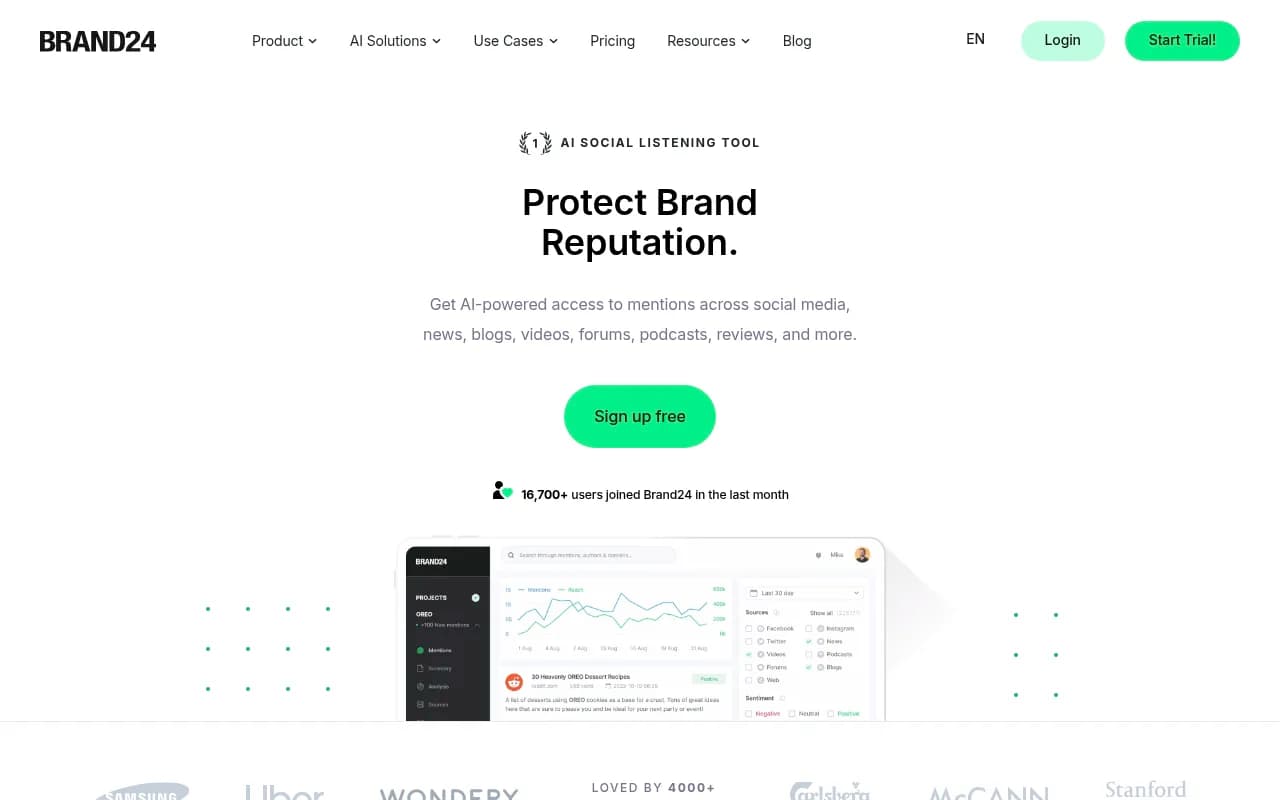
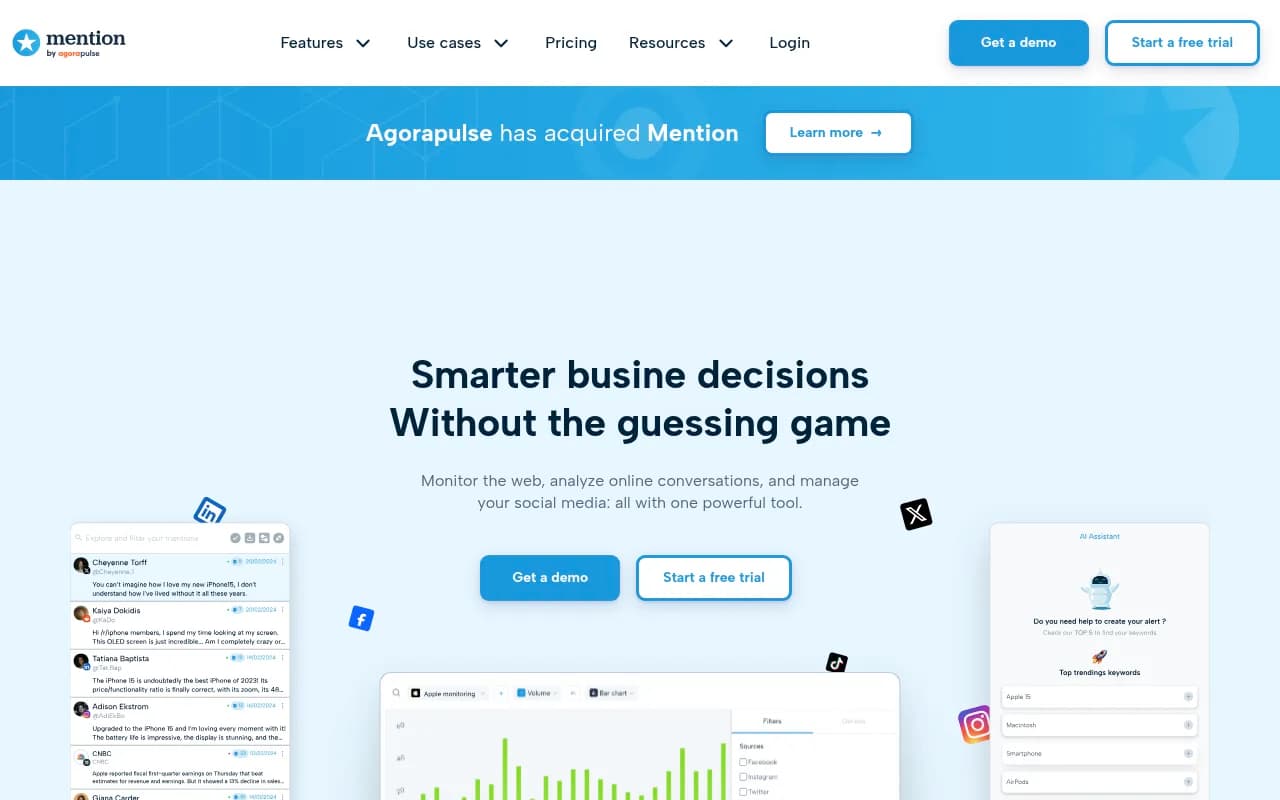
For broader brand mention tracking across the web (which feeds your entity footprint), tools like Brand24 and Mention monitor mentions across millions of sources in real time.
For AI-specific visibility monitoring with a focus on citation tracking, a few other platforms worth knowing:

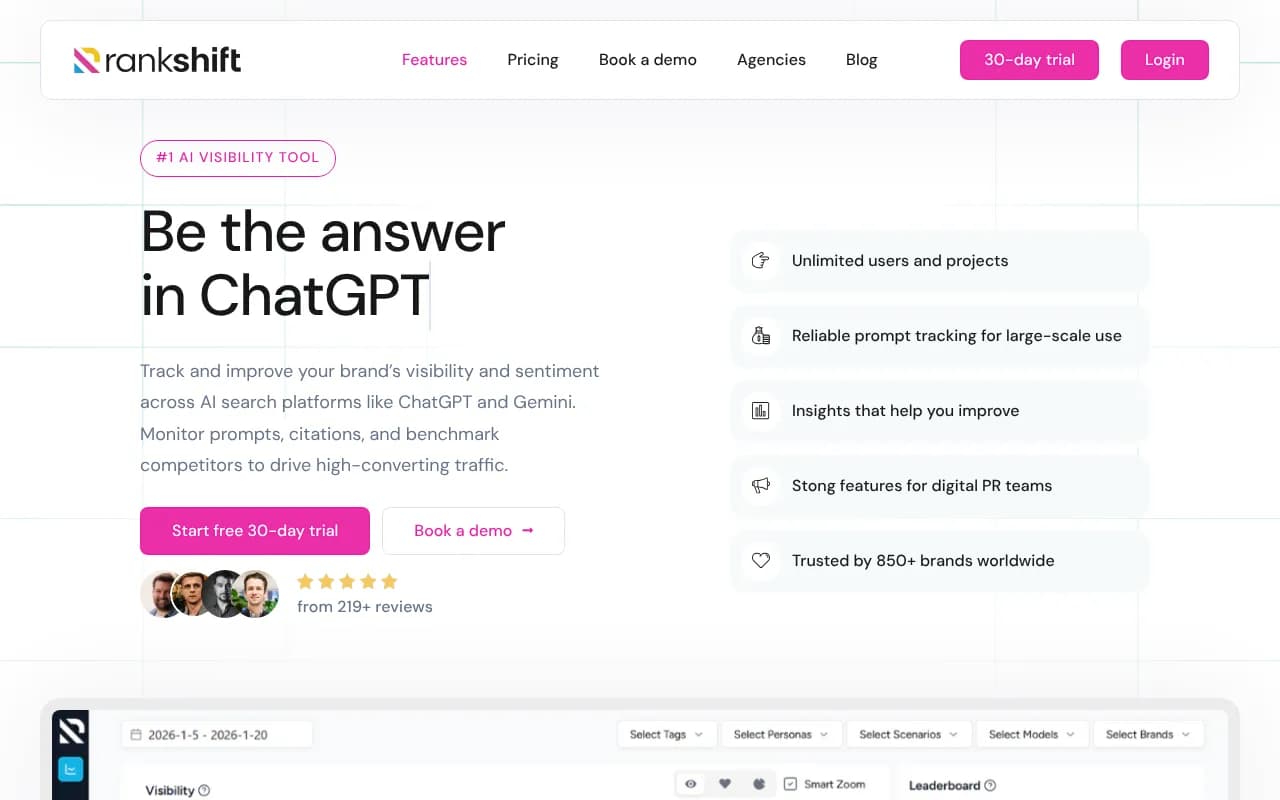
Here's a quick comparison of how these tools approach entity and AI visibility tracking:
| Tool | Entity/mention tracking | AI model coverage | Content gap analysis | Crawler logs |
|---|---|---|---|---|
| Promptwatch | Yes | 10 models | Yes (Answer Gap Analysis) | Yes |
| Profound | Yes | Multiple | Limited | No |
| AthenaHQ | Yes | 8+ models | No | No |
| Rankshift | Basic | Multiple | No | No |
| Brand24 | Web mentions | N/A | No | No |
| Mention | Web mentions | Limited | No | No |
Building an entity-rich content strategy
Tracking is only half the job. Once you know where your entity is weak, you need to strengthen it. The research from Frase.io and Onely points to a consistent playbook.
Create content that answers the questions AI is already being asked
Entity tracking tools show you which prompts are being asked in your category and which ones you're not appearing for. Those gaps are your content brief. Write pieces that directly answer those questions, using your brand's specific perspective and data. Generic content doesn't build entity strength -- specific, attributed, fact-dense content does.
Get mentioned in the right places
Identify the publications, forums, and platforms that AI models cite most often in your category. A mention in one of those sources is worth more than dozens of mentions in lower-quality places. This might mean contributing to industry publications, getting listed in relevant roundups, or participating in Reddit threads that AI models actively pull from.
Keep your entity home current
Your About page or brand definition page should be updated whenever your positioning changes. If you've expanded into a new category or launched a new product line, your entity home needs to reflect that -- otherwise AI models will keep describing the old version of you.
Use structured data consistently
Every major page on your site should have appropriate schema markup. For brand pages, Organization schema. For product pages, Product schema. For articles, Article schema with author and publisher attributes. This isn't glamorous work, but it's one of the clearest signals you can send to AI crawlers.
Build topical depth, not breadth
A brand that has 50 shallow articles on 50 different topics looks like a generalist. A brand that has 10 deep, well-cited pieces on a specific topic cluster looks like an authority. AI models are better at recognizing authority in a defined space than authority spread thin. Pick your core topics and go deep.
What good entity tracking looks like in practice
Say you run a B2B SaaS company in the project management space. A good entity tracking setup would:
- Monitor weekly what ChatGPT, Perplexity, and Google AI Overviews say when asked about project management tools for specific use cases (remote teams, construction companies, marketing agencies)
- Track whether your brand appears in those answers, and if so, what attributes are mentioned
- Flag when a competitor starts appearing in prompts where you used to appear
- Surface new prompt categories where you're not appearing but should be
- Connect visibility changes to actual traffic and conversion data so you can see whether entity improvements are driving revenue
That last piece -- connecting visibility to revenue -- is where most monitoring-only tools fall short. Knowing you appeared in 40 more AI responses this month is interesting. Knowing that drove 200 additional visits that converted at 4x your organic average is actionable.
The entity tracking mindset shift
The underlying shift here is worth naming directly. Traditional SEO was about optimizing for a ranking algorithm. You studied the signals, you optimized for them, and you tracked positions.
Entity optimization is about being genuinely recognizable. AI models are trying to answer questions accurately. They cite brands they understand clearly, trust based on corroboration, and associate with relevant topics based on evidence. You can't trick your way into that -- you have to actually build the entity.
That means consistent positioning, real third-party validation, structured data that makes your attributes machine-readable, and content that answers the specific questions people are asking in your category.
The brands that are winning in AI search right now aren't the ones with the most backlinks or the highest domain authority scores. They're the ones that AI models know the most about. Entity tracking is how you measure that -- and how you close the gap.