Key takeaways
- ChatGPT, Perplexity, Gemini, and other LLMs pull from different data sources, training cutoffs, and retrieval mechanisms -- so they genuinely form different opinions about your brand.
- Gemini surfaces brands in 83.7% of answers but cites sources only 21.4% of the time. ChatGPT flips this: lower brand mention rates but strong citation use (around 87%), according to Semrush data.
- Being visible in one LLM does not mean you're visible in others. Each model needs to be treated as a separate channel.
- The gap between models is widest for mid-market and emerging brands -- well-known brands benefit from training data saturation, while smaller brands depend heavily on retrieval and third-party sources.
- Tracking and closing these gaps requires model-specific monitoring, not just a single "AI visibility score."
Why the same brand gets described differently by different LLMs
Ask ChatGPT about your brand. Then ask Perplexity. Then Gemini. You'll often get three different answers -- different positioning, different competitors mentioned alongside you, sometimes different facts entirely.
This isn't a bug. It's a structural feature of how these models work, and it has real consequences for marketing teams who assume AI search is one unified channel.
The core reason: each LLM has a different mix of training data, retrieval behavior, and source weighting. Some models rely heavily on what they learned during training (with a cutoff date that may be months or years old). Others retrieve live web results and synthesize them in real time. Most do some combination of both -- but the ratio varies enormously.
The result is that your brand has multiple "AI identities" across models, and they may not align with how you want to be perceived.
The three main factors driving LLM disagreement
1. Training data vs. live retrieval
LLMs don't crawl the web the way Google does. They learn from a massive snapshot of the internet up to a training cutoff, then get deployed. After that cutoff, their knowledge is frozen unless the model has a retrieval layer (like Perplexity's real-time web search or ChatGPT's browsing mode).
This matters because:
- A brand that launched or rebranded after a model's training cutoff may not exist in that model's base knowledge at all.
- A brand that received heavy press coverage before the cutoff may be well-represented in training data even without any active optimization.
- Models with live retrieval (Perplexity, Google AI Overviews) will reflect your current web presence more accurately -- but that also means recent negative coverage can surface immediately.
Perplexity is almost entirely retrieval-based, which makes it more responsive to your current content strategy. ChatGPT's base model relies more on training data, though GPT-4o with browsing enabled can retrieve live results. Gemini sits somewhere in between, with strong integration into Google's index.
2. Source weighting and citation behavior
Different models weight different types of sources. This is where things get genuinely interesting -- and where the Semrush data becomes useful.
Gemini surfaces brands in 83.7% of answers but only cites sources 21.4% of the time. ChatGPT shows roughly the opposite pattern: it cites sources in around 87% of responses. What this means in practice:
- Gemini may mention your brand frequently without telling users where it got that information. You get visibility, but users can't easily trace the source back to you.
- ChatGPT's heavy citation behavior means the sources it pulls from are visible to users -- which makes citation placement (being on the right third-party pages, review sites, and directories) more directly valuable.
- Perplexity almost always shows citations, and its source selection is heavily influenced by what ranks well in real-time web results.
For eCommerce brands specifically, ChatGPT may frame you as primarily commercial (product-focused), while Perplexity might position you as more informational if your content strategy leans that way. The same brand, two different identities.
3. Prompt interpretation and persona modeling
The same question phrased differently can produce different brand mentions. "Best project management tool for remote teams" and "What project management software do most companies use?" will surface different brands in the same model -- and the same prompt will surface different brands across models.
This is partly because models interpret intent differently. ChatGPT tends to give opinionated recommendations. Perplexity tends to aggregate what's currently being discussed online. Gemini tends to reflect what Google's own index considers authoritative.
For brands, this means your visibility isn't just about whether you're mentioned -- it's about which prompts trigger your mention, and whether those prompts match how your actual customers search.
Which LLMs matter most for brand visibility in 2026
Not all models deserve equal attention. Here's a practical breakdown:
| LLM | Primary use case | Citation behavior | Best for |
|---|---|---|---|
| ChatGPT (GPT-4o) | Research, recommendations, shopping | High (~87% citation rate) | B2C brands, product recommendations, shopping queries |
| Perplexity | Real-time research, fact-checking | Very high (almost always) | Informational queries, B2B research, technical topics |
| Google AI Overviews / AI Mode | Search-integrated answers | Moderate | Any brand with strong Google SEO presence |
| Gemini | Conversational AI, Google Workspace | Low (~21% citation rate) | Brand awareness, general visibility |
| Claude | Writing, analysis, research | Moderate | B2B, professional services, thought leadership |
| Grok | Social/news-adjacent queries | Low-moderate | Brands with strong social media presence |
| DeepSeek | Technical and research queries | Moderate | Tech brands, developer tools |
| Copilot | Microsoft ecosystem queries | Moderate | Enterprise brands, Microsoft-adjacent tools |
ChatGPT and Perplexity are the highest priority for most brands right now. They have the largest user bases in research and buying-decision contexts -- the moments when someone is actively evaluating options and an AI recommendation can directly influence a purchase.
Google AI Overviews matters enormously for brands with existing SEO investment, since it pulls directly from Google's index and your existing rankings carry over.
Why your brand might be invisible in one model but prominent in another
This is the scenario that surprises most marketing teams when they first start monitoring AI visibility.
A software company might be well-represented in Perplexity (because they have strong technical content that ranks in real-time search) but nearly absent in ChatGPT's base model (because they launched after the training cutoff or never generated enough training-data-era coverage).
An established retail brand might be frequently mentioned in Gemini (saturated in training data from years of press coverage) but rarely cited in Perplexity (because their current content strategy is thin and doesn't generate fresh retrieval signals).
The gap between models tends to be widest for:
- Brands that have rebranded or pivoted recently
- Brands in fast-moving categories where the competitive landscape has shifted
- Mid-market brands that aren't household names but are significant in their niche
- Brands that have invested heavily in SEO but haven't thought about AI-specific content
For well-known brands, training data saturation provides a floor -- they'll show up somewhere in most models regardless. For everyone else, active optimization is the only way to close the gaps.
What actually drives visibility in each model
ChatGPT
ChatGPT's base knowledge comes from its training corpus, which includes a massive sweep of the web, books, and other text. For brands, the key signals are:
- Volume of mentions across authoritative web sources before the training cutoff
- Third-party coverage: review sites, industry publications, comparison pages, Reddit discussions
- How consistently your brand is described across sources (consistency matters -- contradictory descriptions create uncertainty in the model)
For ChatGPT's browsing/retrieval mode, the signals shift toward current web content, similar to Perplexity.
Perplexity
Perplexity is the most "SEO-adjacent" of the major LLMs because it retrieves live results. If you rank well in Google for relevant queries, you have a decent chance of being cited in Perplexity. Key signals:
- Current search rankings for relevant queries
- Fresh content that directly answers the questions users are asking
- Third-party mentions on sites that Perplexity's retrieval layer trusts
Google AI Overviews and AI Mode
These pull from Google's index, so traditional SEO signals apply -- but with a twist. Google's AI layer tends to favor content that directly answers questions, not just content that ranks for keywords. Structured content, clear headings, FAQ sections, and direct answers all help.
Gemini
Gemini's low citation rate makes it harder to reverse-engineer. It appears to weight Google's knowledge graph heavily, which means entity establishment (being clearly defined as a brand, with consistent attributes, in Google's ecosystem) matters more here than raw content volume.
How to close the gaps: a practical approach
Audit each model separately
The first step is understanding where you actually stand. Don't assume your visibility is uniform. Run the same set of prompts across ChatGPT, Perplexity, Gemini, and Claude and document the differences. You'll likely find that your brand is described differently, positioned against different competitors, or absent entirely in some models.
Tools like Promptwatch track brand visibility across 10+ AI models simultaneously, so you can see these discrepancies in one place rather than manually querying each model.

Identify which prompts matter
Not all prompts are equal. A prompt that 50,000 people ask per month is worth more than one that 200 people ask. Focus your optimization efforts on the prompts that are actually driving buying decisions in your category -- the "best X for Y" queries, comparison queries, and problem-aware queries where users are evaluating options.
Build content for retrieval, not just rankings
For models with live retrieval (Perplexity, ChatGPT browsing, Google AI Overviews), content that directly answers specific questions gets cited. This means:
- Write content that answers the exact questions users ask AI models, not just keyword-optimized content
- Create comparison pages, FAQ content, and "best for" guides that match how AI models structure their answers
- Publish on platforms that AI models trust: your own site, industry publications, Reddit, YouTube
Strengthen your third-party presence
For ChatGPT's base model and Gemini, third-party mentions matter as much as your own content. Review sites, industry directories, comparison pages, and press coverage all feed into how models perceive your brand. Consistent, positive descriptions across these sources create a stronger signal than any single piece of content you publish.
Monitor for drift and inconsistency
Brand perception in LLMs isn't static. Models get updated, retrieval layers change, and new content shifts what gets cited. A brand that was well-represented six months ago may have drifted if competitors have published more aggressively or if a negative review thread gained traction.
Regular monitoring -- ideally weekly for high-priority prompts -- is the only way to catch this before it affects actual buying decisions.
Tools worth knowing for cross-LLM visibility tracking
Several platforms have emerged specifically for tracking brand visibility across multiple LLMs. Here are some worth evaluating:
For comprehensive tracking and optimization:
Promptwatch monitors 10 AI models and goes beyond tracking to help you identify content gaps and generate content that addresses them. Useful if you want to close visibility gaps, not just measure them.

Profound focuses on brand tracking across AI search engines with strong analytics for enterprise teams.

Peec AI covers multi-language tracking, useful for brands operating across multiple markets.
For lighter-weight monitoring:

Otterly.AI is a more affordable entry point for teams that primarily need monitoring without content generation.
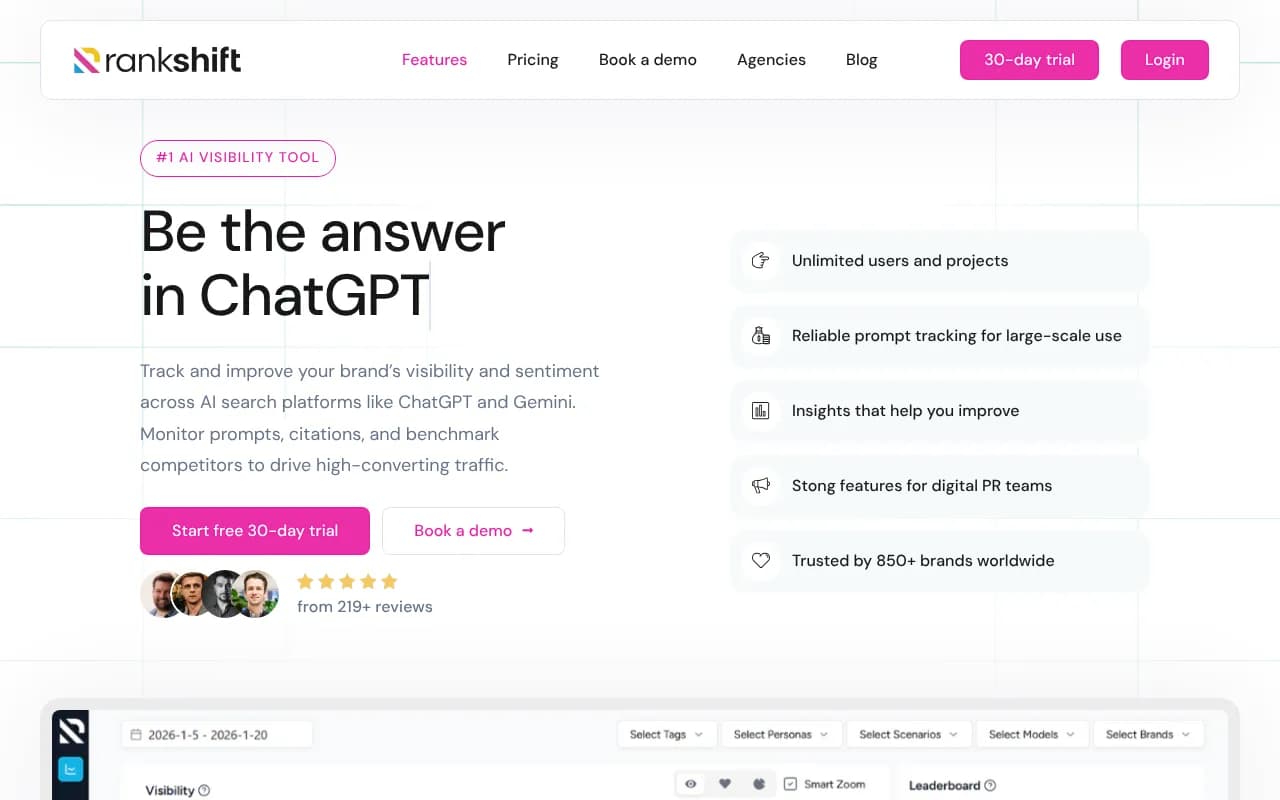
Rankshift focuses specifically on LLM tracking for GEO and AI visibility, with a clean interface for tracking prompt-level performance.
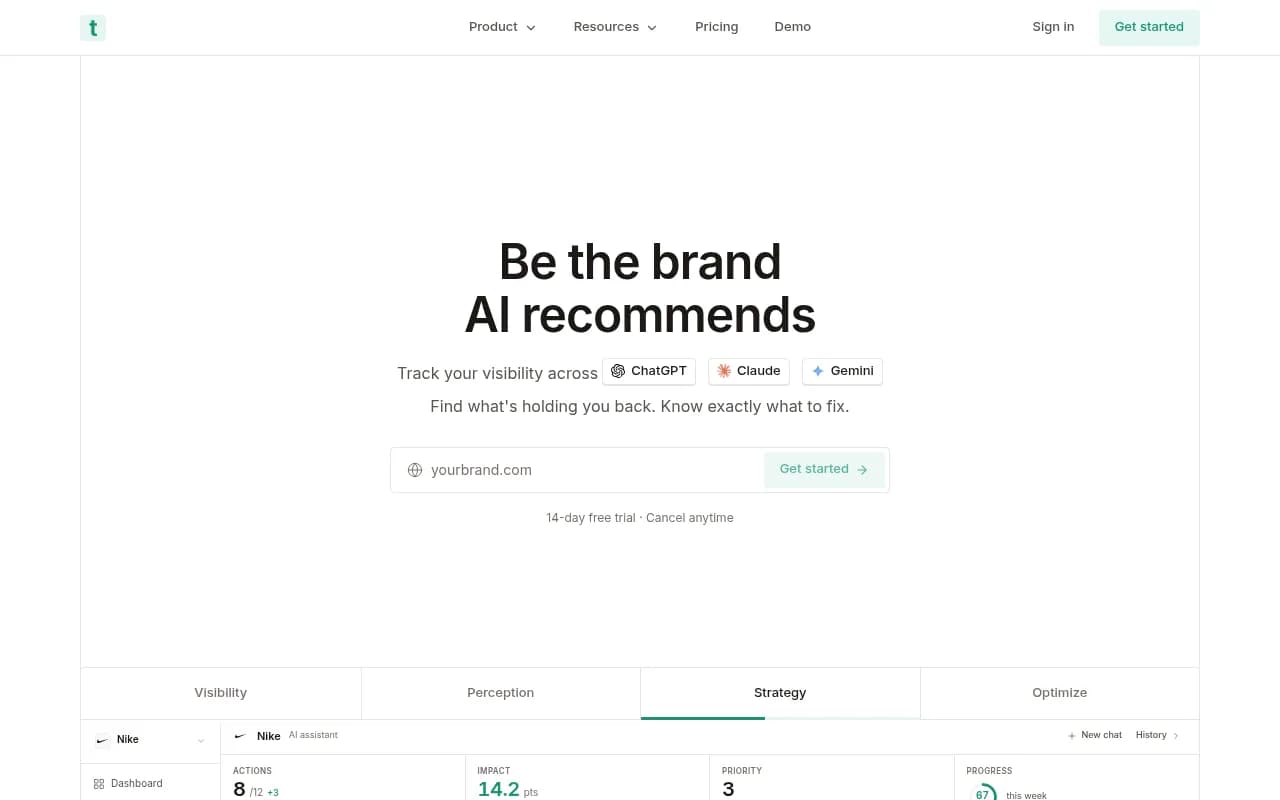
Trakkr.ai tracks brand visibility across ChatGPT, Claude, Perplexity, and other models with a focus on citation tracking.
For eCommerce brands specifically:
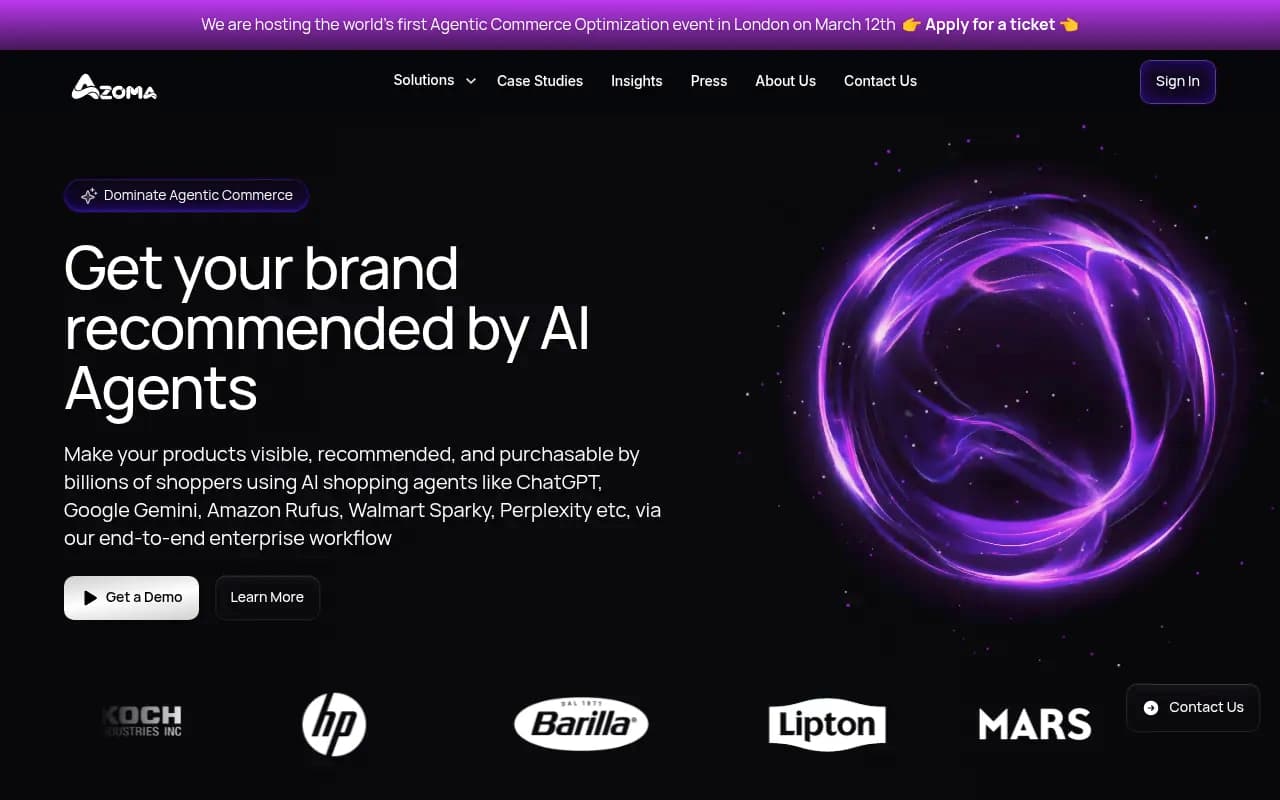
Azoma focuses on AI shopping optimization, including ChatGPT's product recommendations and shopping carousels -- a channel that's increasingly relevant for retail brands.
The bigger picture
The fact that ChatGPT, Perplexity, and Gemini don't agree on your brand isn't a temporary problem that will resolve itself as AI matures. It's a structural feature of how these systems work -- different architectures, different data sources, different update cycles.
What this means for marketing teams is that "AI visibility" isn't one metric. It's a collection of model-specific signals that need to be tracked and managed separately. A brand that optimizes only for one model while ignoring others is leaving real exposure on the table.
The brands that will win in AI search over the next few years are the ones that treat each model as a distinct channel, understand what drives visibility in each, and build content strategies that address the gaps systematically. That's a more complex job than traditional SEO -- but it's also a significant competitive advantage for teams that get there first.