Key takeaways
- Citation rate, share of voice, and AI-referred pipeline are the three metrics that actually matter for GEO ROI -- not keyword rankings or organic traffic alone.
- Semrush research shows AI-sourced traffic converts 2.3x better than traditional organic search, which changes how you should value a citation vs a click.
- Attribution is harder than in SEO because AI-influenced buyers often arrive later and through branded search -- you need wider attribution windows and CRM integration.
- Branded search lift is currently the most reliable proxy for AI visibility impact when direct referral data is thin.
- Purpose-built GEO platforms (not repurposed SEO tools) are the only way to track this at scale across ChatGPT, Perplexity, Gemini, and the rest.
Why your current SEO dashboard is lying to you
Here's a scenario that's playing out in marketing teams everywhere right now: your agency reports 12% organic traffic growth and page-one rankings for 40+ keywords. Meanwhile, a prospect tells your sales team they asked ChatGPT for vendor recommendations and your company wasn't mentioned. The deal goes to a competitor.
Your dashboard showed green. You still lost.
The problem is structural. Traditional SEO was built around the ten blue links model -- Google shows ranked results, users click through, you measure sessions and conversions. That model is breaking down fast. Gartner predicted a 25% drop in traditional search volume by 2026 as AI chatbots become the default answer engine for research queries. Semrush data shows roughly 60% of searches now end without any click at all because AI engines synthesize the answer directly.
So if a buyer asks "what's the best B2B CRM for a 50-person sales team?" and ChatGPT gives them three recommendations with reasoning, your traditional metrics tell you nothing about whether you were in that answer. Citation rate, share of voice in AI responses, and AI-referred pipeline -- these are the metrics that actually reflect what's happening in 2026.
The good news: this is measurable. It just requires a different framework.
The GEO ROI framework: three layers
Think of GEO measurement in three connected layers. Each layer builds on the one before it, and skipping a layer is how teams end up with visibility data they can't connect to business outcomes.
Layer 1: visibility metrics (what AI models say about you)
This is where most GEO tracking starts -- and unfortunately, where many tools stop. Visibility metrics tell you how often and how favorably AI models mention your brand.
Citation rate is the core metric: out of all the prompts you're tracking in your category, what percentage of AI responses include a mention of your brand? If you're tracking 100 buyer-intent prompts and appearing in 23 responses, your citation rate is 23%. Track this weekly and by model -- your citation rate on Perplexity might look very different from your rate on Google AI Overviews.
Share of voice compares your citation rate against competitors. If you appear in 23% of responses and your top competitor appears in 41%, you have a 18-point gap. That gap is your opportunity, and it's a much more honest number to bring to a board meeting than "we rank #4 for [keyword]."
Sentiment and positioning matter too. Being mentioned as "an option to consider" is very different from being cited as "the recommended solution." Some GEO platforms score the quality of mentions, not just the presence.
Prompt coverage measures how many of the queries your buyers are actually asking get answered with your brand in the response. This is where answer gap analysis becomes valuable -- you want to know which prompts your competitors own that you don't.
Layer 2: traffic and engagement signals (what happens after the citation)
Visibility metrics are leading indicators. Traffic and engagement metrics are where you start connecting AI search to actual business activity.
AI-referred traffic is the most direct signal. When someone clicks a citation link in Perplexity or Google AI Overviews, that session shows up in GA4 with a referral source. Set up proper UTM parameters and source/medium tracking to capture perplexity.ai, chatgpt.com, gemini.google.com, and similar referrers as distinct channels. This traffic is often small in absolute terms but high in intent -- the person already received a recommendation, they're clicking to verify or buy.
Branded search lift is the metric most teams underestimate. When AI models mention your brand in a response, many users don't click the citation -- they close the chat and Google your brand name directly. This means branded search volume is a downstream signal of AI visibility, even when direct referral data is thin. If your citation rate on ChatGPT increases and your branded search volume rises two to four weeks later, that's not a coincidence.
Engagement quality for AI-referred sessions tends to be higher. Track pages per session, time on site, and scroll depth for AI referral traffic separately from other organic channels. If the numbers are better (and they usually are), that's data you can use to justify GEO investment.
Direct traffic trends are also worth watching. Some AI-influenced users type your URL directly after seeing a recommendation. This is harder to attribute but shows up as unexplained direct traffic growth in periods when your AI visibility improves.
Layer 3: pipeline and revenue attribution (the hard part)
This is where GEO ROI gets genuinely difficult -- and where most teams give up too early.
The challenge is that AI-influenced buyers often don't convert immediately. They see your brand mentioned in a ChatGPT response during research, they remember the name, they come back three weeks later through a branded search or a direct visit. Standard last-click attribution gives that conversion to "organic" or "direct" and GEO gets no credit.
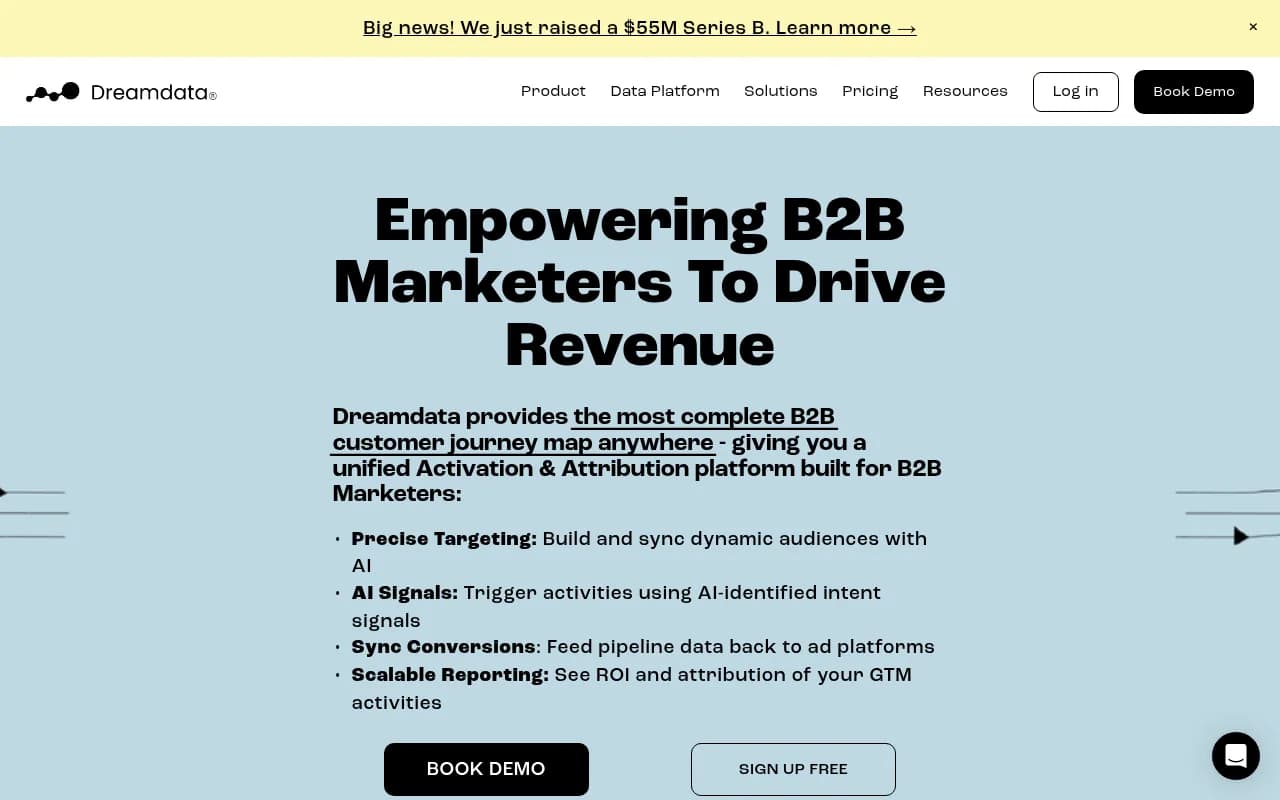
The fix is multi-touch attribution with an extended lookback window. In your CRM, tag leads and opportunities by first-touch source. If someone's first interaction was an AI referral session, that should follow them through the funnel. Tools like HubSpot or Dreamdata can model this across longer windows.
Pipeline contribution is the metric that closes the loop: what percentage of your pipeline touched an AI referral or branded search (as a proxy for AI influence) before converting? Even a rough estimate here is more useful than no number at all.
Customer lifetime value by acquisition source is the long-term version of this. If AI-referred customers have higher LTV than other channels -- which early data suggests is often the case, because they arrived pre-qualified by an AI recommendation -- that changes the economics of GEO investment significantly.
Setting up attribution: the practical steps
Step 1: establish your baseline before you optimize
Before you can measure improvement, you need to know where you stand. Run a baseline audit across 75-100 prompts that represent your buyers' actual research questions. For each prompt, check your citation rate across at least four AI models: ChatGPT, Perplexity, Gemini, and Google AI Overviews. Record:
- Which prompts you appear in
- Which prompts competitors appear in but you don't
- The quality/positioning of your mentions where they exist
- Your current branded search volume (pull from Google Search Console)
This baseline is your "before" state. Everything you measure later is relative to it.
Step 2: configure GA4 for AI referral tracking
GA4 doesn't automatically separate AI referral traffic cleanly. You'll want to:
- Create a custom channel group that includes AI referral sources (
perplexity.ai,chatgpt.com,gemini.google.com,claude.ai,bing.comfor Copilot, etc.) - Set up a comparison segment for AI referral vs other organic traffic
- Track conversion events (form fills, demo requests, purchases) segmented by this channel
Some AI platforms pass referral data inconsistently -- Perplexity is generally reliable, ChatGPT less so. This is why branded search lift remains an important proxy metric.
Step 3: connect to CRM with first-touch tagging
In HubSpot, Salesforce, or whichever CRM you use, make sure first-touch source is captured and preserved through the funnel. When an AI referral session leads to a form fill, that lead should be tagged as AI-referred from day one. This lets you run pipeline reports by acquisition source and calculate close rates and deal values for AI-referred leads specifically.
Step 4: track branded search as a proxy
In Google Search Console, export branded query data monthly. Set up a simple spreadsheet that tracks branded impressions and clicks alongside your AI citation rate over time. If you're running GEO optimization, you should see correlated movement in both metrics within four to eight weeks of publishing new content.
The metrics that matter by business type
Not every business should weight these metrics the same way. Here's a rough guide:
| Business type | Primary GEO metric | Secondary metric | Attribution approach |
|---|---|---|---|
| B2B SaaS | Share of voice in buyer prompts | Branded search lift | Multi-touch, 90-day window |
| E-commerce | ChatGPT Shopping citations | AI-referred revenue | Last-click + AI channel |
| Local services | AI Overview mentions | Branded search volume | First-touch CRM tagging |
| Publisher/media | Citation rate (as a source) | AI-referred traffic | Session quality metrics |
| Agency | Client AI visibility scores | Pipeline from AI-referred | Client-level reporting |
Tools for measuring GEO ROI
The honest reality is that manual tracking across ChatGPT, Claude, Perplexity, Gemini, and Google AI Overviews doesn't scale past about 20 prompts. You'll miss model-to-model variation, you can't track changes over time systematically, and you definitely can't connect visibility data to traffic and revenue without dedicated tooling.
Here's how the main categories of tools fit into the framework above:
AI visibility tracking platforms
These handle layer 1 -- citation rate, share of voice, prompt coverage. The better ones also surface answer gaps (prompts your competitors own that you don't) and track sentiment.
Promptwatch covers all three layers in one platform -- visibility tracking across 10 AI models, AI crawler logs that show which pages are being read and cited, and traffic attribution that connects citations to actual revenue. It's one of the few platforms that tracks real user-facing AI responses rather than just API outputs, which matters because the answers users see can differ from what the API returns.

Profound is another strong option for enterprise teams, with solid share-of-voice tracking and competitive benchmarking.

Peec AI handles multi-language tracking well, which matters if you're operating across markets.

Otterly.AI is a more affordable entry point for smaller teams who need basic citation monitoring.

AthenaHQ covers eight-plus AI engines and is worth considering if breadth of model coverage is your priority.

Attribution and analytics tools
These handle layers 2 and 3 -- connecting visibility to traffic and revenue.
Dreamdata is purpose-built for B2B multi-touch attribution and handles the long attribution windows that AI-influenced buying journeys require.
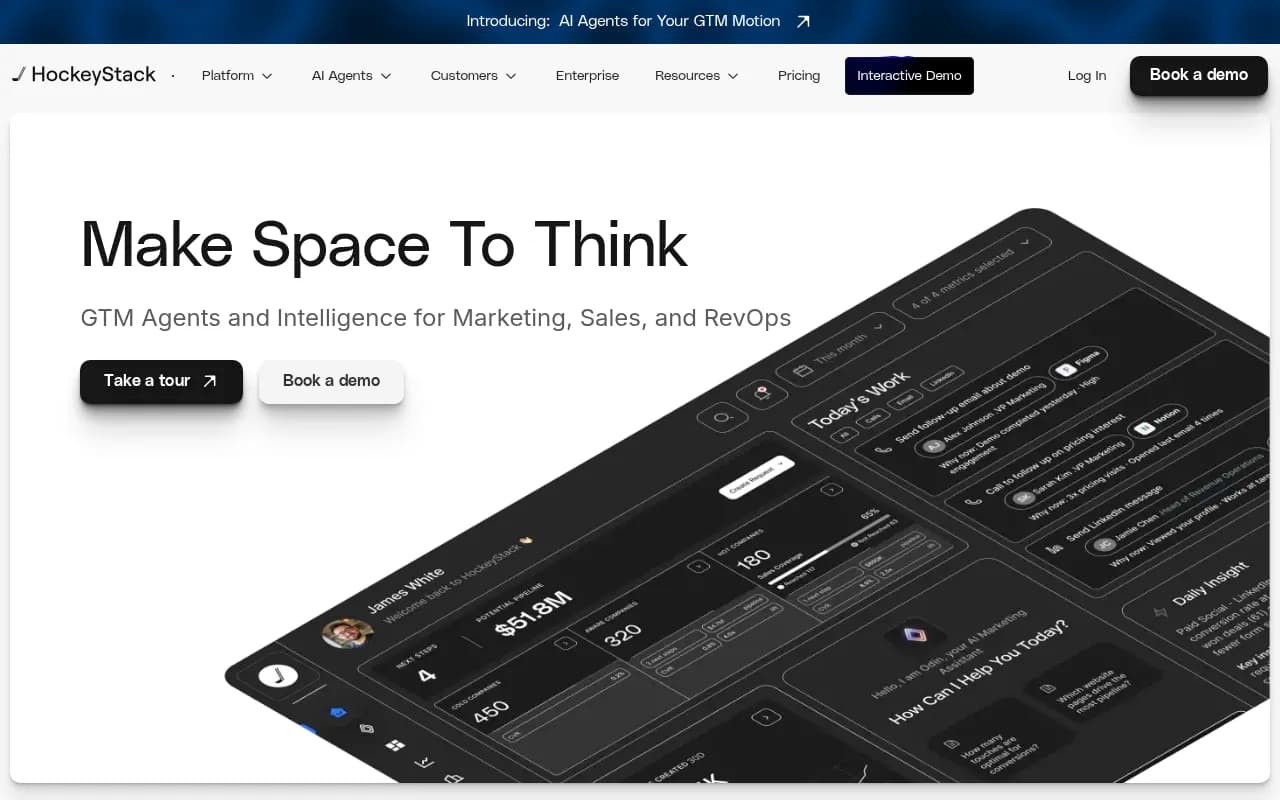
HockeyStack is another strong B2B option that unifies marketing and revenue data.
For e-commerce, Triple Whale handles attribution across channels including AI referrals.
Content gap and optimization tools
Once you know which prompts you're missing, you need to create content that fills those gaps. This is where the loop closes -- better content leads to more citations, which leads to more traffic and pipeline.
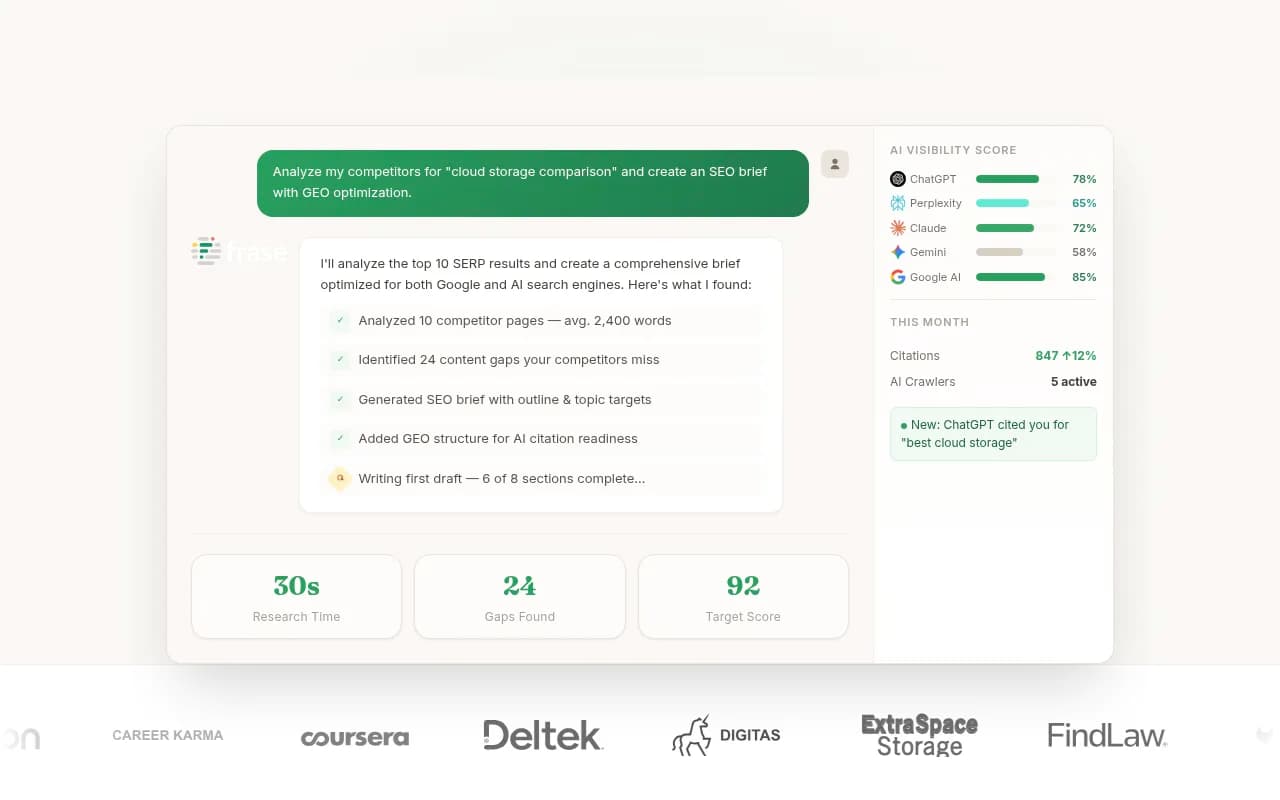
Platforms like Frase help with content optimization for AI search specifically.
Real benchmarks to calibrate against
A few data points worth knowing as you set targets:
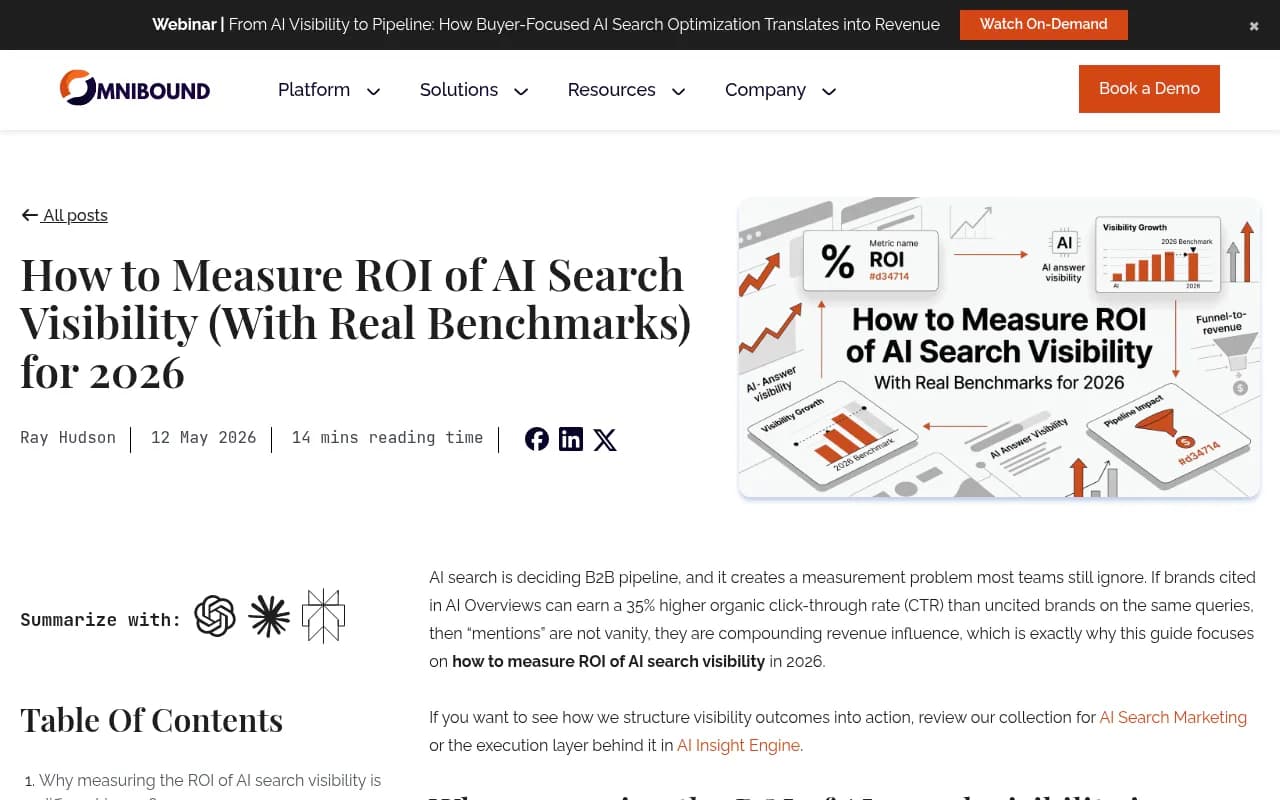
- Semrush research puts AI-referred traffic conversion rates at 2.3x traditional organic search. If your organic conversion rate is 2%, model AI referral conversions at roughly 4.6% when building business cases.
- B2B buyers using AI for market research: eMarketer puts this at 47% in 2026, up from roughly 20% in 2024.
- Branded search lift from AI visibility: teams running active GEO programs typically see 15-30% branded search growth within six months, though this varies significantly by category and competitive intensity.
- Citation rate benchmarks vary widely by industry. In competitive SaaS categories, appearing in 20-30% of relevant prompts is strong. In less competitive niches, 50%+ is achievable.
These aren't guarantees -- they're calibration points for setting realistic targets and building internal business cases.
Building the executive dashboard
When you're reporting GEO ROI to leadership, the dashboard should tell a clear story: here's our AI visibility, here's how it's moving, here's what it's producing in traffic and pipeline.
A practical structure:
- Visibility layer: citation rate trend (weekly), share of voice vs top 3 competitors, prompt coverage percentage, answer gap count
- Traffic layer: AI-referred sessions (monthly), branded search volume trend, AI referral conversion rate vs other channels
- Pipeline layer: AI-influenced leads (first-touch), AI-influenced pipeline value, close rate for AI-referred leads
Keep it to one page. The goal is to make the connection between GEO investment and business outcomes legible to someone who doesn't spend their days thinking about AI search.
The honest caveat about GEO attribution
Attribution in GEO is genuinely harder than in paid search. You can't put a UTM parameter on a ChatGPT mention. Many AI-influenced buyers don't click through at all -- they just remember your name. The data will always be incomplete.
That's not a reason to give up on measurement. It's a reason to use multiple signals together: direct referral data where it exists, branded search as a proxy where it doesn't, and CRM first-touch tagging to capture what you can at the conversion point. The combination gives you a defensible picture even if it's not pixel-perfect.
The teams winning at GEO ROI measurement in 2026 aren't the ones waiting for perfect attribution. They're the ones who established baselines early, picked three or four metrics they can actually track consistently, and built the habit of connecting visibility data to business outcomes every quarter.
Start with citation rate and branded search lift. Add pipeline attribution when your CRM setup allows it. Refine from there.