Key takeaways
- LLMclicks.ai, LLMrefs, and Airefs all sit in the affordable tier of AI visibility tracking, but they serve different use cases and have real differences in depth
- LLMrefs ($79/mo) is the most feature-complete of the three for SEO teams who want keyword-level AI share-of-voice data
- LLMclicks.ai stands out for detecting AI hallucinations and factual inaccuracies about your brand, not just counting mentions
- Airefs is the most accessible entry point, built for teams that want simple citation tracking without a steep learning curve
- None of the three offer content generation or crawler log analysis -- if you need the full optimization loop, you'll want to look at a more complete platform
AI search has quietly changed how buyers discover products. Someone opens ChatGPT, asks "what's the best project management tool for remote teams," and gets three recommendations. If your brand isn't one of them, you've lost that buyer before they even visited a website.
The problem is that most teams don't know whether they're being cited, misrepresented, or ignored entirely. That's where AI citation trackers come in.
The good news: you don't need an enterprise budget to start tracking this. LLMclicks.ai, LLMrefs, and Airefs are three tools that have gained traction in 2026 specifically because they're accessible to smaller marketing teams and solo practitioners. But they're not interchangeable. This guide breaks down exactly what each one does, where it falls short, and who should use which.
What these tools actually track
Before comparing features, it's worth being precise about what "AI citation tracking" means in practice, because different tools define it differently.
At minimum, a citation tracker should tell you: when someone asks a relevant question in ChatGPT, Perplexity, Gemini, or Claude, does your brand appear in the response? That's the baseline.
Beyond that, more sophisticated tools also track:
- Whether the AI's claims about your brand are accurate
- Which specific pages on your site are being cited
- How your visibility compares to competitors for the same prompts
- How visibility changes over time
LLMclicks.ai, LLMrefs, and Airefs each cover the baseline. Where they diverge is in that second tier of depth.
LLMclicks.ai
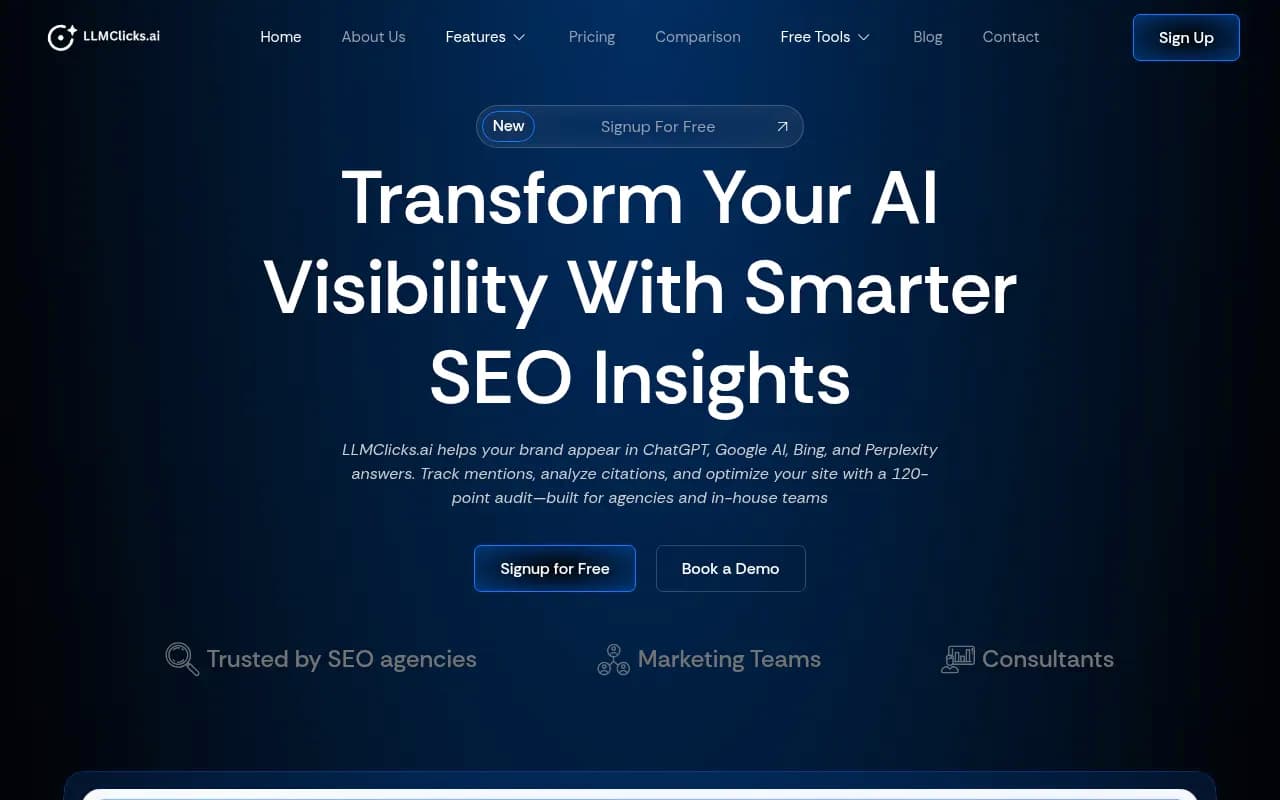
LLMclicks.ai was built by someone who ran into a specific problem: their SaaS product was being mentioned in ChatGPT responses, but with completely wrong pricing information. Prospects were showing up to demos with incorrect expectations. The tool was built to solve that -- not just to count mentions, but to flag when AI is saying something factually wrong about your brand.
That origin story shapes the product. Most citation trackers give you a visibility score and call it done. LLMclicks.ai layers accuracy detection on top, which is genuinely useful for any brand where AI hallucinations could damage trust or conversion rates.
The founder tested 11 AI visibility tools before building their own, and found that nearly every platform counted mentions but none detected when those mentions contained errors. In their own testing, 10 out of 18 AI responses mentioning their brand contained inaccuracies -- outdated pricing, wrong feature descriptions, hallucinated integrations.
What it covers: ChatGPT, Perplexity, Google AI Overviews. Tracks citations, mention frequency, and factual accuracy of AI-generated claims about your brand.
Who it's for: SaaS companies and B2B brands where AI misinformation is a real risk. If your pricing, features, or positioning are frequently misrepresented in AI responses, this is the tool that will catch it.
Limitations: The focus on accuracy detection means it's less oriented toward broad competitive share-of-voice analysis. If you want to track 200 prompts across your whole category, LLMrefs is better suited for that.
LLMrefs
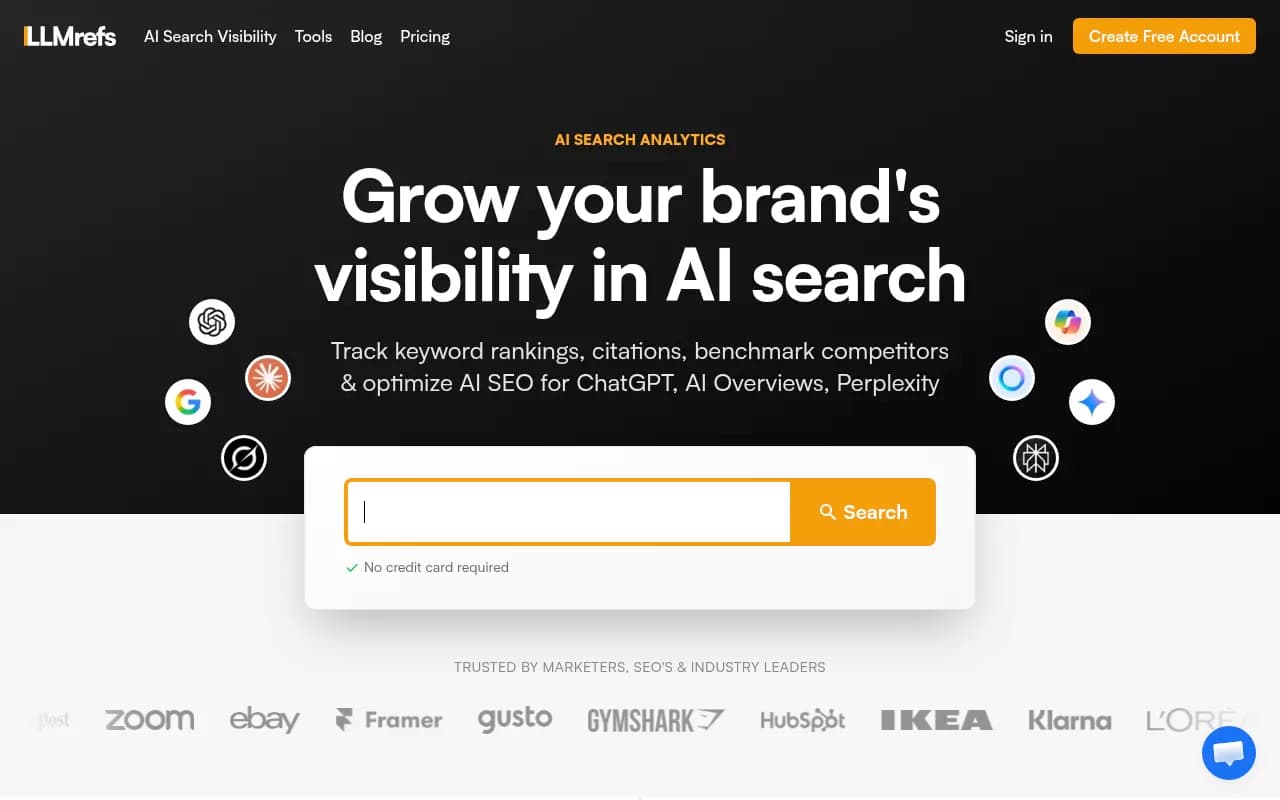
LLMrefs takes a more traditional SEO-analytics approach to AI visibility. The interface and reporting are designed to feel familiar to anyone who's used a rank tracker -- you drop in a list of keywords/prompts, and you get AI visibility scores, share of voice, and citation data in a format that maps cleanly onto existing SEO workflows.
Pricing is $79/month for an all-in-one subscription covering 500 prompts across all supported AI engines. That's a reasonable price point for a team that's already running keyword tracking and wants to extend it into AI search.
The LinkedIn review from 2026 notes that LLMrefs includes CSV export and API access, which means the data can flow into BI tools, custom dashboards, or combined marketing reports. For agencies managing multiple clients, that's a meaningful feature.
What it covers: Multi-engine tracking across major AI assistants, keyword-level AI rankings, share of voice, competitive comparison, CSV export, API access.
Who it's for: In-house SEO teams and agencies that want a repeatable AI monitoring system. If you're already tracking 100+ keywords in a traditional rank tracker and want to see how those same terms perform in AI search, LLMrefs fits naturally into that workflow.
Limitations: The data quality rating from independent reviews sits around 3.5/5 -- it uses statistically significant sampling, but there are accuracy caveats. It also has a non-trivial learning curve for teams new to AI visibility concepts, and there's no long-term free tier.
Airefs
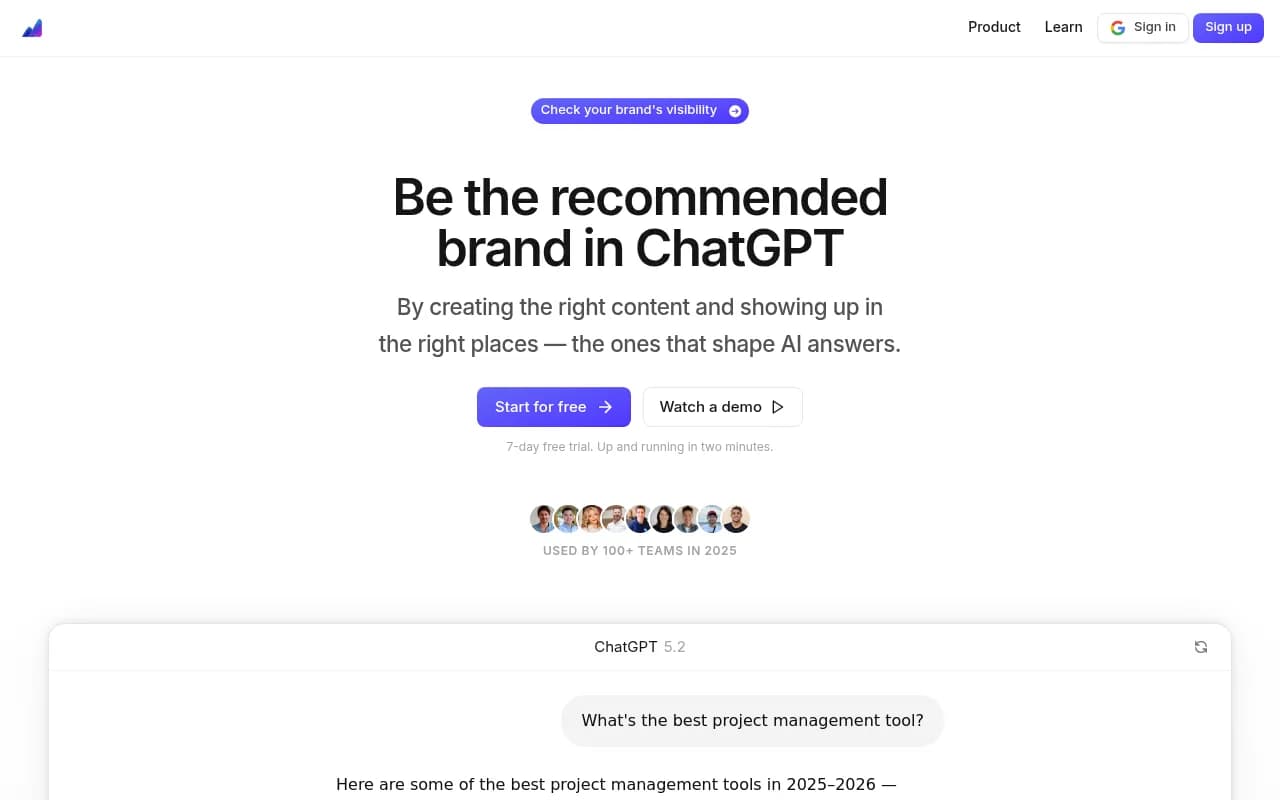
Airefs positions itself as the most accessible entry point in this category. The emphasis is on simplicity: you set up tracking, you see where your brand appears in AI responses, and you get enough data to make decisions without needing to become an expert in AI search mechanics.
It's the right choice for teams that want to start tracking AI citations without committing to a complex platform or a large budget. The trade-off is depth -- Airefs doesn't offer the hallucination detection of LLMclicks.ai or the full SEO-workflow integration of LLMrefs.
What it covers: AI search visibility tracking across major LLMs, citation monitoring, basic competitive comparison.
Who it's for: Small teams, startups, and individuals who want to understand their AI search presence without a steep learning curve or high price point.
Limitations: Less depth on competitive analysis and no content optimization features. Works well as a starting point but you may outgrow it as your AI visibility program matures.
Head-to-head comparison
| Feature | LLMclicks.ai | LLMrefs | Airefs |
|---|---|---|---|
| AI models tracked | ChatGPT, Perplexity, Google AI | Multi-engine (all major) | Major LLMs |
| Hallucination / accuracy detection | Yes (core feature) | No | No |
| Competitive share of voice | Basic | Strong | Basic |
| Prompt/keyword volume | Limited | 500 prompts included | Limited |
| CSV export | Unknown | Yes | Unknown |
| API access | Unknown | Yes | Unknown |
| Ease of use | Medium | Medium-High (SEO-familiar) | High |
| Best for | SaaS accuracy monitoring | SEO teams, agencies | Beginners, small teams |
| Price | Not publicly listed | $79/mo | Affordable |
| Content generation | No | No | No |
| Crawler log analysis | No | No | No |
One thing worth noting: none of these three tools offer content generation or crawler log analysis. They're monitoring tools. They tell you what's happening, but they don't help you change it. If you're at the stage where you want to actively improve your AI visibility -- not just measure it -- you'll need to look at more complete platforms.
What none of them do
This is the honest part of the comparison.
All three tools are fundamentally dashboards. They show you data. They don't help you act on it.
If your brand isn't appearing in ChatGPT responses for "best [your category] tool," knowing that fact is useful. But knowing it doesn't tell you which content to create, which prompts to target, or what's causing the gap. And it definitely doesn't create that content for you.
The gap between "monitoring" and "optimization" is where most teams get stuck. They sign up for a tracker, see that their visibility is low, and then... don't know what to do next.
For teams that want to close that loop -- find gaps, create content that fills them, track whether it worked -- a platform like Promptwatch is built specifically for that workflow. It goes beyond tracking into content gap analysis, AI-grounded content generation, and page-level citation tracking that shows you when new content starts getting picked up by AI models.

That said, Promptwatch starts at $99/month and is a more complex platform. If you're just starting out and want to understand your AI visibility before committing to a full optimization program, one of the three tools above is a perfectly reasonable starting point.
How to choose
The right tool depends on where you are and what problem you're solving.
Start with Airefs if: You've never tracked AI visibility before and want to see where your brand stands without a big time or money investment. It's the lowest-friction way to get started.
Choose LLMclicks.ai if: You're a SaaS company and you're worried about AI giving users wrong information about your product. Pricing errors, feature misattributions, hallucinated integrations -- these are real conversion problems, and LLMclicks.ai is the only tool in this group that specifically catches them.
Choose LLMrefs if: You're an SEO professional or agency that wants AI visibility data to sit alongside traditional rank tracking. The keyword-level reporting, CSV export, and API access make it the most workflow-friendly option for teams already running structured SEO programs.
Go beyond these three if: You want to actually improve your AI visibility, not just measure it. Monitoring tools are the starting point, not the destination.
A note on the broader market
These three tools exist in a category that's grown fast. In 2026, there are now 20+ platforms claiming to track AI search visibility, ranging from simple mention counters to enterprise platforms with full content optimization suites.
The budget tier -- which is where LLMclicks.ai, LLMrefs, and Airefs all sit -- has gotten genuinely useful. A year ago, the data quality at this price point was questionable. Now you can get reasonably reliable citation tracking for under $100/month.
What hasn't changed is the gap between tracking and optimization. The tools that can show you gaps AND help you fill them are still mostly in the mid-to-enterprise tier. That gap will probably close over the next 12-18 months as the market matures, but for now, expect to either pair a budget tracker with a separate content workflow, or step up to a more complete platform.
If you want to explore what else is in the market beyond these three, a few other tools worth knowing about:


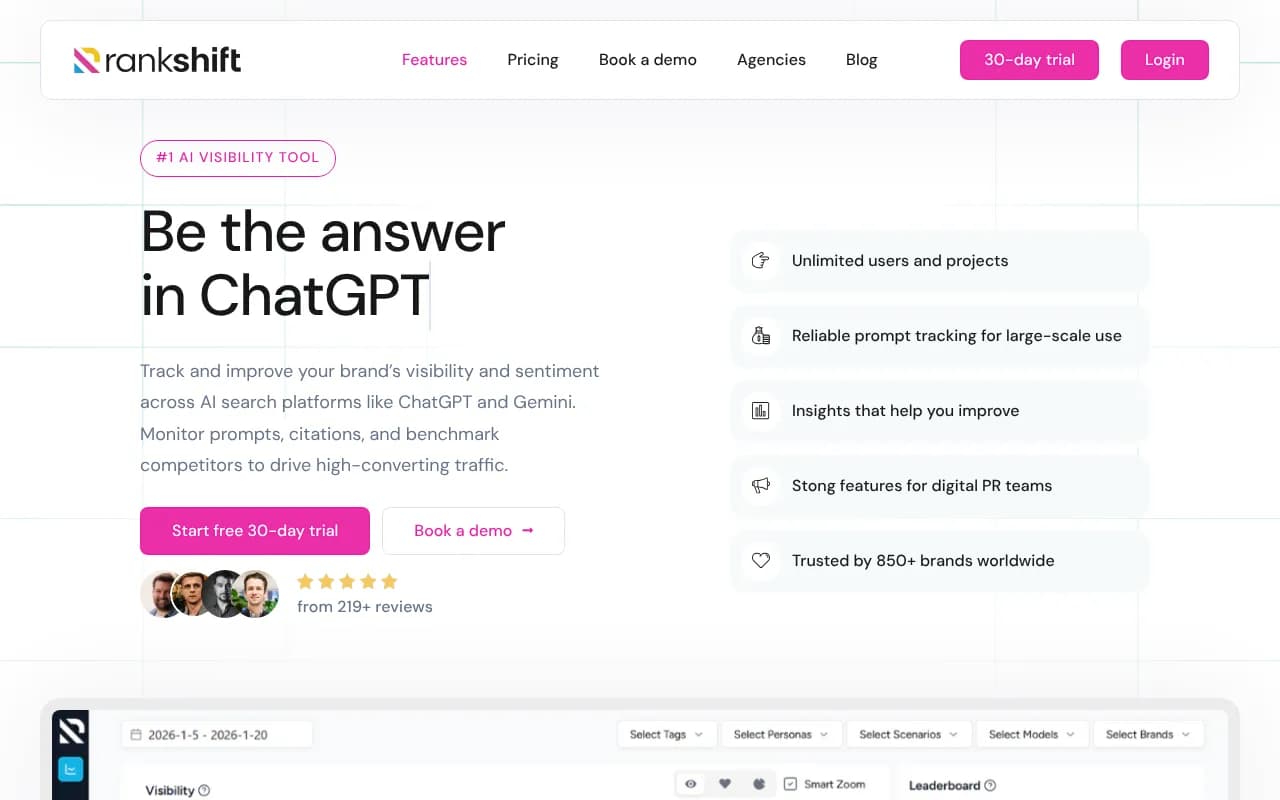

Each has a different angle -- Otterly.AI and Peec.ai are also in the accessible tier, while Profound and Rankshift offer more depth for teams with bigger programs.
The bottom line
LLMclicks.ai, LLMrefs, and Airefs are all legitimate tools for teams that want to start tracking AI citations without a large budget. They're not identical, and picking the wrong one for your use case will leave you frustrated.
If accuracy and hallucination detection matter most: LLMclicks.ai. If you want SEO-workflow integration and broad prompt coverage: LLMrefs. If you want the simplest possible starting point: Airefs.
Just go in knowing that whichever you choose, you're getting a monitoring tool. The next step -- actually improving what you're monitoring -- requires a different kind of platform.