Key takeaways
- 2025 saw an explosion of AEO/GEO tools, but most stayed in "monitoring-only" territory -- showing you data without helping you act on it
- The platforms that delivered real results combined citation tracking with content gap analysis and content generation in a single workflow
- Several traditional SEO giants (Semrush, Ahrefs) added AI visibility features, but their fixed-prompt approaches limit how useful they actually are
- Enterprise players like Bluefish raised significant funding ($68M total) while smaller point solutions flooded the market
- The clearest differentiator heading into 2026 is whether a tool closes the loop: find gaps, create content, track improvement
2025 was a strange year to be in the AEO space. At the start of the year, most marketing teams were still asking "what even is answer engine optimization?" By Q4, those same teams were getting grilled in quarterly reviews about why their brand wasn't showing up in ChatGPT responses.
That pressure created a gold rush. Dozens of tools launched, pivoted, or rebranded around AI visibility. Some were genuinely useful. A lot were dashboards dressed up as strategy platforms. And a handful actually helped brands move the needle.
Here's an honest look at how the category evolved, which tools stood out, and what to look for as you evaluate your stack heading into 2026.
How the category got here
A year ago, "AEO tool" wasn't really a category. You had a few early movers -- Profound, Otterly.AI, Peec AI -- doing basic prompt monitoring, and a lot of blog posts explaining why AI search was going to change everything.
What changed in 2025 was volume. ChatGPT's user base kept growing. Google's AI Overviews became unavoidable. Perplexity started showing up in enterprise workflows. And brands started noticing that their #1 Google ranking meant nothing when someone asked an AI assistant for a recommendation and got their competitor's name instead.
That realization drove demand. And demand drove a wave of new tools, feature launches, and pivots from existing SEO platforms.
The challenge: most of what launched was monitoring. Tools that showed you a dashboard of how often your brand appeared in AI responses, which competitors were getting cited, and maybe a sentiment score. Useful for awareness. Not useful for actually fixing the problem.
The monitoring-only wave
The majority of tools that launched or matured in 2025 fall into this bucket. They're good at telling you where you stand. They're not built to help you improve.
Otterly.AI is a good example of the category's early promise and its ceiling. Affordable, easy to set up, solid for tracking brand mentions across ChatGPT and Perplexity. But if you want to know why you're not being cited, or what content you should create to fix it, you're on your own.

Peec AI took a similar approach, with a stronger emphasis on multi-language tracking -- genuinely useful for European brands monitoring AI responses across markets. But again, the workflow stops at the data.

AthenaHQ built a cleaner interface and covered more AI models than most early tools, but stayed monitoring-focused through most of 2025.
These tools aren't bad. For teams that just need visibility data to report upward, they work fine. The problem is that "monitoring" became the default expectation for the entire category, and a lot of buyers didn't realize they were paying for a dashboard when they needed a workflow.
The enterprise plays
On the other end of the market, a few platforms went after enterprise budgets with more comprehensive feature sets.
Bluefish raised $68M in total funding and positioned itself as the brand protection play for Fortune 500 companies. The pitch: your brand's AI presence is a reputation risk, and you need enterprise-grade tooling to manage it. That framing resonated with large brands that had already built out brand safety teams.
Conductor, which already had Forrester recognition for its integrated SEO workflows, added AI visibility tracking and leaned into its existing enterprise relationships. For companies already in the Conductor ecosystem, the AI features were a natural extension.
Profound built out a more complete platform than most, with agent analytics, prompt volume data, and shopping tracking. Their content on the AEO space was some of the most cited in the industry, which helped with credibility.

Scrunch took an interesting angle, launching an MCP (Model Context Protocol) integration that lets you query your AI search data in natural language. That's a meaningful UX improvement for teams that don't want to live inside another dashboard.
The SEO incumbents' pivot
The most watched story of 2025 was how traditional SEO platforms responded to the AI search shift.
Semrush added AI visibility features, including prompt tracking and some brand monitoring capabilities. The limitation: fixed prompts. You're tracking a predefined set of queries rather than the actual prompts your customers are using. That's a meaningful gap when AI search behavior is so varied and context-dependent.
Ahrefs launched Brand Radar, which tracks brand mentions in AI responses. Same problem: fixed prompts, no traffic attribution from AI sources, no content generation to help you act on what you find.
Both tools are useful additions to existing Semrush and Ahrefs subscriptions. Neither is a serious standalone AEO platform. If you're already paying for one of these, the AI features are worth exploring. If you're building an AEO strategy from scratch, they're not where you'd start.
SE Ranking added an AI visibility toolkit that's more flexible than Semrush's approach, and at a lower price point -- worth a look for smaller teams.
The tools that actually closed the loop
Here's where the category gets interesting. A small number of platforms went beyond monitoring and built workflows that help you actually improve your AI visibility, not just measure it.
The core challenge with AEO is that knowing you're invisible isn't enough. You need to know what content is missing, then create that content, then track whether it worked. Most tools handle step one. Very few handle all three.
Promptwatch is the clearest example of a platform built around this full cycle. The Answer Gap Analysis shows you exactly which prompts competitors are visible for that you're not -- not just "you're missing from this topic" but the specific questions AI models are trying to answer that your site doesn't address. Content Agents then generate articles, comparisons, and briefs grounded in that prompt data. And page-level tracking shows you when your new content gets crawled and cited, with traffic attribution connecting visibility back to revenue.

That end-to-end workflow is what separates an optimization platform from a monitoring dashboard. The AI crawler logs are particularly useful -- seeing which pages AI bots are actually reading (and which ones they're ignoring or hitting errors on) gives you a level of diagnostic detail that most tools don't offer.
Scrunch's agent traffic analysis moves in a similar direction, giving you visibility into how AI agents interact with your site. Their shopping tracking for product-level AI visibility is also genuinely differentiated.
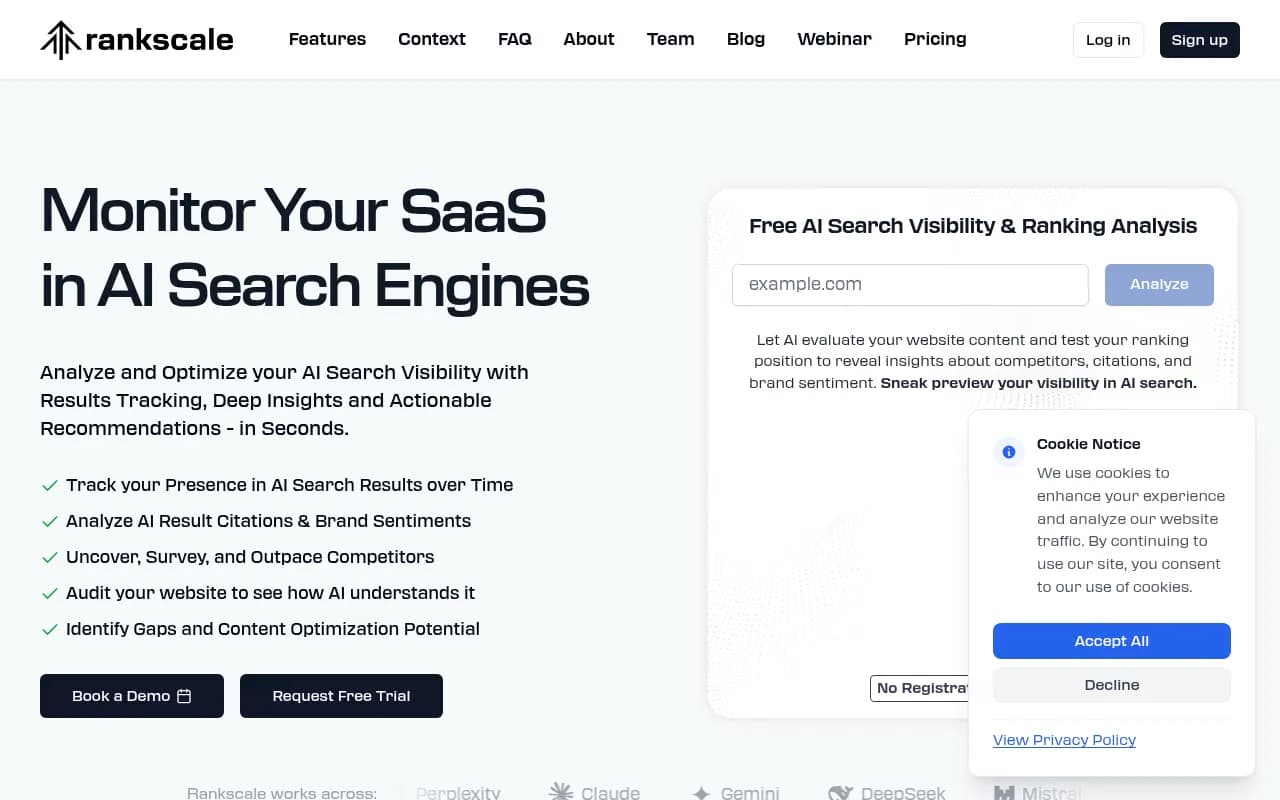
Rankscale built a focused platform around AI search ranking with decent prompt intelligence features.
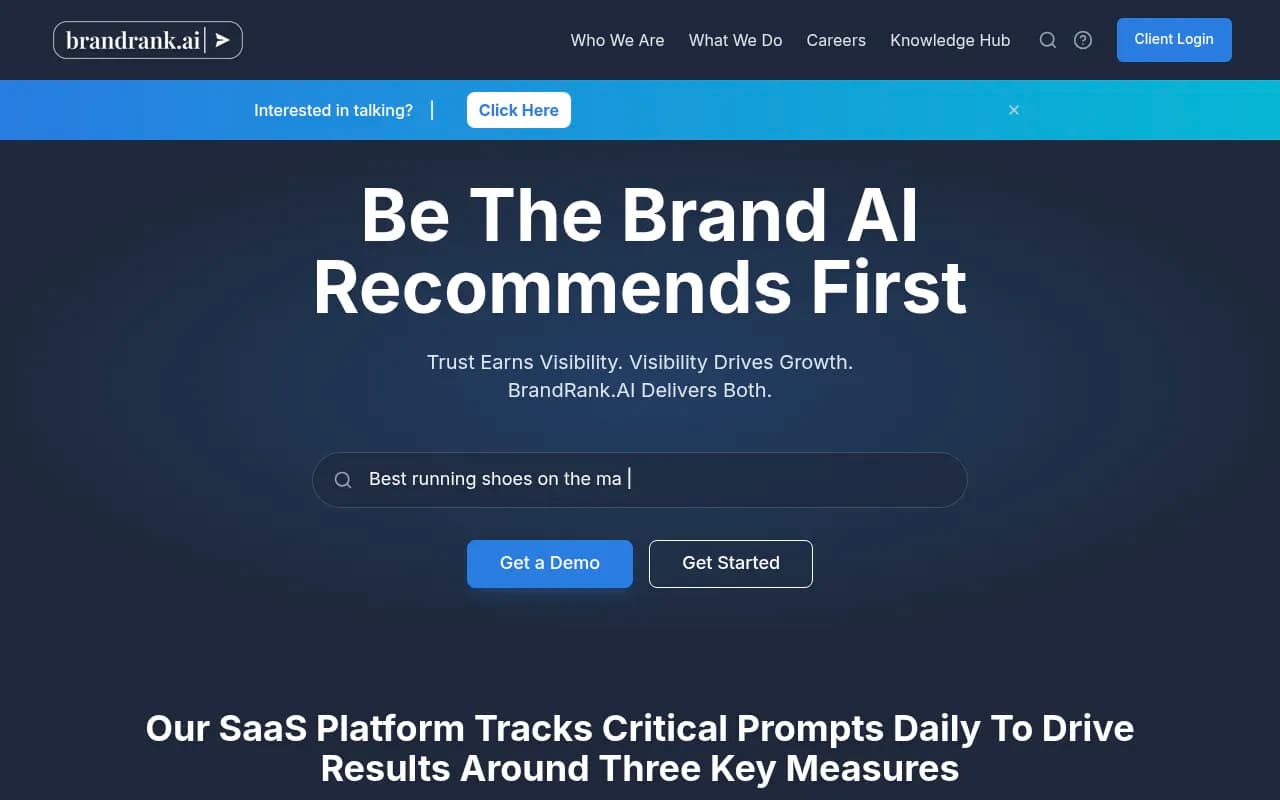
BrandRank.AI went after the brand monitoring angle with a cleaner interface than most.
The point solutions worth knowing about
Beyond the main platforms, 2025 produced a long tail of specialized tools. Some are genuinely useful for specific use cases.
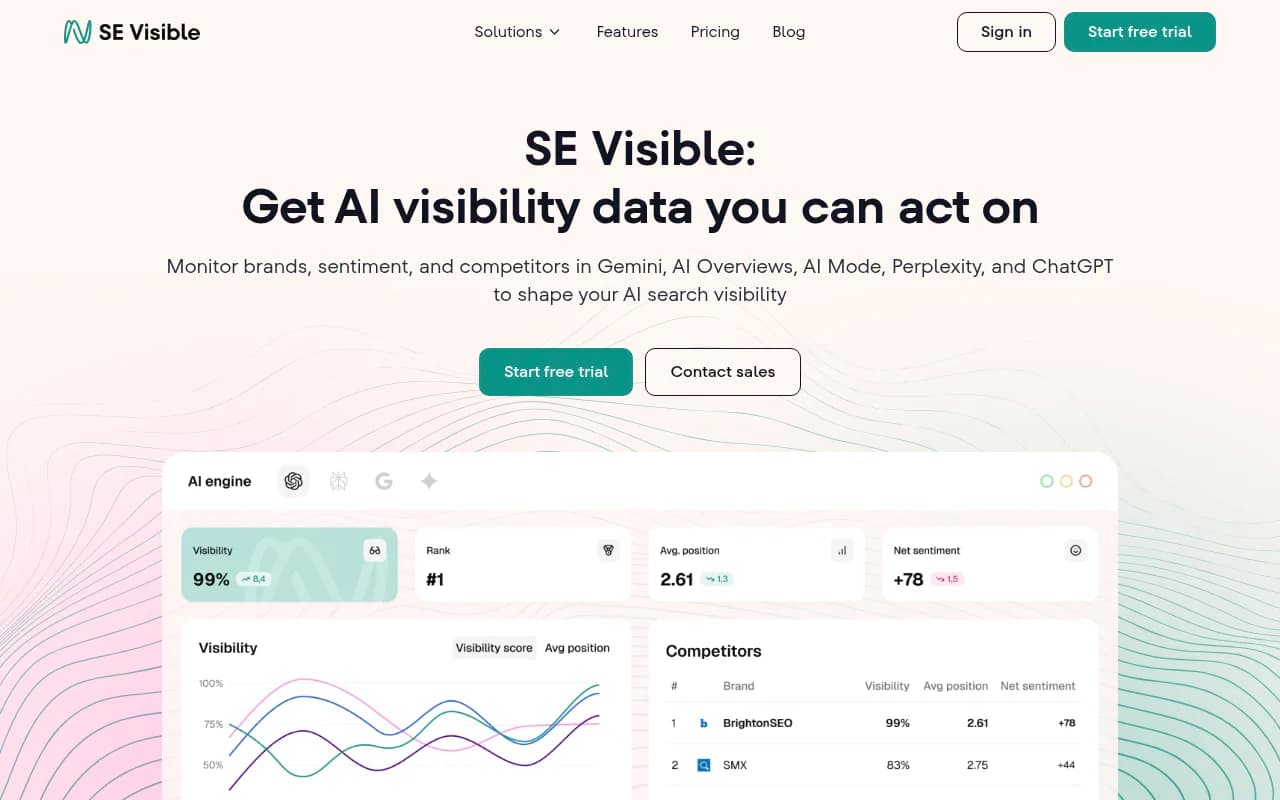
For teams that want affordable, no-frills AI visibility tracking, Airefs and SE Visible both launched with competitive pricing and reasonable feature sets.
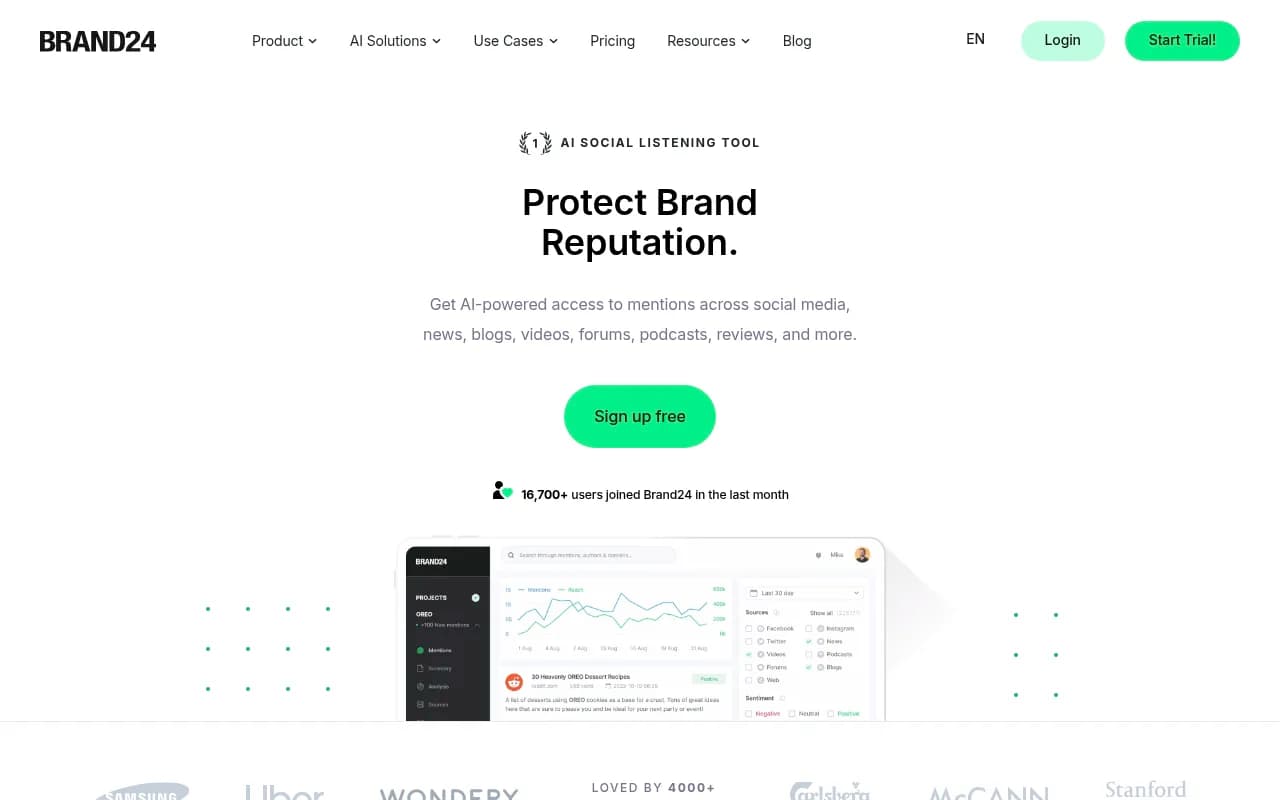
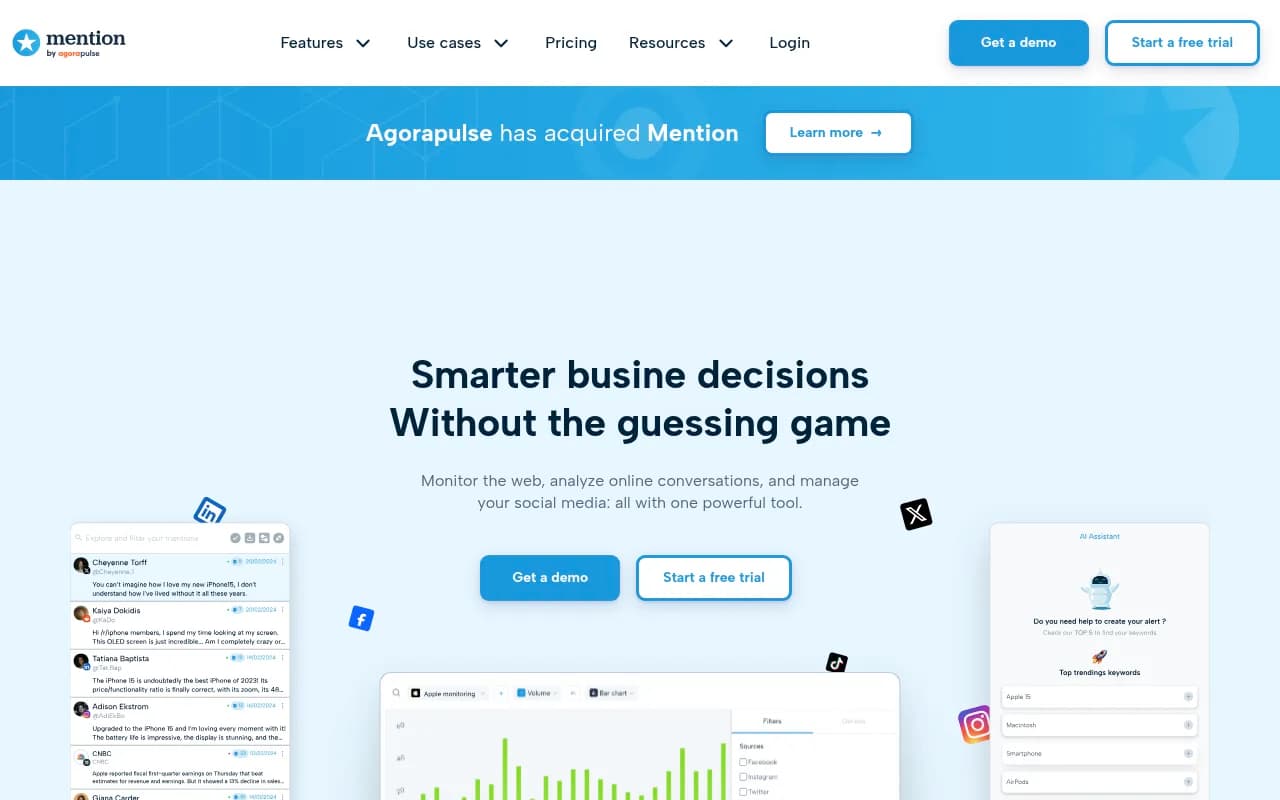
For Reddit and social signal tracking (which matters because AI models cite Reddit heavily), tools like Brand24 and Mention added AI-specific features to their existing monitoring capabilities.
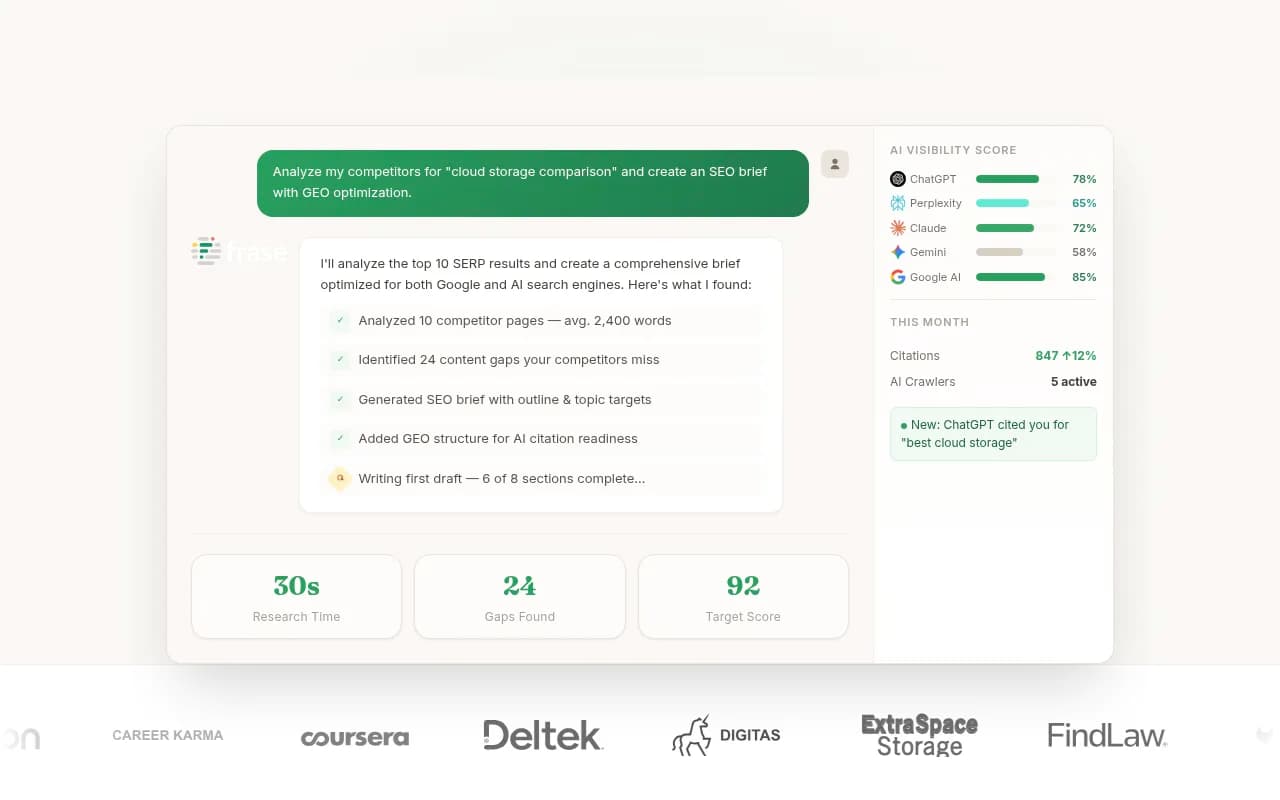
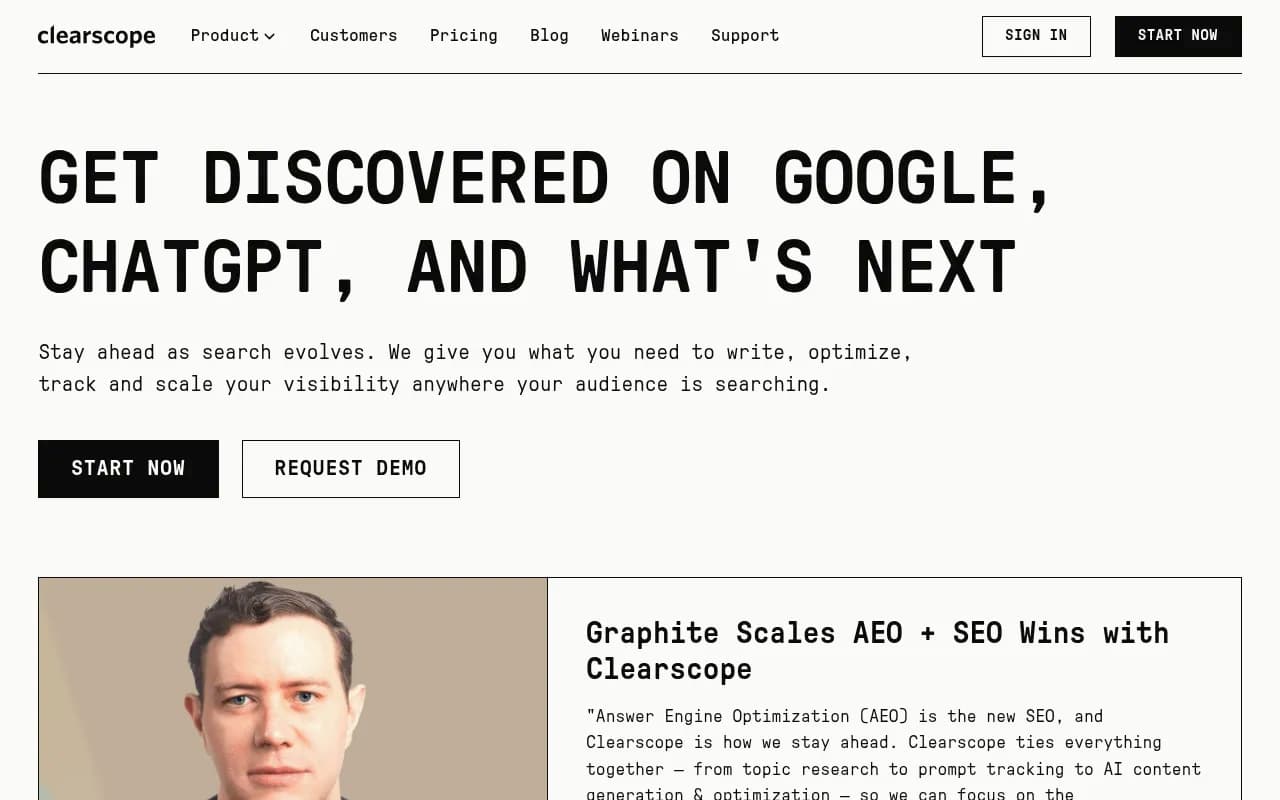
For content creation that's AI-search-aware, Frase and Clearscope both improved their AI overview optimization features through 2025.
GetCito and Rankshift launched as lighter-weight alternatives to the full platforms, useful for smaller teams that don't need enterprise features.
How the tools compare
Here's a quick reference for the main platforms across the dimensions that actually matter for AEO:
| Platform | Monitoring | Content gap analysis | Content generation | Crawler logs | Prompt intelligence | Price range |
|---|---|---|---|---|---|---|
| Promptwatch | Yes (10 models) | Yes | Yes (Content Agents) | Yes | Yes (volume + difficulty) | $99-$579/mo |
| Profound | Yes | Partial | Yes (Agents) | Yes | Yes | Mid-high |
| Scrunch | Yes | Partial | No | Yes (Agent Traffic) | Limited | Mid |
| AthenaHQ | Yes (8 models) | No | No | No | No | Mid |
| Otterly.AI | Yes | No | No | No | No | Low |
| Peec AI | Yes | No | No | No | No | Low |
| Bluefish | Yes | Partial | No | No | No | Enterprise |
| Conductor | Yes | Partial | No | No | Limited | Enterprise |
| Semrush | Yes (fixed prompts) | No | No | No | No | Bundled |
| Ahrefs Brand Radar | Yes (fixed prompts) | No | No | No | No | Bundled |
| SE Ranking | Yes | No | No | No | No | Low-mid |
What actually delivered results in 2025
The research data from DarwinApps puts a number on it: companies using AEO tools saw 10-20% citation share increases within 8-12 weeks. That's a real result, but it comes with a caveat -- that improvement came from teams that did more than just monitor.
The pattern that worked: use prompt intelligence to find high-value, winnable queries where competitors are visible and you're not. Create content specifically designed to answer those queries. Track whether AI models start citing that content. Repeat.
That sounds obvious. But most tools only support the tracking part. The teams that saw real citation share growth were using platforms that helped with the content creation step, not just the measurement step.
The other thing that mattered: understanding AI crawler behavior. Several brands discovered in 2025 that their content was technically fine but AI crawlers were hitting errors, getting blocked, or simply not returning to re-index updated pages. Fixing those issues -- which requires crawler log data -- drove meaningful visibility improvements without any content changes at all.
What to watch in 2026
A few trends are worth tracking as the category matures:
The monitoring-only tools will face pressure. As buyers get more sophisticated, "we show you data" is a harder sell. Expect consolidation, acquisitions, or feature pivots from the pure monitoring players.
Shopping and product-level tracking is becoming table stakes. ChatGPT's shopping features drove real e-commerce traffic in 2025, and brands that weren't tracking product-level AI visibility missed it. Expect more platforms to add this.
Multi-model tracking matters more than it did. Early tools focused on ChatGPT and Perplexity. Now you need to track Google AI Overviews, Gemini, Claude, Grok, DeepSeek, and more -- each with different citation behaviors and different audiences.
The action loop wins. The platforms that help you find gaps, create content, and track results will pull away from the ones that just show dashboards. That's the clearest differentiator heading into 2026.
If you're evaluating your AEO stack right now, the question to ask every vendor is simple: after you show me where I'm invisible, what do you actually help me do about it?
The answer tells you everything.