Key takeaways
- Profound leads on raw monitoring depth and enterprise reporting, with coverage across 10+ AI engines and 400M+ prompt insights.
- Evertune targets Fortune 500 brands with GEO-specific features and a strong emphasis on brand perception, not just citation counts.
- Omnia is the most accessible of the four, with a clean interface and solid share-of-voice analytics that suit mid-market teams.
- Relixir takes a different angle entirely: it's built around an AI-native CMS and autonomous content generation, making it the closest thing to a full GEO execution platform in this group.
- All four are monitoring-heavy. If you need the full loop -- find gaps, generate content, track results -- Promptwatch is worth comparing alongside them.
The AI search visibility category has gotten crowded fast. A year ago, most marketing teams were still debating whether ChatGPT traffic was worth measuring. Now enterprise brands are running RFPs for dedicated GEO platforms, and the vendor landscape has splintered into dozens of tools with overlapping claims.
This guide focuses on four platforms that come up most often in enterprise conversations: Omnia, Profound, Evertune, and Relixir. They're meaningfully different from each other, and the right choice depends heavily on what your team actually needs -- monitoring, optimization, content generation, or some combination of all three.
Let's get into it.
What "enterprise AI visibility" actually means in 2026
Before comparing tools, it's worth being precise about what we're measuring. AI visibility isn't a single metric. It breaks down into at least four distinct things:
- Citation rate: How often does an AI model include your brand in its response to a relevant prompt?
- Share of voice: Across all the prompts in your category, what percentage of AI responses mention you vs. competitors?
- Sentiment and framing: When you are cited, is the context positive, neutral, or damaging?
- Source attribution: Which pages on your site (or off it) are driving those citations?
Enterprise platforms are supposed to answer all four. In practice, most tools nail one or two and paper over the rest with vague dashboards. That gap is what separates the tools in this comparison.
Omnia
Omnia positions itself as the most comprehensive AI visibility platform by sheer breadth -- their own blog compares 28 tools, which tells you something about how they see the market. The product itself is cleaner than that number suggests.
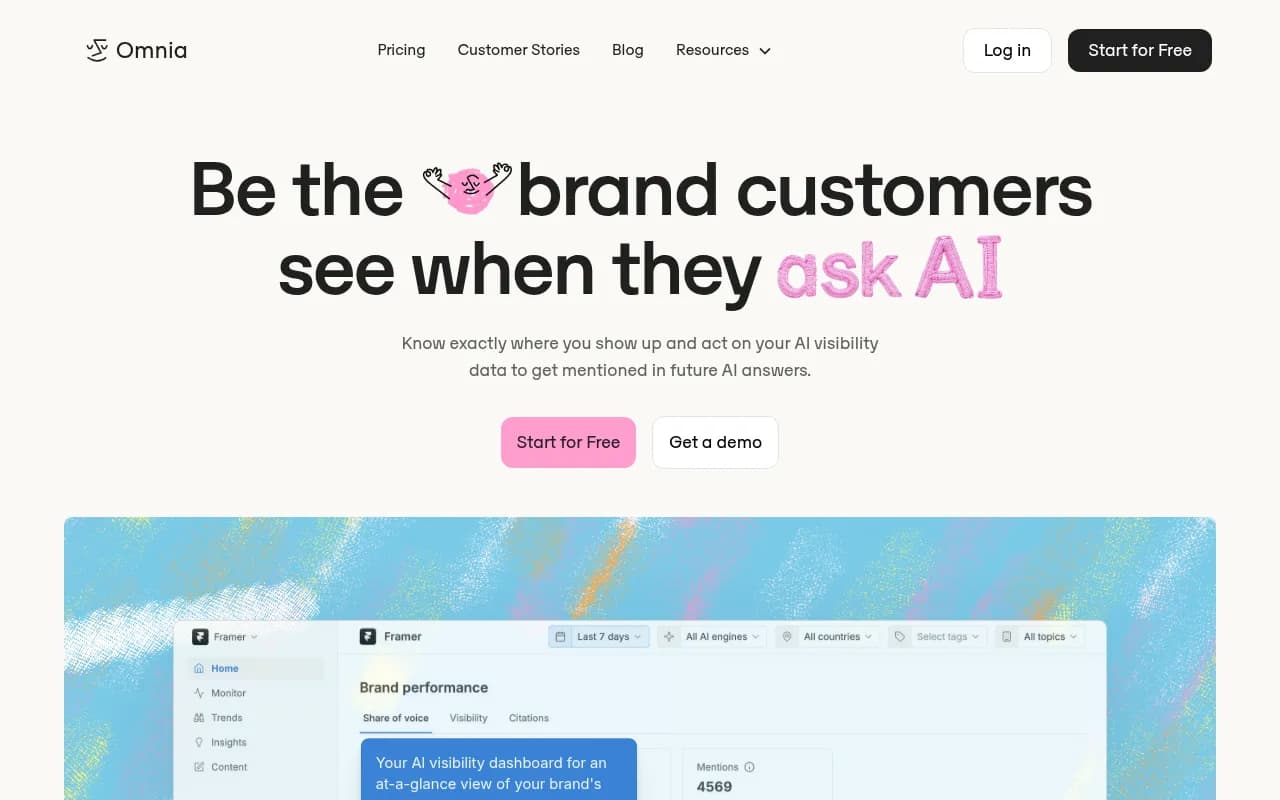
The core of Omnia is prompt monitoring with share-of-voice analytics. You set up a prompt library, Omnia runs those prompts across AI engines on a schedule, and you get a dashboard showing where your brand appears, how often, and how that compares to named competitors. The citation extraction is solid -- it pulls the actual sources AI models are referencing, not just the fact that your brand was mentioned.
Where Omnia works well: mid-market teams that want a clean, fast setup and don't need deep technical integrations. The interface is genuinely easy to use, and the share-of-voice reporting is one of the better implementations in this category.
Where it falls short: content optimization is thin. Omnia shows you the gap but doesn't give you much to act on. There's no content generation, no brief builder, and the prompt library setup is largely manual. For a team that wants to move from insight to action in the same platform, that's a real limitation.
Pricing isn't publicly listed in detail, but Omnia offers a free tier to get started.
Profound
Profound is the most frequently cited "enterprise standard" in this category, and for good reason. One independent AEO scoring analysis gave it a 92/100, citing coverage of 10+ AI engines and a dataset of 400M+ prompt insights. That's not marketing language -- it reflects a genuinely deep monitoring infrastructure.

The platform covers ChatGPT, Perplexity, Google AI Overviews, Claude, Gemini, and several others. Reporting is detailed: you can drill into specific prompts, see how responses change over time, and compare your visibility against competitors at a granular level. For enterprise teams that need to present AI visibility data to leadership, Profound's reporting is probably the strongest in this group.
Profound also has content optimization features -- it can identify which topics and prompts your content isn't addressing and suggest where to focus. This is more developed than Omnia's offering, though it still leans toward analysis rather than execution.
The main friction with Profound is price. It's positioned squarely at enterprise, and the cost reflects that. Teams that don't need the full depth of its reporting will find they're paying for features they rarely use. There's also no publicly available free trial, which makes it harder to evaluate before committing.
That said, if your organization needs the most thorough AI monitoring available and has the budget for it, Profound is hard to argue with.
Evertune
Evertune is the most explicitly GEO-focused platform in this comparison. Where Profound and Omnia are primarily monitoring tools, Evertune frames itself around optimization -- the goal isn't just to know your visibility score, it's to improve it.
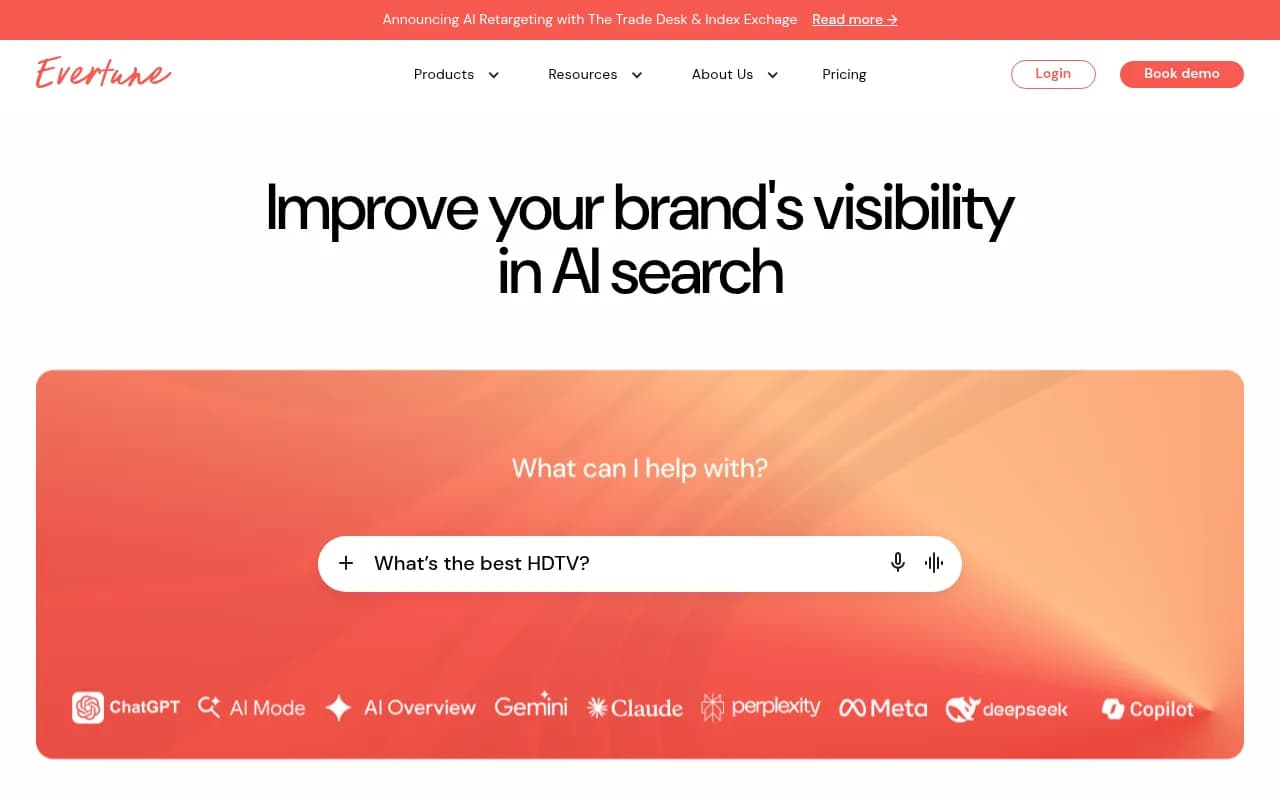
The platform targets Fortune 500 brands specifically, and the feature set reflects that. Evertune tracks brand mentions across AI models, but it also pays attention to how brands are described -- the framing, the context, the sentiment. That's a meaningful distinction. A brand can have high citation rates but still be described in ways that undermine purchase intent, and most monitoring tools miss that entirely.
Evertune also has stronger GEO insight features than its competitors in this group. It surfaces which content signals are influencing AI model behavior, which gives marketing teams a more actionable picture of what to create or update.
The tradeoff is that Evertune is genuinely enterprise-only in its pricing and onboarding. It's not a tool you spin up in an afternoon. Implementation involves a proper onboarding process, and the platform assumes you have a team with the bandwidth to act on its recommendations. For a lean marketing team, that overhead might not be worth it.
Relixir
Relixir takes the most distinct approach of the four. It's built around an AI-native CMS and autonomous content generation -- the idea being that you shouldn't just know where your AI visibility gaps are, you should be able to fill them without switching tools.
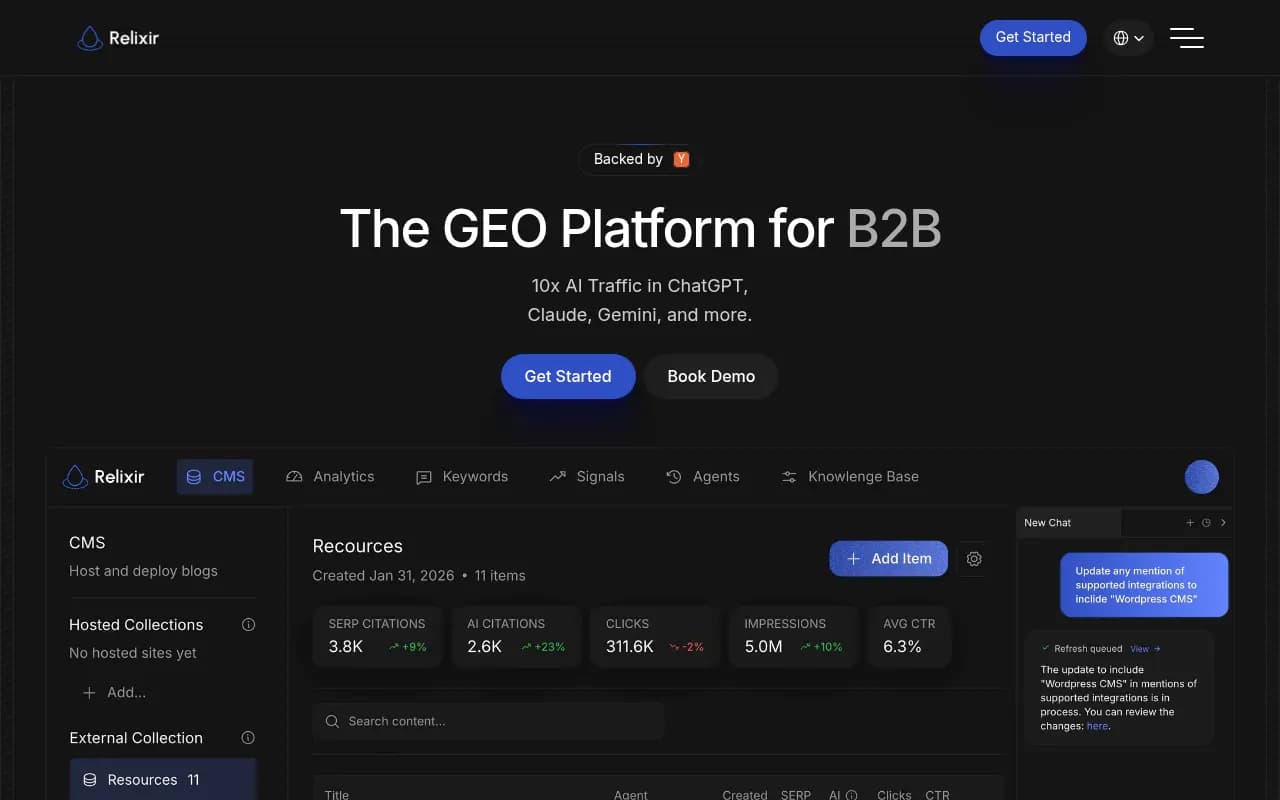
In practice, this means Relixir can identify prompts where competitors are visible and you're not, then generate and publish content designed to close those gaps. It's closer to a GEO execution platform than a monitoring dashboard, which puts it in a different category from Profound and Omnia.
The autonomous content angle is genuinely interesting, but it comes with real questions about quality control. Auto-generated content that goes live without careful review can create as many problems as it solves, especially for enterprise brands with strict brand guidelines. Relixir does have review workflows, but teams should go in with clear processes for what gets published and what gets edited first.
Where Relixir wins: teams that have already identified their AI visibility strategy and want to execute at scale. If you know what content you need and want a platform that can produce it quickly, Relixir's CMS-native approach is efficient.
Where it's weaker: the monitoring and reporting layer isn't as deep as Profound's. If your primary need is understanding the landscape before you act, Relixir might leave you wanting more data before you're ready to generate.
Head-to-head comparison
| Feature | Omnia | Profound | Evertune | Relixir |
|---|---|---|---|---|
| AI engines covered | Multiple (exact count varies) | 10+ | Multiple | Multiple |
| Prompt monitoring | Yes | Yes | Yes | Yes |
| Share of voice tracking | Strong | Strong | Strong | Moderate |
| Sentiment / framing analysis | Basic | Moderate | Strong | Basic |
| Content gap analysis | Basic | Moderate | Moderate | Strong |
| Content generation | No | No | No | Yes (autonomous) |
| Citation source tracking | Yes | Yes | Yes | Yes |
| Competitor benchmarking | Yes | Yes | Yes | Yes |
| Enterprise reporting | Moderate | Strong | Strong | Moderate |
| Free tier / trial | Free tier available | Not public | Not public | Not public |
| Best for | Mid-market teams | Enterprise monitoring | Fortune 500 GEO | GEO execution at scale |
What none of them fully solve
Here's the honest assessment: all four platforms are better at telling you what's wrong than helping you fix it. Profound gives you the most detailed picture of your AI visibility gaps. Evertune gives you the best framing analysis. Omnia gives you the cleanest interface. Relixir gets closest to execution, but its monitoring depth doesn't match its generation capabilities.
The gap between "here's where you're invisible" and "here's the content that will make you visible" is still the hardest problem in this category. Most platforms treat those as separate workflows -- you get the insight in one tool and go somewhere else to act on it.
If that full loop matters to you -- finding gaps, generating content grounded in real prompt data, then tracking whether it actually improved your citations -- it's worth looking at Promptwatch alongside these four. It's the platform that's most explicitly built around that cycle, with content agents that generate articles based on real citation and prompt data, plus crawler logs that show you when AI engines discover and start citing your new content.

How to choose
The right platform depends on what stage your AI visibility program is in and what your team can actually act on.
If you're just starting out and need to understand your baseline, Omnia's accessibility and free tier make it the lowest-friction entry point. You'll get real data without a lengthy implementation.
If you're an enterprise team that needs to present detailed AI visibility reporting to leadership and justify budget, Profound's depth and data volume are hard to beat. It's the platform you bring to a board meeting.
If your brand is at a scale where perception and framing matter as much as citation rates -- where you need to know not just that you're mentioned but how -- Evertune's GEO-specific approach is worth the investment and the onboarding overhead.
If you've already done the analysis and you need to execute content at scale to close identified gaps, Relixir's autonomous CMS approach is the most direct path to production.
And if you want a single platform that connects monitoring to content creation to result tracking, compare all of the above against Promptwatch before you sign anything.
The broader landscape
These four aren't the only options worth knowing about. A few others come up regularly in enterprise evaluations:
Scrunch AI has a solid monitoring foundation and is worth evaluating if you're in the mid-market.
AthenaHQ covers 8+ AI engines and has a clean interface, though it's more monitoring-focused than optimization-focused.

For teams already standardized on a major SEO platform, Semrush's AI Visibility Toolkit and Ahrefs Brand Radar are natural starting points -- though both use fixed prompt sets and lack the depth of dedicated GEO platforms.

Final thought
The AI visibility category is still maturing. Platforms that were "best in class" eighteen months ago have already been lapped by newer entrants with better data infrastructure. The tools in this comparison are all legitimate, but none of them have fully solved the problem of connecting visibility data to content execution to measurable revenue impact.
That's the benchmark worth holding them to. Not "does it track my brand mentions" -- every tool in this category does that -- but "does it help me do something about it, and can I measure whether it worked?"
Ask that question in every demo, and the right choice will become obvious.