Key takeaways
- Most "multi-model" tools claim broad LLM coverage but only a handful actually monitor all 10 major models (ChatGPT, Perplexity, Claude, Gemini, Google AI Overviews, Google AI Mode, Grok, DeepSeek, Copilot, and Meta AI).
- Coverage count alone is misleading -- what matters is whether you can act on the data, not just see it.
- Profound is the strongest enterprise monitoring option but sits at a high price point with limited content optimization.
- Promptwatch is the only platform in this comparison that closes the full loop: find gaps, generate content, track results across all 10 models.
- LLMrefs and Omnia are solid entry points for smaller teams, but both stop at monitoring.
- AICarma is the weakest of the five on raw LLM coverage and depth.
The pitch sounds simple: "track your brand across all major AI models." But when you actually sit down and compare these platforms side by side, the differences are significant enough to matter for your budget, your workflow, and ultimately whether you move the needle on AI visibility at all.
This guide goes beyond the feature checklist. We're looking at which models each tool actually monitors, how deep the data goes, and -- critically -- what you can do with it once you have it.
Why LLM coverage breadth matters more than ever in 2026
A year ago, most marketing teams were satisfied tracking ChatGPT and maybe Perplexity. That's no longer enough. Buyers now use a fragmented mix of AI tools depending on context: Gemini for quick Google searches, Perplexity for research, ChatGPT for vendor comparisons, Grok for real-time takes, and Copilot embedded in Microsoft 365. If your tool only covers four or five of these, you're flying blind on a meaningful chunk of AI-influenced purchase decisions.
The 10 models that matter in 2026:
- ChatGPT (OpenAI)
- Perplexity
- Google AI Overviews
- Google AI Mode
- Claude (Anthropic)
- Gemini (Google)
- Grok (xAI)
- DeepSeek
- Microsoft Copilot
- Meta AI (Llama)
Not every tool covers all ten. And even among those that claim to, the quality of monitoring varies -- some use API outputs that differ from what real users actually see in the interface.
The five tools compared
Profound

Profound has positioned itself as the enterprise standard for AI search monitoring, and for good reason. It tracks up to 10 AI engines (on enterprise plans), offers prompt volume analysis, and has strong market research analytics that appeal to Fortune 500 marketing teams. The interface is clean, the data is detailed, and the reporting is built for stakeholders who need to justify spend.
Where Profound falls short is on the action side. It's a monitoring platform. You get excellent visibility into where you stand, but the platform doesn't help you fix the gaps it surfaces. There's no content generation, no content briefs grounded in prompt data, and no AI crawler log analysis to understand how models are discovering (or failing to discover) your pages. For teams that have a separate content operation and just need the data layer, Profound works well. For teams that need to move fast and create content that actually ranks in AI, it's only half the solution.
Pricing starts at $99/month, but meaningful LLM coverage requires higher tiers. Enterprise pricing is custom.
Promptwatch

Promptwatch monitors all 10 major AI models and is the only platform in this comparison built around what happens after you see the data. The core workflow is a loop: find the gaps your competitors are winning, generate content engineered to fill those gaps, then track whether it's working.
The Answer Gap Analysis is genuinely useful -- it shows you the specific prompts where competitors appear and you don't, down to the exact questions AI models are answering without citing your site. The Content Agents then generate articles, listicles, and comparison pages grounded in that real prompt data, not generic SEO templates.
What separates Promptwatch from the rest of the field is the AI Crawler Logs feature. You can see in real time which AI crawlers (ChatGPT, Claude, Perplexity, etc.) are hitting your pages, which pages they're reading, and when a crawled page moves to an actual citation. That timeline from crawl to citation is something no other tool in this comparison offers. It's also the only platform here with ChatGPT Shopping tracking and Reddit/YouTube citation analysis.
Pricing: Essential at $99/month (1 site, 50 prompts, 5 articles), Professional at $249/month (2 sites, 150 prompts, 15 articles, crawler logs), Business at $579/month (5 sites, 350 prompts, 30 articles). Free trial available.
LLMrefs
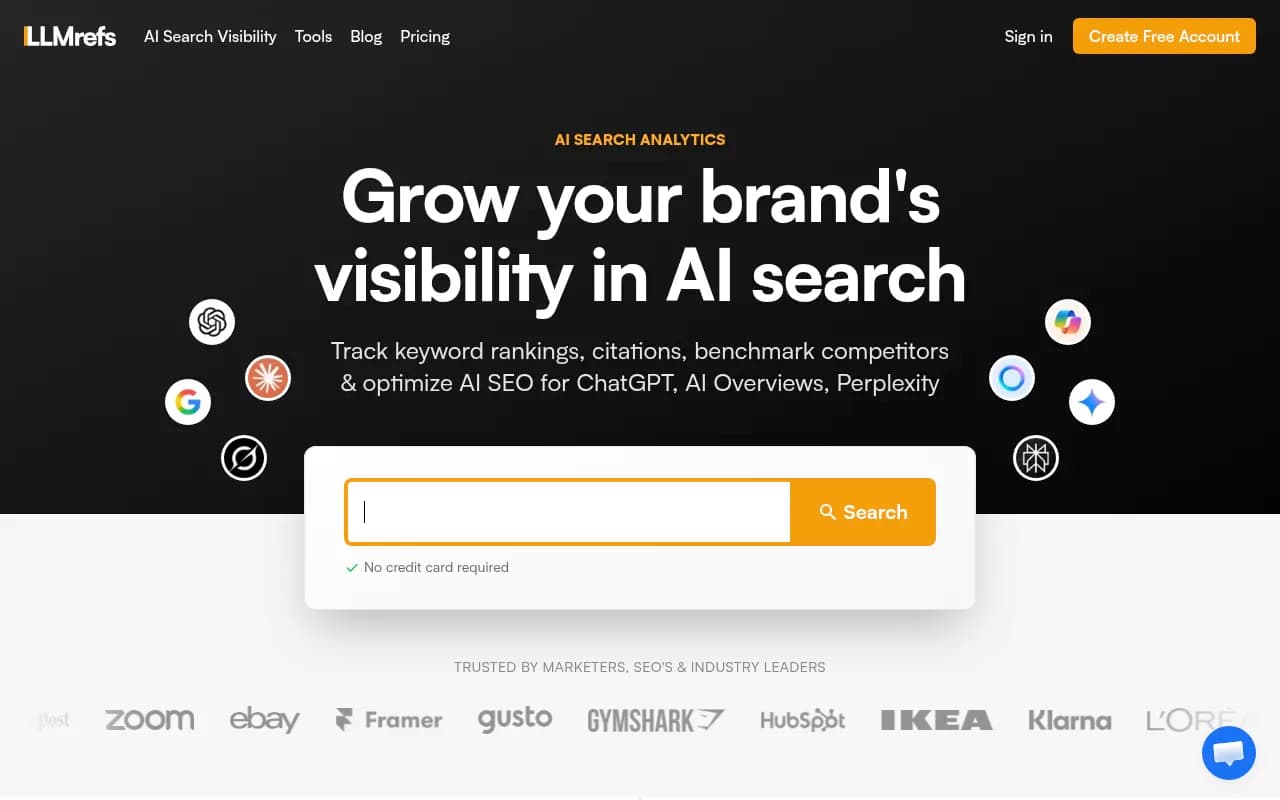
LLMrefs is a lighter-weight tracker that covers ChatGPT, Perplexity, and a handful of other models. It's priced around $79/month and is popular with smaller SaaS teams and solo marketers who want to get started with AI visibility tracking without committing to an enterprise platform.
The appeal is simplicity. Setup is fast, the dashboard is readable, and you can see brand mentions and citation counts without much configuration. The limitation is depth. LLMrefs doesn't cover all 10 major models, doesn't offer prompt volume data or difficulty scoring, and has no content optimization layer. It's a good starting point but you'll outgrow it quickly if AI visibility becomes a serious priority.
AICarma
AICarma is the least mature of the five platforms. It tracks brand sentiment and mentions across a subset of AI models, with a focus on reputation management rather than search visibility in the traditional GEO sense. The model coverage is narrower than competitors, and there's no prompt-level analysis, no citation tracking at the page level, and no content tooling.
It's worth watching as the product develops, but right now it's not a serious contender for teams that need comprehensive multi-model tracking. If brand sentiment in AI responses is your primary concern and you're not worried about citation depth or content gaps, it might serve a niche purpose.
Omnia
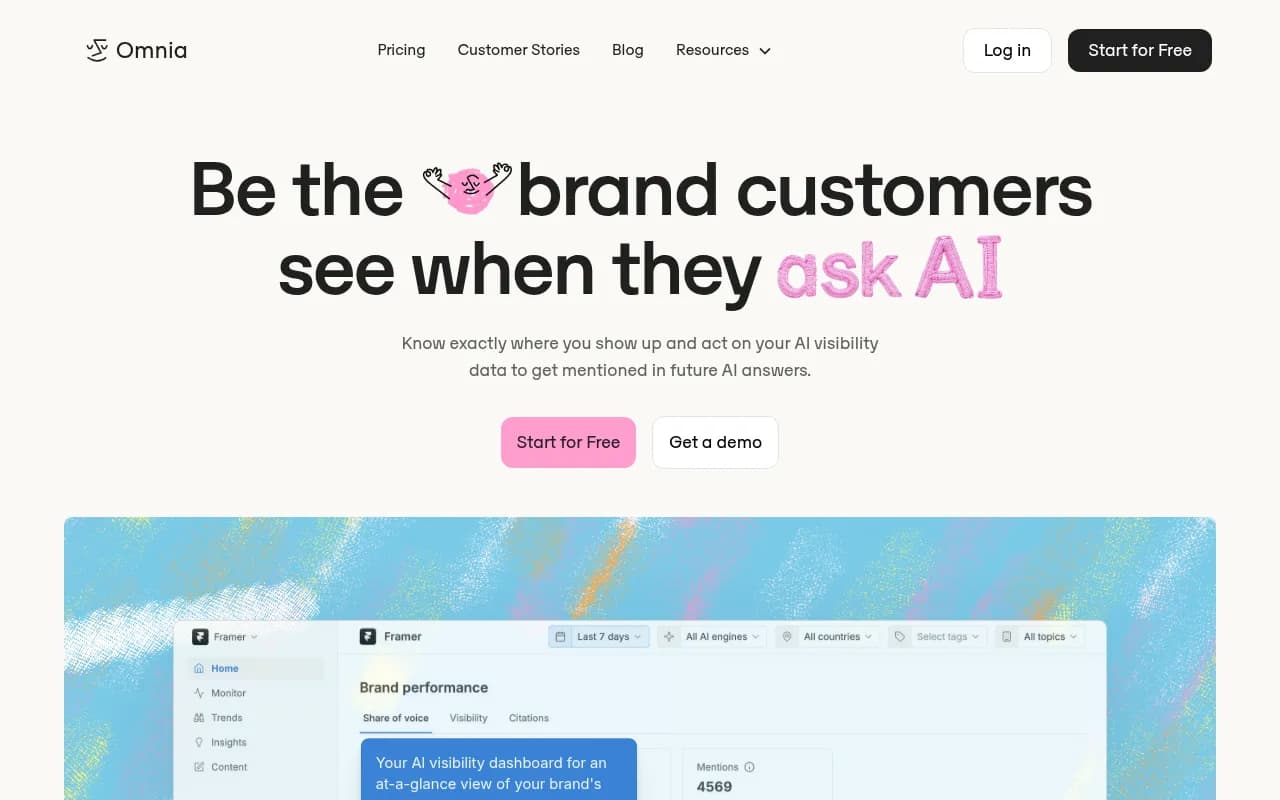
Omnia is a solid mid-market option with a clean interface and reasonable LLM coverage. It tracks share of voice across AI models, offers citation analysis, and has decent reporting for marketing teams that need to show AI visibility progress to leadership.
The platform's blog positions it as a monitoring-first tool, and that's accurate. Omnia doesn't have content generation capabilities, and the prompt intelligence features are less developed than Profound or Promptwatch. It's a reasonable choice for teams that want something between LLMrefs (too light) and Profound (too expensive or too enterprise-heavy), but it won't help you close the gaps it surfaces.
LLM coverage comparison
This is the table that actually matters. "Covers 10 models" means different things depending on whether the platform uses real user-interface monitoring or just API calls.
| Tool | Models tracked | Real UI monitoring | Prompt volume data | Content generation | Crawler logs | Starting price |
|---|---|---|---|---|---|---|
| Promptwatch | 10 | Yes | Yes | Yes (Content Agents) | Yes | $99/mo |
| Profound | Up to 10 (enterprise) | Partial | Yes | No | No | $99/mo+ |
| Omnia | 6-8 | Partial | Limited | No | No | Custom |
| LLMrefs | 3-5 | No | No | No | No | ~$79/mo |
| AICarma | 3-4 | No | No | No | No | Custom |
The gap between API-based monitoring and real UI monitoring is worth explaining. When you query ChatGPT through the API, you sometimes get different answers than what a real user sees in the chat interface. Shopping recommendations, citation carousels, and certain response formats only appear in the UI. Promptwatch specifically tracks user-facing answers, which means the data reflects what your actual customers are seeing.
The monitoring-only problem
Here's the thing most comparison guides skip over: knowing you're invisible in AI search is not the same as becoming visible. Every tool in this list will tell you where you're missing. Only one of them helps you do something about it.
The typical workflow for a team using a monitoring-only tool looks like this: you see that a competitor is cited for "best project management software for remote teams" and you're not. You take that insight to your content team. They write a brief. A writer drafts the article. It goes through review. It gets published. You wait to see if it helps. That cycle takes weeks, sometimes months, and the brief itself is often based on guesswork about what the AI model actually wants to see.
Promptwatch short-circuits that process. The Answer Gap Analysis identifies the specific prompt. The Content Agent generates a draft grounded in real citation data, competitor analysis, and prompt volume. The crawler logs tell you when AI models start reading the new page. The tracking dashboard shows you when it starts generating citations. The whole loop is visible and measurable.
That's not a feature list -- it's a fundamentally different approach to the problem.
Which tool is right for your situation
The honest answer depends on what you actually need right now.
If you're a large enterprise with a dedicated content team and you just need the data layer, Profound is a defensible choice. The monitoring is deep, the reporting is polished, and it integrates into existing workflows without requiring you to change how your content team operates.
If you're a marketing team or agency that needs to both track and improve AI visibility, Promptwatch is the clearest choice. The combination of 10-model coverage, real UI monitoring, content generation, and crawler logs is unique in the market. The Professional plan at $249/month is where most serious teams will land.
If you're a small team or solo marketer just getting started and budget is the primary constraint, LLMrefs at ~$79/month gives you a usable starting point. Expect to upgrade within 6-12 months as your AI visibility program matures.
Omnia sits in a reasonable middle ground for teams that want more than LLMrefs but aren't ready for Profound's price or Promptwatch's full feature set. It's a monitoring tool, so go in with clear expectations.
AICarma is not a serious contender for multi-model tracking in 2026. Keep an eye on it, but don't build a program around it yet.
What to look for beyond LLM count
Before you sign up for any of these tools, ask the vendor four specific questions:
- Do you monitor real user interfaces or just API outputs? The answer changes the accuracy of your data significantly.
- Can I see which of my pages AI models are actually crawling? Without crawler logs, you're guessing at the technical side of AI indexation.
- What happens after I find a gap? If the answer is "you export the data and figure it out," that's a monitoring tool, not an optimization platform.
- Can I track prompt-level performance over time? Share of voice is useful, but knowing that a specific prompt moved from 0% to 40% citation rate over 90 days is what justifies the investment.
The tools that can answer all four questions well are a short list. In 2026, that list is shorter than the marketing pages suggest.
Bottom line
Multi-model LLM tracking has matured enough that "we cover 10 models" is table stakes, not a differentiator. The real question is what you can do with the coverage. Profound is the strongest pure monitoring option. LLMrefs and Omnia are accessible entry points. AICarma needs more time in the oven.
Promptwatch is the only platform here that turns monitoring data into content that actually changes your AI visibility score -- and then shows you the results at the page level. For most marketing teams in 2026, that full loop is what the investment needs to justify itself.