Key takeaways
- Omnia, Rankshift, LLM Pulse, and TrackMyBusiness all target the lighter end of the AI visibility market -- they're built for teams that don't need enterprise complexity or enterprise pricing.
- LLM Pulse has the broadest model coverage of the four and the most transparent pricing, starting at €49/month with a 14-day free trial.
- Omnia is the strongest choice if you need share-of-voice analytics and a clean, fast setup experience.
- Rankshift leans into GEO optimization workflows, making it useful for teams that want to act on data, not just collect it.
- None of these four tools match the depth of a full-stack platform like Promptwatch -- but if you're a small team with a limited budget and modest tracking needs, they're worth a serious look.
Why small teams need a different kind of AI visibility tool
The AI visibility space has exploded. In early 2024, there were maybe a dozen tools worth mentioning. By mid-2026, that number is closer to 80. Most of the press goes to enterprise platforms: Profound, AthenaHQ, Evertune, BrightEdge. These are serious tools with serious price tags to match.
But a lot of teams don't need all that. A two-person marketing team at a SaaS startup, a solo consultant managing a handful of clients, a small e-commerce brand trying to figure out why their competitor keeps showing up in ChatGPT -- these teams need something that works without a six-week onboarding process or a $500/month minimum.
That's the gap Omnia, Rankshift, LLM Pulse, and TrackMyBusiness are trying to fill. This guide looks at all four honestly: what they do well, where they fall short, and which one is likely the best fit depending on your situation.
What these tools actually do
Before diving into the comparison, it's worth being clear on what "AI visibility" means in practice. When someone types a question into ChatGPT, Perplexity, Gemini, or Google's AI Mode, the model generates a response. That response may or may not mention your brand. It may cite your website, recommend a competitor, or ignore your category entirely.
AI visibility tools automate the process of querying these models with the prompts your customers are likely using, then track whether your brand appears, how prominently, and with what sentiment. The core metrics are usually:
- Brand mention rate (how often you appear across a set of prompts)
- Share of voice (your mentions vs. competitors')
- Citation rate (how often your website is linked as a source)
- Sentiment (positive, neutral, or negative framing)
The tools in this comparison all do some version of this. Where they differ is in model coverage, depth of analysis, and whether they help you do anything about what they find.
The four tools, one by one
Omnia
Omnia positions itself as an AI-powered visibility and share-of-voice analytics platform. The interface is clean and the setup is fast -- you can get your first prompt results within minutes of signing up, which matters more than it sounds when you're a small team without a dedicated ops person.
The share-of-voice tracking is where Omnia stands out. You define a set of competitor brands, and Omnia shows you how often each one appears across your tracked prompts. For teams running competitive analysis, this is genuinely useful -- you can see at a glance whether a competitor is pulling ahead in AI results and start asking why.
Omnia also publishes a comparison of 28 AI visibility platforms, which tells you something about how they think about the market. They're not hiding from the competition.
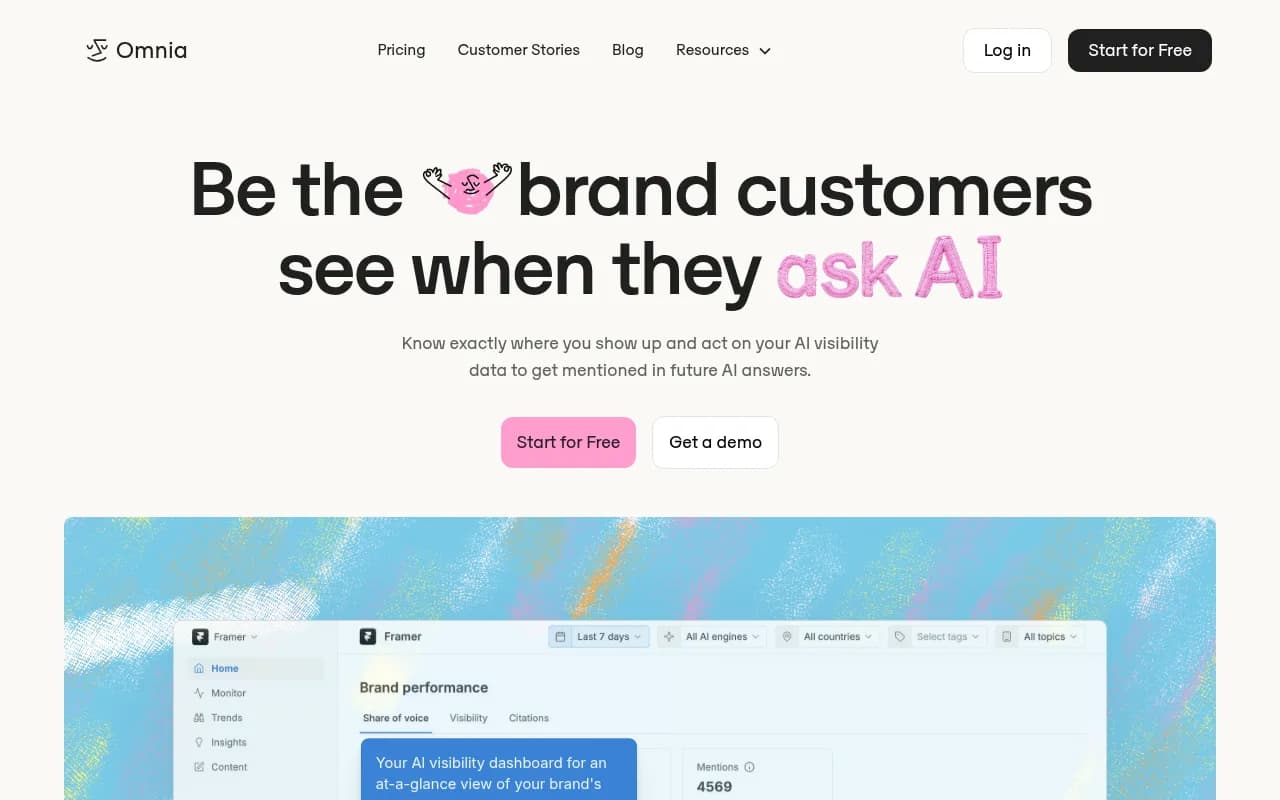
What Omnia doesn't do as well: the content optimization side is thin. You can see where you're losing, but the tool doesn't give you much guidance on what to do about it. For a small team that wants to act on data quickly, that gap can be frustrating.
Rankshift
Rankshift is explicitly built around GEO (Generative Engine Optimization) workflows. The framing is less "here's your dashboard" and more "here's what you should change." That's a meaningful difference.
The tool tracks your brand across LLMs and surfaces prompt-level data, but it also tries to connect that data to content recommendations. If a competitor is appearing for a prompt you're missing, Rankshift flags it and suggests the type of content that might help you close the gap. It's not as sophisticated as a full content generation platform, but it's more actionable than a pure monitoring dashboard.
For small teams that have someone who can actually write and publish content based on recommendations, Rankshift's workflow makes sense. For teams that just want to watch the numbers, it might feel like more structure than they need.
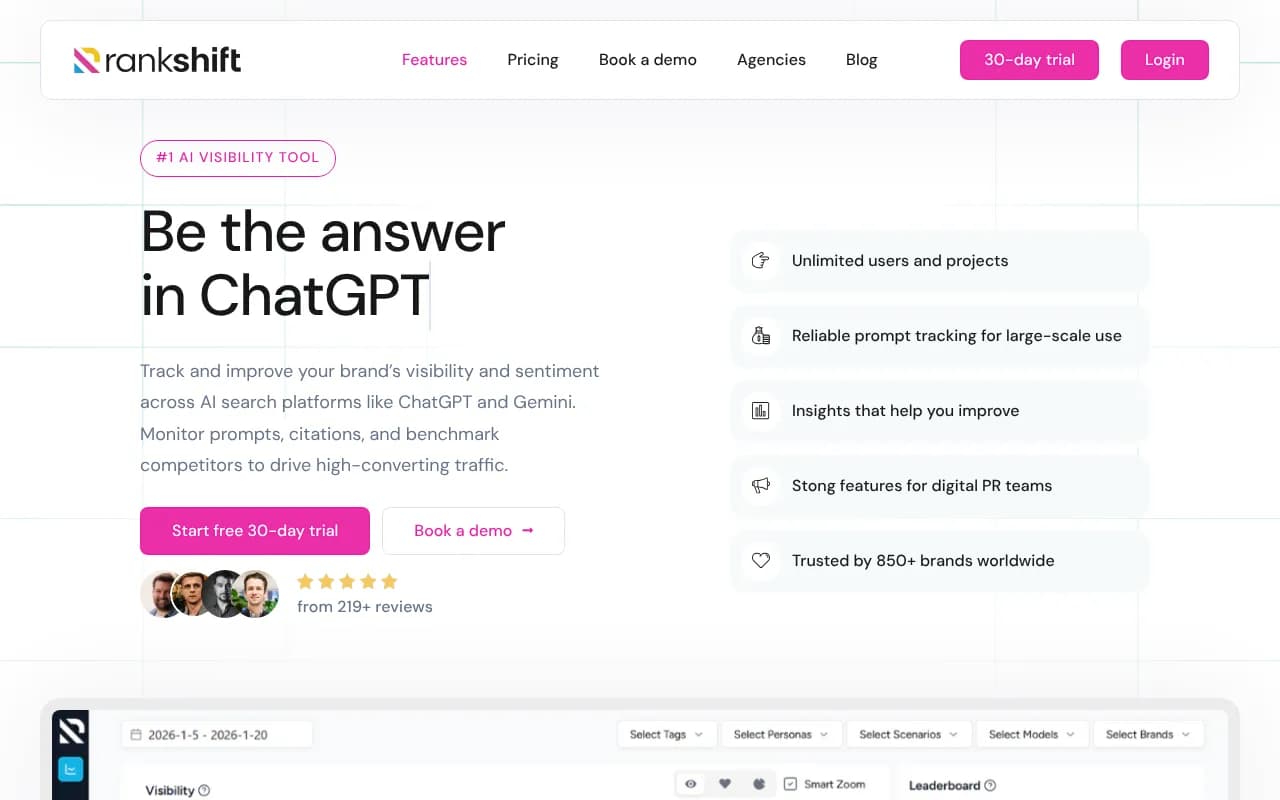
One thing worth noting: Rankshift's LLM coverage is narrower than LLM Pulse's. If you're primarily concerned with ChatGPT and Perplexity, that's probably fine. If you need Google AI Mode or DeepSeek tracking, check the current feature list carefully before committing.
LLM Pulse
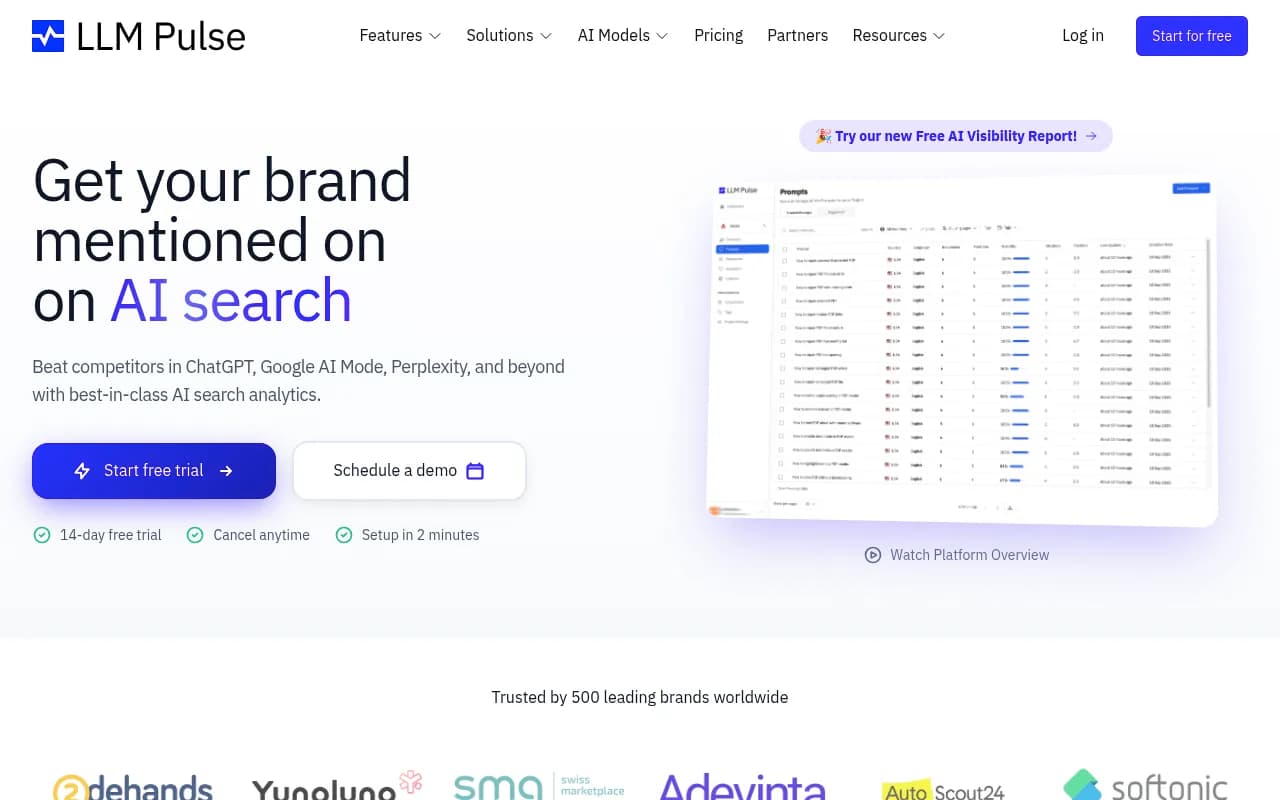
LLM Pulse is the most data-rich of the four. According to their own published review (which, yes, has an obvious conflict of interest, but the feature claims are verifiable), they cover 5+ AI models including ChatGPT, Perplexity, Gemini, and Google AI Mode. They also include real-time sentiment analysis and share-of-voice tracking.
Pricing starts at €49/month with a 14-day free trial, which is the most accessible entry point in this group. For a small team testing the waters on AI visibility, that's a low-risk way to see whether the data is actually useful for your situation.
The interface is more data-dense than Omnia's, which is either a feature or a bug depending on how your team works. If you have someone who likes digging into numbers, LLM Pulse gives them plenty to work with. If you need something you can hand to a non-technical stakeholder and have them understand in 30 seconds, Omnia's cleaner layout might serve you better.
TrackMyBusiness
TrackMyBusiness isn't in the tools catalog for this site, which limits how much detail I can give here. Based on publicly available information, it targets small business owners specifically -- the framing is less "marketing team" and more "business owner who wants to know if AI is sending customers to their competitors."
That's a real use case, and it's underserved. Most AI visibility tools are built with marketing professionals in mind. TrackMyBusiness tries to make the concept accessible to someone who doesn't know what "share of voice" means and doesn't want to learn.
The trade-off is depth. If you need granular prompt-level data, citation analysis, or sentiment breakdowns, TrackMyBusiness probably isn't the right fit. If you need a simple "is my brand showing up in AI results?" answer without a learning curve, it might be exactly what you want.
Side-by-side comparison
| Feature | Omnia | Rankshift | LLM Pulse | TrackMyBusiness |
|---|---|---|---|---|
| Starting price | Not publicly listed | Not publicly listed | €49/month | Not publicly listed |
| Free trial | Yes | Yes | 14-day free trial | Yes |
| AI models covered | Multiple (ChatGPT, Perplexity, Gemini) | ChatGPT, Perplexity (primary) | 5+ including Google AI Mode | Limited (ChatGPT-focused) |
| Share of voice tracking | Yes | Partial | Yes | Basic |
| Sentiment analysis | Basic | Basic | Real-time | No |
| Citation tracking | Yes | Yes | Yes | No |
| Content recommendations | No | Yes | No | No |
| GEO optimization tools | No | Yes | No | No |
| Best for | Competitive SOV analysis | Teams that want to act on data | Data-rich monitoring | Non-technical small business owners |
| Complexity | Low | Medium | Medium | Very low |
How these tools compare to the broader market
It's worth being honest about where these four tools sit in the overall landscape. They're all lighter-weight options -- that's the point. But "lightweight" comes with real limitations.
None of them offer AI crawler logs, which means you can't see how AI agents are actually crawling your site or diagnose why certain pages aren't being cited. None of them have the prompt volume data or difficulty scoring that helps you prioritize which prompts are worth targeting. And none of them have the content generation capabilities that would let you close the gaps they identify.
For teams that outgrow these tools -- or teams that want to start with something more complete -- platforms like Promptwatch cover the full cycle: finding gaps, generating content to fill them, and tracking the results as AI models start citing the new content. It's a different price point, but it's also a different category of tool.

That said, not every team needs the full stack. If you're a two-person team trying to understand whether AI search is even relevant to your business before investing more, starting with LLM Pulse at €49/month is a perfectly reasonable approach.
Other lightweight tools worth considering
If none of the four main tools in this comparison feel quite right, there are a few other options in the same weight class worth knowing about.
Otterly.AI is one of the most affordable options in the market, starting at $29/month. It covers four AI models at the base tier and is genuinely easy to set up. It's monitoring-only -- no content recommendations -- but for pure tracking it's hard to beat at that price.

Peasy is another lightweight option that focuses on real AI performance tracking without the complexity of enterprise platforms.
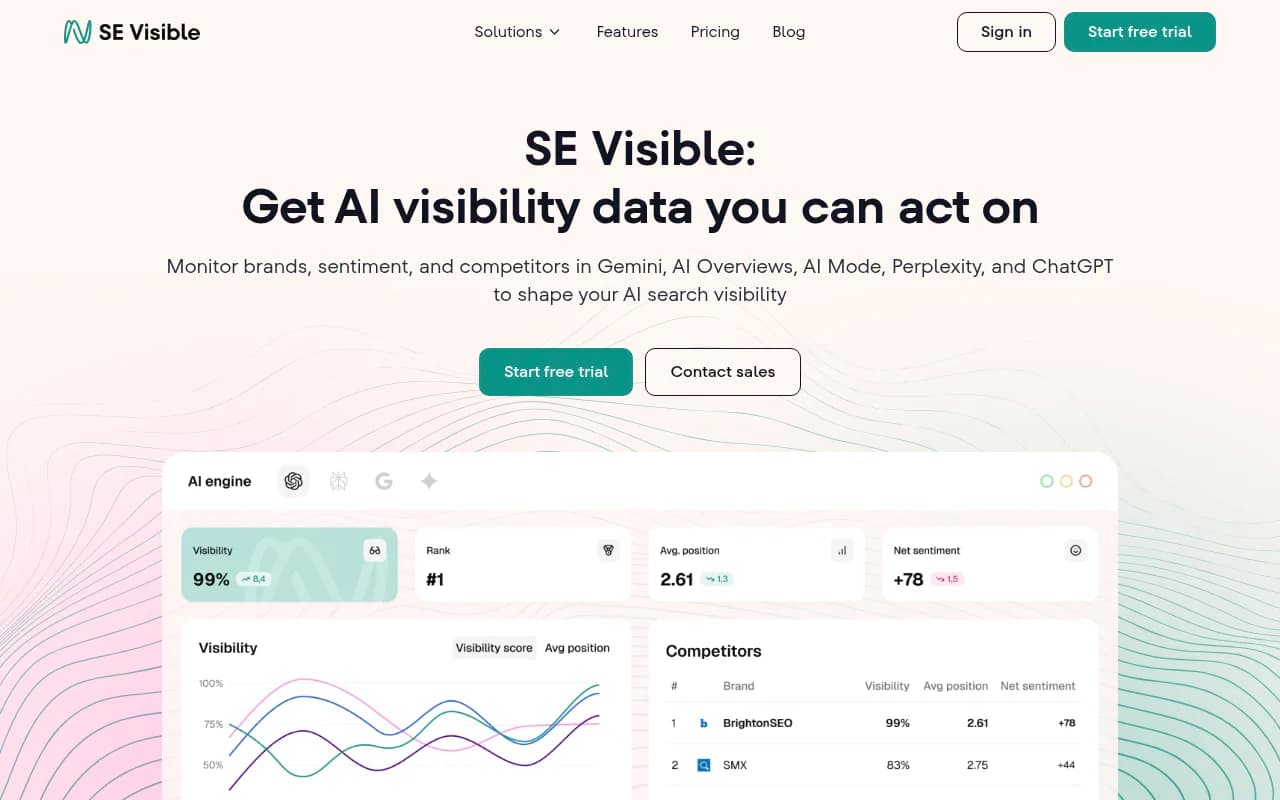
SE Visible from SE Ranking covers five AI models and handles multi-brand, multi-country setups reasonably well for a mid-tier price point.
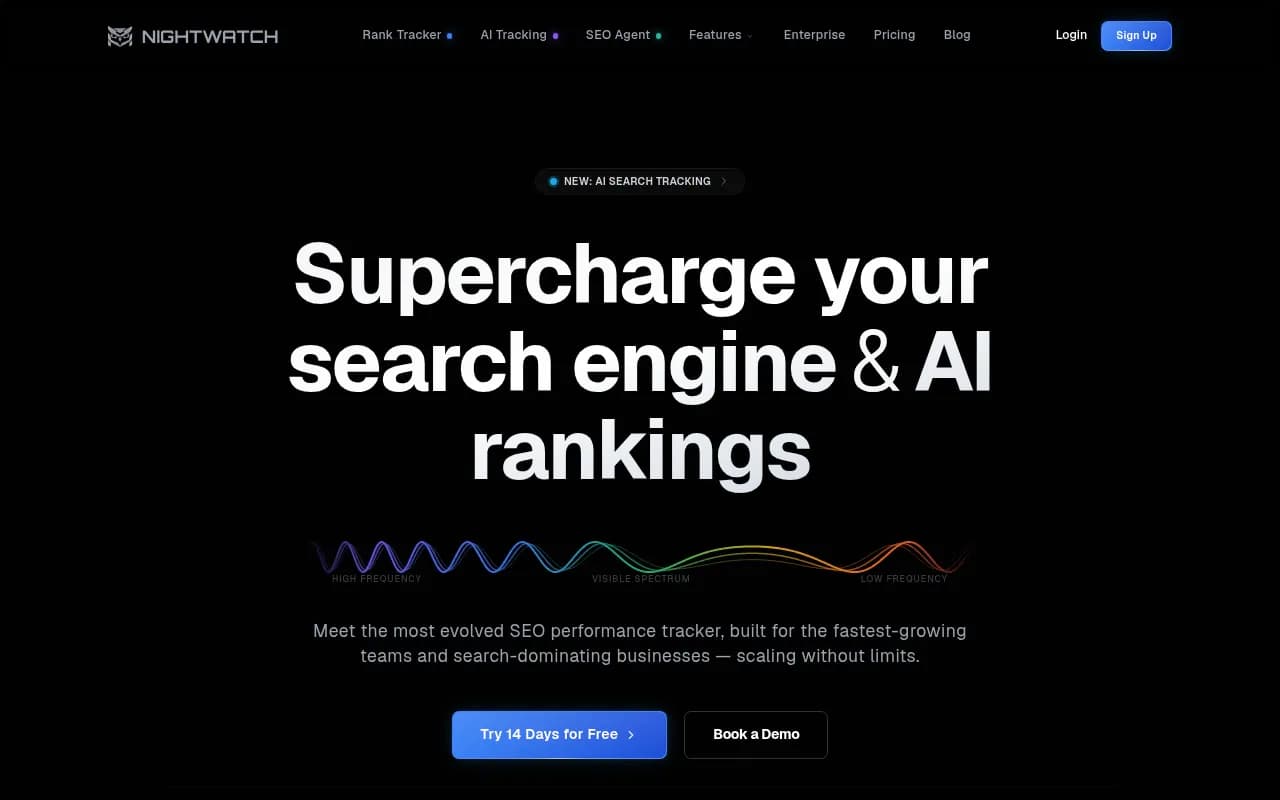
Nightwatch is interesting if you want traditional SEO rank tracking and AI visibility in one tool. The AI monitoring is an add-on ($99/month on top of the base plan), but if you're already paying for rank tracking, consolidating makes sense.
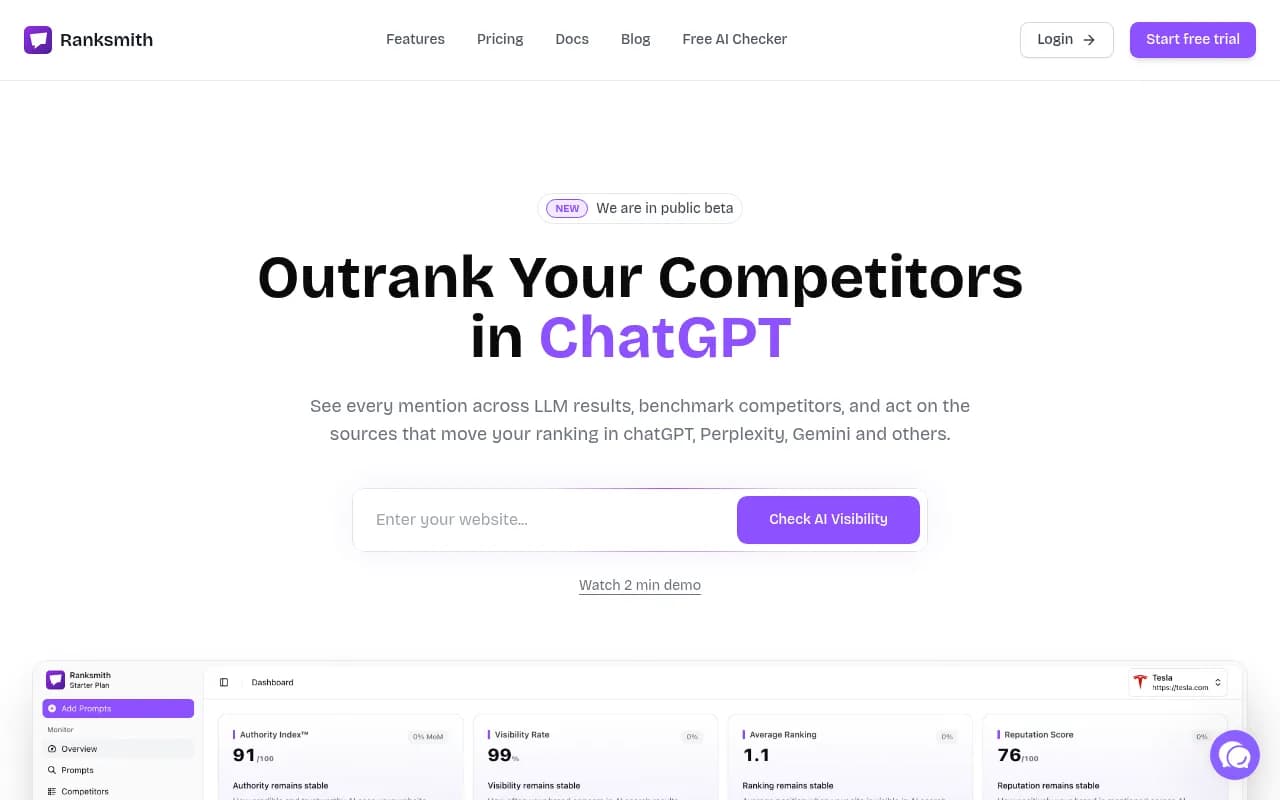
For teams that want something even simpler than TrackMyBusiness, tools like Ranksmith and Hall AI offer stripped-down tracking with minimal setup.

Which tool should you actually use?
Here's a direct answer, because "it depends" isn't useful:
If you want the most data for the lowest price, start with LLM Pulse. The €49/month entry point, 14-day free trial, and 5+ model coverage make it the easiest recommendation for a small team that wants to take AI visibility seriously without a big budget commitment.
If competitive share-of-voice tracking is your primary goal, Omnia's interface makes that specific workflow faster and cleaner than the alternatives.
If you have someone on the team who will actually act on content recommendations, Rankshift's GEO-oriented workflow is worth the added complexity. A monitoring dashboard you ignore is worse than a simpler tool you actually use.
If you're a small business owner who just wants a simple answer to "is my brand showing up in AI results?", TrackMyBusiness is built for you -- just go in knowing the depth isn't there.
And if you find yourself hitting the ceiling of any of these tools -- wanting crawler logs, prompt volume data, content generation, or traffic attribution -- that's when it makes sense to look at a more complete platform.
The honest bottom line
The AI visibility market is still young enough that tools are changing fast. Pricing, features, and model coverage can shift significantly between now and the end of 2026. Before committing to any of these tools, check their current feature pages and take advantage of free trials.
What won't change is the underlying logic: AI search is now a meaningful channel for most businesses, and understanding how your brand appears in AI-generated responses is no longer optional. Whether you start with a €49/month monitoring tool or a full-stack optimization platform, starting somewhere is better than waiting.
The four tools in this comparison are all reasonable starting points. None of them will solve everything, but all of them will tell you something you don't currently know about how AI models are treating your brand.