Key takeaways
- Most AEO tools track AI visibility in English only -- multi-language support is a genuine differentiator in 2026, not a checkbox feature
- The tools that handle multi-language best combine prompt customization, regional persona settings, and per-language citation tracking
- Monitoring alone isn't enough: the most useful platforms connect visibility gaps to content fixes, not just dashboards
- Pricing ranges from ~$39/month for basic trackers to $579+/month for full optimization platforms with content generation
- For teams that need to act on what they find (not just watch), platforms with built-in content agents and gap analysis return more value than pure monitoring tools
If you're running a brand that operates in more than one country, you've probably already noticed that AI search results aren't consistent across languages. Ask ChatGPT "what's the best project management tool?" in English and you'll get one set of citations. Ask the same question in German and the sources shift. Ask in Japanese and the entire framing changes.
This isn't a bug. AI models are trained on different corpora by language, they pull from different regional sources, and the competitive landscape for citations varies dramatically by market. A brand that dominates AI responses in the US can be completely invisible in France.
That's the problem multi-language AEO tracking is trying to solve. And in 2026, the tools that do it well are still a minority.
This guide covers what to look for, which tools are worth your time, and how to think about building a multi-language AI visibility program that actually moves the needle.
Why multi-language AEO is harder than it sounds
The obvious challenge is translation. But that's actually the easy part -- most tools can run prompts in other languages. The harder problems are:
Regional citation sources differ. In English markets, AI models frequently cite Reddit, major news outlets, and established SaaS blogs. In German markets, they cite different forums, industry publications, and local review sites. If you're only tracking English citations, you have no idea what's driving (or blocking) your visibility in DACH markets.
Prompt behavior varies by language. The way users phrase questions in Spanish is structurally different from English. "Best CRM for small business" in English becomes a different kind of query in Portuguese, with different intent signals. Tools that just translate your English prompts often miss the natural phrasing that actual users type.
AI model popularity differs by region. Perplexity dominates in the US. Google AI Overviews matter everywhere Google Search is dominant. In some Asian markets, different models entirely have significant share. A tool that only tracks ChatGPT and Perplexity will give you a distorted picture of visibility in markets where those aren't the primary AI search interfaces.
Competitor sets change. Your main competitor in English-language AI responses might not even have a German-language website. In that market, completely different brands are capturing the citations you want.
What to look for in a multi-language AEO tool
Before diving into specific tools, here's the framework I'd use to evaluate any platform for multi-language work:
Prompt customization by language and region. Can you write prompts in the target language, or does the tool auto-translate? Auto-translation is a red flag -- it produces unnatural phrasing that doesn't reflect how real users actually search.
Regional persona settings. The best tools let you specify a country, language, and user persona so the AI model responds as it would for a real user in that market. This matters because AI models often tailor responses based on inferred user location.
Per-language citation tracking. You need to see which sources are being cited in each language separately. A single aggregated view obscures the regional picture.
Coverage of relevant AI models. Check which models the tool tracks and whether those models are actually relevant in your target markets.
Content gap analysis. Knowing you're invisible is only useful if you can do something about it. Tools that surface specific prompts where competitors are cited but you aren't -- and then help you create content to close those gaps -- are worth significantly more than pure monitoring dashboards.
The tools worth knowing about
Promptwatch
Promptwatch is the most complete platform I've seen for multi-language AI visibility work. It tracks 10 AI models (ChatGPT, Perplexity, Google AI Overviews, Google AI Mode, Claude, Gemini, Meta/Llama, DeepSeek, Grok, Mistral, Copilot) with customizable personas that let you specify country, language, and user type.
What separates it from most competitors is that it doesn't stop at monitoring. The Answer Gap Analysis shows you exactly which prompts competitors are being cited for in each market that you're missing. Then Content Agents generate articles, comparisons, and briefs grounded in that real prompt data -- so you're not guessing what to write, you're filling specific gaps that AI models have already identified.
For multi-language teams specifically, the per-language citation tracking and regional persona customization are genuinely useful. You can run the same prompt set across German, French, and Spanish markets and see completely different citation landscapes for each. The AI Crawler Logs also show which pages AI models are actually reading on your site -- which helps you understand whether your non-English content is even being discovered.
Pricing starts at $99/month (Essential), $249/month (Professional), and $579/month (Business). Free trial available.

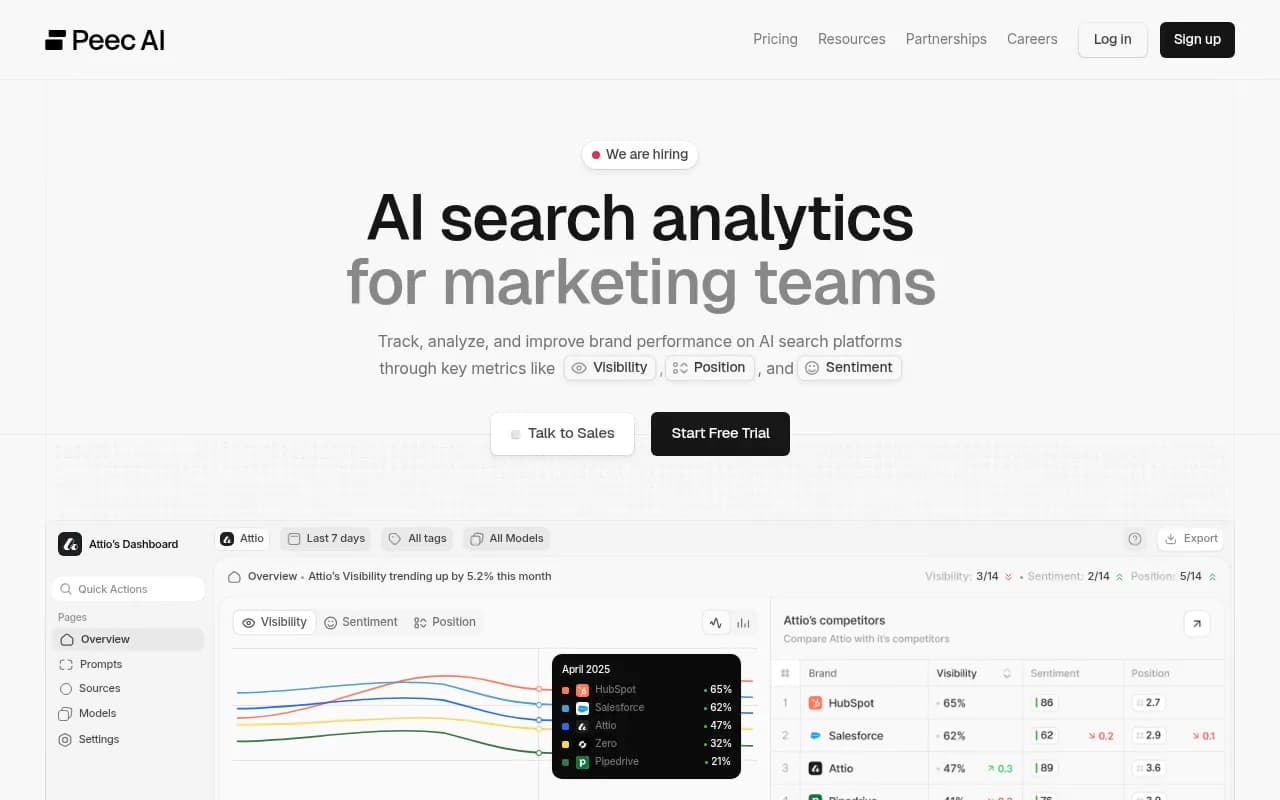
Peec AI
Peec AI is one of the few tools explicitly built for multi-language tracking. It's designed around the idea that AI visibility varies by region, and the prompt interface reflects that -- you can set language and location per prompt set rather than applying a single global configuration.
It's more of a monitoring tool than an optimization platform. You'll get solid visibility data across languages, but the content workflow is limited compared to platforms with built-in generation. Good fit for teams that want clean multi-language data and handle content creation separately.
SE Visible
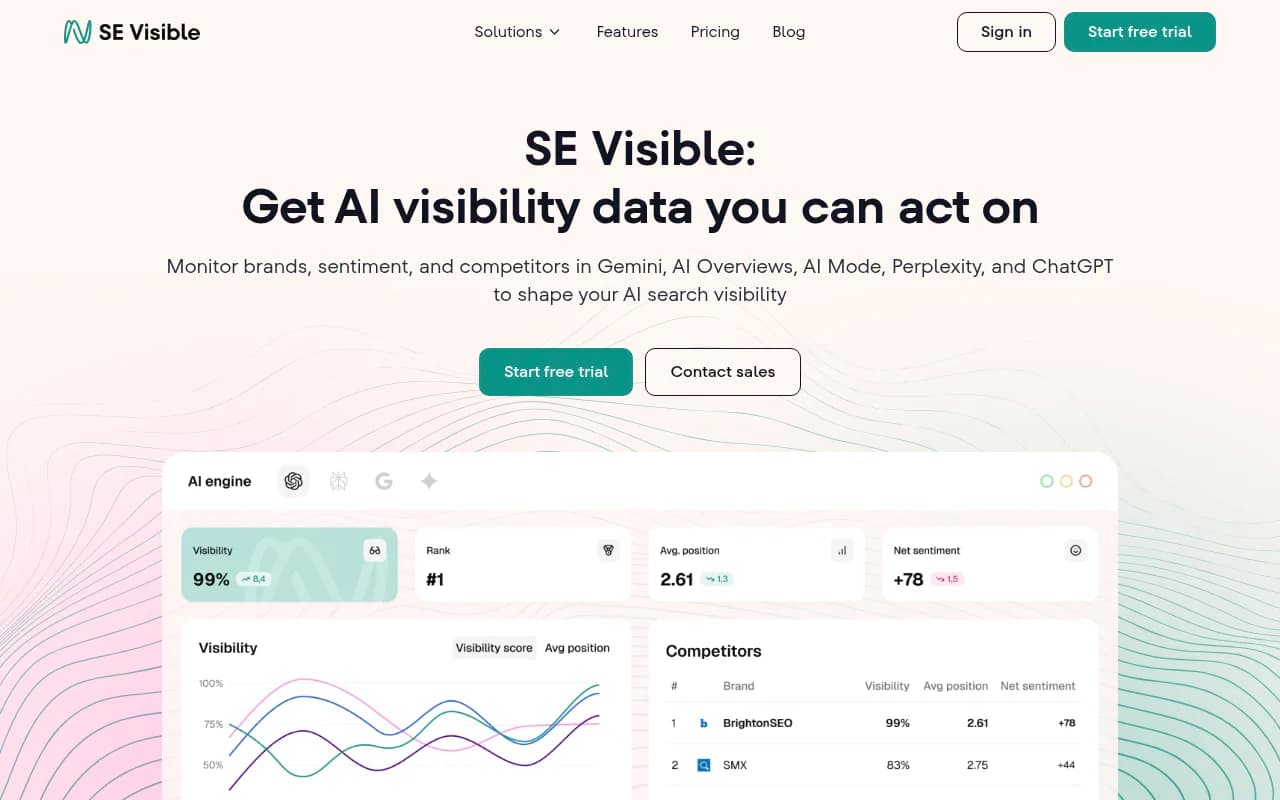
SE Visible (from SE Ranking) tracks AI Overviews, AI Mode, Gemini, ChatGPT, and Perplexity with a focus on brand visibility and sentiment. The competitor intelligence features are strong -- you can see share of voice across AI models and track how that shifts over time.
For multi-language work, SE Ranking's underlying infrastructure is a strength. The platform has deep international SEO roots, and that carries over into the AI visibility product. Pricing starts at $99/month.
Nightwatch
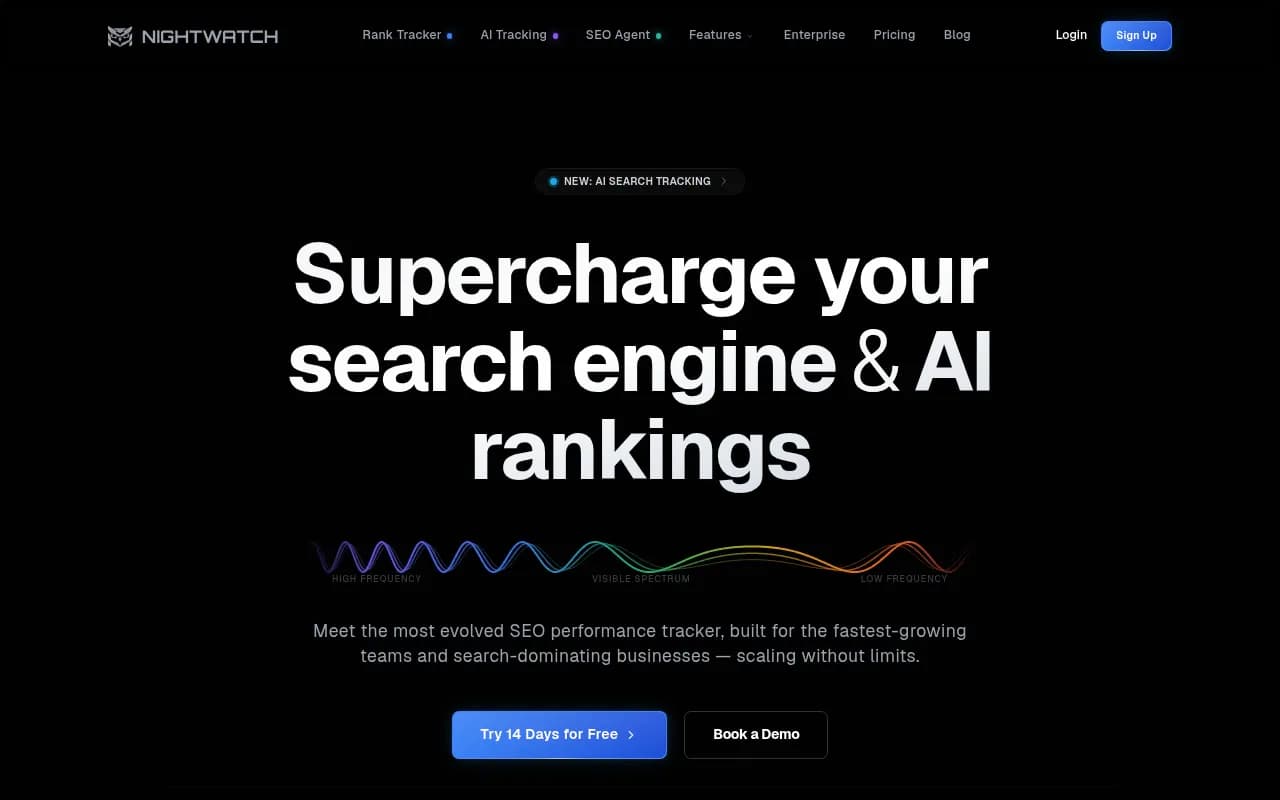
Nightwatch is interesting because it bridges traditional SEO rank tracking with AI visibility monitoring. The AI add-on (on top of the base $39/month plan) tracks ChatGPT, Google AI Overviews, Bing Copilot, Perplexity, and Claude.
The zip-code level tracking is genuinely useful for local and regional work -- you can track AI visibility at a very granular geographic level, which matters for brands with regional presence. Multi-language support exists but is less central to the product than it is for Peec AI.
Scrunch
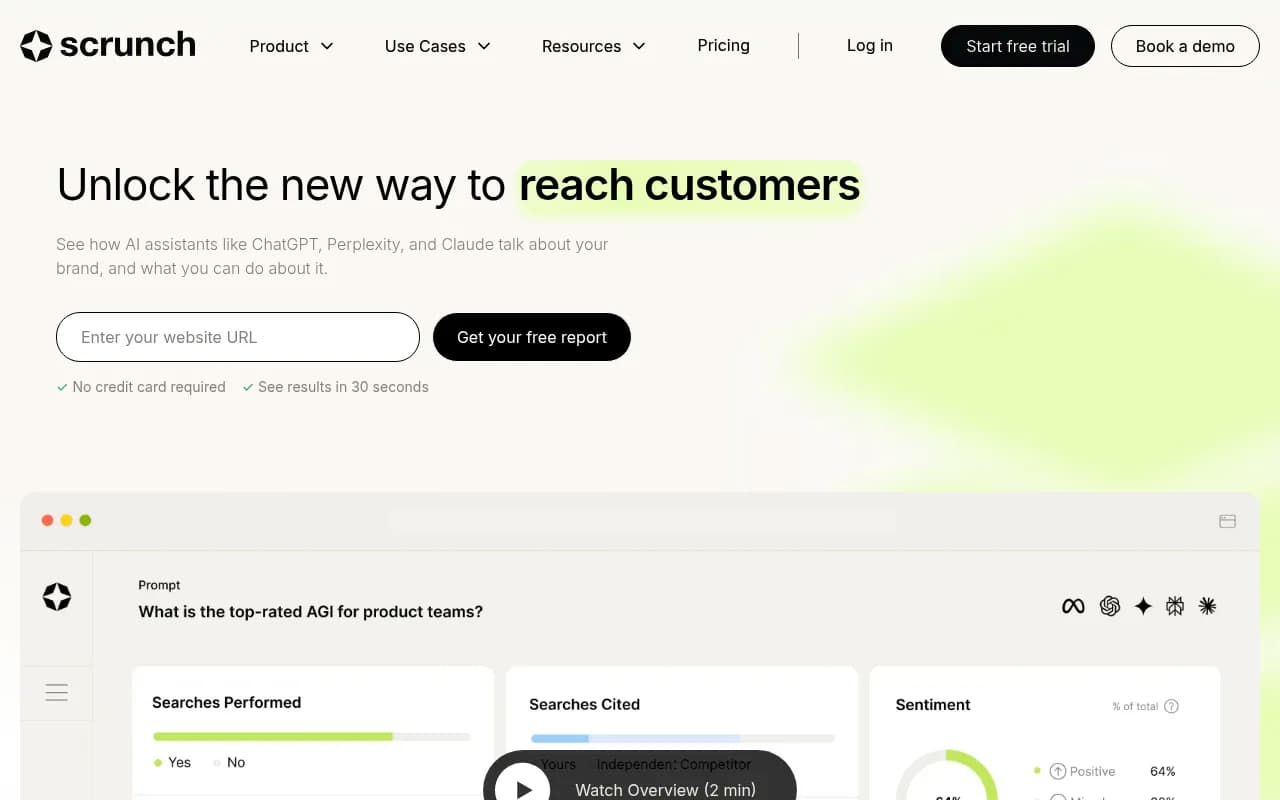
Scrunch has built a solid monitoring and citation platform with agent traffic analysis. The "Site Maps" feature shows how AI agents consume your site structure, which is useful for understanding why certain pages get cited in some markets but not others.
The multi-language angle is handled through regional monitoring configurations. It's a more enterprise-oriented tool, and the pricing reflects that. Better fit for larger teams with dedicated AI search resources.
AthenaHQ
AthenaHQ tracks 8+ AI search engines and has good competitor visibility features. It's primarily a monitoring platform -- the optimization workflow is limited. For multi-language tracking, it works, but you'll need to build content workflows elsewhere.
Profound
Profound has strong enterprise features and a clean interface for tracking brand visibility across AI models. The prompt analytics are detailed, and the competitor comparison views are well-designed. Multi-language support is available but requires some configuration work to set up properly.

Writesonic
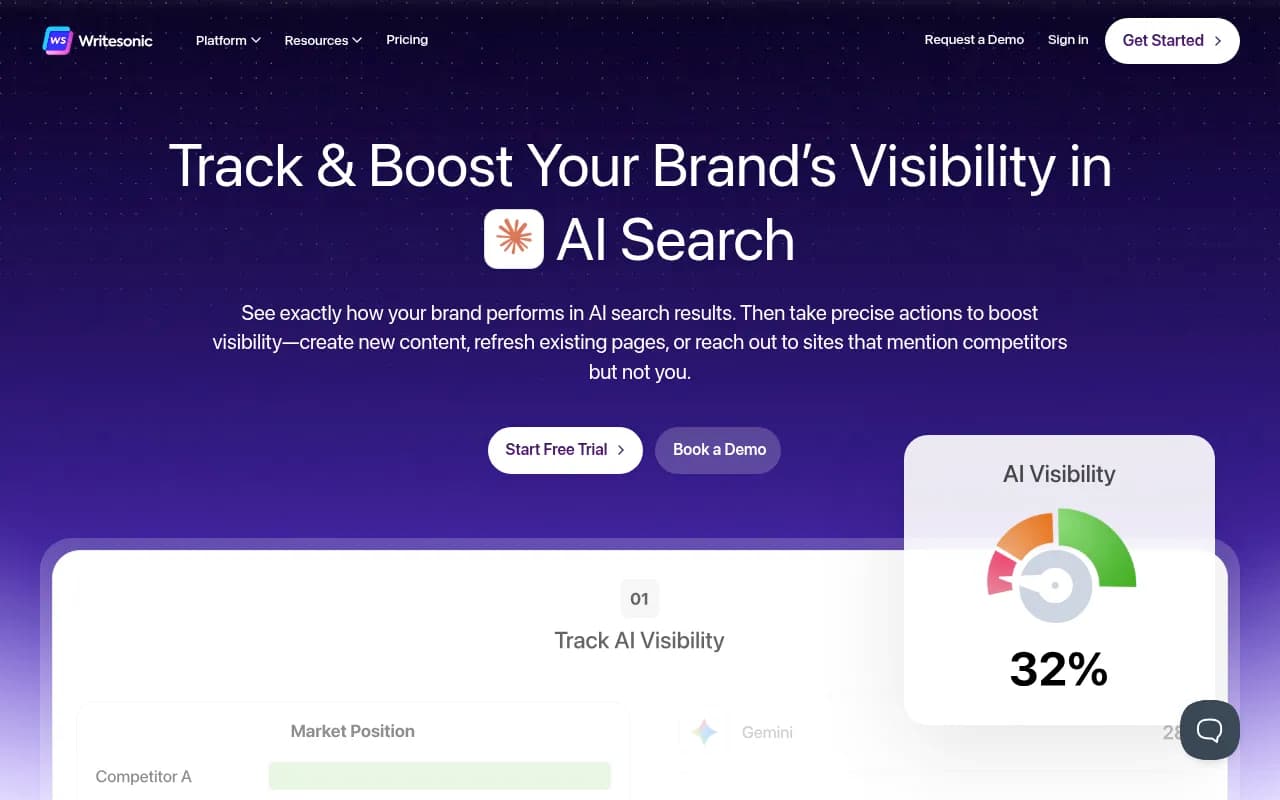
Writesonic has expanded beyond AI writing into GEO/AEO territory. The platform combines visibility tracking with in-platform content optimization -- you can see where you're missing citations and generate content to address those gaps without leaving the tool. Pricing starts at $199/month for the GEO features.
Feature comparison
Here's how the main tools stack up on the dimensions that matter most for multi-language AEO work:
| Tool | Multi-language prompts | Regional personas | AI models tracked | Content generation | Crawler logs | Starting price |
|---|---|---|---|---|---|---|
| Promptwatch | Yes | Yes | 10 | Yes (Content Agents) | Yes | $99/mo |
| Peec AI | Yes (core feature) | Yes | 5+ | No | No | Custom |
| SE Visible | Yes | Partial | 5 | No | No | $99/mo |
| Nightwatch | Yes | Partial | 5 | No | No | $39/mo + $99 add-on |
| Scrunch | Yes | Yes | 6+ | No | Yes (agent traffic) | Custom |
| AthenaHQ | Yes | Partial | 8+ | No | No | Custom |
| Profound | Yes | Yes | 6+ | No | No | Custom |
| Writesonic | Partial | Partial | 6 | Yes | No | $199/mo |
A few things stand out from this table. First, content generation is rare -- most tools are monitoring-only. Second, crawler logs (which tell you whether AI models are actually reading your non-English pages) are almost nonexistent outside of Promptwatch and Scrunch. Third, the tools with the strongest multi-language foundations tend to be the ones built specifically for AI visibility rather than traditional SEO tools that added AI tracking as a feature.
How to build a multi-language AEO program
Having the right tool is only part of the equation. Here's how to actually use these tools effectively across languages.
Start with prompt research in each language
Don't just translate your English prompt list. Spend time understanding how users in each target market actually phrase questions about your category. Tools like Promptwatch surface prompt volume data that can help here -- you can see which questions are generating real AI search traffic in each language.
The goal is a prompt set that reflects natural language use in each market, not a mechanical translation of your English keywords.
Map the citation landscape per language
Before you can close gaps, you need to understand what's actually being cited in each market. Run your prompt sets and look at the source analysis: which domains are AI models citing in German responses? Which Reddit communities, YouTube channels, or industry publications show up in French responses?
This tells you where to focus your offsite efforts -- whether that's getting featured in specific publications, building presence on relevant forums, or creating content that mirrors the formats AI models prefer in that market.
Prioritize by gap size and prompt volume
Not all visibility gaps are equal. A prompt that gets asked 10,000 times a month in Spanish is worth more than one asked 50 times. Use prompt volume data to prioritize which gaps to close first, and focus initial content efforts on high-volume, high-intent prompts where competitors are visible but you aren't.
Track crawl activity on non-English content
This is an underrated step. Many brands have non-English content that AI crawlers simply aren't reading -- either because it's buried in the site architecture, blocked by robots.txt configurations, or structured in ways that AI agents don't parse well. Crawler log data (available in Promptwatch and Scrunch) shows you exactly which pages are being visited and which aren't.
If your German product pages aren't being crawled, no amount of content optimization will help your German AI visibility.
Measure visibility separately by language
Aggregate visibility scores hide important information. A brand that's highly visible in English but invisible in German will show a mediocre aggregate score -- but the action required is completely different than a brand that's uniformly mediocre across all languages. Track and report on each language market separately.
The monitoring-only trap
One thing worth saying directly: a lot of teams invest in AEO tools, get dashboards full of visibility data, and then... don't know what to do with it.
The data tells you you're invisible in French AI responses. Great. Now what?
This is where the gap between monitoring tools and optimization platforms becomes real. Tools that stop at showing you the data leave you to figure out the content strategy, the writing, the publishing, and the measurement on your own. Platforms that connect visibility gaps to specific content recommendations -- and ideally help you create that content -- compress the time from "we have a problem" to "we fixed the problem."
For multi-language work specifically, this matters even more. You're not just writing one article to close a gap; you're potentially creating content in four or five languages, targeting different regional citation sources, and tracking results across different AI models. The operational complexity is real, and tools that help you manage it are worth the premium.
Which tool should you choose?
It depends on what you actually need.
If you're a brand or agency that needs to track and improve AI visibility across multiple languages and markets, and you want a platform that connects monitoring to action, Promptwatch is the strongest option. The combination of multi-language persona tracking, Answer Gap Analysis, Content Agents, and crawler logs covers the full workflow in one place.
If you need deep multi-language monitoring with clean per-language data and handle content separately, Peec AI is worth a close look -- it's one of the few tools where multi-language tracking is a core design principle rather than an afterthought.
If you're already in the SE Ranking ecosystem and want to add AI visibility without switching platforms, SE Visible is a natural fit.
If you're an agency managing multiple clients across different regions, Nightwatch's combination of traditional rank tracking and AI visibility monitoring at a relatively accessible price point makes it worth evaluating -- especially if local/regional tracking matters for your clients.
The honest answer is that multi-language AEO is still an area where most tools are catching up. The platforms that built for it from the start have a real advantage over those that added it as a configuration option. Check whether the tool you're evaluating actually lets you write prompts in the target language (not just translate them), set regional personas, and see per-language citation data separately. If it can't do those three things, it's not really a multi-language AEO tool -- it's a single-language tool with a language selector.