Key takeaways
- Most AI visibility tools in 2026 are monitoring dashboards -- they show you where you're invisible but give you no path to fix it.
- A real optimization platform closes the loop: find gaps, create content, track results.
- The clearest signal a tool is built for improvement (not just tracking): content gap analysis, AI-native content generation, crawler log access, and traffic attribution.
- Monitoring-only tools aren't useless -- they're just incomplete. The question is whether you're paying for a dashboard or a growth engine.
- Before picking a tool, map your workflow: do you need to discover gaps, create content, report to clients, or all three?
The AI visibility tool market has exploded. There are now well over 50 platforms claiming to help brands "dominate AI search" -- and most of them do roughly the same thing: they query ChatGPT, Perplexity, or Gemini with a set of prompts, check whether your brand shows up, and hand you a score.
That's useful. But it's also where most tools stop.
The real question for any marketing team in 2026 isn't "does my brand appear in AI answers?" It's "what do I do about it when it doesn't?" And that's where the market splits into two very different categories of product.
This guide is about understanding that split -- what separates a tracking tool from an optimization platform, what features actually move the needle, and how to evaluate the growing field of AI visibility software without getting dazzled by dashboards.
Why the monitoring-vs-optimization gap matters
Think about how traditional SEO tools evolved. Early rank trackers just showed you keyword positions. Then tools like Semrush and Ahrefs added competitor analysis, backlink data, content gap analysis, and site auditing. The shift from "here's your rank" to "here's why and here's what to do" is what made them indispensable.
AI visibility tools are at the same inflection point right now. Most are still in the "here's your rank" phase. A handful have moved into the "here's why and here's what to do" phase.
The difference matters because AI search visibility isn't static. ChatGPT, Claude, Perplexity, and Google AI Overviews don't rank pages -- they synthesize answers from the content they've crawled and the sources they trust. If your content doesn't answer the questions AI models are fielding, you won't appear. And knowing you don't appear is only half the problem. You need to know what content to create to change that.
The anatomy of a real optimization platform
Before comparing specific tools, it helps to have a framework. A genuine AI search optimization platform does at least three things:
1. Gap analysis (not just presence detection)
Presence detection tells you: "You appeared in 3 out of 10 prompts."
Gap analysis tells you: "Your competitors appear for these 47 prompts that you don't -- here are the specific topics and questions your content isn't covering."
That's a fundamentally different output. One gives you a score. The other gives you a to-do list.
2. Content creation tied to citation data
If a tool identifies gaps but leaves you to figure out what to write, you're still guessing. The best platforms in 2026 connect gap analysis directly to content generation -- producing articles, comparisons, and listicles based on what AI models actually cite, not generic SEO best practices.
This is harder to build than it sounds. It requires analyzing which sources AI models reference (not just which pages rank on Google), understanding prompt volumes and difficulty, and generating content that matches the format and depth those models prefer.
3. Closed-loop tracking
You create content. Does it work? A monitoring-only tool can't answer that. An optimization platform tracks which of your pages get cited, by which AI models, how often, and what traffic that generates. Without this, you're publishing content and hoping.
What to look for (and what to ignore) when evaluating tools
Green flags
Crawler log access. AI crawlers like GPTBot, ClaudeBot, and PerplexityBot visit your site before they cite it. Seeing which pages they read, how often, and whether they encounter errors is genuinely useful data that most tools don't surface. If a platform shows you real-time AI crawler activity, that's a meaningful differentiator.
Prompt volume and difficulty scoring. Not all prompts are worth chasing. A tool that shows you search volume estimates and competitive difficulty for specific prompts helps you prioritize. Without this, you might spend months optimizing for prompts that nobody actually asks.
Citation source analysis. Which pages, Reddit threads, YouTube videos, and external domains are AI models actually citing? This tells you where to publish and what to optimize -- and it's very different from traditional backlink analysis.
Traffic attribution. Can the tool connect AI visibility to actual website traffic and revenue? This is the hardest problem in the space, but platforms that offer GSC integration, server log analysis, or a tracking snippet are at least trying to close the loop.
Multi-model coverage. If a tool only monitors ChatGPT, you're missing Perplexity, Claude, Gemini, Google AI Overviews, Grok, DeepSeek, and others. The AI search landscape is fragmented, and different models cite different sources.
Red flags
Fixed prompt sets. Some tools let you monitor only a predetermined list of prompts. This is a fundamental limitation -- your customers don't ask AI models from a fixed menu. You need to track the actual prompts relevant to your business.
No content guidance. If the platform's entire output is a visibility score and a list of mentions, it's a monitoring tool. Useful, but not sufficient for improvement.
Vague "optimization" features. Some tools claim to help you optimize but offer nothing more than generic content tips ("add more FAQs," "use structured data"). That's not optimization -- that's advice you could find in a 2019 blog post.
No competitor benchmarking. Knowing your own score in isolation is nearly meaningless. You need to know whether competitors are more visible, for which prompts, and why.
How the major platforms stack up
The market in 2026 broadly breaks into four tiers:
| Tier | What they do | Examples |
|---|---|---|
| Full optimization platforms | Gap analysis + content generation + tracking + attribution | Promptwatch, Relixir, Whitebox |
| Advanced monitoring | Deep tracking, competitor analysis, some content guidance | Profound, AthenaHQ, Evertune |
| Standard monitoring | Prompt tracking, mention/citation counts, basic dashboards | Otterly.AI, Peec AI, Brandlight, Scrunch AI |
| SEO tools with AI add-ons | Traditional SEO platforms that added AI visibility features | Semrush, Ahrefs Brand Radar, SE Ranking |
Full optimization platforms
Promptwatch sits in this category and is the clearest example of what the "action loop" looks like in practice. It tracks 10 AI models (ChatGPT, Perplexity, Claude, Gemini, Google AI Overviews, Grok, DeepSeek, Copilot, Meta AI, Mistral), surfaces which prompts competitors rank for that you don't, then provides a built-in AI writing agent to create content grounded in 880M+ analyzed citations. The crawler log feature -- showing you exactly which pages GPTBot or ClaudeBot visited and what errors they hit -- is something most competitors don't offer at all.

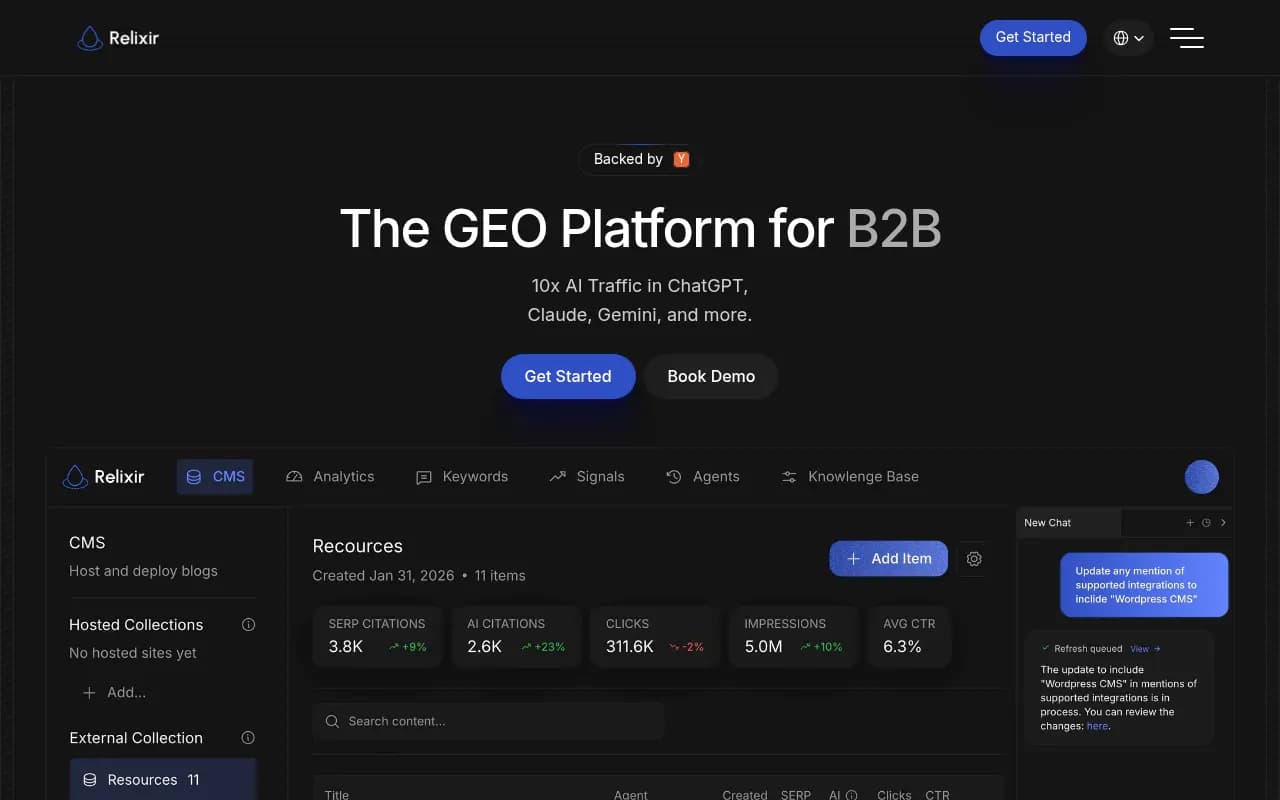
Relixir takes a similar approach with an AI-native CMS and autonomous content generation. Worth evaluating if you want the content creation side to be more automated.
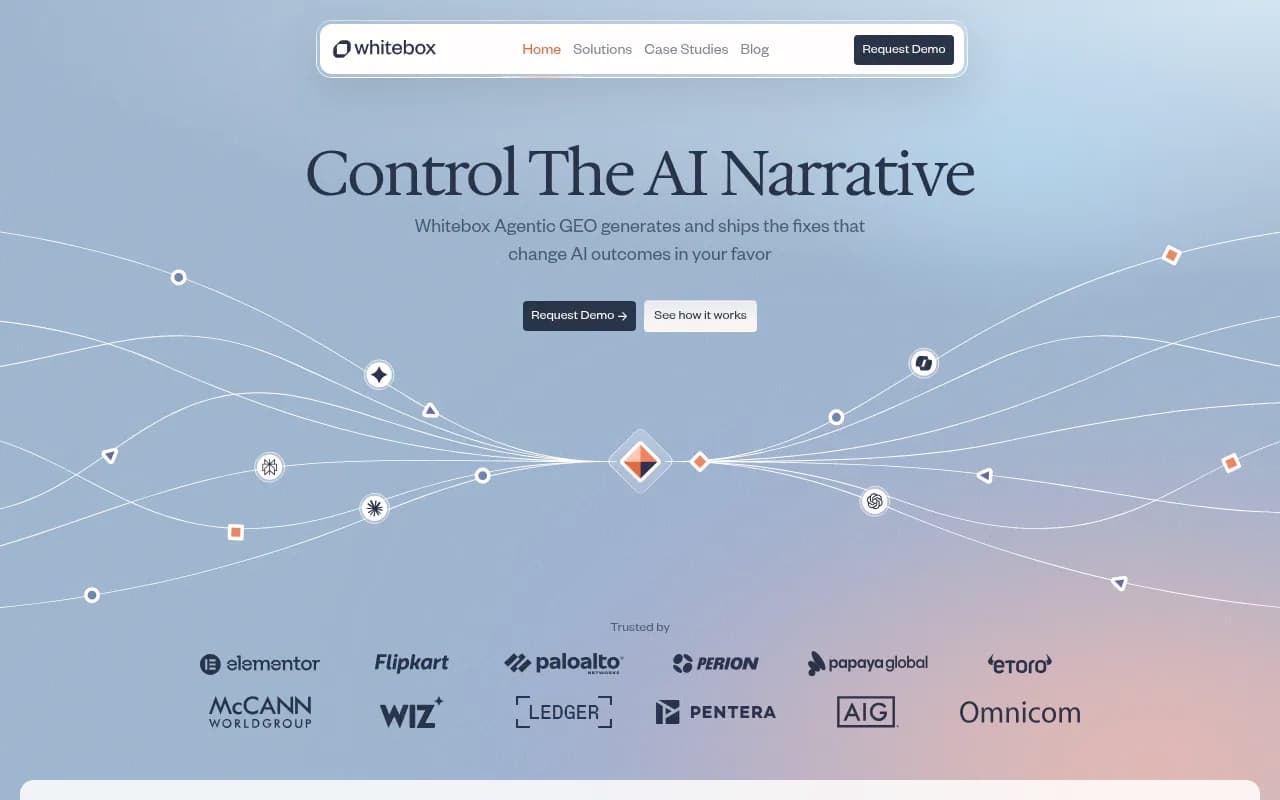
Whitebox is newer but interesting -- it's an agentic platform that generates and ships AI narrative fixes automatically, which appeals to teams that want less manual work in the content loop.
Advanced monitoring with some optimization
Profound has a strong feature set and is well-regarded for enterprise use. It covers most major AI models, offers competitor benchmarking, and provides some content guidance. The main limitation compared to full optimization platforms: it doesn't generate content for you, and it lacks Reddit/YouTube citation tracking and ChatGPT Shopping monitoring.

AthenaHQ covers 8+ AI engines and has solid monitoring depth. It's monitoring-focused, though, and doesn't offer content generation or gap-to-content workflows.

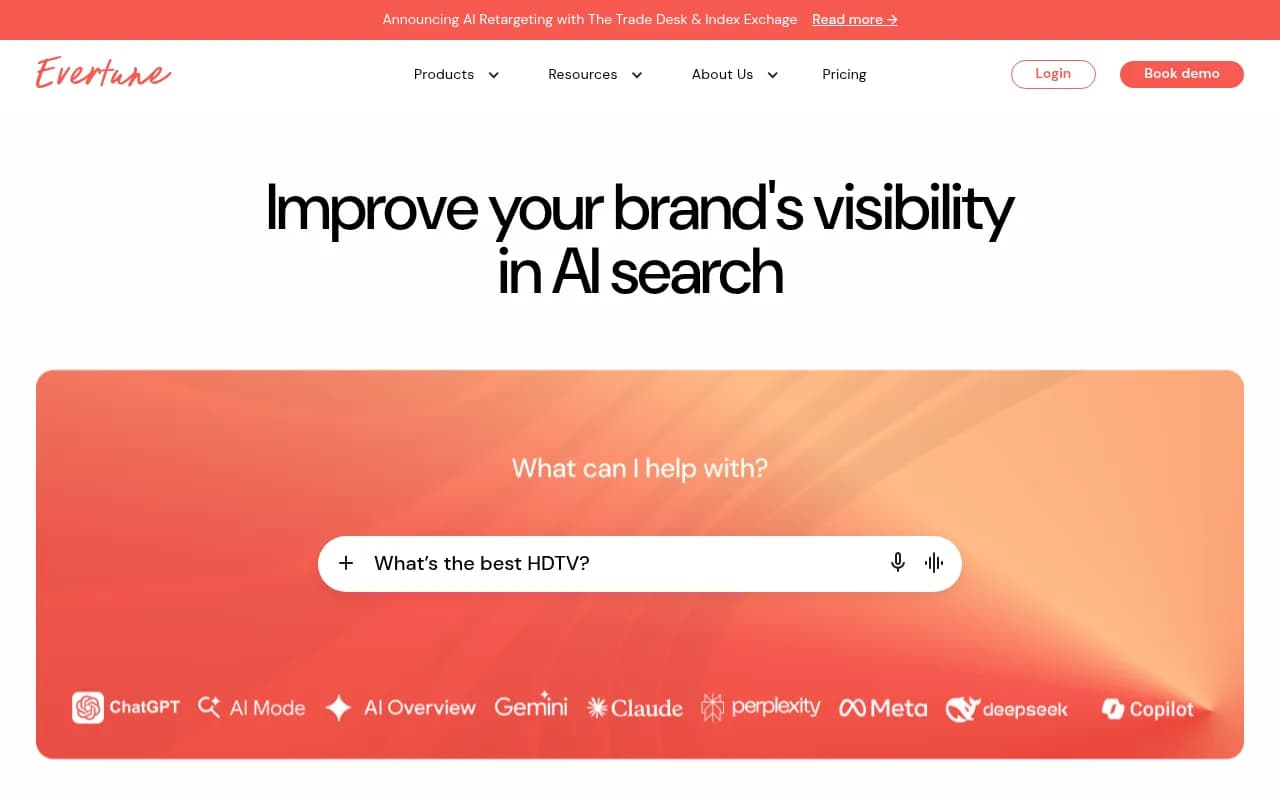
Evertune is positioned toward Fortune 500 brands and offers strong GEO insights. Enterprise pricing and enterprise complexity -- probably overkill for most mid-market teams.
Standard monitoring tools
These tools do what they say: they track whether your brand appears in AI responses. They're useful for awareness, less useful for improvement.
Otterly.AI is affordable and easy to use. Good for teams that just need to know their baseline visibility and report it to stakeholders. No crawler logs, no content generation, no traffic attribution.

Peec AI handles multi-language tracking well, which makes it useful for international brands. Feature set is otherwise monitoring-focused.

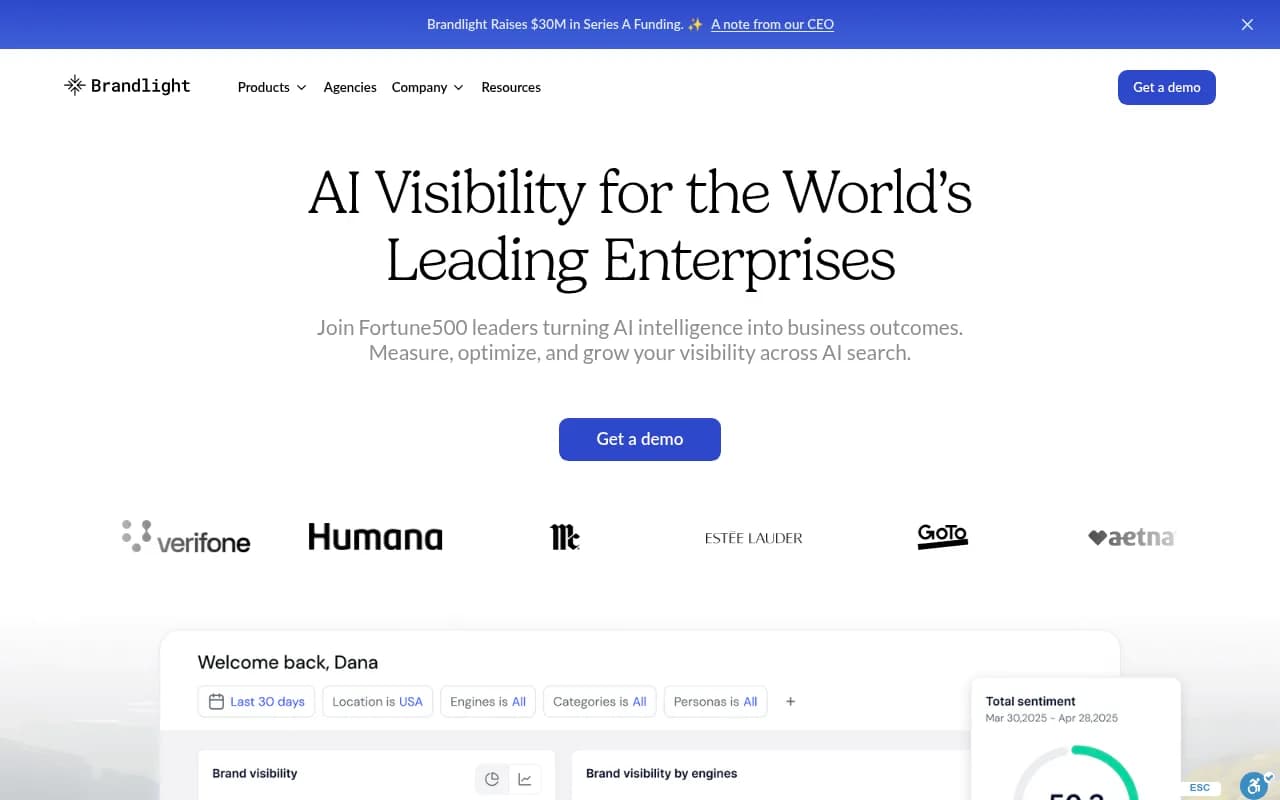
Brandlight covers the basics and has a clean interface. Limited compared to the platforms above.
Scrunch AI is worth a look for brand monitoring, though it's lighter on the optimization side.
SEO tools with AI visibility add-ons
Semrush added AI visibility tracking to its existing platform. The advantage: you already have keyword data, backlink data, and content tools in one place. The limitation: it uses fixed prompts, which means you can't track the specific questions your customers actually ask AI models.
Ahrefs Brand Radar is similar -- fixed prompts, no AI traffic attribution. Useful as a supplement if you're already an Ahrefs user, but not a standalone AI visibility solution.
SE Ranking has added an AI visibility toolkit that's more flexible than Semrush's implementation. Worth considering for teams already in the SE Ranking ecosystem.
Specialized tools worth knowing about
A few tools don't fit neatly into the tiers above but are worth mentioning for specific use cases.
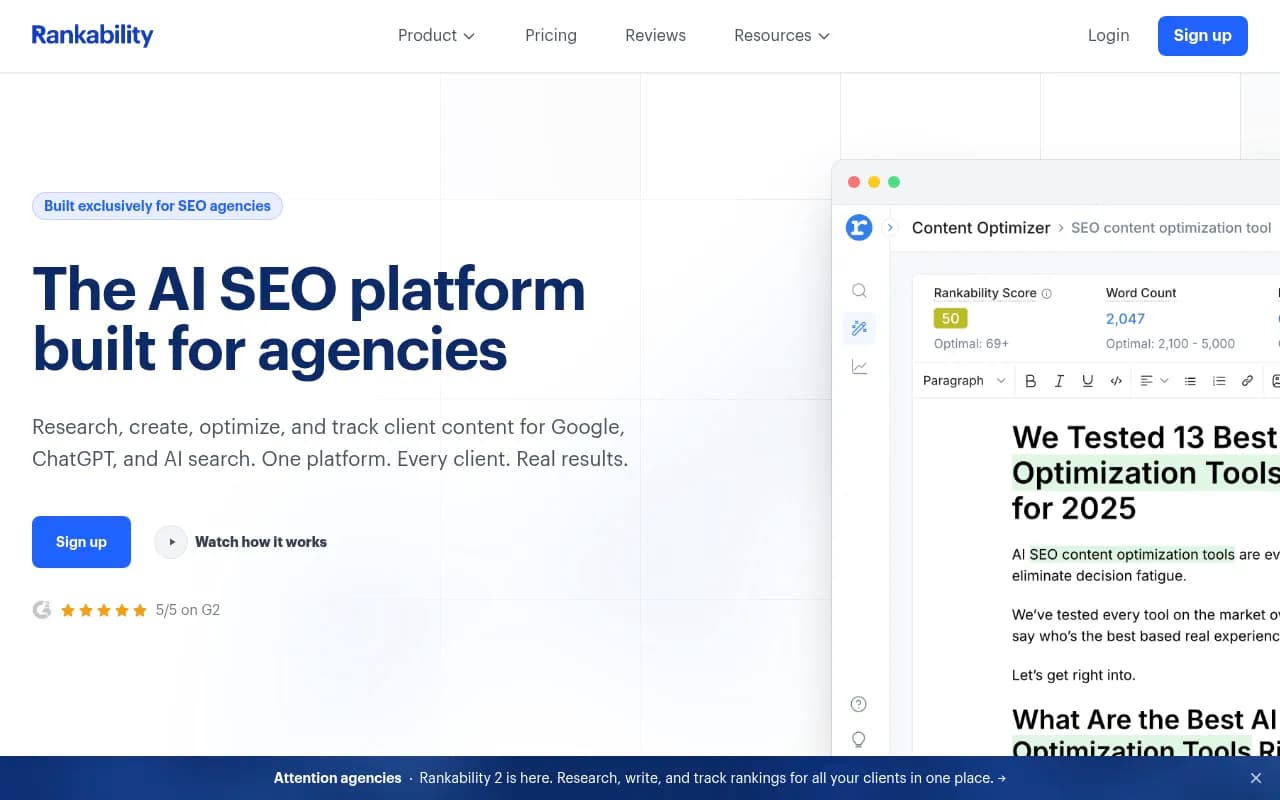
For agencies: Rankability combines AI visibility with classic rank tracking and white-label reporting. If you're managing multiple clients and need to present AI visibility data alongside traditional SEO metrics, it's a practical choice.
For Reddit/social citation tracking: Most platforms ignore Reddit entirely, even though Reddit threads frequently appear as cited sources in AI responses. Platforms that surface this data give you a channel most competitors aren't watching.
For ChatGPT Shopping: If you sell products, ChatGPT's shopping carousels are a new visibility surface that almost no tools track. This is an area where Promptwatch has a specific feature that others lack.
For crawler monitoring specifically: DarkVisitors is a lightweight tool focused specifically on tracking AI bots visiting your site. Not a full visibility platform, but useful as a complement.
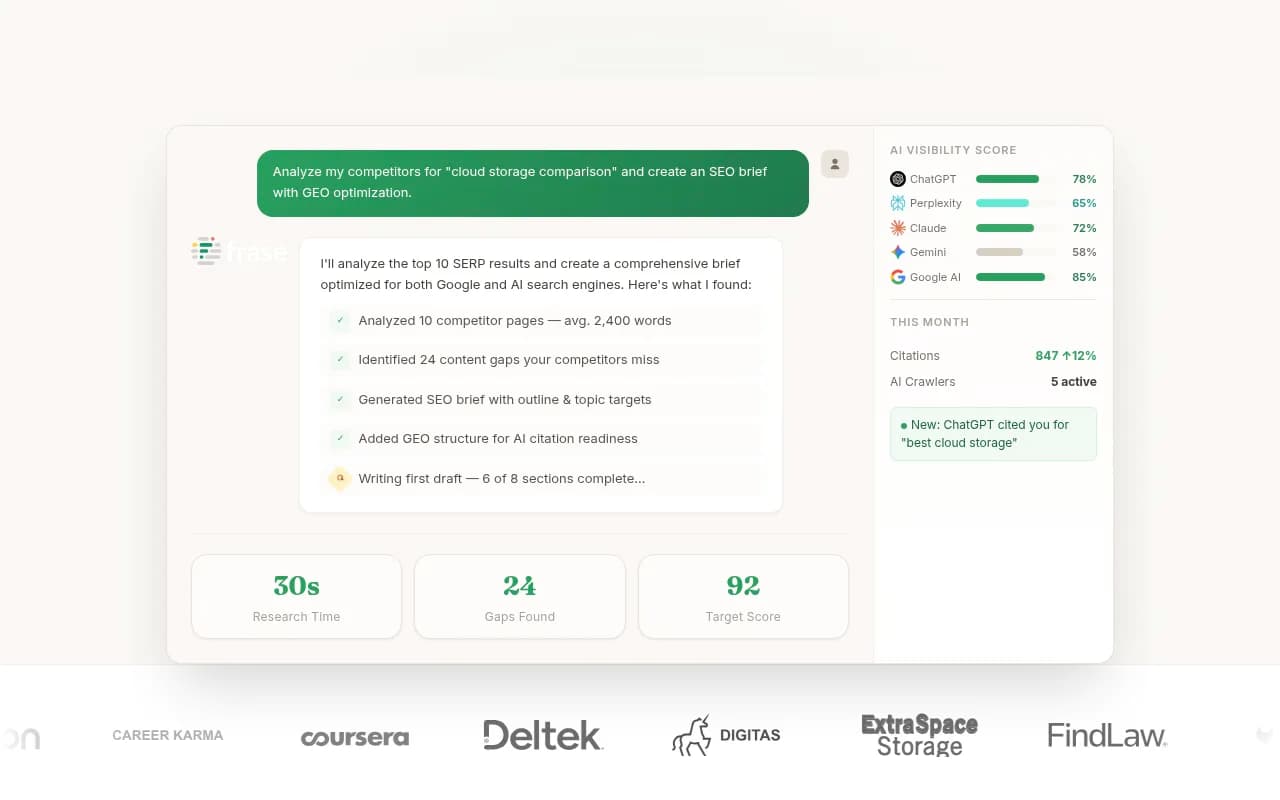
For AI-native content creation: If your primary need is generating content that gets cited by AI models (rather than tracking visibility), tools like Frase and Clearscope can help with content optimization, though they're not purpose-built for AI citation.
A practical decision framework
Before you sign up for anything, answer these four questions:
What's your primary goal right now? If you just need to know your baseline visibility to report to leadership, a monitoring tool is fine. If you want to actually improve your rankings, you need an optimization platform.
How many AI models matter to your audience? If your customers are heavy Perplexity users, you need a tool that tracks Perplexity well. If you're in a market where Google AI Overviews dominate, prioritize that. Don't pay for 10-model coverage if you only care about two.
Do you have content resources? Gap analysis is only valuable if you can act on it. If you have writers or a content team, a platform with gap analysis and content guidance will compound over time. If you don't, look for tools with built-in content generation.
What does "success" look like in your reporting? If you need to show revenue impact, you need a tool with traffic attribution. If visibility scores are enough for your stakeholders, you have more flexibility.
The content piece most teams underestimate
Here's something that doesn't get said enough: the biggest lever for improving AI visibility isn't your tool -- it's your content.
AI models cite sources because those sources answer questions well. If your website doesn't have a page that clearly answers a question your customers are asking AI models, no amount of monitoring will fix that. The tool's job is to tell you which questions those are and help you create the answers.
This is why the gap between monitoring and optimization matters so much. A monitoring tool tells you the score. An optimization platform tells you how to change it.
The teams seeing real improvement in AI visibility in 2026 are the ones treating it like a content strategy problem, not a technical SEO problem. They're identifying high-value prompts, creating content specifically designed to answer those prompts, and tracking whether AI models start citing that content. That cycle -- find gaps, create content, track results -- is what actually moves the needle.
The right tool makes that cycle faster and more informed. But the cycle has to exist first.
Bottom line
The AI visibility tool market is maturing fast, but it's still full of products that are essentially dashboards with a GEO label on them. That's not a criticism -- dashboards have value. But if you're evaluating tools with the goal of actually improving how often AI models recommend your brand, you need to look past the visibility scores and ask: what does this tool help me do?
The platforms that answer that question clearly -- with content gap analysis, AI-native content generation, crawler log access, and closed-loop attribution -- are the ones worth the investment. The ones that stop at "here's your score" are a starting point, not a destination.