Key takeaways
- Most AEO tools on the market in 2026 are monitoring-only dashboards: they show you citation data but don't help you act on it.
- The real cost of monitoring-only tools is the stack you have to bolt on top -- a separate content tool, a separate audit tool, a separate publishing workflow.
- Full optimization platforms close the loop: find gaps, generate content engineered for AI citation, track results, and attribute traffic to revenue.
- The distinction matters more now because AI search has decoupled from Google rankings. A page can rank #1 on Google and never appear in a ChatGPT or Perplexity response.
- When evaluating any AEO platform, ask one question: after it shows me the problem, what does it actually help me do about it?
The monitoring trap most teams fall into
There's a pattern playing out across marketing teams right now. Someone gets budget approved for an AEO tool. They sign up, connect their domain, set up a prompt list, and within a few days they have a dashboard full of data. Citation share by AI engine. Competitor visibility scores. Which prompts they're missing.
Then they sit there staring at it.
The data is real. The problem is clear. But the tool has done its job -- it's shown you the gap -- and now you're on your own. You need to figure out which pages to update, what angle to take, how to structure the content so Claude or Perplexity will actually cite it, and then you need to write it, publish it, and wait to see if the needle moves.
That's not a small lift. For most teams, it means pulling in a content strategist, a writer, and an SEO. It means three tools instead of one. And by the time the content goes live, you've lost weeks.
This is the monitoring trap. And in 2026, with AI search eating into organic traffic faster than most brands expected, it's an expensive place to be stuck.
Why AI search made this problem worse
Two years ago, ranking on Google was a reasonable proxy for being found. Not perfect, but close enough. AI search broke that assumption.
Ahrefs published research in 2025 showing that only 12% of URLs cited by ChatGPT, Gemini, and Copilot also rank in Google's top 10 for the same prompt. The two surfaces have genuinely decoupled. You can have a page sitting at position one on Google and it might never appear in a Perplexity or ChatGPT response. The inverse is also true -- pages that don't rank well on Google are getting cited regularly by AI engines because they're structured in a way that makes them easy to extract and quote.
This means traditional SEO metrics no longer tell the full story. And it means the gap between "knowing you have an AI visibility problem" and "fixing it" is now a gap that directly affects revenue, not just rankings.
The teams that are winning in AI search right now aren't the ones with the best monitoring dashboards. They're the ones who figured out how to move from insight to published content faster than their competitors.
What monitoring-only tools actually give you
To be fair, monitoring is genuinely useful. Before you can fix anything, you need to know what's broken. The core value of a monitoring tool is:
- Tracking which AI engines mention your brand and how often
- Showing which competitor prompts you're absent from
- Measuring citation share over time so you can see if things are improving or declining
- Alerting you when your visibility drops
Tools like Otterly.AI and Peec.ai do this reasonably well at accessible price points.


The problem isn't that monitoring is worthless. The problem is that monitoring alone is incomplete. As one practitioner put it in a Reddit thread comparing AEO tools: "monitoring-only tools are nice but they do not close the loop." That's exactly right. The loop -- find the gap, create content that fills it, confirm the fix worked -- requires more than a dashboard.
A monitoring-only tool hands you a list of problems. What you do with that list is entirely up to you.
The hidden cost of the "monitoring + bolt-ons" stack
Here's what the real workflow looks like when you're using a monitoring-only tool:
- The tool shows you a prompt where a competitor is cited and you're not.
- You export the data and try to figure out which page on your site should be covering that topic.
- You use a separate content research tool to understand what angle the AI engines seem to prefer.
- You brief a writer or use a separate AI writing tool to create the content.
- You publish it, then manually re-run your monitoring tool a few weeks later to see if anything changed.
- You try to connect the citation data to actual traffic, which requires yet another integration.
Every handoff in that chain is a place where things slow down, get lost, or don't happen at all. As Scrunch noted in their 2026 platform analysis: "A tool that only monitors means you still need something else to decipher and act on the data -- which creates complexity, cost, and gaps that compound at scale."
The bolt-on stack also gets expensive fast. A monitoring tool at $150/month, a content tool at $100/month, and an SEO audit tool at $100/month adds up to $350/month for a workflow that still requires significant manual coordination. A full optimization platform at a similar or slightly higher price point can replace all three and actually move faster.
What a full optimization platform looks like
The distinction between a monitoring tool and an optimization platform comes down to one question: does it help you fix the problem, or just identify it?
A full optimization platform does at minimum three things:
Gap analysis that points to specific content. Not just "you're missing this prompt" but "here's what your site is missing -- the specific topics, angles, and questions AI models want to answer but can't find on your pages." That's actionable. A raw visibility score is not.
Content creation grounded in citation data. Generic AI-written content doesn't get cited. Content that's engineered based on what AI engines actually pull from -- the structure, the specificity, the sourcing -- has a much better chance. The best platforms analyze citation patterns at scale and use that to inform what they generate.
Closed-loop tracking. After you publish, you need to know if it worked. Which pages are being cited, by which models, how often -- and ideally, how that citation activity connects to actual traffic and revenue. Without this, you're flying blind on whether your optimization efforts are paying off.
Promptwatch is one of the clearest examples of this full-loop approach. It tracks visibility across 10 AI engines, runs answer gap analysis to surface specific content opportunities, has a built-in AI writing agent that generates content grounded in 880M+ citations analyzed, and closes the loop with page-level tracking and traffic attribution.

Frase takes a similar approach from a content-first angle, combining citation tracking with autonomous content fixes that can republish directly to CMS platforms.
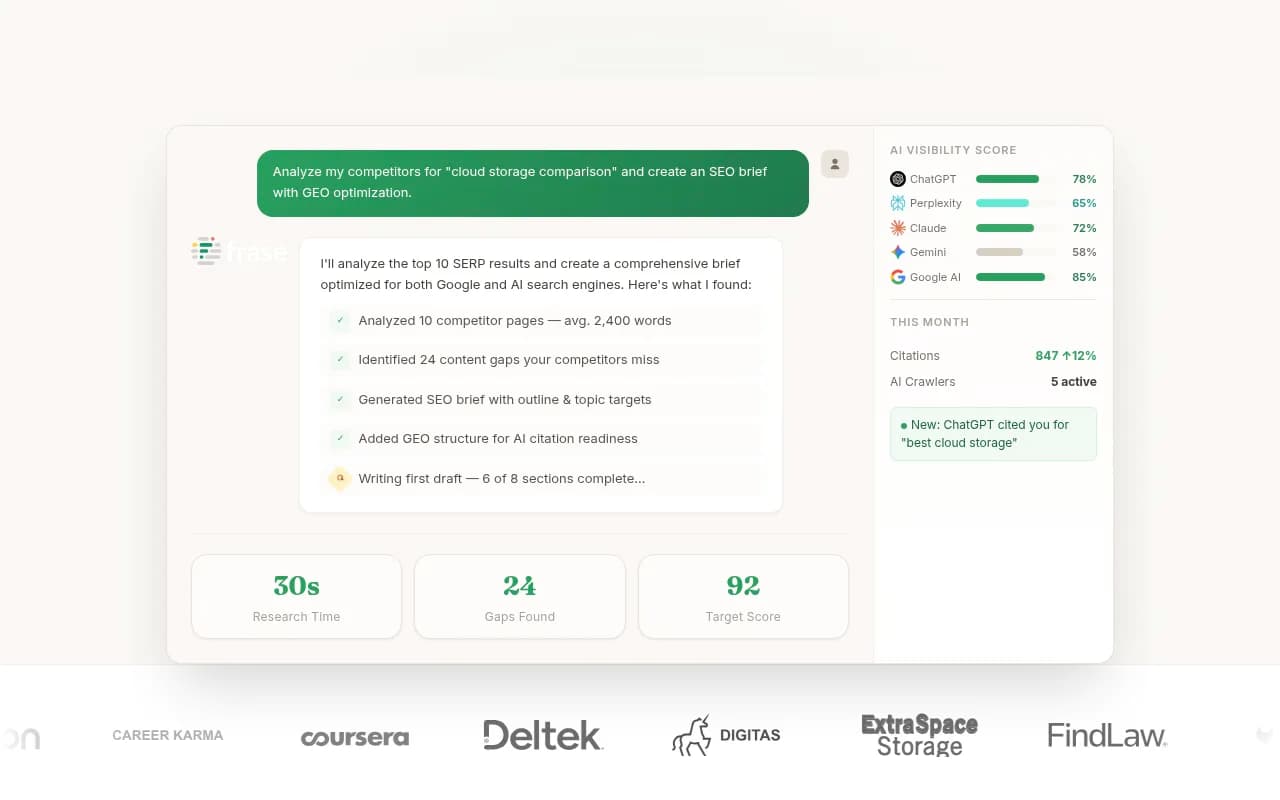
AthenaHQ sits somewhere in between -- strong monitoring across multiple AI engines, but lighter on the content generation and optimization side.

Comparing the categories
Here's an honest breakdown of where the major tools sit in 2026:
| Tool | Monitoring | Gap analysis | Content generation | Traffic attribution | AI crawler logs |
|---|---|---|---|---|---|
| Promptwatch | Yes (10 engines) | Yes | Yes (AI writing agent) | Yes | Yes |
| Frase | Yes | Yes | Yes (autonomous fixes) | Partial | No |
| AthenaHQ | Yes (8+ engines) | Partial | No | No | No |
| Otterly.AI | Yes | Basic | No | No | No |
| Peec.ai | Yes (multi-language) | Basic | No | No | No |
| Profound | Yes | Yes | No | Partial | No |
| Scrunch | Yes | Yes | No | No | No |
| Semrush | Yes (limited) | No | Partial (via ContentShake) | Partial | No |
| Ahrefs Brand Radar | Yes (limited) | No | No | No | No |
A few things stand out from this table. First, most tools stop at monitoring or basic gap analysis. Second, content generation is rare -- and the tools that do offer it vary significantly in how grounded that generation is in actual citation data. Third, traffic attribution (connecting AI visibility to actual revenue) is almost entirely absent from the monitoring-only category.
The tools worth knowing in each category
Monitoring-first tools
If you're early in your AEO journey and just need to understand where you stand, these tools are reasonable starting points.
Otterly.AI is accessible and easy to set up. Good for getting a baseline read on citation share without a lot of configuration.
Peec.ai is worth considering if you operate in multiple languages or regions -- it has solid multi-language support that many tools lack.
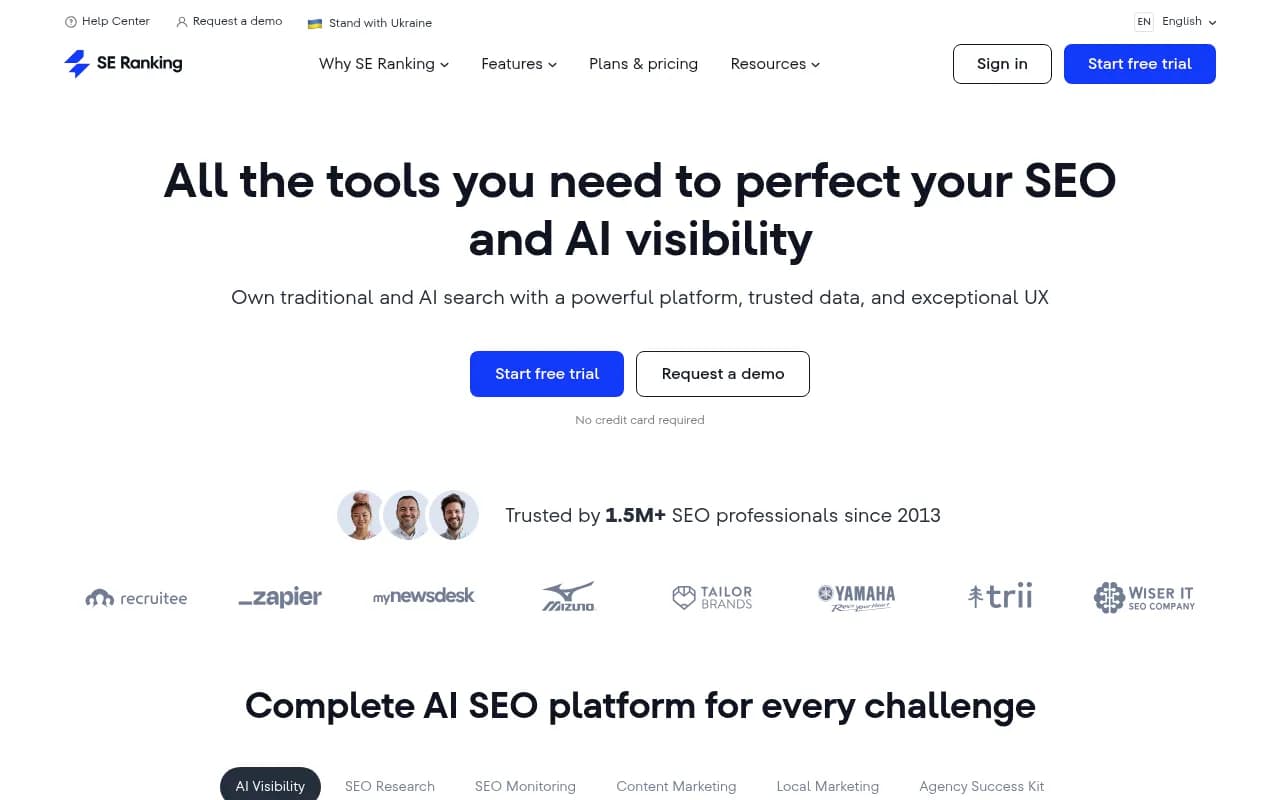
SE Ranking has added AI visibility tracking to its existing SEO suite, which makes it convenient if you're already using it for traditional SEO.
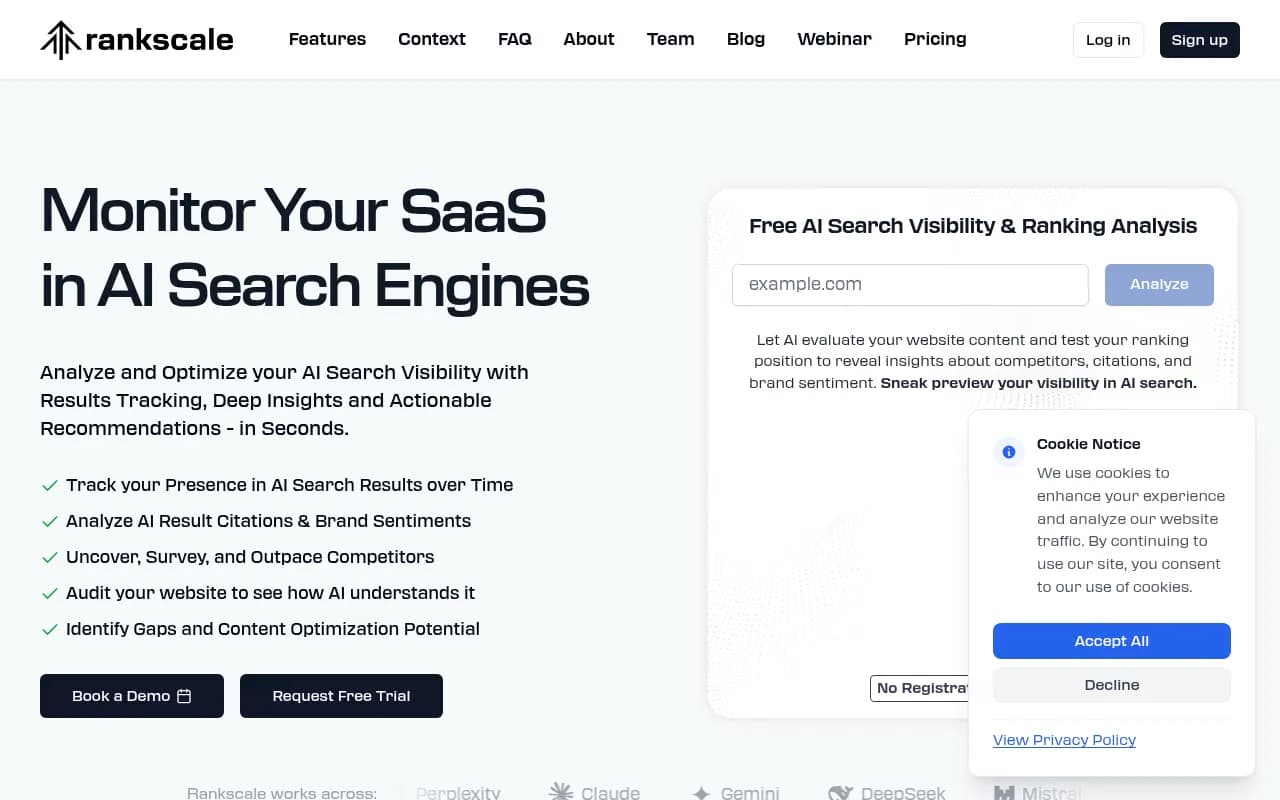
Rankscale focuses on AI search ranking specifically and is a clean, focused tool if you want prompt-level visibility data without a lot of noise.
Tools with stronger optimization capabilities
Profound has better gap analysis than most monitoring tools and some attribution features, though it stops short of content generation.

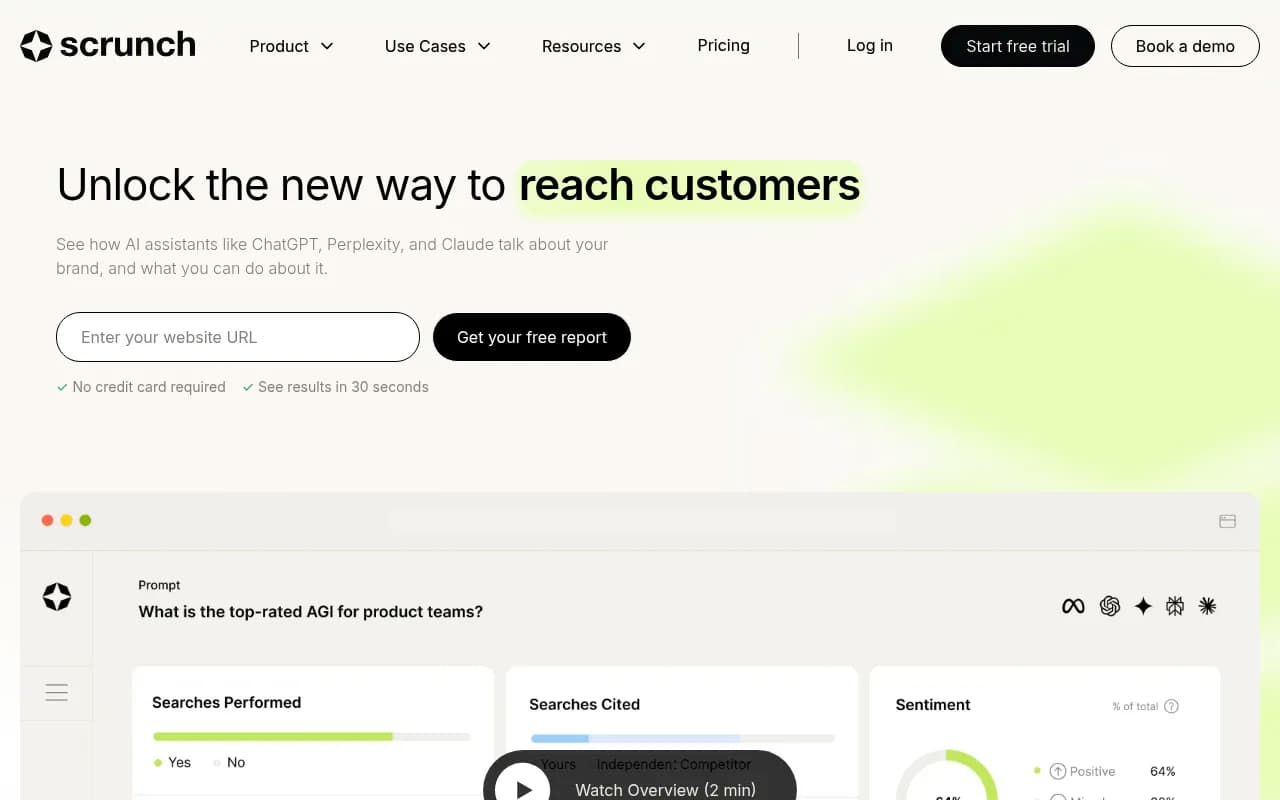
Scrunch has a solid enterprise-focused platform with good gap analysis, though it's primarily a monitoring and insight tool rather than a content creation one.
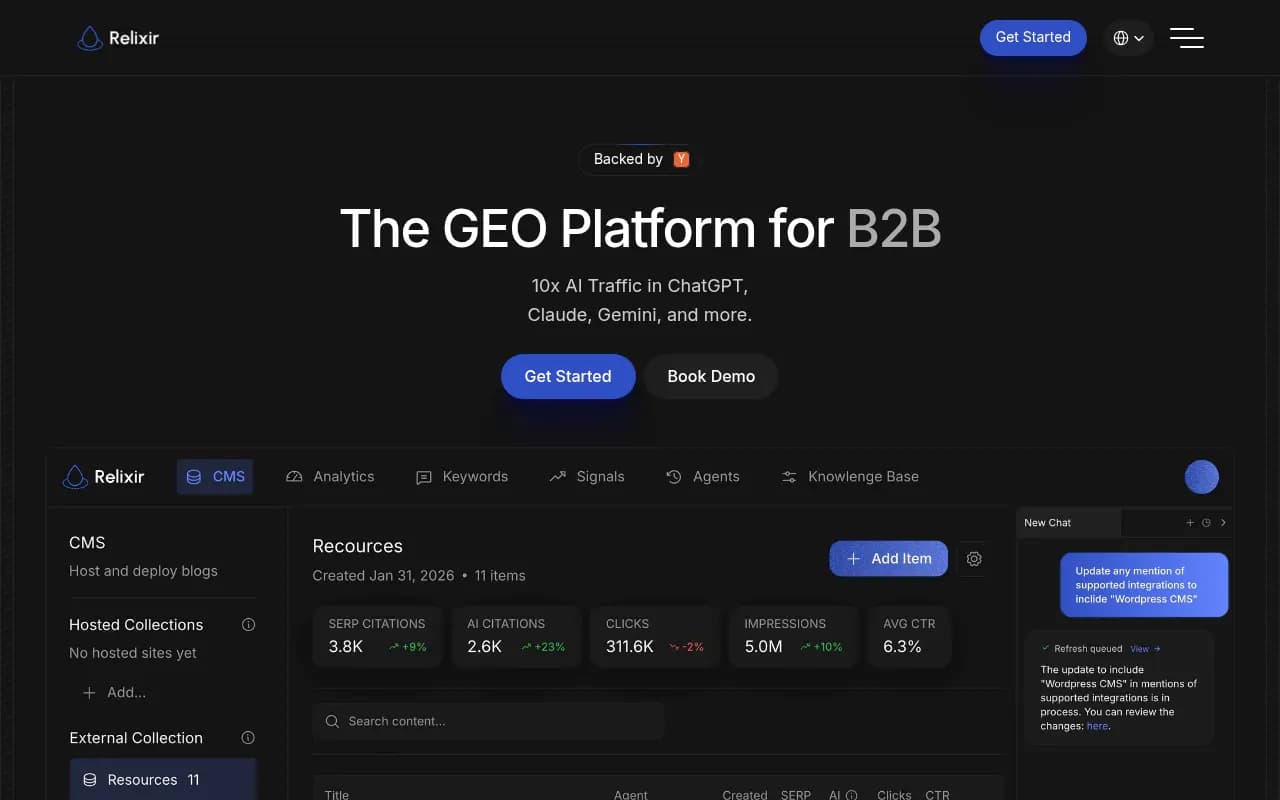
Relixir takes an interesting approach with an AI-native CMS and autonomous content generation specifically designed for GEO.
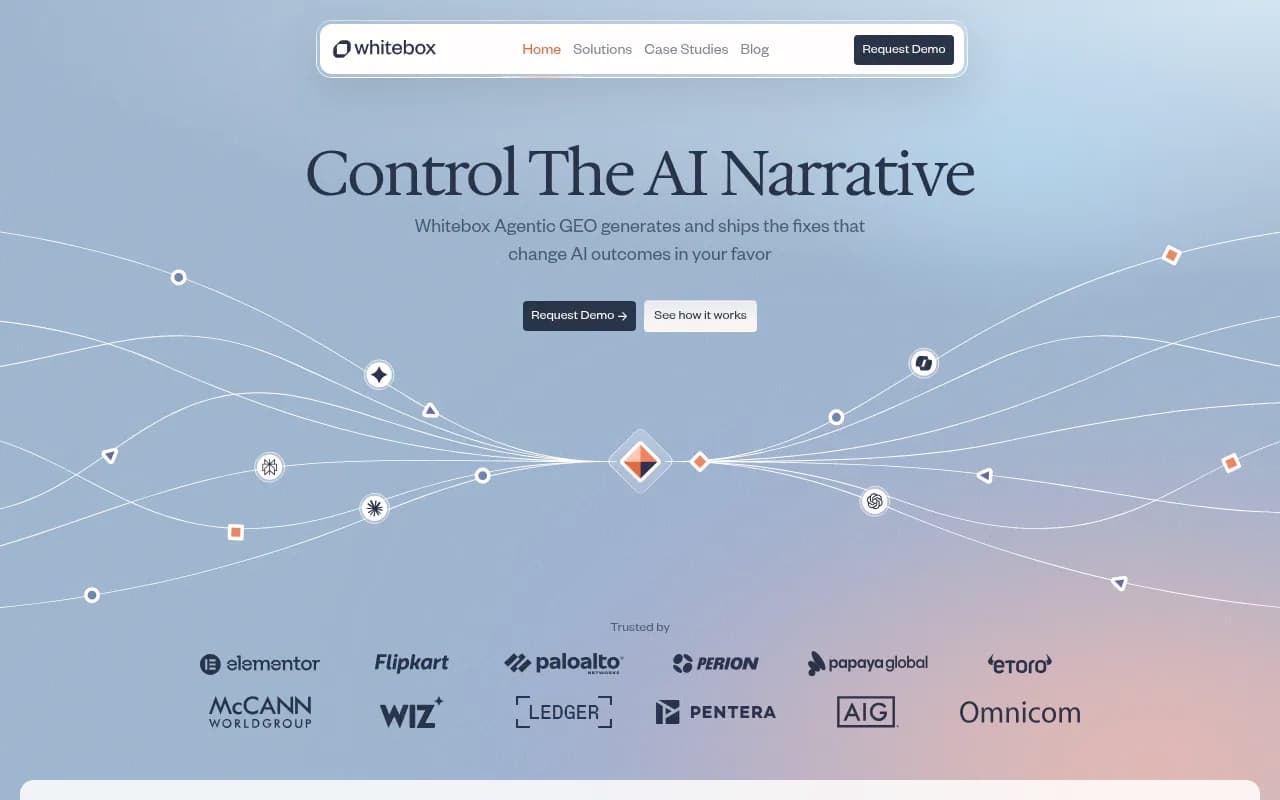
Whitebox is worth watching -- it's positioning itself as an agentic GEO platform that generates and ships AI narrative fixes automatically, which is closer to the full-loop model.
Full-loop platforms
Promptwatch and Frase are the clearest examples of platforms that try to close the entire loop. Both have meaningful content generation capabilities grounded in citation data, both track results at the page level, and both offer some form of traffic attribution.
The difference is emphasis: Frase comes from a content optimization background and has strong CMS integration for publishing fixes. Promptwatch comes from an AI visibility tracking background and has deeper monitoring infrastructure -- crawler logs, Reddit and YouTube citation tracking, ChatGPT Shopping monitoring, and prompt volume/difficulty scoring that helps you prioritize which gaps are actually worth filling.
How to evaluate any AEO tool in 2026
The AEO tool market is crowded and moving fast. New tools launch every few weeks. Here's a simple framework for cutting through the noise:
Ask what happens after the gap is identified. If the answer is "you get a report," that's a monitoring tool. If the answer is "you get content recommendations or generated drafts," that's moving toward optimization.
Check how many AI engines it actually monitors. Some tools claim broad coverage but only actively track two or three engines. In 2026, you need at minimum ChatGPT, Perplexity, Google AI Overviews, Claude, and Gemini. Ideally more.
Look for prompt-level data, not just brand mentions. Knowing your brand is mentioned is less useful than knowing which specific prompts you're winning or losing, and why. Volume estimates and difficulty scores for each prompt let you prioritize intelligently.
Ask about traffic attribution. Citation share is a vanity metric if you can't connect it to actual traffic. The best platforms offer at least one method of connecting AI visibility to site traffic -- whether that's a code snippet, a GSC integration, or server log analysis.
Check if it tracks AI crawlers. This is underrated. Knowing when ChatGPT or Perplexity's crawler is hitting your site, which pages it reads, and whether it's encountering errors tells you a lot about how AI engines are discovering (or failing to discover) your content. Most monitoring tools don't offer this at all.
The practical decision
If you're a small team or solo operator just getting started with AEO, a monitoring tool is a reasonable first step. Understanding your current citation share and identifying the biggest gaps is genuinely useful, even if the tool doesn't help you fix them.
But if you're running a marketing team or agency with real traffic goals, the monitoring-only approach has a ceiling. You'll hit it faster than you expect. The teams that are compounding their AI visibility right now are the ones who found a way to move from insight to published content quickly and consistently -- and they're not doing that with a dashboard and a prayer.
The gap between monitoring and optimization isn't a feature gap. It's a workflow gap. And in a search environment that's shifting as fast as this one, the workflow gap is where traffic is won or lost.
Tools like Promptwatch exist specifically to close that gap -- not just to show you where you're invisible, but to help you do something about it.