Key takeaways
- Google SEO and AI search visibility are now two separate jobs -- your stack needs to cover both
- A 70/30 budget split (core SEO vs. AI visibility) is a reasonable starting point for most teams in 2026
- The four workflow stages are: intent mapping, content creation, AI visibility optimization, and tracking
- Most traditional SEO tools (Ahrefs, Semrush, Moz) still handle Google well but bolt on AI tracking as an afterthought
- Dedicated AI visibility platforms go deeper on citation tracking, content gap analysis, and LLM-specific optimization
- You don't need every tool -- pick one strong foundation for Google, one for AI visibility, and connect them with a simple workflow
There's a moment most SEO practitioners hit sometime in the last year or two: you check your rankings, everything looks fine, then you open ChatGPT and ask the same question your customers are asking -- and your brand doesn't exist. Not buried. Not ranking fifth. Just absent.
That gap is the whole problem with how most teams still think about SEO in 2026. The Google side of the stack is well-understood. The AI side is newer, messier, and genuinely different in ways that matter. Building a stack that covers both isn't about doubling your tool budget -- it's about understanding what each channel actually needs and being deliberate about where you spend.
This guide walks through the full picture: what belongs in a modern SEO stack, how to structure your workflow across both channels, and how to allocate budget without wasting money on tools that overlap or underdeliver.
Why you need two separate mental models
Traditional SEO and AI search visibility look similar on the surface -- both involve content, both involve ranking -- but they work differently enough that treating them as one thing creates blind spots.
Google's algorithm ranks pages. It cares about backlinks, technical health, on-page signals, and user behavior. You can measure your position precisely, track it daily, and tie changes to specific actions.
AI search engines don't rank pages. They synthesize answers and cite sources. Whether your brand gets mentioned depends on whether AI models have encountered your content, whether it's structured in a way they can parse, and whether it directly answers the questions users are asking. Ahrefs measured a 58% drop in clicks for top-ranking pages when Google AI Overviews appear -- which means even a #1 ranking doesn't guarantee traffic if the AI answer satisfies the query without a click.
The implication: you need to optimize for two different systems simultaneously. Your stack should reflect that.
The four workflow stages
Before picking tools, map the workflow. Most teams that struggle with this aren't missing a tool -- they're missing a process. Here's a four-stage framework that works for both channels.
Stage 1: Intent mapping and keyword architecture
This is where everything starts. You need to understand what your audience is searching for on Google and what they're asking AI engines. These overlap but aren't identical.
On the Google side, this means keyword research, search volume, intent classification, and topic clustering. On the AI side, it means understanding which prompts are driving AI-generated answers in your category, which competitors are getting cited, and what content gaps exist on your site.
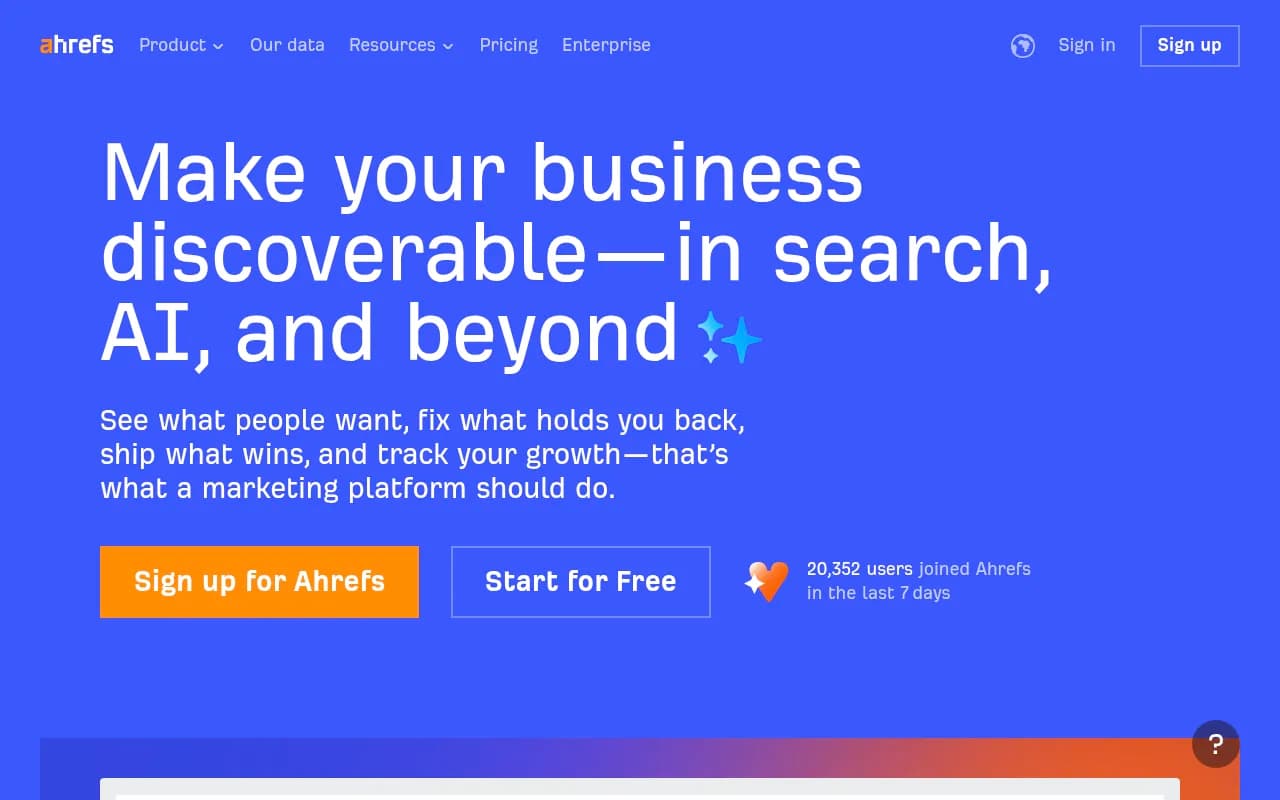
Tools like Semrush and Ahrefs handle the Google side well. Semrush's keyword database covers 27 billion keywords with intent classification based on actual SERP behavior. Ahrefs has 110 billion keywords and the strongest backlink dataset in the industry. Either one works as a foundation.
For the AI side of intent mapping, you need prompt-level data -- which specific questions are being asked in ChatGPT, Perplexity, and Gemini, and how often. This is where dedicated AI visibility platforms earn their place. Promptwatch tracks prompt volumes and difficulty scores across 10 AI models, and its Answer Gap Analysis shows exactly which prompts competitors are visible for that you're not. That's the kind of data that tells you where to invest content effort.

Stage 2: Content creation and optimization
Once you know what to write, you need to write it well -- for both Google and AI engines. The good news is that content that ranks in Google (well-structured, authoritative, specific, genuinely useful) also tends to get cited by AI models. The bad news is that "good enough" content doesn't cut it for either channel anymore.
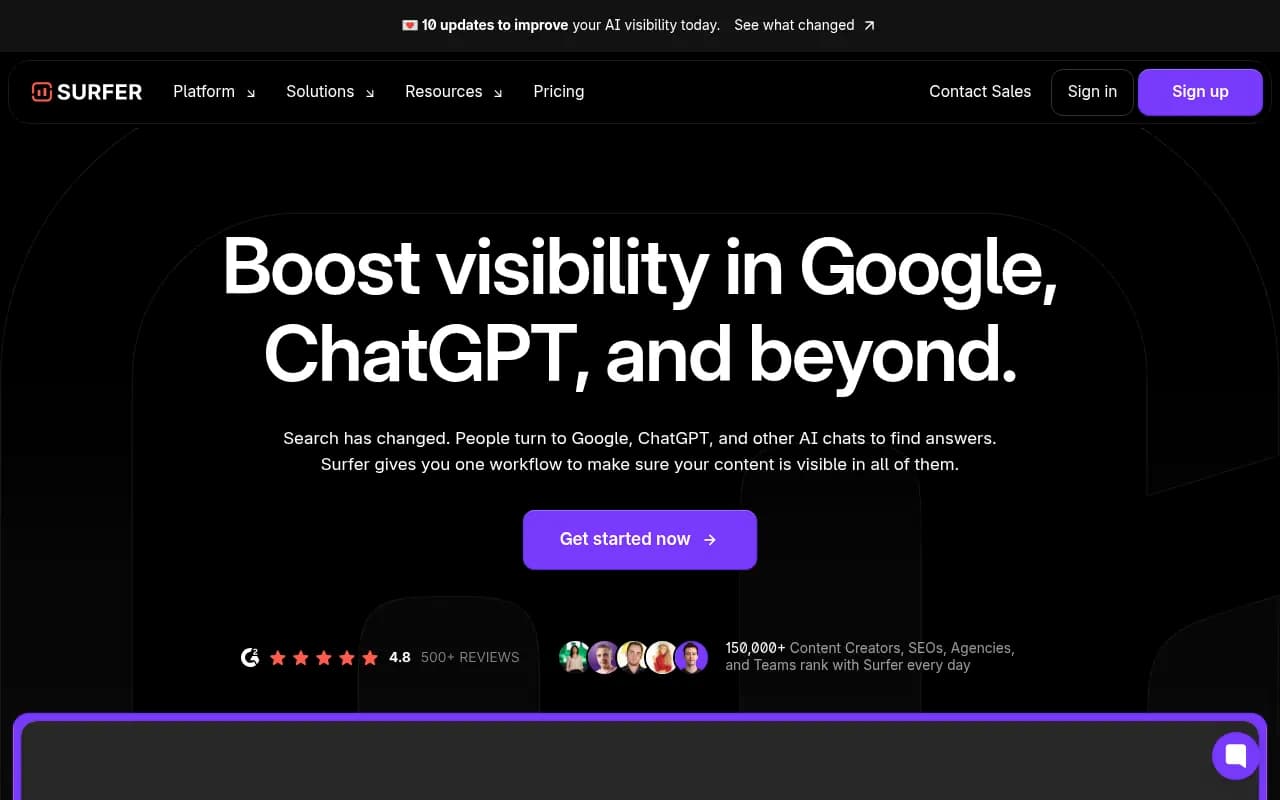
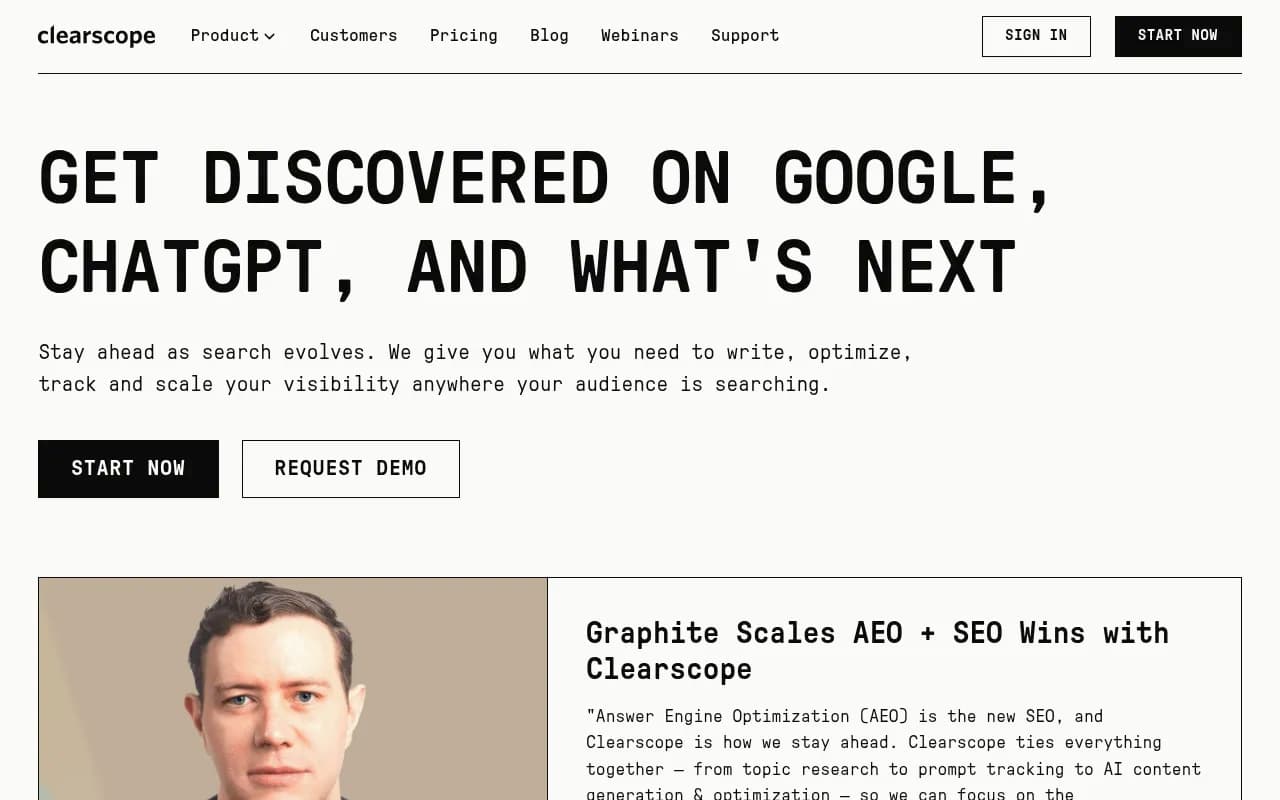
For Google-focused content optimization, Surfer SEO and Clearscope are the two most-used tools. Both analyze top-ranking pages and give you semantic signals to hit -- related terms, heading structures, content depth. Surfer integrates directly with Google Docs and WordPress. Clearscope is cleaner and easier to onboard new writers to.
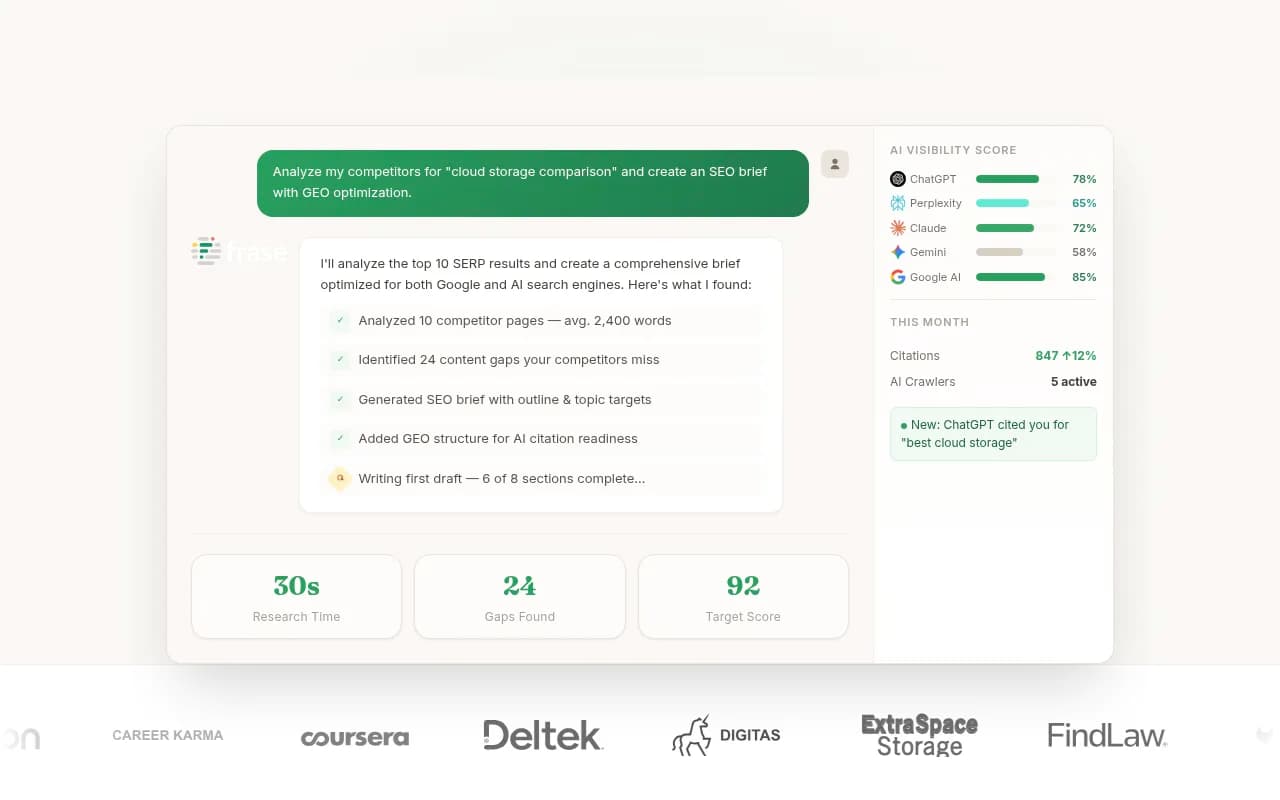
For AI-optimized content, the requirements are slightly different. AI models prefer content that directly answers questions, uses clear definitions, cites sources, and is structured so a language model can extract a clean answer. Content briefs built from real prompt data -- rather than just keyword data -- produce better results here. Frase does a decent job of bridging both worlds, generating briefs grounded in search results and question data.
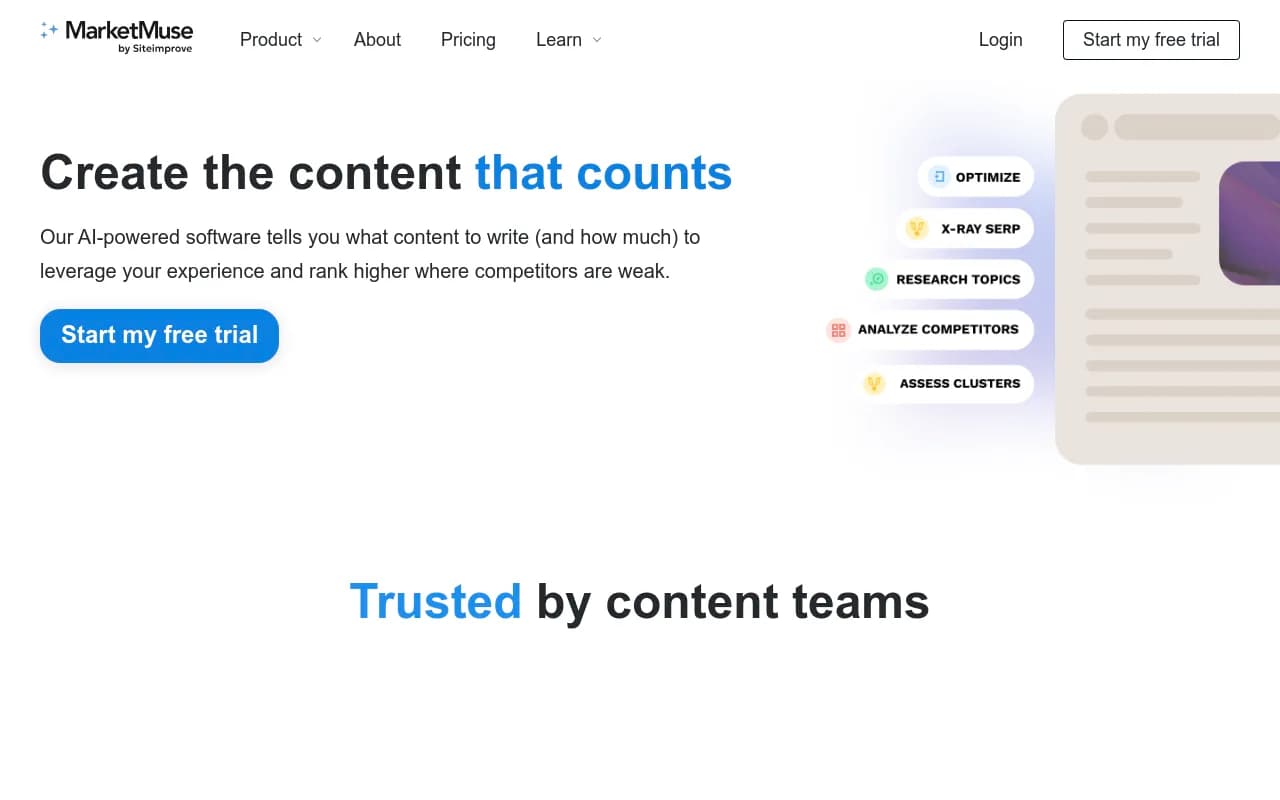
MarketMuse is worth mentioning for teams that need content planning at scale -- it maps your existing content against topic coverage and surfaces gaps.
Stage 3: AI visibility optimization (GEO)
This is the stage most teams skip, and it's where the biggest opportunity sits right now. Generative Engine Optimization (GEO) means actively improving how AI models perceive and cite your brand -- not just publishing content and hoping for the best.
The core activities here are:
- Identifying which prompts you're missing from (Answer Gap Analysis)
- Auditing which pages AI crawlers are actually reading and citing
- Understanding which external sources (Reddit threads, YouTube videos, third-party listicles) are influencing AI recommendations about your category
- Creating or updating content to fill the gaps
Most traditional SEO tools don't touch this. A few have bolted on basic AI monitoring, but monitoring isn't optimization. The distinction matters: knowing you're invisible is step one, but you need to know why and what to do about it.
Promptwatch is the platform that goes furthest here -- it combines crawler log analysis (showing which pages AI bots actually visit and when they move from crawl to citation), offsite citation tracking, and content generation agents that produce articles grounded in real prompt data. It's not the only option, but it's the one that closes the loop from "here's the gap" to "here's the content that fills it."
Other tools worth knowing in this space:
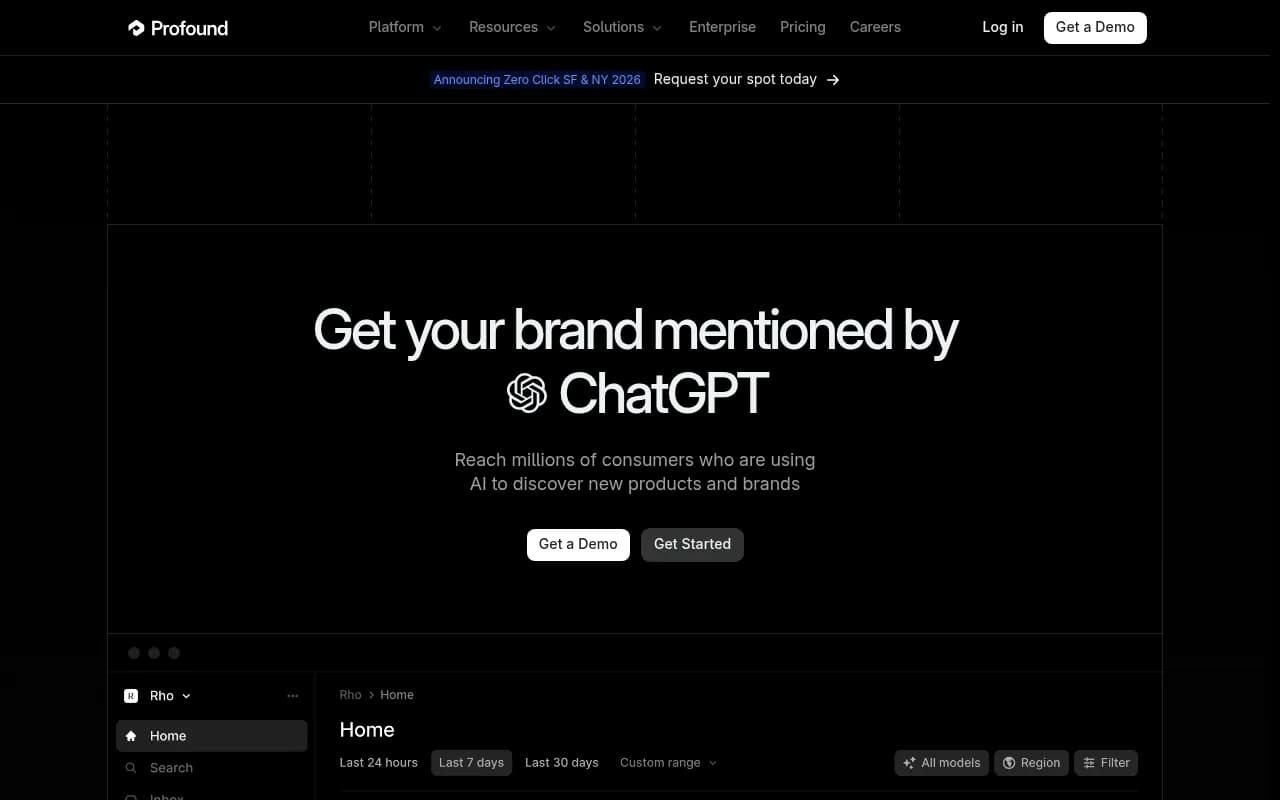
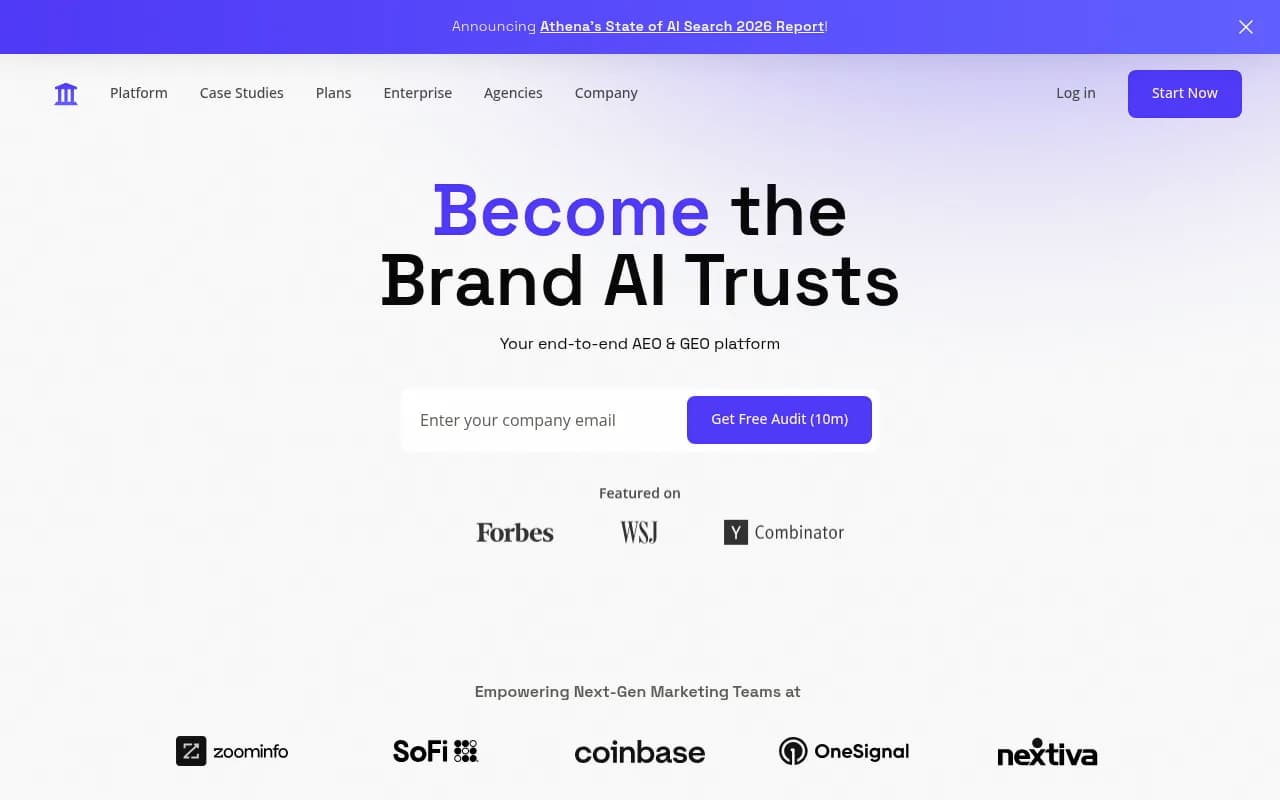


Profound and AthenaHQ have strong monitoring capabilities. Otterly.AI and Peec.ai are more affordable entry points for teams just starting to track AI visibility. None of them go as deep on content generation and optimization as Promptwatch does, but they're legitimate options depending on your budget and needs.
Stage 4: Tracking and attribution
The final stage is measuring what's working. This is harder for AI search than for Google, because AI engines don't pass referral data the way traditional search does. You can't just look at Google Analytics and see "traffic from ChatGPT."
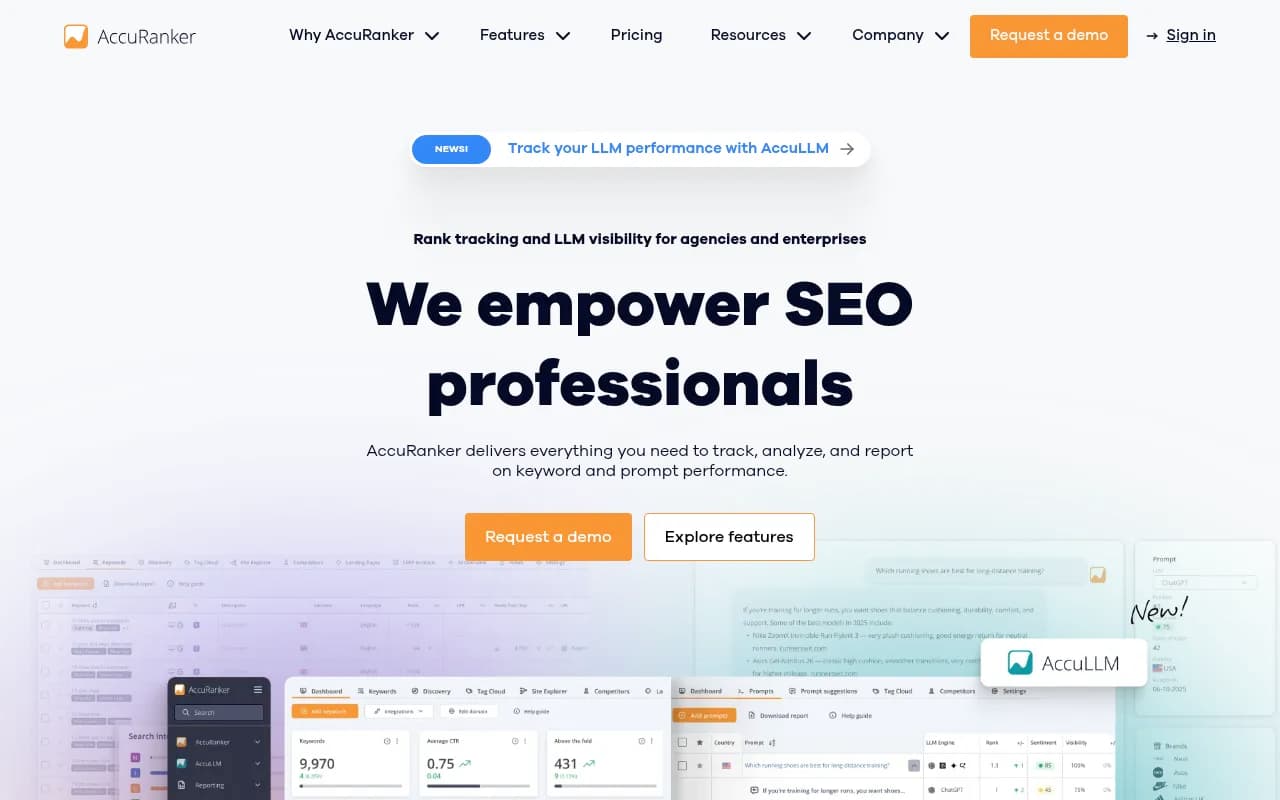
On the Google side, tracking is mature. Google Search Console gives you impression and click data. Rank trackers like AccuRanker or SE Ranking give you daily position data. Attribution tools like HubSpot connect traffic to revenue.
For AI visibility tracking, you need tools that monitor citation frequency across models, track which pages are being cited and by which AI engines, and ideally connect that visibility to actual traffic. This is an area where the market is still developing, but the better platforms now offer page-level citation tracking and traffic attribution.
DarkVisitors is useful for understanding which AI crawlers are hitting your site. LLM Clicks tracks citation-driven traffic. Together they give you a clearer picture of the AI search funnel.
Budget allocation: the 70/30 framework

A practical starting point for most teams in 2026 is allocating roughly 70% of your SEO budget to core Google SEO and 30% to AI visibility. The exact split depends on your industry, audience behavior, and how much of your traffic is already showing signs of AI search impact.
Here's what that looks like at different budget levels:
| Monthly budget | Core SEO tools | AI visibility tools | Content production |
|---|---|---|---|
| $500/mo | Semrush ($140) or Ahrefs ($130) | Otterly.AI or Peec.ai ($50-80) | Remaining for content |
| $1,500/mo | Semrush Pro ($140) + Surfer SEO ($99) | Promptwatch Essential ($99) + SE Ranking ($65) | ~$1,000 for content |
| $3,000/mo | Semrush Guru ($250) + Clearscope ($170) | Promptwatch Professional ($249) + AccuRanker ($116) | ~$2,200 for content |
| $6,000+/mo | Enterprise SEO platform | Promptwatch Business ($579) or custom | Dedicated content team |
A few things to note about this framework:
Content production is the biggest line item at every budget level. Tools don't rank -- content does. Spending $500/month on tools and $0 on content is a common mistake.
You don't need both Semrush and Ahrefs. They overlap significantly. Pick one as your primary platform and use the other's free tier for spot checks if needed.
AI visibility tools are cheaper than most people expect. You can get meaningful tracking for under $100/month. The question isn't whether you can afford it -- it's whether you're prioritizing it.
Comparing the major tool categories
| Category | Best options | Price range | AI search coverage |
|---|---|---|---|
| All-in-one SEO (Google) | Semrush, Ahrefs, Moz Pro | $100-$500/mo | Basic to moderate |
| Content optimization | Surfer SEO, Clearscope, Frase | $50-$200/mo | Limited |
| AI visibility (monitoring) | Otterly.AI, Peec.ai, AthenaHQ | $50-$300/mo | Strong monitoring |
| AI visibility (optimization) | Promptwatch, Profound | $99-$600+/mo | Monitoring + content action |
| Technical SEO | Screaming Frog, Sitebulb, Botify | $20-$500+/mo | None |
| Rank tracking | AccuRanker, SE Ranking, Nightwatch | $50-$200/mo | Growing |
| Attribution | HubSpot, LLM Clicks, DarkVisitors | Free-$200/mo | Emerging |
What a realistic stack looks like
Rather than listing every possible tool, here are three concrete stack configurations based on team size and budget.
Solo practitioner or small business ($300-500/month)
- Ahrefs Lite or Semrush Pro for keyword research and rank tracking
- Surfer SEO for content optimization
- Otterly.AI or Promptwatch Essential for AI visibility monitoring
- Google Search Console (free) for Google-side performance data
This covers the basics without overlap. You're tracking both channels and optimizing content for both.
Mid-size marketing team ($1,500-3,000/month)
- Semrush Guru for keyword research, competitor analysis, and site audits
- Clearscope for content optimization and writer workflow
- Promptwatch Professional for AI visibility tracking, crawler logs, and content gap analysis
- AccuRanker for daily rank tracking
- Screaming Frog for technical audits (annual license, ~$230/year)
At this level, you have proper coverage of both channels and enough data to run a structured optimization workflow.
Agency or enterprise ($5,000+/month)
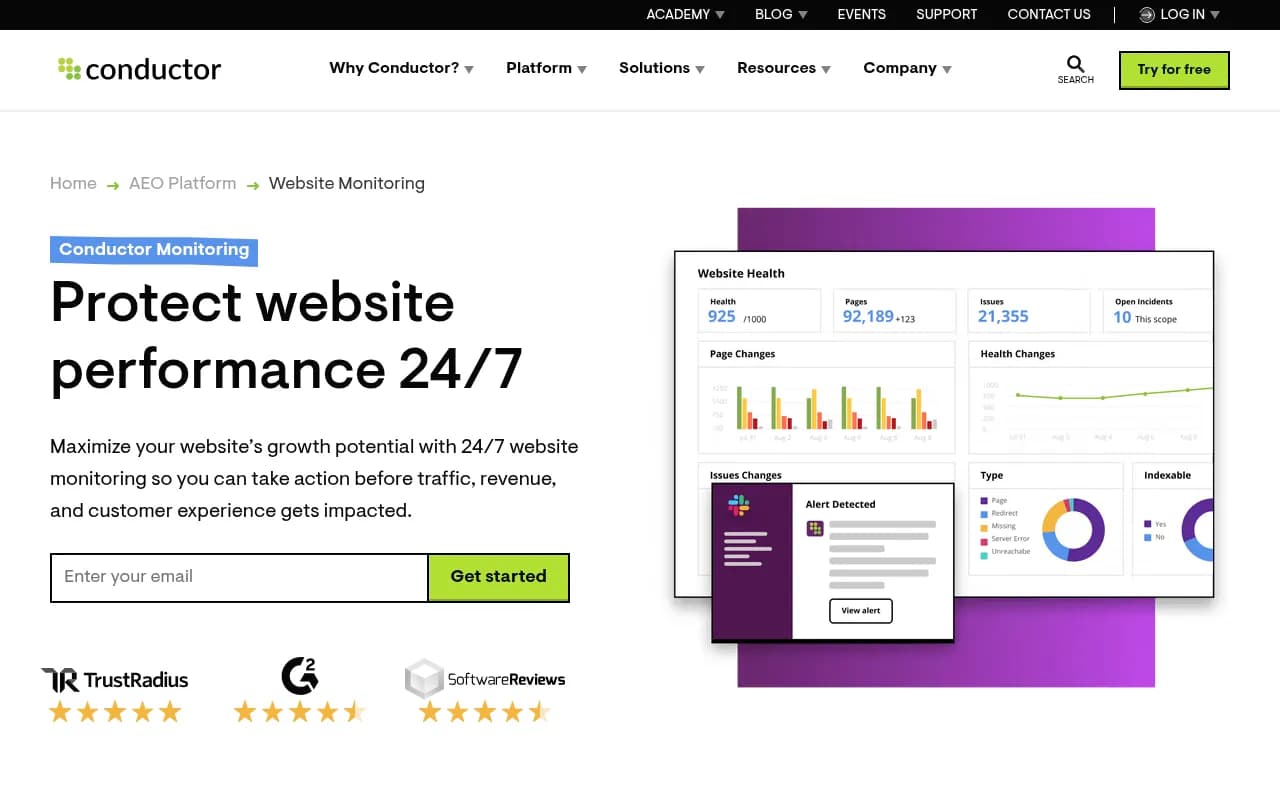
- Semrush or BrightEdge at the enterprise tier
- Botify for large-scale technical SEO and crawl analysis
- Promptwatch Business or custom for AI visibility across multiple sites
- ContentKing for real-time on-page monitoring
- HubSpot or Dreamdata for revenue attribution
The workflow that connects it all
Tools without a workflow are just expensive dashboards. Here's a simple weekly rhythm that keeps both channels moving:
Monday: Pull AI visibility data. Check which prompts your brand appeared in last week, which competitors gained ground, and whether any new content gaps emerged. This takes 20-30 minutes with a good dashboard.
Tuesday-Wednesday: Content work. Use the gap data to brief or write new content. Prioritize prompts with high volume and low competition -- the same logic as traditional keyword targeting, just applied to AI prompts.
Thursday: Technical and on-page review. Check for crawl errors, page speed issues, and any new technical flags. For AI search, check crawler logs to see which pages AI bots visited and whether any pages have errors that might block citation.
Friday: Reporting. Update your visibility scores for both Google and AI channels. Track week-over-week changes. Note what you published and when, so you can correlate content actions to visibility changes.
This isn't complicated. The teams that win at this aren't doing anything exotic -- they're just doing it consistently and measuring both channels instead of one.
What to avoid
A few common mistakes worth naming directly:
Buying AI visibility tools before you have content. If your site has thin content and poor topical coverage, no amount of monitoring will help. Fix the content first, then track.
Treating AI search as a separate strategy. The content that ranks in Google and the content that gets cited by AI models is largely the same content -- authoritative, specific, well-structured. You're not running two separate content programs; you're optimizing one program for two distribution channels.
Chasing every AI model equally. Not all AI engines matter equally for every industry. Check which models your audience actually uses before spreading your optimization effort across all 10. For most B2B companies, ChatGPT and Perplexity drive the most relevant traffic. For consumer brands, Google AI Overviews and Gemini matter more.
Over-investing in tools, under-investing in content. The ratio should probably be 20% tools, 80% content production. Most teams have it backwards.
Where to start if you're building this from scratch
If you're starting fresh, do this in order:
- Audit your current Google performance with Search Console. Understand what's already working before adding new tools.
- Run a basic AI visibility check. Search your brand name and main category keywords in ChatGPT, Perplexity, and Google AI Overviews. Note whether you appear and what competitors do.
- Pick one core SEO platform. Semrush or Ahrefs. Don't agonize over which -- either works. Start with the trial.
- Add one AI visibility tool. Promptwatch's Essential plan at $99/month is a reasonable starting point that gives you real tracking data without a large commitment.
- Build a content calendar based on both keyword data and prompt gap data. Publish consistently.
- Measure both channels monthly. Adjust based on what's moving.
The stack will evolve as you learn more about where your audience actually searches. The goal for the first 90 days is data collection and baseline setting, not perfection.
The brands winning AI search visibility right now aren't doing anything magical. They published good content, structured it clearly, and started tracking AI citations before most of their competitors thought to. That window is still open -- but it's closing.