Key takeaways
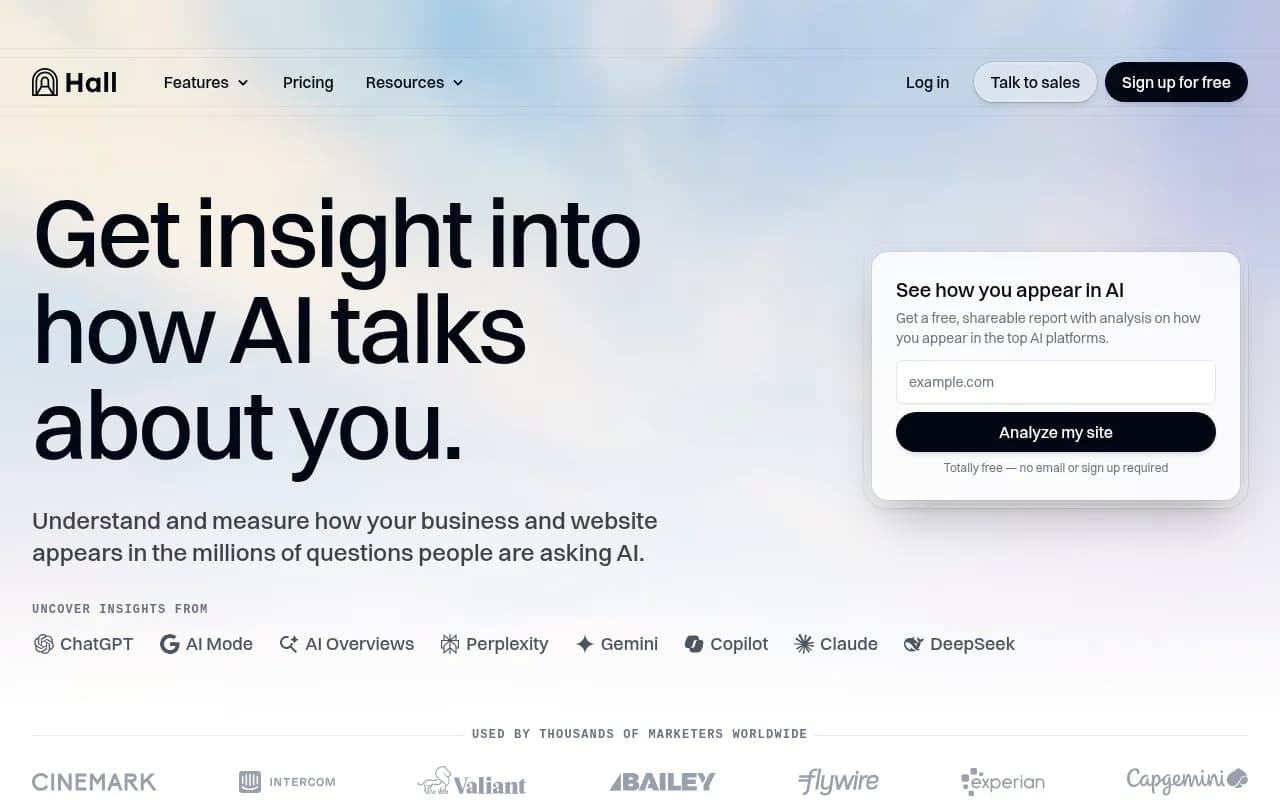
- Hall AI (usehall.com) is shutting down, leaving teams without LLM brand tracking and citation monitoring
- Before the shutdown, export all historical prompt data, citation reports, and benchmark baselines -- you'll need them to measure progress in your new tool
- The migration is also an opportunity to upgrade: most Hall AI replacements offer deeper features like content gap analysis, crawler logs, and multi-model tracking
- Several strong alternatives exist across different price points and use cases, from lightweight trackers to full GEO platforms
- Teams that move quickly and set up proper baseline tracking will lose the least ground in AI search visibility
What happened with Hall AI
Hall AI built a straightforward product: track how AI platforms like ChatGPT, Perplexity, and Claude cite and talk about your brand. For teams just getting started with AI visibility monitoring, it was a reasonable entry point. Simple setup, clear outputs.
Now it's shutting down.
If you're reading this, you're probably in one of two situations. Either you got the shutdown notice and you're scrambling to figure out what to do next, or you heard about it and you're wondering whether your current setup is fragile in the same way. Both are valid reasons to keep reading.
The good news: the AI visibility tooling market has matured significantly in 2026. There are more capable replacements available now than there were when Hall AI launched. The migration is annoying, but it's also a chance to land on something better.
Step 1: Export everything before access ends
This is the most time-sensitive part. Before you do anything else, pull every piece of data you can from Hall AI. Once the service goes dark, that history is gone.
Here's what to prioritize:
Prompt and query data Export the full list of prompts you were tracking. These represent real questions your customers ask AI engines -- they took time to build, and you don't want to reconstruct them from scratch. If Hall AI provides CSV exports, download them now.
Citation and mention reports Any historical data showing when and where your brand was cited across AI models. Even if the format isn't perfect, having a record of your baseline visibility score matters. You'll want to compare "before" and "after" once you're set up on a new platform.
Competitor benchmarks If you were tracking competitor visibility alongside your own, export those numbers too. Competitive baselines are hard to recreate retroactively.
Screenshots or PDF reports For anything that doesn't export cleanly, take screenshots. A messy record is better than no record.
Set a calendar reminder for two days before your access expires. Do the export then, not now -- you want the most recent data possible.
Step 2: Audit what you were actually using Hall AI for
Before picking a replacement, be honest about what you were getting from Hall AI day-to-day. Teams often discover during migrations that they were using only a fraction of a tool's features.
Ask yourself:
- Were you tracking brand mentions across multiple AI models, or just one or two?
- Did you use it for competitor analysis, or mostly self-monitoring?
- Were you generating reports for stakeholders, or just checking numbers yourself?
- Did you have prompt tracking set up for specific product or category queries, or just brand name searches?
- Were you using any content optimization features, or purely monitoring?
The answers will shape which replacement makes sense. A solo SEO consultant has different needs than a five-person AI visibility team at a mid-market brand.
Step 3: Understand what you're migrating to
The AI visibility tool market breaks into a few distinct categories. Hall AI sat in the "monitoring-only" tier -- it showed you data but didn't help you act on it. That's fine as a starting point, but it's worth knowing your options now.
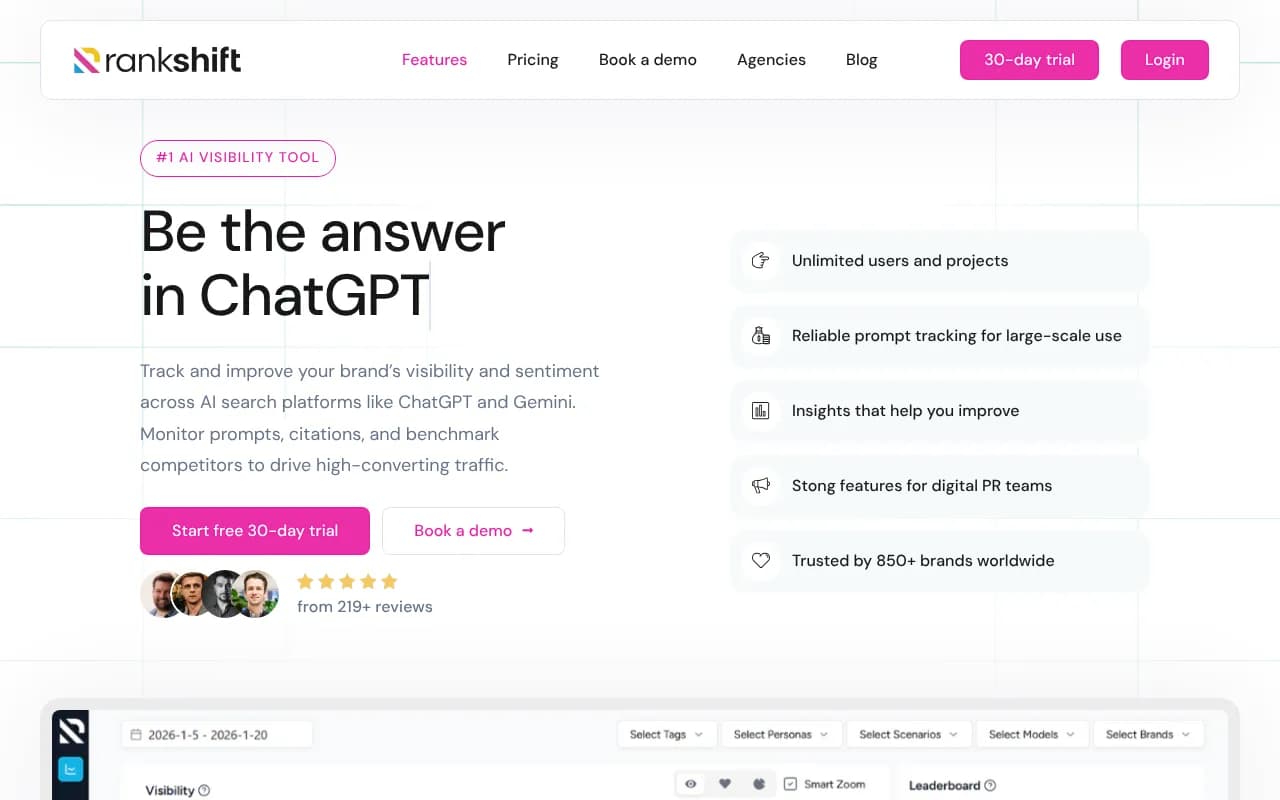
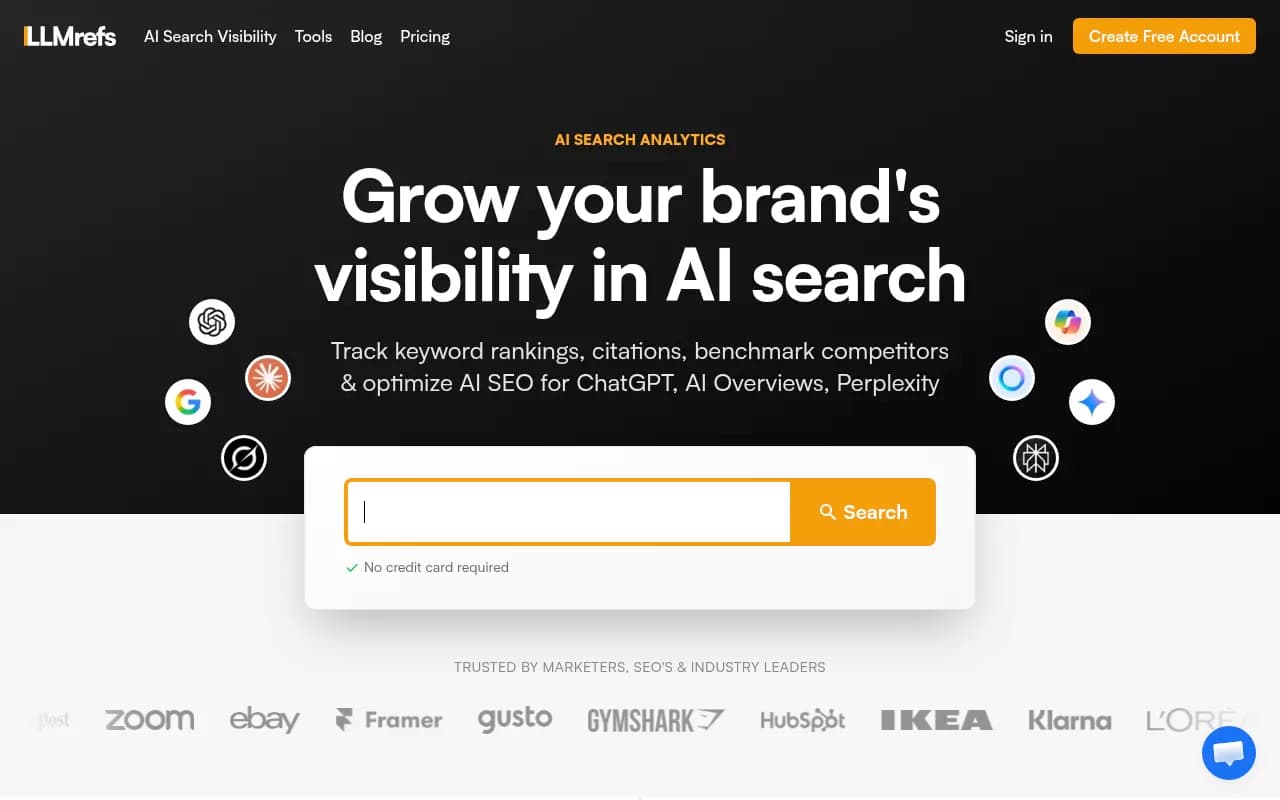
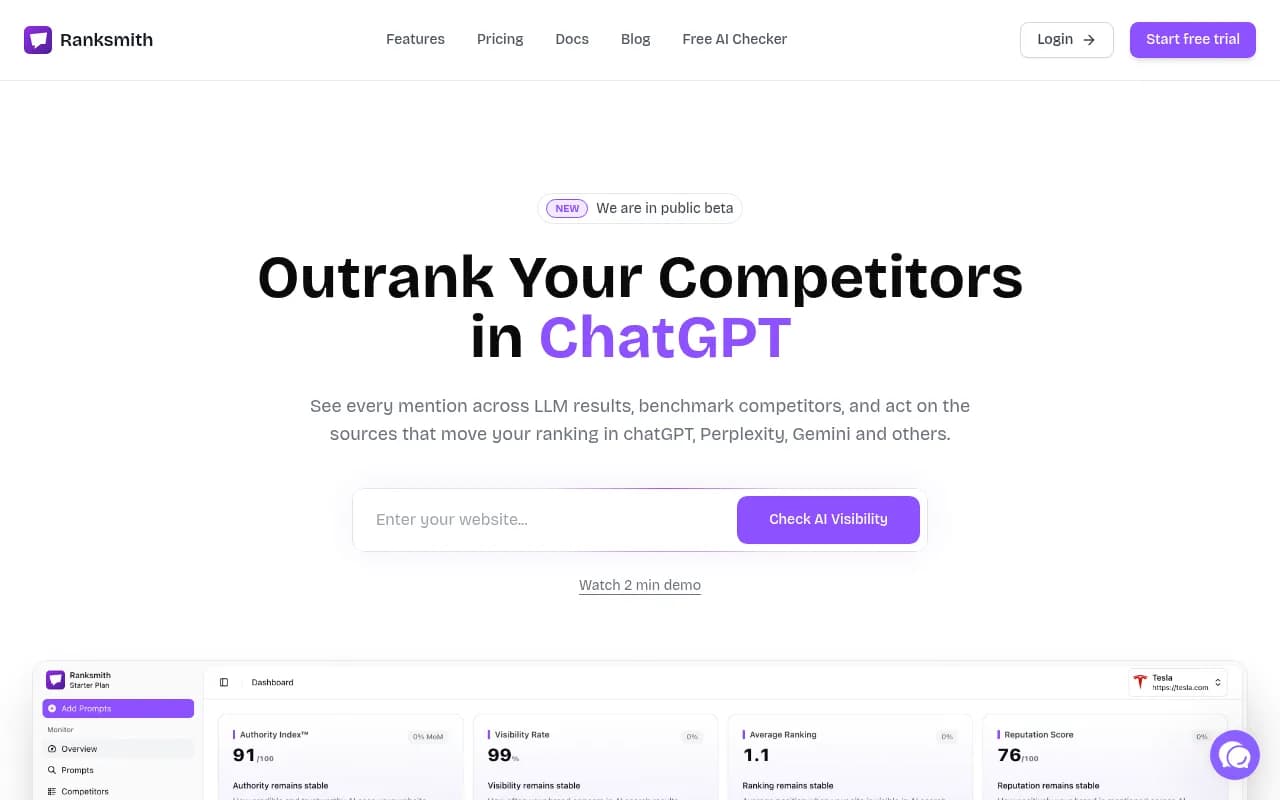
Monitoring-only tools
These track brand mentions and citations across AI models. Good for teams that just need visibility data and handle optimization separately.


Full GEO platforms (monitoring + optimization)
These go further: they show you where you're invisible, help you understand why, and give you tools to fix it. The gap between monitoring-only and full GEO platforms is significant in 2026.
Promptwatch is the clearest example of this category. It tracks citations across 10 AI models, but the more useful part is what happens after you see the data: Answer Gap Analysis shows exactly which prompts competitors are visible for that you're not, and Content Agents generate articles and briefs built around those gaps. It's the difference between a dashboard and an action loop.



Comparison: Hall AI vs. common replacements
| Tool | Models tracked | Content generation | Crawler logs | Competitor analysis | Starting price |
|---|---|---|---|---|---|
| Hall AI | 4-5 | No | No | Basic | ~$49/mo |
| Otterly.AI | 5+ | No | No | Yes | $29/mo |
| Peec AI | 8+ | No | No | Yes | $49/mo |
| Profound | 6+ | No | No | Yes | $199/mo |
| AthenaHQ | 8+ | No | No | Yes | Custom |
| Promptwatch | 10 | Yes | Yes | Yes | $99/mo |
The monitoring-only tools are cheaper and easier to set up. If you just need to replicate what Hall AI did, Otterly.AI or Peec AI will get you there quickly. If you want to actually improve your AI visibility rather than just watch it, Promptwatch is worth the step up.
Step 4: Set up your new tracking baseline immediately
The biggest mistake teams make during tool migrations is waiting too long to establish a new baseline. AI visibility scores fluctuate. If you don't capture your starting point in the new tool right away, you'll have no way to measure whether your efforts are working.
When you set up your replacement tool, do this on day one:
- Run a full brand visibility scan across all models the tool supports
- Add your top 20-30 prompts (use the exported list from Hall AI)
- Add your main 3-5 competitors
- Export or screenshot the initial results
- Set up a weekly or bi-weekly report so you have a time series going forward
This takes maybe 90 minutes. It's worth it.
Step 5: Rebuild your prompt library properly
One thing Hall AI users often discover when they migrate is that their prompt library was too narrow. Tracking "brand name + category" queries is a start, but AI engines field a much wider range of questions than that.
A proper prompt library for AI visibility should include:
Brand queries: Direct mentions, branded comparisons ("is [brand] better than X"), branded how-to questions
Category queries: "Best [product category] for [use case]" -- these are where most AI-driven discovery happens, and where you're likely invisible if you haven't optimized for them
Problem-based queries: Questions your customers ask when they don't know your brand yet ("how do I solve X", "what's the best way to Y")
Competitor queries: Prompts where competitors are getting cited but you're not -- this is where the real opportunity lives
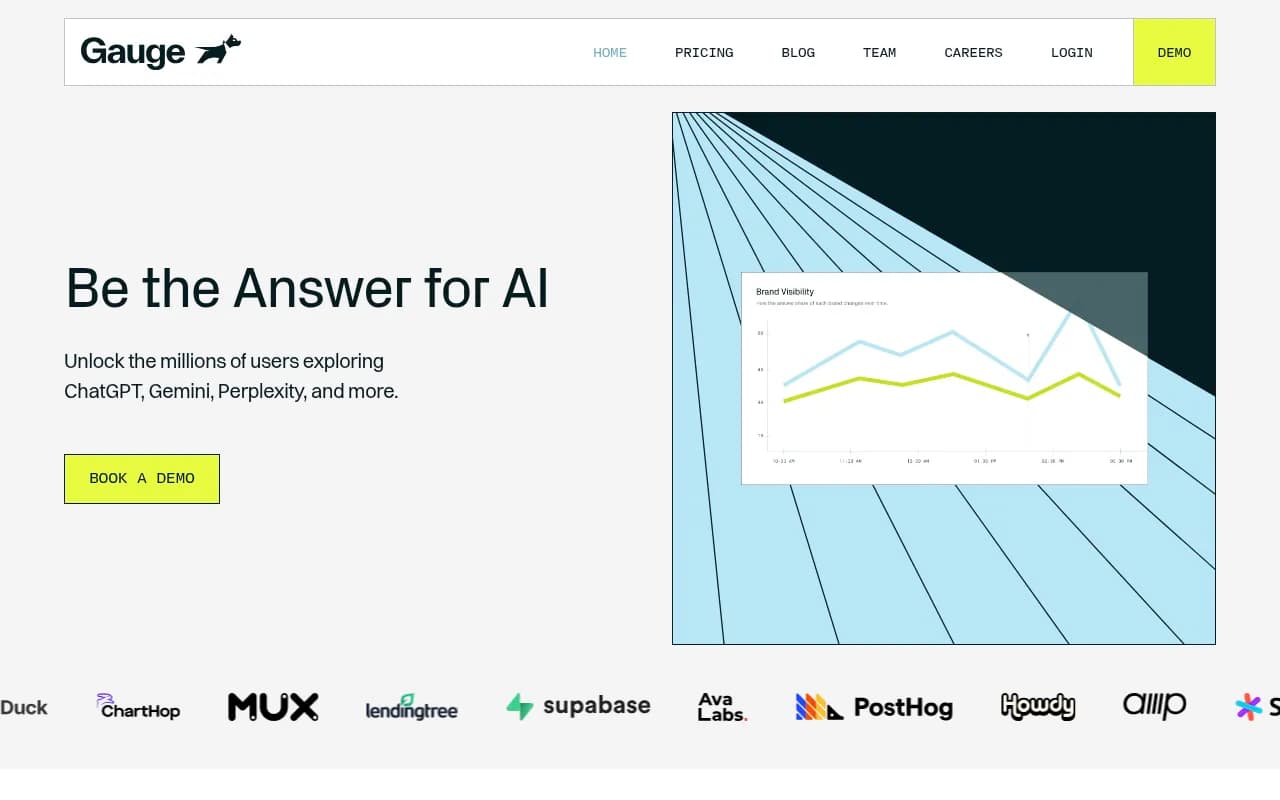
Tools like Promptwatch surface prompt volume estimates and difficulty scores, which helps you prioritize. Not all prompts are worth chasing. Some have high volume but are dominated by established players; others are winnable with a single well-structured piece of content.
Step 6: Check your technical foundations
Monitoring tools tell you what's happening. Technical setup determines whether AI crawlers can actually find and read your content in the first place.
A few things worth checking during your migration window:
Are AI crawlers reaching your site? Tools like Promptwatch's crawler log feature show you which AI agents (ChatGPT, Claude, Perplexity, etc.) are hitting your pages, how often, and whether they're hitting errors. If crawlers can't access your content, no amount of monitoring will help.
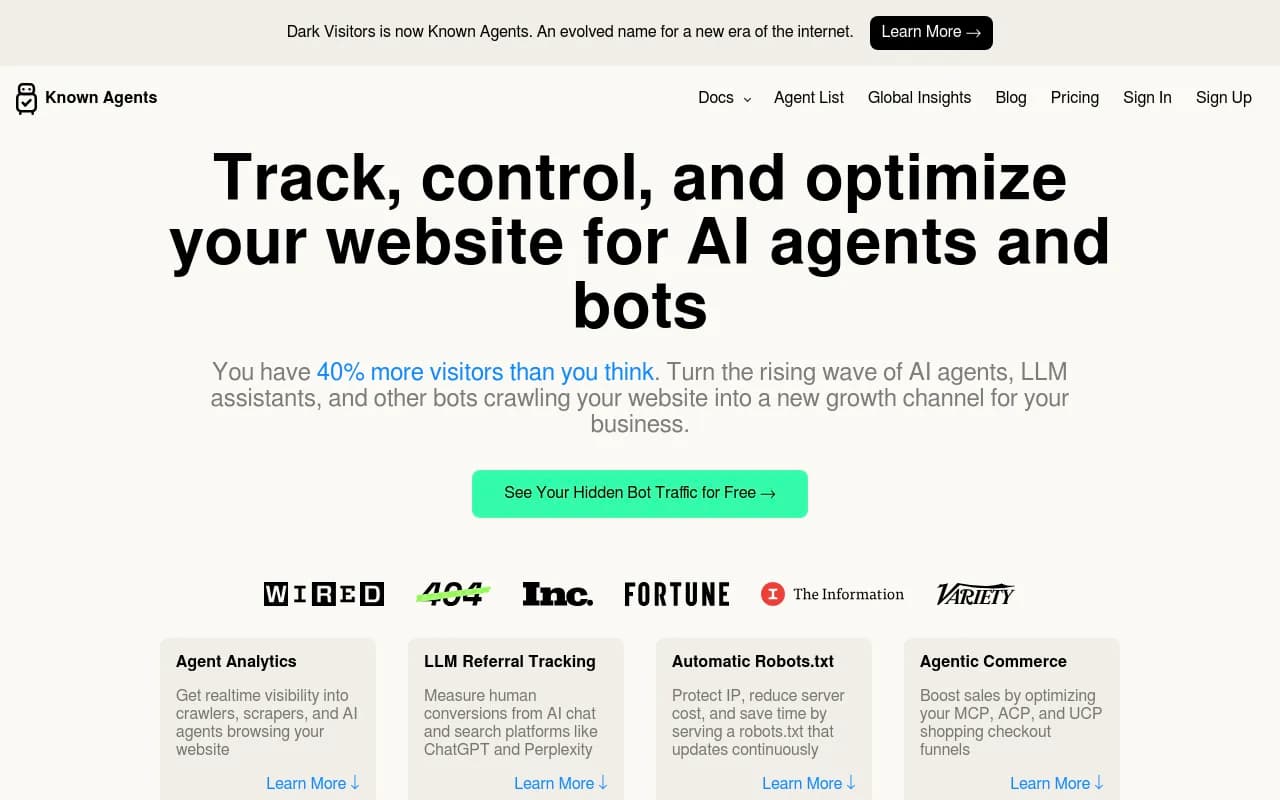
DarkVisitors is also useful here -- it tracks AI bots and agents visiting your site and helps you understand which ones to allow or block.
Is your content structured for AI citation? AI models prefer content that directly answers questions, uses clear headings, and doesn't bury the key point in paragraph five. A technical SEO audit focused on AI readability is worth running.
Do you have an llms.txt file? This is a relatively new convention (similar to robots.txt) that tells AI crawlers which pages are most important. Not all tools support it yet, but it's worth implementing.
Step 7: Don't just replace Hall AI -- improve on it
Migrations are disruptive, but they're also one of the few moments when teams actually reconsider their setup rather than just renewing what they have. Use this one.
A few questions worth asking before you finalize your new stack:
Are you tracking the right models? Hall AI covered a handful of AI engines. In 2026, ChatGPT, Perplexity, Google AI Overviews, Claude, Gemini, and Grok all have meaningful user bases. If your replacement tool doesn't cover most of these, you're flying partially blind.
Are you tracking offsite citations? Your brand visibility in AI isn't just about your own website. Reddit threads, YouTube videos, third-party review sites, and listicles all feed into what AI models recommend. Some platforms track this; most don't.
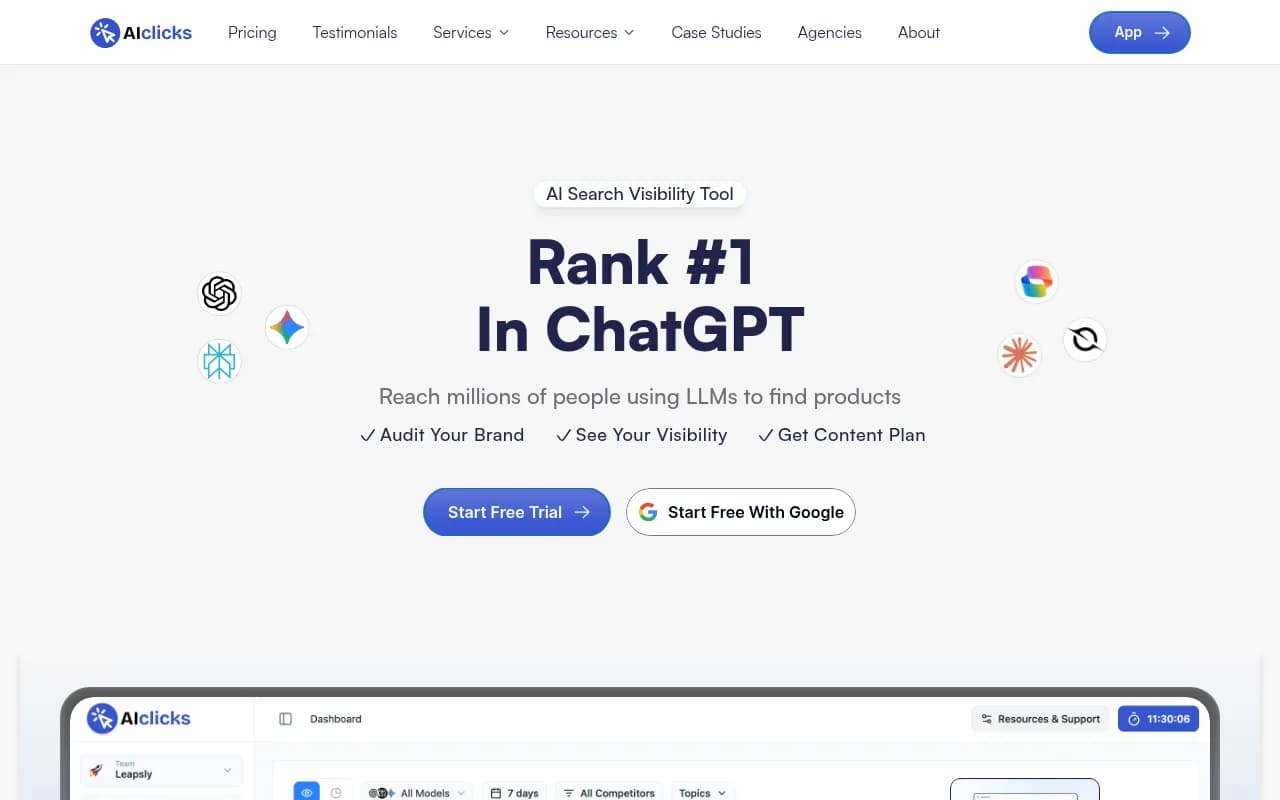
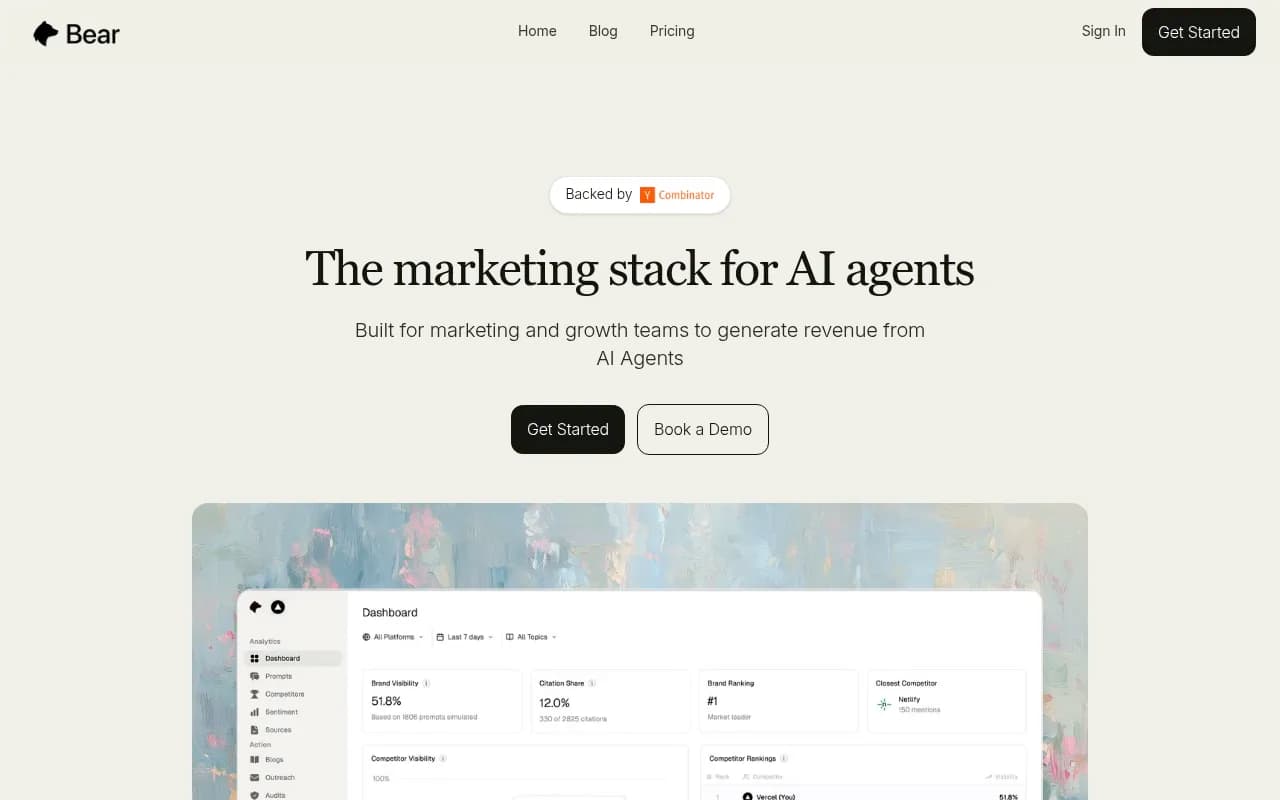
Are you connecting visibility to revenue? Knowing your citation count is interesting. Knowing that a 20% increase in AI visibility drove a 12% lift in organic signups is useful. Traffic attribution from AI search is still an emerging capability, but it's worth prioritizing in your new tool selection.
Recommended migration paths by team type
Solo SEO consultant or small agency
You need something affordable that covers the basics without a steep learning curve. Otterly.AI or Peec AI will replicate Hall AI's core functionality. If you want to grow into content optimization, Promptwatch's Essential plan at $99/month is a reasonable step up.
In-house marketing team (5-50 person company)
You probably need more than monitoring. Promptwatch's Professional plan covers crawler logs, multi-model tracking, and content generation -- the combination that lets you actually move the needle, not just watch it. Profound is also worth evaluating if your team is more analytics-focused.
Enterprise or agency managing multiple brands
Look at platforms with multi-site support, white-label reporting, and API access. Promptwatch's Business and Agency tiers, AthenaHQ, or Evertune depending on your specific requirements.
The short version
Hall AI shutting down is annoying, but it's not a crisis. Export your data now, pick a replacement that matches your actual needs (not just the cheapest thing that looks similar), and use the migration as a chance to set up proper baseline tracking.
The teams that come out ahead from this are the ones who treat it as a forcing function to build a more serious AI visibility practice -- not just a like-for-like swap of one monitoring dashboard for another.
If you're not sure where to start, Promptwatch covers the full workflow from tracking to optimization and has a free trial. That's probably the lowest-friction way to see what a more complete setup looks like before committing.