
Key takeaways
- Free AI visibility tools fall into three groups: one-off checkers, free tiers that keep tracking a few prompts, and trials of full platforms. Pick based on the job, not the brand name.
- A checker is a snapshot. It tells you whether you are visible today, not why, and not whether a fix worked.
- Run checks per engine. Promptwatch Data shows AI Overviews gets 13.16% of its citations from social platforms, against 0.64% for ChatGPT, so one blended score hides a lot.
- Limits change often. Free caps (Semrush's three runs a day, Ahrefs' top five rows) were reported by third-party roundups, so confirm them on each vendor's page before you plan around them.
- For a repeatable baseline, use two checkers for a first look, then a trial for 7 to 14 days of tracking on the prompts that matter to your revenue.
What a free AI visibility tool actually tells you
An AI visibility tool answers one question: when someone asks ChatGPT, Gemini, Perplexity or Google's AI surfaces a buying question, does your brand show up, and where? Free versions answer it for a narrow slice of prompts, once, or on a small schedule.
That is still useful. Before you spend anything, you want to know three things: whether you are mentioned at all, who is mentioned instead of you, and which pages get cited. A free checker can cover the first two in a couple of minutes.
What it cannot do is tell you why. Visibility comes from citations, crawler access, content gaps and what third-party sites say about you. None of that shows up in a score.
If you want the definitions behind the numbers, the Promptwatch Academy metrics overview explains Visibility Score, Share of Voice and position in plain language.
The three kinds of free tool
| Type | What you get | Typical limit | Best for |
|---|---|---|---|
| One-off checker | A score and a snapshot across several engines | A few runs per day, or partial results | A first look, a pitch, a sanity check |
| Free tier of a tracker | A handful of prompts re-run on a schedule | Few prompts, few engines | Watching a small set of branded or core prompts |
| Free trial of a full platform | Real tracking, citations, content and analytics | 7 to 14 days, often card required | Building a real baseline and testing a workflow |
| Browser extension or technical checker | A look at how one engine behaved on one query | Manual, one query at a time | Understanding fan-outs, crawler access and readiness |
Most guides blur these together. They are not interchangeable. A checker will not tell you what happened last Tuesday, and a trial will not stay free.
One-off checkers that need no account
These are the quickest starting point. Reports from third-party roundups (Hokai, Kite and Arobis) describe the following.
Semrush free AI visibility checker
Semrush's free tool gives a domain an AI Visibility Score from 0 to 100 across ChatGPT, Gemini, Google AI Mode and Google AI Overviews. Roundups report you can run it three times a day without an account. The output includes mentions, citations, coverage by platform, an estimated monthly audience, most-cited pages, top topics and a competitor comparison.
It looks up your domain in answers Semrush collected earlier, rather than running fresh prompts. That makes it fast, and it means the data may lag.
Ahrefs free checker
Hokai calls the Ahrefs checker the best place to start if you have never looked, because it needs only a brand name. It covers five engines at once. The catch is that it shows only the top five rows of each section, so it is a taste, not a report.
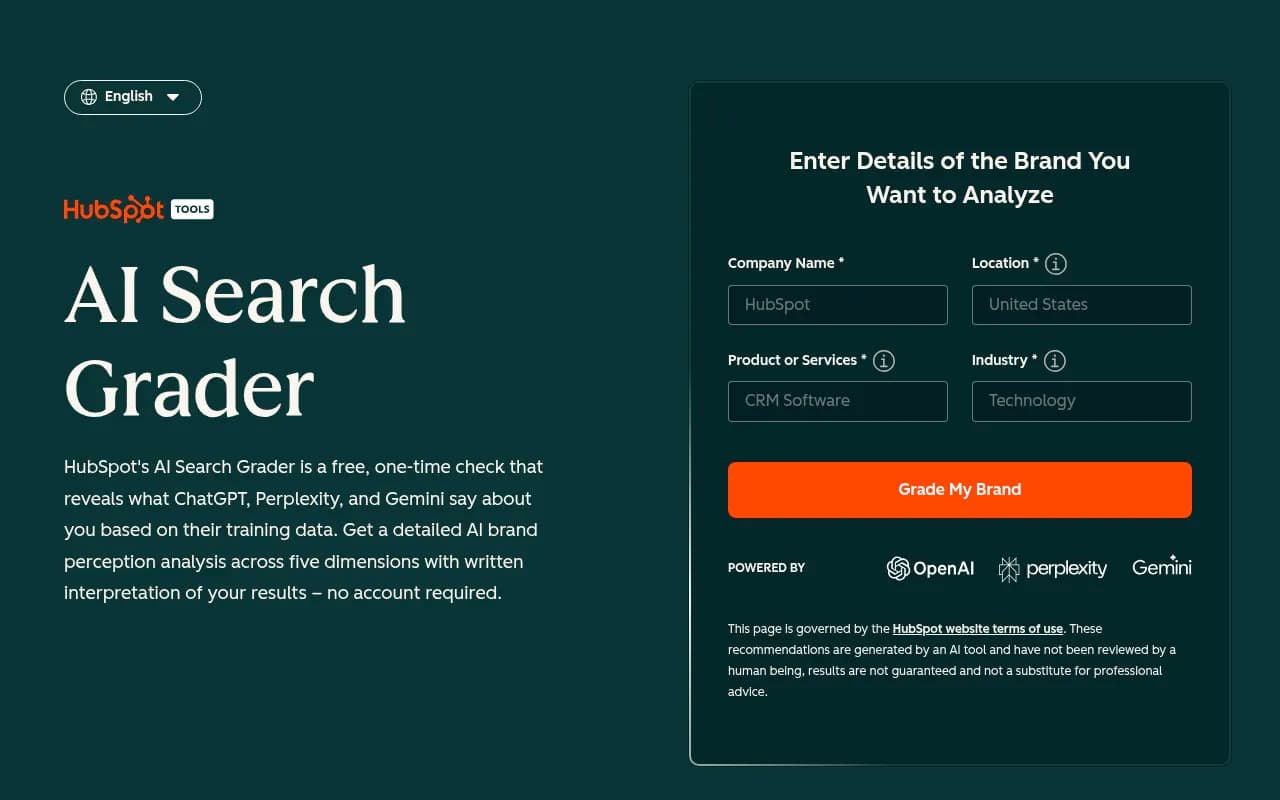
HubSpot AEO Grader
HubSpot's grader is a free one-time check. Hokai describes it as the odd one out among checkers, which is why it is worth running alongside another one. Different tools weigh different signals, and disagreement between them is information.
Other no-signup checkers worth a try
Several smaller tools in our catalog position themselves as free or entry-level checks. I have not tested each one for this guide, so treat these as candidates and read their limits before relying on them.
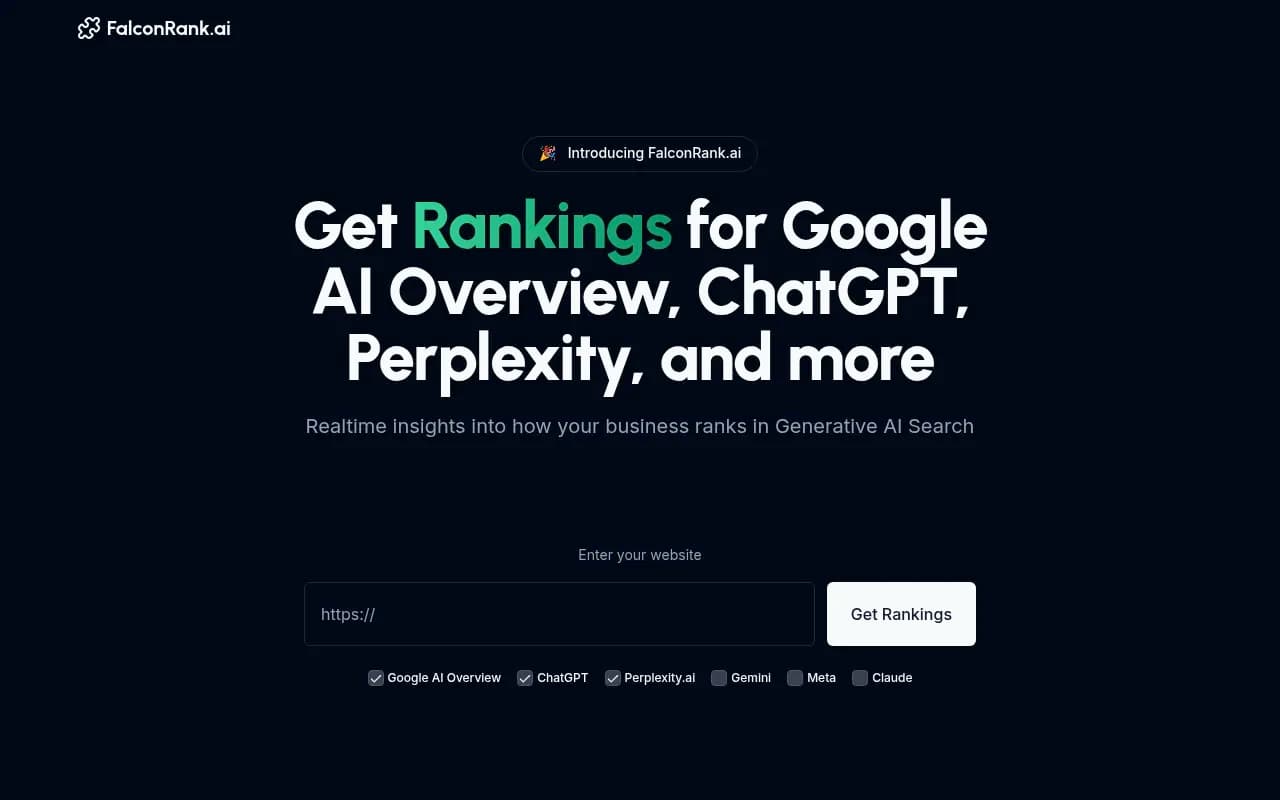
- FalconRank, a free instant check of how AI sees your brand
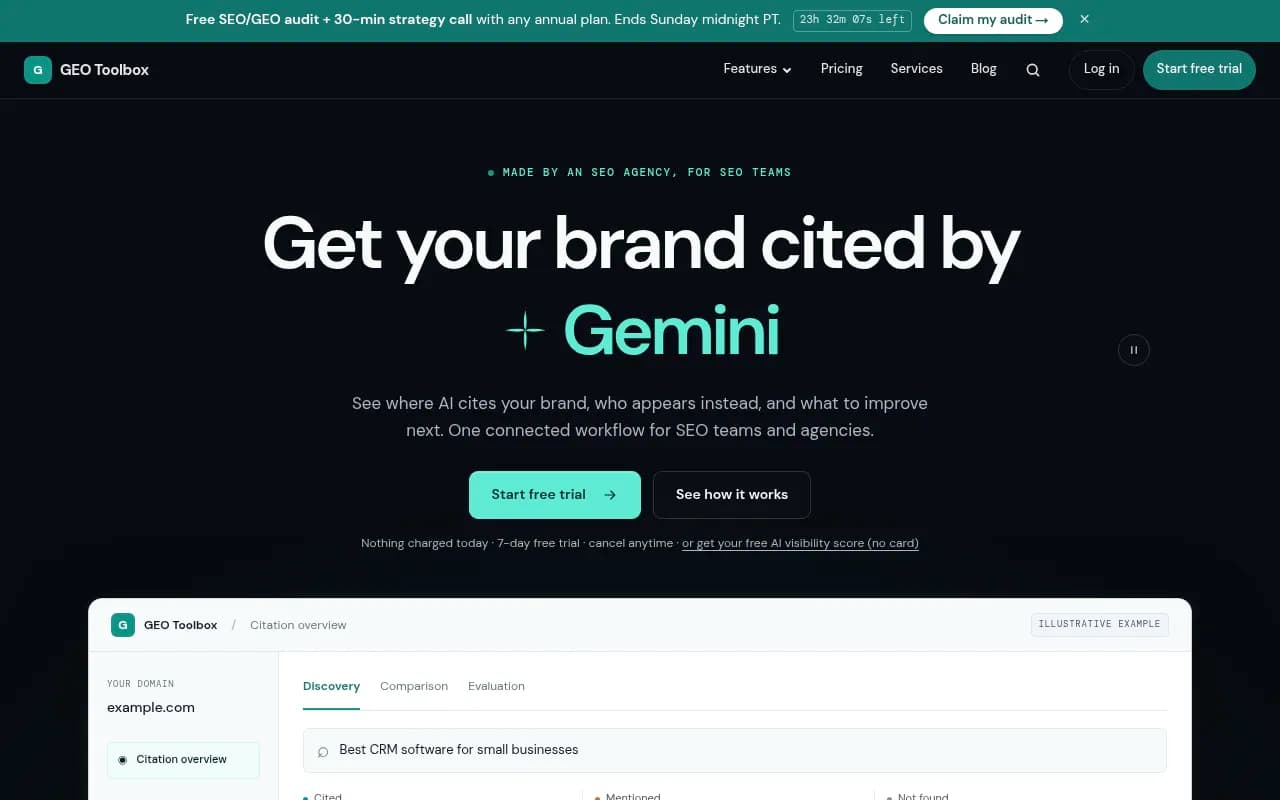
- GEO Toolbox, a free multi-engine checker
- Am I on AI?, an entry-level visibility checker
If you want a Promptwatch-built option, the free AI visibility report scans how ChatGPT, Gemini and Perplexity talk about your brand without a login. It returns a visibility score, a crawler access check and a list of what to fix. The Agentic Readiness Check is a separate free tool that shows which AI crawlers can read your site and which agent standards, such as llms.txt, you support.
Free plans that keep tracking
A free plan is where you start to see change over time. The limits are tight, usually a handful of prompts and fewer engines, but a week of data beats a single snapshot.
From the sources I reviewed:
- Hokai calls Sellm the cleanest free tracker.
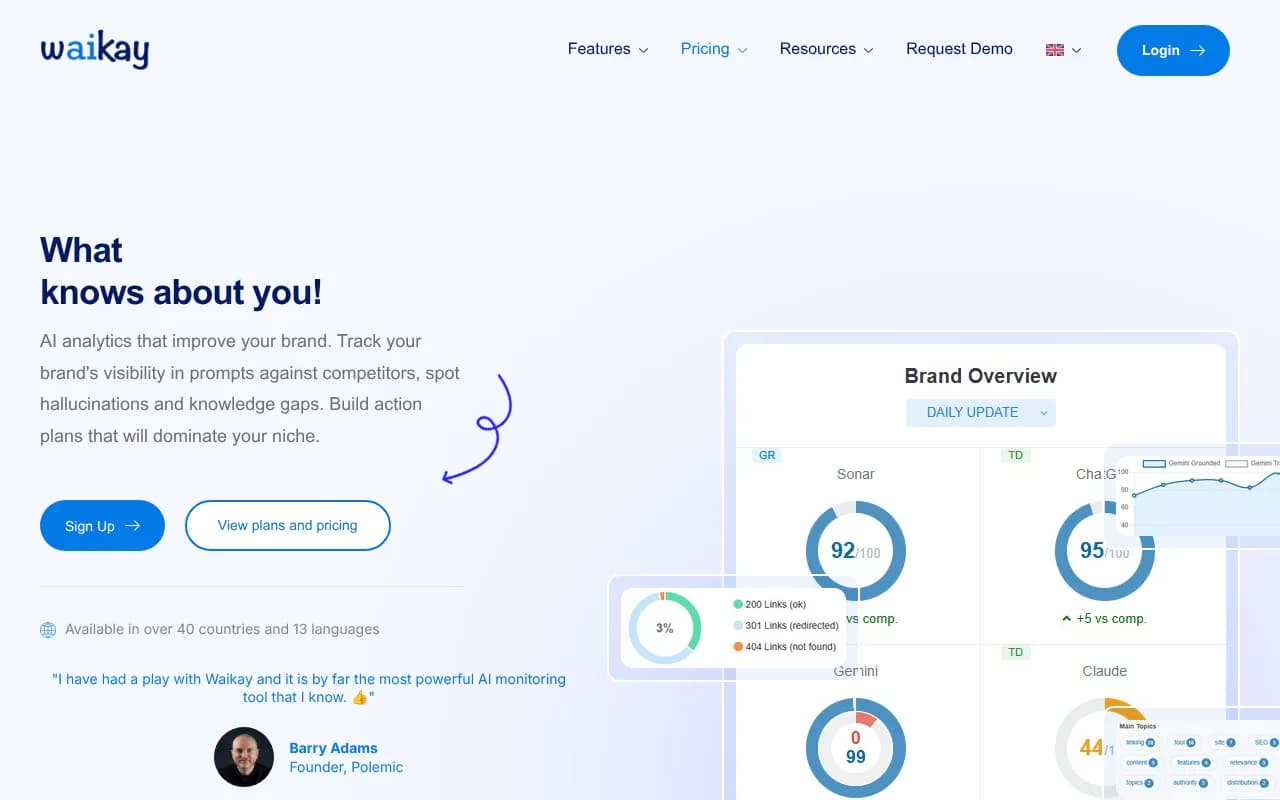
- Arobis reports AthenaHQ has a free Essential tier and Waikay offers limited free access.
- Promptwatch has a free Explore plan with 1 project, 10 prompts and ChatGPT only, with daily tracking. It is meant for evaluating the product, not for running a full program.

For a starting set of 10 prompts, pick questions a real buyer would type. One branded prompt, a few category prompts such as "best X for Y", and a couple of comparison prompts. Resist the urge to fill the limit with variations of the same question.
Trials of full platforms
This is the category people skip, and I think it is the most useful one. A 7-day trial on a real platform gives you tracking, citation data, competitor views and often content tools, enough to decide whether the paid version is worth it.
A few options from our catalog:
- Promptwatch has a 7-day free trial on monthly billing for Essential, Professional and Business. Essential is $95 a month, Professional $245 and Business $579, so confirm current terms on promptwatch.com/pricing. Agencies can look at the agency plans.
- Otterly.AI, Peec AI and Scrunch are the monitoring tools most often compared with it. Check each vendor's site for current trial terms, since I have not verified them.
- ZipTie, Rankscale and Knowatoa are lower-profile trackers that appear in several roundups.


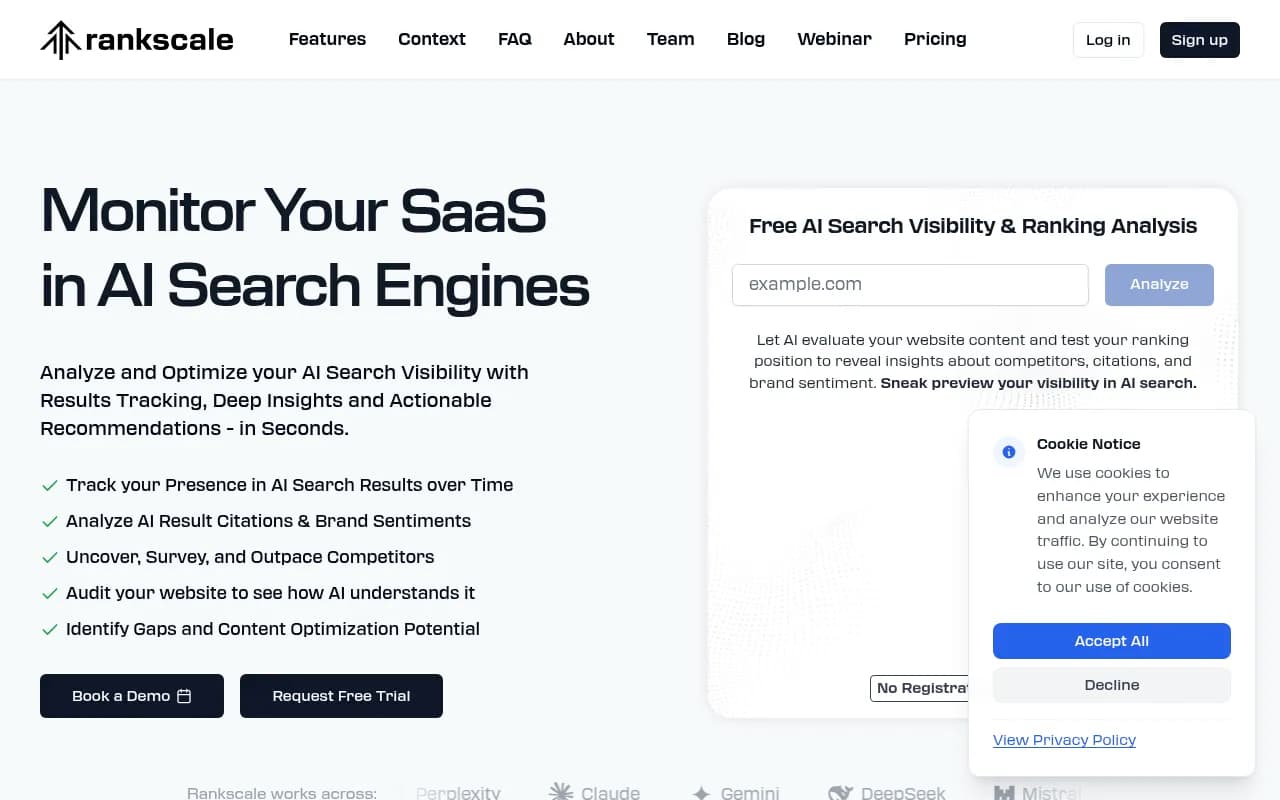
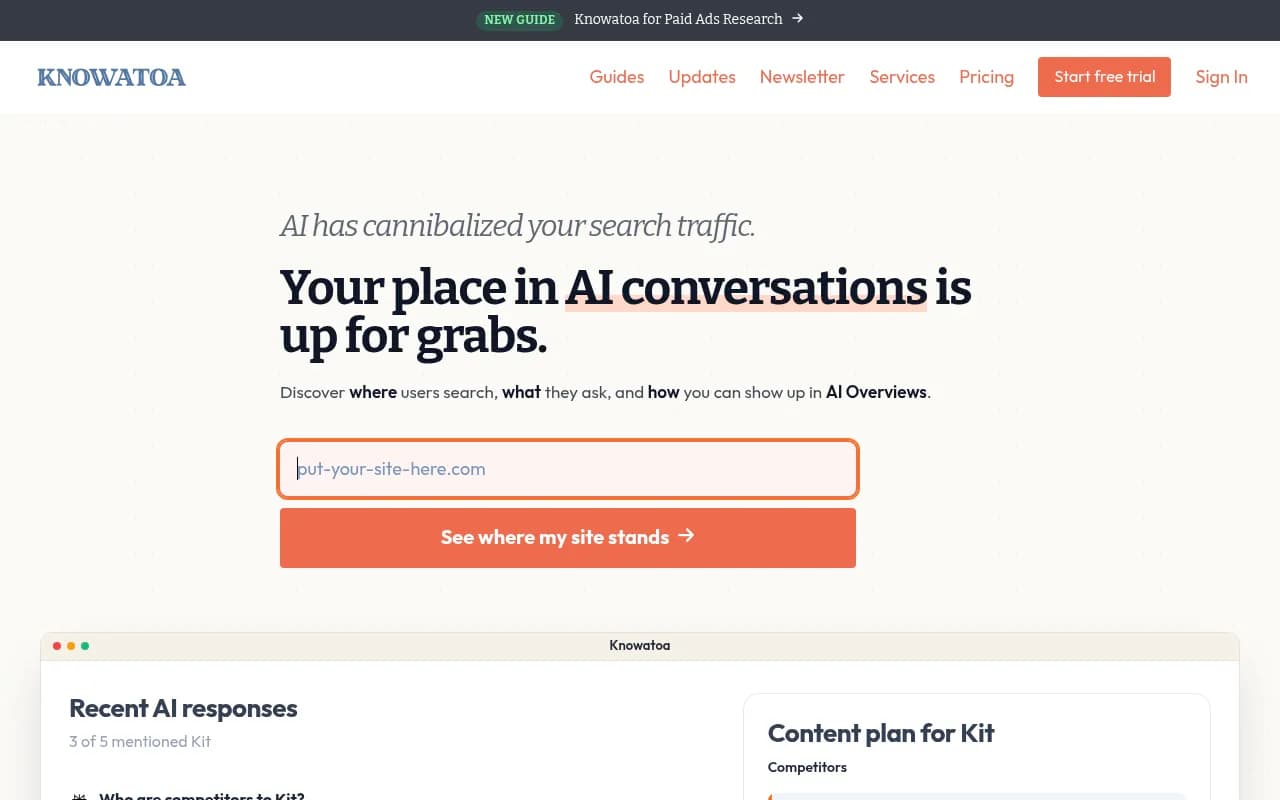
The difference between these tools shows up after the trial. Most track whether you were mentioned. Promptwatch goes further: it traces which pages get cited, logs AI crawler visits, writes and publishes content through its Content Agent, and measures AI-referred traffic. Whether you need that depends on whether you plan to act on the data or just report it.
Extensions and technical checks
Checker scores are blunt. If you want to understand what an engine is doing on a single query, two kinds of free tool help.
The GEO Inspector Chrome extension shows ChatGPT's fan-outs, fetched versus cited sources and the reasoning trail. It runs locally with no sign-in. Fan-outs matter because ChatGPT runs several web searches per answer, and your page has to match those, not only the question the user typed. Promptwatch Data tracked ChatGPT starting to use the site: operator at scale on August 8, 2026, when it jumped from about 0.4% to about 17% of fan-out queries.
For crawler access, the free AI Crawler URL Inspector and Robots.txt Generator for AI catch the boring failures. A page that GPTBot cannot fetch will not get cited, however good it is. The AI Bots and Web Crawlers Directory lists 440+ crawlers with robots.txt guidance.
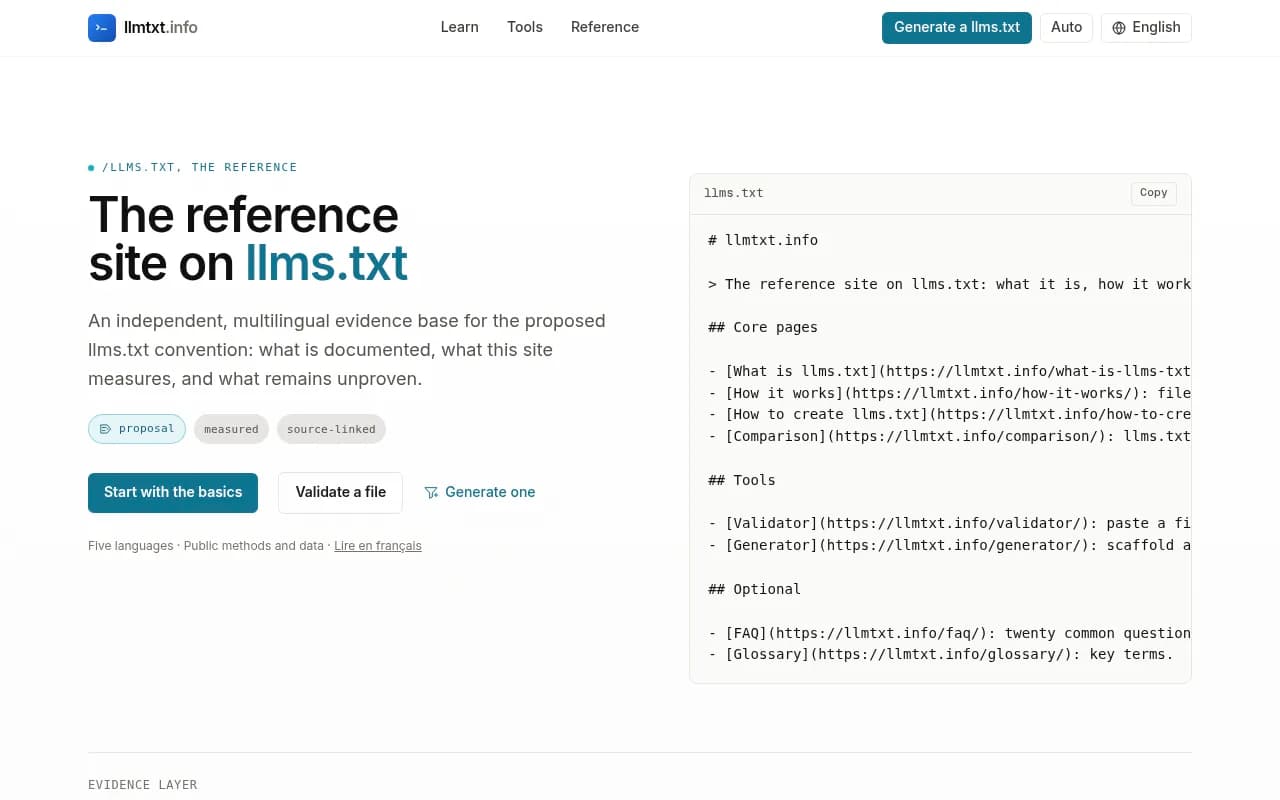
One free utility for the llms.txt crowd: llmtxt.info generates and validates the file. Keep expectations modest. Promptwatch's data shows markdown files make up just 0.05% of AI search citations, so llms.txt is for agents more than for AI search.
How to read a free score without fooling yourself
The score is the least interesting part. Here is what I would look at instead.
Run each engine separately
Engines cite very different things. From Oct 11 to Nov 9, 2026, social platforms earned 13.16% of Google AI Overviews citations, 1.94% of Perplexity's and 0.64% of ChatGPT's. YouTube alone was 6.71% of AI Overviews citations. So a checker that rewards Reddit presence says little about ChatGPT.
For ChatGPT, Promptwatch's November data (Nov 1 to Nov 25) shows review sites holding five of the top 10 spots: G2, Gartner, BBB, Capterra and Trustpilot. Reddit was the top tracked popular site at only 0.23%, down from 3.71% in June. The 20 tracked sites together earned under 2% of citations, with the rest spread across hundreds of thousands of domains.
That last point matters for free tools. If your checker only looks at a handful of big sites, it is measuring a tiny share of where answers come from.
Look at who beats you, not your number
A score of 34 means nothing on its own. A list showing two competitors named in every category prompt tells you where to look next. Open the cited pages. What do they have that yours lacks: a comparison table, a pricing page, reviews?
Check the sources
When the tool shows citations, note the content type. Promptwatch Data found product pages were the most cited content type in ChatGPT at 22.4% in the week of Sep 28 to Oct 4, 2026, followed by landing pages and listicles. If your cited pages are all blog posts and your competitors' are product pages, that is a lead.
Repeat it
AI answers vary run to run. Do the check twice, a few days apart, before trusting a gap. Third-party testers like AIVisibilityNerd have written up this variance, and it is why one screenshot is a weak basis for a client report.
Comparison: which free option fits which job
| Job | Start with | Why |
|---|---|---|
| First look, no account | Semrush or Ahrefs checker | Fast, multi-engine, but limited depth |
| Second opinion | HubSpot AEO Grader | Different method, so disagreements are useful |
| Watch a few prompts weekly | Free tier of a tracker (Sellm, Waikay, AthenaHQ, Promptwatch Explore) | Shows change over time |
| Real baseline with citations and crawlers | 7-day trial of a full platform | Enough data to decide |
| Why ChatGPT chose those sources | GEO Inspector extension | Shows fan-outs and cited sources |
| Can AI bots read my site | Agentic Readiness Check, crawler inspector | Fixes access before content |
| Pitching a client | Agency plan reports | Branded PDF in minutes, not a screenshot |
A two-week plan to start 2027 with a baseline
Here is the sequence I would follow. It costs nothing until the trial ends.
- Day 1: Run two checkers, say Semrush and HubSpot, on your domain. Save the outputs and note any disagreement.
- Day 1: Run the Agentic Readiness Check and the crawler inspector. Fix any blocked bots in robots.txt.
- Day 2: Write 20 to 30 prompts a real buyer would ask, grouped into branded, category and comparison.
- Day 2: Put the 10 most important into a free tracker. Keep the rest in a spreadsheet.
- Days 3 to 10: Start a trial of a full platform and load all the prompts, in the countries and languages you sell in.
- Day 10: Compare. Where are you absent? Which competitor appears most? Which cited pages come up repeatedly?
- Day 14: Pick three fixes: one content gap, one technical fix, one off-site task such as a review site listing. Decide whether to pay.
For step 5, remember the point where free ends. Monitoring is cheap. The work that changes the numbers, writing pages AI cites and checking they were crawled, is where paid tools differ. Promptwatch's 90-day GEO program lays out how to run that after the baseline.
Where free tools fall short
- Prompt coverage is thin. Ten prompts is a sample, not a market.
- Few offer crawler logs, so you cannot tell an access problem from a content problem.
- Almost none connect AI visibility to traffic and conversions. The attribution guide explains why that is harder than it sounds, especially now that ChatGPT stopped sending a referrer on October 8, 2026.
- Local and multi-country tracking is usually paywalled.
- Scores differ between vendors because methods differ. Never compare a Semrush number with an Ahrefs number.
If you would rather not do this yourself, an SEO and GEO agency such as 1001 SEO Media can run the baseline and the fixes for you. For a longer list of tools by category, the GEO software directory at bestgeosoftware.com is a decent next stop.
FAQ
Are free AI visibility checkers accurate?
They are directionally useful. Some read from answers collected earlier, others run live prompts, and AI answers vary between runs. Treat one result as a hint and run two tools before drawing conclusions.
Which free tool covers the most engines?
Roundups report Ahrefs covers five engines but shows only the top five rows per section. Semrush covers ChatGPT, Gemini, AI Mode and AI Overviews. Limits change, so check the current pages.
Is a free trial better than a free plan?
For a baseline, yes. A trial gives you the full feature set for a week or two. A free plan gives you a small, permanent sample. Use both in order.
Do I need a paid tool at all?
If you only want to know whether you show up, no. If you want to improve the numbers and prove it, you will want citation data, crawler logs and traffic attribution in one place, which means a paid platform.
How often should I re-check?
Weekly is enough for a free setup. Daily tracking is standard on paid plans, and faster intervals only matter if you are following a launch.