
Key takeaways
- Bloomreach announced the acquisition of AthenaHQ on November 16, 2026. The price was not disclosed.
- Existing accounts, contracts and support arrangements are said to stay intact. The first combined product use cases are slated for early 2027.
- Nobody has published anything on standalone pricing, data migration or the long-term roadmap. That gap is the real risk for customers.
- Monitoring-only tools will keep getting cheaper. The more useful question is whether a tool helps you fix visibility and measure traffic, not just report a score.
- Alternatives worth a look: Promptwatch, Peec AI, Otterly.AI, Profound, Scrunch, LLMrefs and Rankscale, depending on budget and team size.
What actually happened
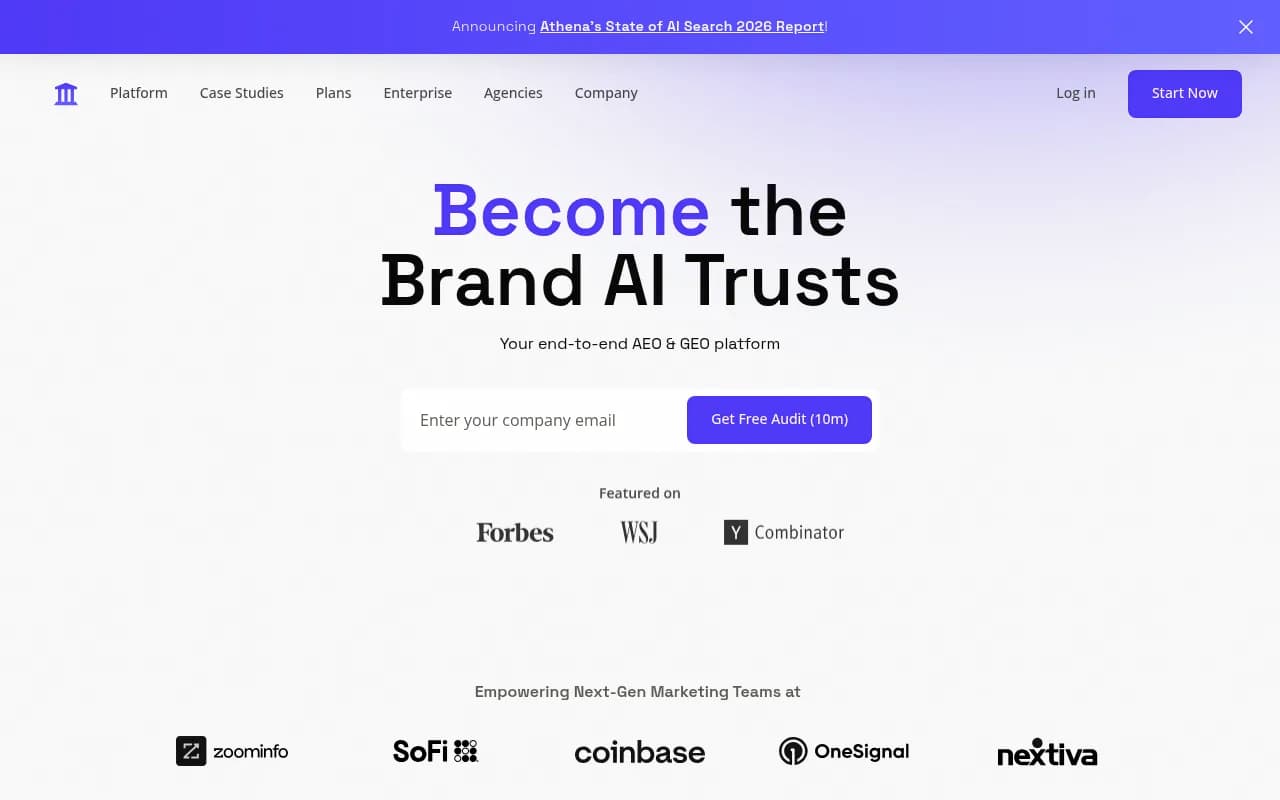
On November 16, 2026, Bloomreach, the customer engagement and ecommerce search company, announced it had bought AthenaHQ, the Y Combinator-backed answer engine optimization platform. Forbes reported that the price was not disclosed. MarTech reported that the founders, Andrew Yan and Alan Yao, and the whole AthenaHQ team are joining Bloomreach.

The pitch from Bloomreach is that more of a brand's customers are now AI agents shopping on behalf of people, and that if an agent can't find a brand it won't recommend it. AthenaHQ's piece is the Athena Citation Engine (ACE), a machine learning model that scores content on how likely it is to be cited by AI. Bloomreach's piece is Loomi, its AI for customer engagement, which it says connects to applications and agents for over 1,400 brands.
AthenaHQ's listed customers include Coinbase, Cozy Earth, Nuvadermis and Datmos.
The deal is less odd than it first looks. As MarTech points out, Bloomreach's first product in 2012 was in search, and in January 2026 it launched Loomi Connect to push retail catalog data into ChatGPT apps and other AI surfaces through MCP. Buying a tool that measures visibility inside AI answers fits that story. MarTech compares the logic to Adobe's Semrush acquisition, and the pattern is the same: marketing suites are absorbing AI visibility vendors.
What the acquisition means for current customers
Here is what is on the record, and what is not.
| Question | What we know | Source |
|---|---|---|
| Will my account and contract change? | Bloomreach says accounts, contracts, support and team contacts remain unchanged | emailexpert, MarTech |
| When do combined features arrive? | First combined use cases due in early 2027 | MarTech, emailexpert |
| Will pricing change? | No official statement found | n/a |
| Will the standalone product continue? | No official statement found | n/a |
| What happens to my data? | No official statement found | n/a |
That last column matters. A third-party comparison site noted that plans and roadmap may change under the new ownership, but that is its own inference, and that site sells a competing product. Treat it as a reason to ask questions, not as news.
My honest read: for the next few months, nothing breaks. Acquired products usually run as they were while the buyer works out packaging. The risk shows up at renewal. If you are on a monthly plan, you can wait and watch. If you are about to sign an annual contract, ask for specifics in writing first.
Questions to put to your AthenaHQ rep
- Will the standalone product keep its current pricing and credit model through at least 2027?
- Is there a commitment on the engines currently covered, and on how fast new ones get added?
- Will the data be portable if you leave (CSV or API export of prompts, responses and citations)?
- Will API access and extra credits stay as add-ons sold through sales?
- Does a future bundle with Bloomreach products become required, or stay optional?
Who should stay put
AthenaHQ itself is not a bad product. A third-party roundup puts it at 11+ platforms listed on paid tiers and a free tier, with paid plans reported from $295 a month on a credit system (3,600 credits a month on Starter, where one credit is one AI response). The listed engine coverage is ChatGPT, AI Overviews, AI Mode, Perplexity, Gemini, Claude, Copilot and Grok.
If you already run Bloomreach for site search or engagement, the combined roadmap could be a real advantage for you. Ecommerce brands that want AI visibility tied to product catalog and email may well be the target buyer here.
If you do not use Bloomreach and just want an AI visibility tool, the acquisition is mostly uncertainty with no immediate upside.
What to look for in a replacement
Before comparing logos, decide what you actually need. After a few years of watching this category, I think the split is simple.
- Monitoring: which prompts mention you, which models, which competitors.
- Diagnosis: why. Which pages get cited, whether AI crawlers can even read your site.
- Action: content gaps turned into published pages.
- Measurement: whether that content brings traffic and conversions.
Most tools do the first well. Fewer do the last three. Citation sources also matter more than they used to. Promptwatch Data's ChatGPT citation share report for November 2026 (Nov 1 to 25) found Reddit at 0.23% of ChatGPT citations, down from 3.71% in June, with review sites like G2, Gartner, BBB, Capterra and Trustpilot holding five of the top 10 spots. The 20 tracked popular sites together earn under 2% of citations, with the rest spread over hundreds of thousands of domains. So pick a tool that tracks citations on your own site and on review sites, not just social threads. The earlier Reddit citations report shows the same shift.
Also check how the tool collects data. Interfaces and APIs can give different answers, and how Promptwatch collects data is a good example of the questions to ask any vendor.
Athena alternatives compared
Prices below are starting prices. Third-party figures come from a Pagelens comparison checked November 25, 2026, and that site sells a competing product, so verify everything on each vendor's page.
| Tool | Starting price | Engines | Notes |
|---|---|---|---|
| Promptwatch | $95/mo (Essential), free Explore plan | All supported models on every plan | Monitoring plus content creation, crawler logs, traffic attribution |
| Peec AI | from $95/mo | 3 on paid plans, extras are add-ons | 50-prompt entry cap, MCP on every plan |
| Otterly.AI | from $29/mo | 7 of 8 | Budget monitoring and GEO audits |
| LLMrefs | $79/mo flat | 9 | Keyword-based, weekly reports |
| Rankscale | from EUR 99/mo | 6 of 8 | Credit-based, like AthenaHQ |
| Scrunch | from $250/mo | not stated | Pagelens says it is now part of Sitecore (unverified) |
| Profound | contact sales | 6 of 8 | Enterprise focus |
Promptwatch
Promptwatch is where I would start if the thing bothering you about AthenaHQ is that it reports and then leaves the work to you. It tracks ChatGPT, Gemini, Claude, Perplexity, Google AI Overviews, AI Mode, Copilot, Meta AI and more through the real interfaces, then goes further: content gap analysis, a Content Agent that writes and publishes to WordPress, Webflow or Framer, IP-verified AI crawler logs, and visitor analytics that show whether AI traffic converts.

That last part answers the question MarTech raised about the Bloomreach deal: can anyone prove AI citations drive sales? With visitor analytics and crawler logs you can at least see which pages bots read, which get cited, and what traffic they send. Crisp reported 2x higher conversion rates from AI traffic, and TreeHouse (Pararius) grew AI search to roughly 25% of organic conversions.
Pricing: Essential $95/mo (50 prompts, 6,000 responses), Professional $245/mo (150 prompts, crawler logs, 5 AEO articles), Business $579/mo (Content Agent, Fact Check, Shopping, faster tracking). Annual billing gives 12 months for the price of 10, and there is a 7-day free trial on monthly billing. Confirm at promptwatch.com/pricing. Ecommerce teams should look at ChatGPT Shopping, which sits on Business.
If you want a side-by-side before committing, there is a Promptwatch vs AthenaHQ page, and you can run the free AI visibility report first.
Peec AI

Peec is a clean, popular tracker with a G2 rating of 4.7 from 21 reviews per Pagelens. The catch is the engine count: paid plans track 3 engines, extra engines cost more, and Claude and Grok are reported as Enterprise-only. Good for a small team that cares about ChatGPT, Perplexity and AI Overviews. Weak if you need content creation or crawler data. See Promptwatch vs Peec.
Otterly.AI

The cheapest credible option at $29 a month. Limits are low and it is a monitoring and audit tool, not a workflow tool. Fine for a solo marketer who wants to see a baseline.
Profound

Enterprise monitoring with sales-led pricing and the biggest review count of the group (4.5 on G2 from 1,133 reviews). Expect a heavier contract. Compare via Promptwatch vs Profound.
Scrunch
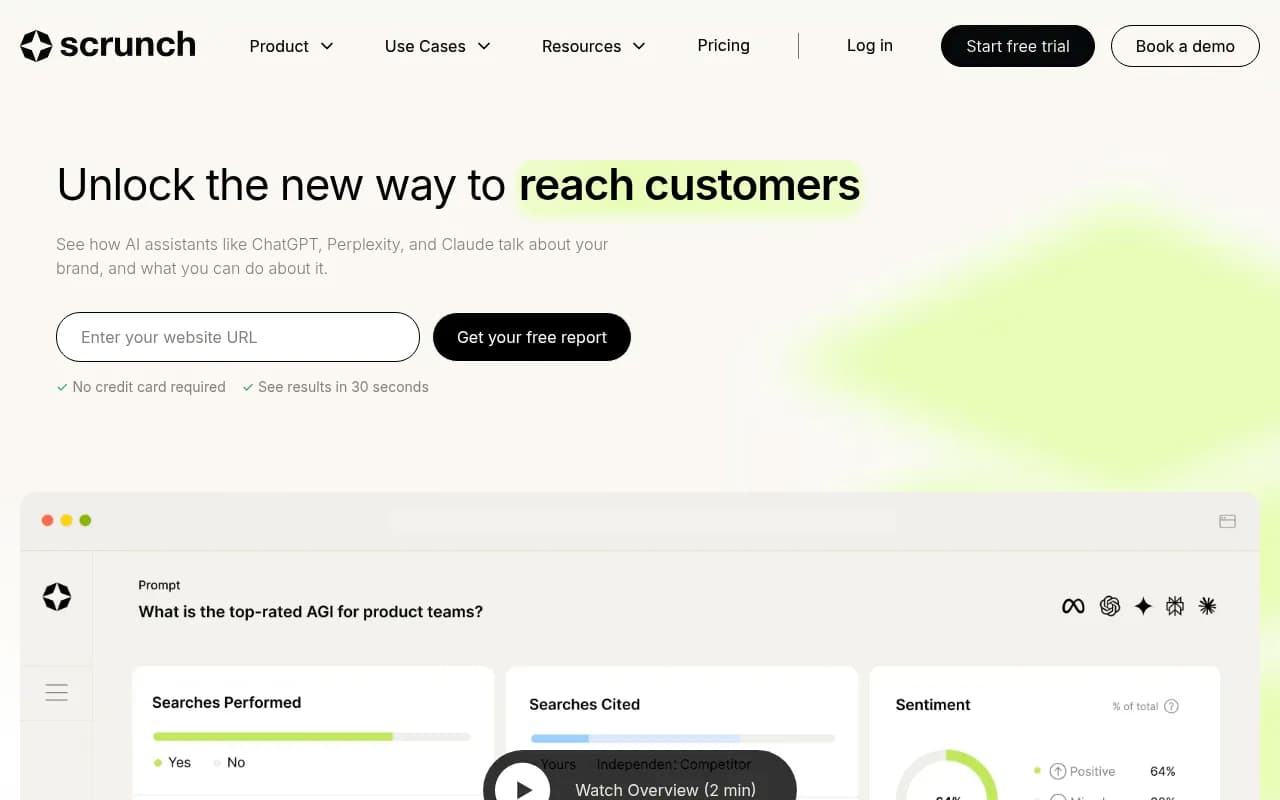
A solid monitoring product from $250 a month with a 4.6 G2 rating from 74 reviews. Check its current ownership and roadmap before signing, as that is exactly the issue you are trying to avoid.
LLMrefs and Rankscale
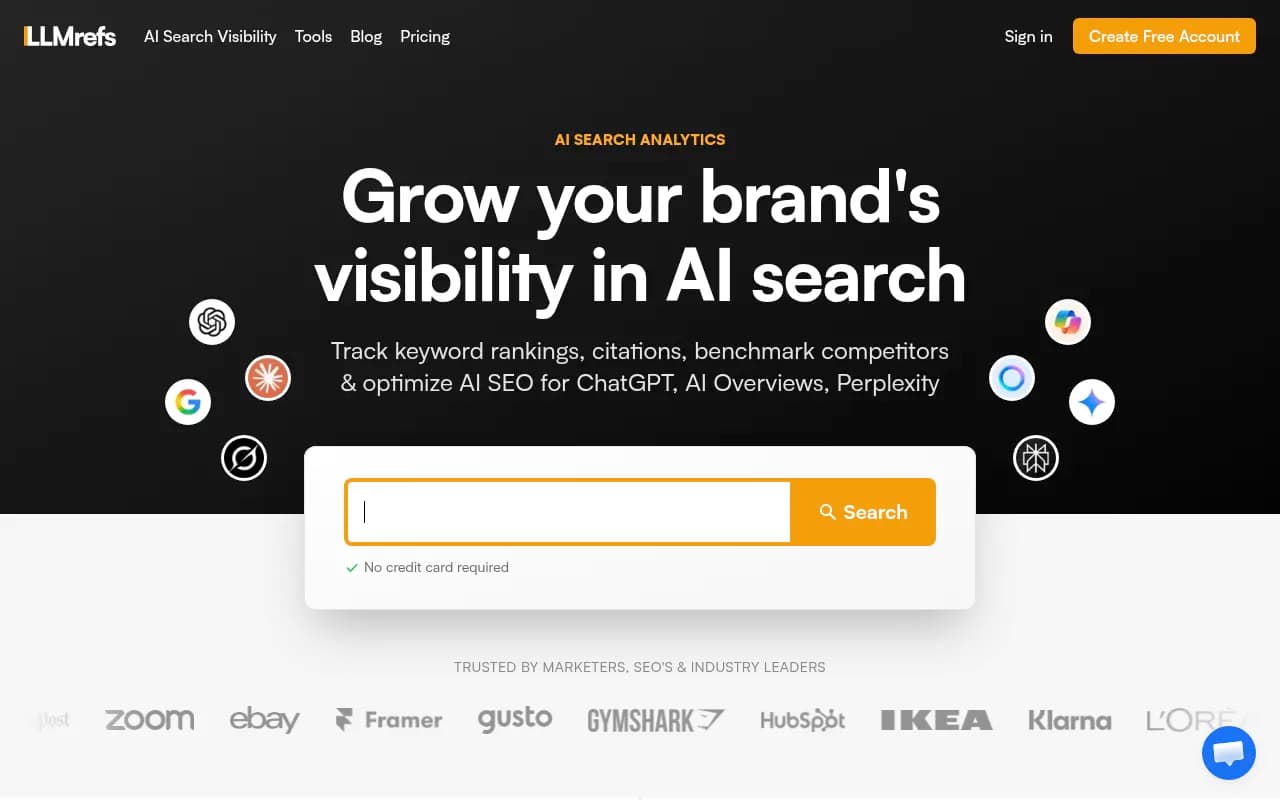
LLMrefs is flat-priced at $79 with unlimited projects and seats, but tracks keywords rather than exact prompts and reports weekly. Good for agencies that want breadth cheaply.
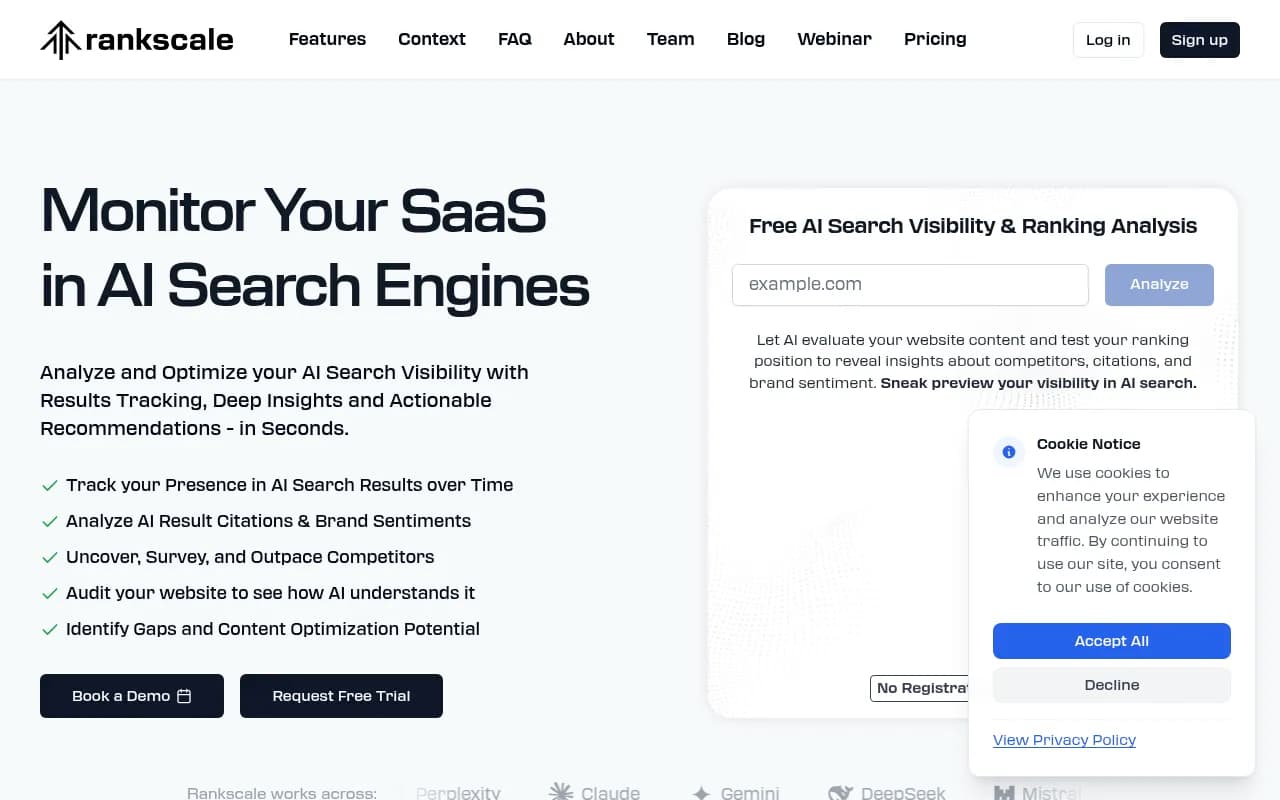
Rankscale is credit-based like AthenaHQ, so if credits were your frustration, it will feel familiar.
Which one should you pick
- You use Bloomreach already and sell products online: wait for the early 2027 combined roadmap, and keep AthenaHQ.
- You want to track and fix visibility, then prove traffic: Promptwatch.
- You have almost no budget: Otterly.AI or LLMrefs.
- You are enterprise and want a sales-led relationship: Profound.
- You manage many client brands: look at agency tiers. Promptwatch's Kick-off plan is $199/mo with unlimited projects and prompts, and the agencies page has the detail.
For a wider catalog of options, the GEO software directory at bestgeosoftware.com lists dozens more.
How to move without losing history
- Export what you can now: prompts, responses, citations and competitor lists, as CSV.
- Rebuild your prompt set in the new tool, grouped by topic. Add buyer personas if the tool supports them.
- Run both tools in parallel for 2 to 4 weeks. Scores will not match, because every vendor scores differently. Compare direction and rank order, not absolute numbers.
- Set up crawler and visitor tracking before you change anything on your site, so you have a clean before-and-after.
- Cancel once the new baseline is stable, not before.
Final thoughts
Acquisition announcements are mostly noise for the first quarter. What matters is that your tracking vendor's incentives have changed. Bloomreach wants AI visibility to feed its engagement stack, which is great if you are in that stack and neutral if you are not. Ask for the commitments in writing, test one alternative in parallel this month, and make the decision at renewal with real data instead of a press release.
FAQ
Is AthenaHQ shutting down?
Nothing published says so. Bloomreach says existing accounts, contracts and support stay intact, and the first combined use cases come in early 2027. There is no official word on the standalone product's long-term future.
Who bought AthenaHQ and for how much?
Bloomreach, announced November 16, 2026. The price was not disclosed.
Will AthenaHQ pricing go up?
Unknown. No official statement exists. Third-party sites list paid plans from $295 a month on a credit model, so ask for a price lock before renewing.
What is the Athena Citation Engine?
ACE is AthenaHQ's proprietary model that forecasts how likely a piece of content is to be cited by AI engines, then suggests what to do about it.
Should I switch now?
Only if you are near renewal or already unhappy. Otherwise run a trial of an alternative in parallel and decide with data.