
Key takeaways
- Three notable AEO and AI visibility deals closed or were announced between October 2025 and June 2026: HubSpot with XFunnel, Adobe with Semrush, and Sitecore with Scrunch.
- I found no verified evidence of AEO platform shutdowns in 2026. Consolidation so far means being absorbed into a larger suite, not disappearing.
- Acquisition is not automatically bad news, but it changes pricing, roadmap and who the product is built for. Put continuity terms in the contract.
- Judge staying power on funding, security attestations, data pipeline quality, how dependent the product is on a single platform, and how easy it is to export your data.
- Check what is shipping today versus what was announced. Adobe's merged product is a good example of the gap.
What actually happened in 2026
Let me separate what is documented from what is rumor, because the AEO space generates a lot of the second kind.
The documented consolidation is all acquisitions:
| Date | Deal | What it means for buyers |
|---|---|---|
| October 2025 | HubSpot acquired XFunnel, which became HubSpot AEO | AEO tracking moves inside a CRM suite (reported in a PingAura procurement review; I did not independently verify it) |
| April 28, 2026 | Adobe completed its Semrush acquisition, reported at about $1.9B | An SEO suite becomes part of Adobe's Experience Cloud lineup |
| June 3, 2026 | Sitecore announced it acquired Scrunch, with Bloomberg's headline putting the price at about $225M | A standalone AEO vendor gets folded into a DXP |
| June 17, 2026 | Adobe announced Adobe Brand Visibility, merging Semrush's database of 289M AI prompts with LLM Optimizer | Two products become one, at least on paper |
The Scrunch price comes from a Bloomberg headline only, and I did not check it against the article body. Treat it as indicative.
What I could not find: a single verified shutdown of an AEO platform in 2026. Roundups still list dozens of small vendors (AthenaHQ, Otterly, Peec AI, Writesonic GEO, Bear AI, Gauge, xSeek and plenty more). That does not mean they are all healthy. It means nobody has documented the failures yet, and a quiet wind-down rarely makes news. Anyone telling you the shakeout has already happened is guessing.
The pattern: suites absorb point tools
The buyers are not AEO specialists. They are a marketing cloud (Adobe), a CMS and DXP vendor (Sitecore), and a CRM (HubSpot). Each wants AI visibility data feeding its own content and customer products. That is a rational move, and it tells you where the category is heading: AI visibility as a feature of a larger platform, plus a smaller group of independents trying to stay ahead by doing the work, not just reporting.
If you are evaluating tools in the broader space, the GEO software directory at bestgeosoftware.com is a handy way to see how many independents are still out there.
What acquisition does to a product you already pay for
I have watched enough SaaS acquisitions to have opinions here. The press release is always optimistic. The reality tends to follow a few paths.
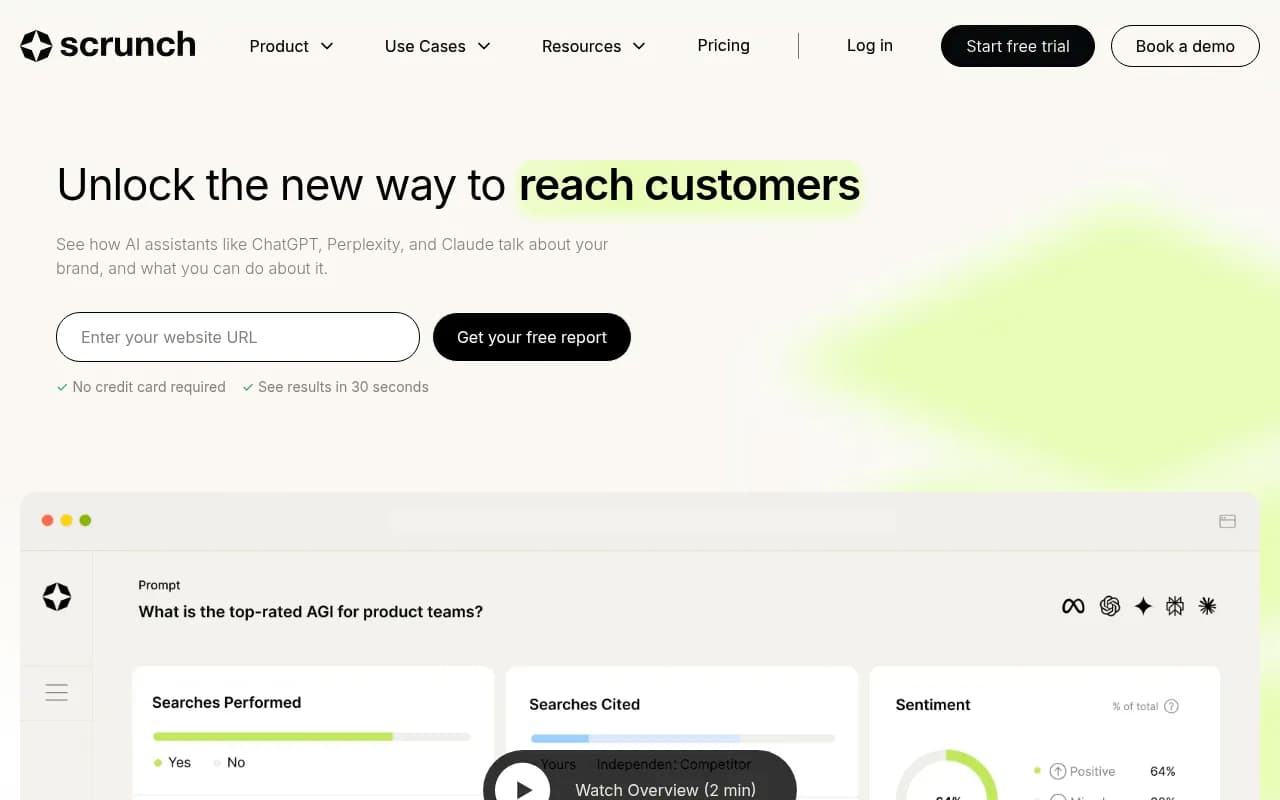
Scrunch inside Sitecore
Sitecore's announcement says Scrunch's recommendations will be automated inside SitecoreAI Content Management, Content Marketing and DAM. Scrunch says it is trusted by 500+ brands and agencies. The pitch is framed as "unlike standalone tools", which is a polite way of saying the product's center of gravity is moving toward the Sitecore stack.
If you run Scrunch on a WordPress site with no Sitecore footprint, ask yourself how long you will be the priority customer. Maybe a long time. Maybe not. That is a question for your account manager, in writing.
Semrush inside Adobe
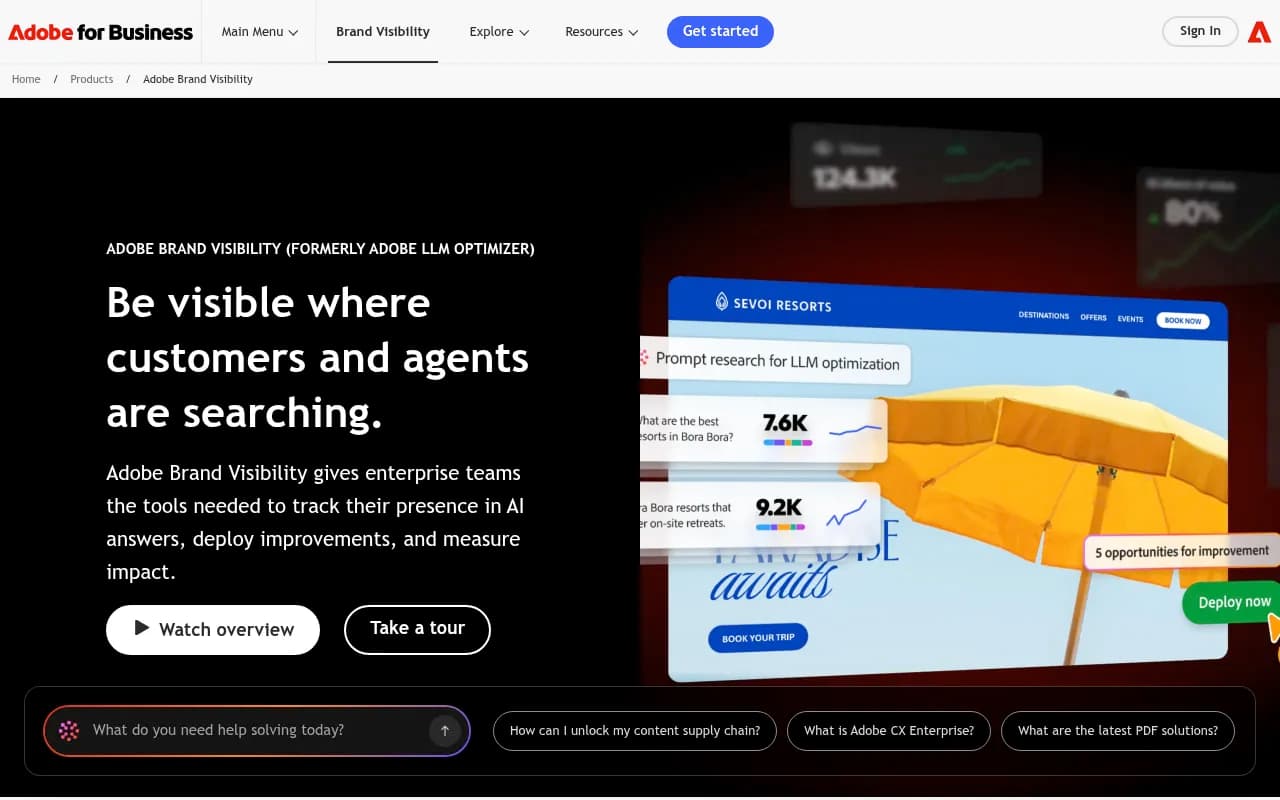
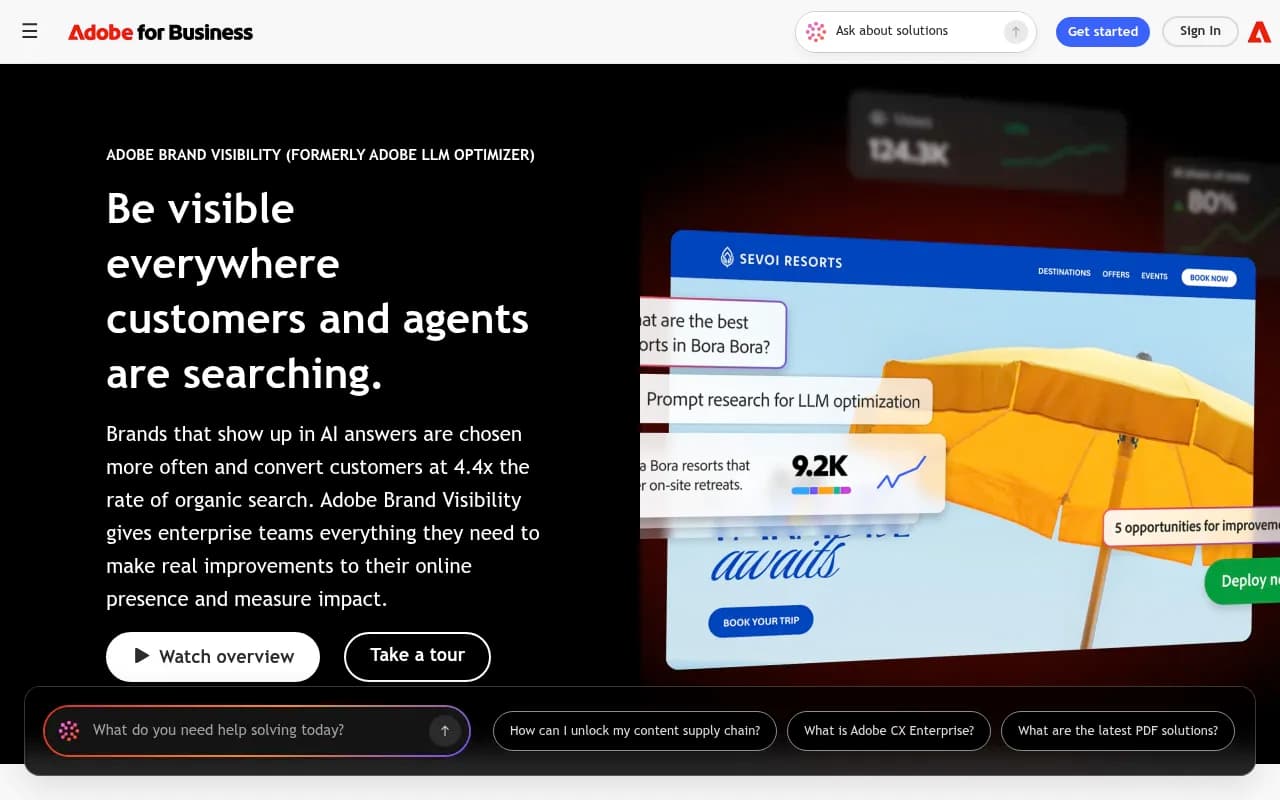
The June merger is a cautionary example of announcement versus shipping. Per the research I gathered, Adobe Brand Visibility tracks ChatGPT, Google AI Mode, Copilot and Perplexity, with Gemini planned. But the product you can actually buy today is still LLM Optimizer, which has been generally available since October 2025. So if you are buying on the strength of the merged roadmap, you are buying a promise.
HubSpot AEO
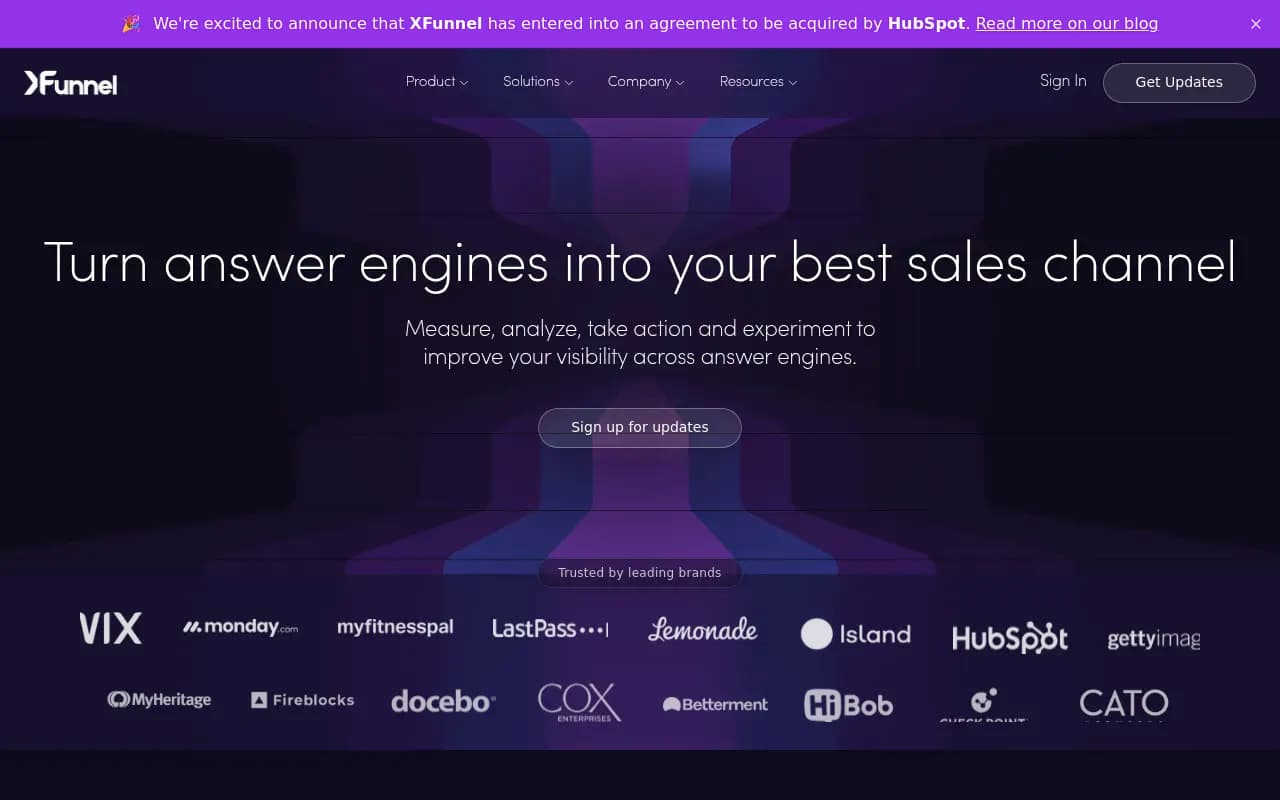
HubSpot's version of the story is simpler: a smaller AEO startup becomes a module in a CRM you may already own. That is great if you live in HubSpot. It is less great if you wanted an independent view across engines without buying into one vendor's ecosystem.
How to judge vendor staying power
None of this requires a finance degree. Here is the checklist I would actually use.
1. Who owns it and who funds it
Check the ownership and funding story. Independent and funded is a different risk from acquired or bootstrapped. I did not scrape funding or runway sources for this guide, so I cannot tell you who is well capitalized beyond what is in press releases. Ask each vendor directly: how long is your runway, who are your investors, and are you profitable?
Treat unverified roundup numbers with caution. One roundup claims Peec AI raised $29M and passed $4M ARR in ten months, but that figure is flagged as unverified in my research. Do not buy on it.
2. Security and procurement basics
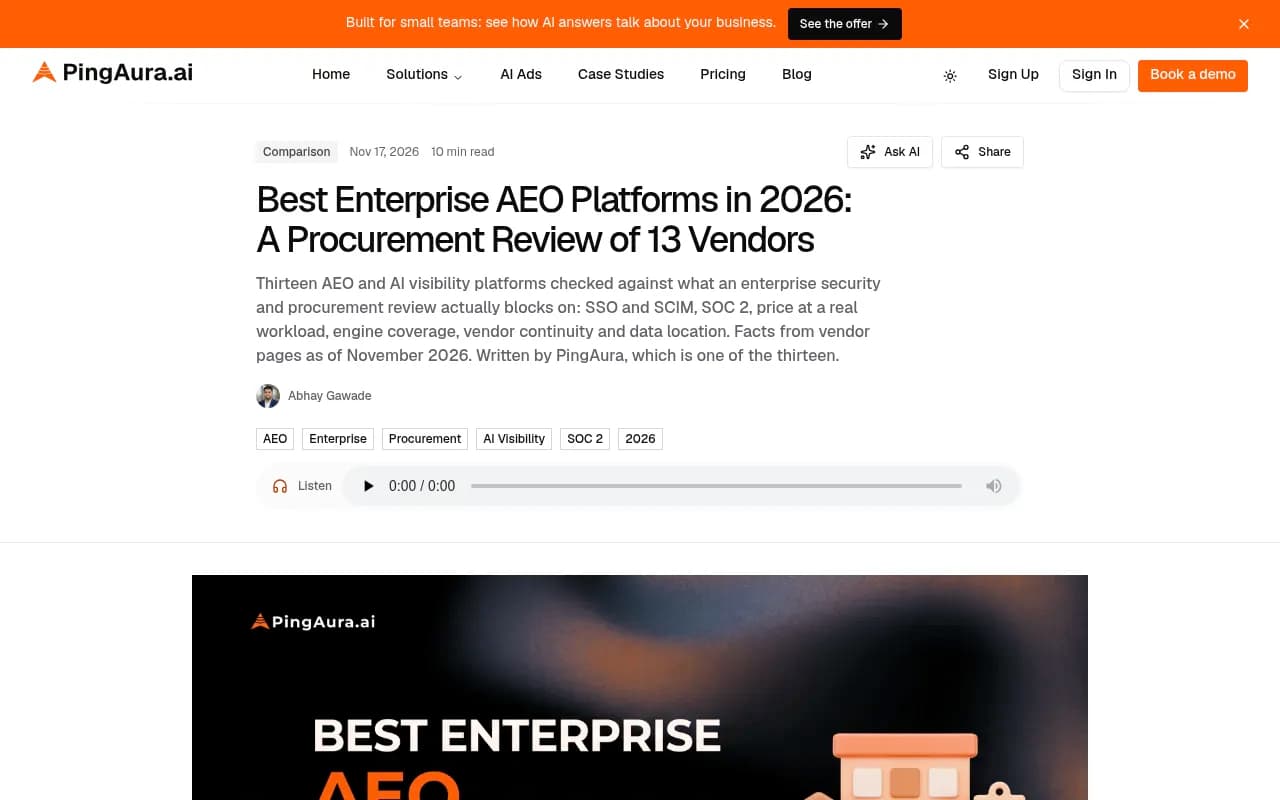
The PingAura procurement review (written by a vendor that is one of the thirteen it covers, so read it with that in mind) makes a point I agree with: enterprise purchases rarely stall on features. They stall on SSO, a SOC 2 report, audit logs, a written price at your real prompt volume, and a DPA that names a data region.
Their count: only five of the thirteen vendors publish their own SOC 2 Type II, and only four publish a price you can read without a sales call at enterprise scale. Their own caveat matters: "not stated" means they could not find it published, not that the control is absent. Ask the vendor for the report, the audit period and the product scope.
The attestation question is a useful staying-power signal on its own. A vendor that has invested in an audit expects to be around long enough to be audited again.
3. Data pipeline quality
This one is under-discussed. A tracking tool is only as good as its data collection. Promptwatch Data shows how fragmented AI citations are: between Nov 1 and Nov 25, 2026, Reddit was the most cited popular site in ChatGPT at just 0.23% of citations, with G2 and LinkedIn each at 0.18%, and the 20 sites in the chart together earned under 2% of citations (Promptwatch's November 2026 ChatGPT citation share report). Reddit's share was 3.71% in June. Patterns move that fast.
So ask a vendor: how do you collect answers, from the real interface or an API? How do you keep data comparable over time when engines change behavior? If a vendor cannot answer clearly, the trend lines you pay for may not mean much. For broader context, see Promptwatch's reports on how fast ChatGPT's behavior shifts.
4. Whether it only monitors or actually does something
Monitoring-only tools are the most exposed to consolidation. A dashboard that reports a score is easy for a suite to replicate as a feature. Tools that connect to execution (content creation, publishing, crawler analytics, traffic attribution) are harder to commoditize because the value sits in a workflow, not a chart.
That is the reasoning behind picking Promptwatch as the independent reference point in this category. It runs a loop: monitor how AI engines mention you, trace which pages get cited, act through the Action Board and Content Agent, then measure with IP-verified crawler logs and visitor analytics. It is used by 1,840+ brands and agencies, rated 4.7/5 on G2, ISO/IEC 27001 certified and GDPR compliant, and it raised a EUR 6M seed round in July 2026 after passing EUR 2M ARR in May 2026. Those are company-reported figures, so verify them in diligence like anything else. It also tracks the real interfaces of ChatGPT, Google AI Overviews, Google AI Mode, Gemini, Perplexity, Copilot and more.

If you are weighing it against a specific vendor, there are head-to-head pages, for example Promptwatch vs Profound and Promptwatch vs Semrush.
5. Exit costs
Can you export prompts, responses, citations and history in CSV or via API? Is there an MCP server or REST API so your data is not trapped? A vendor with a decent API is a vendor you can leave, which paradoxically makes them safer to choose.
A risk table you can reuse
| Signal | Lower risk | Higher risk |
|---|---|---|
| Ownership | Independent with disclosed funding, or acquired by a company with a clear AEO roadmap | Unclear ownership, no funding info |
| Product | Shipping features you can test today | Roadmap-heavy announcements (see Adobe's merge) |
| Security | Own SOC 2 Type II or ISO 27001, SSO, audit log | Nothing published, no DPA data region |
| Pricing | Written price at your prompt volume | "Contact sales" for everything |
| Data | Real-interface collection, documented method | Opaque method, unexplained jumps in scores |
| Exit | Export, API, MCP | Locked dashboards |
Contract terms worth asking for
The PingAura piece ends with seven questions to send every vendor in writing. Two of them are worth stealing outright: how are AI answers collected and what is your position on the AI providers' terms, and if you are acquired, do we get a termination right and a price lock?
My short list for any multi-year deal:
- A termination right triggered by change of control.
- A price lock or cap for the renewal term.
- Data export on termination, in a documented format.
- A written commitment that features you bought will not be removed during the term.
- A DPA naming the data region.
Most vendors will push back on some of these. The ones that agree to most are telling you something about their confidence.
The governance angle: do not let your stack sprawl
A related problem sits inside your own company. A SellersGPT governance piece on AI vendor consolidation, aimed at sales teams, cites Salesforce's State of Sales 8th Edition finding that sellers using five or more AI tools reported 28% higher administrative overhead and 19% lower win rates than peers on two to three. That is a sales-tool study, not an AEO one, so do not stretch it too far. But the lesson transfers: if you run three overlapping AI visibility tools, someone should own the decision about which one to keep.
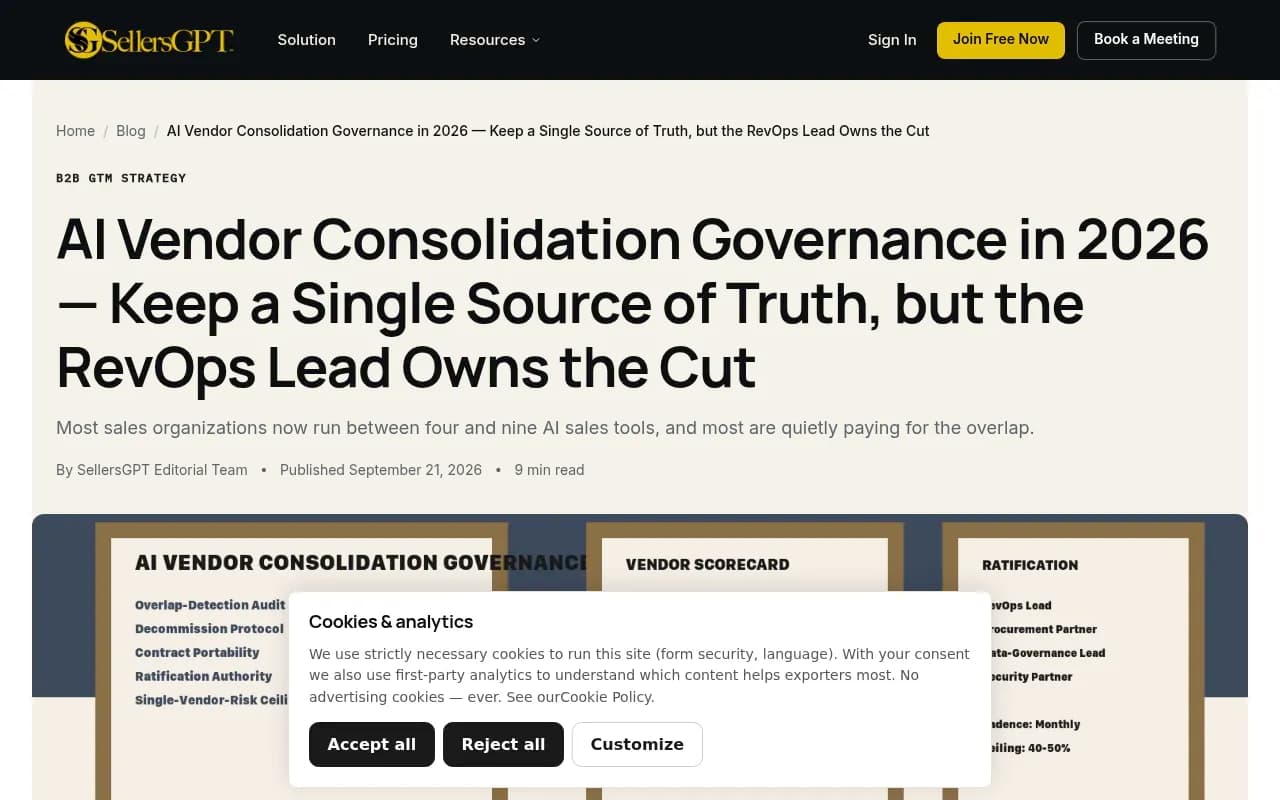
Name one owner. Write down the decommission steps before any vendor sunset email arrives, so a forced migration does not become a scramble.
Running a 30-day pilot without getting locked in
A buyer's guide published by SolCrys (another vendor, so again, a point of view) suggests a rough process: shortlist three to five vendors around the job you need done, score each on a fixed question set, then pilot the top one or two for 30 days. I think that is sensible. Add three things:
- Run the same 50 prompts in two tools and compare the answers. Big gaps are a data-quality warning.
- Test the export before you sign.
- Ask what happens to your data and pricing if they are acquired in the next 12 months.
Where to browse alternatives
If a vendor you use gets absorbed and you need a shortlist, the directories help. The tools below are ones in our catalog that are positioned as independent or enterprise-oriented AEO options. Check each vendor's current ownership yourself.
| Tool | Positioning | Worth a look if |
|---|---|---|
| Promptwatch | End-to-end visibility, content and crawler analytics | You want execution, not just a dashboard |
| Profound | Enterprise AI visibility tracking | You need a large-enterprise monitoring tool |
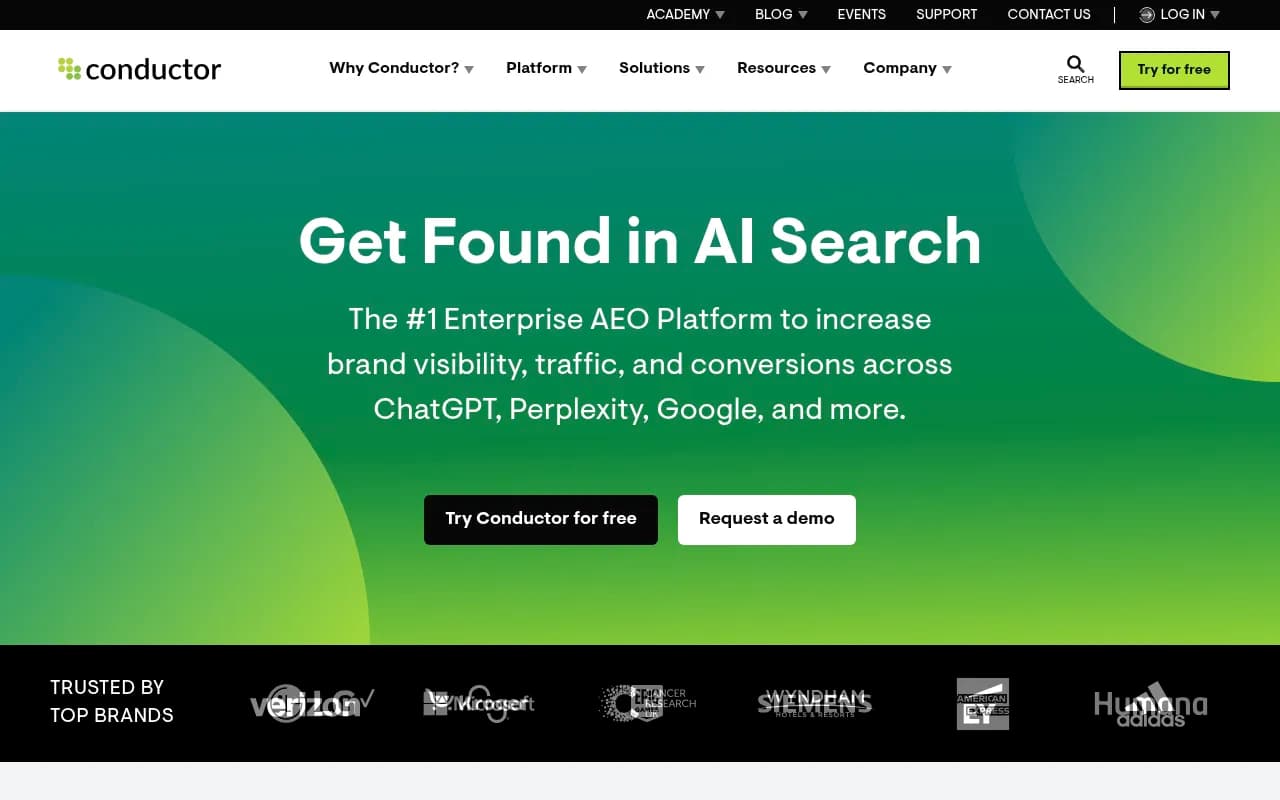
| Conductor | AI visibility with persona customization | You already use it for SEO |
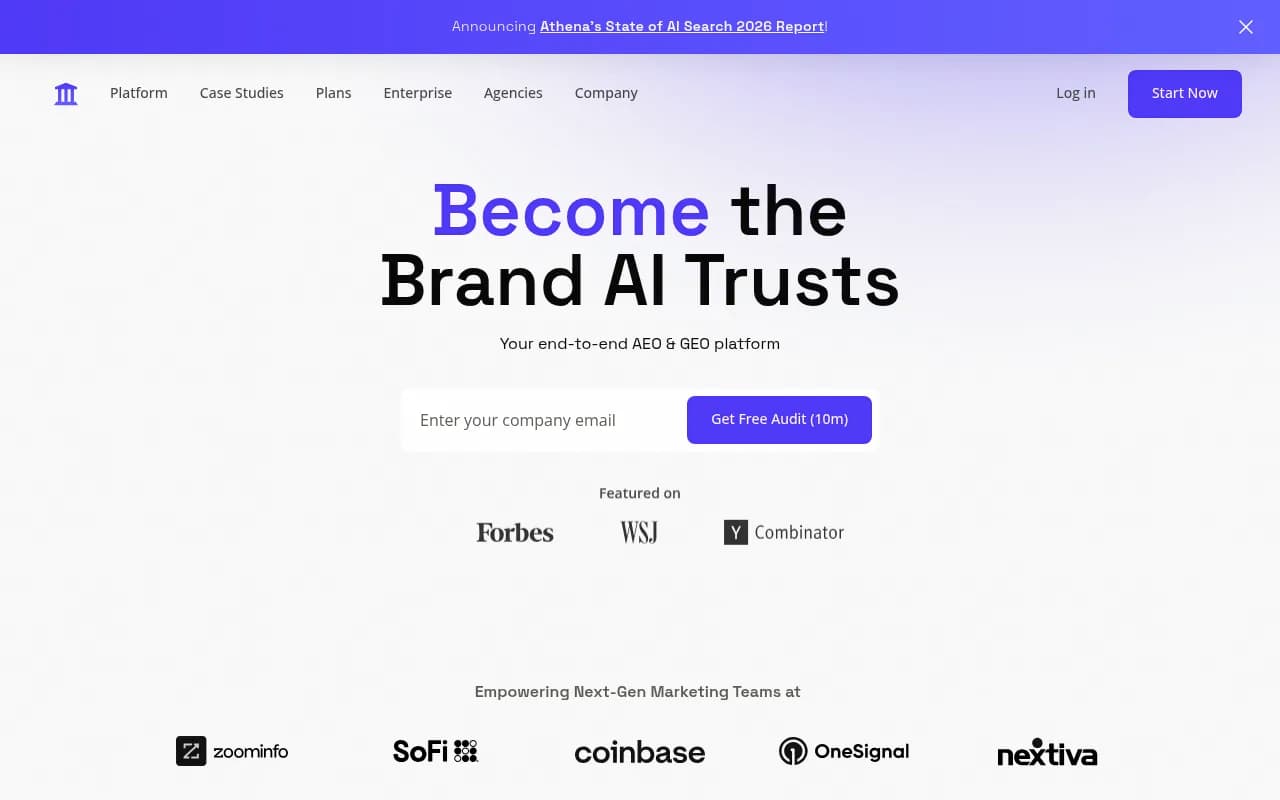
| AthenaHQ | Multi-engine tracking | You want a mid-priced monitor |
| Peec AI | Multi-language tracking | You need many markets |
| Otterly.AI | Affordable monitoring | You are budget-constrained |
| Goodie | Monitoring and optimization | You want SOC 2 coverage |



For a wider view of rank and visibility trackers, the AI rank tools directory is a good second stop.
A note on what to ignore
Some of what you will read is noise. Vendor-authored comparisons rank their author well. Roundup price points often come from affiliate sites and go stale. The $1.8B valuation mentioned in the PingAura review? I could not verify which vendor it refers to, so I am not repeating it as fact. If a number matters to your decision, ask the vendor for it.
Also ignore the idea that your AI visibility is only a function of the tool you buy. One practitioner on YouTube described generating around 61,000 visitors from ChatGPT and other LLMs in Q1 2026 without an AEO strategy, just from years of SEO and brand work. That is one anecdote, but it is a reminder that the tool measures and helps you act. It does not create authority by itself.
If you want a second opinion
Choosing a vendor in a consolidating market is partly a strategy question. If you would rather have a team pressure-test your shortlist, 1001 SEO Media does SEO and AI search consulting, and works with Promptwatch as its AI visibility platform. That is a disclosure as much as a pitch: we publish this site.
Frequently asked questions
Have any AEO platforms shut down in 2026?
I found no verified shutdowns. What is documented is acquisitions: HubSpot and XFunnel, Adobe and Semrush, Sitecore and Scrunch.
Should I avoid a tool that just got acquired?
Not automatically. Ask about the roadmap, pricing and whether your use case still matters to the new owner. Get answers in writing.
What is the single best staying-power signal?
There is no single one, but a published security attestation plus a usable export and API says a lot. A vendor that expects customers to leave is usually confident they will not.
Is a suite safer than an independent?
Safer from disappearing, yes. Less safe from being deprioritized or bundled with products you do not need. It depends on whether you already live in that vendor's ecosystem.
Where can I verify Promptwatch pricing?
At promptwatch.com/pricing, where there is also a 7-day free trial on monthly billing for paid plans.