
Key takeaways
- Most "free" AEO offers are one of three things: a manual method with no tool, a one-off grader, or a time-limited trial. Very few are free forever.
- Free tiers usually cap prompts (10 to 25), engines (often 3), and history. Google AI Overviews, AI Mode and Copilot are the engines most often left out.
- A single free check is one sample, not a fact. AI answers vary run to run, so you need repeated tracking before you act on anything.
- Pricing and trial terms in third-party roundups conflict. Confirm every number on the vendor's own pricing page before you commit.
- Free is enough to find out whether AI mentions you. It stops being enough when you need to fix what you find.
What "free" means in AEO tools
I went through a pile of 2026 roundups for this guide, and the first thing I noticed is how loosely the word "free" gets used. A 7-day trial with preset prompts is not the same thing as a free account you can keep. A one-time grader is not tracking at all.
There are three real categories:
- Manual, no tool. You use the free consumer versions of ChatGPT, Perplexity, Gemini and Claude and log what comes back.
- One-off graders. You enter your brand, get a snapshot, and that's it. No trend line.
- Freemium or trials. An actual dashboard, with caps on prompts, engines, and time.
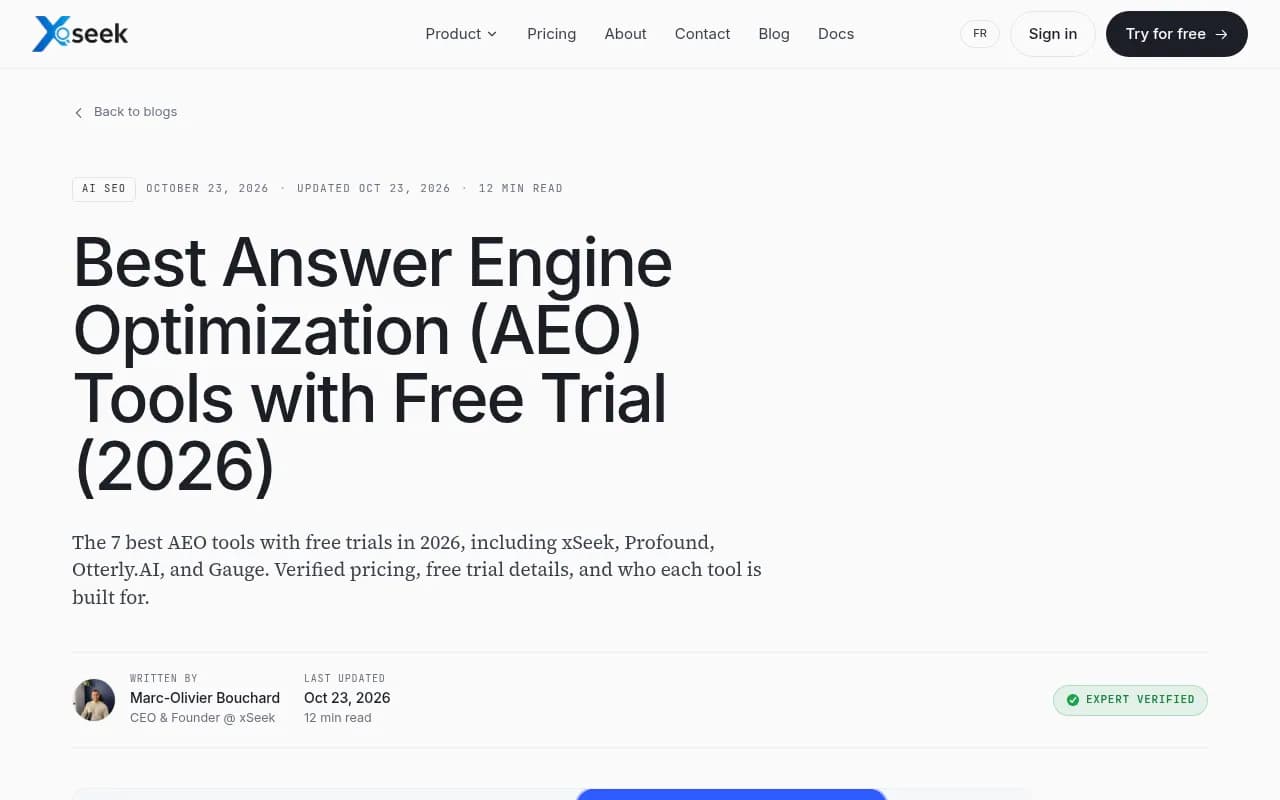
Keep that split in mind. It explains most of the confusion in vendor-written comparisons, and a lot of those comparisons are written by the vendors themselves (xSeek, Yozigo, Agentcy and ziptie.ai all publish their own rankings), so treat their ordering with some suspicion.
Start with the manual method
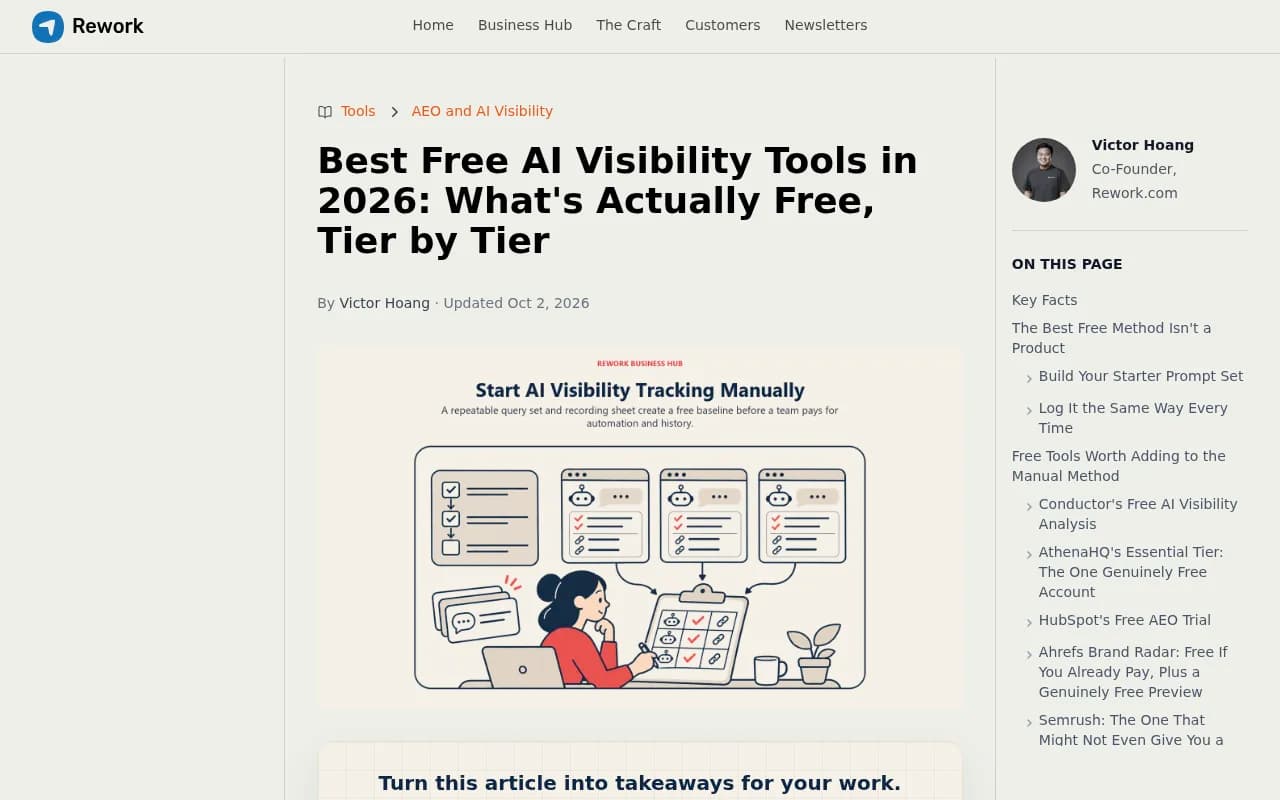
The Rework guide on free AI visibility tools makes a point I agree with: the manual method is the baseline every paid tool gets measured against, not a consolation prize. It costs nothing and takes an afternoon.
Open ChatGPT, Perplexity, Gemini and Claude. Ask 10 to 20 questions your buyers would actually ask. Log the results in a spreadsheet with these columns:
- Date
- Engine
- Prompt
- Mentioned?
- Cited or linked?
- Domain cited instead
- Competitors named
- Notes
Keep "mentioned" and "cited" as separate columns. BuzzStream's data, quoted in the Rework piece, found only 23.1% of brand mentions come with a citation, and just 13% of brands get both in the same answer. Blend them into one score and you hide the actual problem.
Cover six prompt types: direct brand lookup, head-to-head comparison, problem-first with no brand named, "best of" buying intent, pricing or feature questions, and a negative or risk question. Run it for your brand plus two or three competitors. That gives you 15 to 20 prompts a week.
Why one check is never enough
SparkToro's Rand Fishkin ran about 3,000 queries across 12 prompts and found less than a 1% chance that ChatGPT or Google's AI returns the identical brand list twice. So your first manual check is a sample. Repeat it weekly before you trust a pattern.
Churn is the other problem. SISTRIX's 17-week study, again via Rework, found ChatGPT replaces 74% of its cited sources weekly and Google AI Mode replaces 56%. A quarterly check misses most of that movement.
One-off graders: useful, but a single snapshot
These give you a quick read and no history.
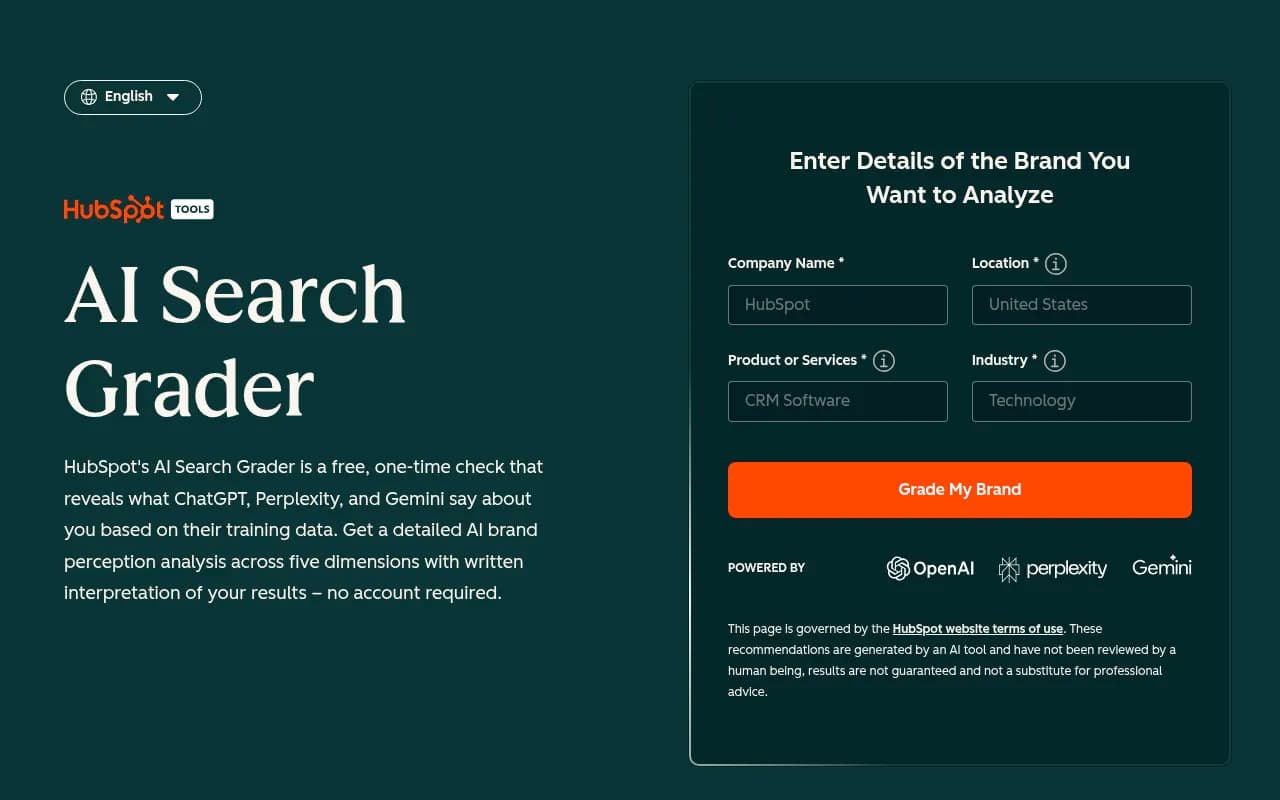
HubSpot's AEO Grader is a free one-time check that doesn't need an account. Profound also publishes a free AEO report at tryprofound.com/aeo-report. Agentcy has a free visibility checker, and a few others in the catalog (FalconRank, GEO Toolbox, Am I on AI?) do similar jobs.
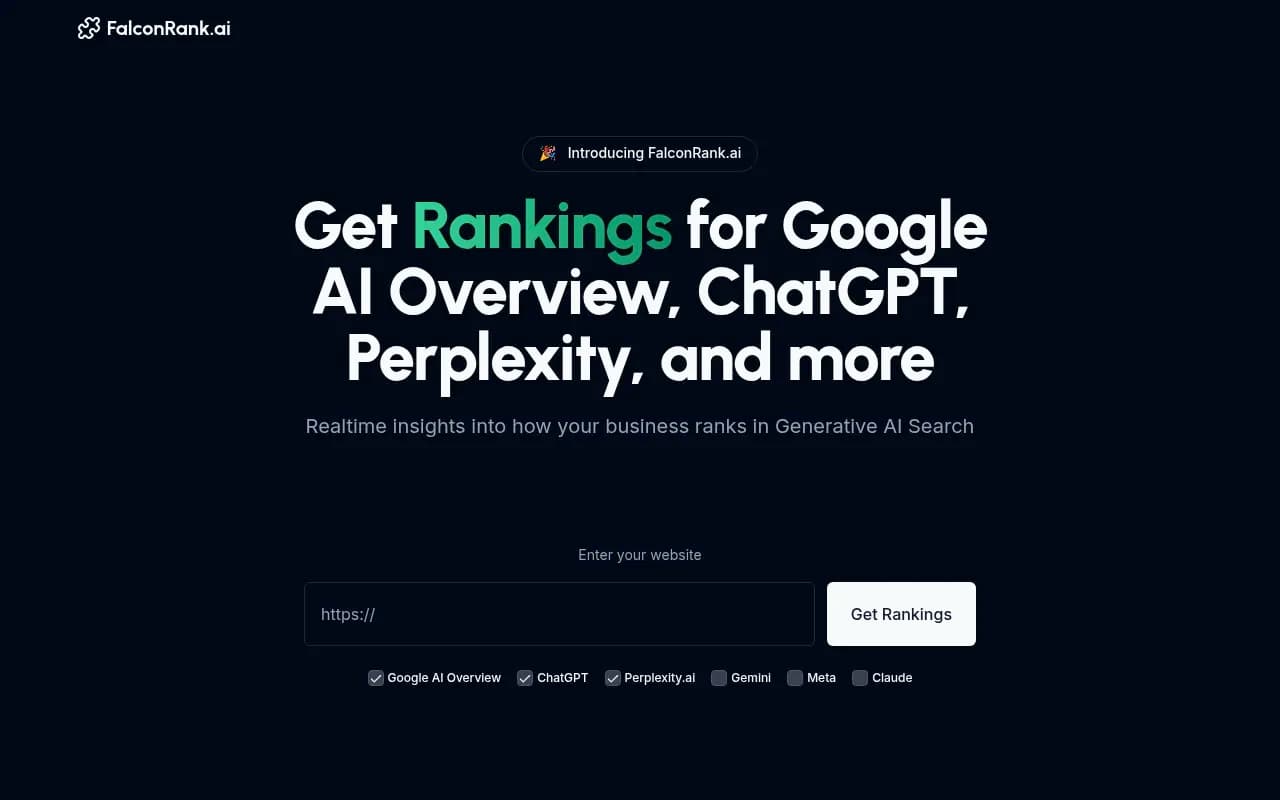
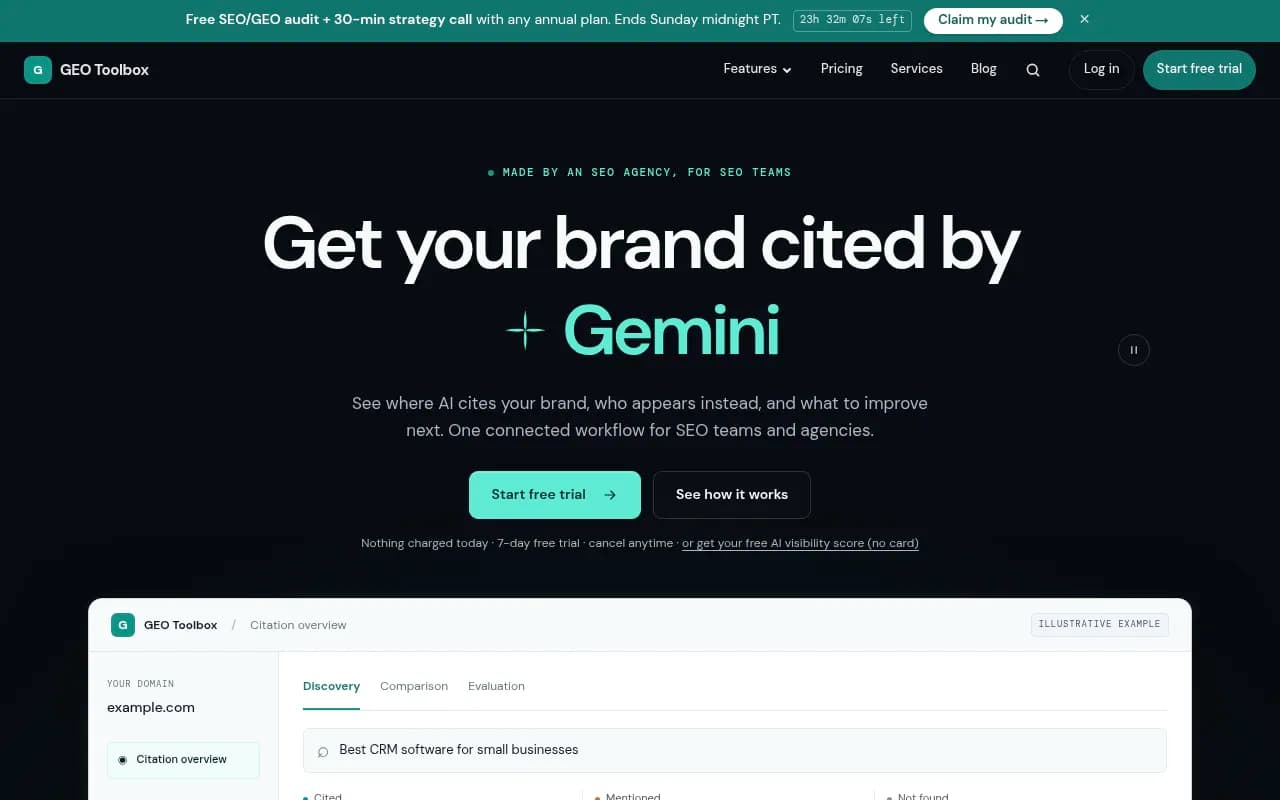
Use a grader to get a first impression or to build a case for budget. Don't use it to measure change over time, because it can't.
If you want a crawler-side check rather than a visibility score, Promptwatch's free Agentic Readiness Check shows which AI crawlers can read your site. Crawler access is a different problem from visibility, and free graders almost never cover it.
Freemium and trial tiers, one by one
Here is where the limits get specific. Remember that I'm drawing on third-party roundups, not vendor pricing pages, so check each one yourself.
AthenaHQ
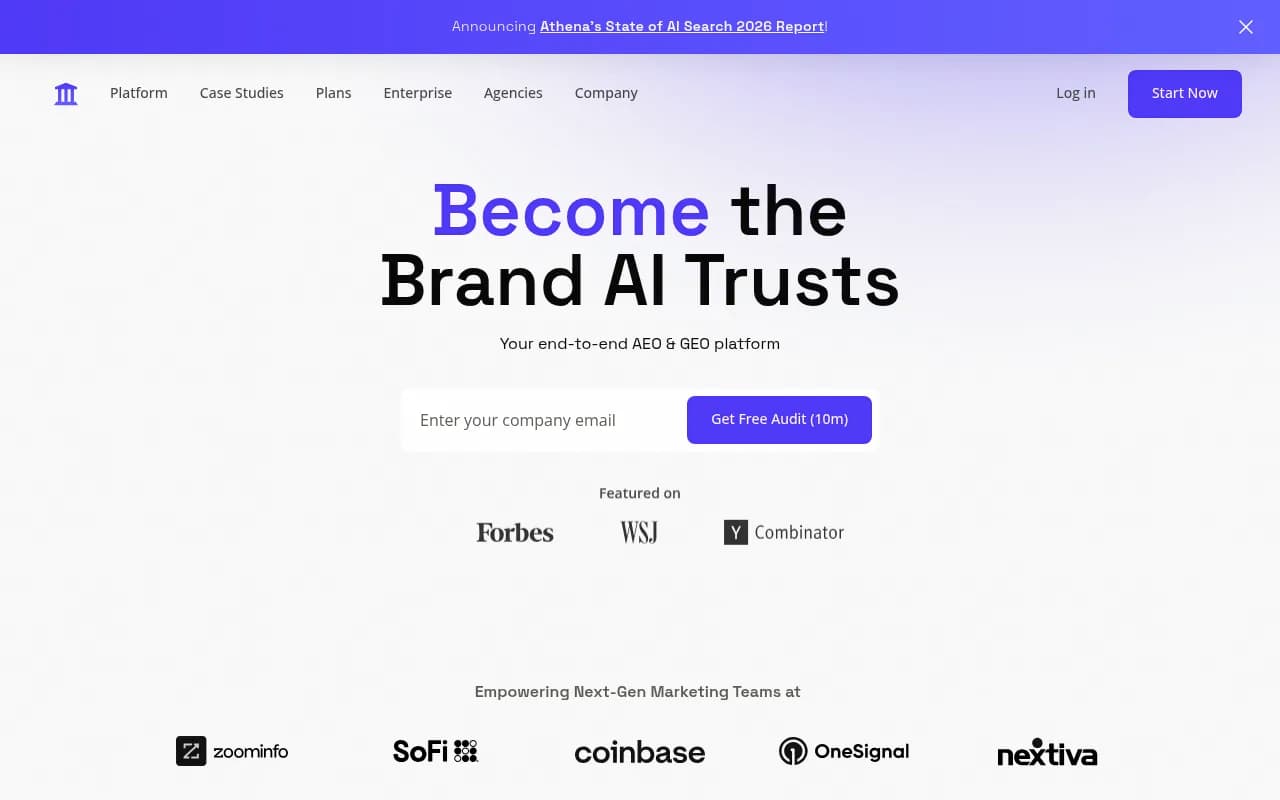
One roundup describes AthenaHQ's Essential tier as the only genuinely free plan among the nine tools it compared. The catch: sources disagree on what you get. One says 300 credits across five engines, others say $25 of credit. Paid plans start around $295 a month, and the fact-check feature is Enterprise-only. Check athenahq.ai/pricing.
HubSpot AEO
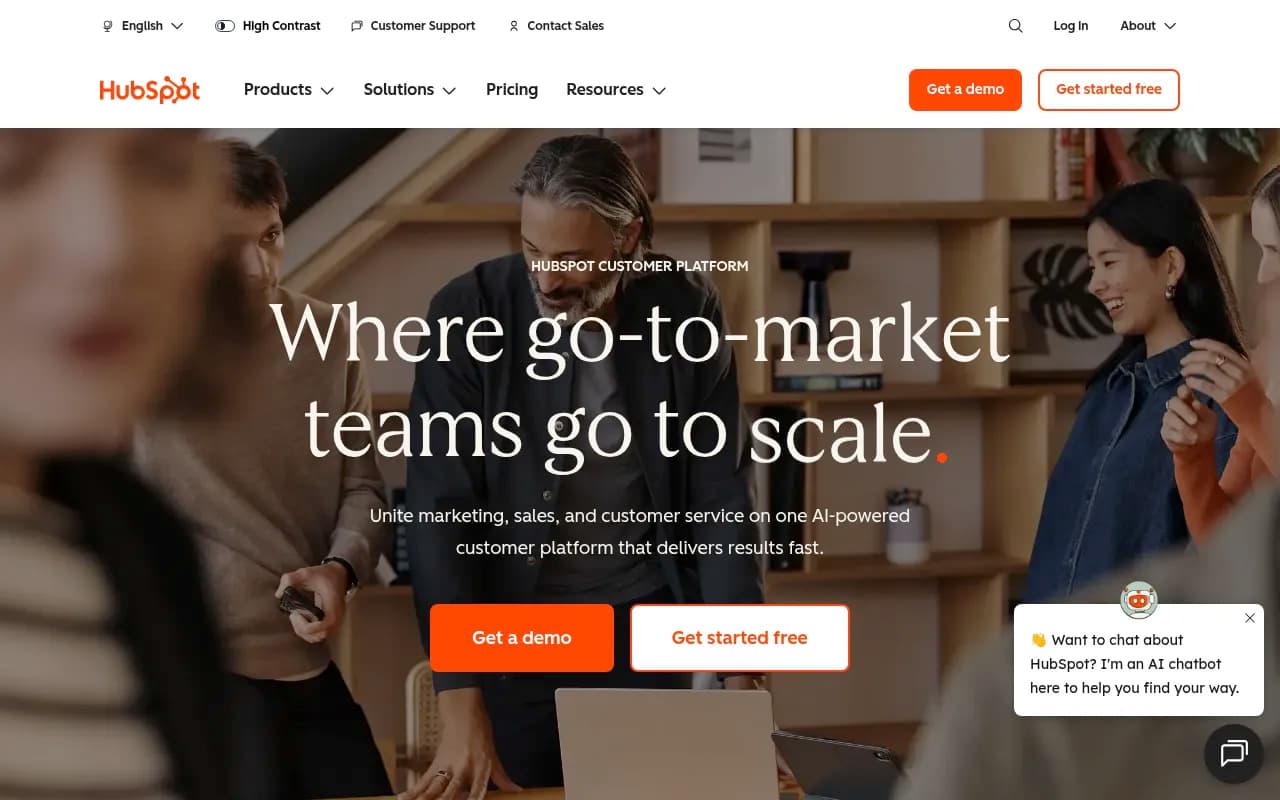
HubSpot AEO runs $50 a month ($45 billed annually) per brand with 25 prompts, and it's included in Marketing Hub Pro and Enterprise. It covers ChatGPT, Perplexity and Gemini, and skips Google AI Overviews, AI Mode and Copilot. The trial terms conflict: xSeek says 28 days and 10 prompts on ChatGPT, Rework says 25 prompts. One of them is out of date.
Profound
Profound offers a 7-day trial, then custom pricing. Trial prompts are reportedly preset and can't be edited, which limits how useful the trial is for your own market. The paid plan covers up to 9 engines and includes a FactCheck module.

xSeek
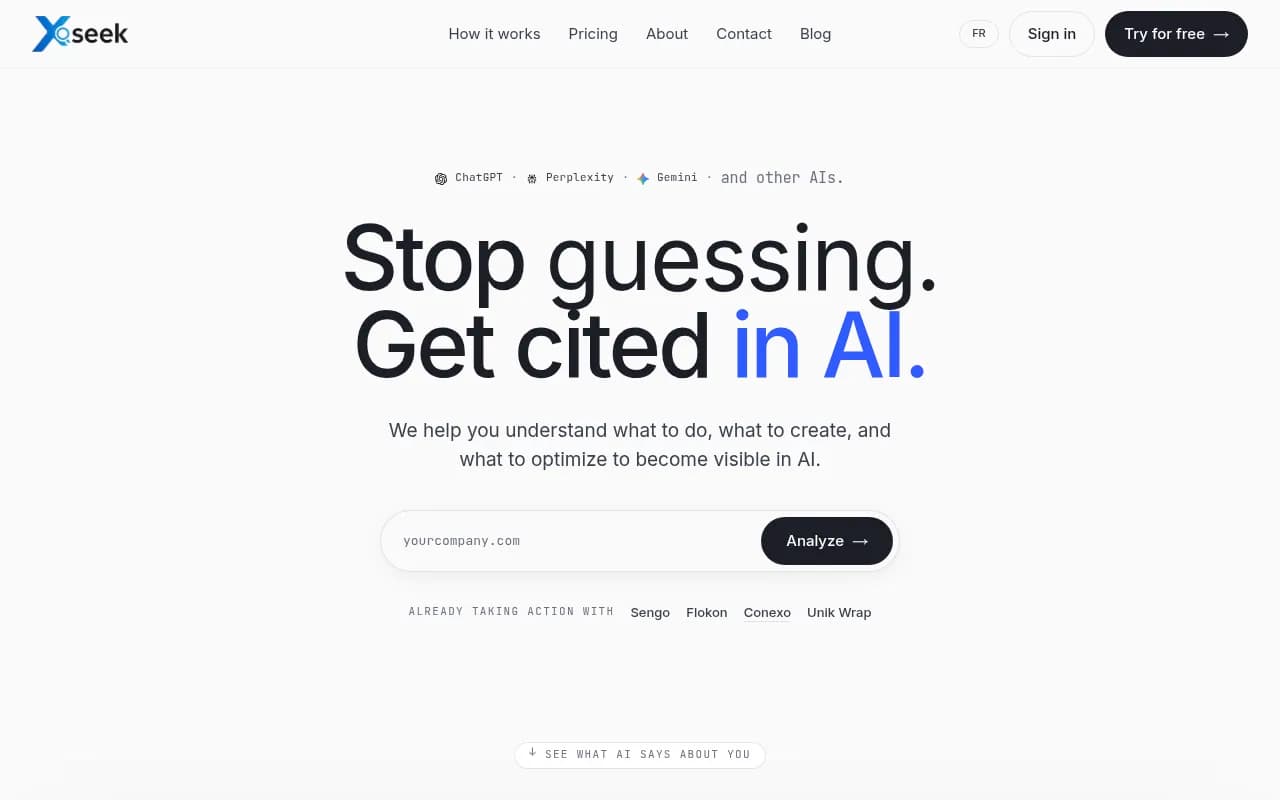
xSeek has a free workspace that allows one run of up to 15 questions. Paid Essential is $49 a month for 10 prompts on 3 engines (ChatGPT, Perplexity, Gemini). Growth adds AI Overviews, Copilot and optional Claude, Grok and DeepSeek.
AirOps and AEOCrawler
AirOps has a free single-user tier, but paid plans jump from roughly $200 a month (Solo) to roughly $2,000 (Pro), per TechRadar. That's a steep climb. AEOCrawler's Explorer tier is free.
Cheap paid entry points
Not free, but close enough to mention:
- Otterly.AI: Lite at $29 a month, 15 prompts, daily. Gemini, AI Mode and Claude are paid add-ons.
- Yozigo: 14-day no-card trial, Solo at $39 a month (vendor-written comparison, so salt applies).
- Ahrefs Brand Radar: from $50 a month.
- Peec AI: Starter about 89 euros a month, 50 prompts, 3 models you choose.
- Semrush AI Visibility Toolkit: $99 a month, 25 prompts.


Open source
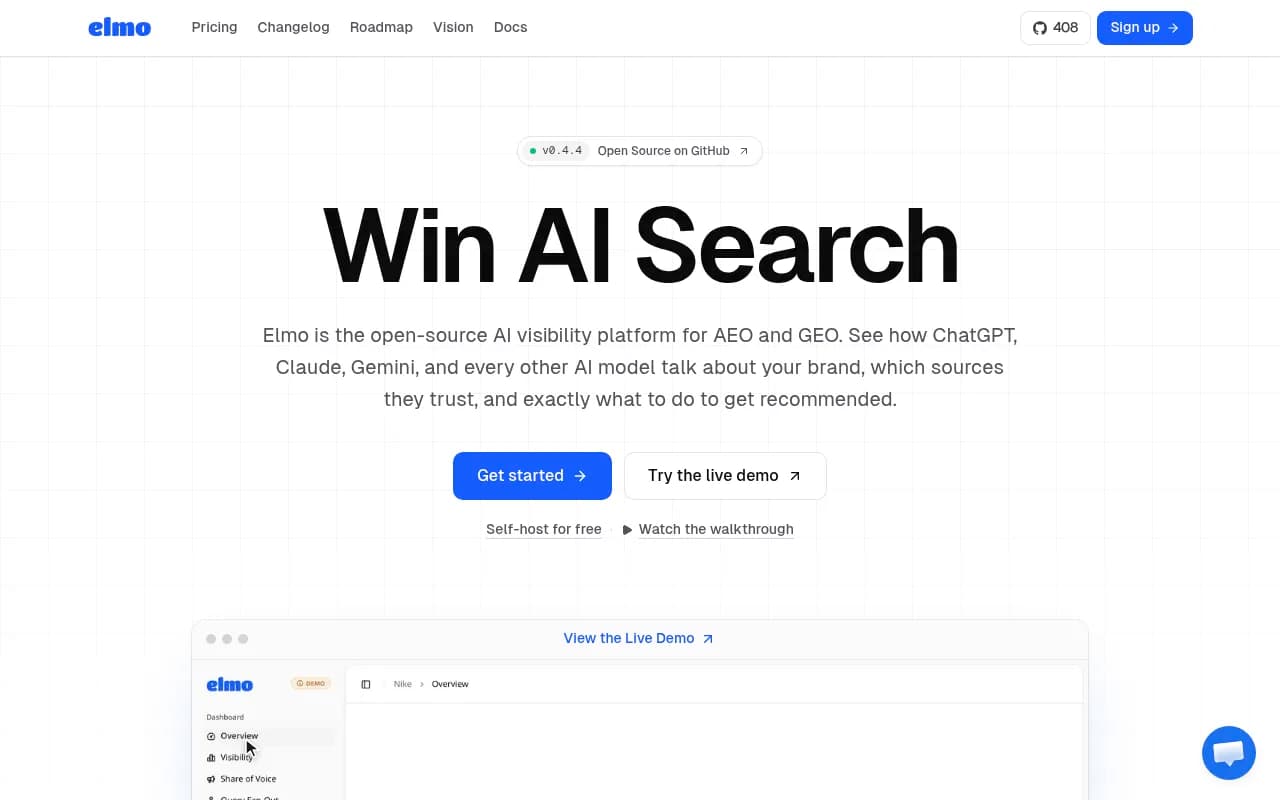
If you're technical and want no vendor at all, Agentcy publishes a self-hosted ChatGPT tracker on GitHub under an MIT licence, and Elmo is an open-source, self-hosted visibility platform. You trade money for setup time and maintenance.
Comparison table
| Option | Type | What you get | Where it stops |
|---|---|---|---|
| Manual spreadsheet | DIY | Any engine you can open, any prompts | Your time; no automation |
| HubSpot AEO Grader | One-off grader | Snapshot, no account | No tracking over time |
| Profound AEO report | One-off report | Snapshot of your brand | No ongoing monitoring |
| xSeek free workspace | Freemium | One run, up to 15 questions | One run only |
| AthenaHQ Essential | Freemium | Credit-based allowance (sources disagree) | Fact-check is Enterprise; paid from about $295/mo |
| HubSpot AEO trial | Trial | 10 to 25 prompts, 3 engines | No AI Overviews, AI Mode, Copilot |
| Profound trial | Trial | 7 days, preset prompts | Can't edit prompts; then custom pricing |
| AirOps free | Freemium | Single-user tier | Paid jumps from about $200 to $2,000/mo |
| Otterly.AI Lite | Paid entry | $29/mo, 15 prompts, daily | Several engines are add-ons |
The limits that bite
Across every tier above, the same walls show up.
Prompt caps. Entry plans sit at 10 to 50 prompts. That's fine for a brand with one product and one market. It's tight if you have several product lines or several languages.
Engine caps. Three models is common. Peec limits Starter to three of its available models. Promptwatch's data on average sources per response shows why this matters: ChatGPT cites about 5 sources per web-search answer, Google AI Overviews about 10, and Perplexity almost exactly 10. These engines behave differently, so a tool that skips the Google surfaces gives you a partial picture. Check what your buyers actually use before you pick a three-engine plan.
Missing Google surfaces. AI Overviews, AI Mode and Copilot are often absent or paid add-ons. Given that AI Overviews pulled 13.16% of its citations from social platforms against 0.64% for ChatGPT in Promptwatch's November 2026 social citation report (Oct 11 to Nov 9), the engines really do differ in what they reward.
Preset prompts. Some trials fix the prompt list. You end up measuring someone else's market.
No history. Graders read once. If you can't see change, you can't tell whether anything you did worked.
Tracking, not fixing. This is the big one, and almost no free tier touches it. Knowing you're missing from a ChatGPT answer is step one. Writing the page, publishing it, and checking that AI crawlers read it is the other 90% of the work.
What to look for before you pay
When free runs out, ask these questions of any platform:
- Does it query the real interfaces of the AI engines, or just APIs? User-facing answers and citations can differ from API output.
- Can you edit the prompt list and choose country and language?
- Does it separate mentions from citations?
- Does it show which pages of yours get cited, and which competitor pages get cited instead?
- Can it tell you whether AI crawlers can read your site at all?
- Does it help you produce content, or only report a score?
- Does it measure AI-referred traffic so you can tie any of this to revenue?
Pew Research found in July 2025 that users click a website 8% of the time when an AI summary appears, against 15% without one. Clicks are scarcer, so being cited and being accurate matter more than a raw visibility score.
When to move beyond free
A reasonable path looks like this.
- Week 1 to 2: Run the manual method and one or two graders. Learn whether you're mentioned, cited, or absent.
- Week 3 to 4: Take one trial with your own prompts, not preset ones. Compare it with your spreadsheet.
- Month 2: If you're missing from key prompts, you need a platform that can find content gaps and help you close them. That's the point where free tiers end.
For teams at that stage, Promptwatch is the platform I'd look at first. It's built as an end-to-end loop rather than a dashboard: it monitors ChatGPT, Gemini, Perplexity, Google AI Overviews, AI Mode and others from their real interfaces, traces which pages get cited, then its Content Agent writes and publishes pages to WordPress, Webflow or Framer, and visitor analytics and IP-verified crawler logs show whether it worked. Plans are Essential at $95 a month, Professional at $245, and Business at $579, with the Content Agent starting on Business. There's a free Explore plan (ChatGPT only, 10 prompts) for evaluation and a 7-day free trial on the paid plans. Confirm current pricing at promptwatch.com/pricing.

If you manage clients, the agency plans start at $199 a month with unlimited projects and AI Visibility Reports you can use for pitches. See Promptwatch for agencies.
If you'd rather hire people than buy software, an agency such as 1001 SEO Media handles AI search and GEO work end to end, and it uses Promptwatch for the measurement side.
For a wider shortlist of trackers, the AI rank tracking directory at ai-rank-tools.com and the GEO software directory at bestgeosoftware.com are useful starting points.
Quick decision guide
| Your situation | Start with | Move up when |
|---|---|---|
| Solo founder, no budget | Manual spreadsheet plus HubSpot AEO Grader | You need weekly trend data |
| Small team, one market | xSeek free run or AthenaHQ Essential, then a $29 to $50 tracker | You need more than 3 engines or 50 prompts |
| Already on HubSpot | HubSpot AEO | You need Google AI surfaces or content tooling |
| Technical team | Open-source self-hosted tracker | Maintenance outweighs the savings |
| Needs to fix gaps, not just see them | A free trial of a full platform like Promptwatch | n/a |
FAQ
What is the best free AEO tool in 2026?
There isn't one. The strongest free starting points are the manual method, HubSpot's AEO Grader, Profound's free AEO report, and xSeek's free workspace. They answer "am I mentioned?" once. None of them track change over time.
Is there a truly free AEO platform with ongoing tracking?
AthenaHQ's Essential tier and Promptwatch's Explore plan are the closest, but both are limited (credit allowances and a ChatGPT-only 10-prompt cap respectively). Treat them as evaluation tiers.
How many prompts do I need?
Start with 15 to 20 covering your brand and two or three competitors across the six prompt types. Entry plans of 10 to 50 prompts cover that. Past that, you're tracking multiple markets or products.
Can I trust a single free report?
No. With under a 1% chance of identical brand lists on repeat runs, one report is one sample. Repeat weekly.
Why do the numbers in different roundups disagree?
Pricing and trial terms change often, and many roundups are written by competing vendors. Verify trial length, prompt count and free allowances on the vendor's own site before deciding.
The short version: use free to learn where you stand, and budget for a paid platform once the question changes from "where am I?" to "how do I get cited?"