
Key takeaways
- AthenaHQ tracks product recommendations in ChatGPT, AI Mode and Gemini shopping carousels through Shopping Insights. Its documented catalog write-back reaches Shopify only, on Enterprise and Agency plans.
- Most alternatives fall into three groups: shopping trackers (Peec AI, LLM Pulse, Hall AI), platforms that also draft product fixes (Profound, Ranketta, Glim AI, Goodie AI), and end-to-end platforms that connect tracking, content, crawler logs and AI traffic (Promptwatch).
- ChatGPT shopping cards are still rare. In Promptwatch Data they show up in a low single-digit percentage of web-search responses, but they concentrate on commercial and transactional prompts, which is where ecommerce lives.
- Ads are the other new surface. Promptwatch Data shows ads in about 20% of ChatGPT web-search responses over a 90-day window, so check whether a tool covers ads before you buy.
- Pricing in this guide comes from vendor pages and third-party comparisons. Confirm current numbers before you commit.
Why ecommerce teams look past AthenaHQ
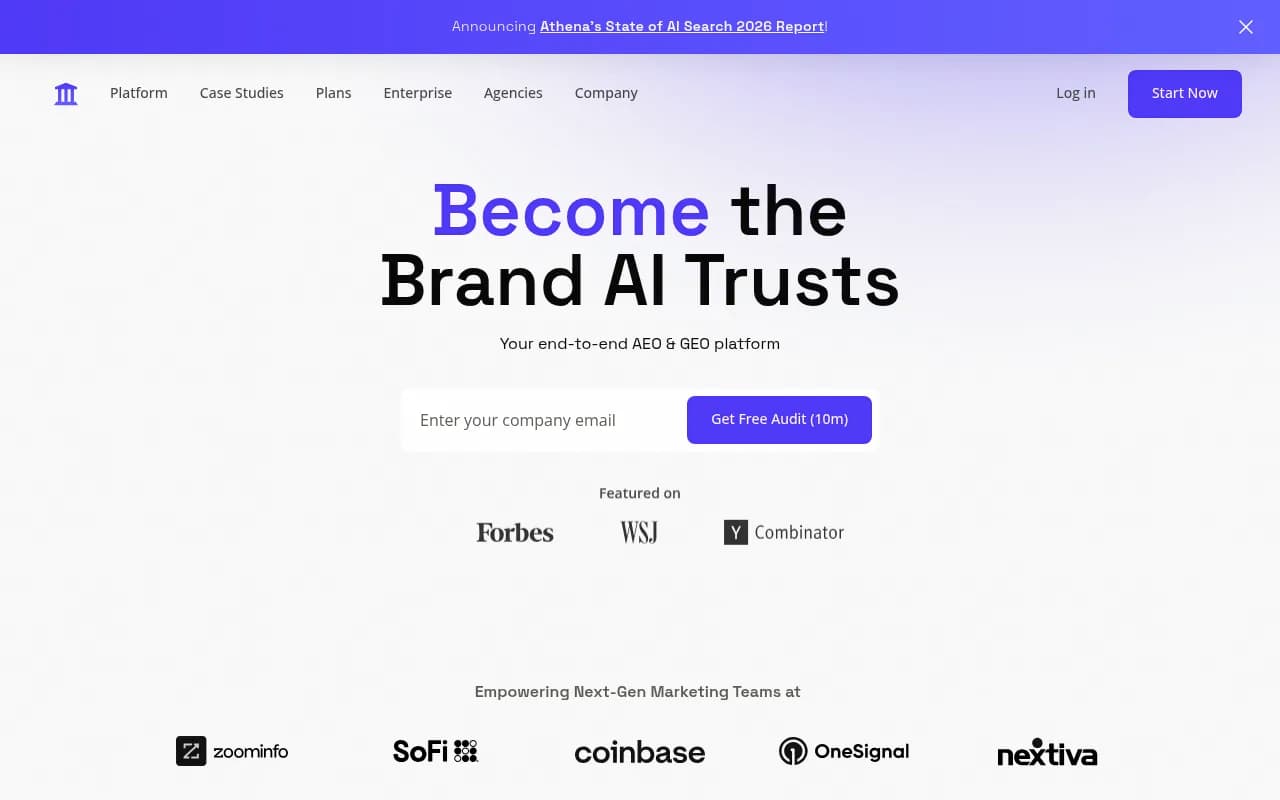
AthenaHQ is a solid platform. It tracks 11 AI models on the self-serve Starter plan, publishes drafted articles to several CMSes, and has a Shopping Insights view that shows which of your products appear in ChatGPT, AI Mode and Gemini carousels, at what position, and from which retailers. A comparison from Ranketta notes it holds a 4.9 rating on G2.
So why shop around? Three reasons come up repeatedly in the comparisons I read.
- Product write-back is gated. Catalog Optimization, which drafts titles, meta descriptions, product descriptions and FAQs and publishes approved fields to Shopify, is on Enterprise and Agency plans. A mid-size store on Starter ($295/mo, credit-metered, where one credit buys one AI response) doesn't get it.
- Credits are a budget you watch. Metered responses make it hard to run a big SKU set daily without doing arithmetic first.
- The fix isn't only content. If AI skips your products because of feed data, schema, or blocked crawlers, another article won't help. You need a tool that sees the feed, the crawl, and the traffic.
None of that makes AthenaHQ a bad choice. It makes the question "what exactly do you need fixed?" more important than the question "who has a shopping tab?"
How big is ChatGPT Shopping, really?
Before paying for shopping tracking, it helps to know how often the surface appears. Promptwatch's ChatGPT Shopping usage data counts product cards, shopping recommendations and price comparisons, and only in responses where ChatGPT ran a web search. They appear in a low single-digit percentage of those responses overall. The rate moves in visible steps, doubling overnight at one point and then falling back weeks later, which Promptwatch reads as OpenAI actively tuning when cards appear. The page doesn't state its date range, so treat the exact shape as indicative.
The useful part for retailers: shopping features concentrate on commercial and transactional prompts, where trigger rates run far higher than the all-prompts average. A tracker that mixes informational prompts into your prompt set will make shopping look smaller than it is for buyers about to purchase.
Promptwatch's suggested prep is boring and sensible: complete Product schema, accurate prices and availability, a clean merchant feed, and a prompt set of buyer-intent queries where you record whether cards appear and which brands fill them.
Then there are ads. Promptwatch's ChatGPT ads data (May 20 to Aug 17, 2026) shows ChatGPT ran no ads until May 27, then ads appeared in an average of 20.1% of web-search responses across the 90 days. The rate passed 30% on July 1 and stayed there, with a daily peak of 43.9%. For ecommerce, that means your competitors can buy the slot next to the answer. Tracking who is bidding on your prompts is now part of shopping visibility.
What to compare before you switch
Feature checkboxes hide the real differences. These are the questions that separate tools for a product catalog.
- Which shopping surfaces? ChatGPT product cards are the baseline. Some tools add Amazon Alexa product results, Gemini, or Google AI Mode shopping.
- SKU level or brand level? Brand mentions in a shopping answer are not the same as knowing whether SKU 4471 appeared at position 2 this week.
- Retailer data. Who controls the checkout link on each card? If AI sends buyers to a marketplace instead of your store, you want to see that.
- Real interface or API? Shopping cards render in the actual ChatGPT interface. API outputs can differ from what a shopper sees.
- Fix path. Does the tool only report, or can it rewrite product copy, push to Shopify, or draft content?
- Crawler and traffic proof. Can you see whether AI bots read your product pages and whether AI sends visitors who buy?
- Ads coverage. Sponsored placements are a separate surface.
Comparison table
| Tool | Shopping coverage | Product-level fixes | Crawler logs and AI traffic | Starting price |
|---|---|---|---|---|
| Promptwatch | ChatGPT Shopping, Amazon Alexa products, Ads Radar | Content Agent, Content Refresh, CMS publishing | Yes, IP-verified logs and visitor analytics | $95/mo (shopping on Business, $579/mo) |
| Profound | ChatGPT product cards, SKU-level visibility, merchant checkout data | Agents draft PDP fixes and FAQs | Agent Analytics for crawlers and conversions | Custom, verify with vendor |
| Peec AI | ChatGPT Shopping, daily SKU visibility and displayed price | Prioritized actions, no product rewrite | Limited | Verify with vendor |
| AthenaHQ | ChatGPT, AI Mode, Gemini carousels | Shopify Catalog Optimization on Enterprise and Agency | Limited | Free Essential; Starter $295/mo |
| LLM Pulse | ChatGPT Shopping, AI ad tracking | Monitoring focus | No | From EUR 49/mo (50 prompts) |
| Hall AI | ChatGPT shopping visibility per product | Monitoring focus | Limited | Verify with vendor |
| Ranketta | Product feed focus | Rewrites titles, descriptions, categories, GTINs; Shopify or Merchant Center | No | Self-serve Starter |
Prices for AthenaHQ, LLM Pulse and Promptwatch come from the sources noted; for others I didn't verify current pricing, so check each vendor.
The alternatives
Promptwatch: shopping tracking tied to crawlers, content and traffic
Promptwatch is the option I would look at first if your problem is bigger than a carousel report. Its ChatGPT Shopping tracking shows which products ChatGPT and Amazon Alexa recommend, which competitors the answer picks instead, and how your own uploaded catalog performs, filterable by model, date range and monitor. It alerts you when competitors appear in shopping results instead of your brand. Ads Radar adds the sponsored side: which advertisers bid on your prompts, their ad copy and landing pages.

What separates it from pure trackers is the loop after the report. The Content Agent writes and publishes pages against your visibility gaps to WordPress, Webflow or Framer. AI crawler logs are IP-verified, so you can tell whether GPTBot and OAI-SearchBot are reading product pages or hitting errors. Visitor analytics then show whether AI-referred visitors convert. Crisp, for example, saw 2x higher conversion rates from AI traffic than from traditional channels, which is the kind of number an ecommerce team can take to finance (case study). TreeHouse, behind Pararius, grew AI search to roughly 25% of organic conversions partly by fixing crawler access (case study).
Plan note: Shopping insights and the Content Agent start on Business ($579/mo); Essential is $95/mo and Professional is $245/mo without shopping. Agencies get Ads Radar on every plan but not Shopping. There is a 7-day free trial on monthly billing, and the current pricing is at promptwatch.com/pricing. Comparison pages exist if you are weighing it against others, such as Promptwatch vs Profound, Promptwatch vs Peec and Promptwatch vs AthenaHQ.
The honest downside: the shopping features sit on the higher tier. If all you want is a cheap SKU report, it is more than you need.
Profound: SKU-level visibility and product page agents
Profound tracks product cards in ChatGPT Shopping plus brand and product mentions on other engines. Its own ecommerce write-up lists SKU-level visibility, whether the engine gets your attributes right, sentiment of descriptions, and which merchants control the checkout link on each card. It also has agents that draft product page fixes and tracks AI crawler visits and AI-referred conversions, including on Shopify through Nostra. Note that this is the vendor's own description of itself, so weigh it accordingly. It is aimed at larger brands, and pricing is on the higher side.

Peec AI: lean SKU tracking
Peec AI is the lean pick. It imports your catalog from Shopify, a CSV or Merchant Center and reports daily SKU-level visibility, the price the engine displays, how often each product appears, and ranked gainers and losers. It also shows which retailers AI recommends most in your category. Data leaves through CSV, Looker Studio, API and MCP. It is a tracker, so you will do the product fixes elsewhere.

LLM Pulse: cheapest way into ChatGPT Shopping and ad tracking
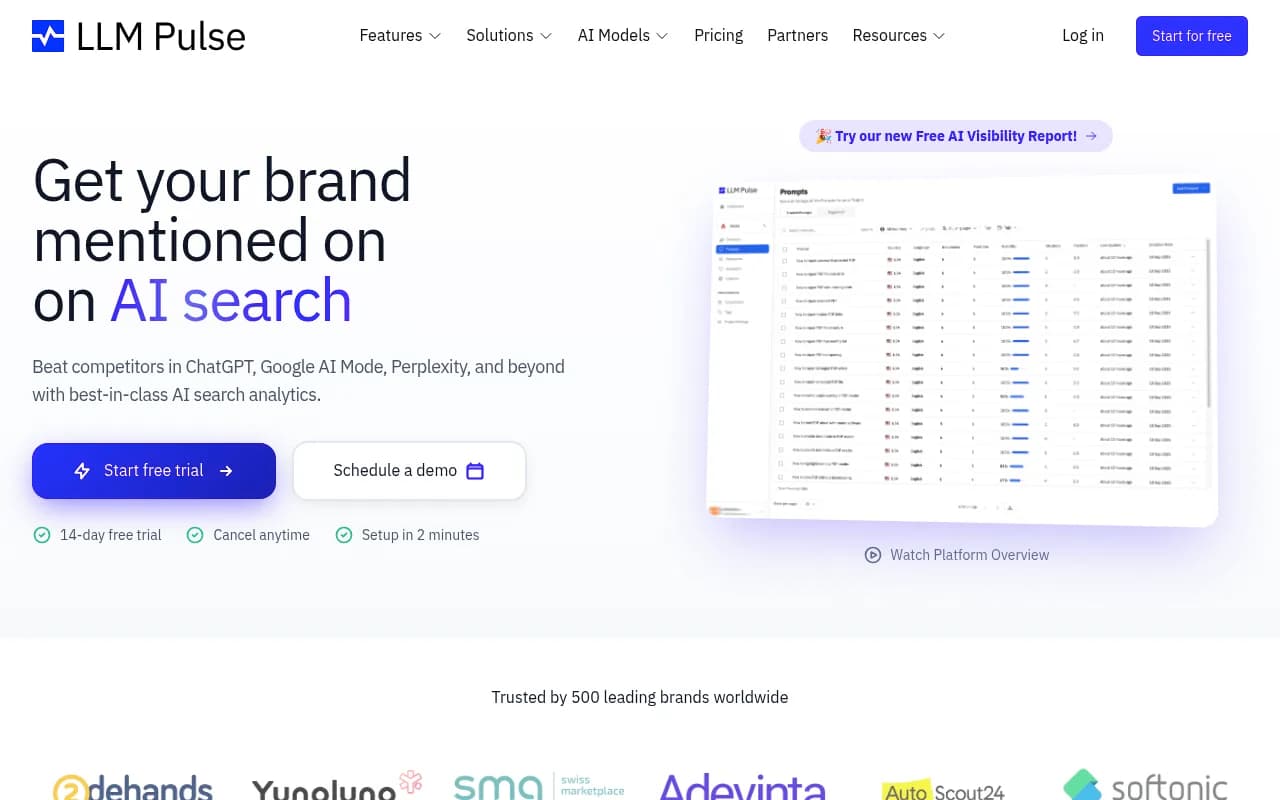
LLM Pulse starts at EUR 49/month for 50 prompts and, per a BrandAxis roundup, covers surfaces few others do: ChatGPT Shopping, AI paid-ad tracking, YouTube and app-store intelligence. For a small store that wants to see whether cards appear at all, that is a low-risk start. Don't expect crawler logs or content automation.
Hall AI: product-level ChatGPT shopping visibility
Hall AI is described by GetMint as offering dedicated ChatGPT shopping visibility, tracking whether your specific products appear in the shopping interface rather than just generic brand mentions. Good fit if you want product-level monitoring with a technical SEO angle.

Ranketta: fix the feed AI shopping reads
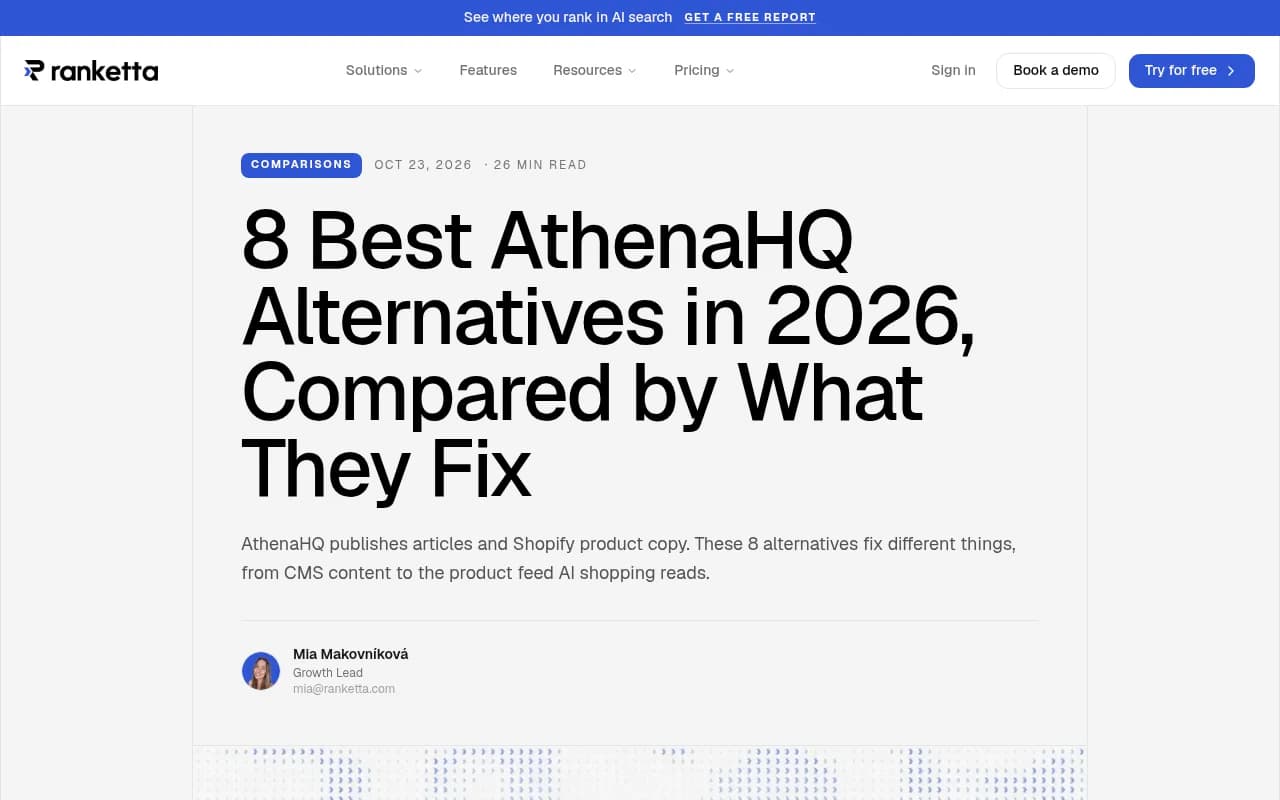
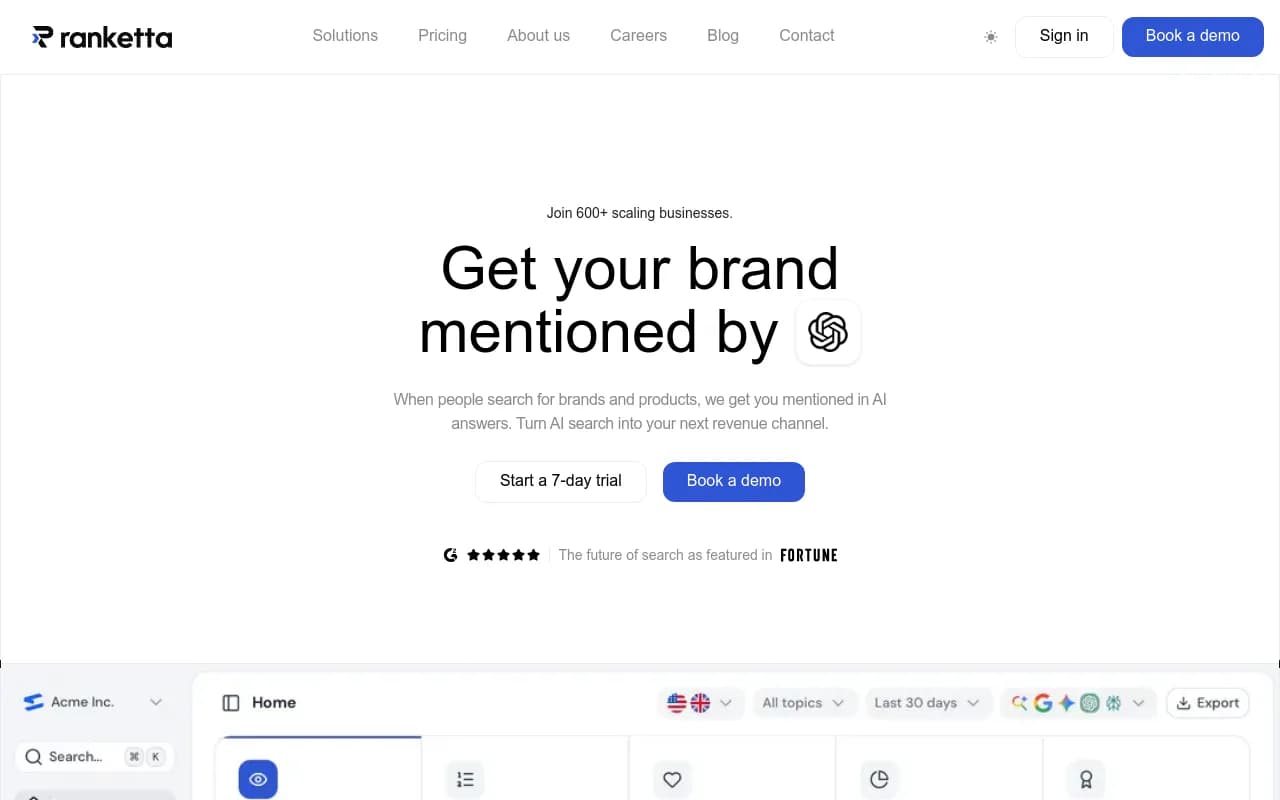
Ranketta takes a different angle. It rewrites product titles, descriptions, categories and GTINs with a confidence score on every change, then writes them back to Shopify or sends them to Google Merchant Center, starting on the self-serve Starter plan. It's the closest match if your core worry is feed quality. The comparison article that ranks it first was published by Ranketta itself, so treat that ranking as a vendor claim.
Others worth a look
The catalog has more ecommerce-leaning options: Goodie AI for agentic commerce optimization on AI shopping surfaces, Azoma for enterprise AI shopping including ChatGPT and Rufus, Glim AI for search and shopping visibility, Yotpo Discover for product discovery, and Searchable, which tracks all four ChatGPT surfaces including Shopping and fan-out queries.
For wider browsing, the GEO software directory lists many more platforms.
Which one fits which store
| Your situation | Start here |
|---|---|
| Want tracking, content, crawler proof and revenue in one place | Promptwatch |
| Enterprise brand with large SKU counts and PDP rewrites | Profound |
| Just need daily SKU visibility and price checks | Peec AI |
| Tight budget, want to see if cards appear | LLM Pulse |
| Feed data is the problem | Ranketta |
| Shopify store already comfortable with AthenaHQ | Stay, and check whether Enterprise or Agency pricing fits |
A practical way to run the evaluation
- Build a commercial prompt set. Write 30 to 50 buyer prompts such as "best running shoes for flat feet under $150". Skip informational prompts for this test.
- Run the same set in two tools for a week. Shopping cards fluctuate, and Promptwatch advises checking across several days before drawing conclusions because one run can land on an outlier day.
- Check one known product by hand. Open ChatGPT, run the prompt, and compare what the tool reports against what you see.
- Look at crawl access. Run the free AI crawler URL inspector on a product page. If bots can't read it, no tracker will fix that.
- Clean the basics. Product schema, correct price and availability, a tidy merchant feed.
- Ask about ads. If the vendor can't show who bids on your prompts, you are missing one of the two newest surfaces.
FAQ
Does AthenaHQ track ChatGPT Shopping?
Yes. Shopping Insights shows which products appear in ChatGPT, AI Mode and Gemini carousels, at what position and from which retailers. Product write-back to Shopify is the part limited to Enterprise and Agency plans.
Which AthenaHQ alternative has the cheapest ChatGPT Shopping tracking?
LLM Pulse lists EUR 49/month for 50 prompts with ChatGPT Shopping included, according to BrandAxis. Verify current pricing on the vendor site.
Do I need SKU-level tracking?
If you sell more than a few dozen products, yes. Brand-level mentions can look healthy while your best sellers never show up in a card.
Is shopping tracking enough?
No. Tracking tells you where you are missing. You still need the content, feed and crawl fixes, then proof that traffic and orders followed.
To see where your own store stands, Promptwatch's free AI visibility report takes a few minutes and needs no login.