
Key takeaways
- AthenaHQ's entry plan reportedly jumps from a free tier straight to $295 a month, and it charges one credit per AI response on every engine, so the effective number of runs is lower than the price suggests.
- Compare tools on cost per prompt per engine per month, not on headline price. Credit-based and prompt-based pricing are hard to line up otherwise.
- Budget trackers like Otterly.AI, Peec AI and Rankscale answer "was I mentioned?" Few of them help you fix anything.
- For a startup with no spare marketing hours, the tools that write content, check crawler access and measure AI traffic save more time than a prettier dashboard.
- Most comparison pages on this topic are written by competing vendors. Check every price on the vendor's own pricing page before you buy.
Why founders are leaving AthenaHQ
AthenaHQ is a decent product. It tracks how AI engines talk about your brand and turns gaps into tasks. The complaint I keep seeing is about money, and about how the money is counted.
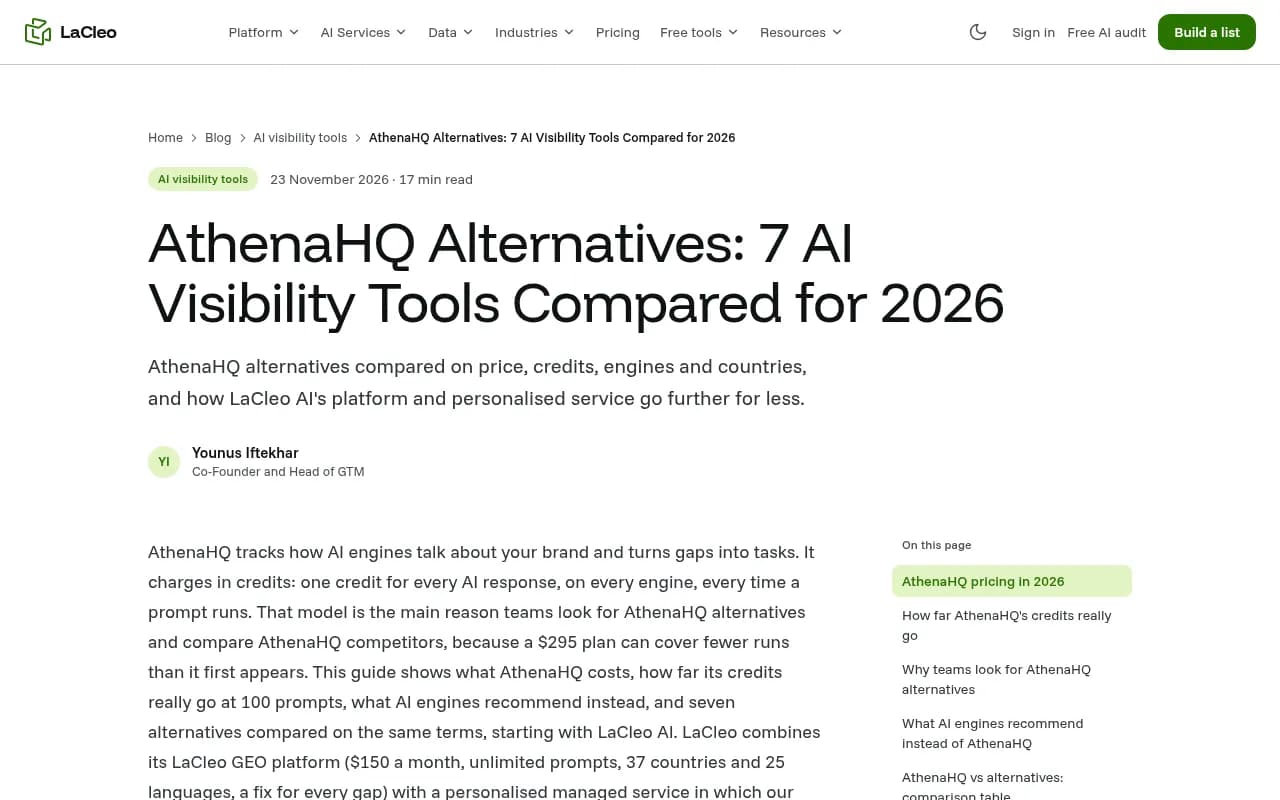
According to LaCleo's comparison (a competitor, so treat the math with a grain of salt), AthenaHQ Starter is $295 a month for 3,600 credits, and one credit is spent for every AI response, on every engine, every time a prompt runs. Track 100 prompts on four engines and that is roughly 9 full runs a month. Track on all 11 models and it drops to about 3. Rework's roundup makes the related point that there is nothing between the free tier and $295, which is a big step for a two-person company.
There is a second constraint. The same LaCleo piece says Starter covers one country and multi-region is Enterprise only. If you sell in the US and the UK, or in several EU markets, that matters.
None of this makes AthenaHQ bad. It makes it a poor default for a bootstrapped team that wants daily numbers and some help acting on them.
How to compare these tools without getting fooled
A few rules I would follow before paying anyone.
Normalise on cost per prompt per engine
Peec AI is quoted at 85 EUR a month for 50 prompts on one comparison page and $245 for 150 prompts on another. Otterly.AI is quoted at $189 for 120 prompts. AthenaHQ sells credits. Divide each plan by prompts, engines and run frequency, then compare. A plan that says "50 prompts" but only three engines is not the same as 50 prompts on every model.
Check what you can measure beyond mentions
A mention count tells you very little by itself. What founders need to know is whether AI bots can read the site, which pages get cited, and whether any of it brings visitors. Tools that stop at monitoring leave all of that to you.
Remember how crowded the answers are
Promptwatch Data shows that 47.6% of ChatGPT responses cite 10 or more different domains (Sep 28 to Oct 4, 2026), and 52.5% for organic prompts with no brand named. You share nearly every answer with many other sites. Brand-specific prompts draw on fewer sources, so your own pricing, features and alternatives pages matter there. Third-party listicles and reviews are often the way into the broader answers. This is a content problem as much as a tracking problem, which is why I weight execution features so heavily below.
Don't track one prompt
Average source counts differ a lot by engine. Promptwatch's sources-per-response data shows ChatGPT citing about 5 sources per web-search answer and Google AI Overviews and Perplexity about 10. A single prompt tells you almost nothing. Measure across a set.
The alternatives at a glance
Prices below are as quoted in third-party comparison pages and were not independently verified. Use them to shortlist, then confirm on each vendor's site.
| Tool | Quoted entry price | What it is good at | Weak spot for a startup |
|---|---|---|---|
| Promptwatch | From $95/mo (Essential, 50 prompts) | Tracking plus content creation, crawler logs, AI traffic | Content Agent starts at the Business plan |
| Peec AI | 85 EUR/mo for 50 prompts (one quote) | Clean tracking, multi-language | Engines and countries are add-ons |
| Otterly.AI | $189 for 120 prompts (one quote) | Low-cost monitoring | Monitoring only |
| Rankscale | Budget tier | Cheap rank-style tracking | Light on action |
| Scrunch | Higher tier | Crawler and site readiness | Priced above most solo budgets |
| Profound | Higher tier | Deep enterprise monitoring | Overkill for tiny teams |
| Semrush / Ahrefs Brand Radar | Add-on to suite | Fits teams already paying | Fixed prompt sets, shallow AI data |
| LaCleo GEO | $150/mo (its own claim) | Unlimited prompts, managed service option | Vendor-reported numbers |
Promptwatch: the one that does the work
If I were a founder with no content team, this is where I would start looking. Promptwatch is an end-to-end AI visibility platform, and the difference from most tools on this list is that it closes the loop. It tracks how ChatGPT, Gemini, Claude, Perplexity, Google AI Overviews, AI Mode, Copilot and others mention your brand, then explains why with citations and IP-verified AI crawler logs, then helps fix it with content gap analysis, the Action Board and the Content Agent.

The pieces that matter most to a small team:
- Essential is $95 a month (85 EUR) with 50 prompts, 6,000 responses, daily tracking, all AI models, Agent Chat, visitor analytics and site audits. Every plan includes unlimited team seats, Brand Narrative, and MCP and API access.
- It monitors the real interfaces of the AI engines, not just API outputs, and user-facing answers and citations can differ from the API.
- Professional ($245/mo) adds AEO articles, a Knowledge Base, and 25M crawler logs, so you can see whether GPTBot or ClaudeBot actually reads your pages and where they fail.
- Business ($579/mo) adds the automated Content Agent, which plans, writes and publishes to WordPress, Webflow or Framer, plus faster tracking and Fact Check.
- Visitor analytics measure the traffic and conversions AI sends, so you can tell if any of this pays off.
The evidence it works for small teams is decent. Crisp saw 2x higher conversion rates from AI traffic than from traditional channels, and TreeHouse, the company behind Pararius, grew AI search to about 25% of organic conversions partly by fixing crawler access.
Honest caveat: the full Content Agent is a Business-plan feature, so at $95 you get tracking and analysis, not autopilot publishing. If you only want a cheap mention counter, a pure monitoring tool costs less. For the head-to-head, see Promptwatch vs AthenaHQ. To test before paying, run the free AI visibility report or start the 7-day free trial on monthly billing. Confirm current plans and any promotions at promptwatch.com/pricing.
Budget monitors: Peec AI, Otterly.AI and Rankscale
These are the usual answers when someone says "cheaper than AthenaHQ," and they are fine for what they are.
Peec AI is a clean, multi-language tracker. The catch in the quotes I saw is that you pick a few engines and more cost extra, and countries scale by plan. Useful if you only care about two or three engines.

Otterly.AI is the low-cost monitoring pick that appears in nearly every roundup.

Rankscale sits in the same budget bucket.
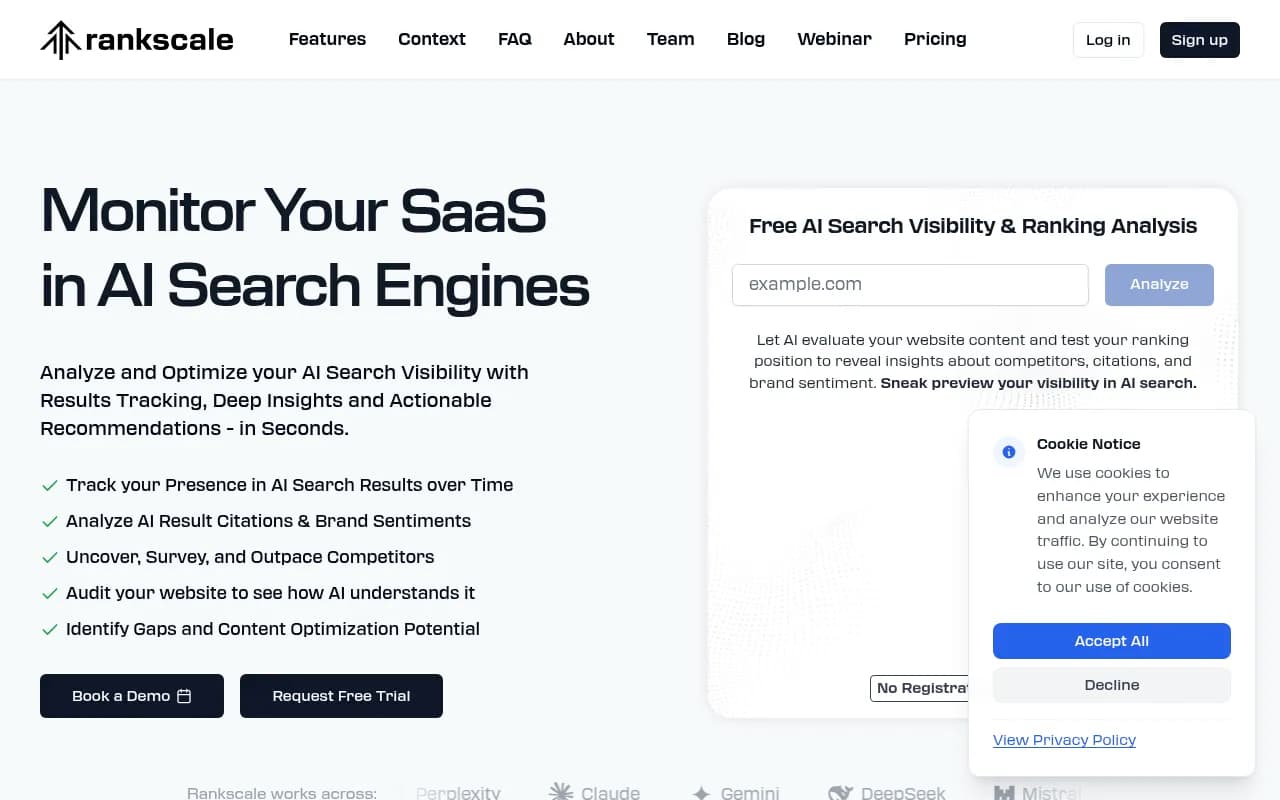
The pattern with all three: you learn that you are missing from an answer, and then you are on your own. No crawler logs, no content generation, no traffic attribution. Fine for a founder who has the time and skills to act on the data. Less fine for one who does not. See how this compares in Promptwatch vs Peec and Promptwatch vs Otterly.
Higher-end monitors: Profound and Scrunch
Profound has strong monitoring and is aimed at larger brands.

Scrunch leans into how AI crawlers see your site.
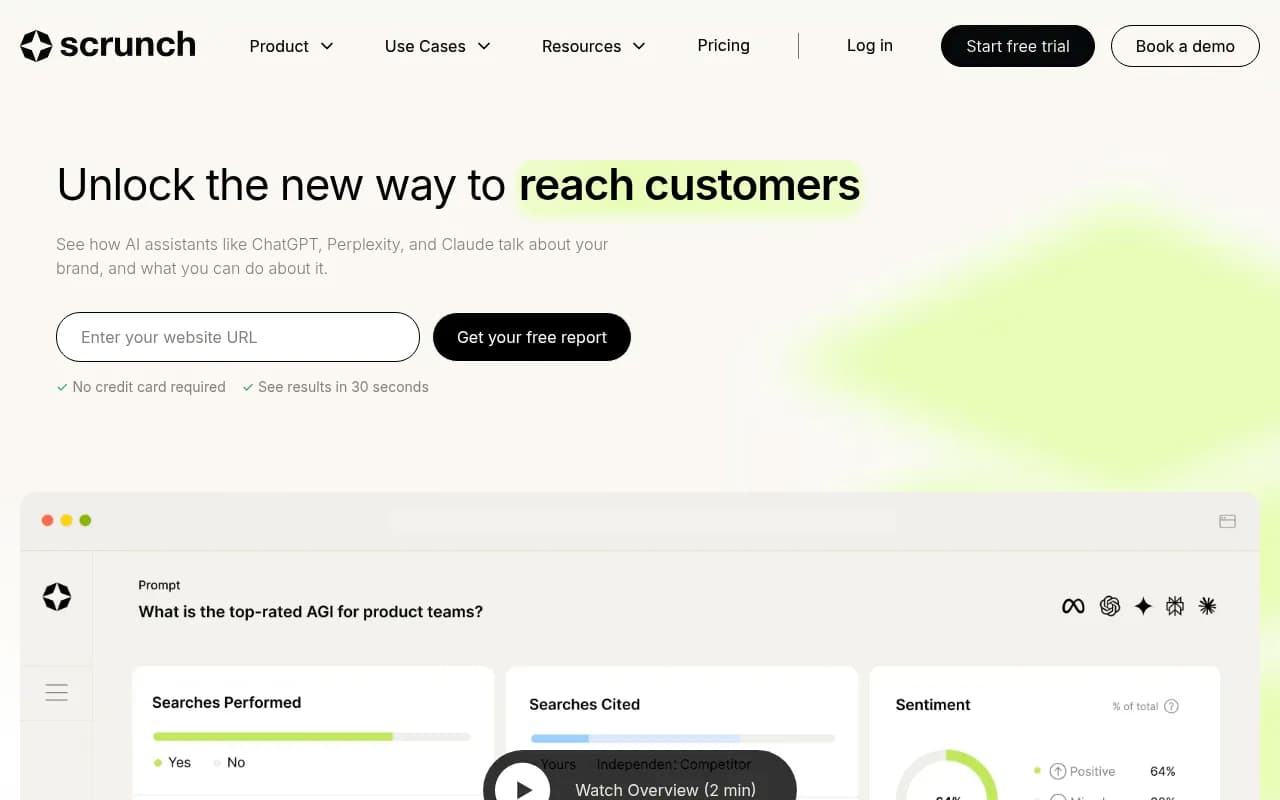
Both are good products, but both price above what most solo founders should spend before they have revenue from AI search. If you are eyeing them, compare against Promptwatch vs Profound and Promptwatch vs Scrunch first.
If you already pay for an SEO suite
Semrush and Ahrefs both bolted AI tracking on. If you already have the subscription, the incremental cost is low and it is a reasonable first look.
The limitation is depth. Prompt sets tend to be fixed, the AI-specific data is shallower, and there are no AI crawler logs or AI traffic attribution. Treat it as a starting point, not the final answer.
Content-first and done-for-you options
Some startups do not want another dashboard at all. A few directions worth knowing:
- Tools that publish content for you, like AirOps, which is a content engineering platform and does not give you monitoring or citation data on its own.
- Managed services, where a team does the optimisation. LaCleo pairs its platform with one, and Snezzi targets small businesses with fully managed GEO.
- Hybrid trackers with built-in fixes, like Writesonic's GEO product.
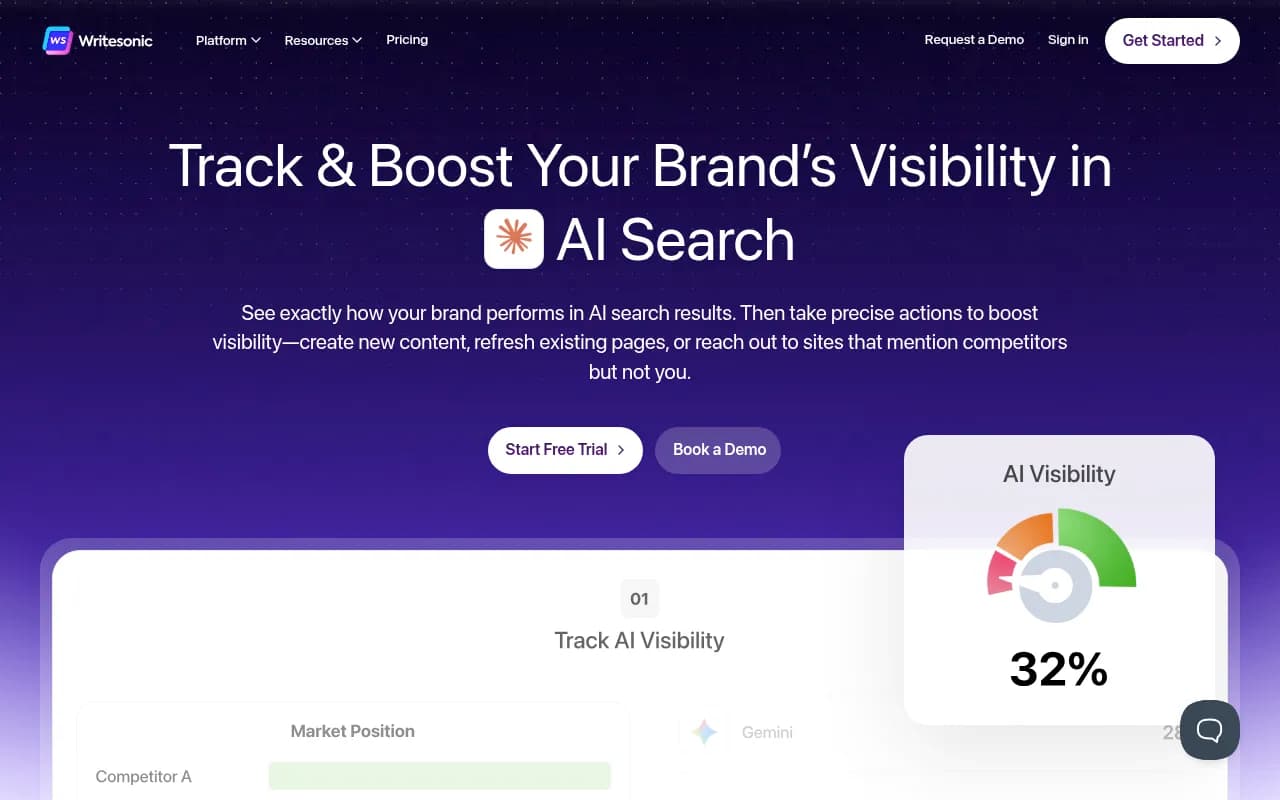
The trade-off is control and grounding. Content tools without citation and crawler data are guessing at what AI wants. Monitoring tools without content leave you guessing at what to write.
Which one should you pick
| Your situation | Pick |
|---|---|
| Solo founder, need to see if you are mentioned at all | Free AI visibility report, then a budget monitor like Otterly.AI |
| Small team, want tracking plus guidance on what to fix | Promptwatch Essential or Professional |
| No content team, want publishing handled | Promptwatch Business with the Content Agent, or a managed service |
| Already on Semrush or Ahrefs, tight budget | Use the built-in AI tracking first, upgrade later |
| Several markets or languages on a small budget | Check country limits on every plan before buying |
| Larger brand, big prompt sets | Profound or Scrunch |
A cheap setup routine that works
Whatever you choose, the first month should look roughly like this.
- Pick 30 to 50 prompts your buyers really ask: category questions, comparisons with named competitors, and pricing questions.
- Run the free checks first. Promptwatch's Agentic Readiness Check and AI crawler URL inspector cost nothing and tell you whether bots can read the site.
- Fix access problems before writing anything. A page AI cannot fetch cannot be cited.
- Write or refresh the pages that answer your highest-value prompts, plus your own comparison and alternatives pages.
- Check back weekly on the same prompt set. Daily noise is real, so look at trends.
- Tie it to traffic. If AI visits are not showing up in analytics, you are flying blind.
If you want more options than this guide covers, the GEO software directory at bestgeosoftware.com lists a lot of them, and Promptwatch's 2026 platform comparison lays out the feature differences side by side.
FAQ
Is AthenaHQ worth it for a startup?
It depends on your prompt volume. Because credits are spent per response per engine, a hundred prompts across many engines burns through Starter fast. Run the math on your own prompt set before committing.
What is the cheapest way to track AI visibility?
The free tiers and free checks, then a budget monitor. Promptwatch's free Explore plan is ChatGPT only and limited to 10 prompts, so it is for evaluation rather than ongoing work.
Do I need daily tracking?
Not usually. Daily runs smooth out noise, but the decisions you make are weekly. What you do need is a stable prompt set so trends mean something.
Can I trust the prices in comparison articles?
Not blindly. Most roundups on this topic are published by competing vendors, and several prices in them conflict. Confirm on each pricing page.