Key takeaways
- AI SEO tools now do four different jobs: research and rankings, content writing and optimization, technical work, and tracking how AI assistants cite you. Few tools do more than two well.
- For classic rankings and research, Semrush, Ahrefs, and SE Ranking are still the foundation. Their AI visibility add-ons are useful but shallower than dedicated platforms.
- For content, Surfer SEO, Clearscope, Frase, and NeuronWriter score drafts against what already ranks. None of them tell you whether AI engines will cite the result.
- For AI search, Promptwatch is the pick when you want to fix visibility rather than just watch it. Profound, Peec AI, and Otterly.AI sit closer to monitoring.
- Verify pricing on vendor pages before buying. Plans for these tools change every few months.
What counts as an AI SEO tool in 2026
The label is stretched thin. Every vendor now says AI, and the listicles that rank for this query disagree wildly about who belongs on the list. Whatagraph, Rankability, Otterly, and Ryze each published a "best 15" or "best 25" with different winners, which tells you most of these rankings reflect the author's product or affiliate deals.
So I sorted tools by what they actually do for you. One of the roundups, from Ryze, makes the same point: AI SEO tools split into doing the work on the site, writing and refreshing content, supplying research data, and tracking how AI assistants cite you. That is a more useful lens than a single ranked list, because the tool you need depends on which job is hurting.
A note on how I built this guide. I did not run all 15 tools on the same sites myself, and I am not going to pretend I did. The picks below draw on the published roundups, vendor positioning, and Promptwatch's own citation data. Treat feature and price notes as a starting point and confirm them on each vendor's site.
The 15 tools at a glance
| Tool | Main job | Best for | Watch out for |
|---|---|---|---|
| Semrush | Research plus AI visibility | Teams wanting one suite | AI tracking is a bolt-on with fixed prompt sets |
| Ahrefs | Backlinks, competitor research | Link and content research | AI features lighter than the core index |
| SE Ranking | SEO plus AI visibility toolkit | Agencies, budget-conscious teams | Two toolkits to learn |
| Surfer SEO | Content scoring | Writers optimizing for Google | Score is not a citation guarantee |
| Clearscope | Content optimization | Editorial teams | Premium pricing |
| Frase | Brief to refresh | Content workflows | Less depth on research data |
| Writesonic | Writing plus GEO tracking | Small teams wanting both | Jack of two trades |
| AirOps | Content engineering | Scaled content programs | Setup effort |
| Search Atlas | Research suite plus OTTO automation | Teams that want changes deployed | Automation needs review |
| Alli AI | On-page changes at scale | Large sites | Needs governance |
| Rankscale | AI rank tracking | GEO monitoring on a budget | Tracking only |
| Profound | Enterprise AI visibility | Large brands | Higher price point |
| Peec AI | Multi-language AI tracking | Lean monitoring | No crawler logs or content tools |
| Otterly.AI | Affordable AI monitoring | Small budgets | Basic tracker |
| Promptwatch | AI visibility plus action | Teams that want to fix gaps | More than a casual user needs |
Research and ranking suites
These are the tools you probably already own. They answer the old questions: which keywords, which competitors, which links.
Semrush
Semrush is the default for many teams because SEO, content, and PPC live under one login, and it has added an AI visibility layer through its Semrush One bundle. The upside is convenience. The downside is that prompt sets are fixed and the AI data is shallower than what a dedicated platform collects. Use it as your research base and be honest about what its AI numbers can and cannot tell you.
Ahrefs
Ahrefs is still the tool I would pick for backlink analysis and competitor research. Its Brand Radar product tracks brand mentions in AI results. Tim Soulo, Ahrefs' CMO, published his own 2026 roundup on Medium, so read it knowing the author works for one of the vendors in it.
SE Ranking
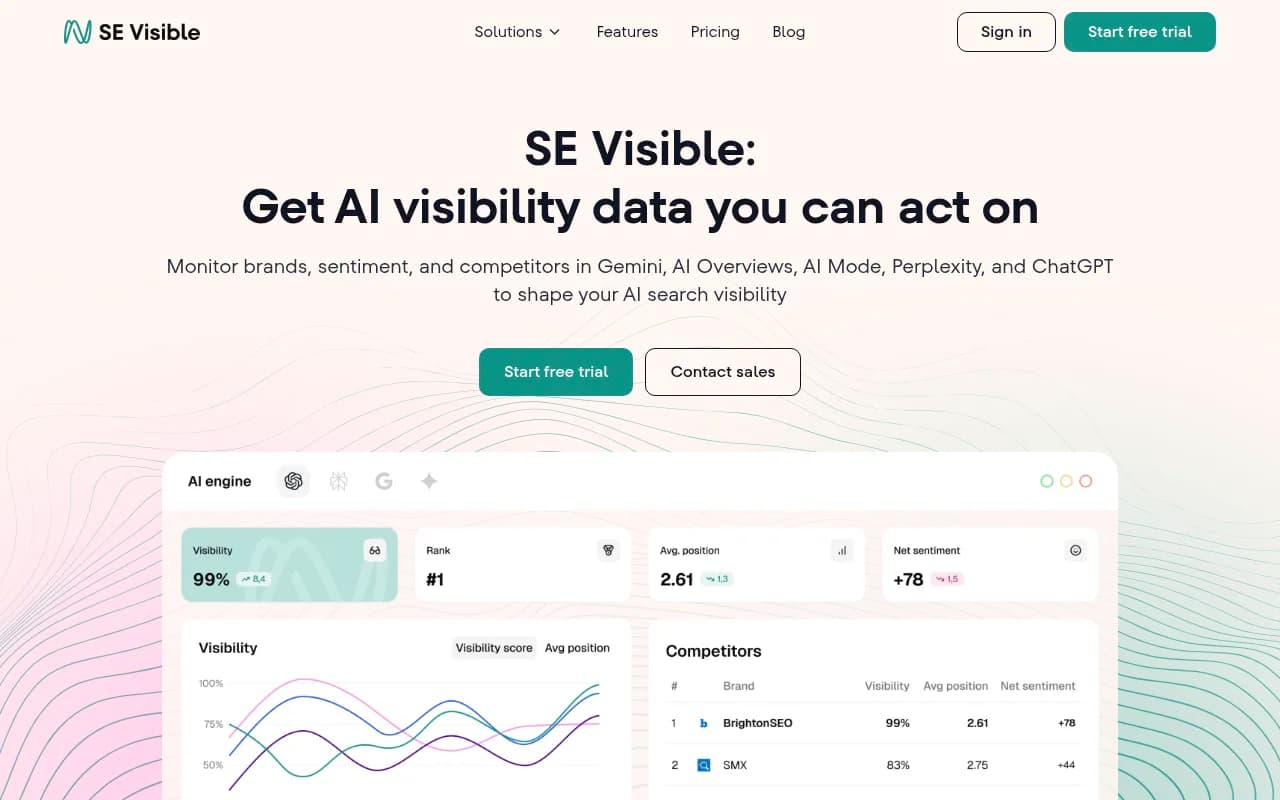
SE Ranking runs two toolkits, one for classic SEO and one for AI visibility, which is a sensible way to split things. It is often cheaper than Semrush and works well for agencies. The AI visibility side is also sold separately as SE Visible.
Search Atlas
Search Atlas pairs a research suite with OTTO, an automation layer that deploys changes. Per the Ryze comparison, only Search Atlas OTTO and Alli AI deploy changes directly, while the other tools produce data, drafts, or scores for a person to act on. That is a real difference, and also a risk. Anything that edits your site on its own needs review rules.
Content optimization tools
These score a draft against the pages that already rank. They help you cover a topic properly. They do not know whether ChatGPT will cite you.
Surfer SEO and Clearscope
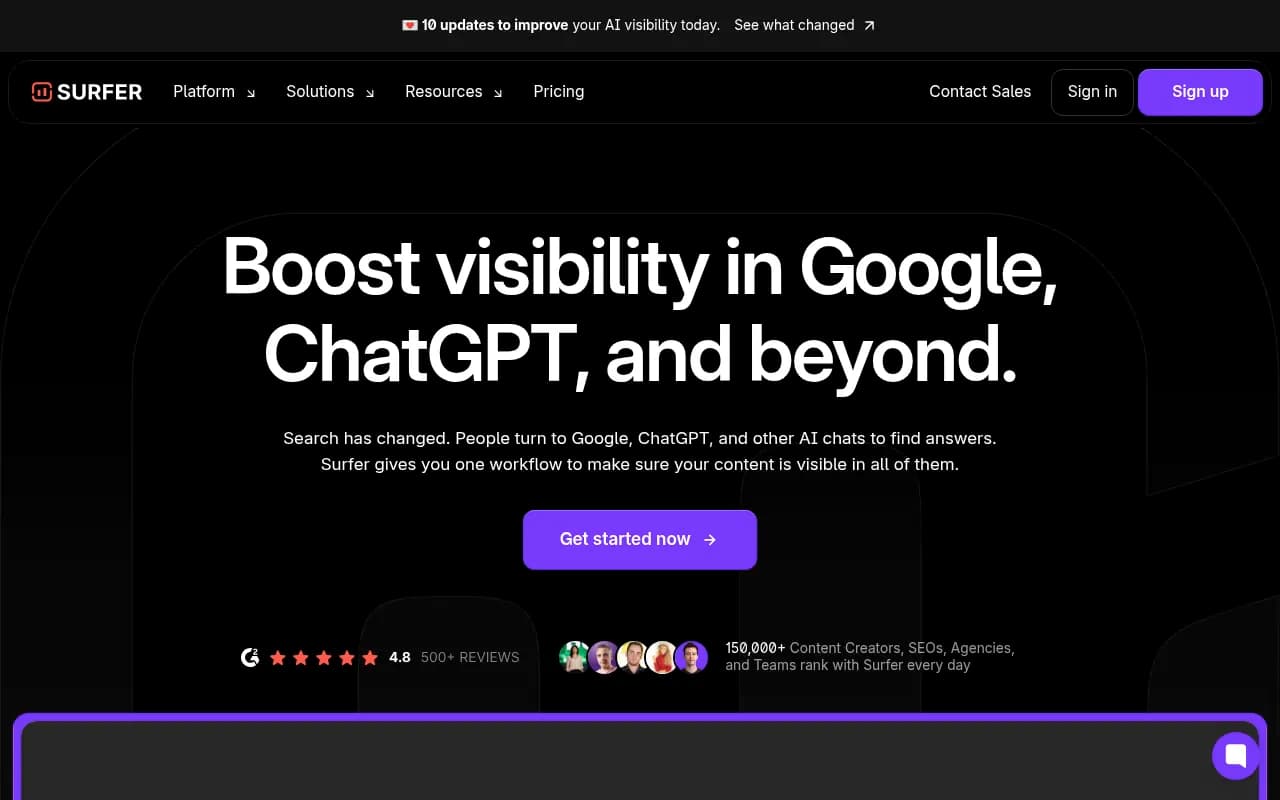
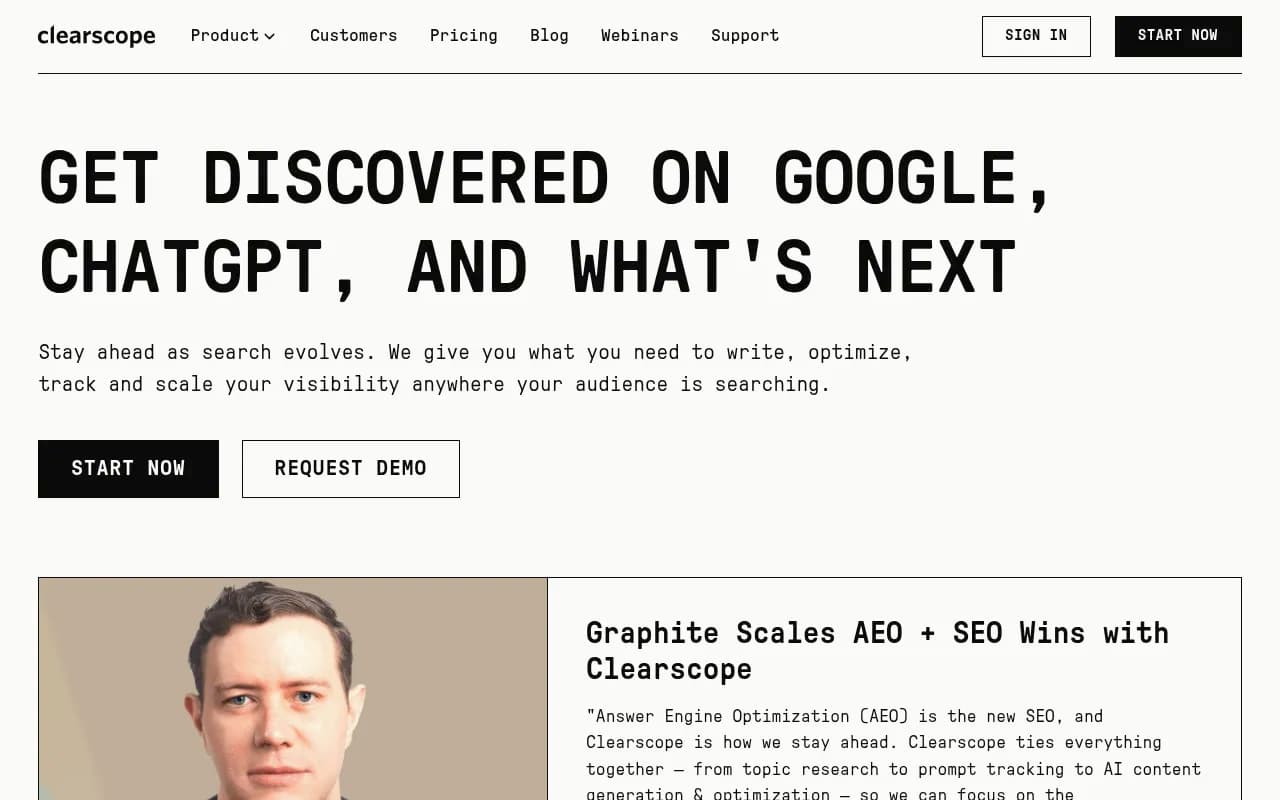
Rankability's testing named Rankability, Surfer, and Clearscope as the strongest content-focused picks in early 2026, though Rankability is also selling a product, so weigh that. Surfer is the more tactical editor. Clearscope is the more editorial one, and its price reflects that.
Frase and NeuronWriter
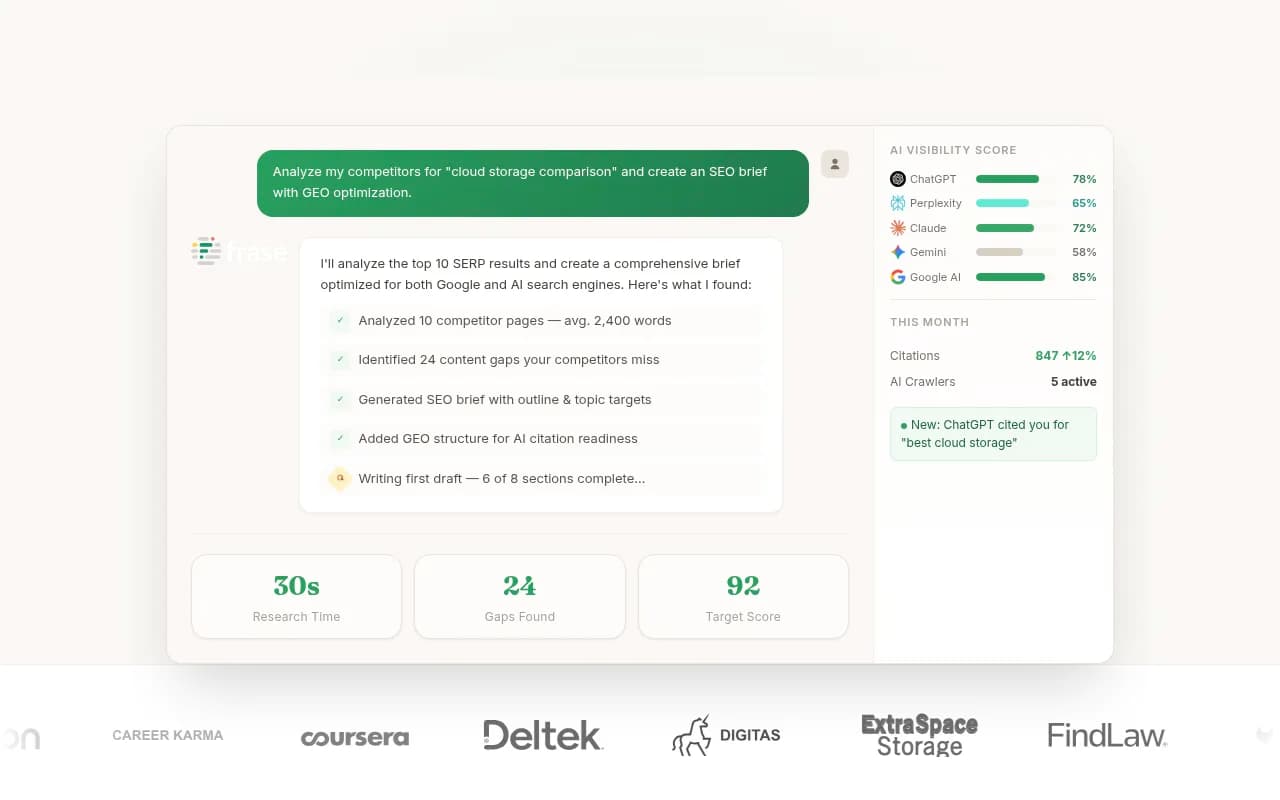
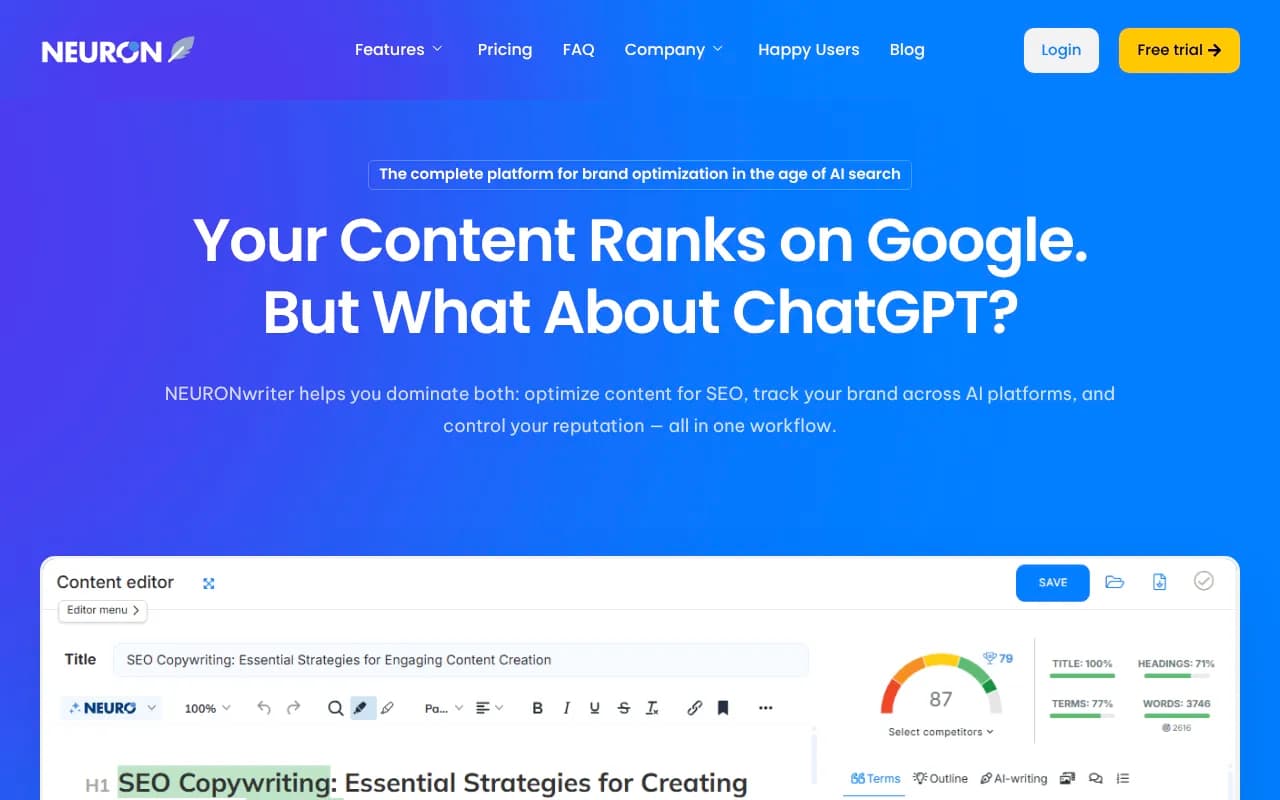
Frase covers brief, draft, and refresh in one flow, and now markets itself on GEO as well. NeuronWriter does semantic analysis at a lower price. Either is a fine choice if Surfer feels heavy.
Writesonic and AirOps
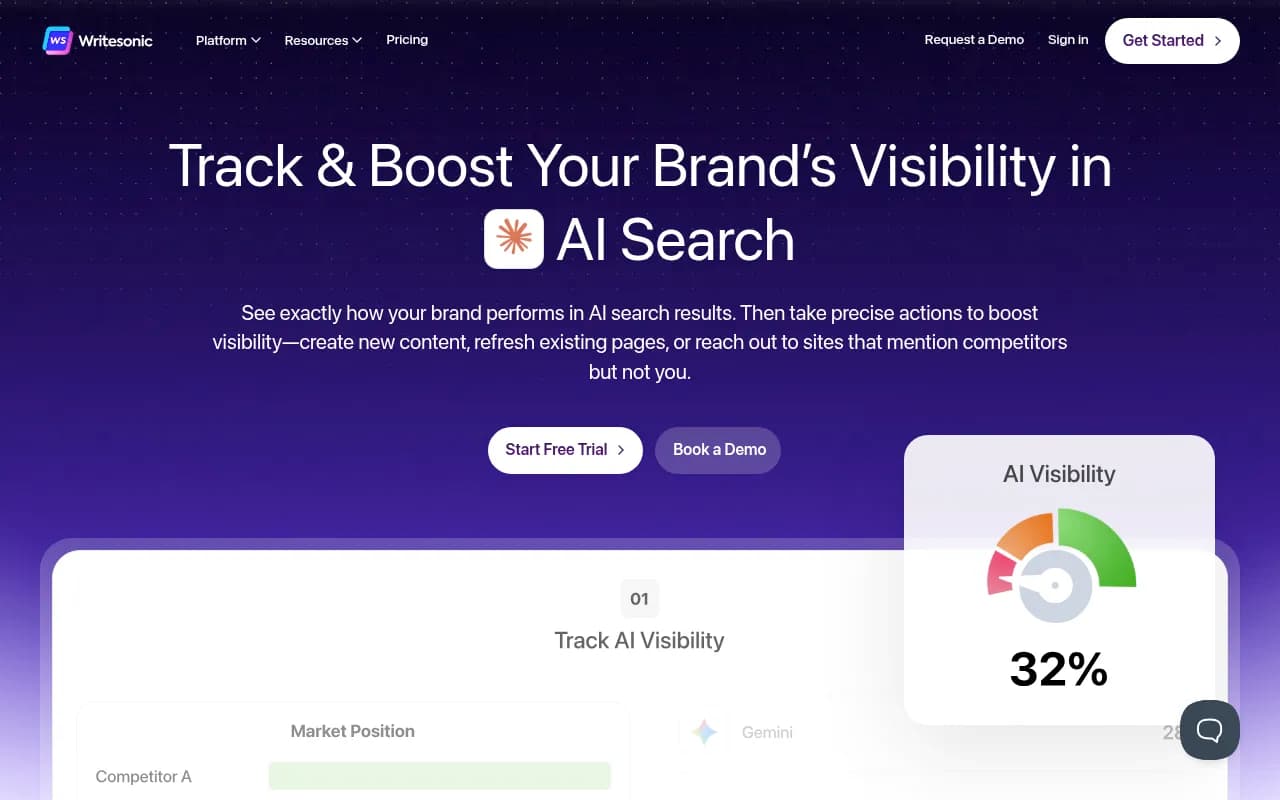
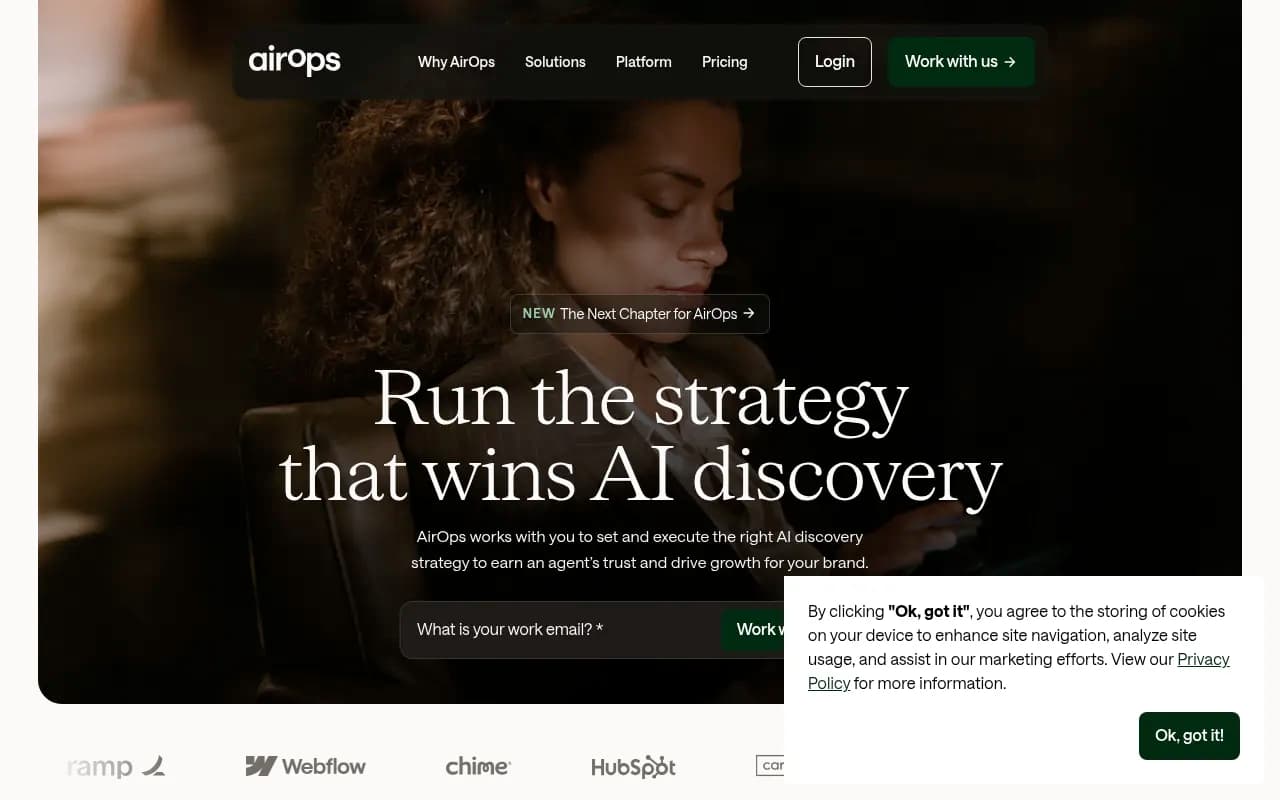
WriteSonic combines a writing tool with AI search tracking across ChatGPT, Perplexity, Google AI Overviews, Gemini, Claude, and Copilot. AirOps leans toward content engineering, building repeatable workflows for scaled production, with AI visibility tracking across ChatGPT, Google, Perplexity, and Google AI Studio. AirOps suits teams that publish a lot and want process. Writesonic suits smaller teams that want one login.
Alli AI
Alli AI applies on-page changes at scale, which is handy on large sites with thousands of templated pages. It is a different category from writing tools, so do not compare them head to head.
AI search visibility platforms
This is the category that did not exist three years ago, and it is where tools differ most. The core split is between trackers, which tell you whether your brand was mentioned, and platforms that help you change the answer.
Why content type matters more than word count
What gets cited is not random. In Promptwatch Data's ChatGPT citation share by content type report (Sep 28 to Oct 4, 2026), product pages made up 22.4% of classified ChatGPT citations and landing pages another 16.8%. Listicles took 13.6%, documentation 7.5%, and reviews only 1.7%. For commercial prompts like "best CRM for small businesses," product pages, landing pages, listicles, and comparisons add up to almost 70% of citations.
Two takeaways. First, the pages describing what you sell matter as much as your blog. Second, if you are not in the roundups ChatGPT cites, you are leaving share on the table. Content scores from Surfer or Clearscope will not tell you either of these things.
Freshness matters too. Promptwatch's content half-life report found that news pages lose half their citations within about 36 days, while landing pages and docs stay cited far longer. If your AI traffic depends on news-style posts, plan for constant refreshes.
Promptwatch
Promptwatch is the one I would put at the top of this category for teams that want results, not a dashboard. It tracks the real interfaces of ChatGPT, Google AI Overviews, AI Mode, Gemini, Perplexity, Copilot, and others, then goes past monitoring. IP-verified AI crawler logs show whether bots can actually read your pages, a content gap analysis shows which prompts you lose, and the Content Agent writes and publishes to Webflow, Framer, or WordPress. Published pages are then tracked for crawls, citations, and AI-driven visits.
It is rated 4.7/5 on G2 and used by over 1,840 brands and agencies. Pricing starts with a free Explore plan, then Essential at $95 per month, Professional at $245, and Business at $579; check promptwatch.com/pricing for current numbers. The honest caveat is that if you only need a weekly mention count, it is more tool than you need.

Profound, Peec AI, Otterly.AI, and Rankscale
Profound is the enterprise heavyweight, with strong monitoring and a higher price. Peec AI is a clean multi-language tracker. Otterly.AI is the affordable option for small teams. Rankscale is a budget AI rank tracker. All four are good at answering whether you showed up. None of them match the crawler logs, traffic attribution, or content generation of an optimization platform.



If you want to browse more options, the GEO software directory lists dozens of trackers and platforms side by side.
Not every channel is worth chasing
A lot of AI SEO advice says to go post on Reddit. The data is less friendly. Per Promptwatch's social media citations report (Sep 28 to Oct 4, 2026), social platforms together made up just 0.46% of ChatGPT's citations, while Google AI Overviews drew 12.2% from them, with YouTube at 4.28% and Facebook at 2.38%. Reddit's share in ChatGPT collapsed in mid-August.
That means channel strategy depends on the engine. YouTube and Facebook help in AI Overviews. Reddit and LinkedIn matter for Perplexity. Skip X. A tool that breaks citations down by engine and source type saves you from guessing.
Which tool for which job
| If you need to... | Start with | Add if needed |
|---|---|---|
| Research keywords and competitors | Semrush or Ahrefs | SE Ranking for budget |
| Optimize drafts for Google | Surfer SEO or Clearscope | Frase for briefs |
| Scale content production | AirOps or Writesonic | Frase for refreshes |
| Deploy on-page changes automatically | Search Atlas or Alli AI | Human review process |
| Track brand mentions in AI answers | Otterly.AI or Peec AI | Rankscale |
| Fix AI visibility and publish content | Promptwatch | Semrush for research |
| Enterprise-scale AI monitoring | Profound | Promptwatch for action |
How to build a stack without overspending
Most teams do not need 15 tools. Two or three is plenty.
- Keep one research suite. Semrush, Ahrefs, or SE Ranking. Pick based on whether you value backlinks, breadth, or price.
- Pick one content tool. If your writers live in Google Docs, Surfer or Clearscope. If you want brief-to-publish in one place, Frase.
- Add one AI visibility platform. Start with a free scan to see where you stand, such as Promptwatch's free AI Visibility Report, before paying for anything.
- Review monthly. Look at which pages get cited and which do not, then adjust content types, not just keywords.
If your team is stretched, an agency can run this for you. 1001 SEO Media does technical SEO, content, and generative engine optimization with Promptwatch as its AI visibility platform, but plenty of in-house teams run this stack fine on their own.
Questions worth asking any vendor
- Does it test the real ChatGPT or Gemini interface, or only the API? User-facing answers and citations can differ from API output.
- Can it show crawler activity, so you know whether AI bots can read your site?
- Does it connect visibility to actual traffic and conversions?
- What does it do after it finds a gap?
- What happens to my data and prompts if I cancel?
Watch for tools that rate their own product first in a roundup. Several of the "best AI SEO tools" pages that rank today are written by vendors on the list. Check pricing on the vendor's page and run a trial on your own site before committing.
Bottom line
Pick by job, not by hype. Semrush or Ahrefs for research, Surfer or Clearscope for content, and a dedicated platform for AI search. If you want the platform that turns visibility gaps into published content and then measures whether it worked, Promptwatch is the one I would try first. For a wider look at the category, the AI rank tracking directory is a good next stop.