Key takeaways
- The AI visibility tool market has split into two camps: monitoring dashboards that show you data, and optimization platforms that help you act on it. The gap between them matters enormously.
- Most tools -- including Otterly.AI, Peec AI, and AthenaHQ -- stop at tracking. They tell you where you're invisible but don't help you fix it.
- A handful of platforms (Promptwatch, Profound, Writesonic, Frase) have built content generation or gap analysis into their workflows, making them genuinely useful for improving visibility, not just measuring it.
- Coverage varies wildly. Some tools track only ChatGPT and Perplexity. The best ones cover 10+ models including Google AI Overviews, Gemini, Grok, DeepSeek, and Copilot.
- Pricing ranges from free tiers to $500+/month for enterprise plans. The right choice depends on whether you need monitoring, optimization, or both.
The AI search landscape shifted fast. ChatGPT hit roughly 900 million weekly active users in early 2026. Google's AI Overviews now reach an estimated 2 billion people per month. Perplexity has become a default research tool for millions of professionals. And SparkToro's analysis of Similarweb clickstream data found that about 68% of Google searches ended without a click in early 2026.
That last number is the one that should make every marketing team nervous. When the answer is the destination, being cited inside it is the new front page. Traditional rank trackers don't measure this. They tell you where you sit on a results page. They say nothing about whether ChatGPT recommends you or whether Perplexity cites your guide.
That's the gap AI visibility platforms exist to close. But not all of them close it equally well.
This guide ranks every major platform in the category, explains what each one actually does (versus what it claims to do), and tells you which one to use depending on your situation.
The core distinction: monitoring vs. optimization
Before getting into individual tools, it's worth being direct about the most important dividing line in this market.
Most AI visibility tools are monitoring dashboards. They run prompts, collect responses from AI engines, and show you a score or a share-of-voice metric. That's useful. But it's only half the job. Knowing you're invisible doesn't make you visible.
A smaller number of platforms have built what you might call an action loop: they identify gaps, help you create content to fill them, and then track whether that content actually gets cited. That's a fundamentally different product.
When you're evaluating tools, ask one question: "After this tool shows me a gap, what does it help me do about it?" The answer will tell you everything.
Platform rankings and reviews
Tier 1: Full optimization platforms (find gaps, fix them, track results)
These tools go beyond monitoring. They help you understand why you're missing from AI responses and give you the means to do something about it.
Promptwatch
Promptwatch is the most complete end-to-end platform in the category. It covers 10 AI models (ChatGPT, Perplexity, Claude, Gemini, Google AI Overviews, Google AI Mode, Grok, DeepSeek, Copilot, and Mistral), tracks real user-facing responses rather than just API outputs, and -- critically -- has built content generation directly into the workflow.
The Answer Gap Analysis shows you exactly which prompts competitors are visible for that you're not. Then Content Agents generate articles, listicles, and briefs grounded in that prompt data. Then page-level tracking shows whether those new pages get crawled and cited. That cycle -- find gaps, create content, track results -- is what separates it from monitoring-only tools.
A few capabilities worth noting specifically: AI Crawler Logs show which pages AI bots are reading, how often they return, and where they hit errors. This is rare. Most competitors don't have it. Reddit and YouTube tracking surfaces third-party discussions that influence AI recommendations. ChatGPT Shopping tracking monitors product carousels. Prompt volume and difficulty scoring helps you prioritize which gaps are worth chasing.
Used by 1,480+ brands including Booking.com, Center Parcs, and Everflow. Pricing starts at $99/month (Essential), $249/month (Professional), $579/month (Business). Free trial available.

Profound
Profound is the strongest dedicated monitoring platform for enterprise teams. It tracks 10+ AI engines, has processed 400M+ prompt insights, and offers solid competitor benchmarking. The reporting is detailed and the data quality is high. Where it falls short is on the action side -- it doesn't generate content or provide the kind of crawler-level diagnostics that Promptwatch does. For teams that have a separate content operation and just need authoritative tracking data, it's a serious option.

Writesonic
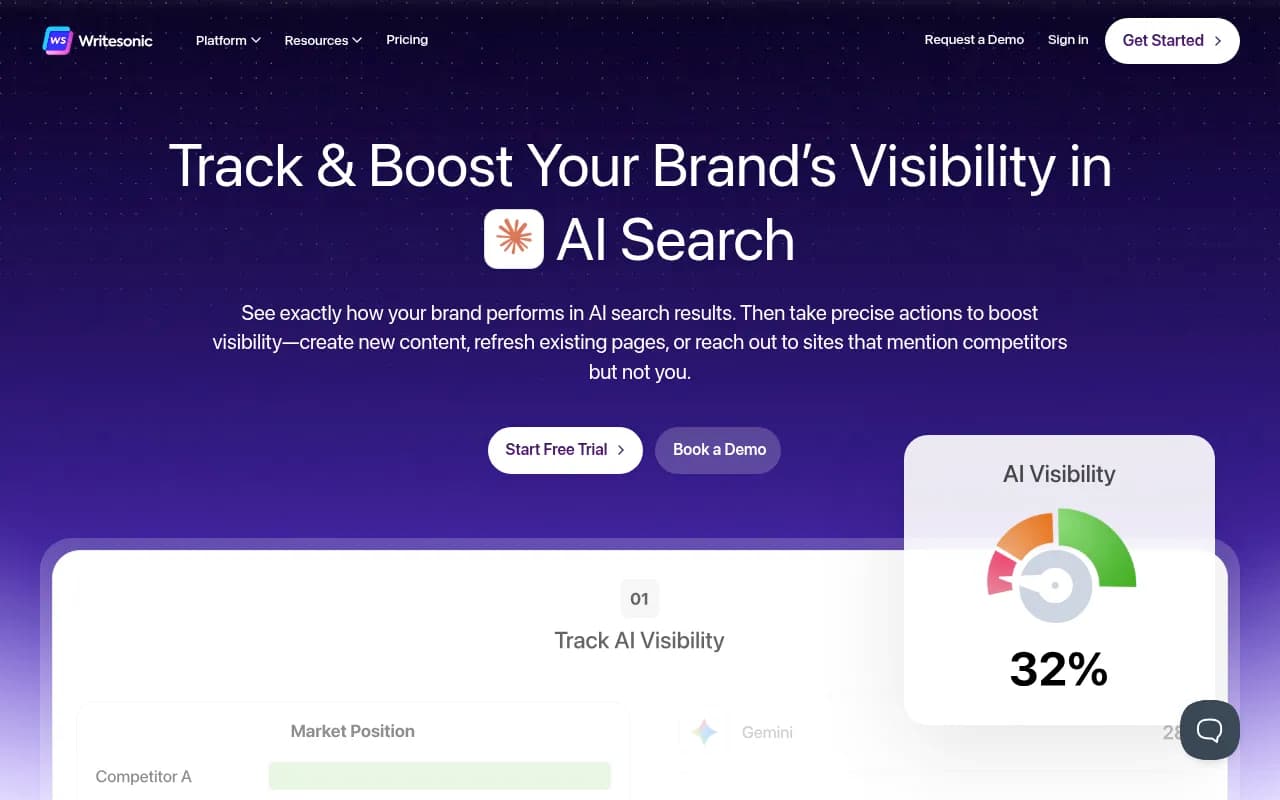
Writesonic has evolved from a pure content generation tool into something more interesting: a platform that tracks AI visibility and then uses that data to inform content creation. The integration between the tracking and writing sides of the product is still maturing, but the direction is right. Better suited to smaller teams that want an all-in-one workflow than to enterprises that need deep analytics.
Frase
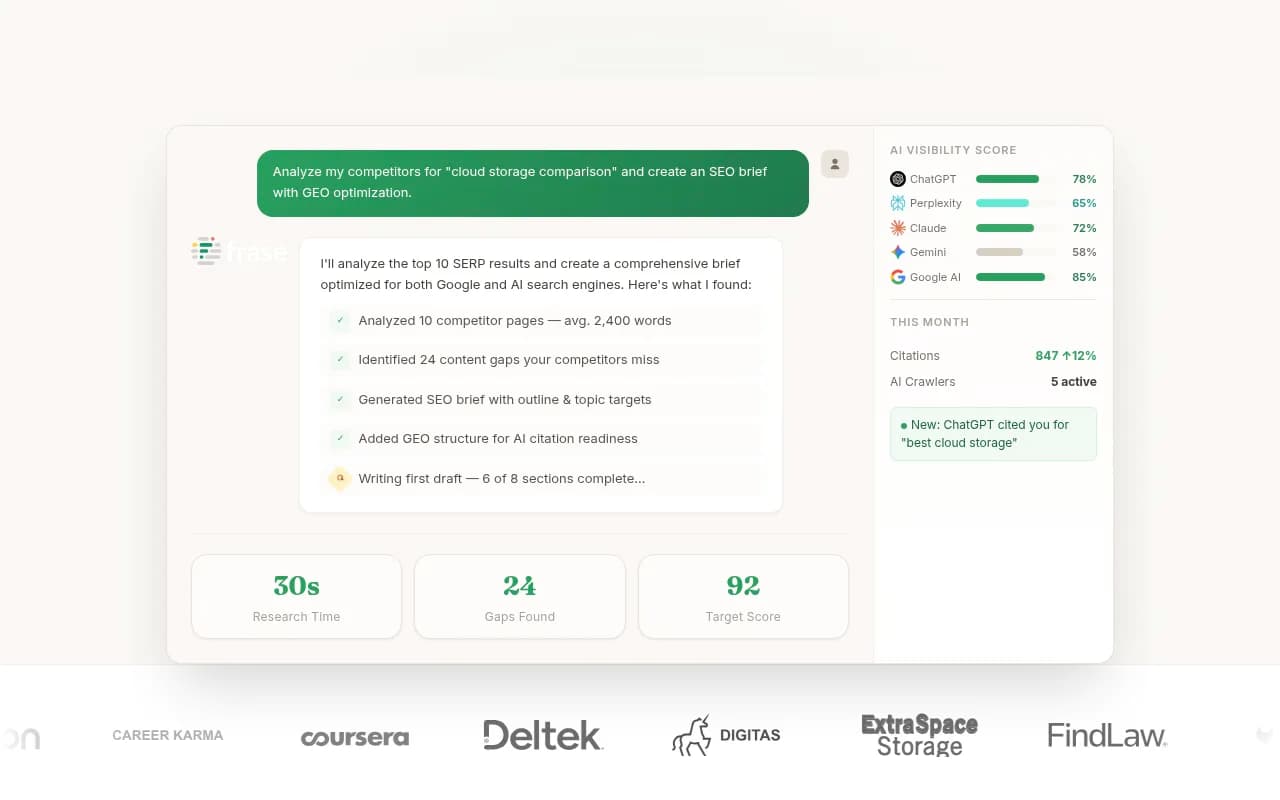
Frase pairs daily AI-engine tracking with research, writing, and optimization tools in one workflow. It's particularly strong for content teams that want to move quickly from "we're missing from this prompt" to "here's a draft that addresses it." The tracking depth is less granular than Promptwatch or Profound, but the content workflow is genuinely good. Worth considering if your bottleneck is content production rather than analytics.
Tier 2: Solid monitoring tools with some optimization features
These platforms do monitoring well and have started adding optimization features, but the action loop isn't complete.
AthenaHQ
AthenaHQ tracks 8+ AI search engines and has a clean interface for monitoring brand visibility and competitor share of voice. It's added some content optimization guidance over time, but it remains primarily a monitoring tool. Good for teams that want reliable tracking without a lot of complexity.

Semrush (AI Toolkit)
Semrush's AI Toolkit is a natural fit for teams already standardized on Semrush. It adds AI visibility tracking to an existing SEO workflow, which reduces friction. The limitation is that Semrush uses fixed prompt sets rather than dynamic prompt discovery, and there's no AI traffic attribution. If you're already paying for Semrush and want basic AI monitoring added on, this makes sense. If AI visibility is your primary concern, you'll outgrow it.
SE Ranking
SE Ranking has built AI visibility monitoring into its broader SEO platform. Coverage is decent, the price is competitive, and it's a reasonable choice for smaller teams that want AI tracking without a dedicated tool. Doesn't have the depth of prompt intelligence or gap analysis that the Tier 1 tools offer.
Scrunch AI
Scrunch AI focuses on AI search visibility monitoring with a clean interface and solid coverage across major models. It's a capable monitoring tool, but like most in this tier, it shows you the problem without giving you the machinery to fix it.
Searchable
Searchable covers AI search visibility monitoring with some content tools layered on. It's a reasonable mid-market option, though it lacks the crawler log capabilities and prompt intelligence depth of the top-tier platforms.
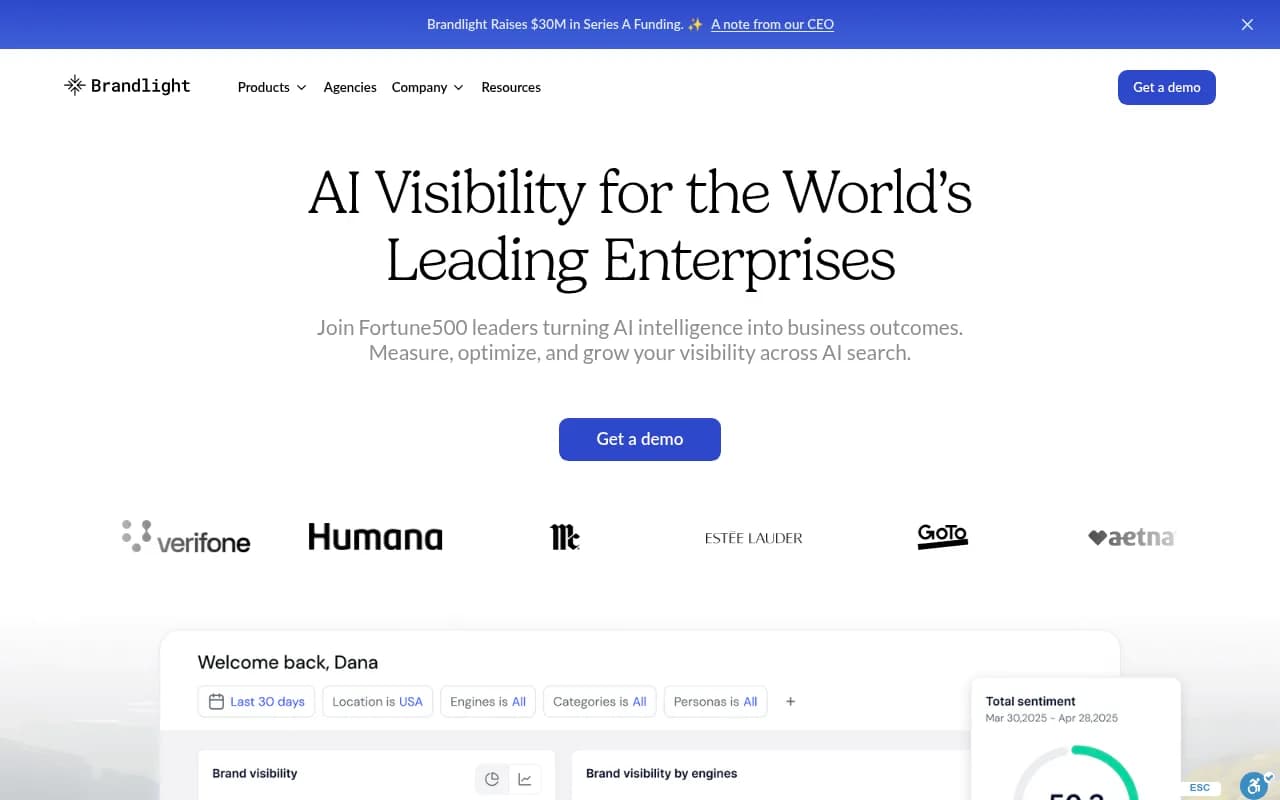
Brandlight
Brandlight focuses on AI-powered brand visibility tracking. It's positioned more toward brand monitoring than full GEO optimization. Useful if brand sentiment and mention tracking across AI engines is your primary need.
Tier 3: Monitoring-only dashboards
These tools track AI visibility and report on it. That's their job and they do it adequately. But they stop there. If you're invisible in AI responses, they'll confirm it -- and then leave you to figure out what to do next.
Otterly.AI
One of the earlier entrants in the category. Affordable, easy to set up, and covers the main AI models. Good for teams that just want to know whether their brand is being mentioned and don't need deep analytics or content tools.

Peec AI
Peec AI has strong multi-language support, which makes it a reasonable choice for international brands. The core product is monitoring: track prompts, see citations, compare competitors. No content generation or crawler diagnostics.

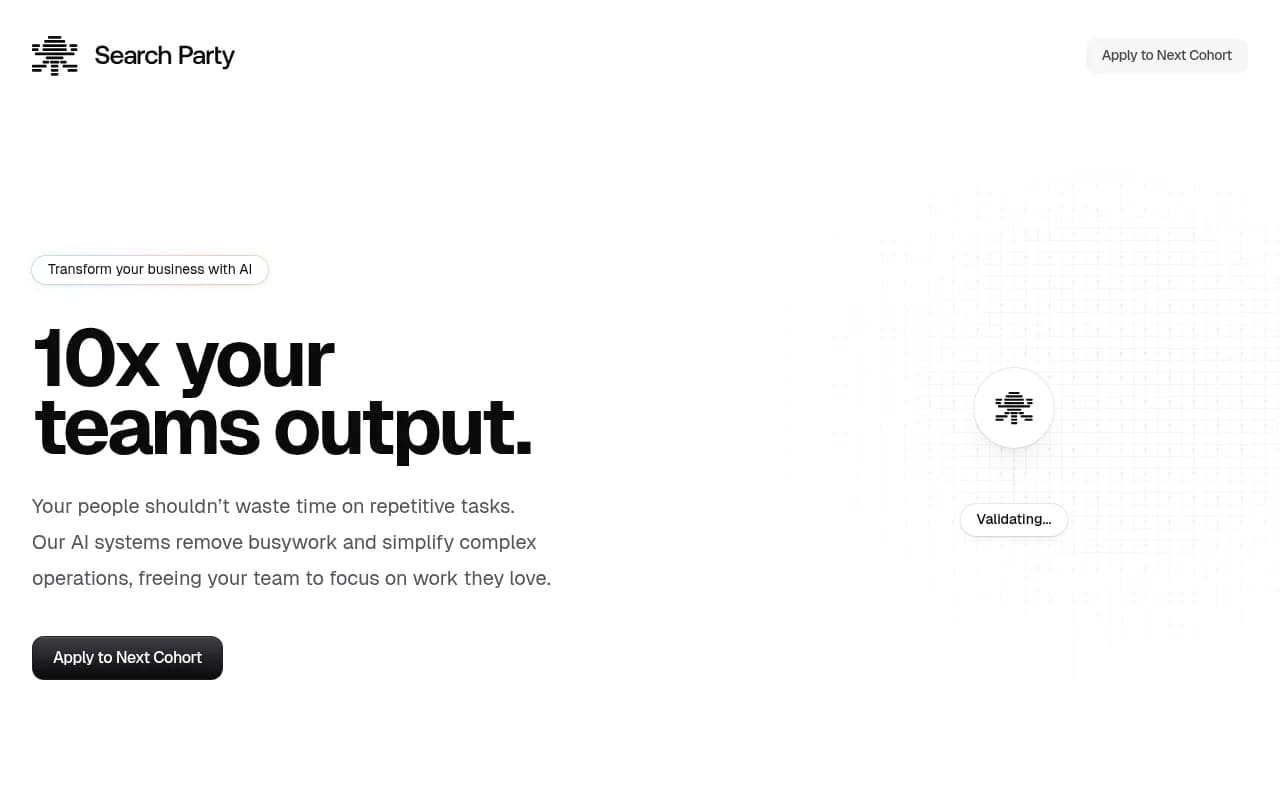
Search Party
Search Party is agency-oriented and has decent prompt tracking, but limited prompt metrics and no content gap analysis. Better suited to agencies that want to show clients AI visibility data than to teams trying to actively improve it.
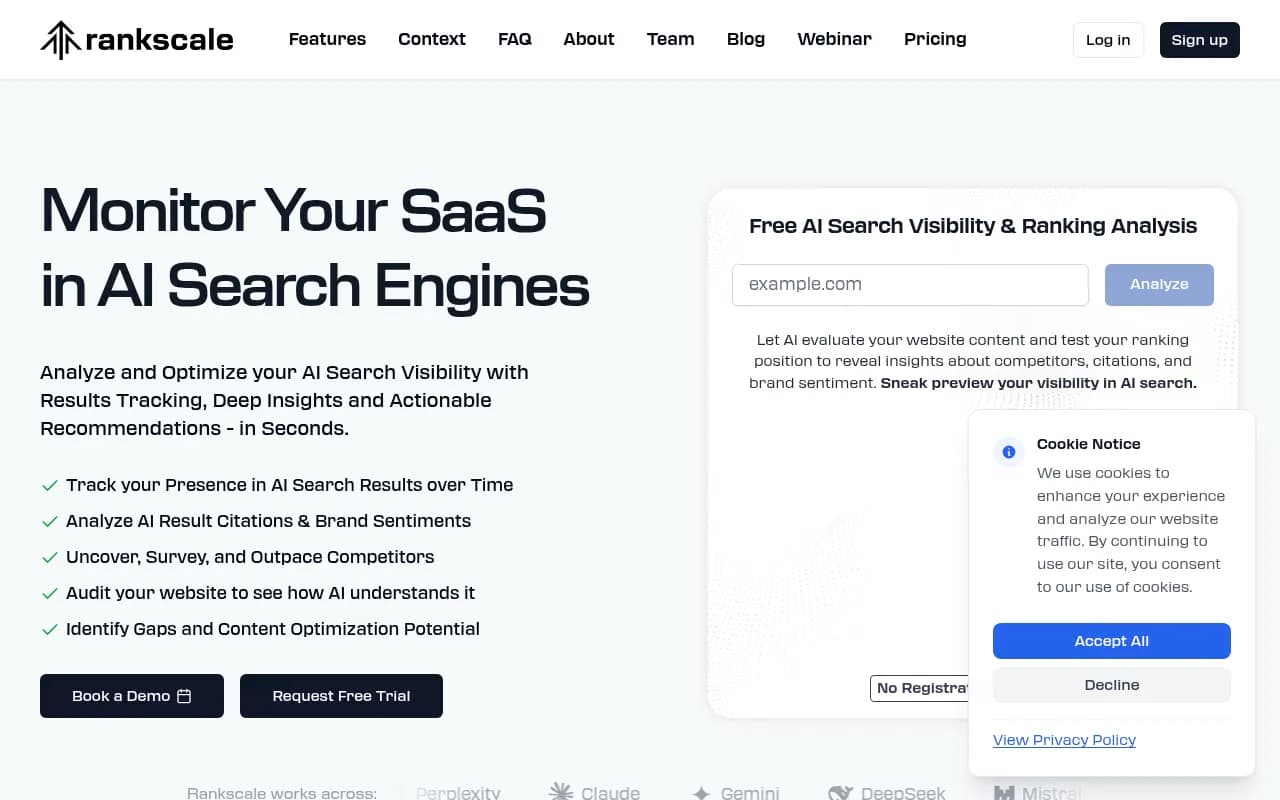
Rankscale
Rankscale pioneered daily AI search monitoring across ChatGPT, Claude, Perplexity, and Google AI Overviews. It's a solid tracker with a clean interface. Lacks the optimization layer.
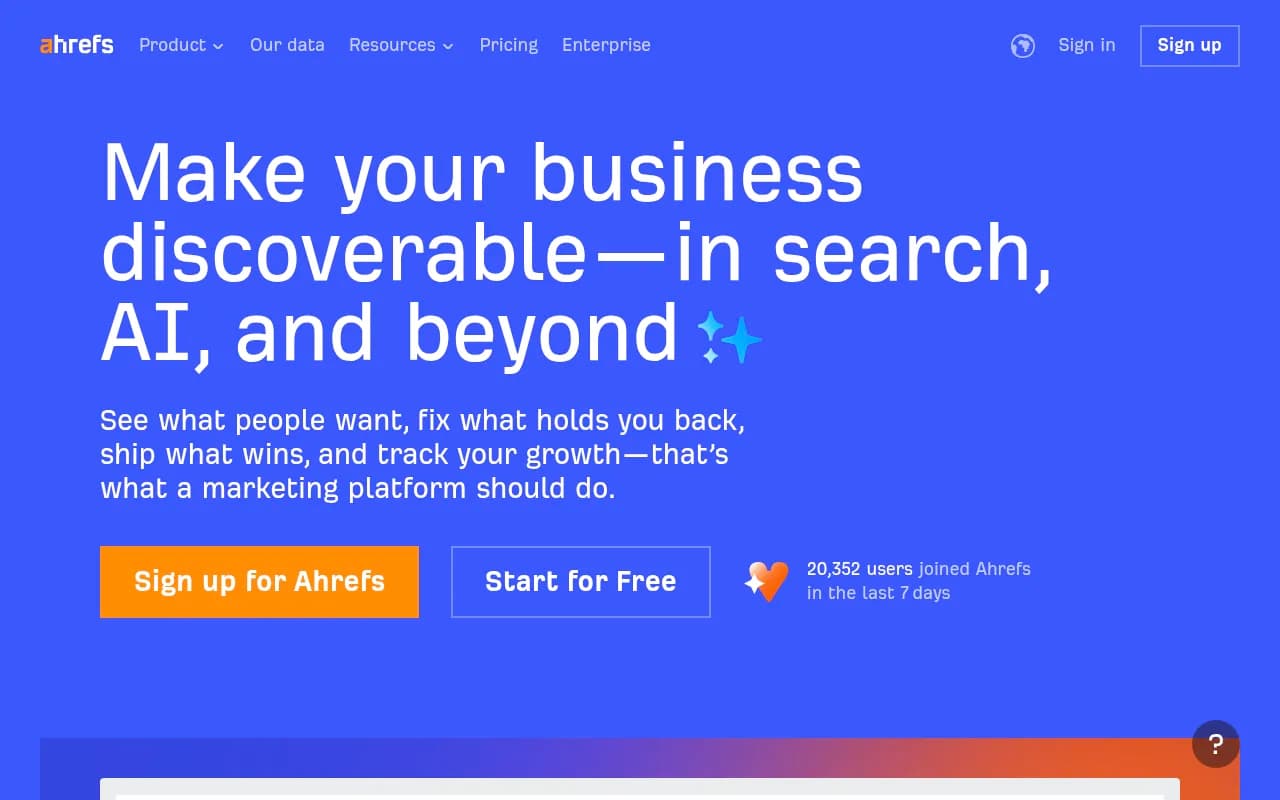
Ahrefs Brand Radar
Ahrefs Brand Radar adds AI search monitoring to the Ahrefs ecosystem. Like Semrush's offering, it uses fixed prompts and has no AI traffic attribution. Fine as an add-on for existing Ahrefs users, limited as a standalone AI visibility solution.
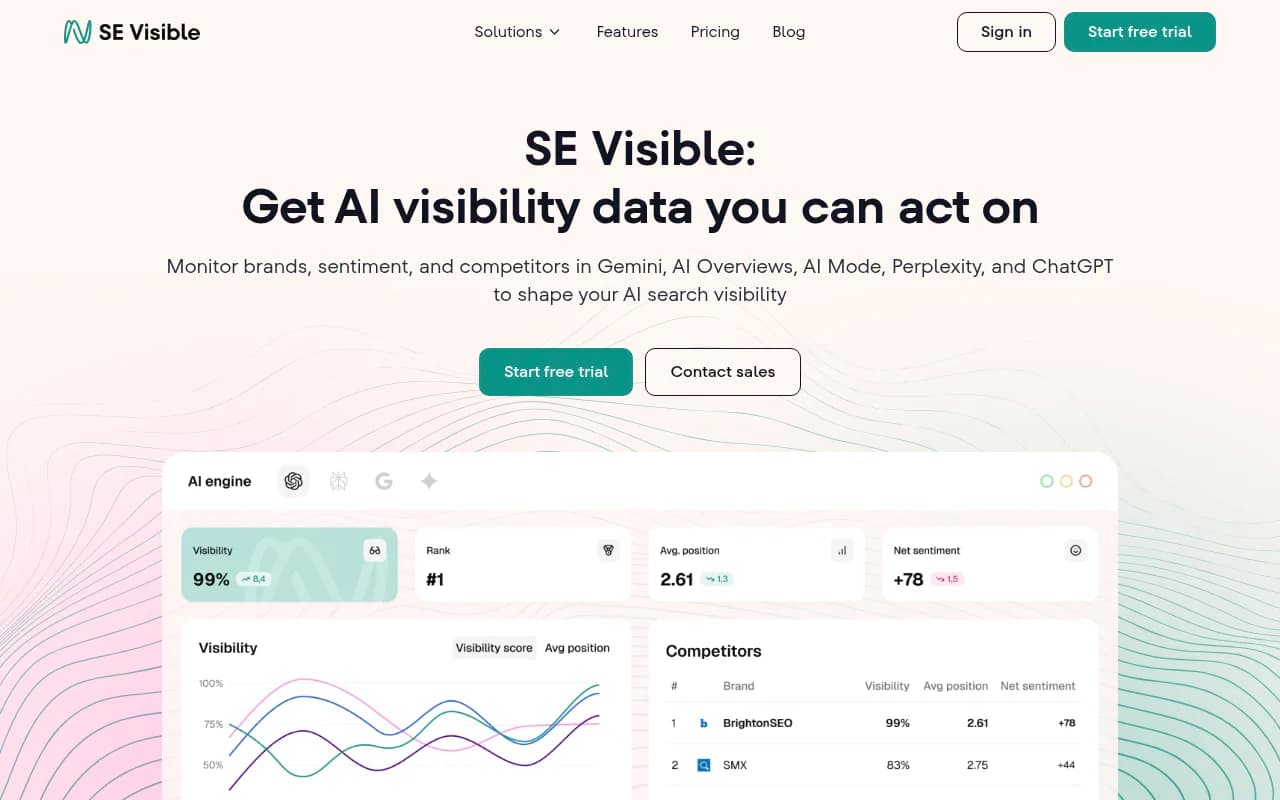
SE Visible
SE Visible (from SE Ranking) is a user-friendly entry point for AI visibility tracking. Straightforward interface, reasonable coverage, no frills.
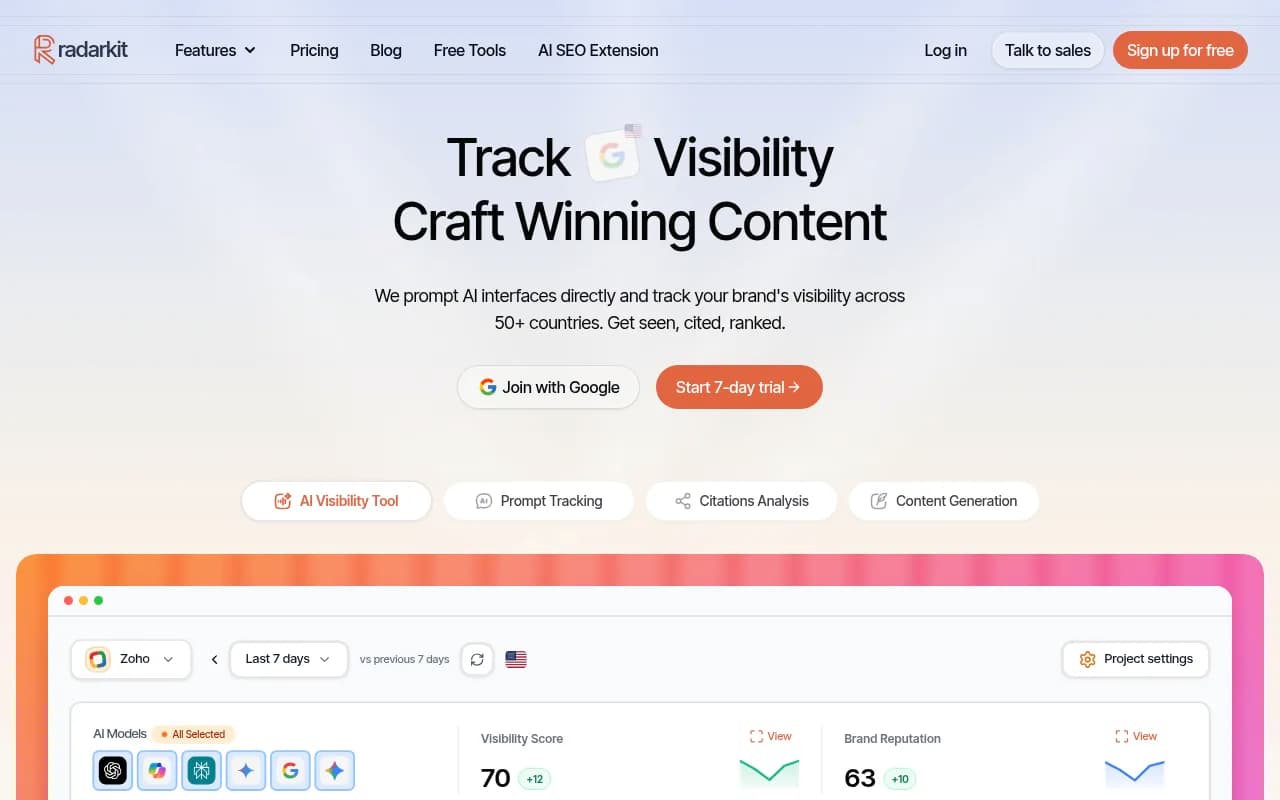
Radarkit
Radarkit tracks brand visibility across AI search engines with a focus on simplicity. Good for teams that want basic monitoring without a steep learning curve.
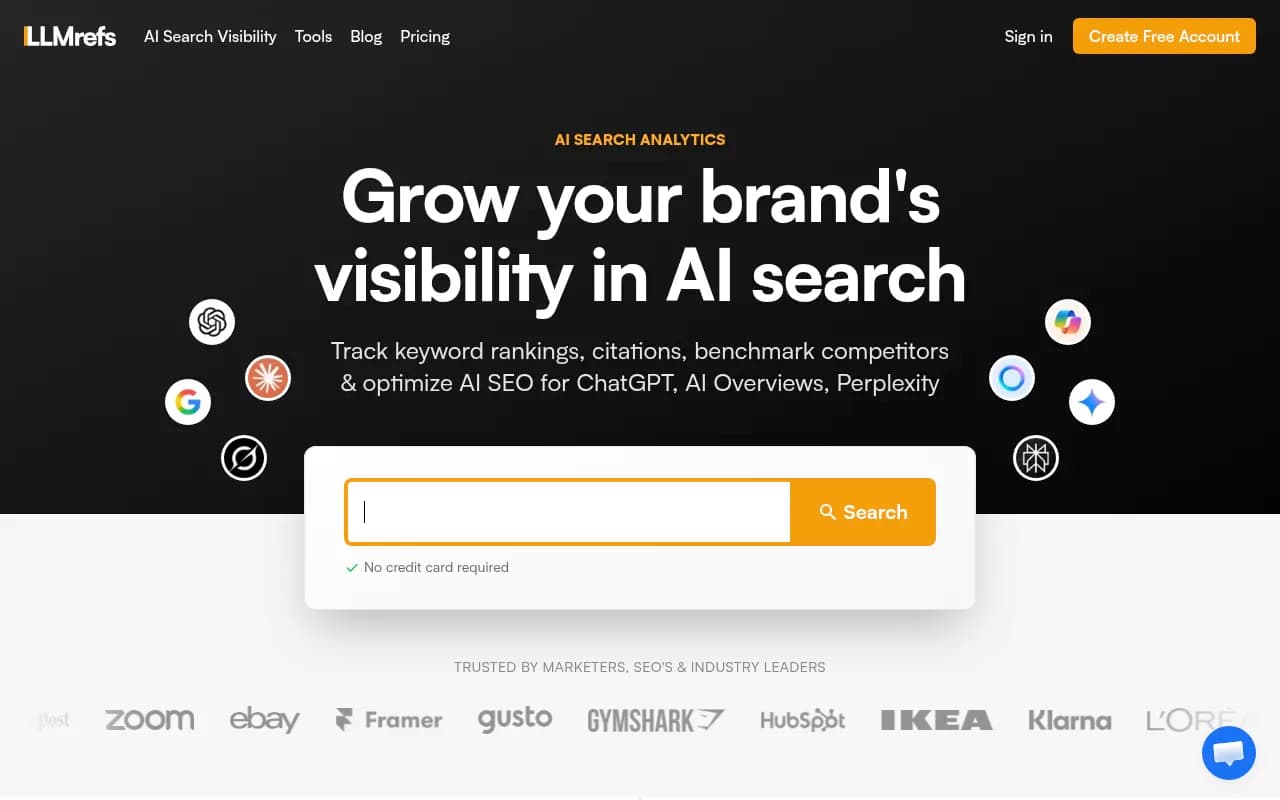
LLMrefs
LLMrefs tracks brand visibility across ChatGPT, Perplexity, and other major models. Lightweight and focused. Worth considering if you want a simple, affordable monitoring tool without enterprise complexity.
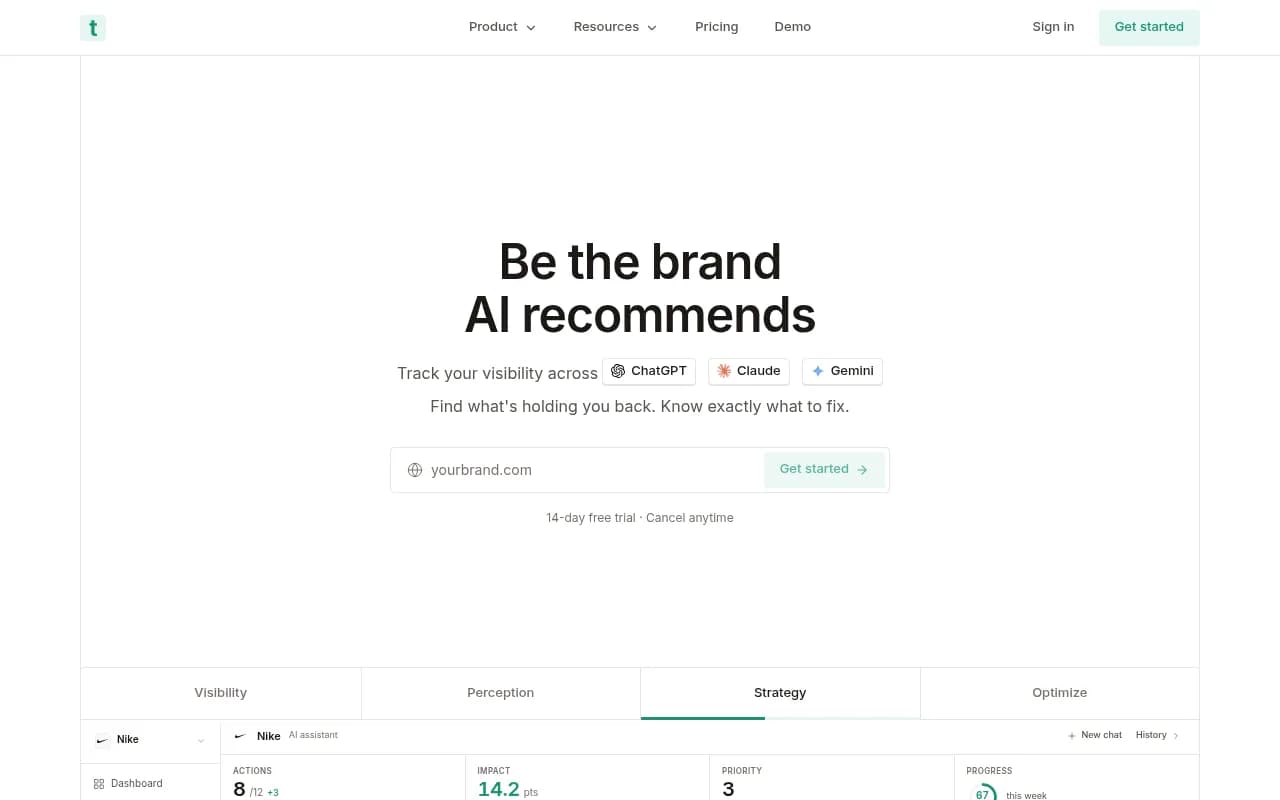
Trakkr.ai
Trakkr.ai monitors brand visibility across ChatGPT, Claude, and Perplexity. Straightforward tracking tool without the optimization layer.
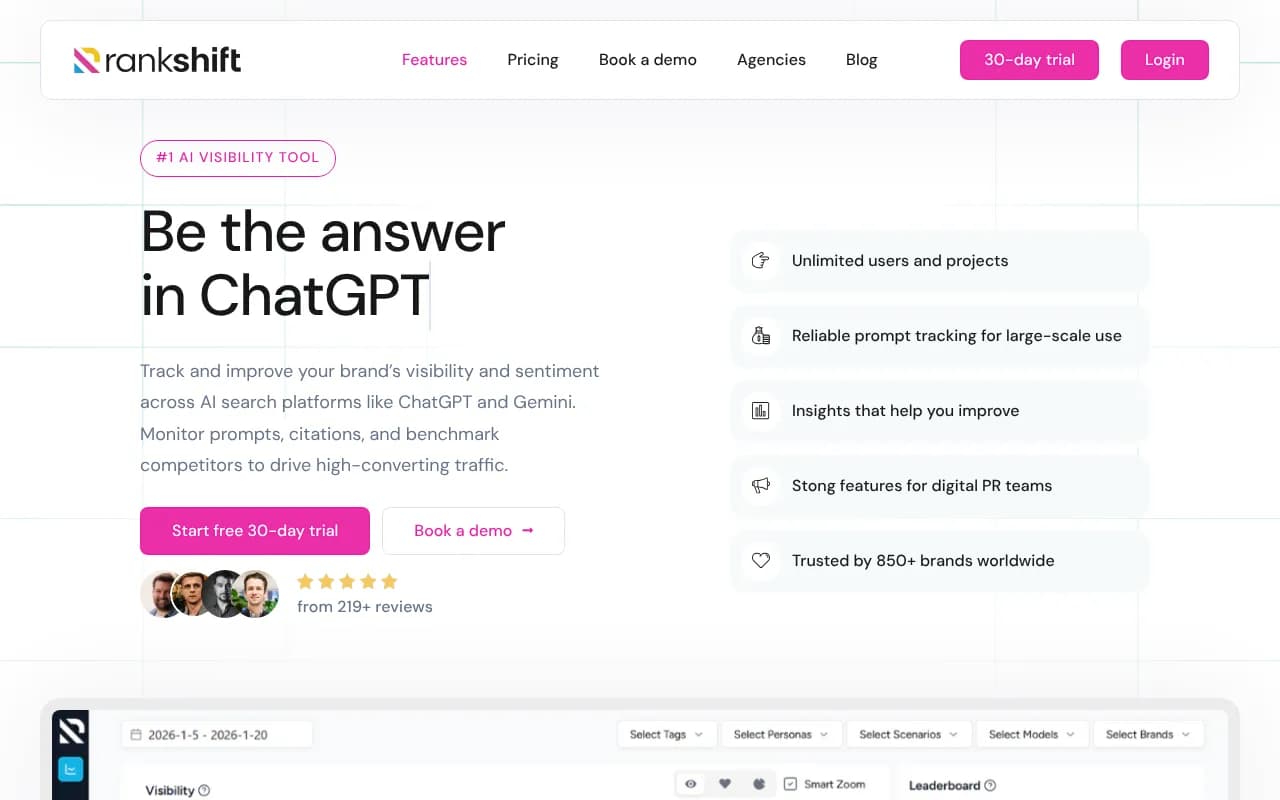
Rankshift
Rankshift focuses on LLM tracking for GEO and AI visibility. A capable monitoring tool for teams that want to track prompt-level performance across models.
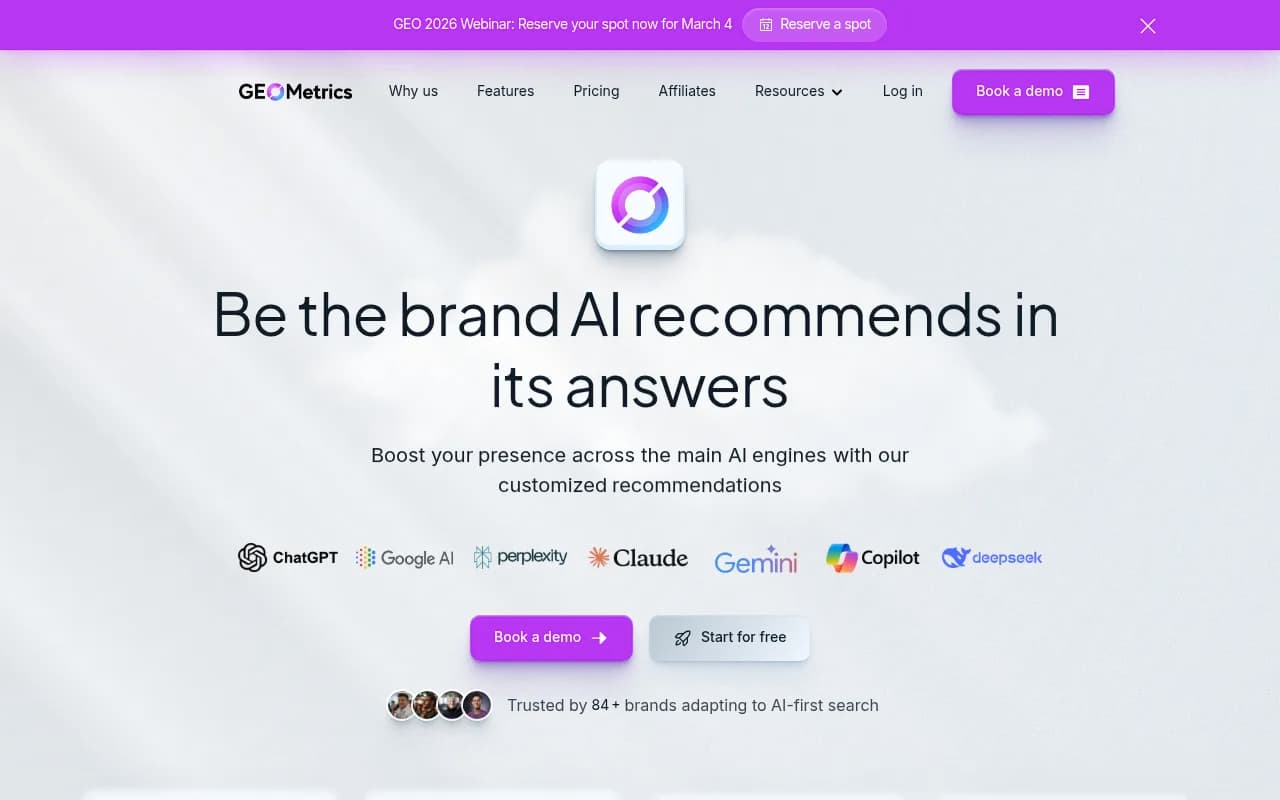
GEO Metrics
GEO Metrics tracks how ChatGPT, Gemini, and other AI engines mention your brand. Simple, focused, and affordable for teams just getting started with AI visibility measurement.
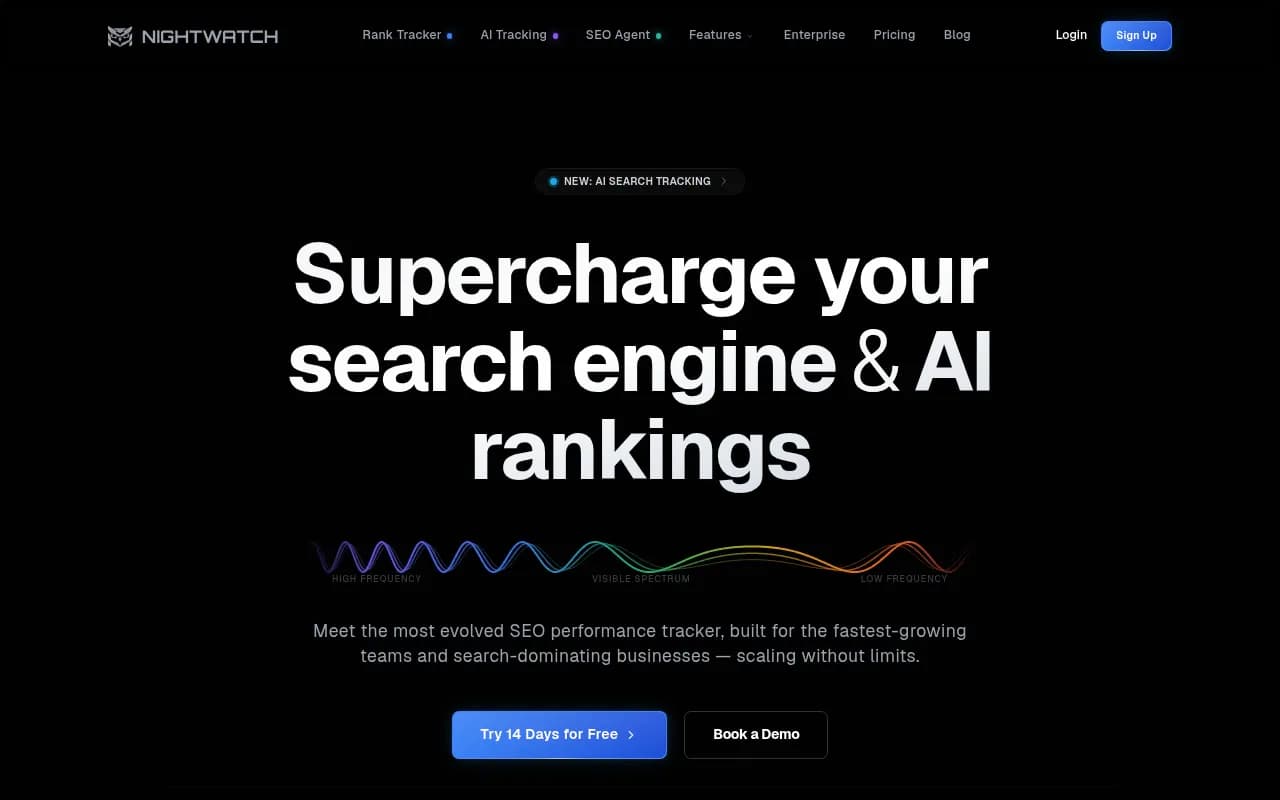
Nightwatch
Nightwatch has added AI search monitoring to its existing rank tracking product. Useful for teams that want traditional SEO tracking and AI monitoring in one place.
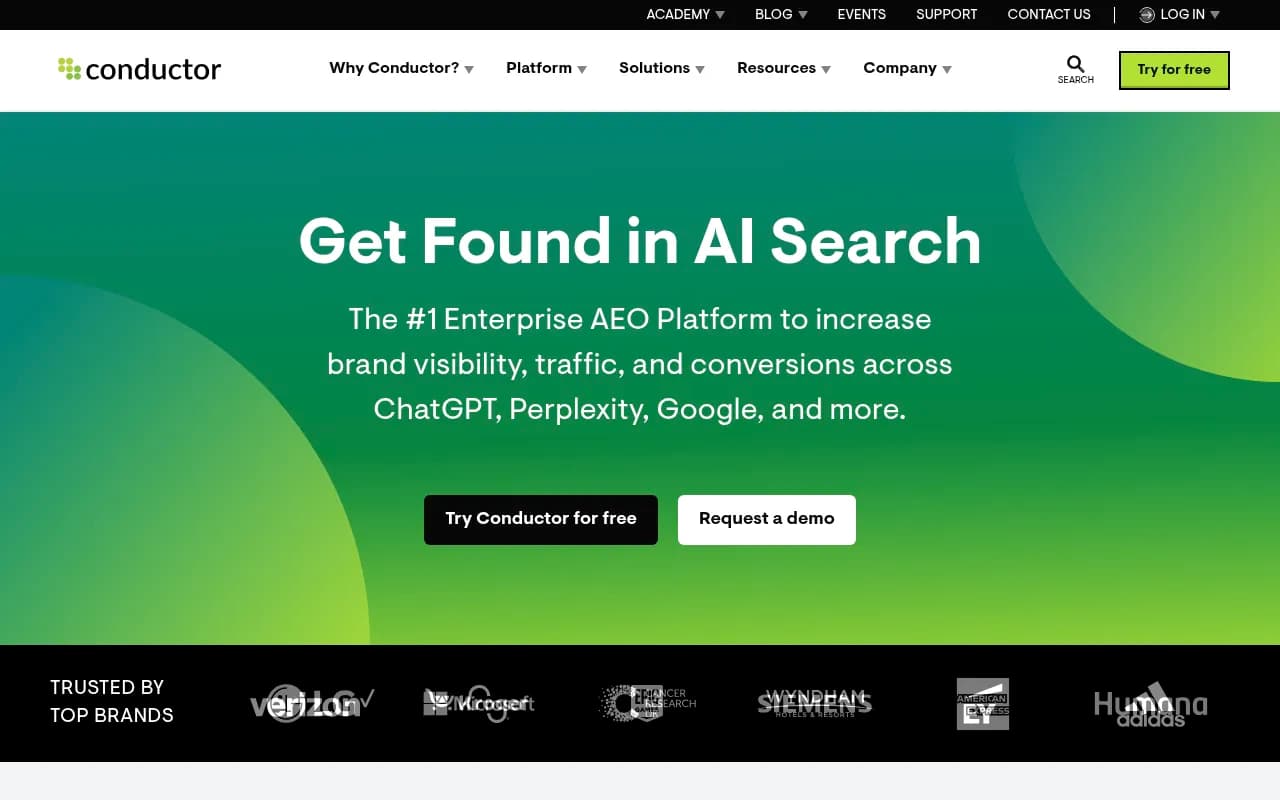
Conductor
Conductor offers AI visibility tracking with persona customization, which is a useful feature for brands that want to simulate how different customer types prompt AI engines.
BrandRank.AI
BrandRank.AI tracks and benchmarks brand visibility across AI answer engines. Solid monitoring with competitive benchmarking features.
Tier 4: Enterprise and specialized platforms
These tools serve specific use cases or enterprise segments that the general-purpose platforms don't fully address.
BrightEdge AI Catalyst
BrightEdge's AI Catalyst is built for large enterprise SEO teams. It integrates AI search visibility into BrightEdge's existing enterprise SEO platform. The price point reflects the enterprise positioning. Best for organizations already invested in BrightEdge's ecosystem.
Evertune
Evertune is positioned for Fortune 500 brands that want deep GEO insights and competitive intelligence at scale. It's a serious enterprise product with strong analytical depth. Less accessible for mid-market teams on budget.
Bluefish
Bluefish targets Fortune 500 brands with an enterprise AI marketing platform. Strong on brand visibility monitoring at scale, but the price point and complexity put it out of reach for most teams.
seoClarity
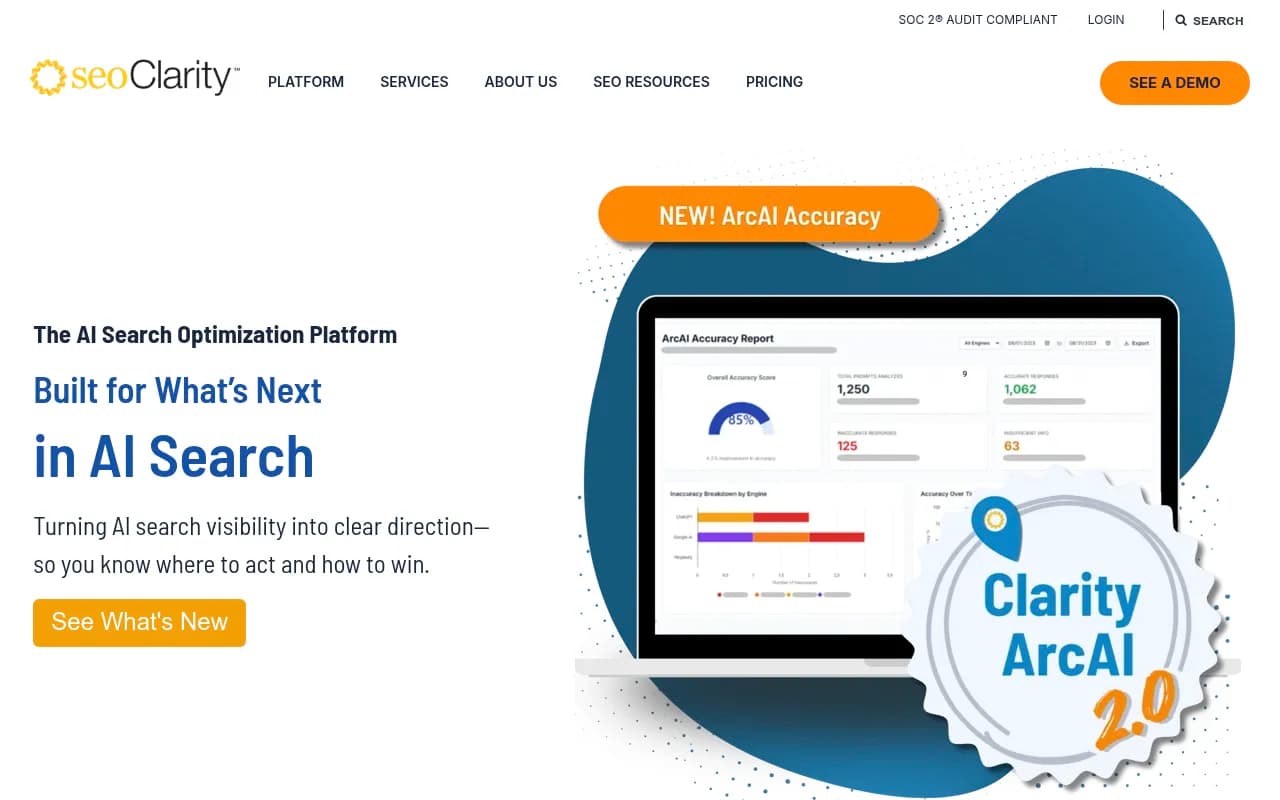
seoClarity is an enterprise SEO platform that has added AI search visibility tracking. Good for large organizations that want AI monitoring integrated into their existing enterprise SEO workflow.
Azoma
Azoma focuses specifically on AI shopping optimization -- ChatGPT Shopping, Amazon Rufus, and similar product discovery surfaces. If e-commerce AI visibility is your primary concern, it's worth a look.
Feature comparison table
| Platform | AI models covered | Content generation | Crawler logs | Prompt intelligence | Reddit/YouTube tracking | Starting price |
|---|---|---|---|---|---|---|
| Promptwatch | 10+ | Yes (Content Agents) | Yes | Yes (volume + difficulty) | Yes | $99/mo |
| Profound | 10+ | No | No | Partial | No | Custom |
| Writesonic | 5+ | Yes | No | Basic | No | ~$49/mo |
| Frase | 5+ | Yes | No | Basic | No | ~$45/mo |
| AthenaHQ | 8+ | Partial | No | No | No | Custom |
| Semrush AI Toolkit | 4-5 | No | No | No | No | Add-on |
| SE Ranking | 4-5 | No | No | No | No | ~$65/mo |
| Otterly.AI | 4-5 | No | No | No | No | ~$29/mo |
| Peec AI | 5+ | No | No | No | No | ~$49/mo |
| Ahrefs Brand Radar | 3-4 | No | No | No | No | Add-on |
| Evertune | 10+ | No | No | Partial | No | Enterprise |
| BrightEdge AI Catalyst | 5+ | No | No | No | No | Enterprise |
How to choose the right tool for your situation
The right platform depends on where you are in your AI visibility journey and what your team can actually act on.
If you're just starting out and want to know whether your brand appears in AI responses at all, a monitoring-only tool like Otterly.AI or Peec AI will get you there cheaply. Run it for a month, understand your baseline, and then decide whether you need more.
If you're past the "do we exist in AI search?" question and want to actively improve your visibility, you need a platform with an optimization layer. That means gap analysis, content tools, and ideally crawler diagnostics. Promptwatch is the most complete option here. Profound is the strongest pure-monitoring alternative if you have a separate content team.
If you're an enterprise team with an existing SEO platform, check whether that platform has added AI tracking before buying a standalone tool. Semrush and Ahrefs have both added AI monitoring. It's less deep than dedicated tools, but it reduces the number of platforms your team has to manage.
If e-commerce AI visibility (ChatGPT Shopping, Rufus) is your specific concern, Azoma is worth evaluating alongside a general-purpose platform.
What good AI visibility tracking actually looks like
A few things are worth knowing before you commit to any platform.
Real user-facing tracking matters. Some tools query AI models through APIs. Others simulate actual user sessions in real interfaces. The outputs can differ -- especially for shopping recommendations and citation formats. Tools that track real user-facing responses give you more accurate data about what your customers actually see.
Prompt coverage is everything. A tool that tracks 10 prompts will give you a very different picture than one that tracks 500. Before signing up, ask how many prompts are included in your plan and whether you can customize them to match how your actual customers search.
Crawler logs are underrated. Knowing that an AI model cited your page is useful. Knowing that the AI crawler visited your page three times last month, hit a 404 error on your product page, and has never crawled your new blog section is actionable. Very few platforms offer this level of visibility into how AI engines actually interact with your site.
Attribution is the final frontier. Most platforms show you visibility metrics. A smaller number connect those metrics to actual traffic. Almost none connect them to revenue. That's the direction the category is heading -- and it's worth asking any vendor how close they are to closing that loop.
The bottom line
The AI visibility tool market has matured quickly. There are now dozens of platforms, most of them competent at the basic job of tracking brand mentions in AI responses. The differentiator in 2026 is what happens after the tracking.
Monitoring tells you where you stand. Optimization changes where you stand. If you're evaluating platforms, that's the question to keep asking: after this tool shows me a gap, what does it help me do about it?
For most teams, the answer to that question will point toward a short list of platforms. The ones that have built the full loop -- gap analysis, content generation, citation tracking -- are the ones worth the investment.