Key takeaways
- Most small businesses need $30 to $100 a month of AI marketing software. You can reach the $200 ceiling, but you rarely need to.
- Build around five jobs: writing and strategy, design, SEO, email, and analytics. Buy one tool per job.
- Watch the billing model. Per-seat, per-contact, per-channel and per-task pricing all grow quietly, and some "from" prices only apply on annual plans.
- Free tools handle more than people expect. Google Search Console and Google Analytics 4 cost nothing and should be in every stack.
- If customers now ask ChatGPT for recommendations, add AI visibility tracking once the basics are working, not before.
How to think about an under-$200 stack
Most roundups hand you a list of 12 tools and let you sort it out. That is how small businesses end up paying for seven or eight subscriptions and using three of them weekly. (That figure comes from AdLibrary and is unverified, but it matches what I see.)
A better test, borrowed from Storyflow's small business roundup: in a small company the owner is the bottleneck, so spend money only where you personally are the constraint. Ask which hour of your week a tool gives back. If you can't name the hour, skip the tool.
AdLibrary, a vendor with its own product to sell, so read it with that in mind, suggests five functions:
- Copy and strategy
- One image tool
- One SEO tool
- One email platform
- One analytics layer
Its full stack lands at $155 to $190 a month, and a lean version at $59 to $99. That is a sensible skeleton. I would add only one rule: buy tools that replace work you would otherwise pay someone for, not tools that make work you already enjoy slightly faster.
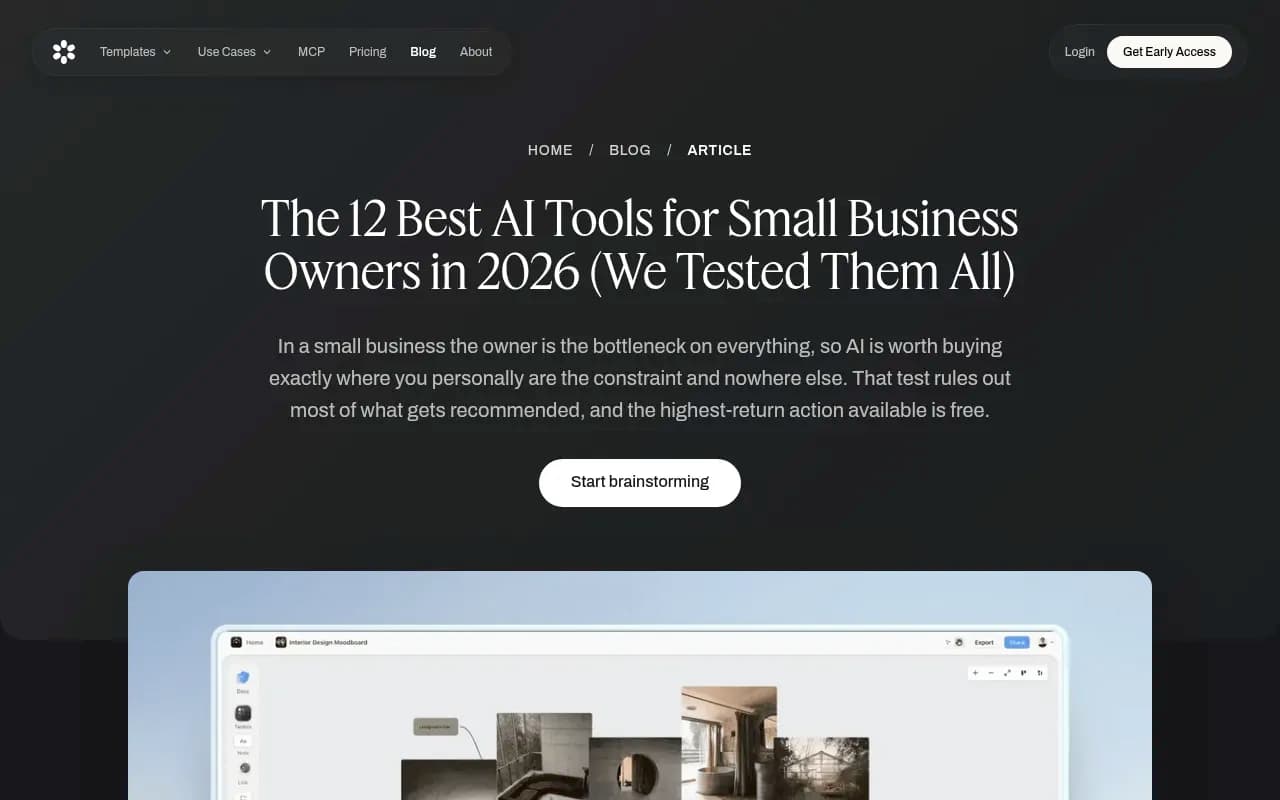
Storyflow's piece is worth a skim for its blunt advice: claim your free Google Business Profile before you buy anything at all. It also says a core AI and admin stack costs roughly $35 to $70 a month.
The quick comparison
Prices below come from vendor pages and third-party roundups gathered in 2026. Several sources disagree with each other, so confirm on each vendor's pricing page before you commit.
| Job | Tool | Typical price | Watch out for |
|---|---|---|---|
| Writing and strategy | Claude Pro or ChatGPT Plus | $20/month each | Individual plans, team plans start around $25 to $30 per user |
| Design | Canva Pro | $15/month ($12 on annual) | Free tier is already generous |
| Social scheduling | Buffer | Free, then about $6 per channel | Per-channel pricing adds up |
| Mailchimp, MailerLite, ActiveCampaign | $0 to $30 | Price scales with contact count | |
| SEO | Ubersuggest, Surfer SEO | $29 to $49 | Annual billing assumed |
| Automation | Zapier | Free, then about $20 | Multi-step Zaps burn tasks fast |
| CRM and marketing | HubSpot Marketing Hub Starter | From $7 to $20 per seat | HubSpot Credits are pay-per-use |
| Customer chat | Tidio Lyro | $39/month | Separate from your core stack |
Writing and strategy: one assistant is enough
You do not need Jasper, Copy.ai, Writesonic and a general assistant all at once. For most owners, one general-purpose assistant covers email drafts, ad copy, product descriptions, content calendars and quick research.
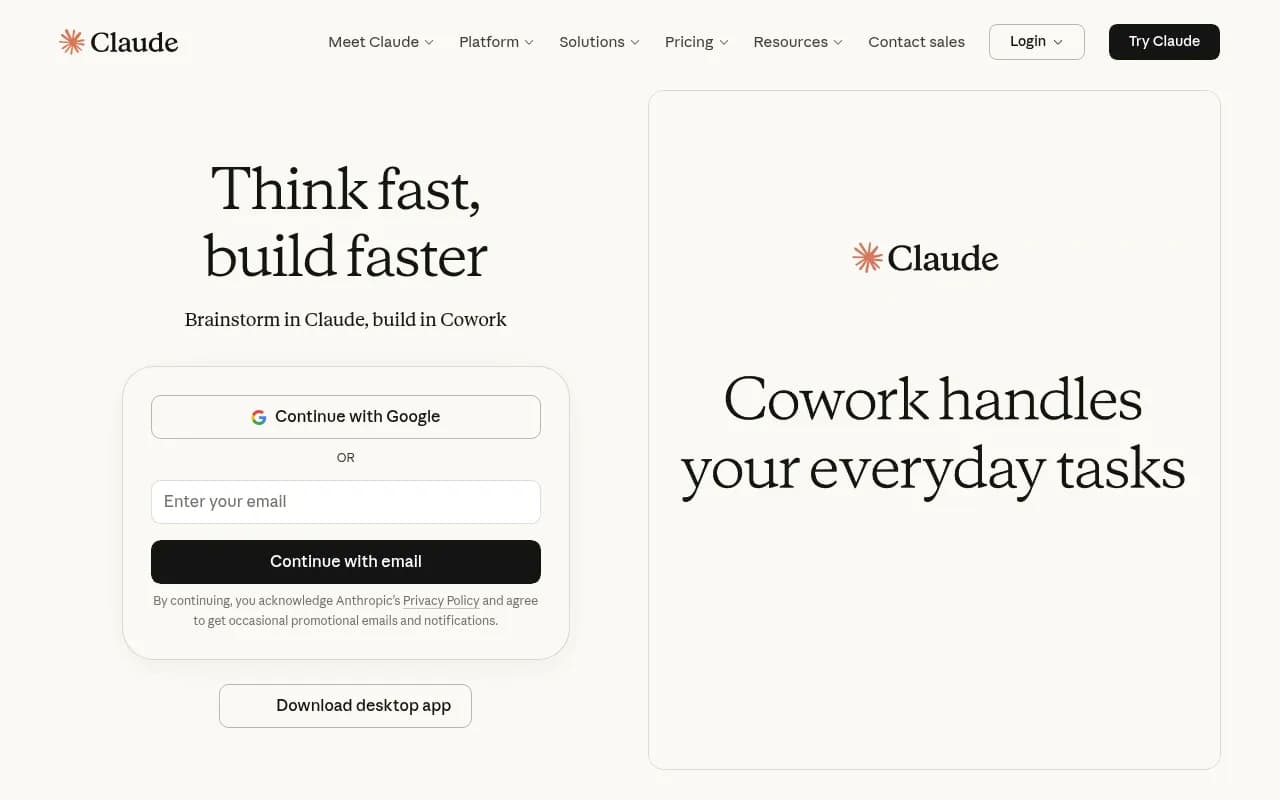
Claude and ChatGPT both run $20 a month for an individual plan. Claude tends to be the stronger pick for longer copy that needs to sound like a person. ChatGPT is the better all-rounder if you also want image generation and data analysis in the same window. Both have free tiers, and the ChatGPT free tier covers most day-to-day drafting.
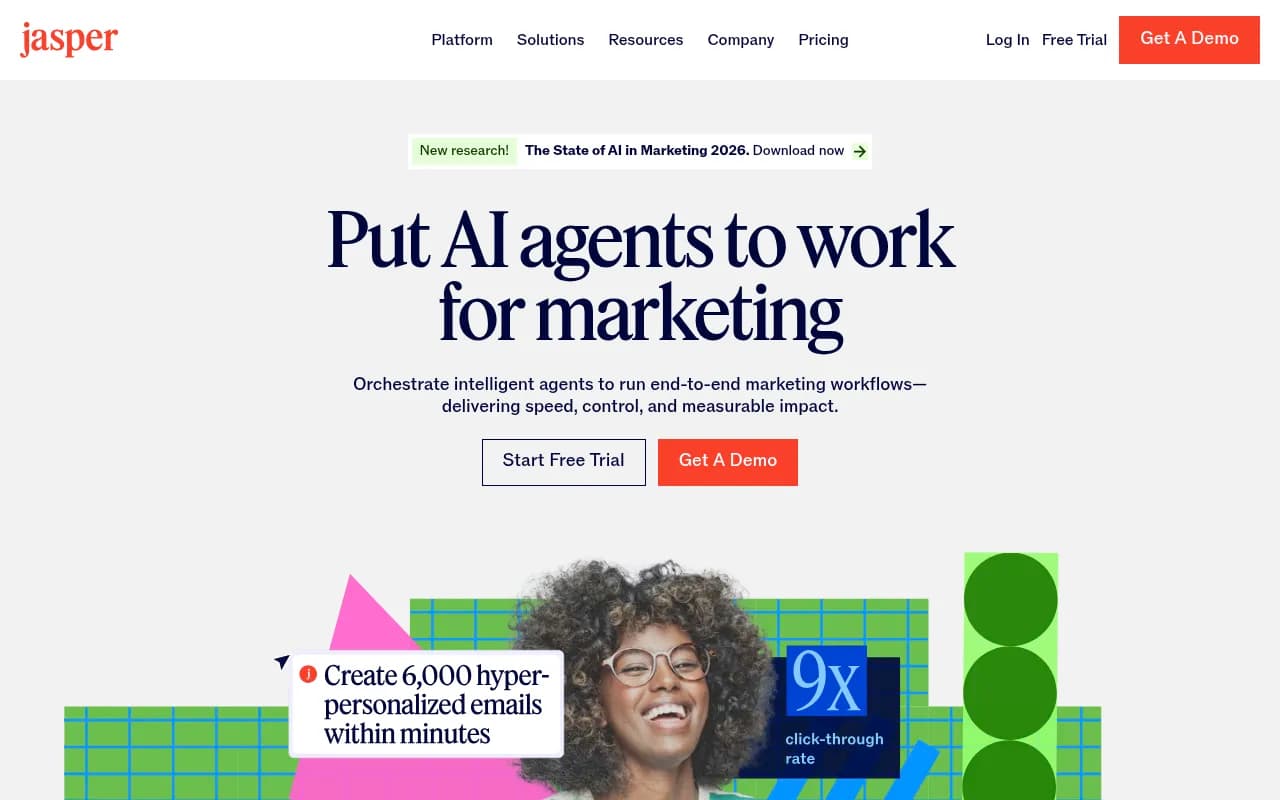
Specialist writing tools make sense in narrow cases. Jasper has Brand Voice and templates, but Pro is $59 per seat on annual billing or $69 month to month. That is a big bite of a $200 budget for something a $20 assistant with a good prompt can mostly do.
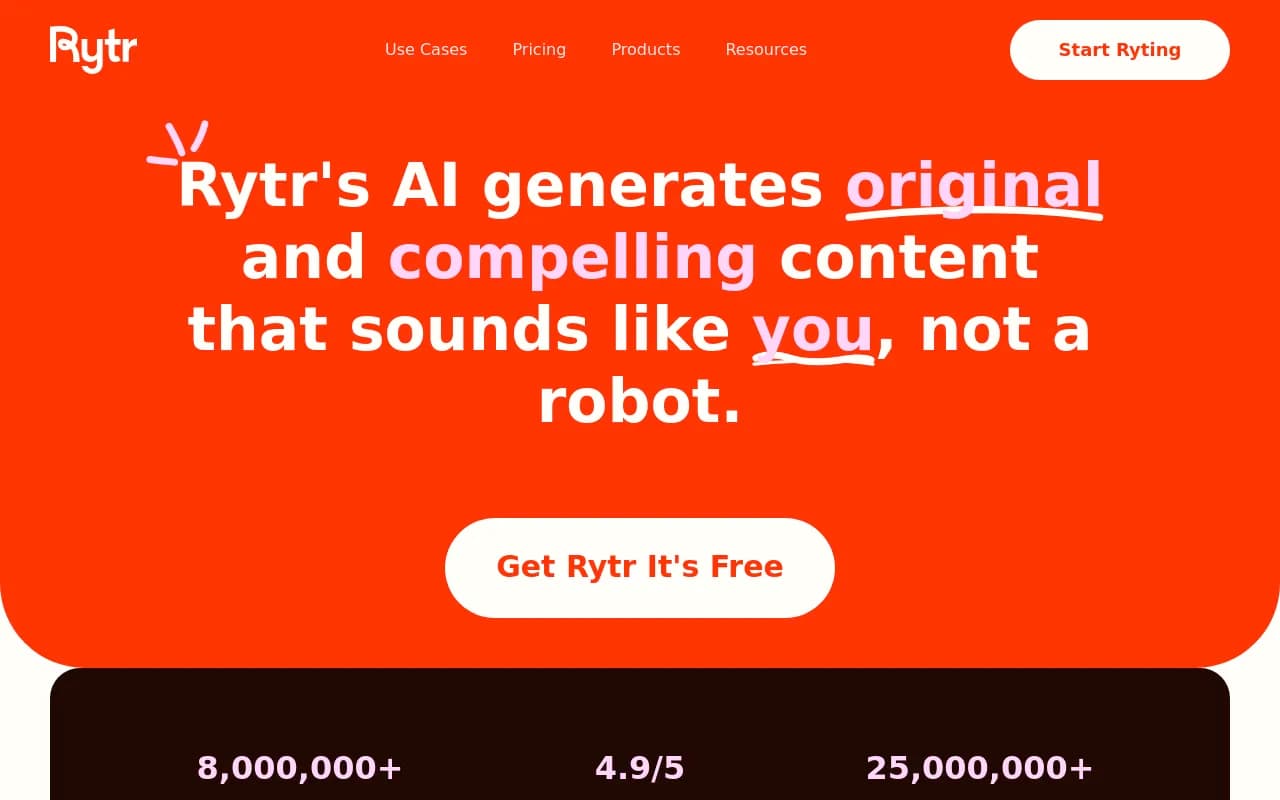
If you want something cheaper and simpler, Rytr is a short-form writing assistant that costs far less.
A practical tip on brand voice
Paste three of your best existing emails or posts into your assistant and ask it to describe your voice in a short paragraph. Save that paragraph and reuse it at the top of every writing request. It costs nothing and does most of what paid Brand Voice features promise.
Design: Canva does the heavy lifting
Canva Pro is $15 a month and includes 500 AI credits a month, unlimited cloud storage and a Brand Kit, according to the US Chamber of Commerce's roundup. One source lists $144 a year per person, which works out to $12 a month billed annually.
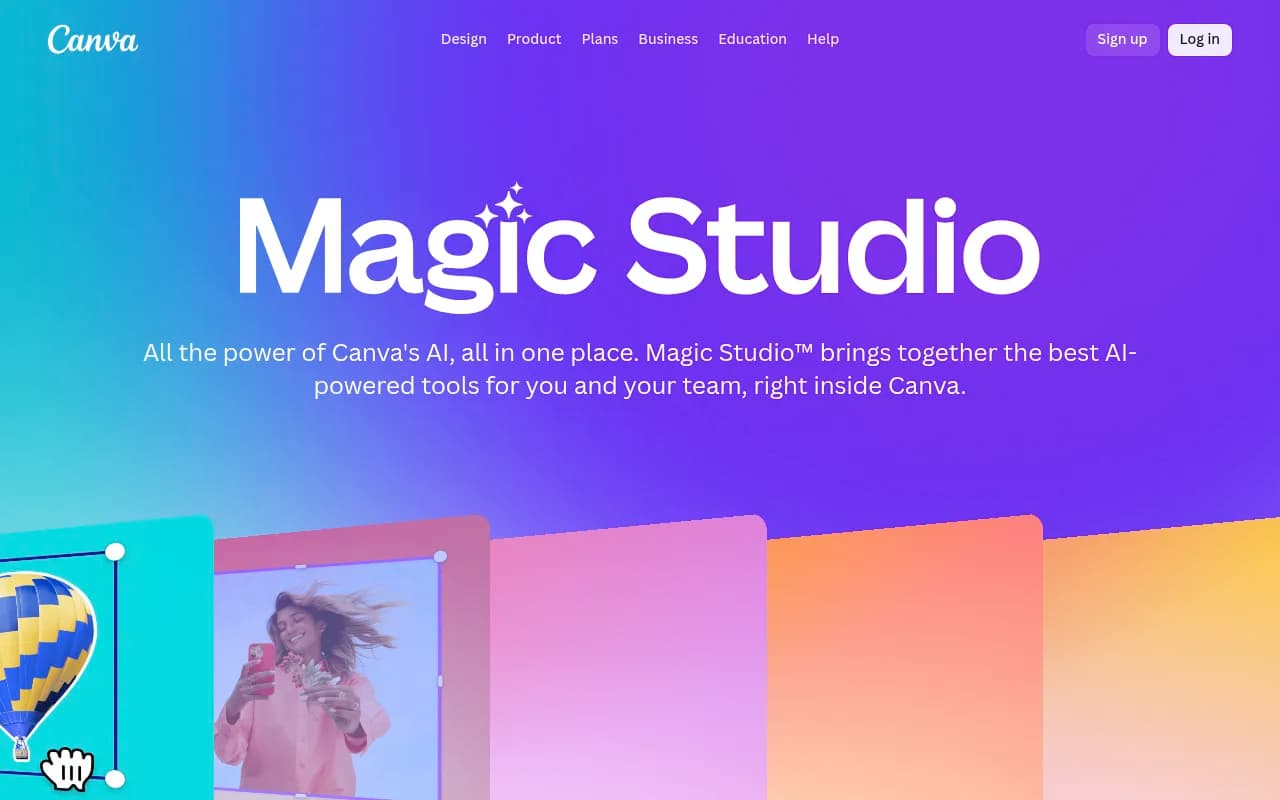
For most small businesses this is the single best-value subscription on the list. Social graphics, flyers, simple ad creative and presentations all live in one place, and the AI tools handle background removal, resizing and quick image generation.
If you want fresh imagery, AdLibrary suggests Midjourney Basic at about $10 a month for roughly 200 image jobs. Its own caveat is the right one: Midjourney gives you raw visual material, which you then finish in Canva. Don't expect ready-to-run ad creative. Adobe Firefly is a $4.99 monthly add-on with cleaner commercial usage rights, which matters if you run paid ads.
SEO: pick one tool and use all of it
The most common SEO mistake I see small businesses make is buying a big suite and using a tenth of it. One source claims most small businesses use about 30% of Semrush Pro, which costs $139.95 a month. That is an opinion, but it is plausible, and at that price it would eat most of your budget.
Start free. Google Search Console costs nothing, shows the queries that already bring people to your site, and AdLibrary calls it non-negotiable. I agree.
Then choose one paid tool:
- Ubersuggest is the budget option, with keyword research and a site audit at a fraction of the big suites.
- Surfer SEO starts at $49 a month on annual billing ($588 a year). There is no free tier, and AI tracking costs extra. It is a content optimization tool, so it suits you if you publish articles regularly.
- Mangools is a beginner-friendly toolkit if you want keyword research and rank tracking without the complexity.
AdLibrary suggests targeting keywords with 100 to 1,000 monthly searches and keyword difficulty under 30. For a small local business that is solid advice. Chasing high-volume terms against established competitors is how you burn six months for nothing.
Bigger suites like Semrush are excellent, but they belong in a budget above $200 or in an agency's toolkit.
Email and social: keep it boring and cheap
Email is still the channel you own. Three sensible options:
- Mailchimp has a free plan with 250 contacts and 500 sends a month. Paid Essentials pricing differs by source ($9.74 on annual in one, from $13 in another), so check mailchimp.com/pricing/marketing before you decide. Price rises with list size.
- MailerLite sits in the $0 to $30 range and is a common pick for small lists.
- ActiveCampaign Starter runs about $15 a month and is claimed to give more automation than paid Mailchimp tiers. If you want welcome sequences and abandoned-cart flows, it is worth a look.
beehiiv suits you if your email is really a newsletter: the Launch plan is free up to 2,500 subscribers.
Social scheduling
Buffer is the cheap answer. The free plan covers 3 channels with 10 queued posts per channel, and Essentials is about $6 per channel per month. Per-channel pricing adds up quickly if you are on five networks, so run the numbers before you connect everything.
Hootsuite starts around $99 a month in one comparison, which is probably too much for a business with one person handling social.
A cheaper way to get content out of your head is Predis.ai, which generates social posts and creative from a short prompt.
CRM and automation
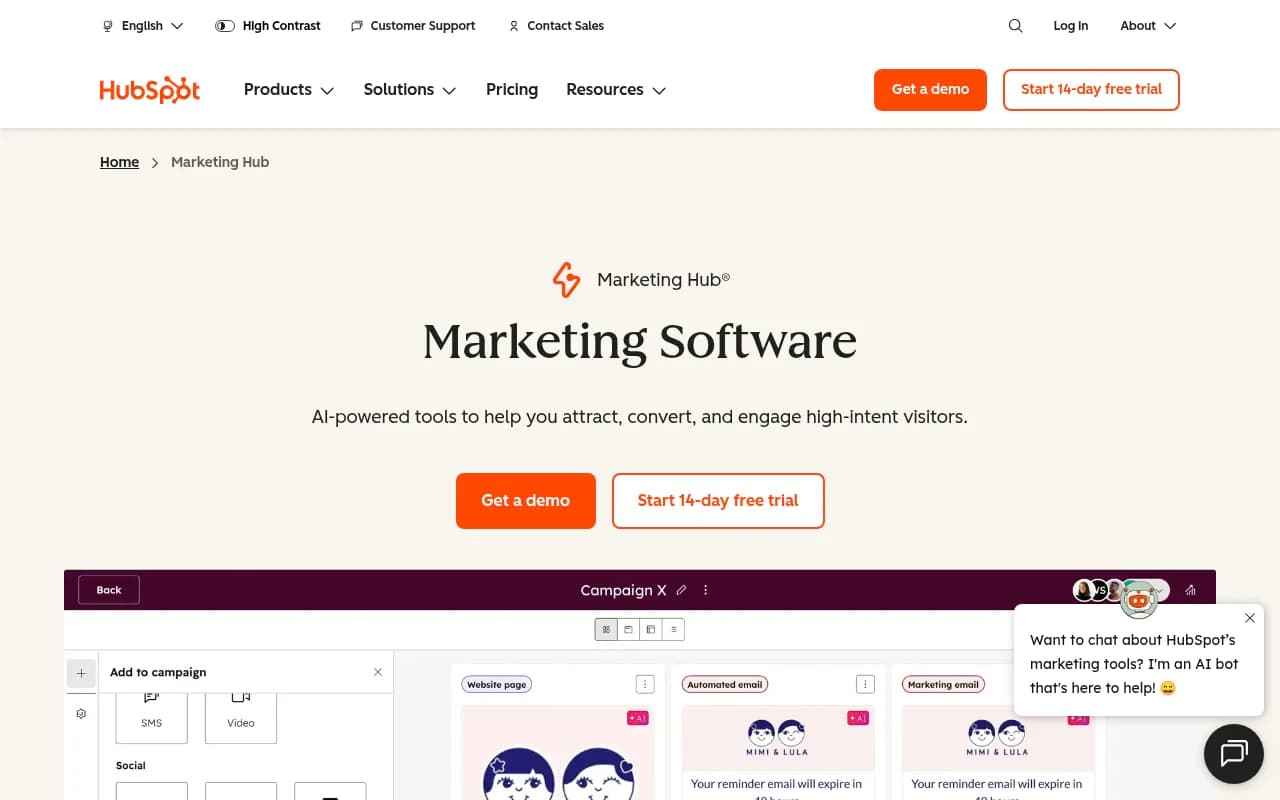
HubSpot is the tool that tempts small teams to overspend. The free CRM is genuinely good. Marketing Hub Starter shows "starts at" $7 per seat per month, or $20 per seat on the other billing option. The page does not make clear which price goes with which billing period, so confirm that on the pricing page. Starter includes 1,000 marketing contacts, 500 HubSpot Credits, email marketing, simple automation and ad management.
The jump is brutal after that: Professional is $800 a month and Enterprise is $3,600. Also note that HubSpot Credits are pay-per-use, so AI usage can add cost. Third-party summaries put Breeze agent pricing at $0.50 per resolved customer conversation and $1.00 per recommended prospecting lead. A $200 budget can drift past $200 if you aren't paying attention.
For glue between your tools, Zapier has a free plan with 100 tasks and two-step Zaps. Professional is $19.99 a month billed annually. Multi-step Zaps consume tasks quickly, so a workflow that looks cheap can run through your allowance in a week.
If you are comfortable tinkering, n8n and Make are alternatives worth a look.
Listening to your customers
Brand monitoring is the one category where small businesses often overspend. The US Chamber of Commerce lists Brand24 from $199 a month and says plainly that it is probably not the right fit for a brand-new company with little to monitor yet. That is honest advice.
If you just want to know when someone mentions you, Alertmouse positions itself as a low-cost upgrade on Google Alerts. Start there.
Adding AI search visibility when you are ready
Here is the newer piece of the puzzle. Customers increasingly ask ChatGPT, Gemini and Perplexity who to hire or what to buy, and the answers cite specific sources. According to Promptwatch's data on which content types ChatGPT cites most, product pages were the most cited type at 22.4% of citations between Sep 28 and Oct 4, 2026, followed by landing pages and listicles. For a small business, that is a reminder that clear, specific pages on your own site matter.
You do not need this on day one. But once your core stack is running, a tool like Promptwatch can show whether AI search engines mention your business and which pages they cite. Its Essential plan is $95 a month, which fits inside this budget if you drop a couple of other subscriptions. There is also a free tier that tracks ChatGPT only.

HubSpot now sells an AEO beta too, but it sits on the Professional and Enterprise tiers, far outside this budget. For a free first look, HubSpot's AEO Grader gives you a one-off check.
If you want to compare more options, the GEO software directory at bestgeosoftware.com lists dozens of trackers, including budget ones.
Three example budgets
These are adapted from LoudScale's example stacks and AdLibrary's figures. Treat the totals as estimates, since prices vary by plan and billing term.
| Budget | What you get | Approximate total |
|---|---|---|
| $0 a month | ChatGPT Free, Canva Free, Mailchimp Free, Buffer Free, Zapier Free, HubSpot free tools, Search Console, GA4 | $0 |
| $30 to $50 a month | ChatGPT Plus or Claude Pro ($20), Canva Pro ($15), Mailchimp Essentials (about $10), Buffer (about $6 per channel) | $50 or so |
| $100 to $200 a month | Everything above, plus Surfer Discovery ($49) or Jasper Pro ($59), HubSpot Starter, optionally an AI visibility tracker | $100 to $190 |
Another source puts a lean stack at $54 to $109 a month: Canva Pro, ActiveCampaign Starter, and either Tidio Lyro or Surfer. LoudScale says most small businesses spend $30 to $100 a month total. I would start at the middle row and not move up until something is clearly limiting you.
Pricing traps to avoid
- Annual billing. Surfer's $49 and Jasper's $59 both depend on an annual commitment. Monthly can cost more.
- Scaling meters. Buffer charges per channel, Mailchimp by contact count, Zapier by task. Your bill grows as your business does.
- Usage-based credits. HubSpot Credits and Breeze agents can push costs up without a visible plan change.
- Overlapping tools. Two AI writers and two SEO tools is a waste. AdLibrary's advice to pick one SEO tool and use it fully is right.
- Vendor-written reviews. Many roundups, including a few cited here, are written by companies that sell software or earn affiliate fees. Re-check prices for Mailchimp, Canva, Surfer and Midjourney on their own pages.
A simple way to decide
- List the three marketing tasks that eat your week.
- Start with free tiers for each and use them for a month.
- Upgrade only the tool whose free limit you actually hit.
- Cap the total at a number you can defend, whether that is $50 or $200.
- Review every quarter and cancel anything you have not opened.
If you would rather hand parts of this to specialists, an agency like 1001 SEO Media handles SEO, content and AI search work for businesses that have outgrown DIY. For most owners under $200 a month, though, a well-chosen five-tool stack is enough.
Final recommendation
If I had to pick one starting stack for a typical small business tomorrow: Claude Pro or ChatGPT Plus for writing, Canva Pro for design, Mailchimp or ActiveCampaign for email, Google Search Console for SEO data, and Ubersuggest if you need keyword research. That comes to roughly $60 to $90 a month, leaves more than $100 of headroom, and covers the work that actually moves a small business forward.