
Key takeaways
- No single tool wins. Draft-first writers (Byword, Frase, Jasper) and optimization editors (Surfer SEO, Clearscope, NeuronWriter) solve different problems, and most good workflows use one of each.
- Pick the tool by workflow: bulk programmatic publishing, brief-to-draft for a content team, or editing and scoring a human draft.
- General assistants like Claude and Gemini write well but have no SEO data. Pair them with a research or optimization tool.
- Format matters for AI search. Promptwatch Data shows listicles, how-tos and comparisons earn about 28% of ChatGPT citations, and evergreen formats stay cited longest.
- Verify pricing on each vendor's site. Plans change often, and I have not quoted prices here.
What "long-form SEO writer" actually means in 2026
A year or two ago, an AI writer meant a text box and a prompt. Now the useful ones do research first: they pull the top-ranking pages, build an outline from the SERP, and then write. Some also check whether the draft is likely to be quoted by ChatGPT or Google AI Overviews.
That shift matters because long-form is where generic AI output falls apart. A 300-word product blurb survives being bland. A 2,500-word guide does not. You need real structure, specific facts, internal links, and a point of view.
So when I compare tools below, I look at four things:
- How the tool researches before it writes (SERP analysis, competitor headings, entities).
- How much control you get over outline, tone and facts.
- Whether it scores or optimizes the draft against search data.
- How the content gets out the door (editor, export, CMS publishing).
The three types of tools
Most products in this category fall into one of three buckets. Knowing which you need saves a lot of trial subscriptions.
| Type | What it does | Examples | Best for |
|---|---|---|---|
| Draft-first writers | Research and write a full article from a keyword | Byword, Frase, SurgeGraph, Scalenut | Teams that need volume |
| Optimization editors | Score and guide a draft against top-ranking pages | Surfer SEO, Clearscope, NeuronWriter, MarketMuse | Editors improving human or AI drafts |
| General AI assistants | Flexible writing and reasoning, no SEO data | Claude, Gemini, Notion AI | Writers with their own research process |
Draft-first AI writers
Frase
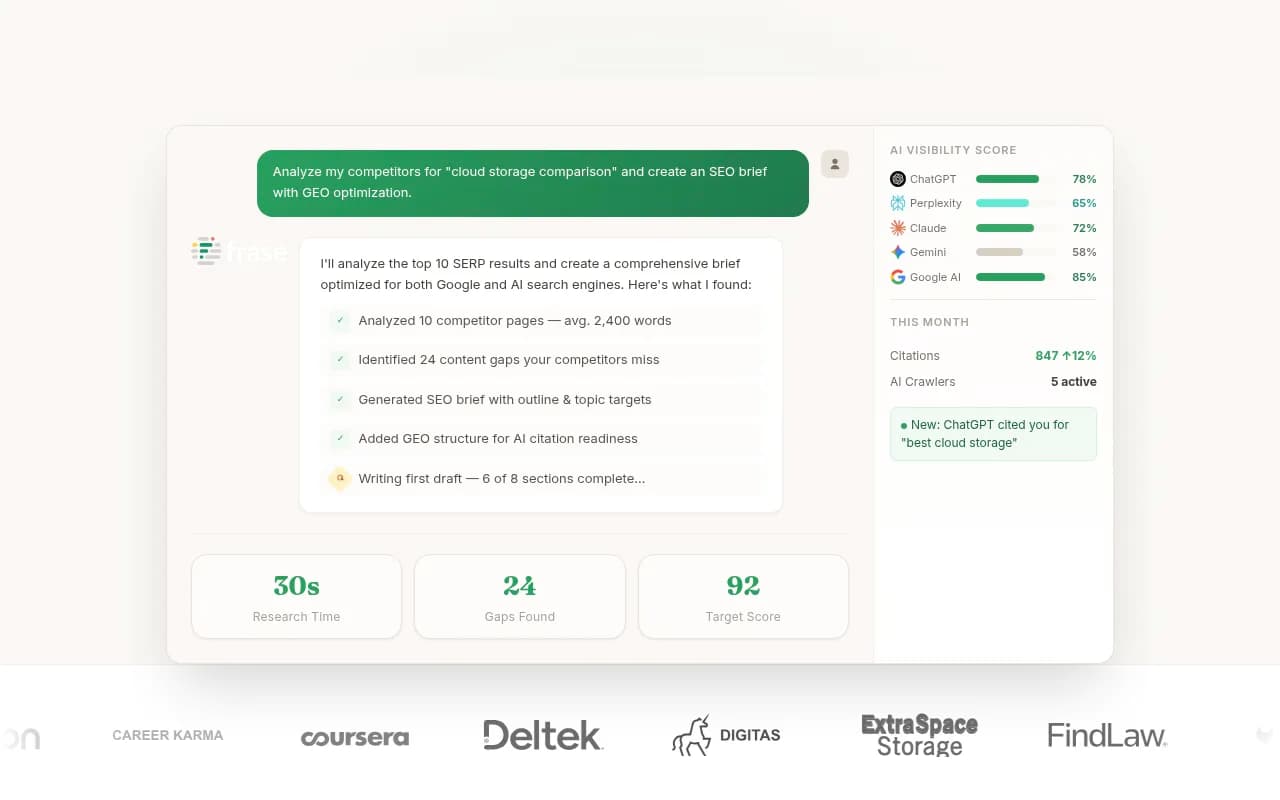
Frase researches a keyword, builds a brief from the top results, and writes a draft you can edit in the same place. It now positions itself around both SEO and GEO, which means it also cares whether your content is structured for AI answers. It is a good fit if you want one tool that goes from keyword to first draft without stitching things together.
Byword
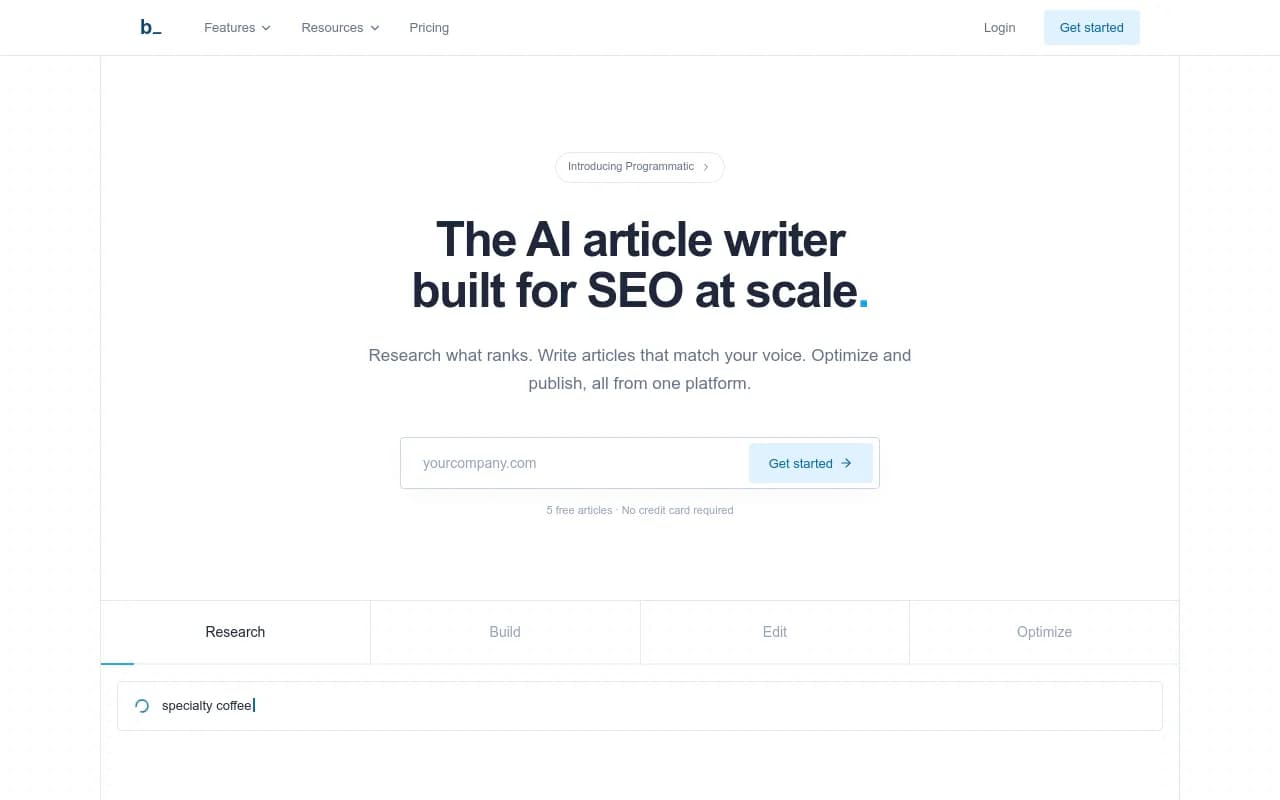
Byword is built for bulk article production. You feed it keywords or titles, and it researches, writes, optimizes and can publish. I would use it for long-tail clusters where the topics are well understood and the stakes per article are low. I would not use it unedited for a flagship guide.
Jasper
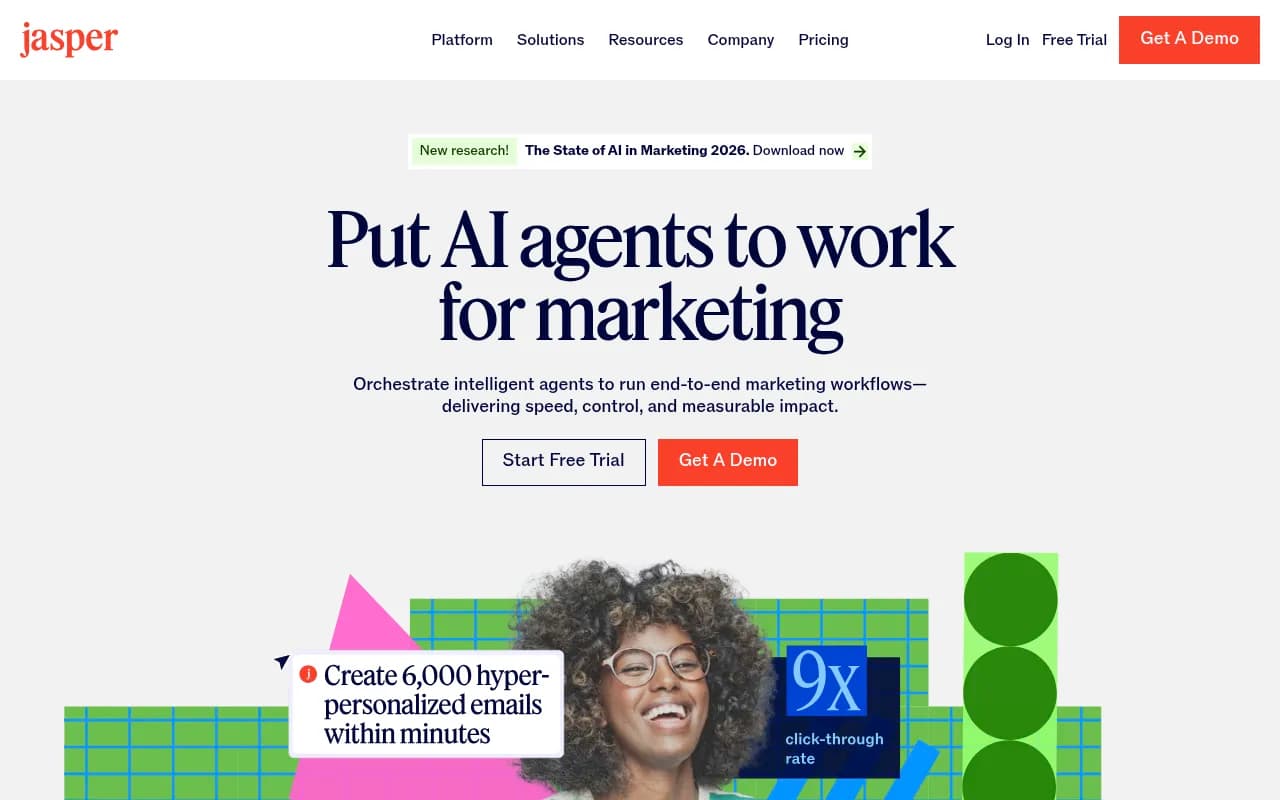
Jasper has moved from a writing tool toward AI agents that run marketing workflows. Its strength is brand voice and team controls, which matter when five people are writing for one company. It is less of a pure SEO tool than Frase or Surfer, so expect to pair it with an optimization editor.
Scalenut and SurgeGraph
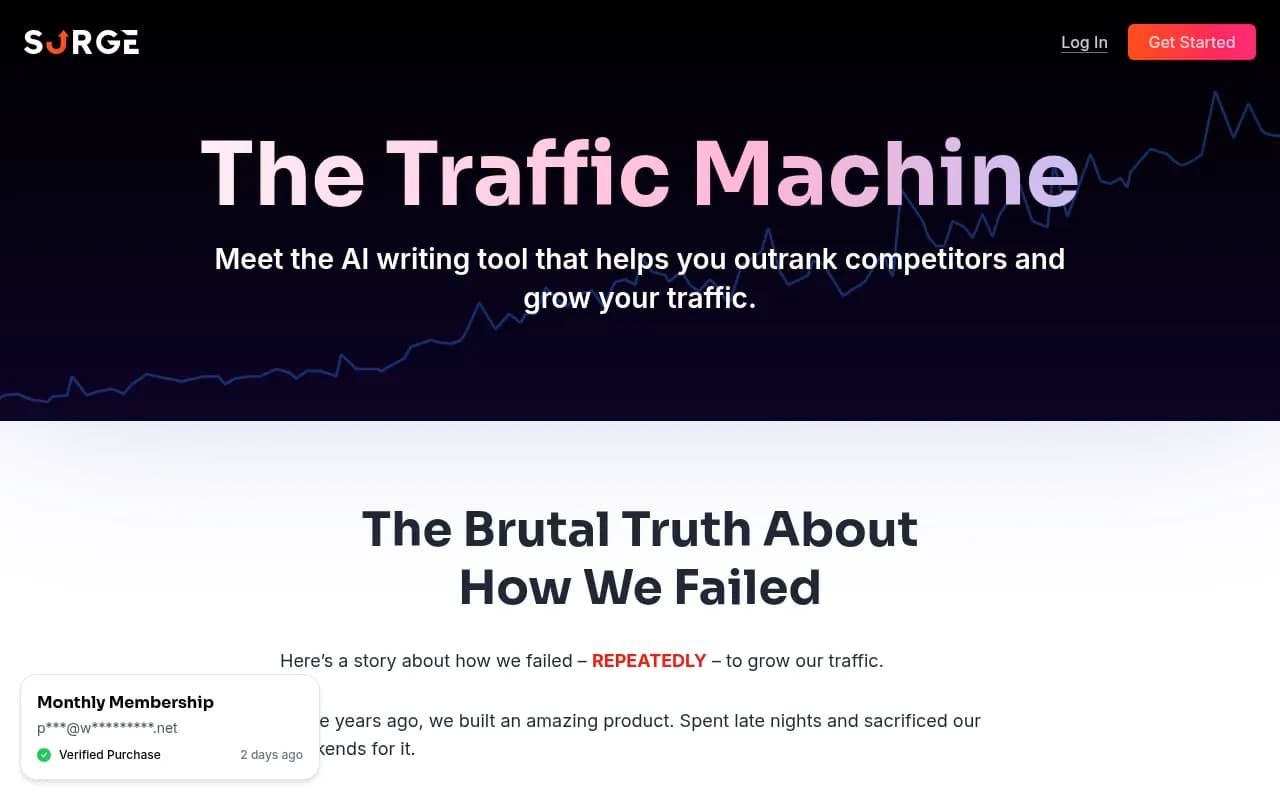
Scalenut combines keyword planning, briefs and drafting in one platform. SurgeGraph leans toward high-volume generation with topical coverage in mind. Both are worth a trial if you are running a large content program and want planning and writing under one login.

Writesonic and ContentShake AI
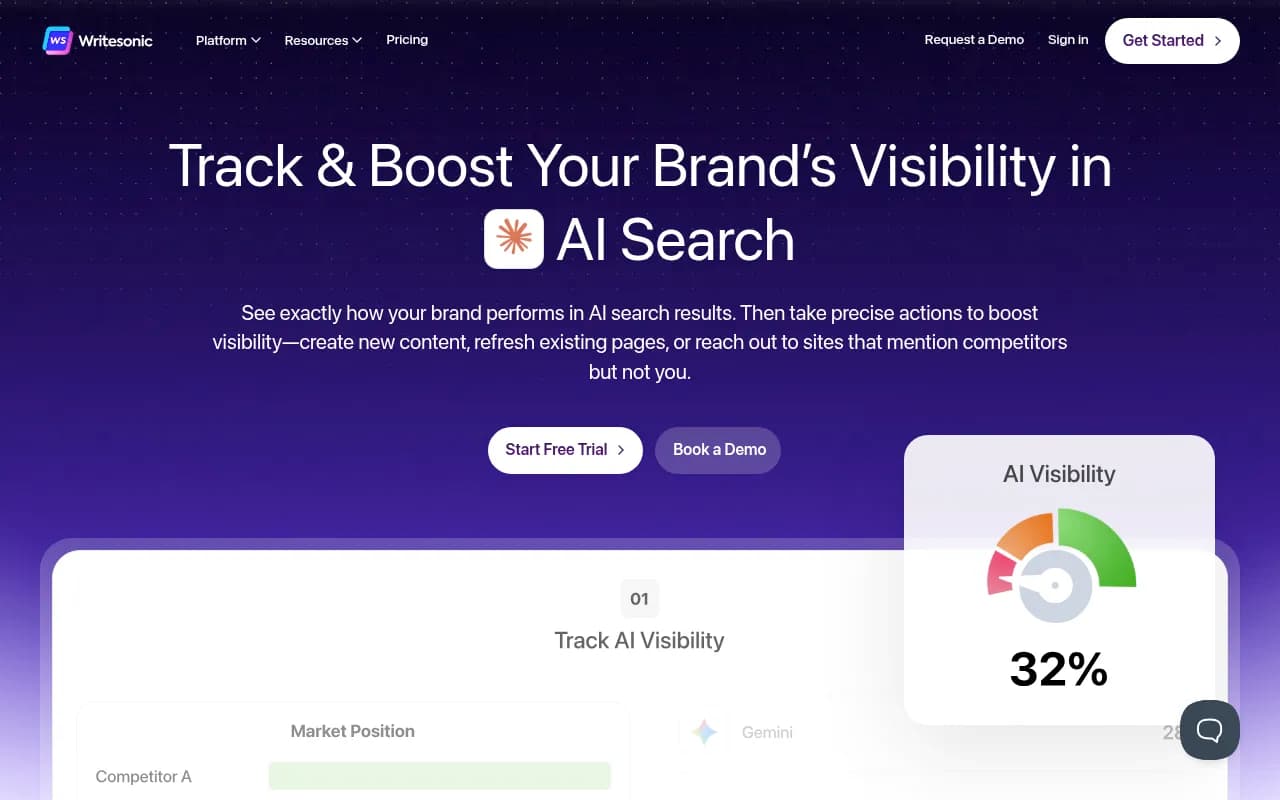
Wriesonic started as a general AI writer and now sells itself as an AI search visibility platform with content tools attached. ContentShake AI, from Semrush, is the simpler option: it suggests topics, drafts, and plugs into the Semrush data you may already pay for.
Optimization editors
These tools do not replace your writer. They tell you what the top pages cover that yours does not.
Surfer SEO
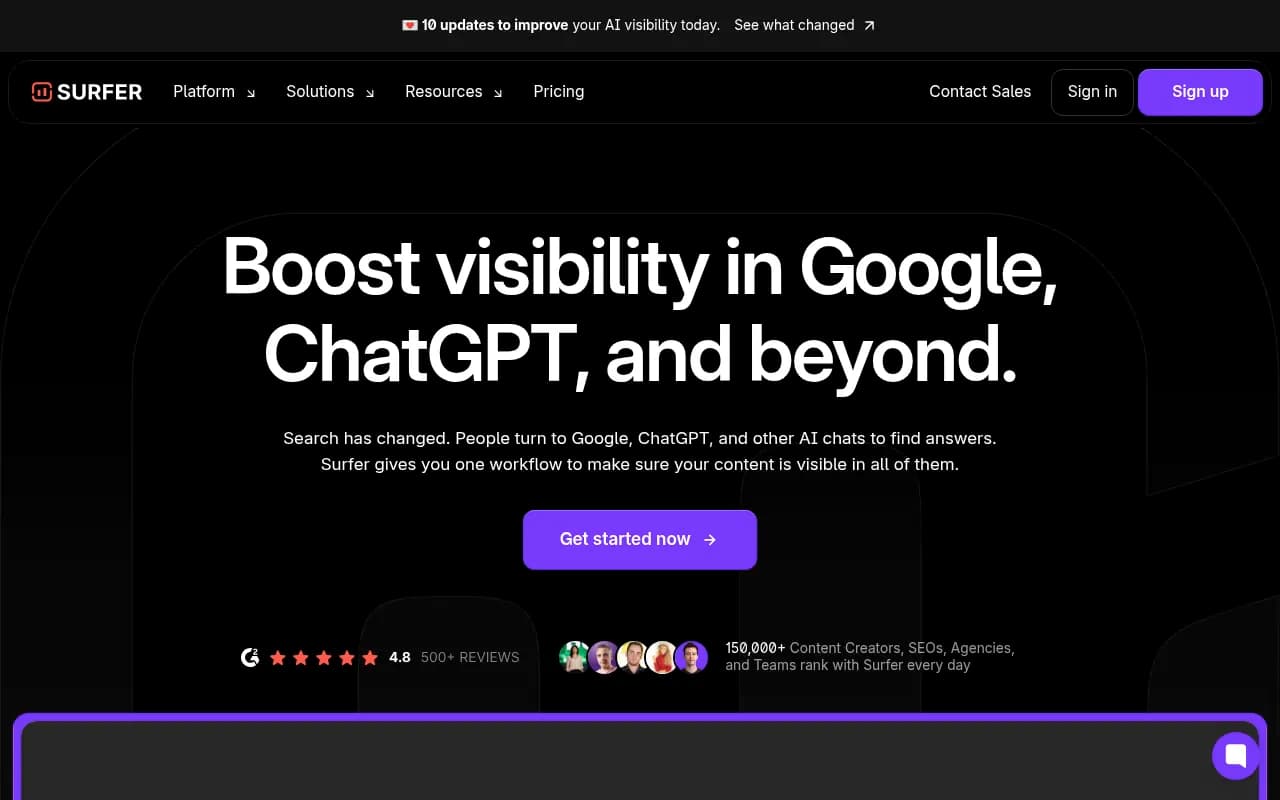
Surfer is the best-known content editor. You get a target term list, a length range, and a live score as you write. It is useful for catching missing subtopics. The danger is chasing the score and stuffing terms, which produces stiff prose. Use the score as a checklist, not a goal.
Clearscope
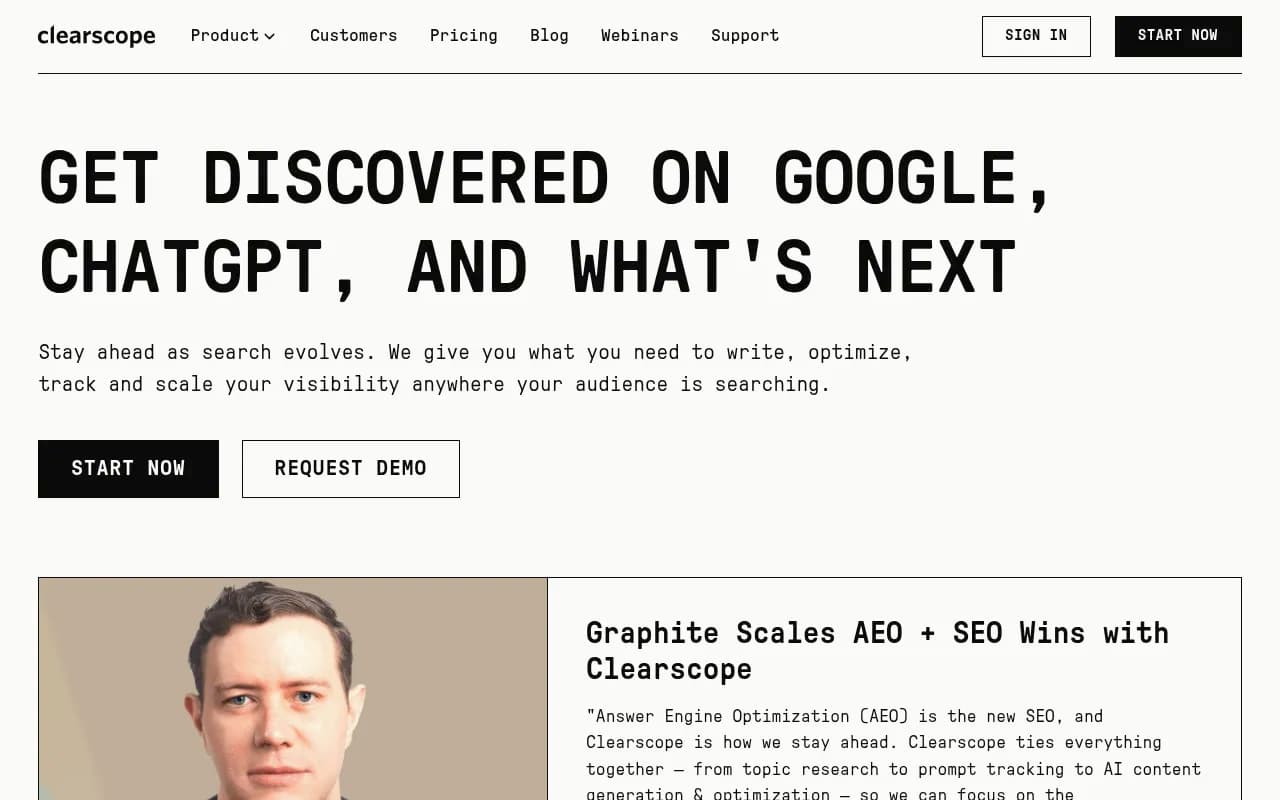
Clearscope is the more restrained option. Its recommendations are cleaner and it tends to be favored by editorial teams that care about readability. It also covers AI search, which is a reasonable bonus.
NeuronWriter, MarketMuse and Dashword
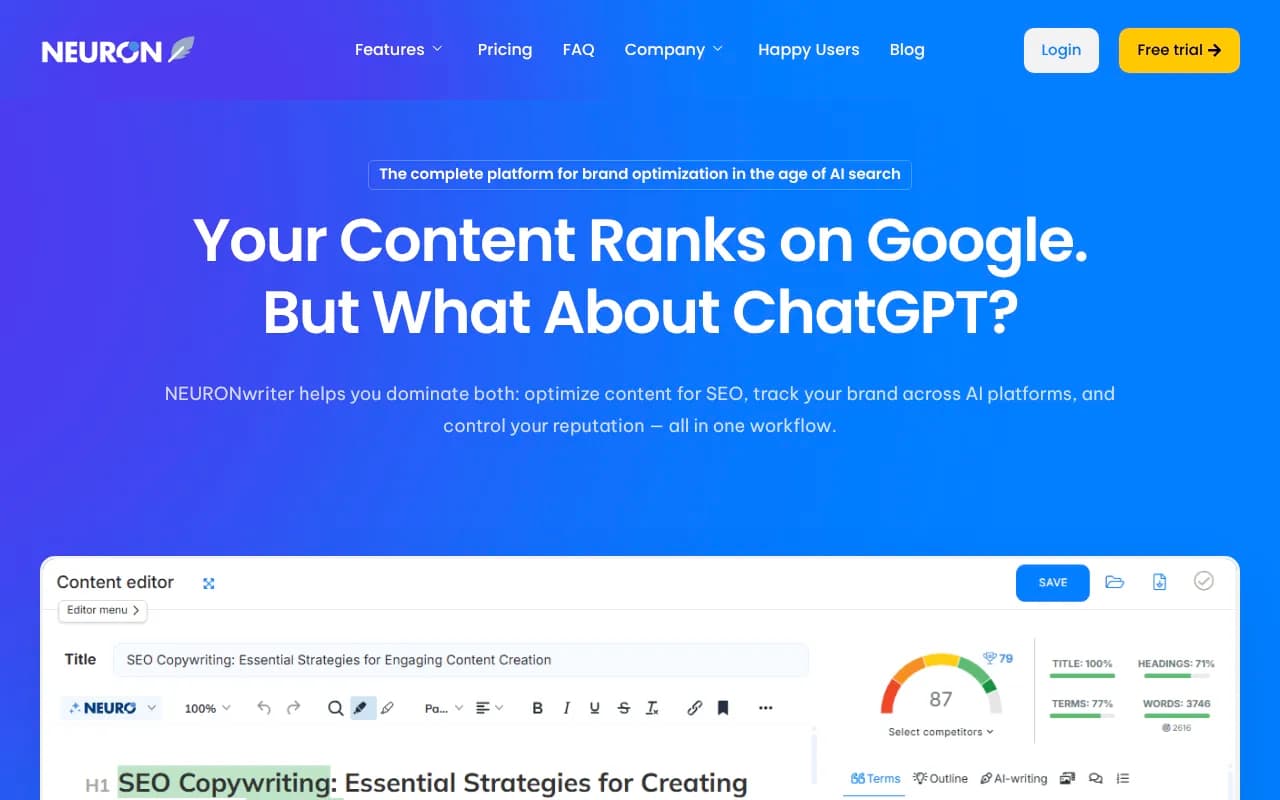
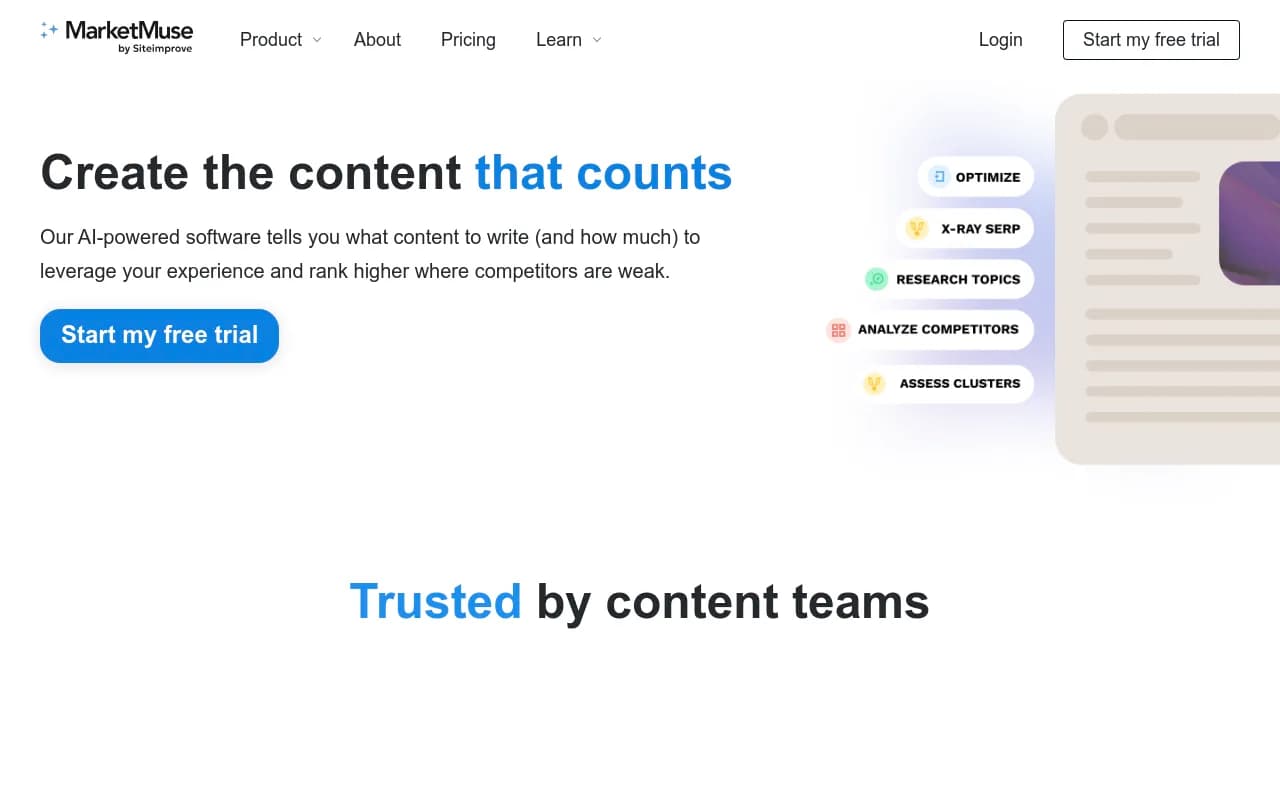
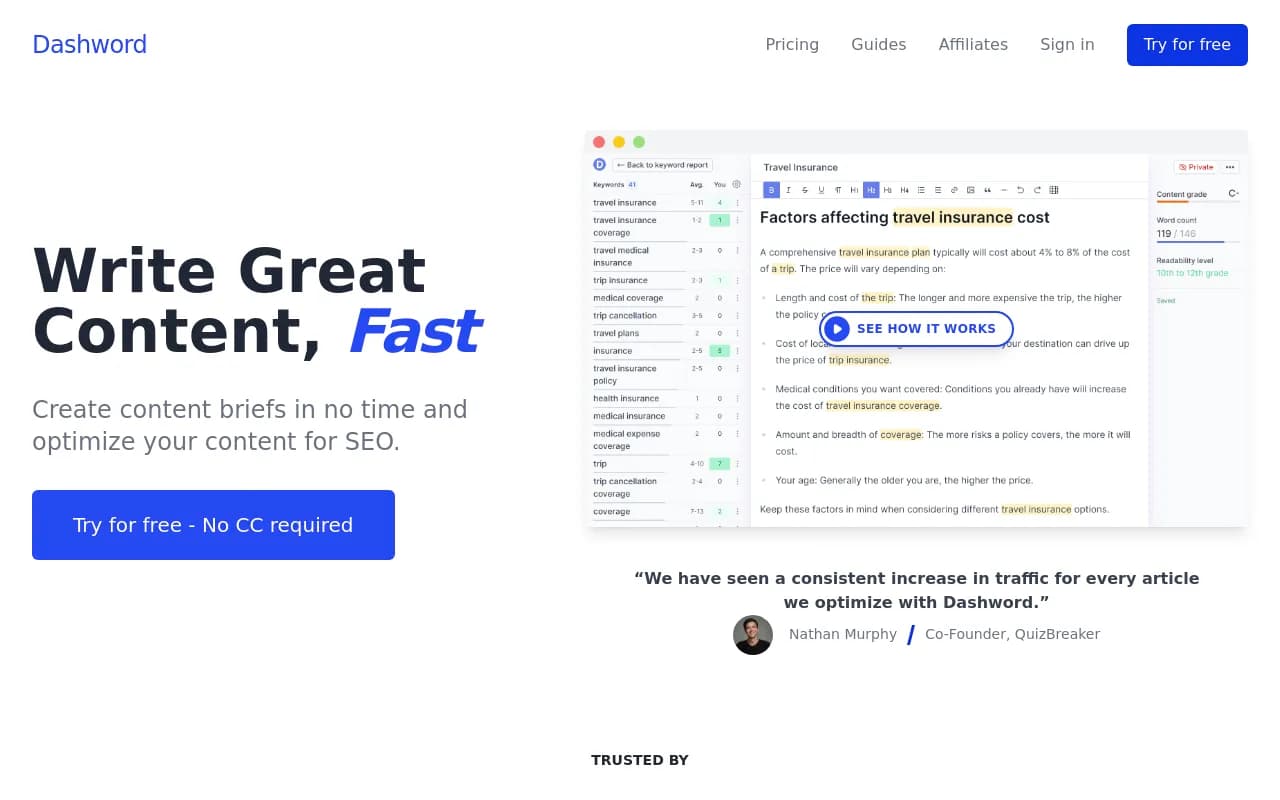
NeuronWriter does semantic analysis at a friendlier price tier than the big names. MarketMuse is better for planning topical authority across a whole site than for polishing one draft. Dashword focuses on briefs and scoring. If you are choosing one, try NeuronWriter first for single articles and MarketMuse if you plan at the cluster level.
General assistants that write well
Claude and Gemini are strong at long, coherent drafts, and they are better than most dedicated tools at following a detailed style guide. What they lack is live SERP data. If you go this route, paste in your competitor outline, your own facts and your brand notes, and ask for a section at a time rather than a 3,000-word dump.
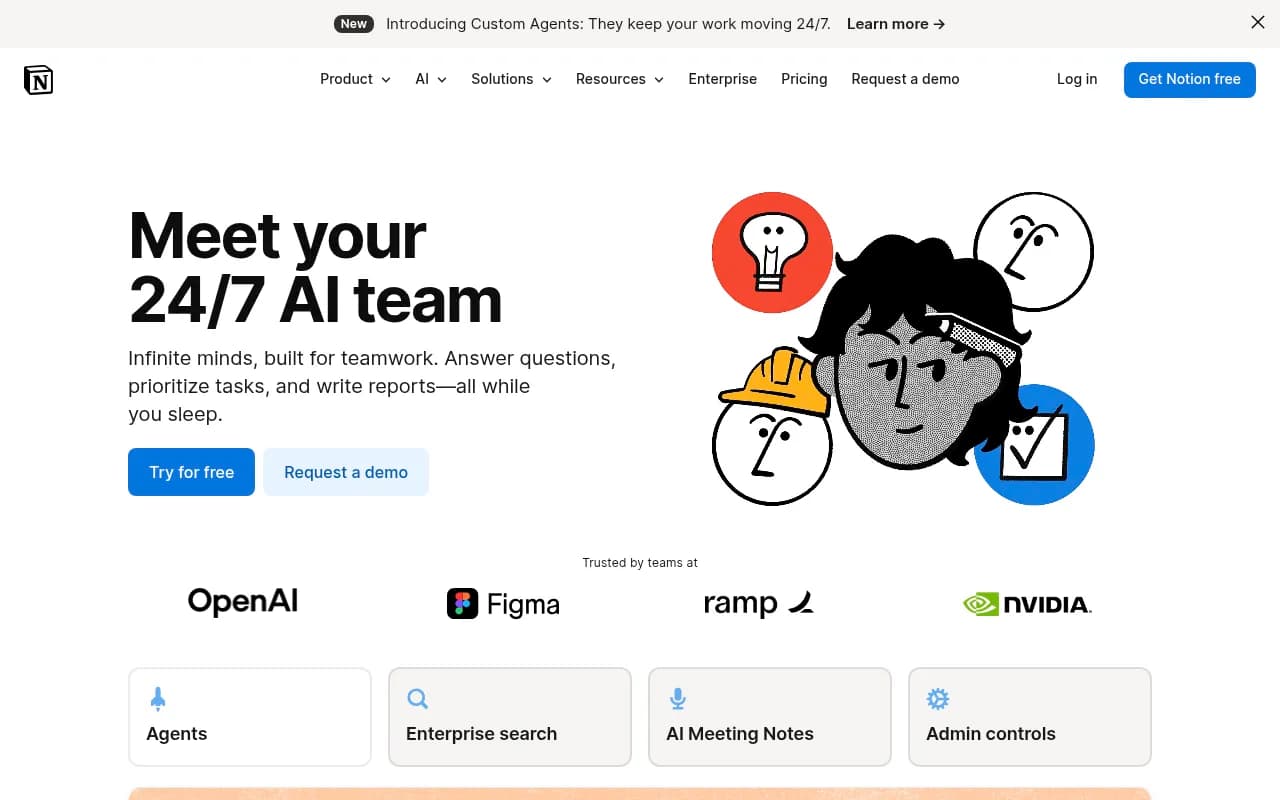
Notion AI is handy if your briefs and drafts already live in Notion, though I would not call it an SEO tool.
Comparison at a glance
| Tool | Strength | Weak spot | Workflow fit |
|---|---|---|---|
| Frase | Research to draft in one place | Less depth on brand voice | Small SEO teams |
| Byword | Bulk generation and publishing | Needs human editing for key pages | Long-tail clusters |
| Jasper | Brand voice, team controls | Lighter SEO data | Marketing teams |
| Surfer SEO | Live content scoring | Easy to over-optimize | Editors with drafts |
| Clearscope | Clean recommendations | Fewer generation features | Editorial teams |
| NeuronWriter | Semantic analysis, value | Smaller ecosystem | Freelancers, agencies |
| Claude | Long coherent drafts, style control | No SEO data built in | Writers with their own research |
Write for AI citations, not just rankings
Ranking in Google is one goal. Getting quoted in ChatGPT, Perplexity and AI Overviews is the other, and the formats that win are not identical.
Promptwatch's data on which content types ChatGPT cites (Sep 28 to Oct 4, 2026) found product pages at 22.4% of classified citations and landing pages at 16.8%. Among editorial formats, listicles took 13.6%, how-to guides 8.7%, comparisons 5.9%, and news 5.7%. You can read the full breakdown in the ChatGPT citation share by content type report. For informational prompts, how-tos climbed to 10.7%, so a step-by-step guide has a real shot there.
Longevity is a separate question. In Promptwatch's content half-life study, which tracked pages ChatGPT cited on July 6, 2026 for 90 days, 78% of landing pages and 76% of docs were still cited after 30 days. Comparisons held 72%, and listicles kept 60% after 60 days. News lost half its pages within 36 days. Product pages, reviews and how-tos had half-lives of roughly 74 to 77 days.
What I take from that for long-form planning:
- Lead with evergreen comparisons, listicles and docs-style guides. They last.
- Put how-tos and reviews on a refresh schedule, roughly every two to three months.
- Treat news-style posts as short bursts. Do not expect them to keep earning citations.
- Match format to intent: step-by-step for informational queries, comparisons and roundups for commercial ones.
Measuring whether your AI-written articles get cited
Drafting tools stop at publish. They cannot tell you whether ChatGPT or Perplexity ever picks the page up. That is a separate job, and tools like Promptwatch cover it: it tracks which of your pages get cited across AI engines, shows where content gaps are, and its Content Agent can write and publish to WordPress, Webflow or Framer. If you only want the measuring half, the free AI visibility report is a quick starting point.

For a wider look at this category, the directory at bestgeosoftware.com lists GEO tools side by side.
A workflow that holds up
Here is the setup I would run for a team producing four to eight long articles a month.
- Pick topics from gaps, not guesses. Use keyword data plus the prompts AI engines answer in your space.
- Build the brief with Frase, Surfer or Clearscope. Keep the outline human-approved.
- Draft with your writer of choice. Claude or Jasper if voice matters, Frase or Byword if speed matters.
- Add what a model cannot: original data, quotes, screenshots, a real opinion.
- Run the optimization pass, then ignore any suggestion that makes a sentence worse.
- Fact-check every number and every claim about a product.
- Publish, then track citations and refresh on the schedule that fits the format.
Mistakes that get AI articles ignored
- Publishing raw output. Readers and search engines both notice padding.
- Trusting the tool's facts. Models invent statistics and feature claims with confidence.
- Writing the same article as everyone else. If your outline is the SERP average, so is your value.
- Skipping internal links and schema. Long-form needs structure to be useful.
- Never refreshing. A half-life of two to three months for how-tos means stale pages quietly drop out.
Which one should you choose?
- Content team with a defined process: Frase or Jasper for drafting, Clearscope or Surfer for review.
- Agency or freelancer on a budget: NeuronWriter plus Claude.
- High-volume niche sites: Byword or SurgeGraph, with spot-checking.
- Enterprise planning across hundreds of pages: MarketMuse for strategy, a drafting tool for execution.
Pricing and feature sets change often, so check each vendor's site and take the free trial before committing. The best test is simple: write the same article in two tools, edit both, and see which one you would actually publish.