
Key takeaways
- No AI writer verifies facts for you. An inline citation shows where a claim came from, not that the claim is true. You still open the source.
- Research-first tools (Perplexity, NotebookLM) cite sources by design. General writers (Claude, Gemini, Jasper) need a grounded workflow around them.
- Fact-checking is often a separate step. Originality.ai has a Fact & Hallucination checker, and Writesonic lists fact-checking only on its Enterprise tier.
- AI answers usually pull from many domains. In Promptwatch's data, 47.6% of ChatGPT responses with citations cite 10 or more domains, so a long source list does not mean careful sourcing.
- The safest setup is a two-tool stack: one tool that drafts with sources, and one that checks the draft.
What fact-checking means in an AI writer
The phrase gets used loosely, so it helps to separate three things vendors blur together.
- Retrieval with citations. The tool searches the web or your documents, writes from what it finds, and links the passages. Perplexity does this on every answer.
- Source-grounded writing. The tool only writes from documents you upload. NotebookLM is built this way, so claims trace back to your files rather than the open web.
- Post-hoc fact checking. A separate pass that flags statements that look unsupported or invented. Originality.ai sells this as a checker rather than a writer.
A tool can do one of these well and none of the others. Be skeptical of any product that says it "eliminates hallucinations." Nobody has published an independent benchmark I'd trust on that, and I could not find a credible fabricated-citation rate for any of the tools below. If a vendor quotes one, ask for the methodology.
Why a citation is not proof
A citation is a pointer. The model can attach a real link to a sentence the page does not support, or paraphrase a source too confidently. Worse, the cited page may itself be wrong.
The scale of sourcing matters here too. Promptwatch Data shows that from Sep 28 to Oct 4, 2026, 47.6% of ChatGPT responses with at least one citation cited 10 or more unique domains, and 66.1% cited at least 8. Only 6% cited three or fewer. Brand-specific prompts were the exception: just 21.3% reached 10 domains. That is a count of what ChatGPT cites, not a measure of accuracy, but it tells you something practical. Answers are stitched from many pages, so checking one link is rarely enough.
Source counts also differ by engine. Promptwatch's average sources per response report puts ChatGPT at about 5 sources per web-search answer, Google AI Overviews at about 10, and Perplexity at almost exactly 10, day after day. Copilot swung from under 2 to nearly 17 within a few weeks. If your writer sits on top of one of these engines, its citation habits come with it.
Quick comparison
| Tool | Type | Citations | Fact-check feature | Pricing noted |
|---|---|---|---|---|
| Perplexity | Research assistant | Inline on every answer | Verify via source links | Pro $17/mo annual, Max $167/mo annual |
| NotebookLM | Source-grounded notebook | Tied to your uploaded sources | Grounded in your documents | Check Google's current plans |
| Originality.ai | Checker | No | Fact & Hallucination checker | Free 10K words, Pro $12.95/mo annual |
| Writesonic | Article writer + GEO platform | Varies by workflow | Fact Check & Citation Decay on Enterprise only | Starter $79/mo annual |
| Claude | General assistant | Depends on features enabled | Not a dedicated checker | Verify on vendor site |
| Gemini | General assistant | Depends on features enabled | Not a dedicated checker | Verify on vendor site |
| Jasper | Marketing agents | Verify on vendor site | Verify on vendor site | Verify on vendor site |
| TheSEOAgent | Daily article publisher | Source-checked, citable articles | Source checking built into the pipeline | Verify on vendor site |
Pricing above comes from vendor pages I could confirm. Where I could not, the table says so rather than guessing. Check each vendor's page before buying.
Best tools for sourced drafting
Perplexity
Perplexity is the closest thing to a default for sourced research. Its own pitch is that every answer includes inline citations from trusted sources so you can verify claims, and in practice that is how it behaves. You ask, it searches, it writes, and numbered links sit next to each statement.
Pro runs $17 a month billed annually and adds deep research, model selection, and document creation. Max is $167 a month billed annually, with the highest usage limits and priority access to new features. The vendor's demo also shows labelled premium sources such as PitchBook, Statista, CB Insights, and S&P Capital IQ, which matters if you write about markets and need figures from outside the open web.
Where it falls short as a writer: the prose is serviceable, not distinctive. I treat it as the research layer. Pull the facts and links from Perplexity, then write or edit elsewhere. And still click through. The ten-source habit means some links will be tangential.
NotebookLM
NotebookLM takes the opposite approach. Instead of searching the web, it works from sources you load in, such as PDFs, transcripts, and pages. Answers point back to passages in those files.
That design is the strongest defense against invented facts, because the model has a bounded pool of material. The tradeoff is obvious: it only knows what you give it. It suits reports, literature reviews, interview write-ups, and anything where you already hold the primary documents. It is a weaker choice for fresh topics where you have not collected sources yet.
TheSEOAgent
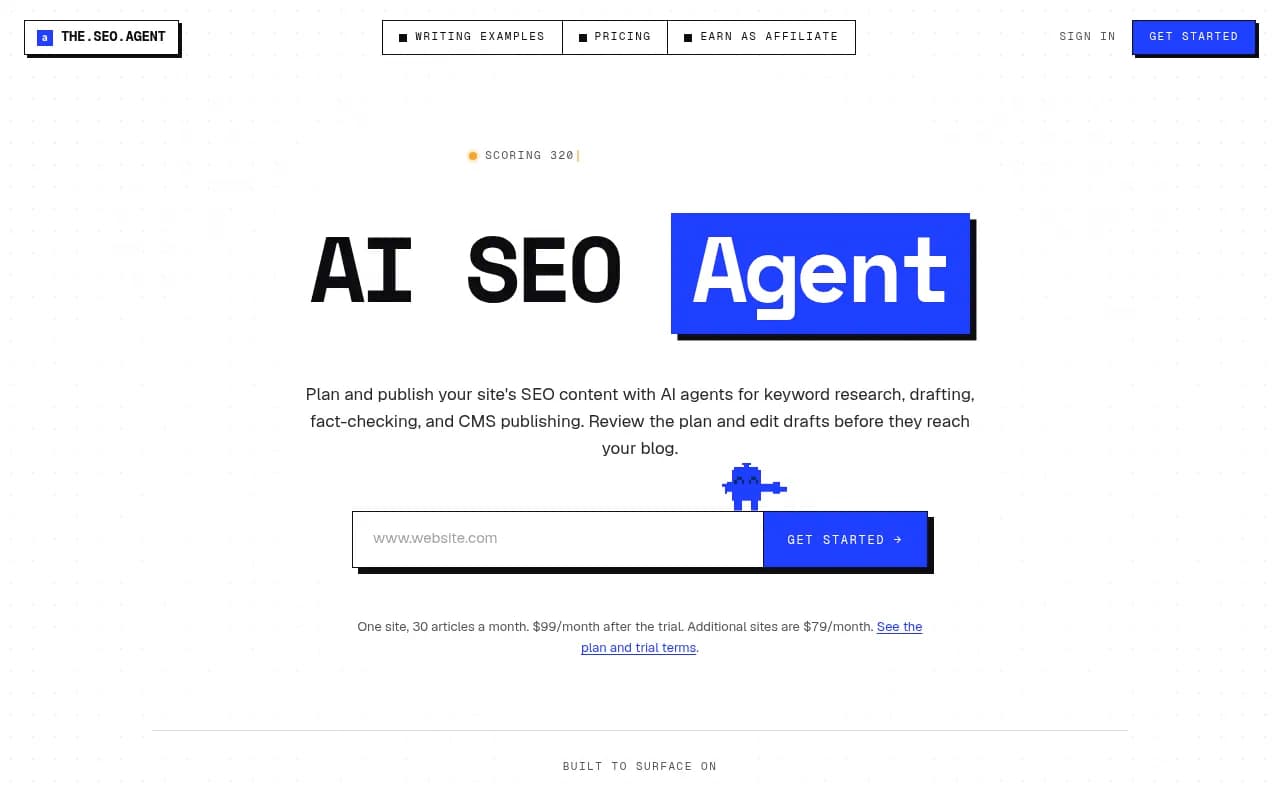
TheSEOAgent is built around publishing one source-checked, citable article per day. If your goal is a steady content cadence rather than one-off research, the source-checking step being part of the pipeline is the interesting bit.
I would still audit its output for the first few weeks. Automated pipelines that publish daily are exactly where a small sourcing error gets copied across dozens of pages.
Best tools for checking a draft
Originality.ai
Originality.ai is not a writer, but it belongs in this guide because it is the clearest example of fact-checking sold as its own product. Alongside its AI detector, plagiarism checker, grammar checker, and readability checker, it includes a Fact & Hallucination checker with sentence-level precision.
The pricing is easy to read. The free tier gives 10K words as a one-time allowance. Pro is $12.95 a month billed annually ($14.95 monthly) for 200K words a month, with bulk scan, file upload, and 30-day scan history. Enterprise is $136.58 a month billed annually ($179 monthly) for 1.5M words, API access, and a year of history.
A checker flags suspicious sentences. It does not tell you which are right. Treat the output as a shortlist of claims to verify by hand.
Writesonic
Writesonic has changed shape. It now positions itself as an AI search visibility platform that also generates articles. Starter is $79 a month billed annually with 15 articles and 50 tracked prompts. Basic is $199 with 25 articles, and Growth is $399 with 50 articles.
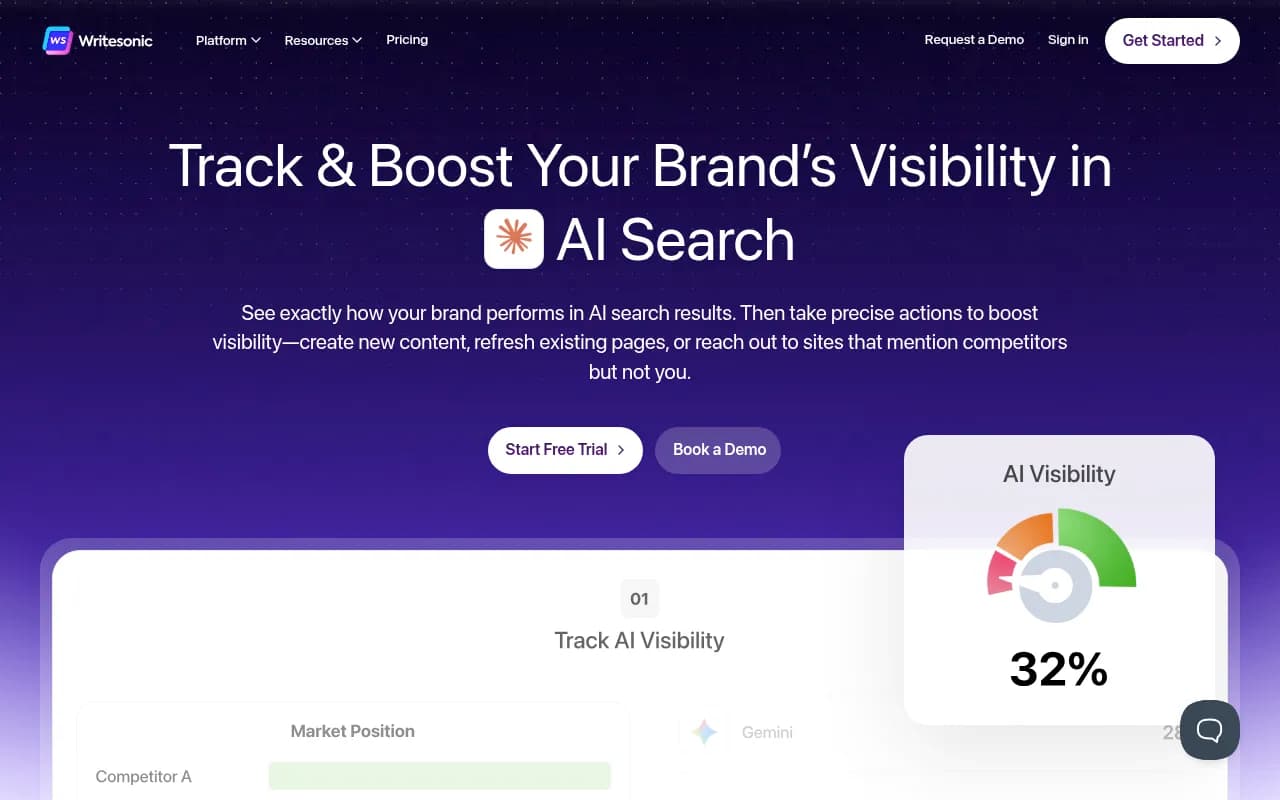
Here is the catch for this guide: "Fact Check & Citation Decay" is listed only on the Enterprise tier, which has custom pricing. If fact-checking is why you are shopping, the lower tiers do not list it. Ask sales exactly what the feature checks and against which sources.
General writers that can work with the right setup
Claude and Gemini
Claude and Gemini are strong drafting tools. Neither is sold as a dedicated fact-checker, so what you get depends on whether search or document grounding is turned on in your plan. I could not verify the exact citation behavior of either for this guide, so test it yourself: ask for a sourced paragraph, then open every link.
A useful trick with either: paste your source material into the prompt and instruct the model to quote the supporting sentence for each claim, or to say "not in sources." It is a poor man's NotebookLM, and it works better than asking for citations from memory.
Jasper, Copy.ai, and marketing suites
Jasper and Copy.ai focus on marketing workflow automation. I could not confirm built-in fact-checking in either, so I would not buy them on that basis.
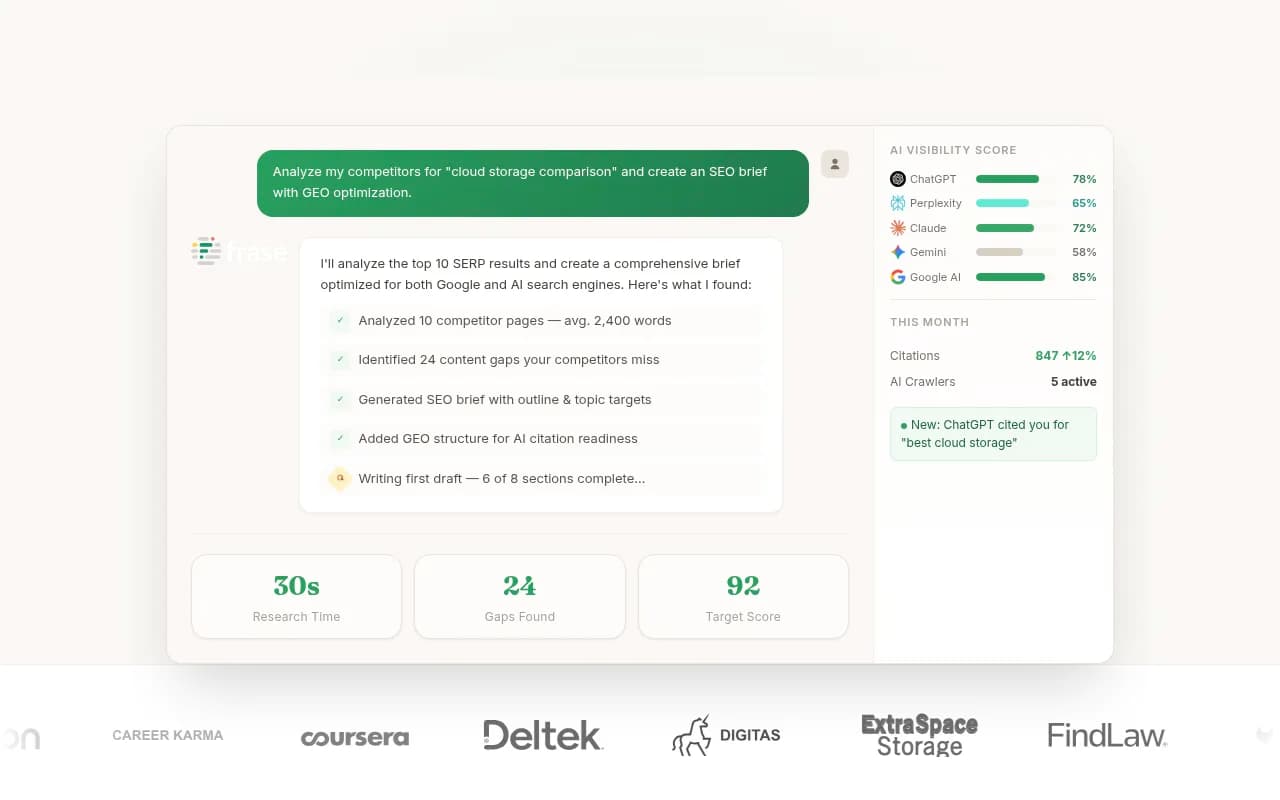
SEO-focused writers like Frase research the SERP and pull source material before drafting, which gives you grounding even without a dedicated checker.
A workflow that actually catches errors
No single tool gets you there. This is the setup I would use for anything that carries your name.
- Research with citations. Run the topic through Perplexity or load your documents into NotebookLM. Save the links.
- Draft from the sources. Give a writer (Claude, Gemini, or your usual tool) only the saved material, and ask it to mark any claim it cannot tie to a source.
- Open every statistic. Numbers, dates, quotes, and named studies are where hallucinations hide. Click through and find the exact line.
- Run a checker pass. Feed the draft to a tool like Originality.ai to surface sentences worth a second look.
- Cite primary sources. If a blog cites a blog that cites a study, go find the study.
- Date-stamp time-sensitive claims. Citations decay. Pages move, and figures get updated.
Steps 3 and 5 are manual and always will be. They are also where most of the value is.
What makes AI content get cited by AI
If you publish content, the flip side matters too: AI engines are citing you. Whether your pages get picked depends on being clear, specific, and verifiable, which is the same standard you should hold your writer to. Product pages, landing pages, and docs tend to be cited and stay cited. Promptwatch's content-type data found product pages were 22.4% of ChatGPT citations from Sep 28 to Oct 4, 2026, and its half-life study found news pages lose half their citations within 36 days.
To see whether the articles you ship are being cited, and what AI engines say about your brand afterward, an AI visibility platform like Promptwatch tracks mentions and citations across ChatGPT, Gemini, Perplexity, and Google AI Overviews. Its Fact Check feature also compares claims AI makes about your brand against your own pages and the sources AI cites.

For more options in that category, the GEO software directory lists dozens of tools.
How to choose
| If you need | Start with |
|---|---|
| Fast, sourced research | Perplexity |
| Writing from documents you already hold | NotebookLM |
| A second pass that flags shaky sentences | Originality.ai |
| High-volume articles with source checking | TheSEOAgent, Writesonic Enterprise |
| General drafting with your own grounding | Claude or Gemini |
Budget matters less than process. A $13 checker plus a careful editor beats an expensive tool that nobody audits.
FAQ
Do AI writers fact-check their own output?
Not reliably. Some retrieve sources and cite them, which helps you verify, but retrieval is not verification. The model can still misread a source.
Are citations from Perplexity always accurate?
No. They are links the model used or associated with a claim. Open them and confirm the page says what the sentence says.
Which tool has a dedicated fact-checking feature?
Originality.ai includes a Fact & Hallucination checker, and Writesonic lists Fact Check & Citation Decay on its Enterprise tier. Confirm the scope with each vendor.
Can I trust a long source list?
A long list shows breadth, not quality. Promptwatch's data shows nearly half of ChatGPT answers cite 10 or more domains, so count tells you little about accuracy.
What should I always verify by hand?
Statistics, quotes, dates, legal or medical claims, and names of studies or people. Those cause the most damage when wrong.