
Key takeaways
- Google's spam policies include a section on scaled content abuse. The problem is producing lots of pages with little value, not using AI itself.
- The biggest red flags are tools that promise hundreds of articles on autopilot, skip research, and offer no editing, fact-checking, or brand input.
- Thin, generic listicles and news-style posts have the shortest citation life in ChatGPT, according to Promptwatch Data. Factual product, landing, and documentation pages last longest.
- Test any tool with a pilot batch of 5 to 10 pages before you scale, and track results in Search Console and AI visibility data.
- Pick tools that help you plan, research, and optimize. Be wary of tools that only generate.
Why the tool matters less than how it gets used
I should say this up front: AI-written content is not automatically bad for SEO. Google's own spam policies target scaled content abuse, meaning many pages produced mainly to manipulate rankings, with little value for readers. Whether a human, a machine, or a mix wrote them is not the test. Read that section of the spam policies yourself before you buy anything. It sits next to related sections on thin affiliation, doorway abuse, expired domain abuse, keyword stuffing, and scraping, and a lot of cheap AI writers are built to commit exactly those sins at volume.
So the question is not "does this tool use AI?" It is "does this tool push me toward publishing pages nobody needed?" Here are the ten signs it does.
The 10 red flags
1. It sells volume as the headline benefit
"500 articles in a day." "Publish 30 posts a month on autopilot." If the pitch is about quantity and never about whether anyone searches for the topic, walk away. Volume is the exact pattern the scaled content policy is aimed at. A tool can support high output (some teams legitimately publish daily), but the pitch should start with topic selection and quality control, not a counter.
2. There is no research step
Good tools look at what already ranks, what questions people ask, and what is missing. Bad tools take a keyword, hand it to a language model, and return 1,500 words of plausible filler. Ask the vendor: where does the brief come from? If the answer is "the model knows", expect the same generic article every competitor will publish.
3. Every article has the same shape
Generate five articles on different topics. If they all open with "In today's fast-paced world", use the same H2 pattern, and end with the same neat conclusion, you are looking at a template with words swapped. Search engines and readers both notice sameness. Repetition across your own site is also a quiet way to create near-duplicate content.
4. It publishes straight to your CMS with no review gate
Direct CMS publishing is fine. Direct publishing with no review inbox, no draft state, and no approval step is a problem. One hallucinated statistic, one wrong product claim, one fabricated quote, and it is live under your name. Look for a draft mode and a way to approve, edit, or decline each piece.
5. It cannot cite or verify sources
Ask the tool to write about something with hard numbers. Does it link to where the figures came from? Does it let you check them? Tools that invent statistics with confidence are the fastest way to damage trust. If the output has "studies show" with no study, treat it as unusable.
6. It ignores your brand, product, and facts
A writer that cannot ingest your product details, positioning, tone of voice, and source documents will make things up about you or stay vague. Vague is its own failure: it produces pages that say nothing specific. Look for a knowledge base, brand guidelines, or custom instructions you control.
7. It has no internal linking logic
Cheap generators drop a few random links or none. A useful one finds relevant pages on your own site and links to them with sensible anchors. Without that, every new page is an orphan, which wastes crawl budget and weakens your topical structure. You can catch orphan pages later with a crawler like Screaming Frog or Sitebulb, but it is better if the writer prevents them.
8. Keyword stuffing is baked into the scoring
Some content optimizers reward you for hitting a keyword count or a term-frequency target. Used as a guide, that is helpful. Used as the goal, you get stilted copy that repeats phrases unnaturally. If the tool's score goes up every time you add the keyword, and the text gets worse to read, the score is the problem.
9. It promises to beat AI detectors
Tools that advertise "100% undetectable" content are selling the wrong thing. I found no verified data on AI detector accuracy, and the detectors are known to be inconsistent anyway. More to the point, Google's stated concern is value, not detection. A tool built around evading detectors is built around hiding low effort, which is a red flag in itself.
10. It does not tell you what happened after publishing
This one is easy to miss. If a tool generates and ships pages but gives you no way to see whether they got crawled, indexed, ranked, cited, or visited, you are flying blind. You will not know a batch failed until months later. The healthiest tools close the loop with performance data.
What the data says about thin, generic content
There is a second reason to care that goes beyond Google rankings: AI search. Promptwatch Data looked at ChatGPT citations from Sep 28 to Oct 4, 2026, and the content types that earn citations are not generic filler.
| Content type | Share of ChatGPT citations |
|---|---|
| Product pages | 22.4% |
| Landing pages | 16.8% |
| Listicles | 13.6% |
| How-to guides | 8.7% |
| Documentation | 7.5% |
| General articles | 6.1% |
| Comparisons | 5.9% |
| News | 5.7% |
| FAQ pages | 3.3% |
| Reviews | 1.7% |
For commercial prompts, product pages, landing pages, listicles, and comparisons make up almost 70% of citations. The takeaway from that report is practical: keep specs, prices, and positioning on product pages complete and factual, publish real step-by-step guides, and keep documentation public and crawlable.
Lifespan matters too. In Promptwatch's content half-life report, landing pages and docs stayed cited for months, while news-style pages lost half their citations within about five weeks. A tool that mass-produces disposable news-flavored posts and thin listicles is feeding the category that fades fastest.
How the tool types compare
Here is a rough way to sort AI writing and content tools by how they behave against the red flags above. I am describing categories based on how they position themselves, so check each vendor's current features before you buy.
| Tool type | Examples | Typical strength | Typical risk |
|---|---|---|---|
| Autopilot article generators | Byword, SurgeGraph, Outrank | Speed and volume | Thin pages if you skip review and topic selection |
| Brief and optimization tools | Surfer SEO, Clearscope, MarketMuse, Frase | Research and structure | Over-optimizing to a score |
| General AI writing assistants | Jasper, Copy.ai, Rytr, Wordtune | Drafting and rewriting | No SEO research or performance feedback |
| AI visibility platforms with content | Promptwatch, AirOps | Content tied to citation gaps and measurement | Costlier, needs setup |
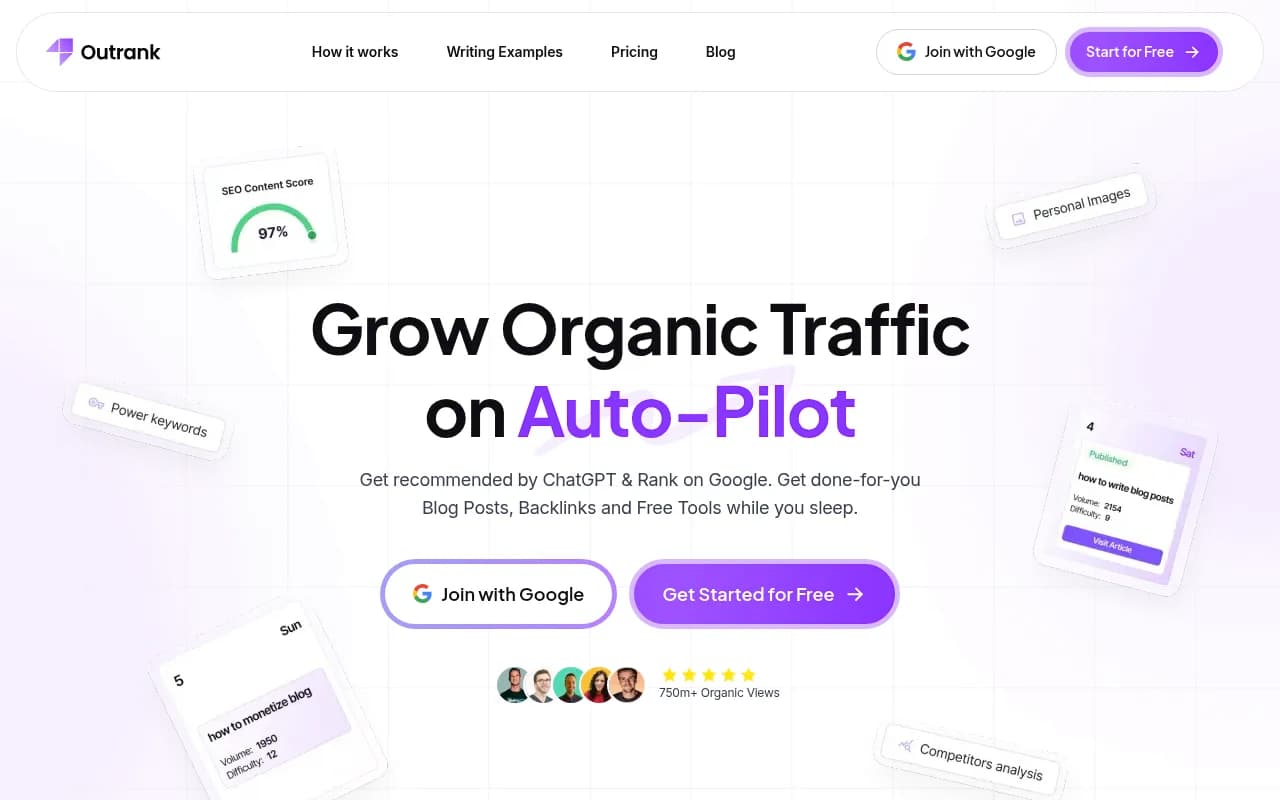
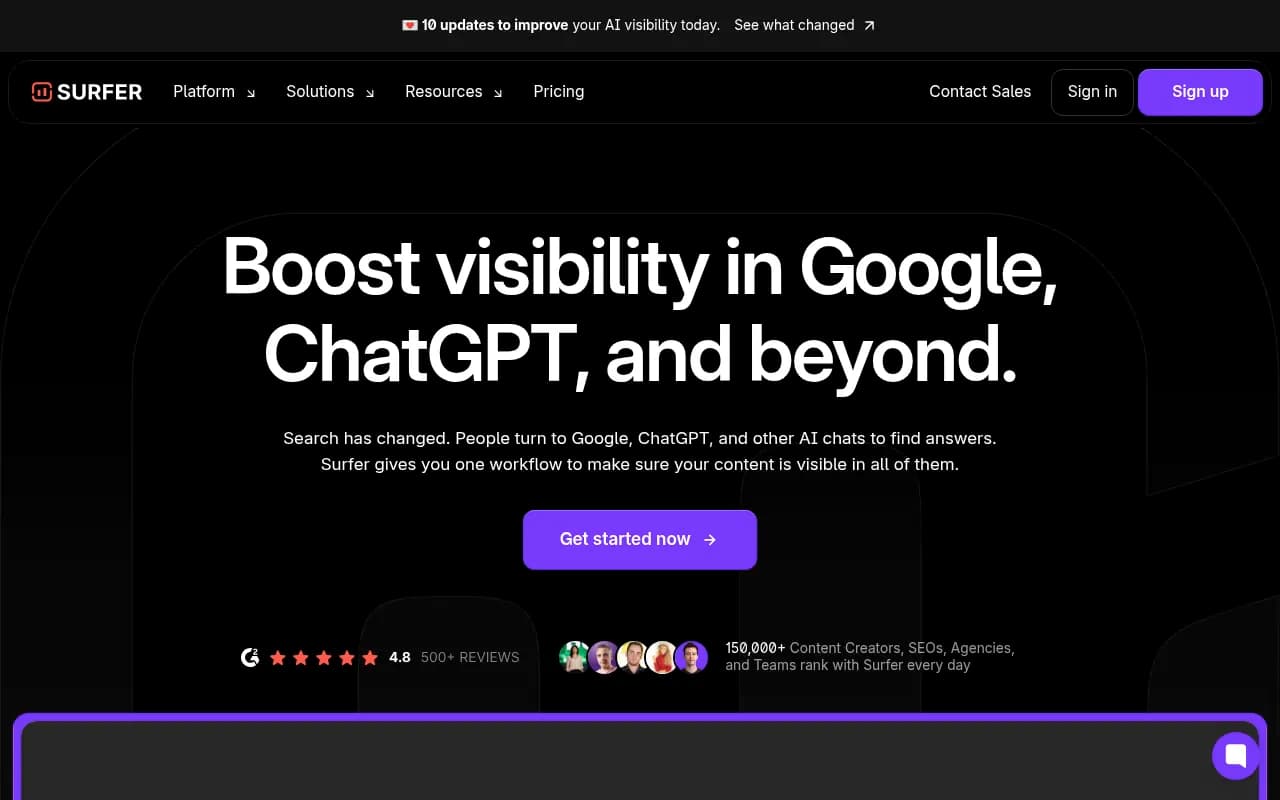

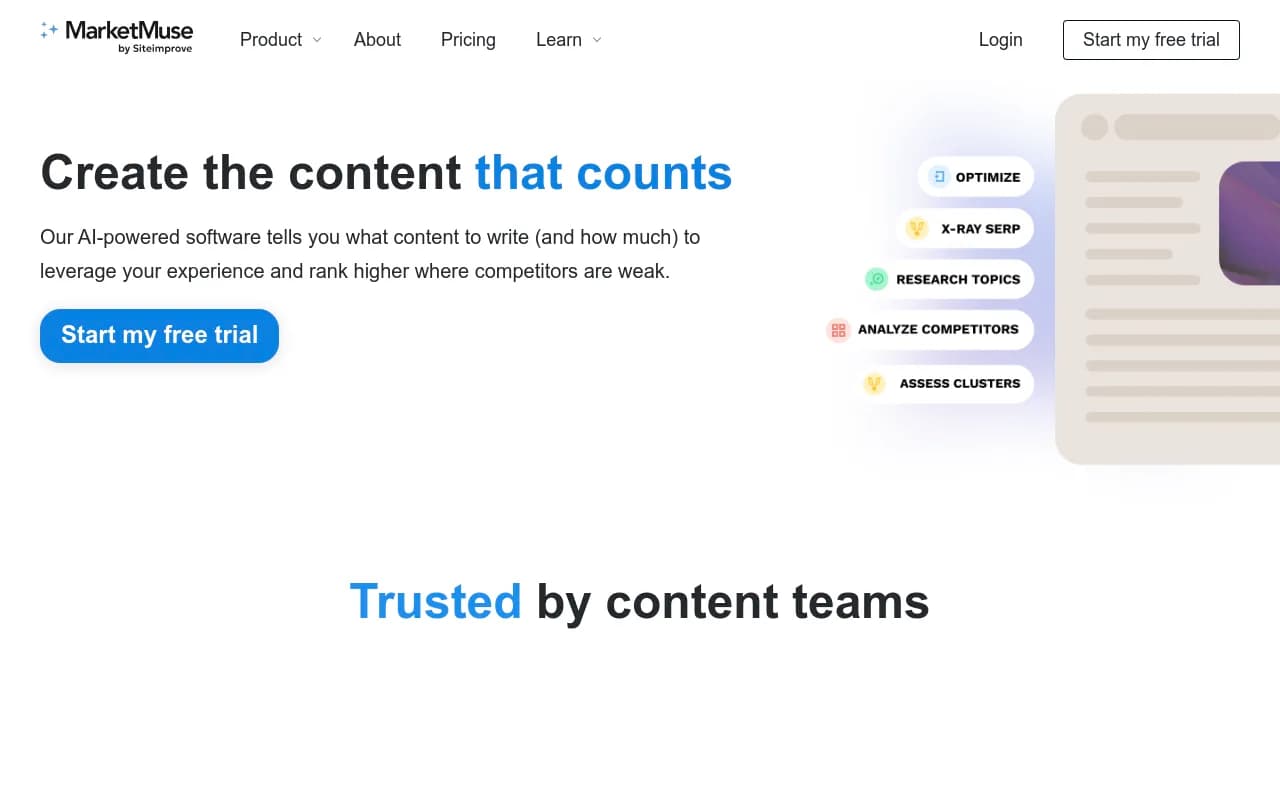
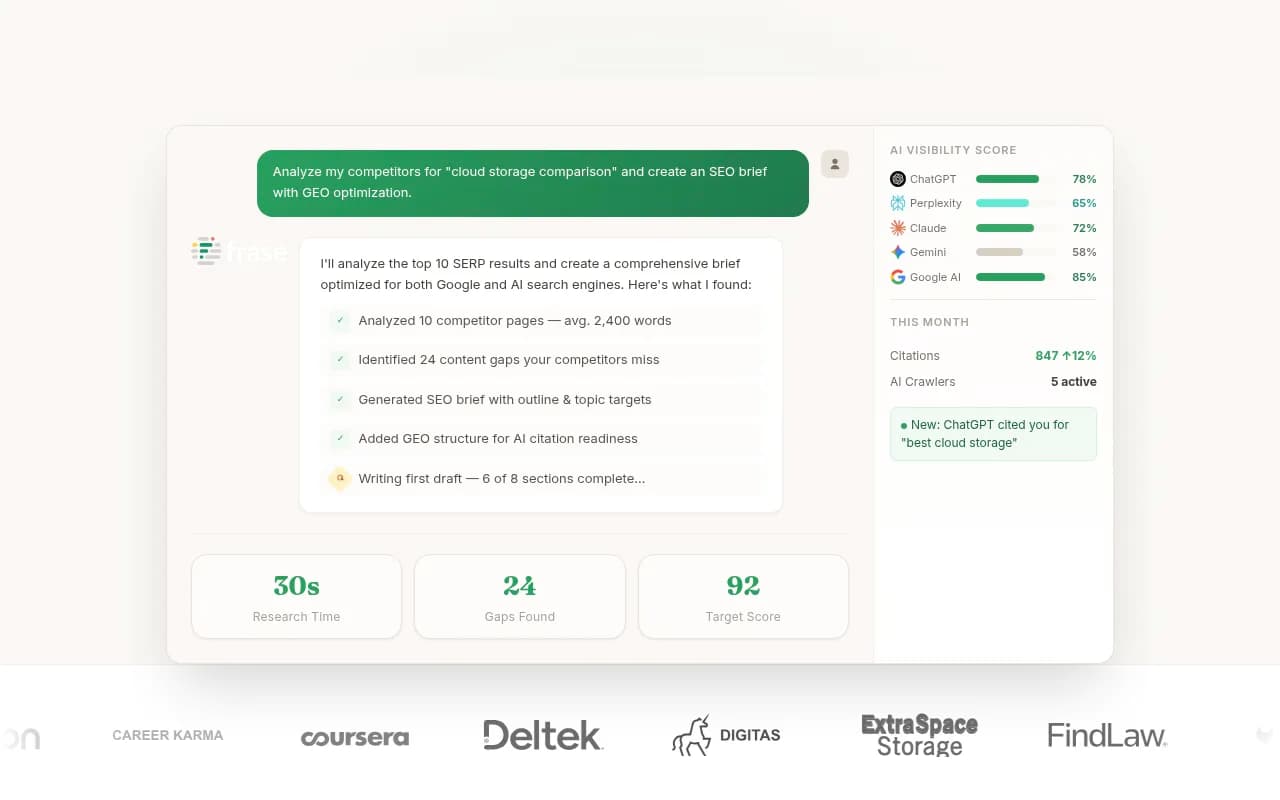
None of these is automatically good or bad. Autopilot tools are fine for a team that edits every output and picks topics carefully. Optimization tools are fine if a human still decides what the page should say.
A tool that closes the loop
The healthiest setup I know of ties content to evidence. That means finding which prompts and queries you are missing from, writing against those gaps with your own facts, and then checking whether the pages got crawled and cited. Promptwatch is built around that loop: content gap analysis, a Content Agent that writes and publishes to WordPress, Webflow, or Framer with a review inbox, a Knowledge Base and Brand Book for your facts, and IP-verified AI crawler logs plus visitor analytics to see what happened next. Used well, it addresses red flags 2, 4, 6, and 10 directly.

It is not the cheapest route, and the Content Agent starts on the Business plan, so confirm current plans at promptwatch.com/pricing. If you only need monitoring, other tools in the GEO software directory at bestgeosoftware.com may fit.
How to test any AI writer before you commit
- Run a small pilot. Generate 5 to 10 pages on topics you have real expertise in. Do not scale a tool you have not stress-tested.
- Fact-check everything. Pick every number, name, and claim and verify it. Count the errors per article.
- Compare to what already ranks. Open the top results for the same query. Does your draft add anything they lack: data, experience, a clearer answer?
- Read it aloud. Repetitive phrasing and empty transitions show up quickly.
- Check the edit cost. If fixing a draft takes longer than writing it, the tool is not saving you anything.
- Watch the numbers. After publishing, look at Search Console for indexing and impressions, and at crawler and citation data for AI search. Pause the batch if pages sit unindexed or never earn impressions.
If you want a second opinion on content strategy rather than another tool, an agency can help. 1001 SEO Media, which publishes this site, runs content strategy and audits for teams worried about scaling output safely.
Green flags worth looking for
Flip the list and you get the buying criteria:
- Topic and keyword selection that starts from real demand
- Briefs built from live search results and competitor gaps
- A knowledge base or brand guide you control
- Draft, review, and approval steps before anything goes live
- Source links you can verify
- Smart internal linking to existing pages
- Post-publish data on crawling, indexing, citations, and traffic
- Human editors in the process, not just a generate button
Frequently asked questions
Does Google penalize AI-generated content?
Google's spam policies focus on scaled content abuse, meaning large volumes of low-value pages made to manipulate rankings. The method of production is not the stated issue. Read the policy text directly, since wording and examples can change.
How many AI articles is too many?
There is no safe number. A site that publishes 5 useful, edited pages a week is in a different position than one that dumps 500 near-identical pages overnight. Judge by value per page and by how the pages perform after publishing.
Can AI content get cited by ChatGPT?
Yes, if it is factual, specific, and structured around what people ask. Promptwatch Data shows product pages, landing pages, and documentation earn the most ChatGPT citations, so generic filler is a poor bet.
Should I run AI detectors on my drafts?
I would not rely on them. Accuracy is inconsistent, and they measure the wrong thing. Fact-checking and an editor's read will tell you more about quality.
The short version
Before you pay for an AI writer, ask what it does besides generate. If the answer is "nothing", you are buying a faster way to publish pages that may never earn a click. Pick a tool that researches, uses your facts, lets you review, and shows you what happened afterward, and keep a human in charge of what gets published.