Key takeaways
- AEO (Answer Engine Optimization) tools help brands appear in AI-generated responses from ChatGPT, Perplexity, Google AI Overviews, Claude, and other models -- but most tools stop at monitoring and don't help you act on the data.
- The most important distinction in 2026 is between monitoring-only platforms and full optimization platforms that include content gap analysis, content generation, and traffic attribution.
- Tools like Promptwatch, Writesonic, and Profound offer deeper optimization workflows; tools like Otterly.AI, Peec AI, and SE Visible are better suited for teams that just need lightweight tracking.
- Pricing ranges from free tiers to $500+/month for enterprise plans -- but price doesn't always correlate with capability.
- The right tool depends on whether you need to track, optimize, or both.
If you've been watching your organic traffic flatten while your rankings stay the same, you already know what's happening. AI search is eating the clicks. Google AI Overviews answer questions before anyone scrolls. ChatGPT Search synthesizes sources and delivers a verdict. Perplexity cites three websites and moves on. Your #1 ranking doesn't mean much if none of those citations are yours.
That's the problem AEO tools are supposed to solve. But here's the thing: the category is genuinely messy right now. Some tools are doing serious work. Others are basically dashboards with a "AI" badge slapped on them. And the difference matters a lot when you're trying to justify a subscription to your team.
This guide breaks down the best AEO platforms in 2026 by what they actually do -- not just what their landing pages claim.
What AEO tools actually need to do in 2026
Before getting into specific platforms, it's worth being clear about what separates a useful AEO tool from a glorified Google Alert.
A real AEO platform in 2026 should do at least some of the following:
- Track your brand's presence (and absence) across multiple AI models -- not just one
- Show you which prompts and questions trigger competitor citations but not yours
- Identify the specific content gaps causing you to be invisible
- Help you create or optimize content that AI models are more likely to cite
- Tell you which of your pages are actually being crawled and cited by AI engines
- Connect visibility data to real traffic and revenue
Most tools in this space handle the first two reasonably well. Far fewer handle the last four. That gap is the most important thing to understand when evaluating any platform.
The tools, ranked by what they do
Full optimization platforms (track + fix)
These tools go beyond monitoring. They help you understand why you're invisible and give you a path to fix it.
Promptwatch
Promptwatch is the most complete AEO/GEO platform available right now, and the one I'd recommend to most marketing teams as a starting point. It monitors 10 AI models (ChatGPT, Perplexity, Claude, Gemini, Google AI Overviews, Google AI Mode, Grok, DeepSeek, Copilot, Meta/Llama), but the monitoring is almost secondary to what it does with that data.
The core workflow: find prompts where competitors are visible but you're not (Answer Gap Analysis), generate content specifically engineered to earn citations (built-in AI writing agent trained on 880M+ citation data points), then track whether that content actually gets picked up. It also logs AI crawler activity in real time -- which of your pages ChatGPT or Perplexity are actually reading, how often, and what errors they hit. That's a feature most competitors don't have at all.
Reddit and YouTube tracking is another differentiator. AI models frequently cite Reddit threads and YouTube videos in their responses, and Promptwatch surfaces those discussions so you know where to engage or publish. There's also ChatGPT Shopping tracking for e-commerce brands, prompt volume and difficulty scoring, and query fan-out analysis that shows how a single prompt branches into sub-queries.
Pricing starts at $99/month (Essential: 1 site, 50 prompts, 5 articles), $249/month (Professional: 2 sites, 150 prompts, crawler logs), and $579/month (Business: 5 sites, 350 prompts). Free trial available.

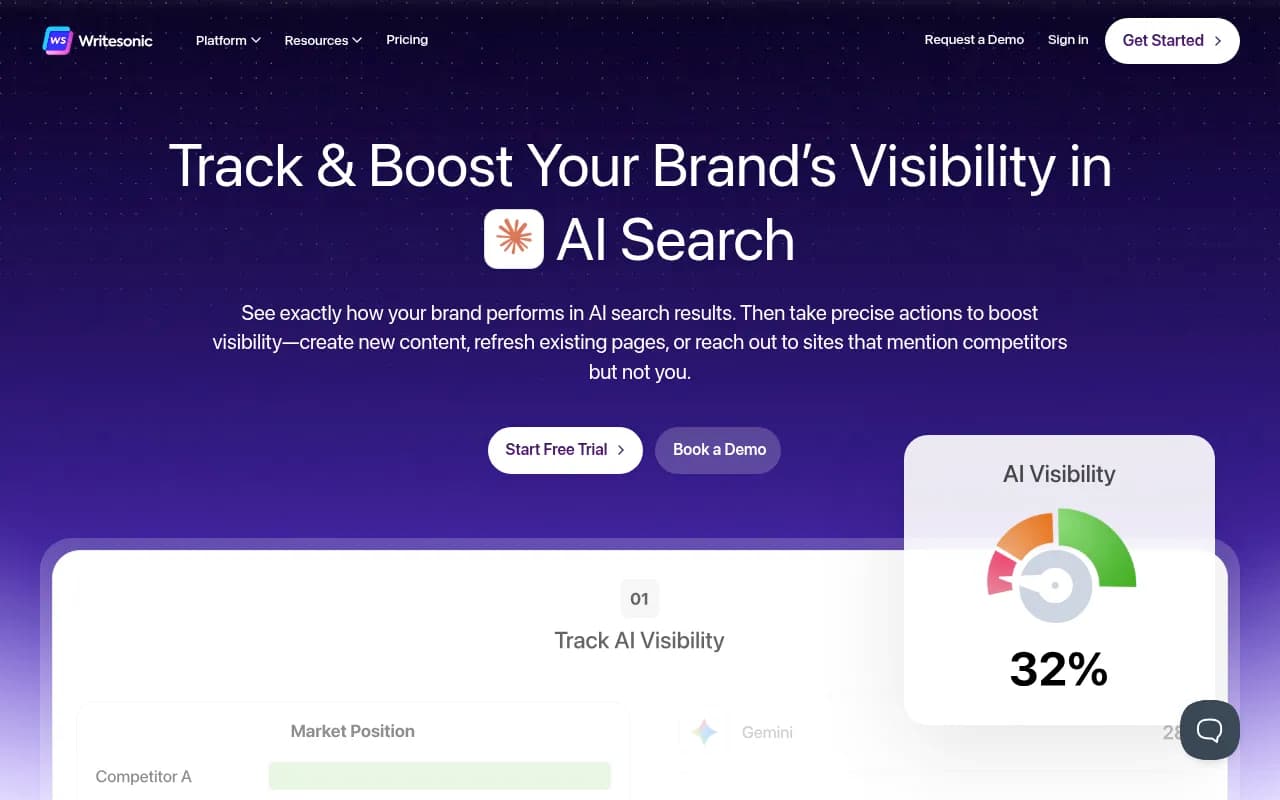
Writesonic
Writesonic has evolved well beyond its origins as an AI writing tool. Its GEO/AEO suite tracks citation share across ChatGPT, Google AI Mode, AI Overviews, Gemini, Perplexity, and Claude, and combines that with in-platform content optimization workflows. The citation analysis is solid, and the ability to go from "I'm not being cited for this prompt" to "here's a draft that addresses the gap" in one tool is genuinely useful for content teams.
It's positioned more toward enterprises and agencies that want an integrated workflow rather than a standalone tracker. Starts at $199/month for the GEO features.
Profound
Profound is a strong option for teams that want detailed AI search analytics with a cleaner interface. It covers brand tracking across major AI models, competitor share of voice, and source analysis. The platform has good depth on the analytics side and is particularly well-regarded for enterprise use cases.
Where it falls short compared to Promptwatch: no Reddit/YouTube tracking, no ChatGPT Shopping monitoring, and the content optimization capabilities are more limited. It's a better tracker than optimizer.

Frase
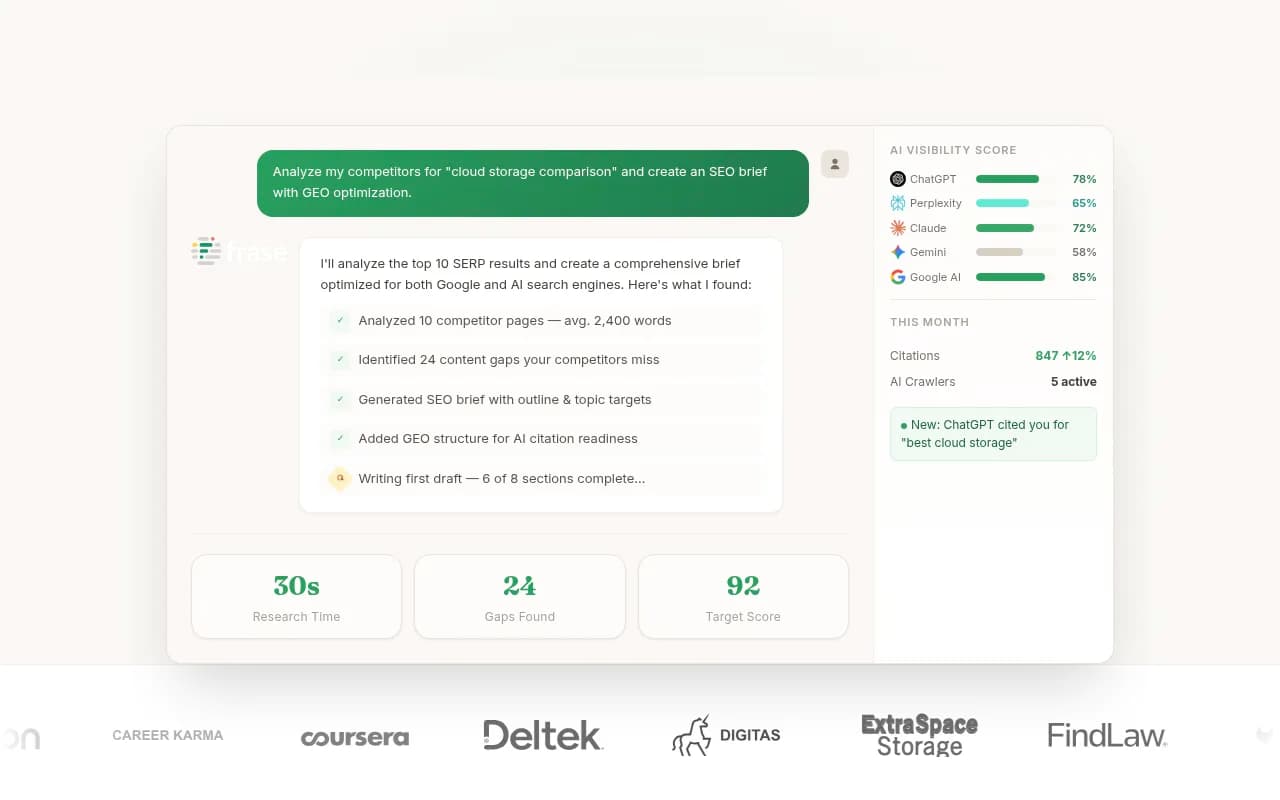
Frase has been in the content optimization space for years and has added AEO-specific features including citation share tracking, content decay detection, and automated content fix recommendations. If your team is already using Frase for SEO content briefs, the AEO layer is a natural extension. For teams starting fresh with AEO, it's a solid mid-tier option.
Strong monitoring platforms (track well, limited optimization)
These tools are genuinely good at what they do -- they just don't close the loop on content creation or gap analysis.
Otterly.AI
Otterly.AI is one of the more popular lightweight trackers in the space. It monitors brand mentions across AI models, tracks share of voice, and gives you a clear picture of where you appear and where you don't. The interface is clean and the setup is fast. For small teams or individuals who just want visibility data without a complex workflow, it's a reasonable choice.
The limitation is real though: Otterly.AI is a monitoring tool. It shows you the problem but doesn't help you solve it. No content generation, no crawler logs, no traffic attribution.

Peec AI
Peec AI is a multi-language AI visibility tracker that works well for teams operating across multiple markets. The multi-language support is genuinely better than most competitors, and the interface is straightforward. Like Otterly.AI, it's monitoring-focused -- good for tracking, not for acting on what you find.

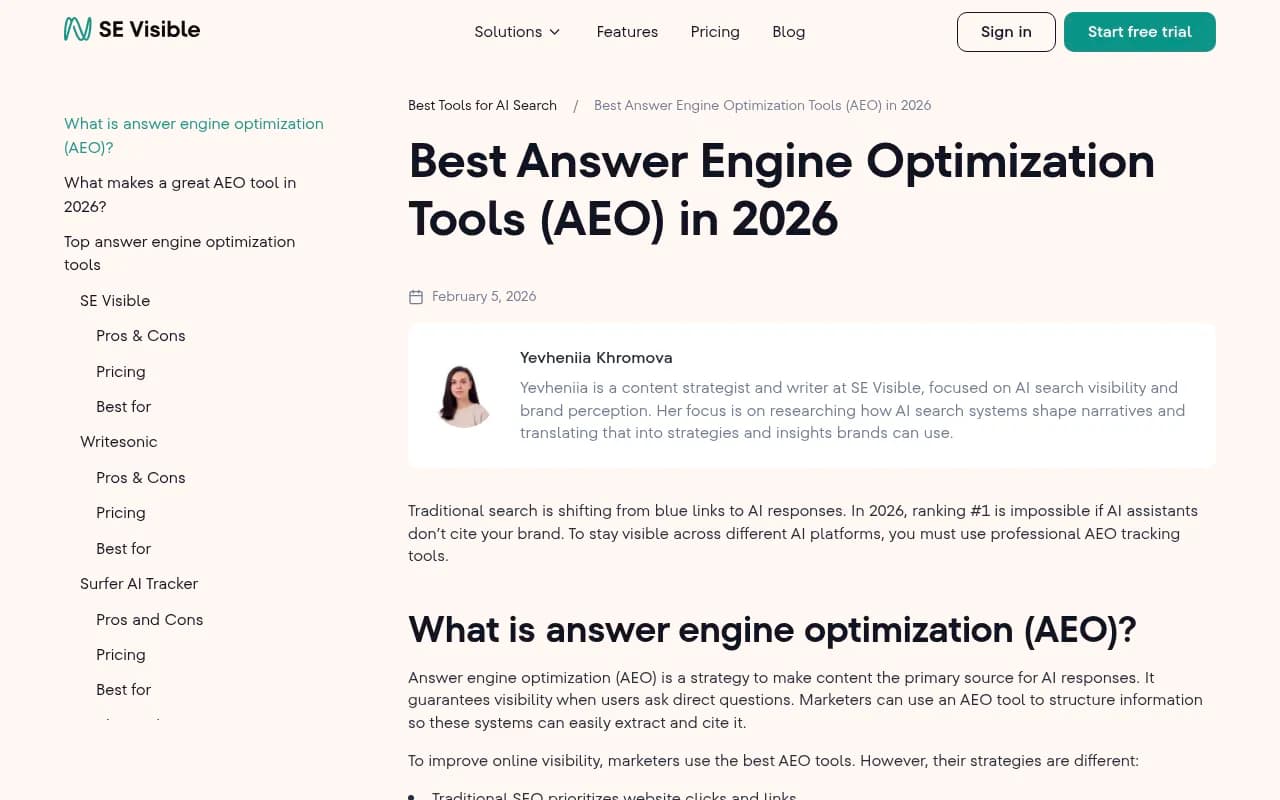
SE Visible
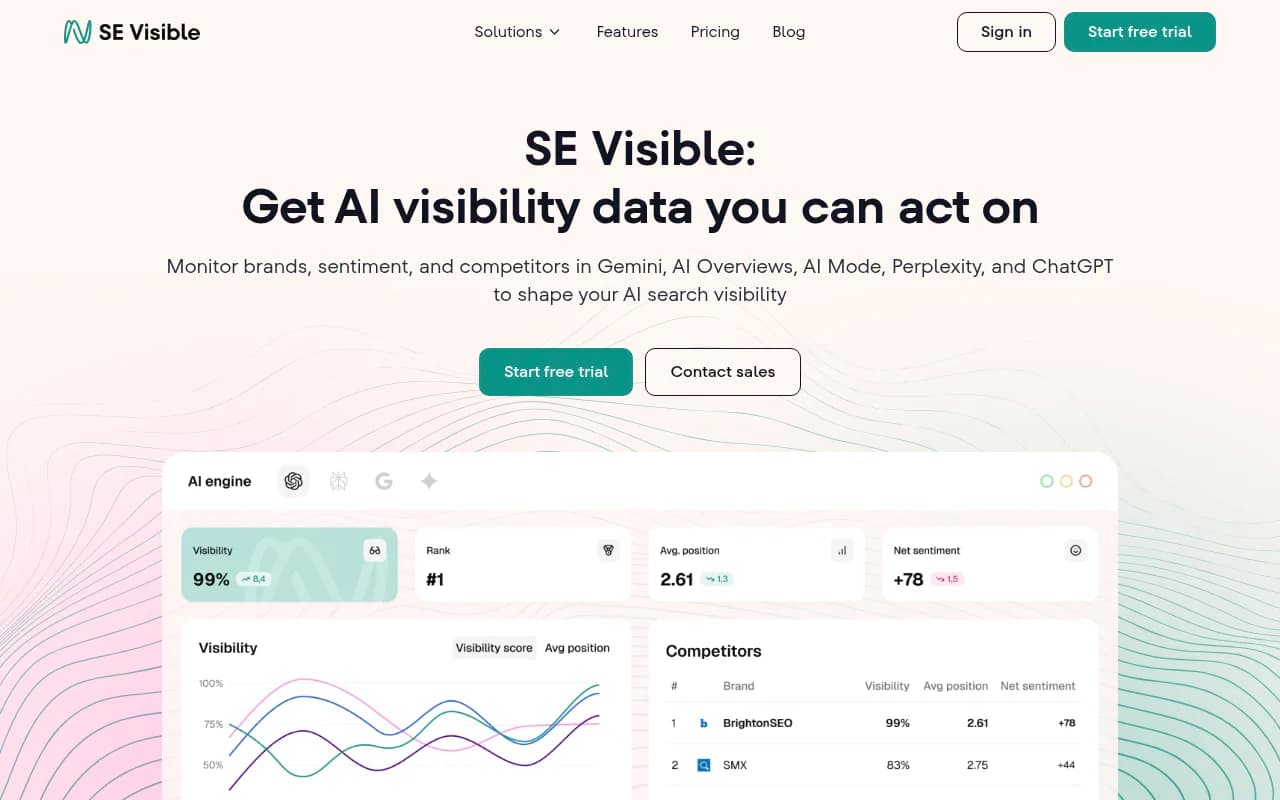
SE Visible (from SE Ranking) tracks AI visibility across Google AI Overviews, AI Mode, Gemini, ChatGPT, and Perplexity. It includes competitor insights and a sentiment score, which is a nice touch. The $99/month price point makes it accessible, and it integrates with SE Ranking's broader SEO toolkit if you're already a customer.
AthenaHQ
AthenaHQ covers 8+ AI search engines and has a clean interface for tracking brand visibility and competitor comparisons. It's monitoring-focused, which is fine if that's what you need. The platform doesn't offer content generation or gap analysis, so teams looking to act on the data will need to combine it with other tools.
Nightwatch
Nightwatch is interesting because it bridges traditional SEO rank tracking and AI visibility monitoring. If you're an agency managing multiple clients and want one platform that handles both Google rankings and AI citation tracking, Nightwatch is worth a look. The AI tracking is an add-on ($99/month on top of base pricing), which makes it more expensive than it first appears, but the combined SEO+AEO view is useful.
Enterprise and specialist platforms
Conductor
Conductor is a well-established enterprise SEO platform that has added AI visibility tracking with persona customization -- meaning you can test how AI models respond to different types of users asking the same question. That's a genuinely useful feature for brands targeting multiple audience segments. The enterprise pricing and complexity make it overkill for most teams, but it's a serious option for large organizations.
Semrush
Semrush has added AI visibility features to its existing platform, which makes sense given its market position. The integration with Semrush's keyword and competitive data is the main advantage. The downside: the AI tracking uses fixed prompts rather than custom ones, which limits how useful it is for brands with specific or niche positioning. Better as a supplement to a dedicated AEO tool than a replacement.
Ahrefs Brand Radar
Ahrefs Brand Radar tracks brand mentions in AI search results and integrates with Ahrefs' existing backlink and keyword data. Like Semrush, it uses fixed prompts and lacks AI traffic attribution, which are real gaps. Useful if you're already deep in the Ahrefs ecosystem.
Evertune
Evertune is built specifically for Fortune 500 brands and enterprise GEO use cases. It has strong brand narrative tracking and the ability to monitor how AI models describe your brand over time. The pricing and complexity reflect the enterprise focus -- not the right fit for most teams, but worth knowing about if you're at that scale.
Lightweight and budget-friendly options
Rankshift
Rankshift is a straightforward LLM tracking tool that covers the major AI models without a lot of complexity. Good for teams that want basic visibility data at a lower price point.
Brandlight
Brandlight focuses on AI-powered brand visibility tracking with a clean interface. It's a niche player but has a clear use case for brand-focused teams.
Goodie
Goodie monitors and optimizes brand presence in AI search. It's a newer entrant in the space with a focus on making AEO accessible for smaller brands.
How the major platforms compare
Here's a direct comparison of the key capabilities across the platforms most teams will actually consider:
| Tool | AI models tracked | Content generation | Crawler logs | Reddit/YouTube tracking | Traffic attribution | Starting price |
|---|---|---|---|---|---|---|
| Promptwatch | 10 (ChatGPT, Claude, Perplexity, Gemini, Grok, DeepSeek, Copilot, Meta AI, Google AIO, AI Mode) | Yes (built-in AI writer) | Yes | Yes | Yes (GSC, snippet, logs) | $99/mo |
| Writesonic | 6 | Yes | No | No | Limited | $199/mo |
| Profound | 5+ | Limited | No | No | No | Custom |
| Otterly.AI | 4-5 | No | No | No | No | ~$49/mo |
| Peec AI | 4-5 | No | No | No | No | ~$49/mo |
| SE Visible | 5 | No | No | No | No | $99/mo |
| AthenaHQ | 8+ | No | No | No | No | Custom |
| Nightwatch | 5 | No | No | No | No | $39+$99/mo |
| Semrush | 3-4 | No | No | No | No | $139/mo+ |
| Ahrefs Brand Radar | 3-4 | No | No | No | No | $129/mo+ |
| Conductor | 5+ | Limited | No | No | Limited | Custom |
| Evertune | 5+ | No | No | No | No | Custom |
How to choose the right AEO tool for your situation
The honest answer is that it depends on what you're actually trying to do.
If you just want to know whether your brand is being mentioned in AI responses and how you compare to competitors, a monitoring-only tool like Otterly.AI or SE Visible will do the job at a lower price point. They're not going to help you improve, but they'll tell you where you stand.
If you want to actually improve your AI visibility -- find the content gaps, create the content, and track whether it works -- you need a platform with the full optimization loop. Promptwatch is the strongest option here, particularly because of the crawler logs (which tell you how AI engines are actually reading your site) and the citation-grounded content generation (which isn't just generic AI writing, it's based on what AI models actually cite).
For teams already deep in the Semrush or Ahrefs ecosystem, the built-in AI tracking features are worth using as a starting point, but they're not a substitute for a dedicated AEO platform if you're serious about the channel.
For agencies managing multiple clients, Promptwatch's agency pricing and multi-site support, combined with Looker Studio integration and API access, make it the most practical choice. Nightwatch is worth considering if you need traditional rank tracking alongside AI monitoring.
What most AEO tools get wrong
The biggest issue with the current generation of AEO tools is that they treat visibility as the end goal. It isn't. Visibility is an input. The actual goal is traffic, leads, and revenue.
Most platforms will show you a share-of-voice score and a list of prompts where competitors appear. That's useful information. But it doesn't tell you which of those prompts are worth targeting, what content you'd need to create to win them, whether your site is even being crawled properly by AI engines, or whether any of this is actually driving traffic.
The tools that close that loop -- from gap identification to content creation to traffic attribution -- are the ones worth paying for. Right now, that's a short list.
The bottom line
AEO is no longer optional for brands that depend on search traffic. The question is which tool actually helps you do something about it.
For most marketing and SEO teams, Promptwatch is the strongest all-around platform -- it's the only one that meaningfully covers the full cycle of finding gaps, creating content, and tracking results, with crawler logs and Reddit/YouTube tracking that competitors don't offer. Writesonic and Profound are solid alternatives for teams that want different trade-offs. And if you just need lightweight monitoring without the optimization layer, Otterly.AI or SE Visible will get you started without a large commitment.
Pick the tool that matches where you are in the process. If you're just starting to understand AI visibility, a monitoring tool is fine. If you already know you're invisible and need to fix it, you need something that helps you act.