Key takeaways
- Product-led growth companies have a distinct AEO problem: buyers ask AI engines "what tool should I use for X?" and your product needs to be the answer -- not just mentioned, but recommended.
- Most AEO tools are monitoring dashboards. PLG teams need tools that close the loop: find the gaps, create content that fills them, and track whether AI engines start citing you.
- The highest-leverage AEO tactic for PLG is answer gap analysis -- finding the specific prompts where competitors appear and you don't, then creating content that addresses those exact questions.
- Prompt volume and difficulty scoring matter more than raw visibility counts. A PLG team with limited resources should chase winnable, high-intent prompts first.
- AI crawler logs are underused by PLG teams. Knowing which pages AI engines actually read (and which they skip) tells you where to focus your content efforts.
There's a specific kind of pain that hits PLG marketing teams in 2026. Someone on your exec team googles "best [your category] tool" and notices your product isn't in the ChatGPT answer. Or a sales rep hears from a prospect: "We asked Perplexity what to use and it recommended your competitor."
This is the AEO problem for product-led growth companies, and it's different from the AEO problem for, say, a media publisher or an e-commerce brand. When your product is the answer to a user's question, getting AI engines to say so is a direct revenue lever -- not a brand awareness play.
This guide is specifically for PLG teams: SaaS companies, developer tools, productivity apps, and any product where the user can sign up and get value before talking to sales. The AEO dynamics here are distinct, and the tools you need reflect that.
Why PLG companies have a unique AEO challenge
Traditional SEO for PLG has always been about capturing high-intent searches: "best project management tool," "Slack alternative," "free CRM." The playbook was comparison pages, G2 review optimization, and feature-focused content.
AEO is the same game, different surface. When someone asks ChatGPT "what's the best tool for managing customer onboarding?" they're not going to scroll through ten blue links. They're getting a synthesized answer with two or three recommendations. If your product isn't in that answer, you don't exist for that buyer.
The PLG-specific wrinkle: AI engines tend to recommend products they have high-confidence information about. That means products with strong third-party coverage (review sites, Reddit discussions, YouTube tutorials, comparison articles), clear use-case documentation, and consistent citation patterns across the web. A PLG product with great word-of-mouth but thin content coverage is invisible to AI engines even if it's beloved by users.
The other wrinkle: PLG buyers often ask very specific, use-case-driven questions. Not "what's the best CRM" but "what CRM works best for a 10-person SaaS team that doesn't want to do manual data entry." AI engines answer these with specificity. Your content needs to match that specificity.
The three things PLG teams actually need from AEO tools
Before diving into specific tools, it's worth being clear about what matters for PLG teams specifically.
Prompt discovery and gap analysis. You need to know which questions buyers are asking AI engines about your category -- and which of those questions your competitors are answering but you're not. This is the highest-leverage starting point.
Content creation tied to real prompt data. Generic AI content won't move the needle. You need content that's engineered around the specific prompts, angles, and use cases that AI engines are already surfacing. This is where most monitoring-only tools fall short.
Attribution back to pipeline. PLG teams are accountable to signups and revenue. An AEO tool that shows you visibility scores but can't connect them to actual traffic or conversions is hard to justify to a CFO.
The best AEO tools for PLG companies in 2026
End-to-end platforms
These are the tools that go beyond monitoring to actually help you act on what you find.
Promptwatch is the most complete option for PLG teams that want to close the full loop. The answer gap analysis shows you exactly which prompts competitors are visible for and you're not -- with volume estimates and difficulty scores so you can prioritize. The content agents generate articles, comparisons, and briefs grounded in that prompt data, not generic SEO templates. And the crawler logs show you which pages AI engines are actually reading, so you know whether your new content is getting picked up. For a PLG team that wants to move from "we're invisible in AI search" to "we're being recommended," this is the most direct path.
Promptwatch also tracks ChatGPT Shopping recommendations and Reddit/YouTube citations -- two channels that matter a lot for PLG products, where community-driven discovery is often how buyers first hear about a tool.

Profound is another strong option, particularly for teams that want deep answer engine insights and have the budget for an enterprise-tier tool. Their platform covers prompt volumes, agent analytics, and shopping tracking. The interface is polished and the data depth is solid. Worth evaluating if you're a larger PLG company with a dedicated AEO team.

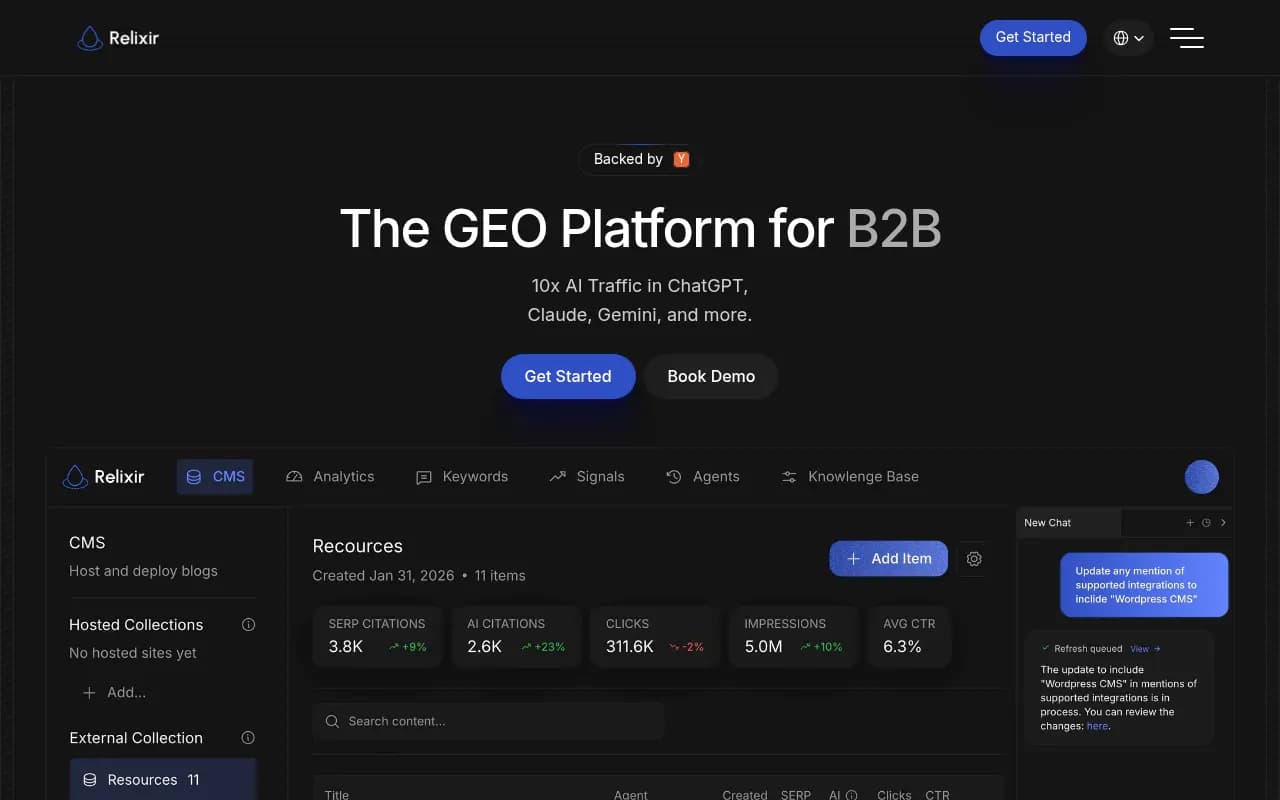
Relixir takes a different angle -- it's built around an AI-native CMS that generates and publishes content automatically based on visibility gaps. For PLG teams that want to move fast and don't have a large content team, the autonomous content generation is appealing. The tradeoff is less control over brand voice.
Monitoring-focused tools (good for getting started)
These tools are strong for understanding your current AI visibility, even if they don't help you act on it directly.
Otterly.AI is one of the more affordable entry points for AI visibility monitoring. Good for PLG teams that are just starting to track their presence in ChatGPT, Perplexity, and Gemini and want a clean dashboard without a big commitment.

Peec AI is worth noting for PLG companies with international user bases -- it has solid multi-language tracking. If your product is growing in non-English markets, this fills a gap that most tools ignore.

AthenaHQ covers eight-plus AI search engines and has a clean monitoring interface. It's monitoring-focused, so you'll need to pair it with a content workflow to act on what you find.

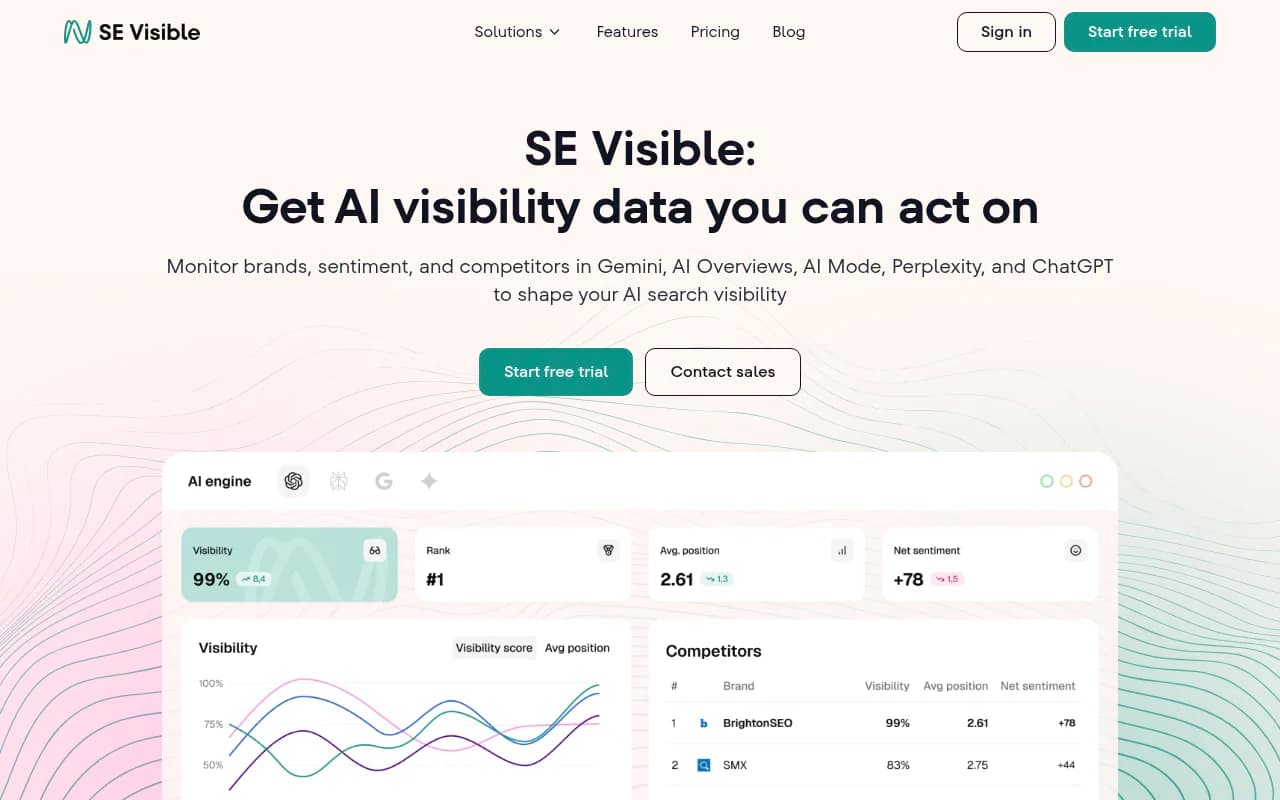
SE Visible (from SE Ranking) is a user-friendly option that sits within a broader SEO platform. If your team is already using SE Ranking for traditional SEO, the AI visibility layer is a natural add-on.
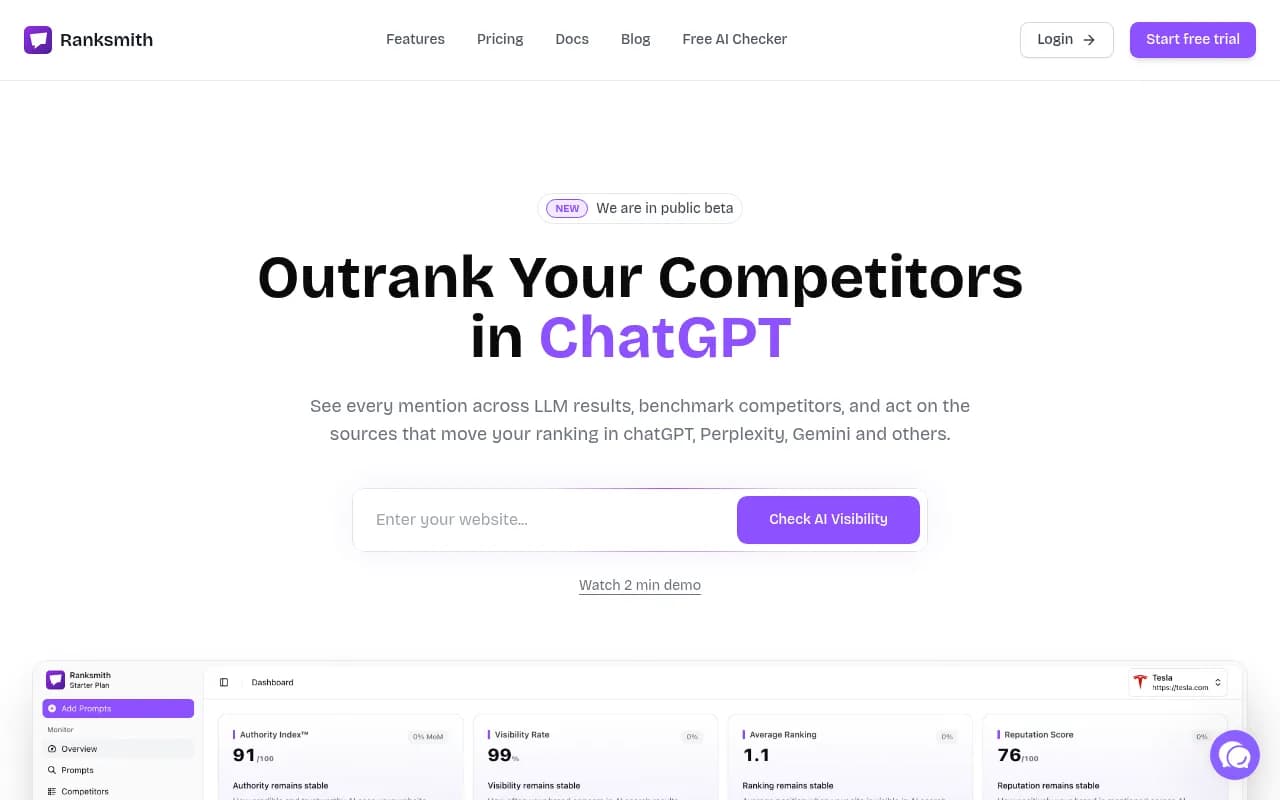
Ranksmith surfaces actionable insights rather than just raw data, which makes it easier for PLG marketers who don't want to spend hours interpreting dashboards.
Content and optimization tools
AEO isn't just about tracking -- you need to create content that AI engines want to cite. These tools help with that.
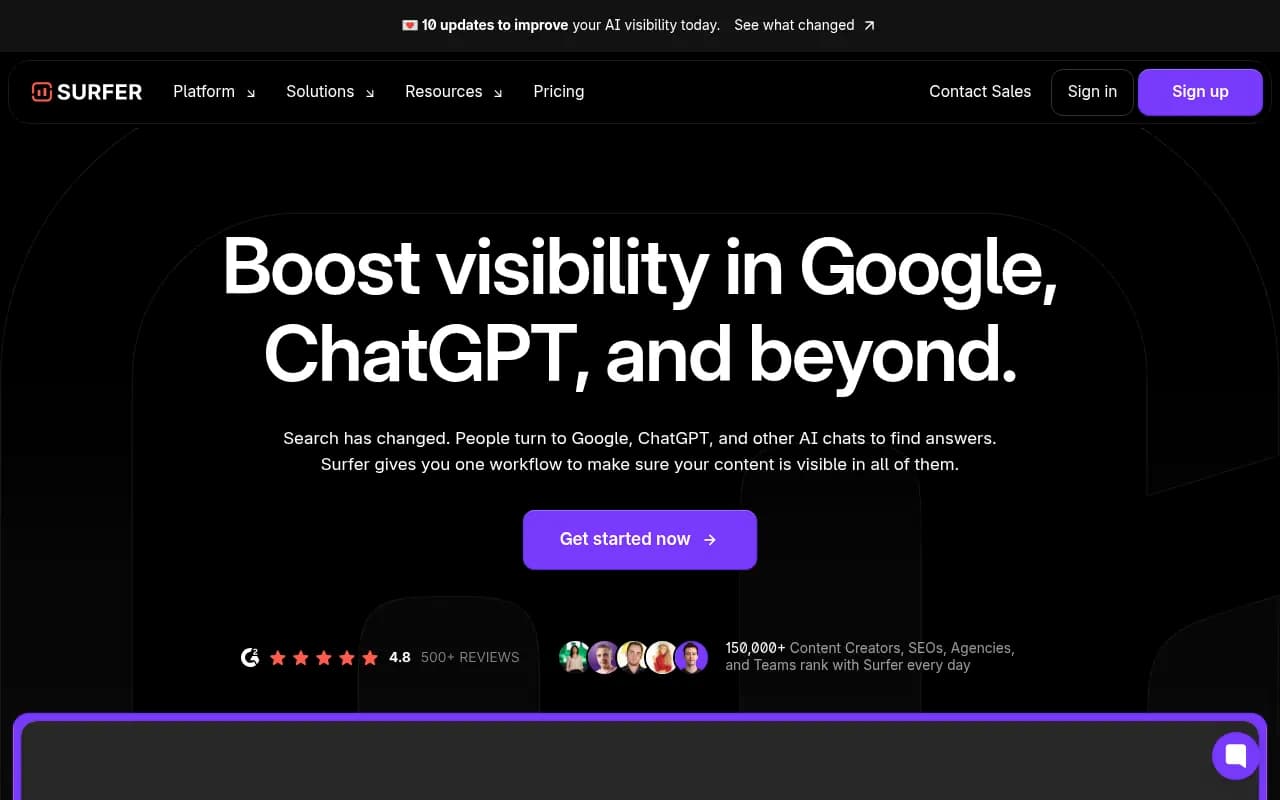
Surfer SEO has been adding AI search optimization features alongside its traditional content scoring. For PLG teams that already use Surfer for content briefs, the AI visibility layer is worth exploring.
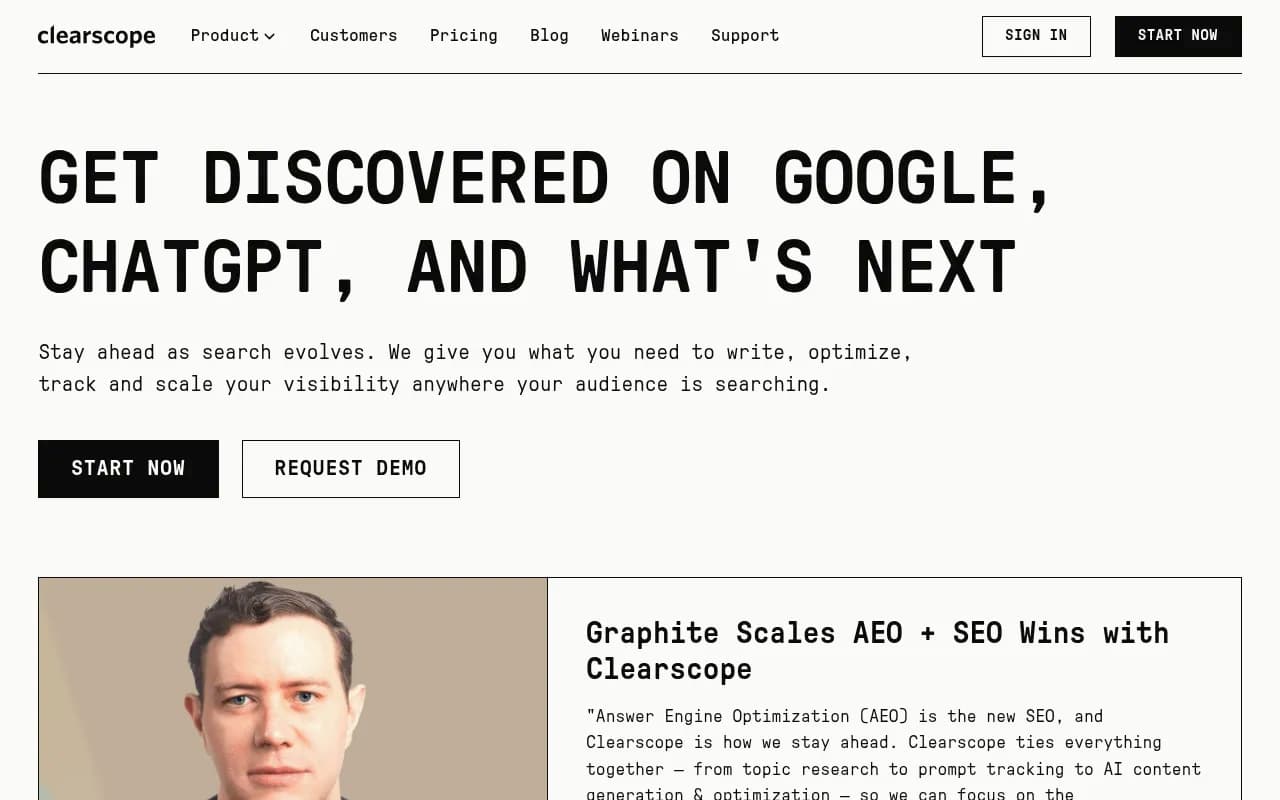
Clearscope is strong for content optimization against semantic relevance signals. If your PLG content team is producing comparison pages, use-case articles, and category content, Clearscope helps ensure the depth and coverage that AI engines look for.
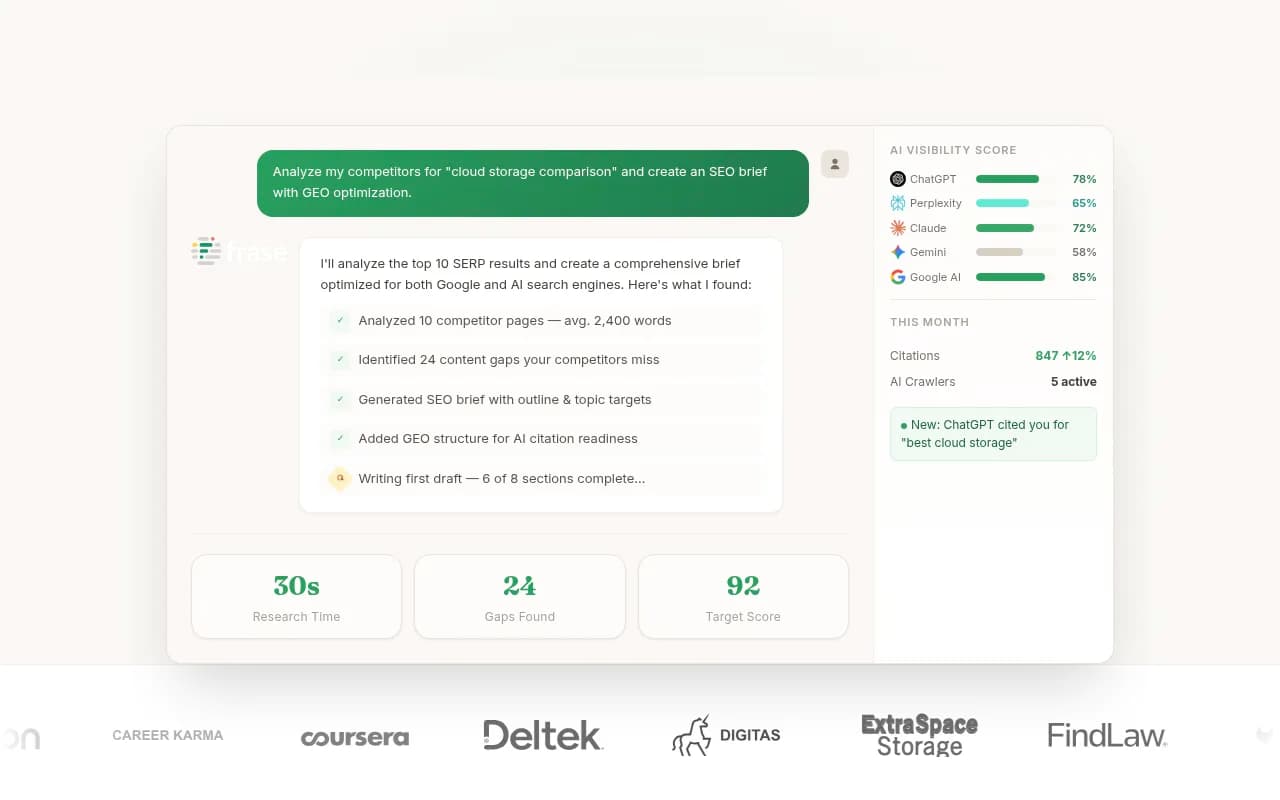
Frase combines research, brief generation, and optimization in one workflow. Useful for PLG teams that need to produce a high volume of answer-optimized content without a large team.
Attribution and analytics
This is where PLG teams often have an edge -- they're already tracking activation, retention, and revenue. The gap is connecting AI visibility to those metrics.
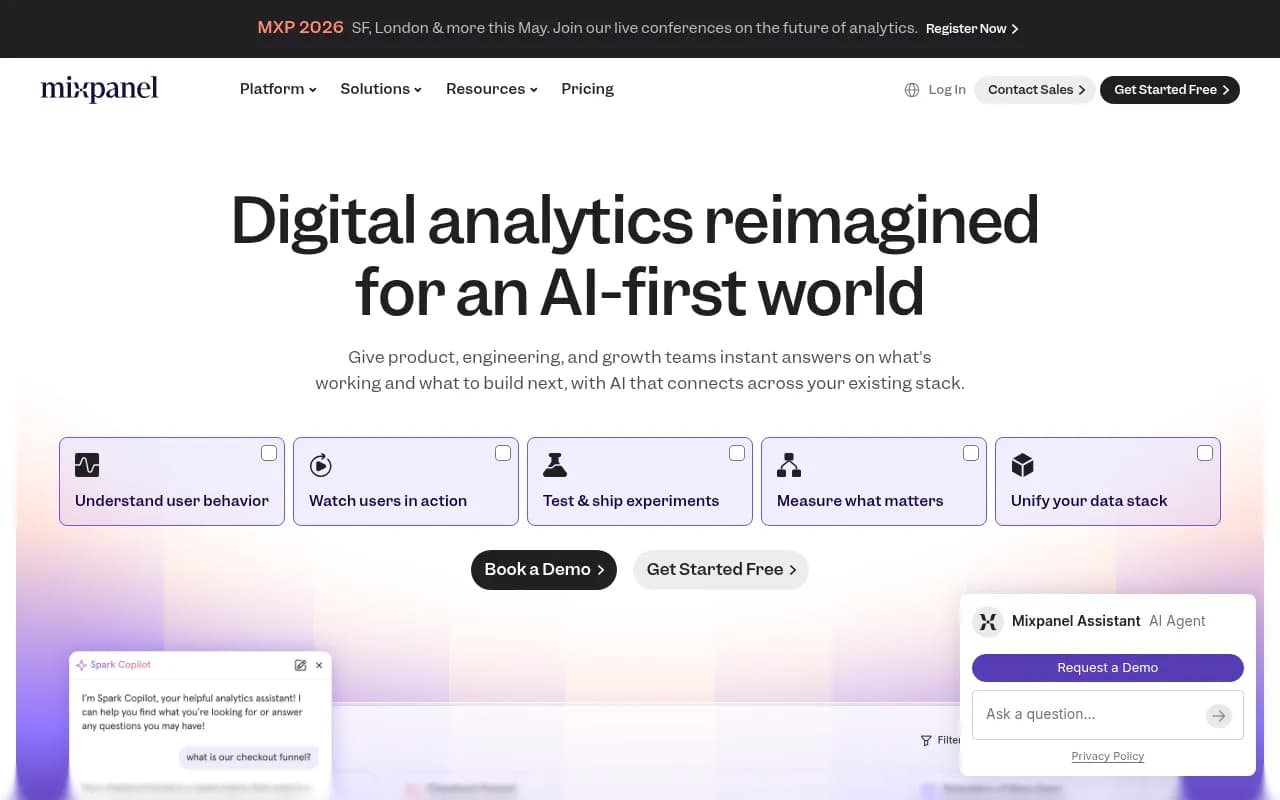
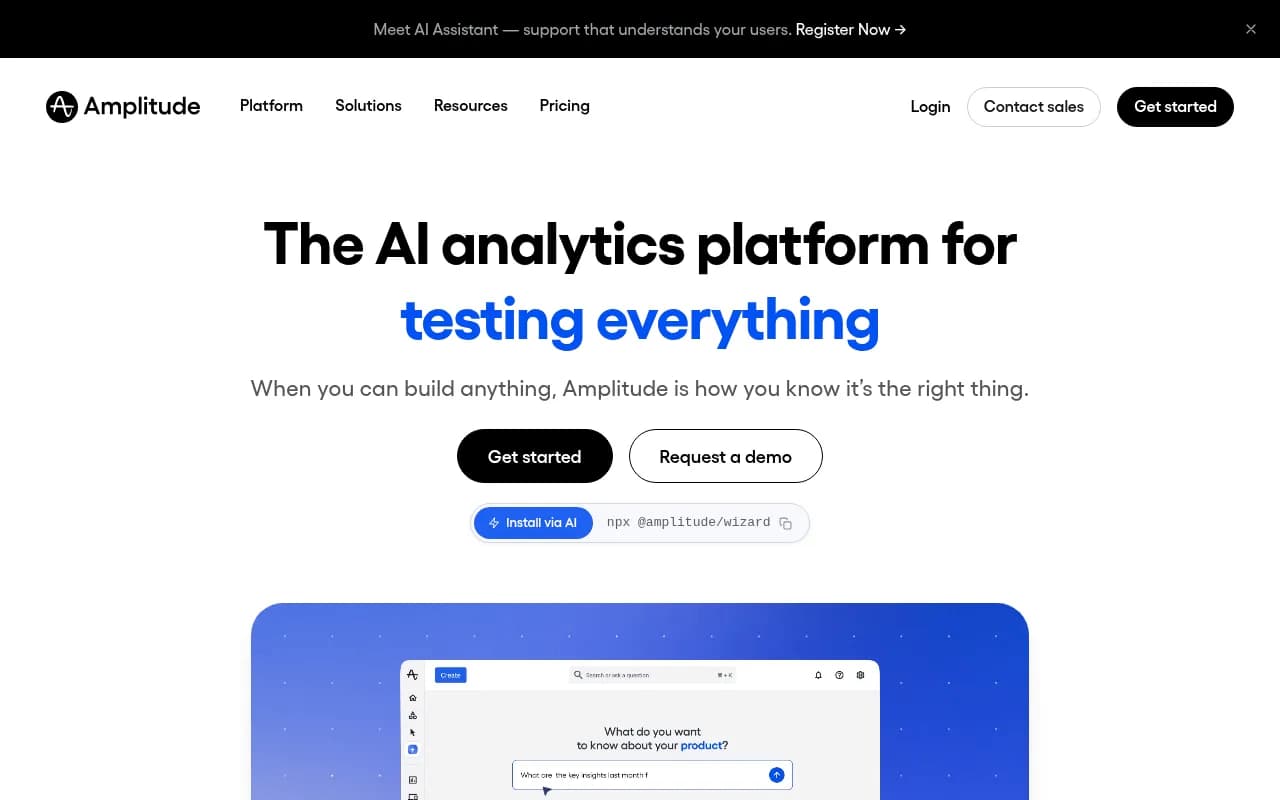
Mixpanel and Amplitude are the standard PLG analytics tools. Neither tracks AI visibility natively, but both can ingest UTM data and referral sources from AI-driven traffic. The key is making sure your attribution setup captures perplexity.ai, chatgpt.com, and similar referrers as distinct sources.
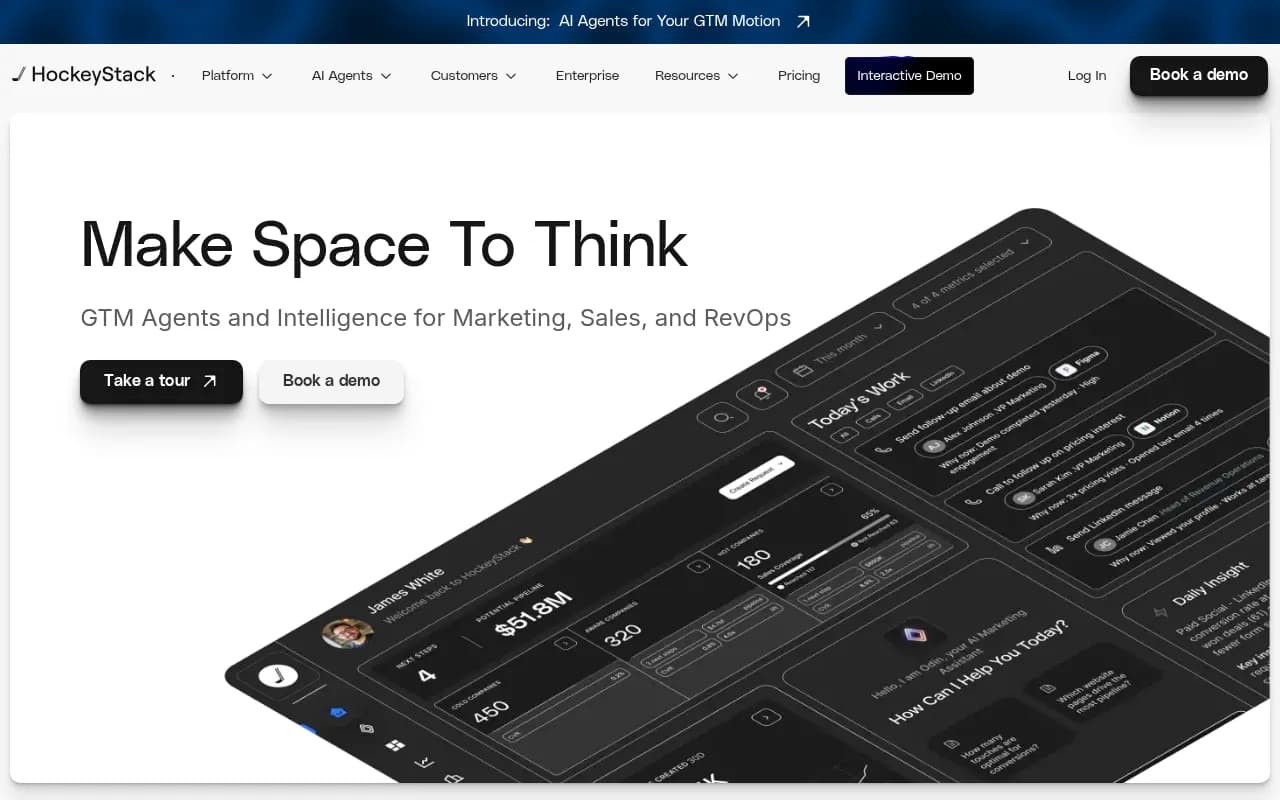
HockeyStack is worth mentioning for B2B PLG companies specifically. It unifies marketing touch data with revenue, which means you can start to see whether AI-referred visitors convert at different rates than organic search visitors.
Comparison table: AEO tools for PLG teams
| Tool | Gap analysis | Content generation | Crawler logs | Reddit/YouTube | Attribution | Best for |
|---|---|---|---|---|---|---|
| Promptwatch | Yes | Yes (AI agents) | Yes | Yes | Yes | Full-loop AEO optimization |
| Profound | Yes | Yes (agents) | Yes | No | Partial | Enterprise PLG teams |
| Relixir | Yes | Yes (autonomous) | No | No | No | Fast content publishing |
| Otterly.AI | No | No | No | No | No | Budget monitoring |
| Peec AI | No | No | No | No | No | Multi-language monitoring |
| AthenaHQ | Partial | No | No | No | No | Multi-engine monitoring |
| SE Visible | No | No | No | No | No | SE Ranking users |
| Surfer SEO | No | Partial | No | No | No | Content optimization |
| Clearscope | No | No | No | No | No | Content depth/coverage |
| HockeyStack | No | No | No | No | Yes | B2B revenue attribution |
How to build an AEO strategy for a PLG product
Step 1: Map the prompts your buyers actually use
Start with the questions your ideal users ask AI engines when they're looking for a product like yours. Think in terms of:
- Category-level prompts: "best tool for X"
- Use-case prompts: "how do I do Y without Z"
- Comparison prompts: "tool A vs tool B"
- Problem-aware prompts: "I'm struggling with X, what should I use"
PLG products often have strong activation metrics but weak top-of-funnel content. The prompts where you're invisible are usually the problem-aware and use-case ones -- not the category-level ones where you might already have some coverage.
Step 2: Run a gap analysis against your competitors
Once you have a prompt list, check which of those prompts your competitors appear in and you don't. This is the most direct way to find content opportunities. Tools like Promptwatch automate this -- you get a ranked list of gaps with volume and difficulty scores, so you can prioritize instead of guessing.
The gaps that matter most for PLG are usually mid-funnel: prompts where a buyer is evaluating options, not just learning about a category. These are the prompts where a clear, specific recommendation from an AI engine can directly influence a signup decision.
Step 3: Create content that answers the specific question
This is where most PLG content teams go wrong. They create content optimized for traditional SEO signals -- keyword density, backlinks, domain authority -- and wonder why AI engines don't cite it.
AI engines cite content that directly and specifically answers the question. For PLG, that means:
- Comparison pages that actually compare (not just "we're better at everything")
- Use-case pages that describe a specific workflow, not just a feature list
- FAQ content that mirrors the exact language buyers use in prompts
- Third-party coverage: getting your product mentioned in review roundups, Reddit threads, and YouTube tutorials
The third-party coverage piece is often underweighted by PLG teams. AI engines don't just read your website -- they read the whole web. A product that appears in five independent "best tools for X" articles is more likely to be recommended than a product with a perfectly optimized website but no external citations.
Step 4: Monitor which pages AI engines are actually reading
This is where crawler logs become valuable. Knowing that Perplexity's crawler visited your pricing page three times last week but has never visited your use-case pages tells you something actionable. It means your use-case content either doesn't exist, isn't linked well, or isn't getting indexed.
Most PLG teams don't look at this data at all. It's one of the faster ways to find and fix AI visibility gaps.
Step 5: Connect visibility to signups
Set up your analytics to track AI-referred traffic as a distinct segment. perplexity.ai, chatgpt.com, claude.ai, and gemini.google.com are all trackable referrers. Once you can see that AI-referred visitors have a 3x higher signup rate than average (a pattern some PLG teams are already seeing), the business case for AEO investment becomes straightforward.
What PLG teams get wrong about AEO
Treating it like traditional SEO. AEO isn't about ranking -- it's about being cited. The signals that drive citations are different: specificity, third-party corroboration, and direct question-answering matter more than domain authority.
Focusing only on their own website. AI engines synthesize from across the web. If your product isn't mentioned in relevant Reddit threads, YouTube tutorials, or third-party comparison articles, you're invisible to AI engines regardless of how good your website is.
Measuring visibility without measuring impact. A high visibility score in an AI monitoring tool is meaningless if it doesn't translate to traffic and signups. PLG teams should insist on attribution data from day one.
Ignoring prompt specificity. A PLG product that ranks well for "best project management tool" but is invisible for "best project management tool for remote engineering teams" is missing the high-intent, high-conversion prompts. The more specific the prompt, the more likely the buyer is ready to sign up.
A note on the monitoring-only trap
The AEO tool market in 2026 is crowded with monitoring dashboards. They'll show you a visibility score, a list of prompts where you appear, and a comparison against competitors. That's useful context. But it doesn't tell you what to do next.
The PLG teams making real progress with AEO are the ones using tools that close the loop: find the gaps, create content that fills them, track whether AI engines start citing the new content, and connect that to revenue. That cycle -- gap analysis, content creation, tracking -- is what separates an optimization program from a reporting exercise.
Most monitoring tools stop at the report. Make sure the tools you choose don't.
Getting started: a practical first week
If you're a PLG marketing team starting from zero on AEO, here's a realistic first week:
- Set up AI visibility tracking for your brand and your top two or three competitors. Even a basic monitoring tool gives you a baseline.
- Run a manual prompt test: ask ChatGPT, Perplexity, and Gemini the five most common questions your buyers ask about your category. Screenshot the answers. Note who's being recommended and who isn't.
- Check your analytics for AI referrers. You may already be getting traffic from AI engines without knowing it. Understanding the baseline is step one.
- Identify your three biggest prompt gaps -- the high-volume, high-intent prompts where competitors appear and you don't. These become your first content priorities.
- Create one piece of content specifically designed to answer one of those prompts. Not a keyword-optimized blog post -- an actual answer to the specific question, with enough depth and specificity that an AI engine would feel confident citing it.
That's a week's work. The compounding effect comes from repeating the cycle.
The PLG companies that figure out AEO early will have a meaningful advantage. Buyers are already using AI engines to make software decisions. The question is whether your product is in the answer.