Amplitude Review 2026
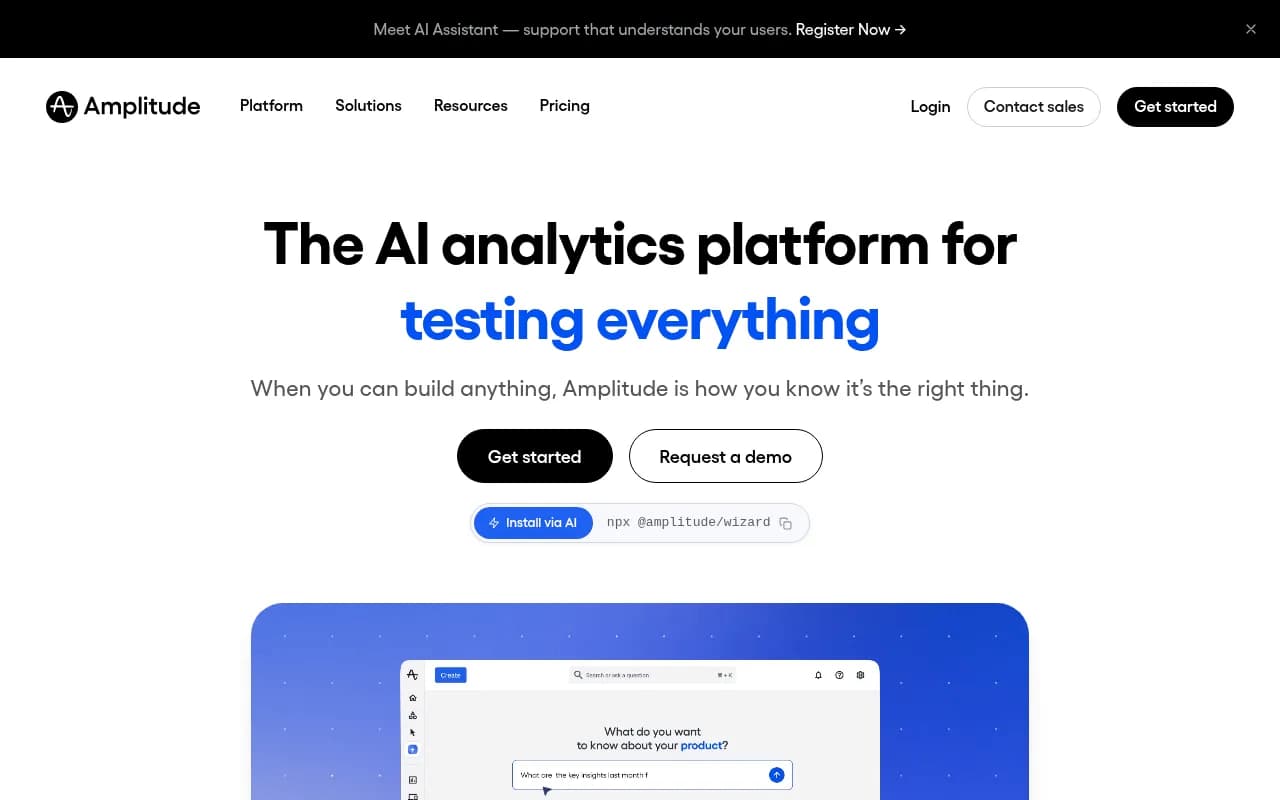
Amplitude is an AI-powered digital analytics platform combining product analytics, session replay, A/B experimentation, and web analytics. Built for product and growth teams at digital-native companies to understand user behavior and build better products.
Key takeaways
- Amplitude is one of the most complete product analytics platforms available in 2026, combining behavioral analytics, session replay, A/B testing, and in-app engagement tools under one roof
- Named a Leader in the Forrester Wave for Digital Analytics Solutions (Q3 2025) with the highest scores in 21 criteria -- a meaningful external validation
- Free plan is genuinely useful: up to 10,000 monthly tracked users with no credit card required, which is rare at this level of capability
- Pricing scales quickly once you move past the free tier; mid-market teams can find costs climb faster than expected as MTU counts grow
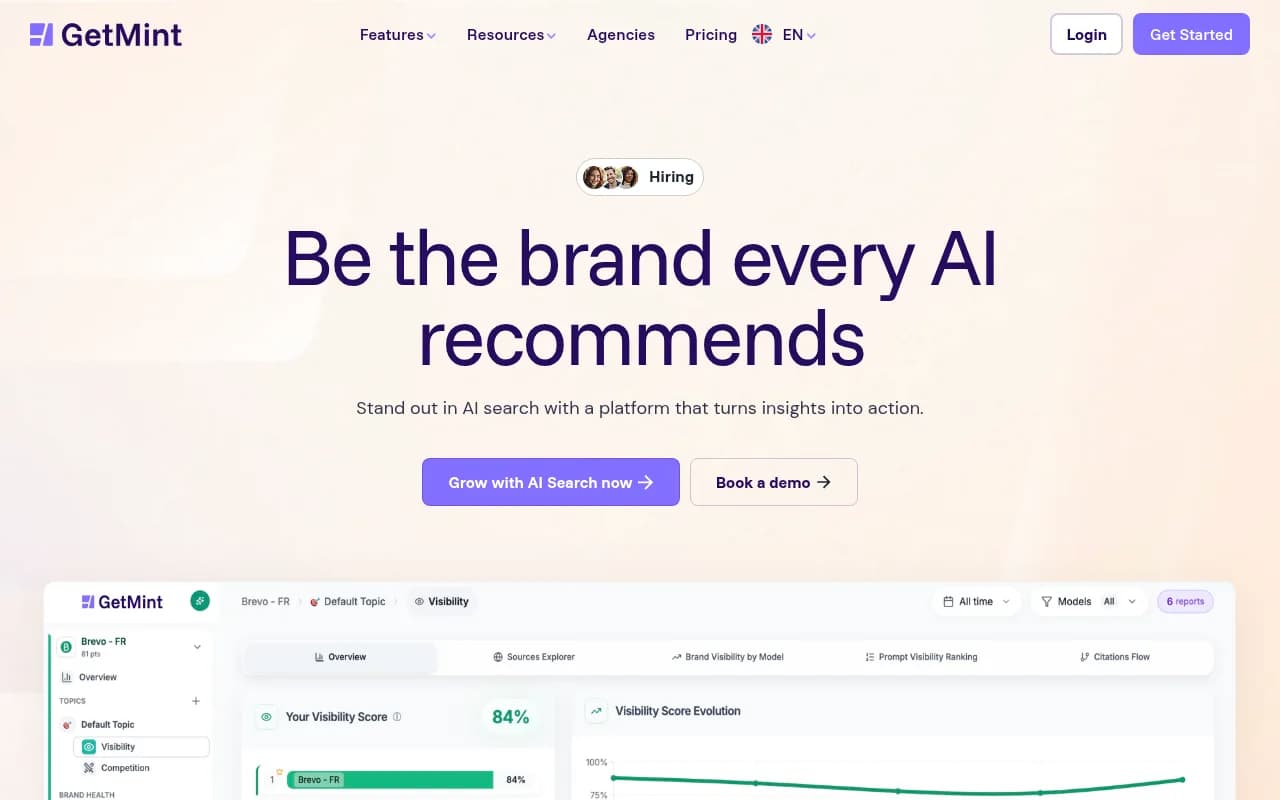
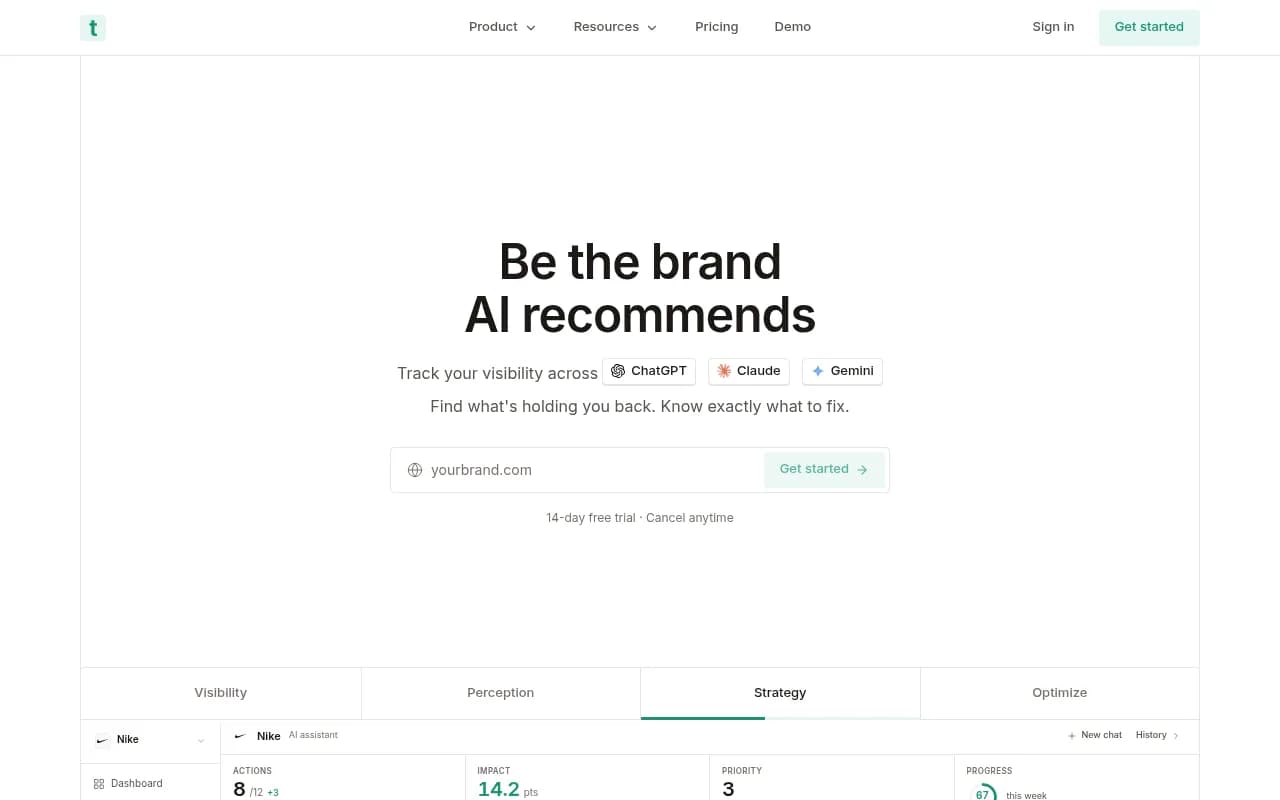
- The platform's AI Visibility feature monitors how LLMs talk about your brand, but it's a lightweight add-on compared to dedicated GEO platforms like Promptwatch that offer deeper citation tracking, content gap analysis, and AI traffic attribution
Amplitude launched in 2012, founded by Spenser Skates, Curtis Liu, and Jeffrey Wang in San Francisco. The original pitch was simple: give product teams the same kind of behavioral data that data scientists had, but without requiring SQL or engineering support. That idea resonated. By the time Amplitude went public via direct listing on Nasdaq in September 2021, it had become the default analytics platform for a generation of product-led growth companies.
Today, Amplitude describes itself as an "AI analytics platform" -- a label that reflects both genuine AI investment and some marketing ambition. The core product is still behavioral analytics: tracking what users do inside your product, understanding where they drop off, what drives retention, and which features actually get used. But the platform has expanded significantly, adding experimentation, session replay, web analytics, in-app guides and surveys, and more recently, AI-powered features including autonomous agents and LLM brand monitoring.
The target audience is broad but the sweet spot is clear: product teams at digital-native companies, typically Series B and beyond, who want to move fast without waiting on data engineering. Amplitude is used by companies like Walmart, Square, NBC, and Atlassian -- but it's equally common at mid-stage SaaS startups where a product manager needs to answer "why did retention drop last month?" without filing a data ticket.
Key features
Product analytics is the core of everything Amplitude does. The event-based tracking model lets you instrument any user action -- button clicks, page views, feature interactions -- and then slice that data across funnels, cohorts, retention curves, and user paths. The Funnel Analysis chart is particularly strong: you can define multi-step conversion flows, compare cohorts, and identify exactly where users abandon. The User Paths (formerly Pathfinder) feature shows what users actually do before and after key events, which often surfaces behavior that no one anticipated. Compared to Mixpanel, Amplitude's behavioral analysis tends to go deeper, especially for retention and lifecycle analysis.
Session replay lets you watch recordings of real user sessions, linked directly to the analytics data. If you see a drop-off in a funnel, you can click through to watch session replays of users who abandoned at that step. The integration between quantitative data and qualitative replay is tighter than what you get from standalone tools like FullStory or Hotjar -- you're not switching contexts, you're drilling down within the same workflow. Privacy controls let you mask sensitive fields automatically.
Feature experimentation (Amplitude Experiment) is a full-featured A/B and multivariate testing tool built on feature flags. You can run server-side or client-side experiments, target specific user segments, and analyze results using Amplitude's own statistical engine. The integration with the analytics layer means experiment results are analyzed against the same behavioral data you're already tracking -- no need to export to a separate stats tool. Sequential testing and CUPED variance reduction are both supported, which puts it ahead of simpler flag-based tools.
Web experimentation extends A/B testing to marketing and web pages without requiring engineering involvement. Marketers can set up visual experiments, deploy personalized content, and run tests on landing pages or checkout flows. It's positioned as a no-code layer on top of the core experimentation infrastructure, which makes it accessible to growth and marketing teams who don't want to wait for developer time.
Web analytics covers the marketing side of the funnel -- traffic sources, campaign attribution, content performance -- with the same event-based model as the product analytics. The key difference from Google Analytics is that Amplitude's web analytics connects to the same user profiles as your product data, so you can trace a user from first ad click through to long-term retention. For teams that want a unified view of acquisition and engagement, this is genuinely useful.
Guides and surveys is an in-app engagement layer that lets product and growth teams create tooltips, modals, banners, and NPS surveys without engineering support. You can trigger these based on behavioral conditions (e.g., show a tooltip to users who haven't used Feature X after 7 days) and measure their impact on downstream behavior. It's not as deep as dedicated tools like Pendo or Appcues, but for teams already on Amplitude, it removes the need for a separate tool.
AI agents are Amplitude's newest addition -- autonomous agents that monitor your data 24/7 and surface anomalies, drops in key metrics, or unusual patterns. The idea is that instead of building dashboards and waiting for someone to notice a problem, the agent flags it proactively. In practice, this is still maturing, but the direction is clear: Amplitude wants to move from a query tool to something closer to an always-on analyst.
AI Visibility is a feature that monitors how large language models like ChatGPT and Perplexity talk about your brand. It's positioned as a way to "win AI search" -- tracking brand mentions in AI-generated responses. This is a real and growing concern for marketing teams, but Amplitude's implementation is relatively surface-level compared to dedicated platforms. It lacks the citation-level tracking, content gap analysis, prompt volume scoring, and AI traffic attribution that purpose-built GEO tools provide.
MCP server integration lets you query Amplitude data directly from Claude, Cursor, or other AI platforms using natural language. This is a developer-friendly feature that reflects the broader trend of embedding analytics into AI workflows rather than requiring users to log into a separate dashboard.
Who is it for
Amplitude's primary users are product managers and product analysts at companies with digital products -- mobile apps, SaaS platforms, e-commerce sites, media products. A typical user might be a PM at a Series C fintech who needs to understand why a new onboarding flow is underperforming, or a product analyst at a streaming service tracking feature adoption across different user segments. The self-serve nature of the platform means non-technical users can answer complex questions without SQL, which is a real differentiator at companies where data team bandwidth is limited.
Growth and marketing teams are a secondary but growing audience, particularly with the addition of web analytics and web experimentation. A growth marketer running acquisition campaigns who also wants to see how those users behave inside the product -- not just whether they converted -- will find Amplitude's unified user model genuinely useful. The Guides and Surveys feature also appeals to lifecycle marketers who want to run in-app campaigns without engineering support.
Data and engineering teams use Amplitude differently: they care about the data governance features, the warehouse integrations, and the API. Amplitude's Data product (formerly Iteratively) handles event tracking plans, schema validation, and data quality -- which matters a lot at companies where multiple teams are instrumenting events and the taxonomy tends to drift over time.
Who should probably look elsewhere: very early-stage startups (the free plan is generous but the learning curve is real), companies that primarily need traditional web analytics without behavioral depth (Google Analytics 4 or Plausible are simpler), and teams that need deep customer data platform capabilities (Segment or mParticle are better fits). Also, if your primary concern is AI search visibility and brand monitoring in LLMs, Amplitude's AI Visibility feature is too lightweight -- you'd want a dedicated GEO platform for that.
Integrations and ecosystem
Amplitude's integration catalog is extensive. On the data ingestion side, it connects to Segment, mParticle, Tealium, and RudderStack for event streaming, and supports direct SDK instrumentation for iOS, Android, JavaScript, Python, Go, and more. On the data warehouse side, Amplitude can sync data to and from Snowflake, BigQuery, Databricks, and Redshift -- both for importing data into Amplitude and for exporting raw event data for custom analysis.
Marketing and engagement integrations include Braze, Iterable, Salesforce, HubSpot, Marketo, and Intercom. These let you use Amplitude cohorts to power campaigns in your existing tools -- for example, syncing a cohort of users who completed onboarding but haven't used a key feature to Braze for a targeted push notification.
The Amplitude API is well-documented and supports both data export and chart/cohort querying. There's also a Looker integration and pre-built connectors for Tableau and Power BI for teams that prefer to visualize data in their existing BI tools.
The MCP server is a newer addition that lets AI coding assistants and chat tools query Amplitude data directly. Browser extensions aren't a core part of the product, but the Amplitude Chrome extension for debugging event tracking is useful during implementation.
Pricing and value
Amplitude's pricing structure in 2026 has four main tiers:
- Starter (Free): Up to 10,000 monthly tracked users, core analytics features, unlimited user seats. No credit card required. This is genuinely one of the more generous free plans in the analytics space.
- Plus: Starting at $49/month. Scales based on monthly tracked users (MTUs). Adds more advanced features and higher data limits. Annual billing saves 20%.
- Growth: Custom pricing. Adds experimentation, advanced behavioral analysis, data governance, and enterprise features. This is where most mid-market and enterprise customers land.
- Enterprise: Custom pricing. Adds SSO, dedicated support, custom contracts, and additional compliance features.
The jump from Plus to Growth is significant and the pricing isn't transparent -- you need to talk to sales. For a company with 100,000 MTUs, costs can reach several thousand dollars per month at the Growth tier. This is a common complaint: the free plan is excellent, the Plus plan is affordable for small teams, but scaling up gets expensive quickly.
Compared to Mixpanel, Amplitude's free plan is more generous and the feature set at comparable tiers is broader (especially with experimentation included). Compared to Heap or FullStory, Amplitude is more focused on product analytics and less on session replay as a primary use case. Compared to Google Analytics 4, Amplitude is significantly more powerful for behavioral analysis but also significantly more expensive and complex to implement.
The Forrester TEI study commissioned by Amplitude found a 217% ROI over three years and a six-month payback period for composite customers -- though these figures come from Amplitude's own commissioned research, so treat them as directional rather than definitive.
Strengths and limitations
Amplitude does several things genuinely well. The behavioral analysis depth -- funnels, retention, user paths, cohort analysis -- is among the best available. The integration between analytics and experimentation is tighter than most competitors, which means you can design experiments based on behavioral data and analyze results in the same context. The free plan is unusually generous for a platform at this level. And the data governance tooling (event schemas, tracking plans, data quality monitoring) is mature enough for enterprise use.
The limitations are real too. Implementation complexity is non-trivial: getting Amplitude set up correctly, with a clean event taxonomy and proper instrumentation, takes meaningful engineering time. Teams that underinvest in setup end up with messy data that undermines the platform's value. The pricing cliff between Plus and Growth is steep and opaque -- you often don't know what you'll pay until you're in a sales conversation. And the AI Visibility feature, while interesting, is a thin layer compared to what dedicated GEO platforms offer. If tracking how your brand appears in ChatGPT or Perplexity responses is a priority, Amplitude's current implementation won't give you the citation-level detail, content gap analysis, or AI traffic attribution you'd need to actually act on that data.
Session replay, while functional, isn't as polished as FullStory or Hotjar for teams where qualitative research is the primary use case. And for companies that need a true customer data platform with identity resolution and audience management, Amplitude's CDP capabilities are more limited than Segment or mParticle.
Bottom line
Amplitude is the right choice for product teams at digital-native companies who want to understand user behavior, run experiments, and make data-driven product decisions -- all without building a custom analytics stack. It's particularly strong for companies in the growth stage (Series B through public) where product-led growth is a core strategy and the team needs self-serve analytics that non-technical stakeholders can actually use.
Best use case in one sentence: a SaaS or mobile app company that wants to connect user behavior data to product decisions and A/B testing in a single platform, without requiring a data engineering team to answer every question.
Tags:
Frequently asked questions
What is Amplitude?
Is there a free plan for Amplitude?
How much does Amplitude cost?
Who is Amplitude best suited for?
How does Amplitude compare to Mixpanel?
Does Amplitude track AI search visibility?
Similar and alternative tools to Amplitude