Key takeaways
- Google AI Overviews now appear in over 60% of all searches, up from 25% in mid-2024 -- and citations from top organic rankings have dropped to just 38%, meaning traditional SEO rank alone no longer guarantees visibility.
- Organic CTR drops 61% when an AI Overview appears, but cited brands see 35% more organic clicks and 91% more paid clicks -- so getting cited matters enormously.
- 86% of AI Overview citations come from pages already ranking in the top 100 organically, but position alone isn't the deciding factor.
- The core ranking signals are semantic completeness, E-E-A-T, structured content (headers, FAQ schema), content freshness, and third-party presence on Reddit, Wikipedia, and review platforms.
- Tracking your AI Overview visibility requires dedicated tools -- traditional rank trackers don't capture this data.
Here's a number that should make any SEO team uncomfortable: only 38% of Google AI Overview citations now come from pages in the top organic rankings. That's down significantly from where it was a year ago, and it tells you something important about how the rules have changed.
For years, the logic was simple. Rank well, get traffic. But AI Overviews have broken that equation in two directions at once. If you're not cited, your organic CTR drops by 61% when an Overview appears above your result. If you are cited, you get a 35% boost in organic clicks and a 91% lift in paid clicks. The gap between cited and non-cited is enormous -- and it's not determined by the same factors that drove traditional rankings.
So what actually determines who gets cited? Here's what the data from thousands of queries shows.
The scale of the shift
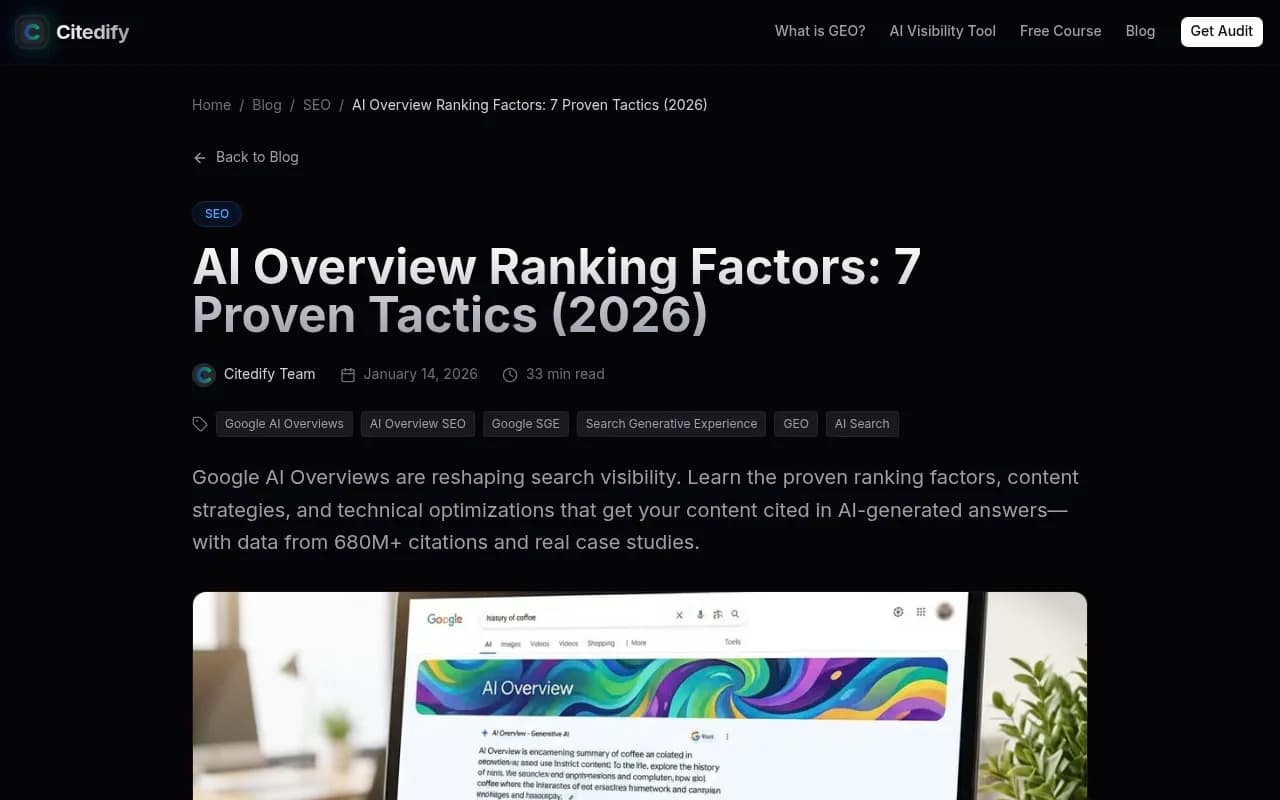
Before getting into ranking factors, it's worth understanding just how much the search results page has changed. Google AI Overviews now appear in over 60% of all searches as of 2025, up from 25% in mid-2024. Over 1 billion users encountered them by the end of 2024.
The format is also different from what came before. Unlike featured snippets, which pull from a single source, AI Overviews synthesize information from an average of 7.7 sources. They appear at position zero, above all organic results, with expandable sections and numbered footnotes. That multi-source structure is exactly why the citation game matters so much -- there are multiple slots to compete for, not just one.
One more number worth keeping in mind: 43% of AI Overview citations point back to Google's own properties, and nearly 30% of all citations go to the top 50 domains on the web. That concentration means newer or smaller sites face a steeper climb, but it's not insurmountable if you understand what Google's model is actually selecting for.
The 38% problem: why traditional rankings aren't enough
The drop in citations from top-ranked pages is the most important data point in this space right now. It means Google's AI isn't simply pulling from whoever ranks #1 -- it's making independent judgments about which sources best answer the query.
A Seer Interactive study analyzing 25.1 million impressions found that position 2 saw a 39% CTR decline year-over-year. An Ahrefs analysis of 300,000 searches confirmed an average 34.5% reduction in clicks to organic results when AI Overviews are present. For some high-traffic keywords, traffic dropped by as much as 64%.
The implication is clear: you can rank on page one and still be invisible in the result that most users actually read. The question is what determines whether Google's model picks your content over a competitor's.
The core ranking factors: what the data shows
1. Organic ranking is the floor, not the ceiling
Let's start with what is still true: 86% of AI Overview citations come from pages already ranking in the top 100 organically. You can't completely ignore traditional SEO. If Google hasn't indexed and ranked your page at all, it won't cite it.
But ranking in the top 10 doesn't give you a citation advantage over a page ranking 40th if that page is more semantically complete. The organic ranking is a prerequisite, not a predictor.
2. Semantic completeness
This is probably the factor that explains the 38% drop most directly. Google's Gemini model is evaluating whether a page actually answers the full question -- not just the primary keyword, but the related sub-questions, context, and nuances a user might need.
Pages that get cited tend to cover a topic comprehensively. That means addressing the main question, the follow-up questions, the edge cases, and the "why" behind the answer. Thin content that targets a keyword but doesn't fully satisfy the query intent gets passed over, even if it ranks well.
This is also where query fan-outs matter. A single search prompt branches into multiple sub-queries that the AI needs to answer. If your page only addresses the main query but not the sub-questions, you're less likely to be cited.
3. E-E-A-T signals
Experience, Expertise, Authoritativeness, and Trustworthiness have been part of Google's quality framework for years, but they carry more weight in AI Overview citations than in traditional rankings. The model appears to weight sources that demonstrate real-world expertise and verifiable credentials.
Practically, this means:
- Author bios with credentials and professional history
- Original data, research, or first-hand experience
- Citations from other authoritative sources
- Clear editorial standards and fact-checking processes
Sites that lack these signals -- even if they rank well -- are less likely to be pulled into an AI Overview. Google is essentially asking: "Would I trust this source to give my users accurate information?"
4. Content structure and schema markup
AI Overviews favor content that's easy to parse. Clear headers (H2, H3), concise paragraphs, and FAQ schema markup all make it easier for the model to extract and synthesize information.
FAQ schema is particularly worth implementing. Pages with structured Q&A markup give the AI a pre-formatted signal about what questions the content answers. Research suggests that pages with FAQ schema are cited more frequently for question-based queries, which make up a large share of AI Overview triggers.
Content length matters too, but not in the way you might expect. Extremely long pages aren't necessarily better. What matters is that the content is organized so the relevant answer is findable quickly. A 1,500-word page with clear headers often outperforms a 5,000-word wall of text.
5. Content freshness
AI Overviews show a clear preference for recently updated content, especially for queries where information changes over time. This isn't just about the publication date -- it's about whether the content reflects current reality.
Pages that haven't been updated in 18+ months are at a disadvantage for any query where the answer might have evolved. Regularly auditing and refreshing your most important pages is more valuable now than it was in traditional SEO.
6. Third-party presence and entity authority
This one is underappreciated. Google's model doesn't just evaluate your website in isolation -- it looks at your entity's presence across the web. Wikipedia entries, Reddit discussions, review platform profiles, and mentions in other authoritative publications all contribute to how the AI perceives your brand or content as a trustworthy source.
Reddit is particularly interesting here. Reddit discussions appear in AI Overview citations with surprising frequency, and they influence how the AI understands what real users think about a topic. If your brand or product is discussed positively in relevant subreddits, that signal feeds into your overall entity authority.
7. Multimodal content signals
Increasingly, AI Overviews incorporate images, videos, and structured data. Pages that include relevant images with descriptive alt text, video content, and structured data markup are better positioned as AI models become more multimodal in their source selection.
This isn't yet a dominant factor, but the trend is clear. Google's Gemini model is multimodal by design, and its source selection is beginning to reflect that.
What doesn't work (despite what you might have read)
A few tactics that circulate in SEO communities don't hold up against the data:
Keyword stuffing for AI queries. The model evaluates semantic meaning, not keyword density. Forcing exact-match phrases into content doesn't help and often hurts readability, which is itself a negative signal.
Chasing AI Overview triggers with thin content. Some teams have tried to create short, direct-answer pages specifically to get cited. These rarely work. The AI prefers comprehensive sources, not pages engineered to look like answer boxes.
Ignoring technical SEO. Page speed, crawlability, and proper indexing still matter. If Google's crawlers can't efficiently access and process your content, it won't be considered for citation regardless of quality.
The citation concentration problem
One uncomfortable reality: 43% of AI Overview citations go to Google's own properties (Google Maps, YouTube, Google Shopping, etc.), and nearly 30% of all external citations go to the top 50 domains on the web. That's a significant concentration.
For most brands, this means competing for the remaining 57% of citations -- and doing so against a long tail of other sites. The good news is that the remaining citations are distributed across a wide range of domains, and niche authority matters. A specialized site with deep expertise in a narrow topic can outcompete a general authority site for queries within that niche.
How to track whether you're actually getting cited
Traditional rank tracking tools don't capture AI Overview citations. Knowing your position 3 ranking tells you nothing about whether you're being cited in the Overview that appears above it.
Dedicated AI visibility tools are now necessary for any team that takes this seriously. Promptwatch tracks AI Overview citations alongside other AI search engines (ChatGPT, Perplexity, Claude, Gemini, and more), showing you which pages are being cited, how often, and what prompts trigger those citations. It also includes answer gap analysis to show you which queries competitors are cited for that you're not -- which is the most direct way to find content opportunities.

Other tools worth knowing about:
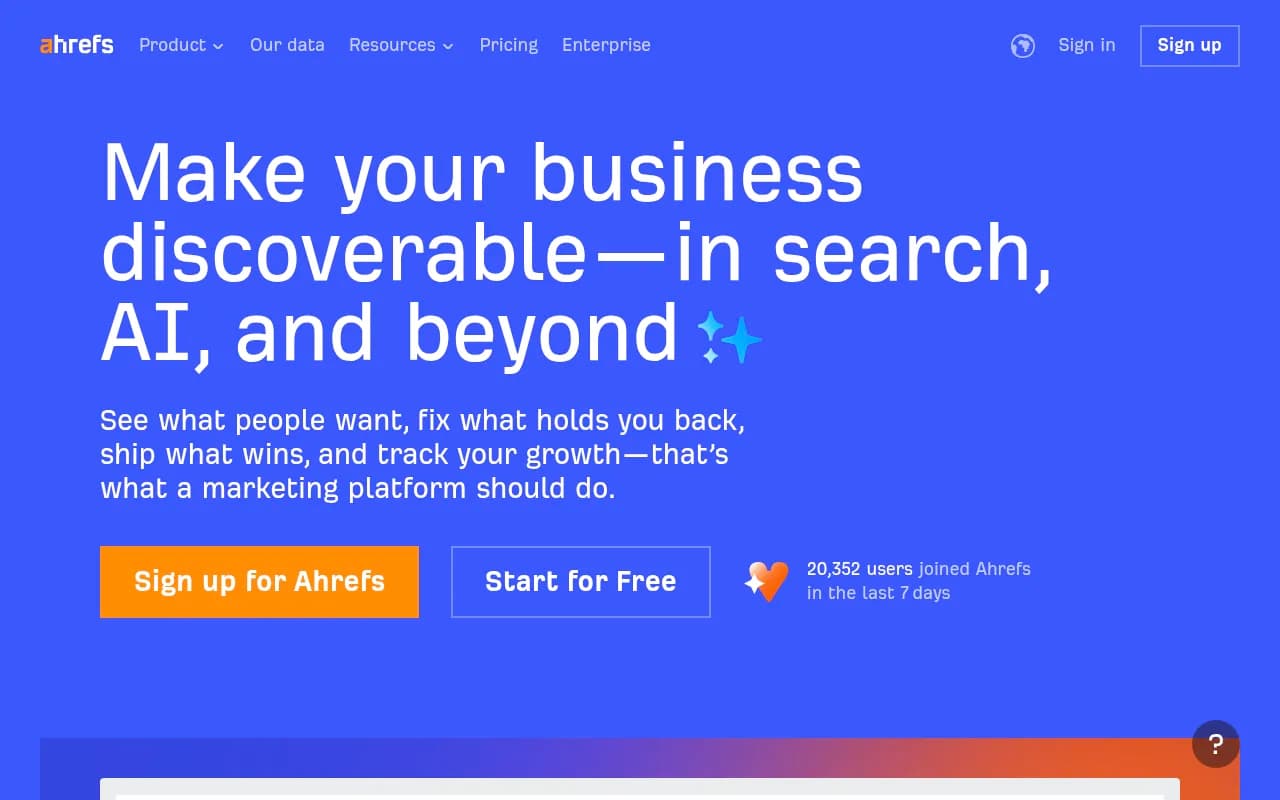
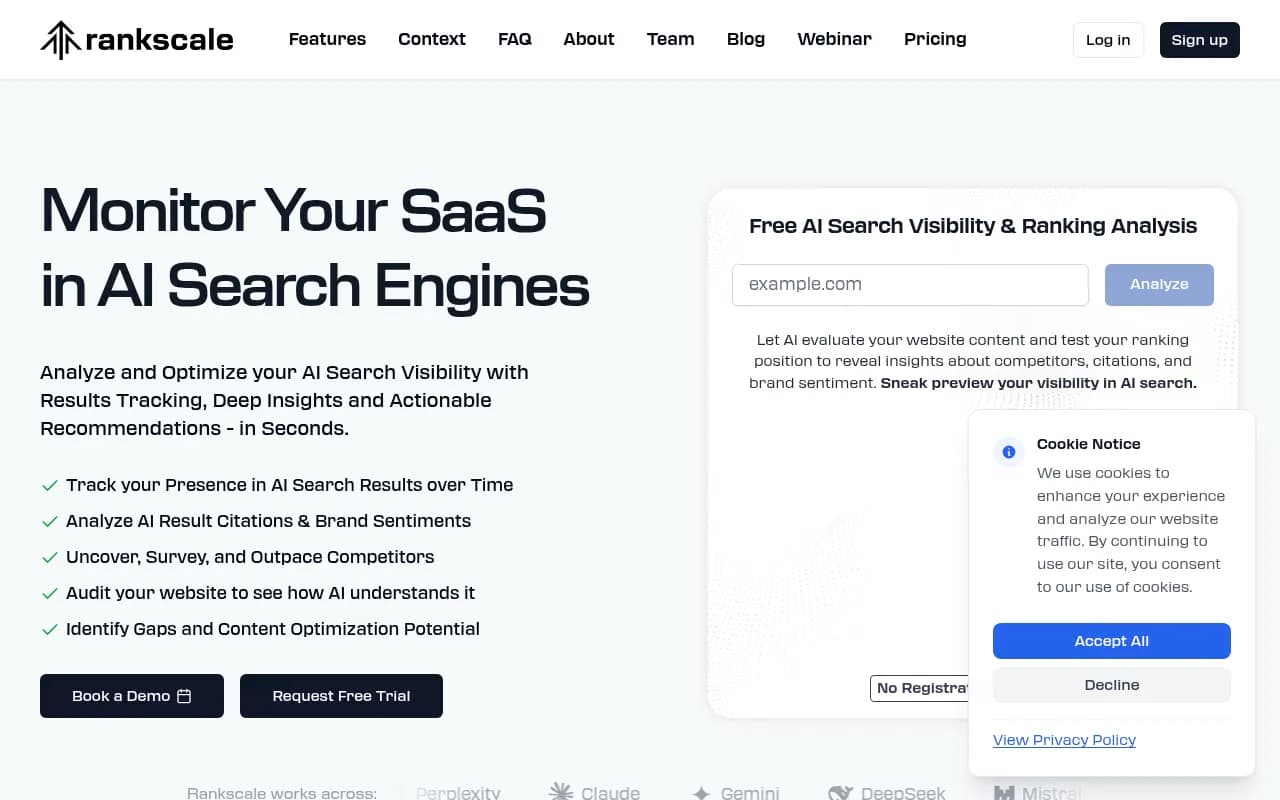
Here's a quick comparison of how these tools handle AI Overview tracking:
| Tool | AI Overview tracking | Content gap analysis | Citation source detail | Pricing |
|---|---|---|---|---|
| Promptwatch | Yes (10 AI models) | Yes | Page-level + crawler logs | From $99/mo |
| Semrush | Partial (fixed prompts) | Limited | Basic | From $139/mo |
| Ahrefs Brand Radar | Partial (fixed prompts) | No | Limited | Included in Ahrefs plans |
| Rankscale | Yes | No | Basic | From $49/mo |
| Thruuu | Yes (content teams) | No | Basic | From $29/mo |
The key difference between monitoring tools and optimization tools is whether they help you act on the data. Knowing you're not cited is only useful if you know why and what to change.
A practical framework for improving your AI Overview citations
Based on what the data shows, here's how to approach this systematically:
Audit your current citation status
Before changing anything, establish a baseline. Which of your pages are currently cited in AI Overviews? For which queries? This requires an AI visibility tool -- you can't get this data from Google Search Console alone.
Identify your highest-value gaps
Find the queries where competitors are cited but you're not, especially for topics where you have existing content. These are your highest-priority targets because you're already in the game -- you just need to improve your content to win the citation.
Improve semantic completeness on priority pages
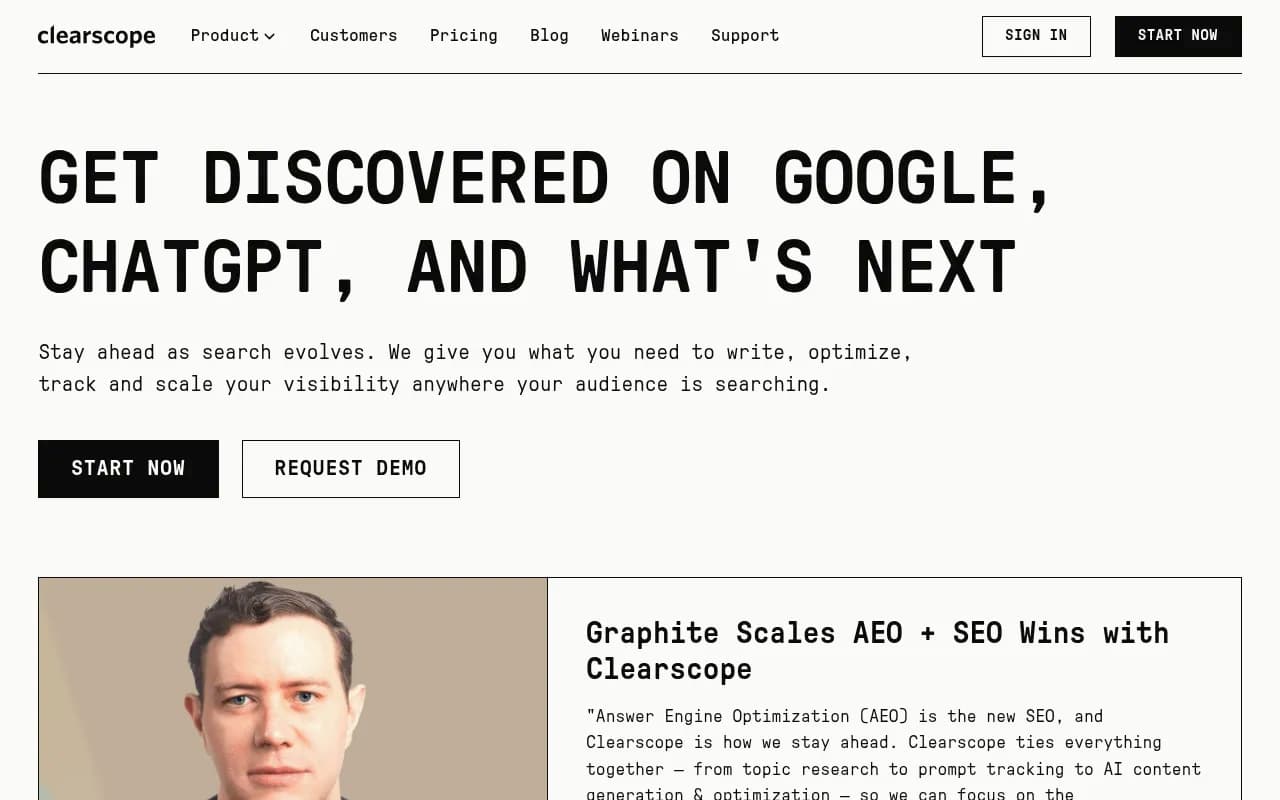
For each target page, map out the full question space. What sub-questions does a user asking this query also need answered? Use tools like Clearscope or Surfer SEO to identify semantic gaps, then add content that addresses them.
Add structure and schema
Implement FAQ schema on pages that answer question-based queries. Ensure headers are logical and descriptive. Break up long paragraphs. Make the content easy for a model to parse.
Build your entity presence
Publish original research that other sites will cite. Contribute to industry publications. Ensure your Wikipedia presence (if applicable) is accurate and up to date. Engage in relevant Reddit communities genuinely -- not with promotional content, but with real expertise.
Refresh stale content
Audit pages that haven't been updated in 12+ months and are targeting queries where information changes. Update statistics, examples, and recommendations. Add a "last updated" date that's visible to both users and crawlers.
Track and iterate
Set up monitoring for your target queries and review citation data monthly. Look for patterns: which types of content updates lead to new citations? Which queries remain stubbornly resistant? Adjust your approach based on what the data shows, not what you assume.
The bottom line
The 38% citation rate from top organic rankings is the clearest signal that AI Overviews operate by different rules than traditional search. Ranking well is still necessary, but it's no longer sufficient.
The sites getting cited consistently are the ones that treat AI Overview optimization as a distinct discipline: comprehensive content that addresses full query intent, strong E-E-A-T signals, clean structure, fresh information, and a real presence across the web beyond their own domain.
The brands that figure this out early will compound their advantage. AI Overviews are now the first thing most users read for 60%+ of queries -- and that share is still growing.