Key takeaways
- Traditional organic traffic metrics miss 60% of search interactions that now happen in AI Overviews, ChatGPT, and other AI engines without clicks
- Revenue attribution requires tracking three distinct paths: assisted conversions from AI recommendations, direct traffic from AI citations, and brand search lift after AI exposure
- Modern attribution stacks combine AI crawler logs, UTM parameters for AI referrals, server-side tracking, and revenue system integration to connect visibility to dollars
- The shift from vanity metrics (traffic, rankings) to revenue metrics (customer acquisition cost, lifetime value by source, revenue per AI citation) is no longer optional in 2026
You're tracking organic traffic growth while your CFO is asking why revenue hasn't moved. Your team celebrates first-page rankings while qualified leads stay flat. The dashboard shows 47% more visitors, but the sales pipeline looks identical to last quarter.
This disconnect isn't a reporting problem. It's a measurement architecture problem.
The search landscape underwent a structural shift over the past 18 months. AI Overviews now appear in 47% of Google searches, reaching 2 billion users monthly. Zero-click searches account for 60% of all queries. ChatGPT serves 700 million weekly active users who increasingly perform search-like queries inside the platform rather than Google. Perplexity, Claude, and other AI engines are fragmenting search behavior across surfaces that don't show up in Google Search Console.
Traditional traffic metrics were built for a world where visibility meant clicks and clicks meant conversions. That world is gone. In 2026, visibility happens in AI-generated answers. Traffic comes from citations you can't see in analytics. Conversions start with AI recommendations that never touch your website.
The companies winning right now aren't tracking more metrics. They're tracking different metrics -- ones that connect AI visibility directly to revenue outcomes.
Why traditional traffic attribution is broken
The measurement crisis in search stems from three concurrent structural changes.
AI-generated answers now mediate most informational searches. When Google's AI Overviews appear (which they do in nearly half of all searches), click-through rates drop from 15% to 8%. Twenty-six percent of searches end without any click when AI Overviews are present. Users get synthesized answers before considering organic listings. The relationship between visibility and traffic fundamentally changed.
Search behavior fragmented across multiple surfaces. Users perform search-like queries across Google, ChatGPT, Perplexity, Microsoft Copilot, and other AI assistants. AI search platforms experienced 527% year-over-year growth. Google Search Console captures only a portion of total search visibility. Historical benchmarks became less reliable for forecasting.
Attribution models assume linear customer journeys. Traditional last-click or first-click attribution breaks down when customers interact with AI recommendations, read citations in ChatGPT responses, then visit your site days later via direct traffic or branded search. The touchpoint that drove awareness (an AI citation) gets zero credit. The touchpoint that captured demand (branded search) gets all the credit.
Most marketing analytics tools track clicks, sessions, and conversions but don't connect to actual revenue systems. Your ERP, accounting software, and CRM hold the revenue data. Your analytics platform shows traffic. The gap between these systems is where attribution dies.
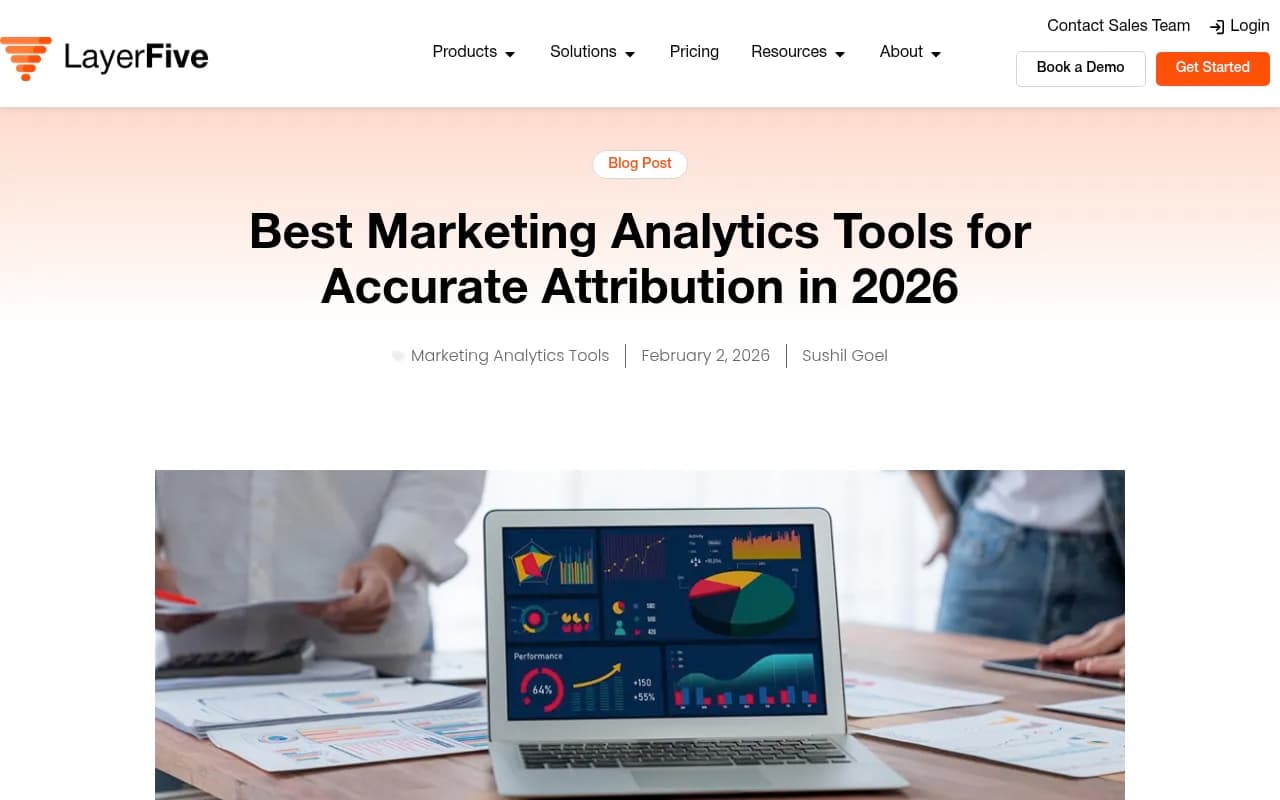
According to recent industry analysis, 47% of marketing spend ($66+ billion annually) is wasted due to broken attribution. A 2021 Adverity survey revealed that 51% of CTOs and chief data officers don't trust the data they receive from marketing platforms. This trust deficit costs companies millions in misallocated budget and missed opportunities.
The three revenue paths from AI visibility
AI visibility impacts revenue through three distinct monetization paths. Each requires different tracking mechanisms.
Assisted conversions from AI recommendations
AI engines recommend products, services, and brands in response to buying-intent queries. A user asks ChatGPT "best project management software for remote teams" and receives a list with your product. They don't click immediately. They research, compare, then convert three days later via branded search.
Traditional attribution gives credit to the branded search. The AI recommendation that created awareness gets ignored.
How to track it: Implement post-purchase surveys asking "How did you first hear about us?" with "AI chatbot recommendation" as an option. Track branded search volume spikes correlated with AI visibility increases. Monitor direct traffic surges after major AI citation wins.
Direct traffic from AI citations
Some AI engines (Perplexity, Claude, newer ChatGPT features) include clickable citations in responses. Users click through to verify claims, read more detail, or take action. This traffic often appears as direct or referral traffic in analytics, not organic search.
How to track it: Use UTM parameters in URLs you control (social profiles, directory listings, press releases) that AI engines might cite. Monitor referral traffic from perplexity.ai, chatgpt.com, and other AI domains. Check server logs for AI crawler user agents followed by human visits.
Brand search lift after AI exposure
Users exposed to your brand in AI responses don't always click immediately. They remember the name, then search for it later when ready to buy. This creates a lag between visibility and conversion that traditional attribution misses entirely.
How to track it: Establish baseline branded search volume, then monitor for statistically significant increases. Correlate branded search spikes with AI visibility gains (tracked via tools like Promptwatch). Use brand lift studies comparing users exposed to AI mentions vs control groups.

Building a modern attribution stack
Connecting AI visibility to revenue requires a four-layer tracking architecture.
Layer 1: AI crawler and citation tracking
Before you can attribute revenue to AI visibility, you need to know when and how AI engines interact with your content.
AI crawler logs show which pages AI engines (ChatGPT, Claude, Perplexity) are reading, how often they return, and what errors they encounter. This data reveals what content AI models have access to when generating responses.
Citation monitoring tracks when your brand, products, or content appear in AI-generated responses. Tools like Promptwatch monitor 10+ AI models across thousands of prompts, showing exactly when and how you're being cited.
Other platforms in this space include:



| Tool | AI models tracked | Citation tracking | Crawler logs | Starting price |
|---|---|---|---|---|
| Promptwatch | 10 (ChatGPT, Claude, Perplexity, Gemini, etc.) | Yes | Yes | $99/mo |
| Profound | 6 | Yes | No | $299/mo |
| AthenaHQ | 8+ | Yes | No | $149/mo |
| Otterly.AI | 5 | Yes | No | $49/mo |
Layer 2: Traffic source identification
AI-driven traffic rarely shows up correctly in Google Analytics. It appears as direct traffic, referral traffic from unknown domains, or gets lost entirely.
UTM parameter strategy for AI referrals:
- Add
utm_source=ai_citation&utm_medium=organic&utm_campaign=perplexityto URLs in content AI engines frequently cite - Use distinct UTM codes for different AI platforms (ChatGPT vs Perplexity vs Claude)
- Track these parameters in your CRM so you can connect them to closed deals later
Server-side tracking captures referrer data that client-side JavaScript misses. When users click citations in AI responses, the referrer header often contains the AI platform domain. Server logs preserve this data even when analytics scripts fail to fire.
AI-specific referral domains to monitor:
- chatgpt.com
- perplexity.ai
- claude.ai
- gemini.google.com
- copilot.microsoft.com
Layer 3: Revenue system integration
The attribution gap exists because traffic data lives in analytics platforms while revenue data lives in CRMs, ERPs, and accounting systems. Closing this gap requires connecting these systems.
CRM integration links website sessions to actual deals. When a lead converts to a customer, you can trace back through their entire journey -- including the AI citation that started it.
Implementation:
- Pass UTM parameters and traffic source data into your CRM as custom fields on lead records
- Use hidden form fields to capture this data on form submissions
- Connect closed deals back to original traffic sources via CRM reporting
Revenue attribution by traffic source shows which channels drive actual dollars, not just conversions. A channel that generates 100 conversions worth $10,000 is less valuable than a channel generating 20 conversions worth $50,000.
Customer lifetime value (LTV) by source reveals which traffic sources bring high-value customers vs one-time buyers. AI-driven traffic might convert at lower rates but bring customers with 3x higher LTV.
Layer 4: Correlation analysis
The final layer connects AI visibility metrics to downstream revenue outcomes through statistical correlation.
Methodology:
- Track AI visibility score over time (citations, mentions, recommendation frequency)
- Track revenue metrics over the same period (qualified leads, closed deals, revenue)
- Look for lagged correlations (AI visibility increase in Week 1 → revenue increase in Week 3-4)
- Control for other variables (paid spend, seasonality, product launches)
This analysis reveals the true ROI of AI visibility efforts. If a 20% increase in AI citations correlates with a 12% increase in qualified leads four weeks later, you can model the revenue impact of visibility improvements.
The metrics that actually matter in 2026
Retire these vanity metrics:
- Total organic traffic (doesn't distinguish quality or source)
- Average position (personalized SERPs make this meaningless)
- Domain authority (correlates poorly with AI citations)
- Bounce rate (AI-driven traffic behaves differently)
- Time on site (AI users often know exactly what they need)
Track these revenue-connected metrics instead:
AI visibility metrics:
- Citation frequency (how often you're mentioned in AI responses)
- Citation context (positive recommendation vs neutral mention vs comparison)
- Share of voice vs competitors in AI responses
- Prompt coverage (percentage of relevant prompts where you appear)
Traffic quality metrics:
- Revenue per visitor by traffic source
- Qualified lead rate by traffic source
- Customer acquisition cost (CAC) by channel
- Time to conversion by first touch source
Revenue outcome metrics:
- Revenue attributed to AI-driven traffic (direct + assisted)
- Customer lifetime value by acquisition source
- Revenue per AI citation (total revenue / citation count)
- Payback period by traffic source
Implementing attribution tracking: A practical roadmap
Month 1: Foundation
Week 1-2: Audit current tracking
- Document all existing analytics implementations
- Identify gaps in traffic source data
- Map customer journey from awareness to purchase
- List all systems holding revenue data (CRM, ERP, payment processors)
Week 3-4: Implement AI crawler tracking
- Add server-side logging for AI crawler user agents
- Set up citation monitoring with a platform like Promptwatch
- Create baseline reports for current AI visibility
Month 2: Traffic source identification
Week 1-2: UTM parameter strategy
- Design UTM taxonomy for AI referrals
- Add UTM parameters to all controllable URLs (social profiles, directories, press releases)
- Implement hidden form fields to capture UTM data
Week 3-4: Referral tracking
- Configure analytics to properly attribute AI platform referrals
- Set up custom channel groupings for AI traffic
- Create dashboards showing AI traffic separately from traditional organic
Month 3: Revenue integration
Week 1-2: CRM connection
- Map traffic source data into CRM custom fields
- Test data flow from website → CRM → closed deals
- Create reports showing revenue by original traffic source
Week 3-4: Analysis and optimization
- Run correlation analysis between AI visibility and revenue
- Calculate CAC and LTV by traffic source
- Identify which AI platforms drive highest-value customers
- Adjust content and optimization strategy based on revenue data
Common attribution challenges and solutions
Challenge: AI traffic appears as direct traffic
Solution: Implement server-side tracking to capture referrer headers that client-side JavaScript misses. Use UTM parameters on all URLs you control that AI engines might cite.
Challenge: Long lag between AI exposure and conversion
Solution: Use lagged correlation analysis (AI visibility in Week 1 → conversions in Week 4). Implement post-purchase surveys to capture self-reported attribution. Track branded search volume as a leading indicator.
Challenge: Multiple touchpoints in customer journey
Solution: Use multi-touch attribution models that give partial credit to all touchpoints, not just last click. Weight AI citations higher when they occur early in the journey (awareness stage).
Challenge: AI citations don't always include clickable links
Solution: Track brand search lift as a proxy for AI-driven awareness. Monitor direct traffic spikes correlated with AI visibility increases. Use brand lift studies to measure impact.
Challenge: Revenue data lives in separate systems
Solution: Integrate CRM with analytics via native integrations, Zapier, or custom API connections. Use customer data platforms (CDPs) to unify data across systems.
Tools for AI traffic attribution
The modern attribution stack requires multiple specialized tools working together.
AI visibility and citation tracking:
- Promptwatch -- tracks citations across 10 AI models, includes crawler logs and content gap analysis
- Profound -- strong feature set with persona targeting
- AthenaHQ -- monitors 8+ AI engines with prompt tracking
- Otterly.AI -- affordable monitoring for smaller teams
Analytics and attribution platforms:
- Google Analytics 4 (with proper configuration for AI referrals)
- Mixpanel (for product analytics and user journey tracking)
- Amplitude (for behavioral analytics and cohort analysis)
- Heap (for automatic event tracking)
CRM and revenue tracking:
- HubSpot (marketing automation + CRM with revenue attribution)
- Salesforce (enterprise CRM with custom attribution models)
- Pipedrive (sales-focused CRM with deal tracking)
- Close (CRM built for tracking revenue by source)
Integration and automation:
- Zapier -- connects analytics to CRM without code
- Make (formerly Integromat) -- visual workflow automation
- Segment -- customer data platform that unifies tracking
Case study: Connecting AI visibility to revenue
A B2B SaaS company selling project management software implemented full AI attribution tracking in Q4 2025. Here's what they learned.
The setup:
- Implemented Promptwatch to track citations across ChatGPT, Claude, Perplexity, and Gemini
- Added UTM parameters to all directory listings and social profiles
- Connected Google Analytics to HubSpot CRM with custom fields for traffic source
- Set up server-side logging to capture AI referrer data
The findings:
- AI-driven traffic (direct + referral from AI platforms) accounted for 18% of total traffic but 31% of qualified leads
- Customer acquisition cost for AI-driven leads was 43% lower than paid search
- Customers acquired via AI citations had 2.1x higher lifetime value than average
- There was a 3-week lag between AI visibility increases and lead volume increases
- ChatGPT citations drove the highest conversion rate (8.2%) vs Perplexity (4.1%)
The outcome:
- Shifted content strategy to prioritize topics with high AI citation potential
- Increased investment in AI visibility optimization by 300%
- Reduced paid search spend by 25% and reallocated to AI-focused content
- Revenue from AI-attributed sources grew 240% over six months
The future of attribution in an AI-first world
Attribution is getting harder before it gets easier. As AI engines proliferate and customer journeys fragment further, connecting visibility to revenue requires more sophisticated tracking, not less.
The companies that win will be the ones that stop optimizing for vanity metrics (traffic, rankings, domain authority) and start optimizing for revenue metrics (CAC, LTV, revenue per citation). They'll build attribution stacks that connect AI visibility to actual dollars. They'll use data to make strategic decisions about where to invest.
The shift from activity metrics to outcome metrics is no longer optional. Your CFO doesn't care about organic traffic growth. They care about revenue growth. The sooner you connect the two, the sooner you can prove SEO's value and secure the budget you need.
Start with the foundation: implement AI crawler tracking and citation monitoring. Add UTM parameters to capture AI referrals. Connect your analytics to your CRM. Run correlation analysis between visibility and revenue. Build the attribution stack that lets you say with confidence: "This AI visibility increase drove $X in revenue."
That's the conversation that gets budgets approved in 2026.