Key takeaways
- AEO work is four jobs, not one: find the questions, shape pages that answer them, publish, then check who gets cited. Most tools cover only one or two.
- Most roundups are written by vendors who rank themselves first. HubSpot and Conductor both do this. Treat their rankings as one input, not a verdict.
- Promptwatch Data shows product pages (22.4%) and landing pages (16.8%) get the most ChatGPT citations, so content teams should not spend all their time on blog posts.
- Product pages, how-tos and listicles have a half-life of about 74-77 days in ChatGPT. Plan scheduled refreshes.
- Pick tools by workflow gap. A pure tracker will not fix a content problem.
Why content teams need a different AEO shortlist
Most AEO tool roundups are written for a CMO or an SEO lead. They ask: can this thing track my brand across ChatGPT, Gemini and Perplexity? That's a fair question, but it isn't the one an editor asks on Monday morning. An editor wants to know what to write, how to structure it, whether it got published, and whether it worked.
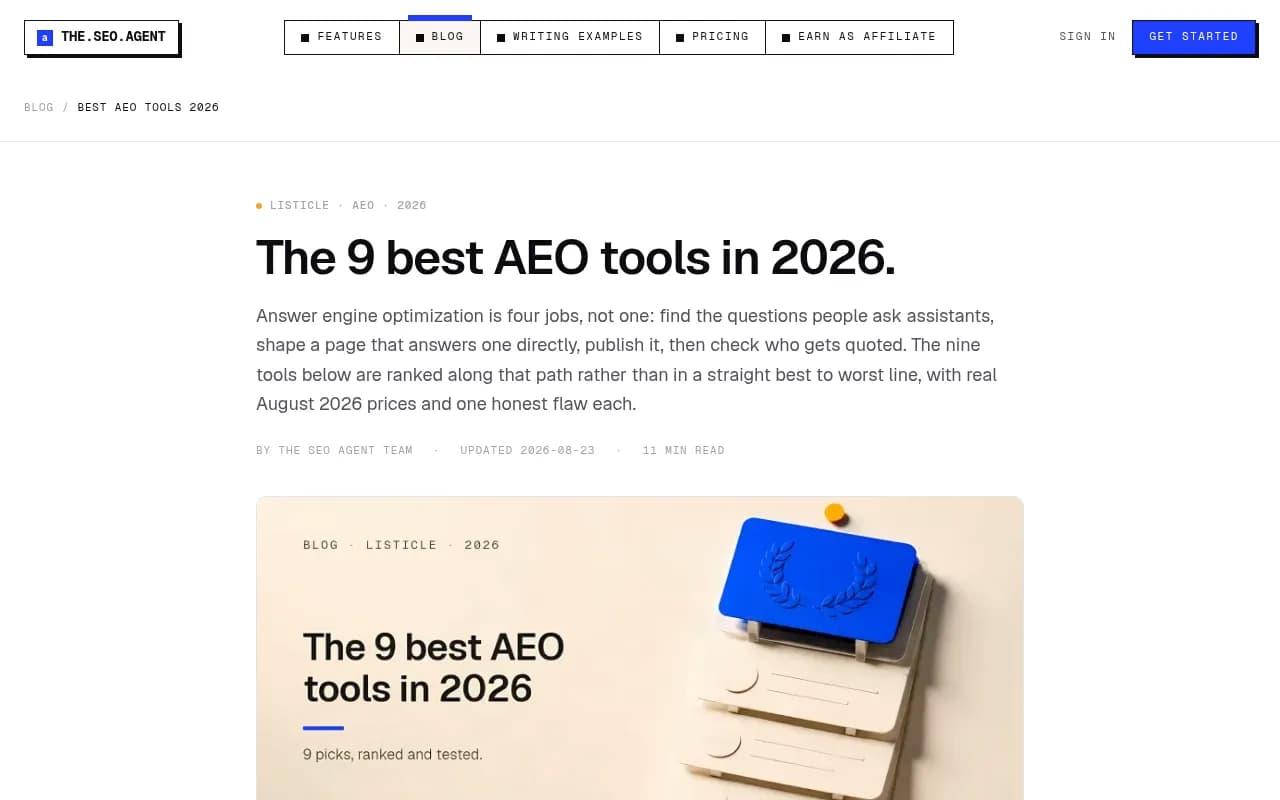
The SEO Agent's roundup made a point I agree with: most AEO lists are tracker lists with a new label. They show eight dashboards that all answer "are we mentioned?" and none that change the answer. So I've organized this guide along the editorial workflow instead of a straight best-to-worst ranking.
A disclosure up front. This site is published by 1001 SEO Media, an agency that uses Promptwatch as its AI visibility platform. I mention Promptwatch where it fits and I'll say plainly where other tools are the better pick. Also, I haven't run every tool below through a paid trial for this piece. Where I cite pricing or claims, I attribute them to the vendor or roundup that published them, and you should confirm on each vendor's pricing page.
The four stages of an AEO editorial workflow
Here is the workflow I used to evaluate tools:
- Question research. What are people actually asking assistants, and which of those prompts matter commercially?
- Answer structuring. Briefs and drafts built so a model can lift a direct answer.
- Publishing. Getting the page live in the CMS without a week of handoffs.
- Verification. Did the page get crawled, cited and clicked? If not, why?
A tool can be excellent at stage 4 and useless at stage 2. That's fine, as long as you know it going in. The failure mode is buying a stage-4 dashboard and expecting it to produce stage-2 results.
What the citation data says about what to write
Before picking tools, it helps to know what you're optimizing for. Promptwatch's data on ChatGPT citations by content type (Sep 28 to Oct 4, 2026) breaks down what the model actually cites. The full numbers are in the content type report.
| Content type | Share of ChatGPT citations |
|---|---|
| Product pages | 22.4% |
| Landing pages | 16.8% |
| Listicles | 13.6% |
| How-tos | 8.7% |
| Docs | 7.5% |
| General articles | 6.1% |
| Comparisons | 5.9% |
| News | 5.7% |
| FAQ pages | 3.3% |
| Reviews | 1.7% |
Two things jump out. First, 39% of citations go to pages that describe what a company sells. Content teams that only publish thought-leadership blog posts are fishing in the smaller pond. Second, the split changes by prompt intent. For commercial prompts, product pages hit 26.0%, landing pages 20.6% and listicles 15.0%. For informational prompts, how-tos (10.7%) and docs (8.5%) climb above their overall share.
The practical read: map each piece of content to a prompt intent before you brief it. A comparison page and a how-to are different jobs.
Plan for decay
The second dataset matters more for workflow. Promptwatch's content half-life report tracked pages ChatGPT cited on July 6, 2026 through Oct 4, 2026.
- Landing pages and docs held up best: 78% and 76% still cited after 30 days, 69% and 67% after 60.
- Product pages, reviews and how-tos had a half-life of roughly 74-77 days, with about 55% still cited at day 60.
- Listicles kept about 60% at day 60.
- News decayed fastest. Half of cited news pages were gone after 36 days, and almost a quarter were never cited again after day 0.
So an editorial calendar built only around new posts is wrong for AEO. You need a refresh slot every couple of months for how-tos, listicles and product pages, and you should treat news as a short burst. That requirement should shape which tools you buy: you want something that tells you which pages are slipping.
Stage 1: question research
This is the cheapest stage to get right and the one teams skip. You want real questions, not just keywords.
- AlsoAsked (free credits, then about $12/month per The SEO Agent's roundup) is a lightweight way to see People Also Ask trees. It isn't in our catalog, so check its site directly.
- Prompt-level research inside a visibility platform. Tools like Promptwatch pull prompt volumes, difficulty and query fan-outs, which show the actual web searches an AI runs per response. That is closer to what the model will retrieve than a keyword list.

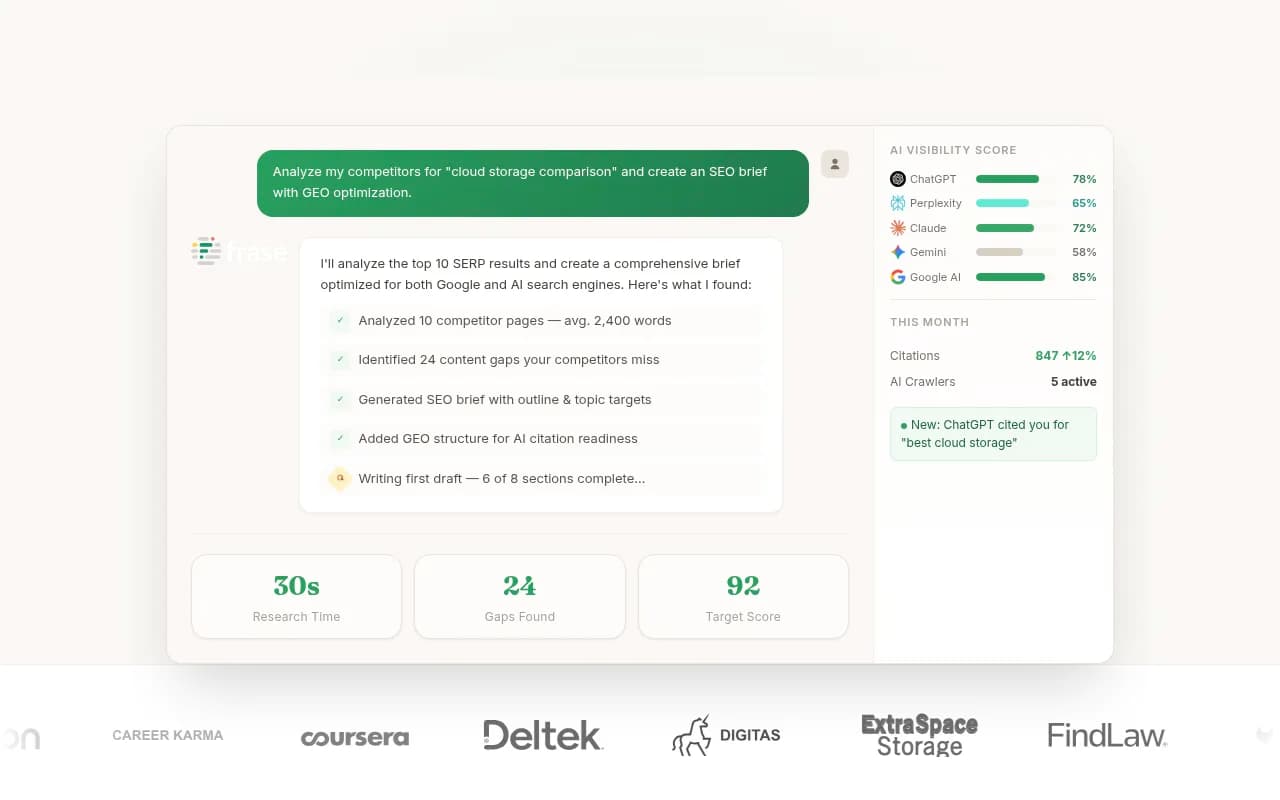
- Frase is aimed at research and briefs from SERP and question data.
For a quick, free read on fan-outs, Promptwatch also has a ChatGPT query fan-out generator that costs nothing to try.
Stage 2: answer structuring and briefs
This is where traditional content optimizers are catching up. They score drafts against competing pages, and several now add AI-visibility angles.
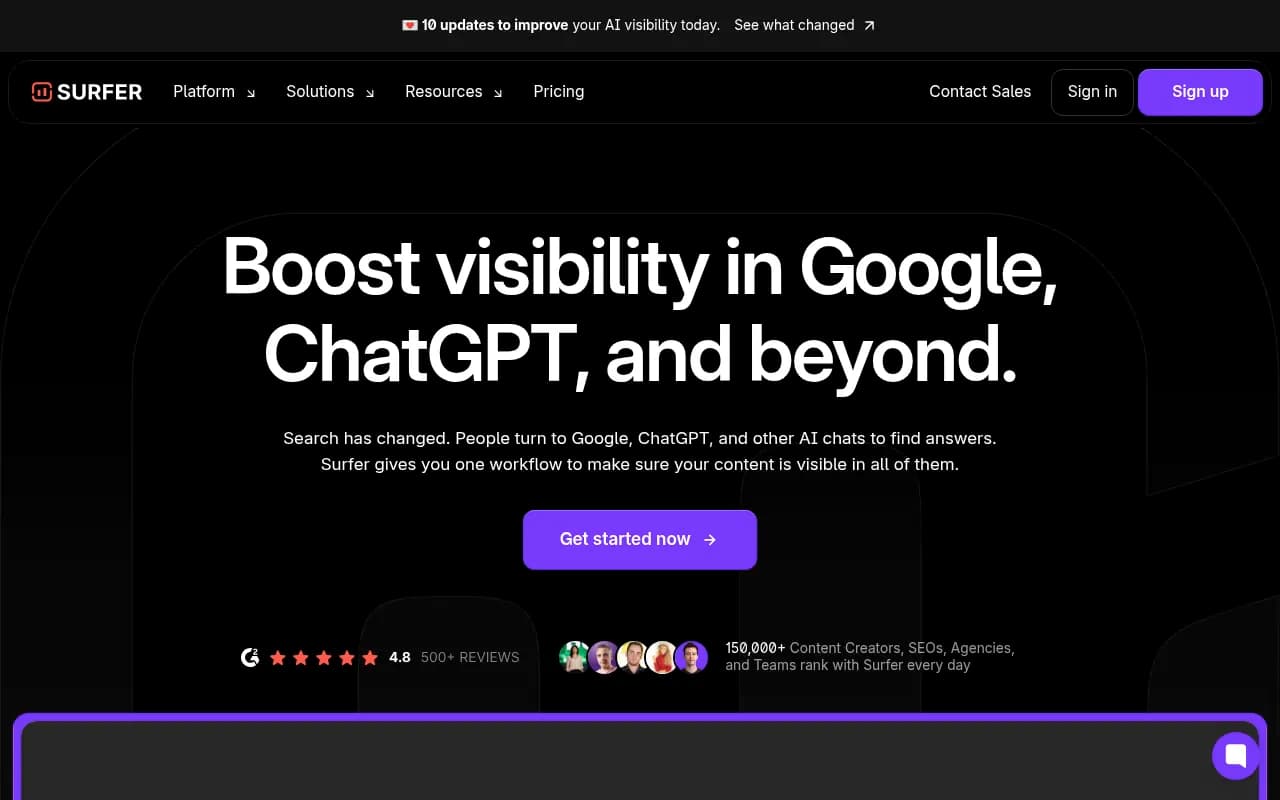

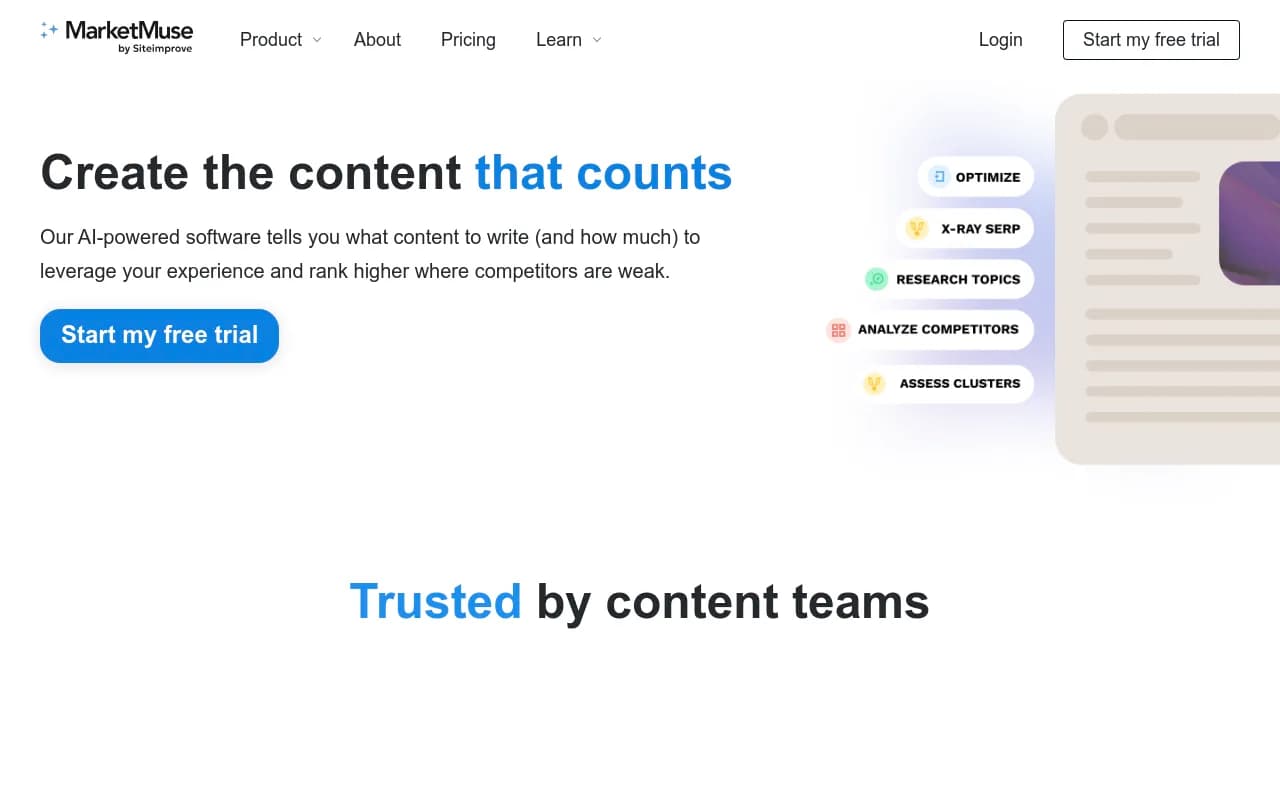
Surfer, Clearscope and MarketMuse are mature, and editors already know how to work in them. Conductor's roundup includes Surfer SEO in its enterprise list. The caveat is that these optimize against what ranks in Google. AI answers pull from a different, sometimes wider, set of sources. Almost half of ChatGPT responses cite 10 or more unique domains (Promptwatch Data, Sep 28 to Oct 4, 2026), so a brief that mirrors only the top three Google results misses most of the sources the model reads.
A rough rule: use a classic optimizer for on-page quality, and use a GEO tool's citation data to decide which competitor pages the model actually favors.
Stage 3: publishing
This is where most workflows leak. A brief gets approved, the draft sits in a doc, and the CMS push happens two weeks later.
Tools that write and publish:
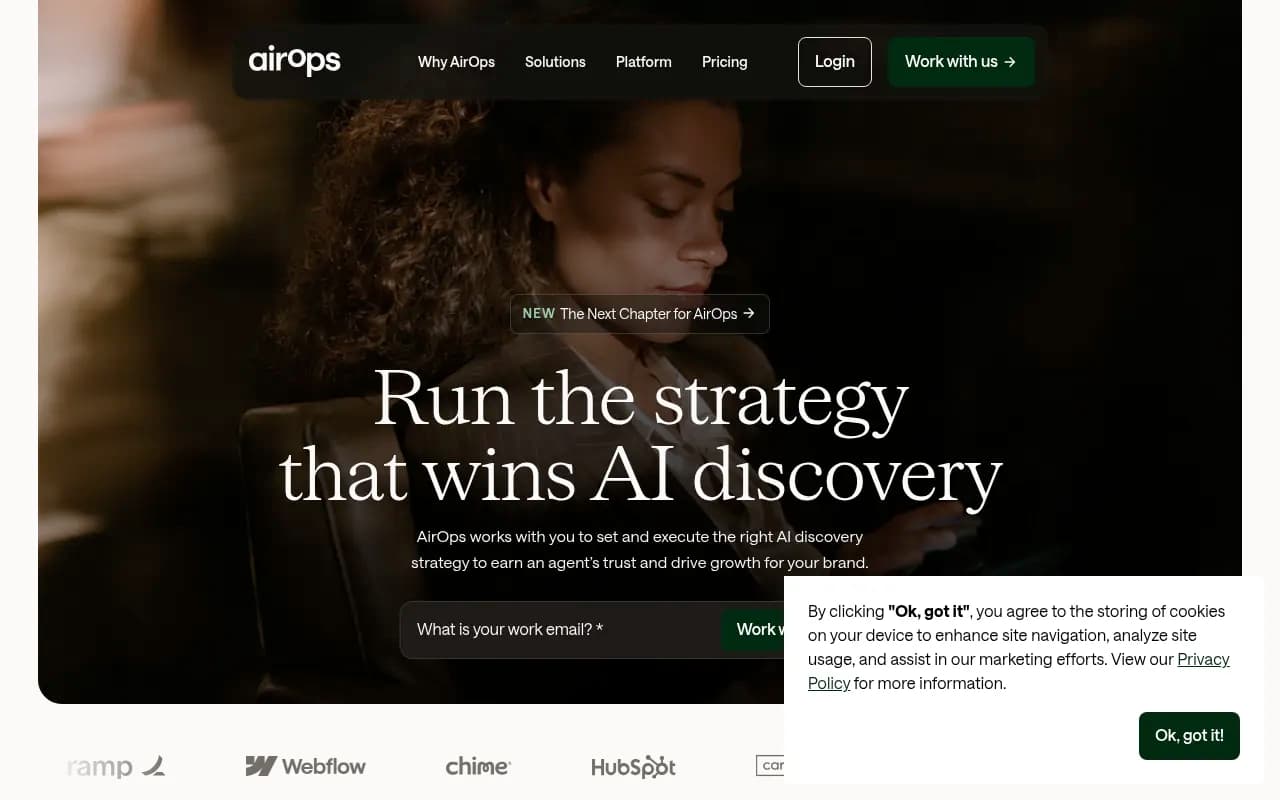
AirOps is a content engineering platform with a workflow builder. Venture Harbour's head-to-head test described it as built for teams starting to produce content who want to go from zero to publishable fast. That matches what I'd expect: it is strong on production, but it doesn't have a crawler-log or citation layer of its own to tell you if the content worked.
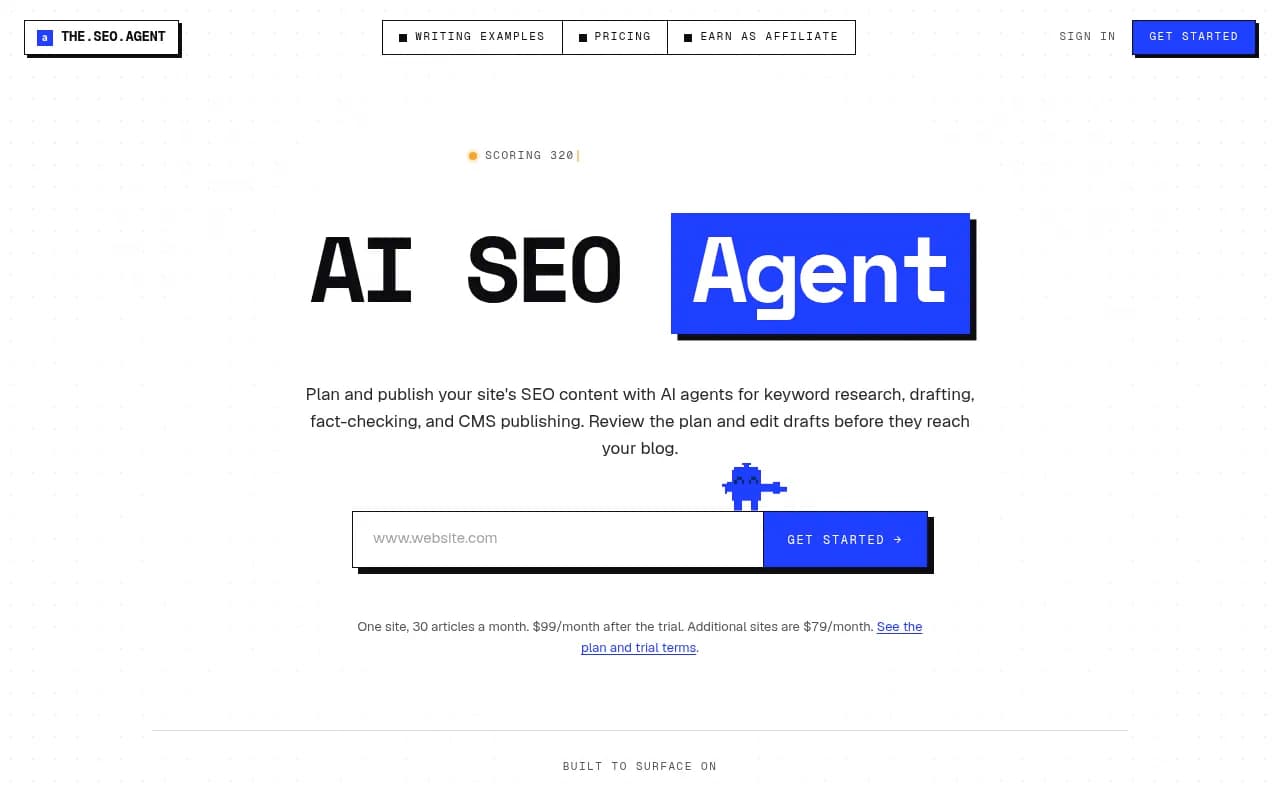
TheSEOAgent publishes one source-checked article a day at $99/month flat, per its own roundup. That is a vendor claim, and a daily cadence suits a narrow set of sites. Read a sample before committing.
Promptwatch's Content Agent takes the other route: it plans, writes and publishes against visibility gaps it finds in your tracked prompts, pushing to WordPress, Webflow or Framer on a schedule you control, with a review inbox if you want a human to approve. It is included from the Business plan ($579/month). The reason I'd weigh it for editorial teams is the closed loop. The published page is tracked through crawls, citations and traffic, and underperformers come back as refresh suggestions, which is exactly what the half-life data says you need. Read more on the Content Agents page.
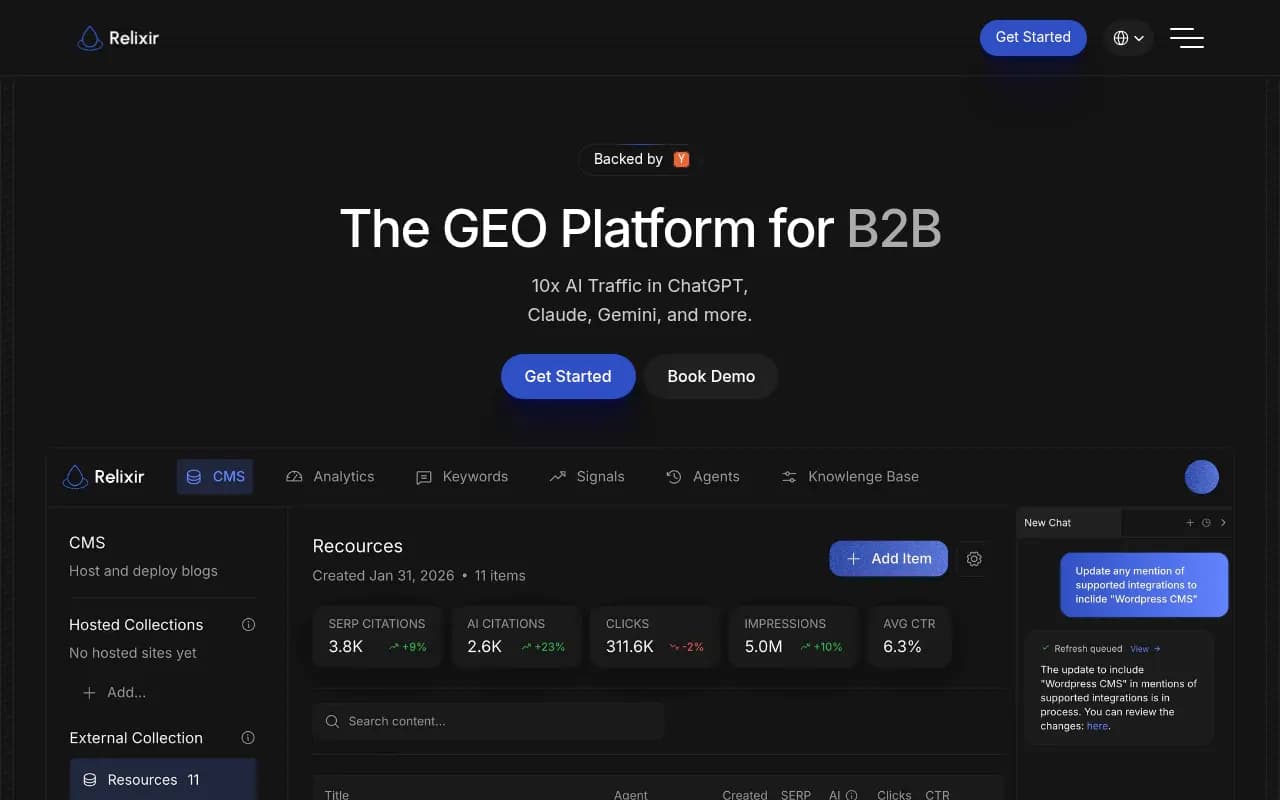
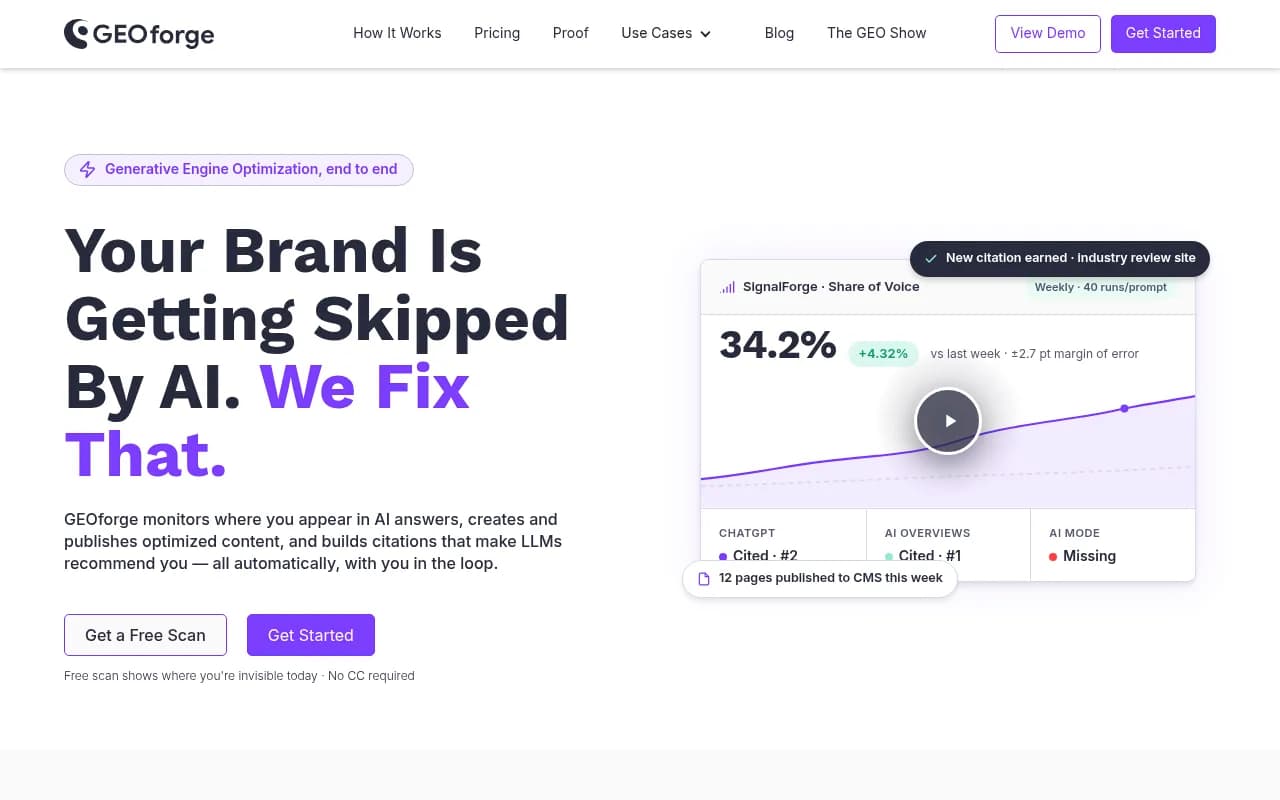
Other options in the "track and publish" group include Relixir, Open Forge and GEOforge, listed in our catalog. I haven't verified their output quality, so treat them as ones to trial.
Stage 4: verification and tracking
This is the most crowded category. Almost every tool in the catalog lives here. The differences that matter for content teams:
- Does it track the real interfaces of the AI engines or only API outputs? User-facing answers can differ.
- Does it show which of your pages were cited, not just whether the brand was mentioned?
- Does it show whether AI crawlers can read the page at all?
- Does it flag pages that are decaying?
Trackers compared
| Tool | Positioning | Pricing note | Content team fit |
|---|---|---|---|
| Promptwatch | Monitoring plus action: content gaps, Content Agent, crawler logs, page tracking | From $95/month (Essential); Content Agent from Business at $579/month | Teams that want tracking and production in one loop |
| HubSpot AEO | Brand visibility, prompt tracking, recommendations | From $50/month, 28-day trial (vendor claim) | HubSpot shops that want CRM attribution |
| Profound | Enterprise monitoring depth | Enterprise pricing, confirm with vendor | Large brands with analyst capacity |
| Peec AI | Multi-language tracking | Check vendor | Marketing teams, per The SEO Agent |
| Otterly.AI | Affordable monitoring | From $29/month (per The SEO Agent) | Small teams on a budget |
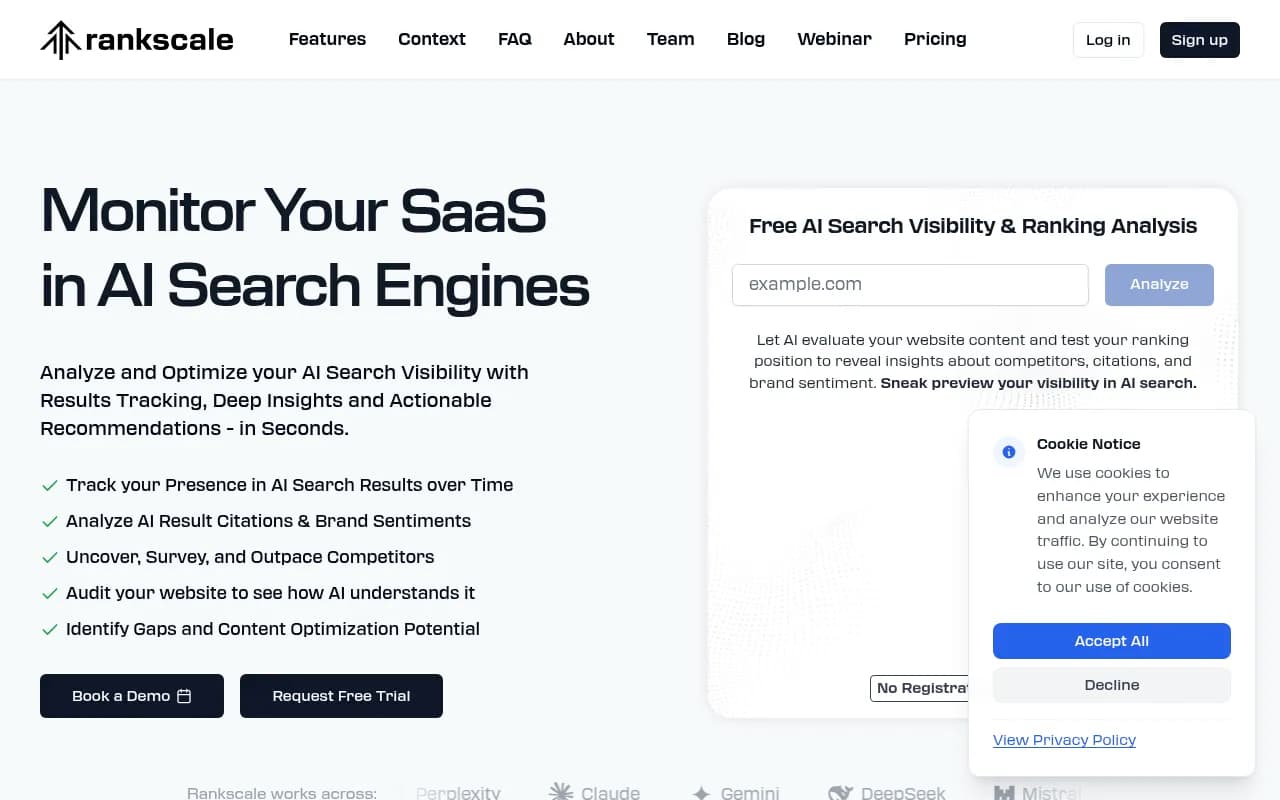
| Rankscale | Wide engine list, low entry price | About 20 euros (per The SEO Agent) | Budget coverage |
| Conductor | Enterprise platform tying visibility to content and technical health | Enterprise | Large SEO orgs already on Conductor |
| Semrush | SEO suite with AI tracking added | Check vendor | Teams already in Semrush |
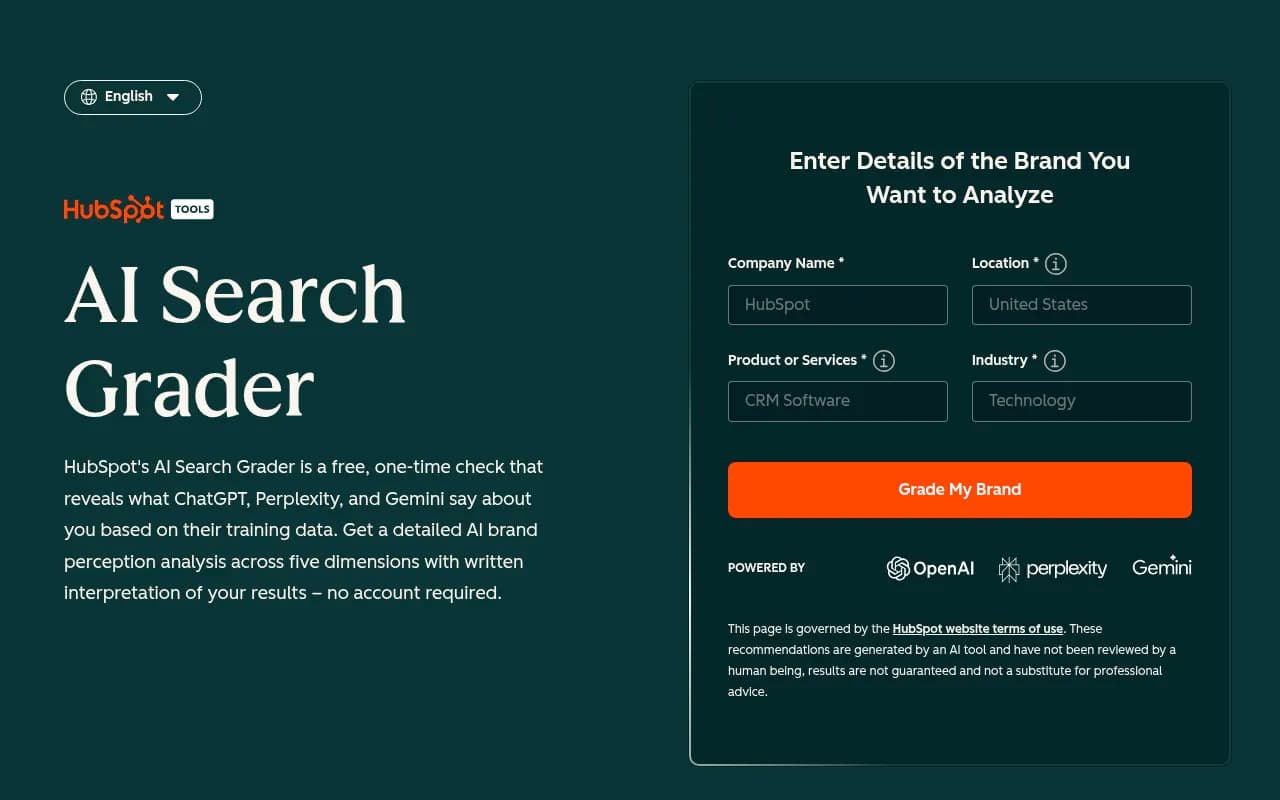



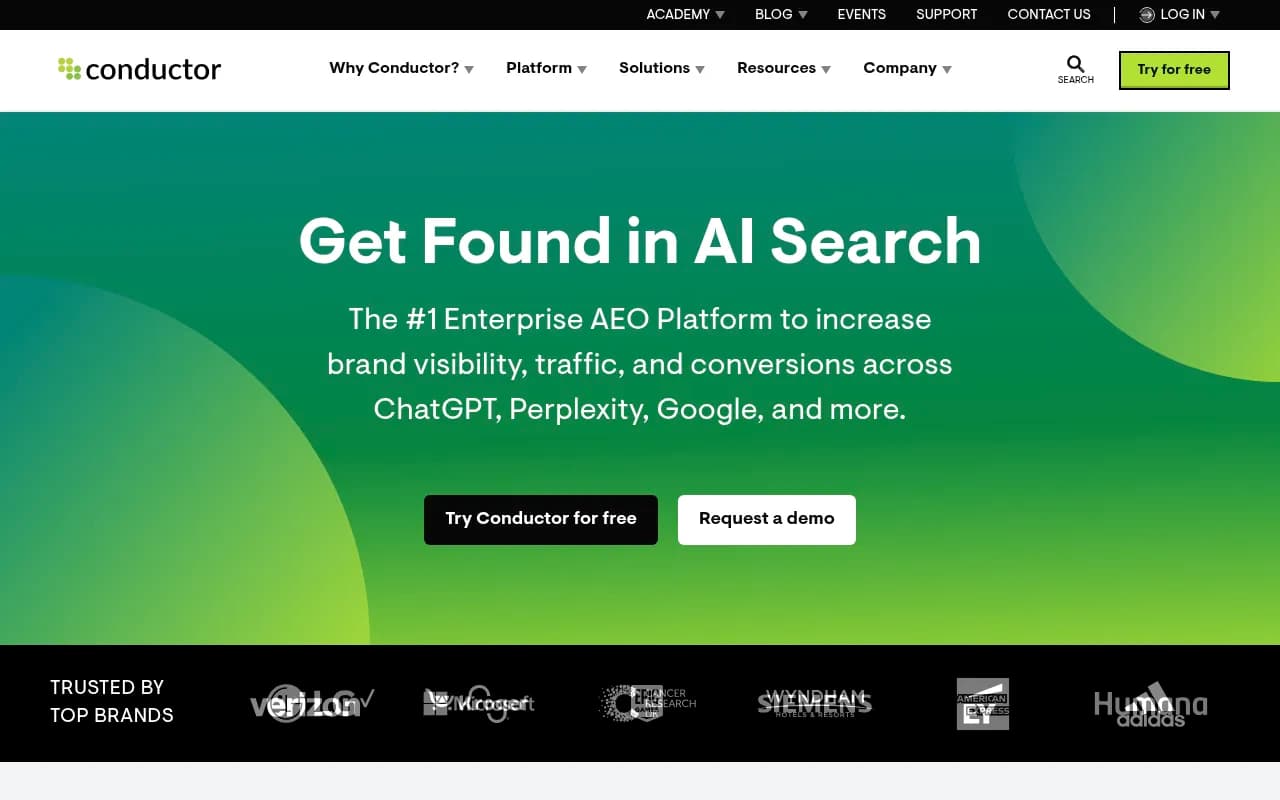
Note the pattern in the rankings. HubSpot's own list puts HubSpot first. Conductor's puts Conductor first. That's normal marketing, not a scandal, but it means the ordering tells you about the publisher's product, not the market.
Where trackers stop
A pure tracker answers "were we mentioned?" A content team needs the next three questions: why, what do we write, and did it work. Check for these features before paying:
- A content gap view mapping your pages to the prompts AI answers
- Page-level citation tracking, so you can see if the page you published last Tuesday is being cited
- AI crawler logs, so you can tell an access problem (the bot can't read it) from a content problem (it read it and didn't care)
- Referral analytics for AI traffic
Promptwatch covers these in one product, including IP-verified crawler logs, and that is the main reason it sits at the top of my own shortlist for editorial teams. Most monitoring-only tools skip crawler logs entirely. If you want to see where you stand first, the free AI visibility report needs no login.
A sample editorial workflow
Here is how I'd wire this up for a team of three to five writers and an editor.
Weekly
- Review new prompt opportunities and the gap list. Pick two or three prompts that map to a real product or buying question.
- Brief with the intent in mind. A commercial prompt gets a comparison or landing page. An informational prompt gets a how-to or doc.
- Draft, edit, publish. Use a classic optimizer for on-page quality if your team already has one.
Every 60 days
- Pull pages that were cited last cycle and are no longer cited. Based on the half-life data, product pages, how-tos and listicles are the likely decay candidates.
- Refresh with updated facts, specs and prices. Keep product and landing page claims factual, which is also Promptwatch's own advice from the content type report.
Monthly
- Check crawler logs for errors on key pages.
- Check AI-referred traffic and conversions, not just mentions.
- Fix inaccurate claims. If AI says something wrong about you, find the page it learned it from.
Budget-based picks
There's no single winner, so here is how I'd choose by situation.
| Situation | What I'd pick |
|---|---|
| Solo marketer, tiny budget | Free graders first (HubSpot AEO Grader, Promptwatch's free report), then Otterly.AI or Rankscale |
| In-house team, no content bandwidth | A platform with a publishing agent (Promptwatch Business, AirOps, TheSEOAgent) |
| In-house team that already writes well | A tracker with page-level citations and crawler logs, plus your existing optimizer |
| HubSpot-centric stack | HubSpot AEO, for CRM attribution |
| Enterprise SEO org | Conductor or Profound, depending on whether you want content tie-in or deep monitoring |
| Agency managing clients | Agency plans: Promptwatch's Kick-off, Growth and Scale ($199, $399, $799 per month) have unlimited projects |
For the full list of options in a category, the GEO software directory is a decent place to scan the long tail.
Promptwatch pricing, for reference: Essential $95/month, Professional $245/month and Business $579/month, with a 7-day free trial on monthly billing. Annual billing gives 12 months for the price of 10. Always confirm on the pricing page, since plans change.
Mistakes I see content teams make
Buying a dashboard and expecting output
A score doesn't write pages. If nobody owns the action list, the dashboard becomes a monthly slide.
Ignoring intent
Publishing 20 blog posts when commercial prompts mostly cite product pages, landing pages and listicles is a lot of effort pointed at the wrong target.
Skipping refreshes
The half-life data says pages decay on a roughly 74-77 day curve for several formats. If your calendar has no refresh column, citations will drift away quietly.
Treating every engine the same
ChatGPT and Google AI Overviews behave differently. In one week of data (Sep 28 to Oct 4, 2026), ChatGPT drew 0.46% of its citations from social platforms while Google AI Overviews drew 12.2% (source). A strategy that leans on community posts may help in one and do nothing in the other.
Trusting vendor rankings blindly
Read the methodology, check who published the list, and run a trial on your own prompts. Seven days is enough to see whether the data looks right for your category.
What I'd do this week
Run the free baseline checks. Pick ten prompts that map to real buying questions. Check whether your product and landing pages exist for them, and whether AI crawlers can read those pages. Then choose a platform based on the gap you find: if the gap is research, buy research tools; if it's production, buy production; if it's both plus verification, choose one that closes the loop. For a broader view of the category, see the AI rank tracking directory.
The tool matters less than the habit of briefing by intent, publishing quickly and refreshing on a schedule. The decay curves are not subtle.