Key takeaways
- Peec.ai is a solid entry point for AI visibility monitoring, but teams consistently report hitting limits around cost at scale, multi-engine coverage, and the lack of actionable optimization guidance.
- The market has split into two camps: monitoring-only dashboards (show you data, leave you stuck) and full optimization platforms (find gaps, help you fix them, track results).
- The right alternative depends heavily on your use case: budget trackers, enterprise platforms, content-focused tools, and full GEO suites all serve different needs.
- Platforms like Promptwatch go beyond tracking to help you actually create content that gets cited by ChatGPT, Claude, Perplexity, and other AI engines.
- Free trials are available across most platforms -- test with your actual prompts before committing.
Peec.ai had a good run. When AI visibility tracking was still a niche concern in early 2025, it was one of the few tools that let marketing teams monitor brand presence across ChatGPT, Perplexity, and Google AI Overviews without needing a developer to set anything up. For many teams, it was the first time they could actually see whether their brand was being cited in AI-generated answers -- or completely absent.
But a year later, the complaints are consistent. Costs balloon when you scale up prompt sets. Coverage gaps appear in industries outside tech and SaaS. And the core problem remains: Peec.ai tells you where you're not showing up, but it doesn't tell you what to do about it.
As one marketer put it on r/DigitalMarketing: "Even when my content ranks in the top 10, I barely see any traffic. And when I check the AI summaries, it's never my pages getting cited."
That frustration -- knowing you're invisible but not knowing how to fix it -- is exactly what's driving teams to look elsewhere.
This guide covers the alternatives that actually delivered results, organized by use case. No filler, no tools I haven't verified against real user feedback and feature documentation.
Why teams leave Peec.ai
Before getting into alternatives, it's worth being specific about what breaks down. The three issues that come up most often in SEO communities:
Cost at scale. Peec.ai's pricing works fine for small prompt sets. Once you're tracking 100+ prompts across multiple brands or clients, the bill climbs fast. Agencies especially feel this.
Engine coverage. The platform does well on Google AI Overviews and ChatGPT-style engines. Teams competing on Perplexity, Claude, Grok, or DeepSeek often find coverage thinner than advertised.
No path from insight to action. This is the big one. Peec.ai is a monitoring tool. It shows you your visibility score. It doesn't help you improve it. There's no content gap analysis, no writing tools, no guidance on what to publish to get cited more. You're on your own once you have the data.
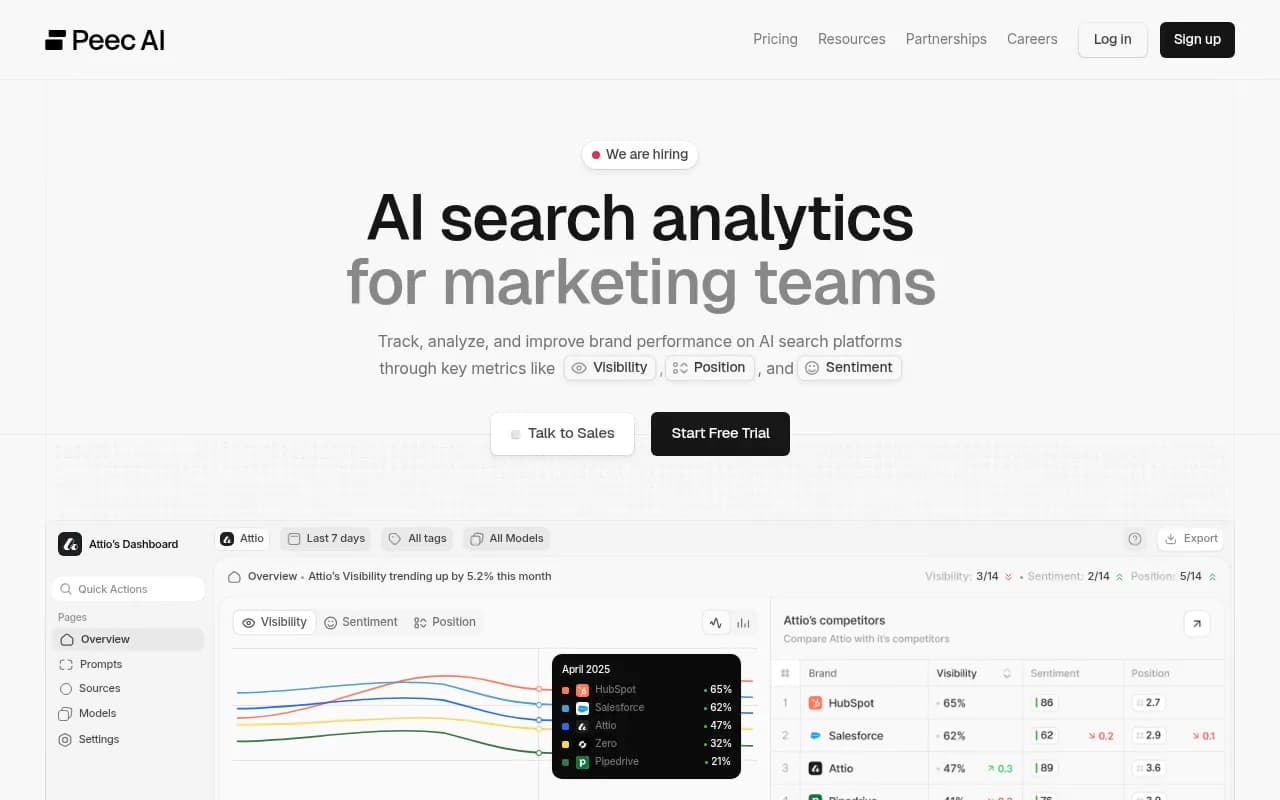
The full-platform alternative: Promptwatch
If you want to stop just monitoring and start actually improving your AI visibility, Promptwatch is the most complete option available right now.
Promptwatch covers 10 AI engines (ChatGPT, Perplexity, Claude, Gemini, Google AI Overviews, Google AI Mode, Grok, DeepSeek, Copilot, and Meta/Llama) and has processed over 1.1 billion citations, clicks, and prompts. That data depth matters -- it's what makes the platform's recommendations grounded in what AI models actually cite, not just what ranks well in traditional search.
What separates it from Peec.ai and most other alternatives is the action loop:
- Answer Gap Analysis shows you which prompts your competitors are visible for but you're not -- with specific topics and questions your site is missing.
- The built-in AI writing agent generates articles, listicles, and comparisons engineered to get cited by AI models, grounded in citation data and prompt volume analysis.
- Page-level tracking shows which of your pages are being cited, by which models, and how often -- so you can see visibility scores improve as new content gets picked up.
It also has features most competitors don't touch: real-time AI crawler logs (see when ChatGPT or Perplexity's crawler hits your site and what errors they encounter), Reddit and YouTube citation tracking, ChatGPT Shopping monitoring, and prompt difficulty scoring so you can prioritize winnable terms.
Used by 6,700+ brands and agencies including Booking.com and Center Parcs. Pricing starts at $99/month.

Best alternatives by use case
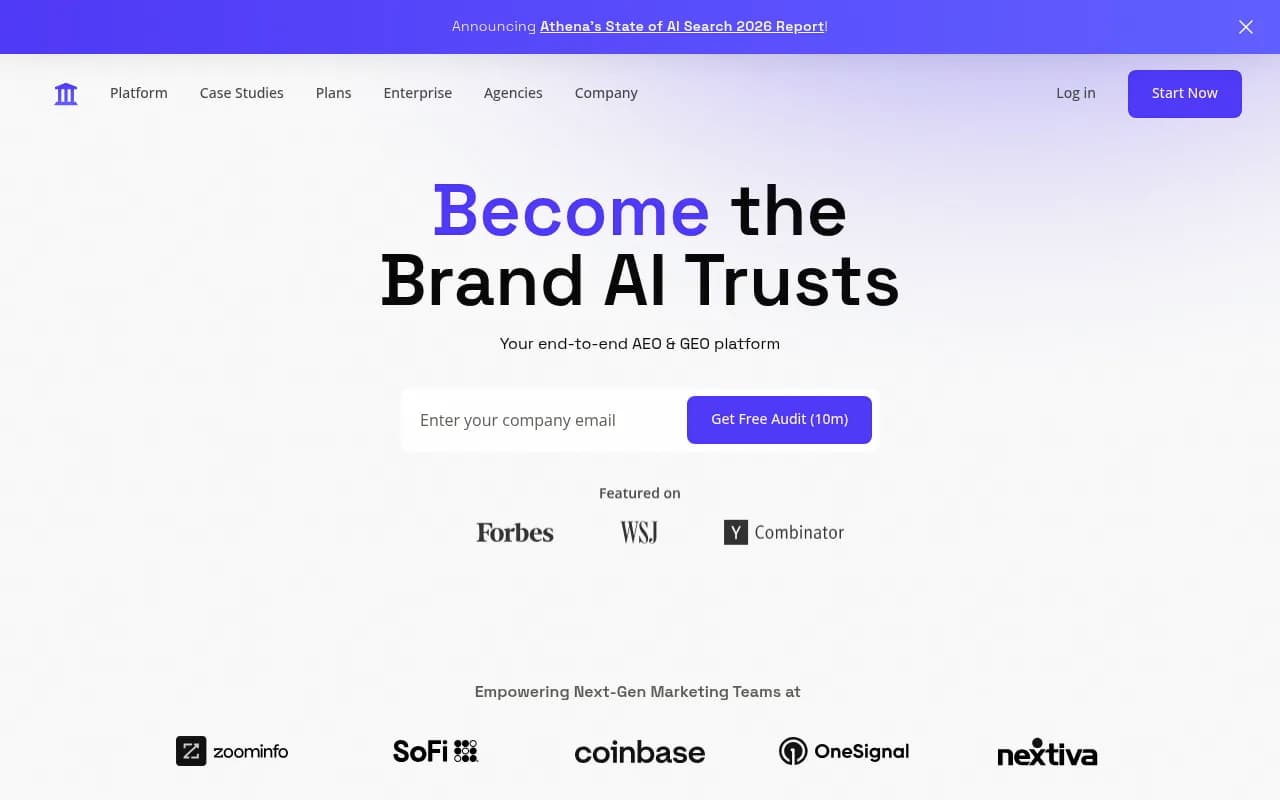
Best for enterprise-wide monitoring: AthenaHQ
AthenaHQ tracks brand visibility across 8+ AI engines with strong sentiment analysis and competitor benchmarking. It's built for teams that need to monitor brand narrative at scale -- how AI models describe your company, what attributes they associate with you, and where competitors are outpacing you.
The gap is on the optimization side. AthenaHQ is primarily a monitoring and intelligence platform. It'll tell you a lot about your AI presence, but content generation and gap analysis aren't its focus. For large brands that already have content teams and just need the intelligence layer, that's fine. For teams that need to act on the data, you'll want to pair it with something else.
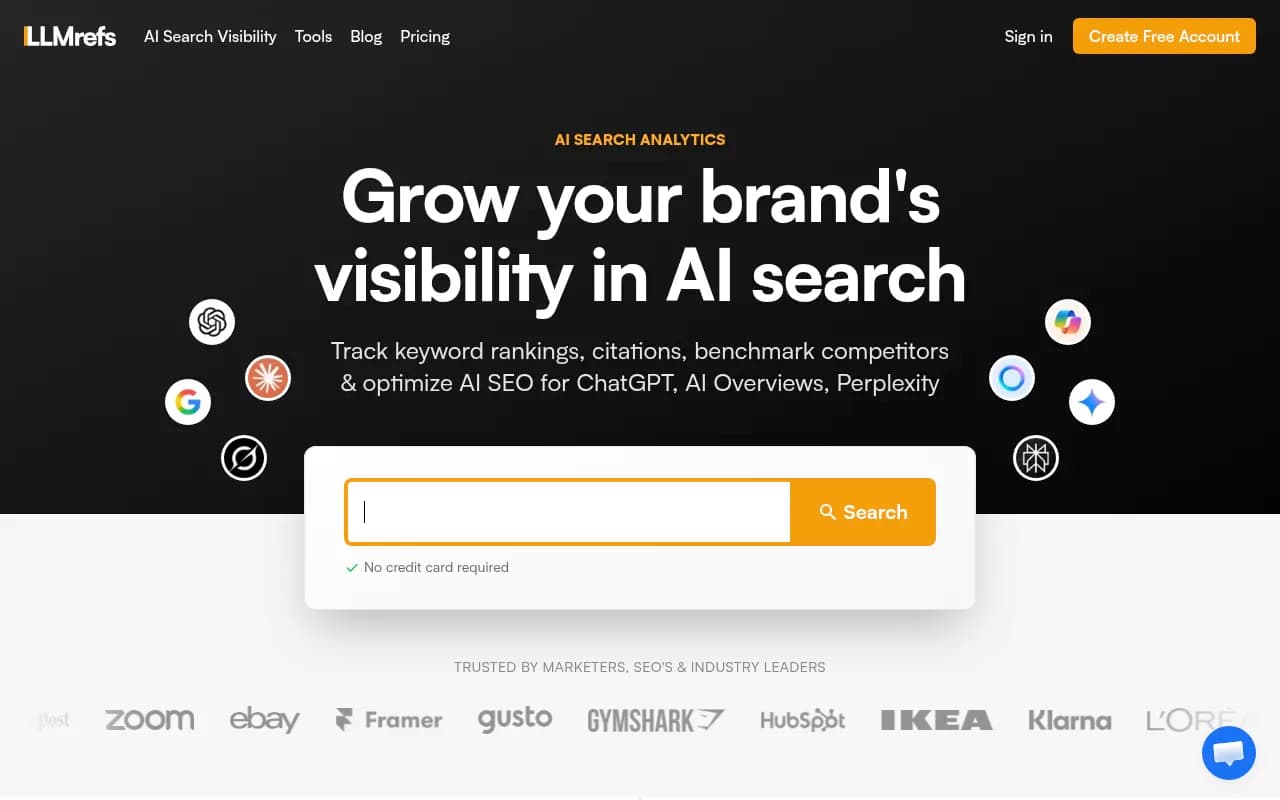
Best for tracking citations and sources: LLMrefs
LLMrefs focuses specifically on citation tracking -- which pages, domains, Reddit threads, and YouTube videos are being cited in AI responses for your target queries. If your goal is understanding the citation ecosystem (where AI models pull their sources from, which third-party content is influencing recommendations about your brand), LLMrefs does this better than most.
It's narrower in scope than a full GEO platform, but that focus means the citation data is genuinely detailed.
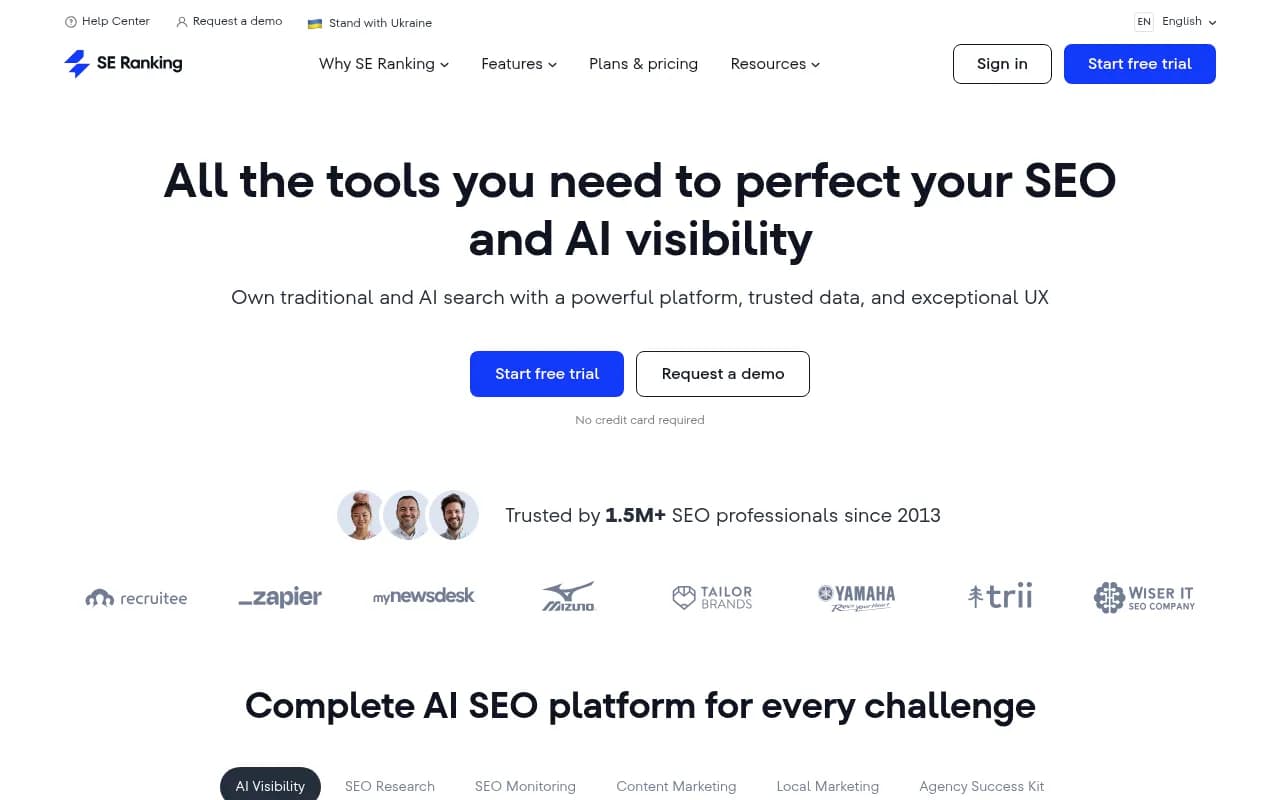
Best for teams already using an SEO suite: SE Ranking
SE Ranking has built an AI visibility toolkit into its existing SEO platform. If your team is already paying for rank tracking, site audits, and keyword research inside SE Ranking, the AI visibility layer is a natural add-on rather than a separate subscription.
The trade-off is depth. The AI visibility features are solid but not as specialized as dedicated GEO platforms. For teams that want one bill and one dashboard, it's a reasonable choice.
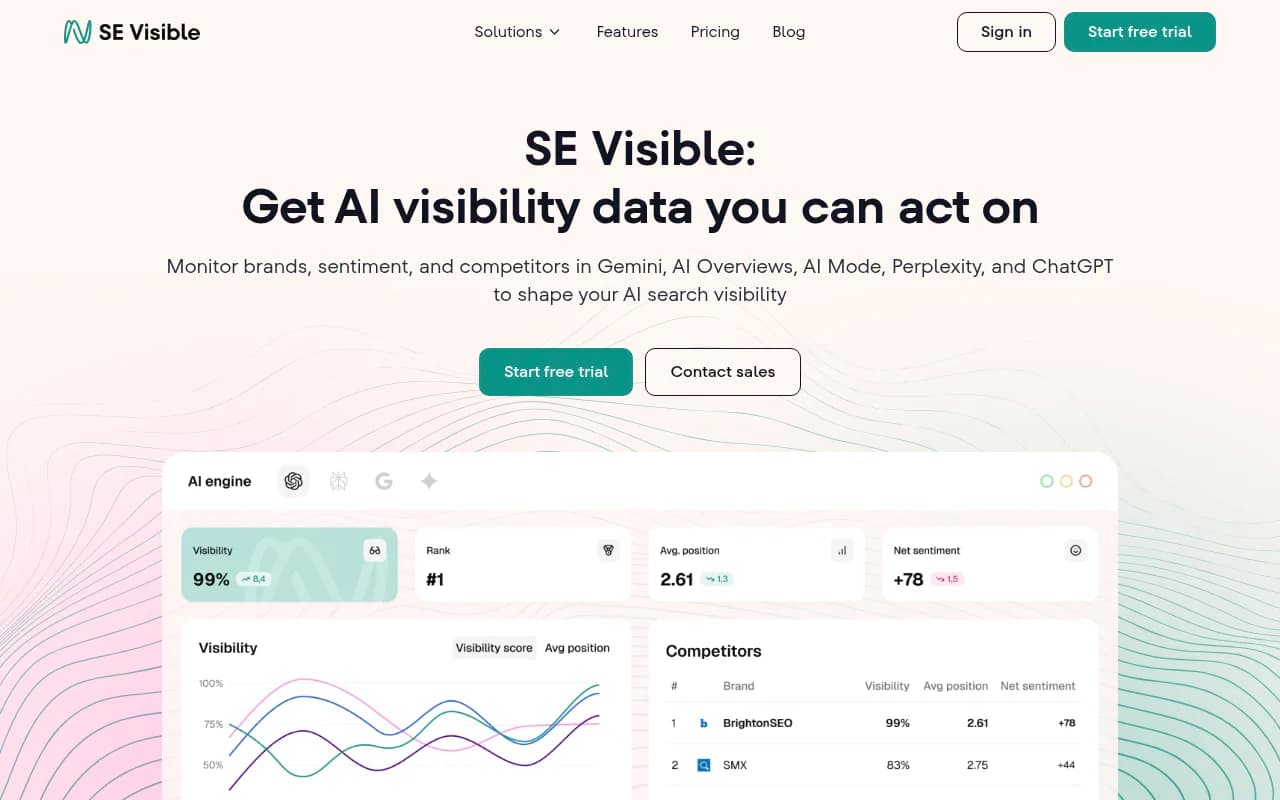
SE Visible (SE Ranking's standalone AI visibility product) is worth a look if you want the AI-specific features without the full SEO suite.
Best budget option: Otterly.AI
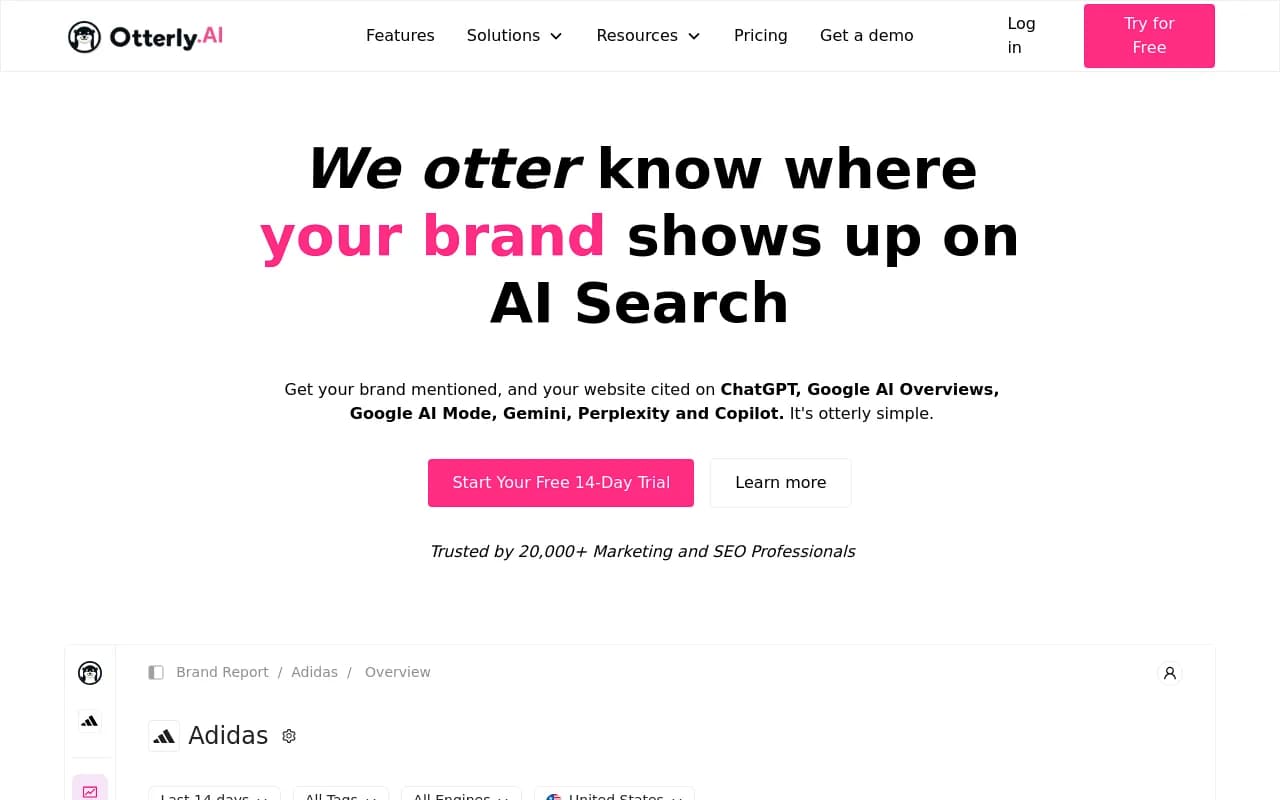
Otterly.AI is the most common recommendation for teams that want basic AI visibility monitoring without a large budget. It tracks brand mentions across ChatGPT, Perplexity, and a handful of other engines, and the UI is clean enough that non-technical marketers can use it without much setup.
The limitations are real: no crawler logs, no content generation, no traffic attribution. It's a monitoring dashboard, full stop. But if you're a small team that just wants to know whether your brand is showing up in AI answers, Otterly.AI gets the job done at a price that doesn't require budget approval.
Best for competitive intelligence: Gauge
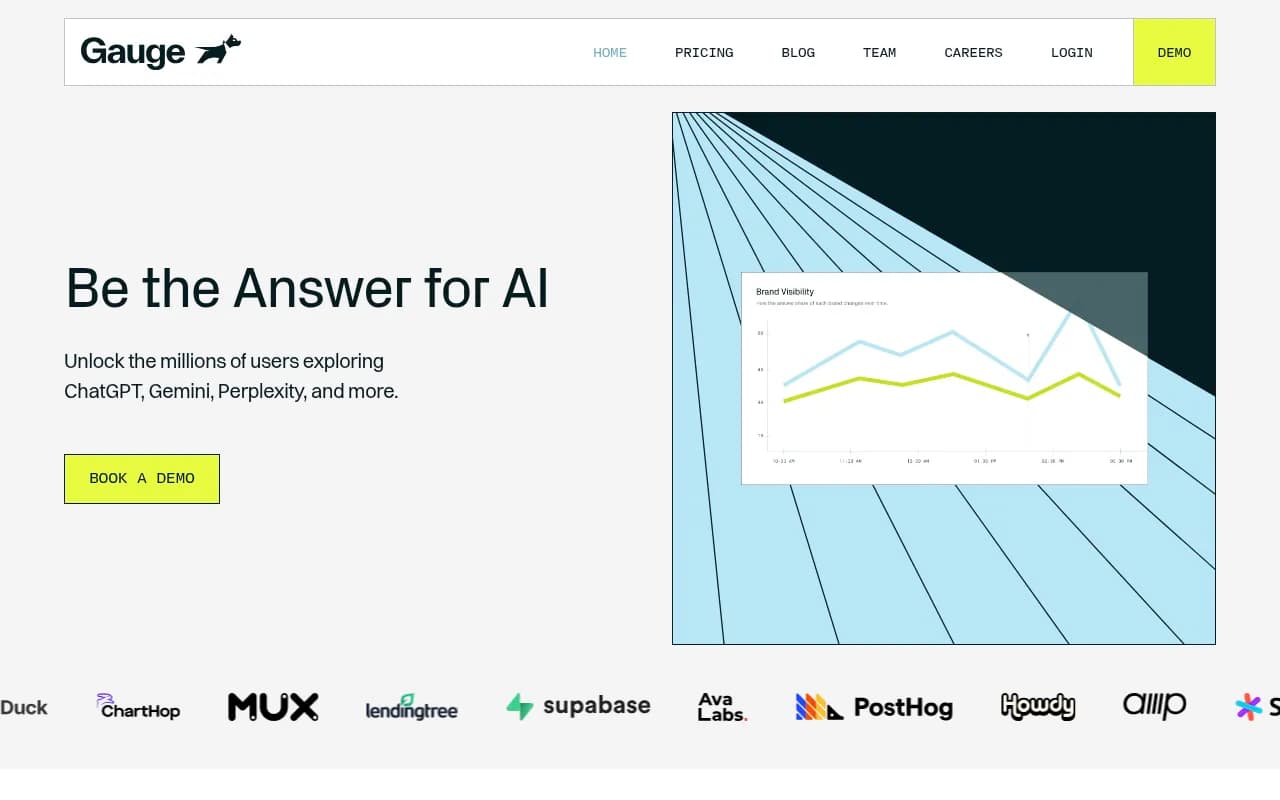
Gauge positions itself as a competitive intelligence platform for AI visibility -- less about your own content and more about understanding how the whole competitive landscape looks in AI search. It tracks where your brand and competitors appear in AI answers and gives you a comparative view across engines.
Best for content-focused teams: Scrunch AI
Scrunch AI focuses on brand narrative analysis -- not just whether you're mentioned, but how AI models describe you, what language they use, and whether the narrative matches what you want. It's particularly useful for enterprise brands managing brand perception across multiple AI engines.
Best for tracking prompt-level data: Profound
Profound does precise AI Overview tracking with entity extraction and attribution mapping. If you're doing entity-driven SEO and need to understand exactly which entities are being associated with your brand in AI responses, Profound's data model is well-suited to that work.

Best for rank tracking with AI monitoring: Rankscale
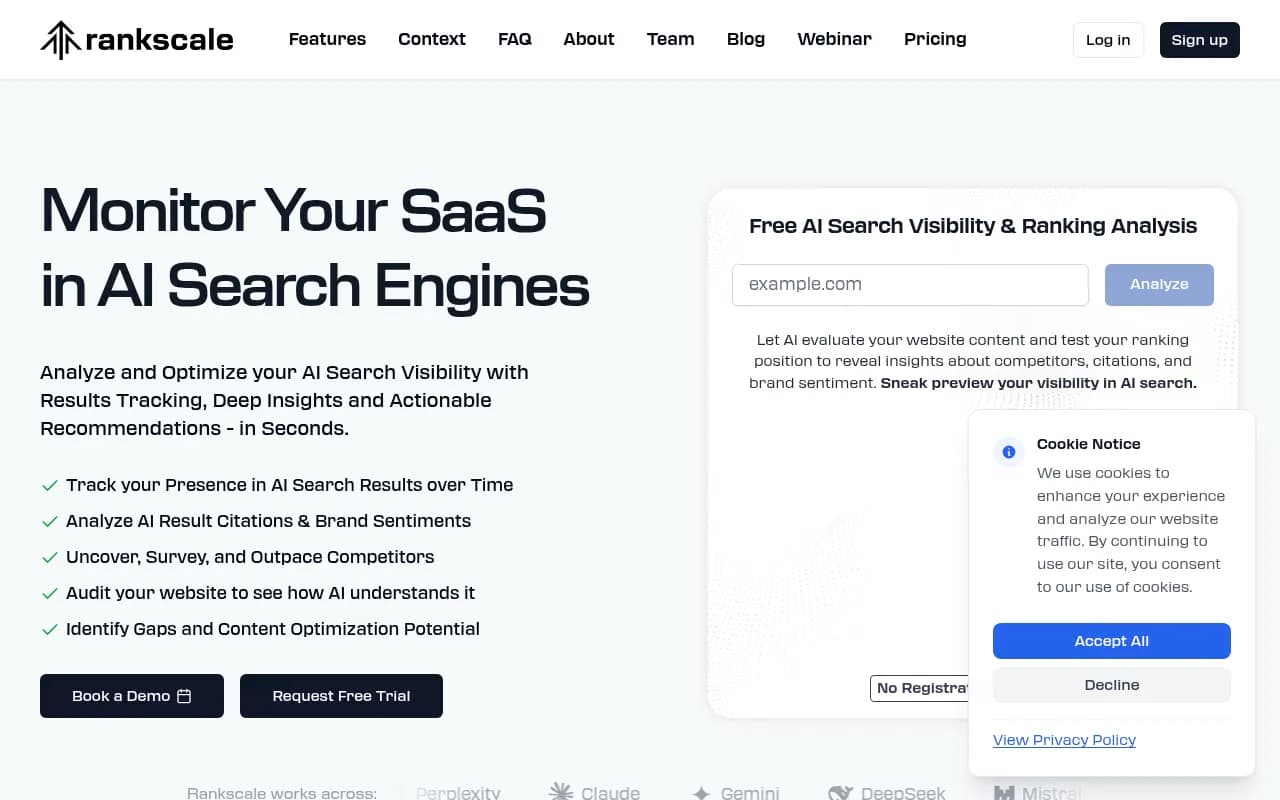
Rankscale focuses on competitive AI visibility benchmarking -- where you rank relative to competitors for specific prompts across multiple engines. It's a cleaner, more focused tool than some of the all-in-one platforms, which can work in its favor if you know exactly what you need.
Comparison table
| Tool | AI engines covered | Content generation | Crawler logs | Citation tracking | Starting price | Best for |
|---|---|---|---|---|---|---|
| Promptwatch | 10 | Yes (built-in agent) | Yes | Yes (880M+ citations) | $99/mo | Full GEO optimization |
| Peec.ai | 4-5 | No | No | Basic | ~€89/mo | Entry-level monitoring |
| AthenaHQ | 8+ | No | No | Yes | $295/mo | Enterprise brand monitoring |
| Otterly.AI | 4-5 | No | No | Basic | ~$49/mo | Budget monitoring |
| Profound | 3-4 | No | No | Yes | $99/mo | Entity-driven SEO |
| SE Ranking | 5+ | No | No | Basic | $95/mo | Teams in SEO suites |
| Scrunch AI | 6+ | No | No | Yes | Custom | Brand narrative analysis |
| LLMrefs | 4-5 | No | No | Yes (deep) | Varies | Citation source research |
| Gauge | 5+ | No | No | Yes | Varies | Competitive intelligence |
| Rankscale | 5+ | No | No | Basic | Varies | Competitive benchmarking |
The monitoring-only problem
It's worth naming something that the comparison table makes obvious: most Peec.ai alternatives are still monitoring-only tools. They've improved on Peec.ai in specific ways -- more engines, better citation data, cleaner UI, lower price -- but they share the same fundamental limitation. They show you a score. They don't help you improve it.
This isn't a minor gap. The whole point of tracking AI visibility is to improve it. If your brand isn't showing up when someone asks ChatGPT for a recommendation in your category, knowing that fact is step one. Steps two and three -- figuring out what content to create and then verifying it worked -- are where most platforms leave you on your own.
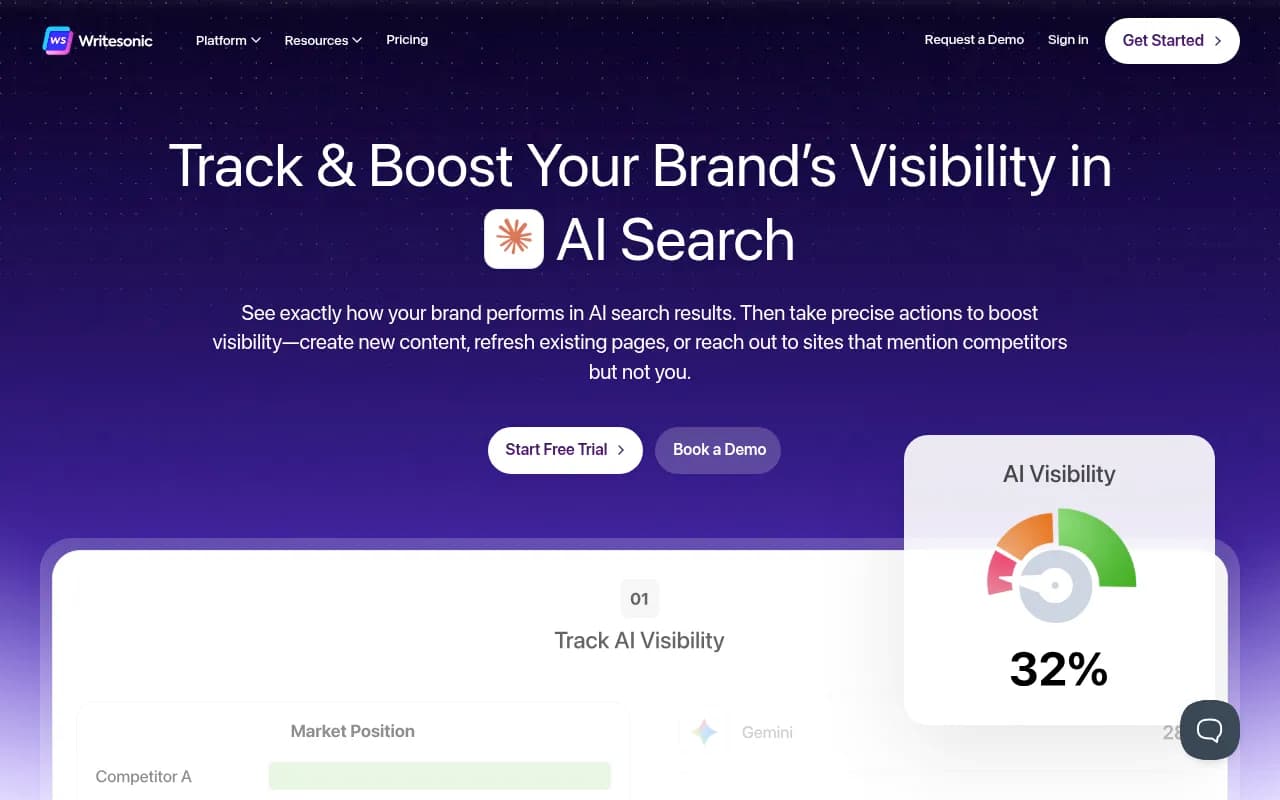
The platforms that have started building the full loop (gap analysis, content creation, results tracking) are still in the minority. Promptwatch is the most complete version of this right now. A few others like Writesonic have added AI visibility features alongside their content tools, though the tracking depth varies.
How to choose
A few questions that narrow it down quickly:
Do you need to act on the data, or just report on it? If your team needs to create content that improves AI visibility, you need a platform with content gap analysis and ideally a writing tool. If you're reporting to stakeholders on brand presence, a monitoring dashboard is enough.
How many AI engines matter to your audience? If your customers are primarily using Google AI Overviews and ChatGPT, most tools cover you. If you're seeing traffic from Perplexity, Claude, or Grok, check engine coverage carefully before committing.
Are you managing one brand or multiple? Agency pricing and multi-site support vary significantly. Promptwatch's agency tiers are built for this. Some other platforms charge per brand regardless of scale.
What's your prompt volume? Pricing models differ -- some charge per prompt tracked, others by tier. If you're tracking 200+ prompts, run the math on a few platforms before assuming the cheapest entry price stays cheap.
Do you need traffic attribution? Knowing your AI visibility score is one thing. Connecting it to actual revenue requires traffic attribution (either via a code snippet, Google Search Console integration, or server log analysis). Most monitoring tools don't offer this. Promptwatch does.
Bottom line
Peec.ai was a reasonable starting point when AI visibility tracking was new. In 2026, the bar is higher -- teams need to know not just where they're invisible but what to do about it.
For most marketing teams that want to actually improve their AI search presence (not just measure it), Promptwatch is the strongest option: the widest engine coverage, the deepest citation data, built-in content generation, and the only platform that closes the loop from gap analysis to traffic attribution. The $99/month entry tier is competitive with Peec.ai's pricing and covers significantly more ground.
If budget is the primary constraint, Otterly.AI gets you started. If you're already inside SE Ranking, the AI toolkit there is worth exploring before adding another subscription. And if competitive intelligence is the priority, Gauge or AthenaHQ are worth a closer look.
Most of these platforms offer free trials. Test with your actual prompts -- the difference between tools often shows up in the specific industries and query types you care about, not in feature lists.