Key takeaways
- Brands cited in AI Overviews earn roughly 35% more organic clicks than non-cited competitors -- citation data is now a direct traffic lever, not just a vanity metric.
- The AI visibility growth loop has three stages: find citation gaps, publish content engineered for extraction, then track which pages get cited and by which models.
- Most tools stop at monitoring. The ones worth using help you act on what you find -- generating content, fixing crawl errors, and closing the loop with traffic attribution.
- Citation patterns differ across models: ChatGPT, Perplexity, and Google AI Overviews each favor different source types, formats, and authority signals.
- Compounding is the point. Each piece of cited content raises your baseline authority, making the next piece easier to get cited.
Why citation data is the growth signal you've been ignoring
For years, organic traffic was the scoreboard. You published, you ranked, you measured clicks. Simple enough.
That scoreboard hasn't disappeared, but a second one has appeared next to it -- and most marketing teams are barely glancing at it. When someone asks ChatGPT "what's the best project management tool for remote teams" or asks Perplexity "which CRM do agencies use," they get a synthesized answer. They may never see a search results page. They may never click a link.
But they do see which brands get cited.
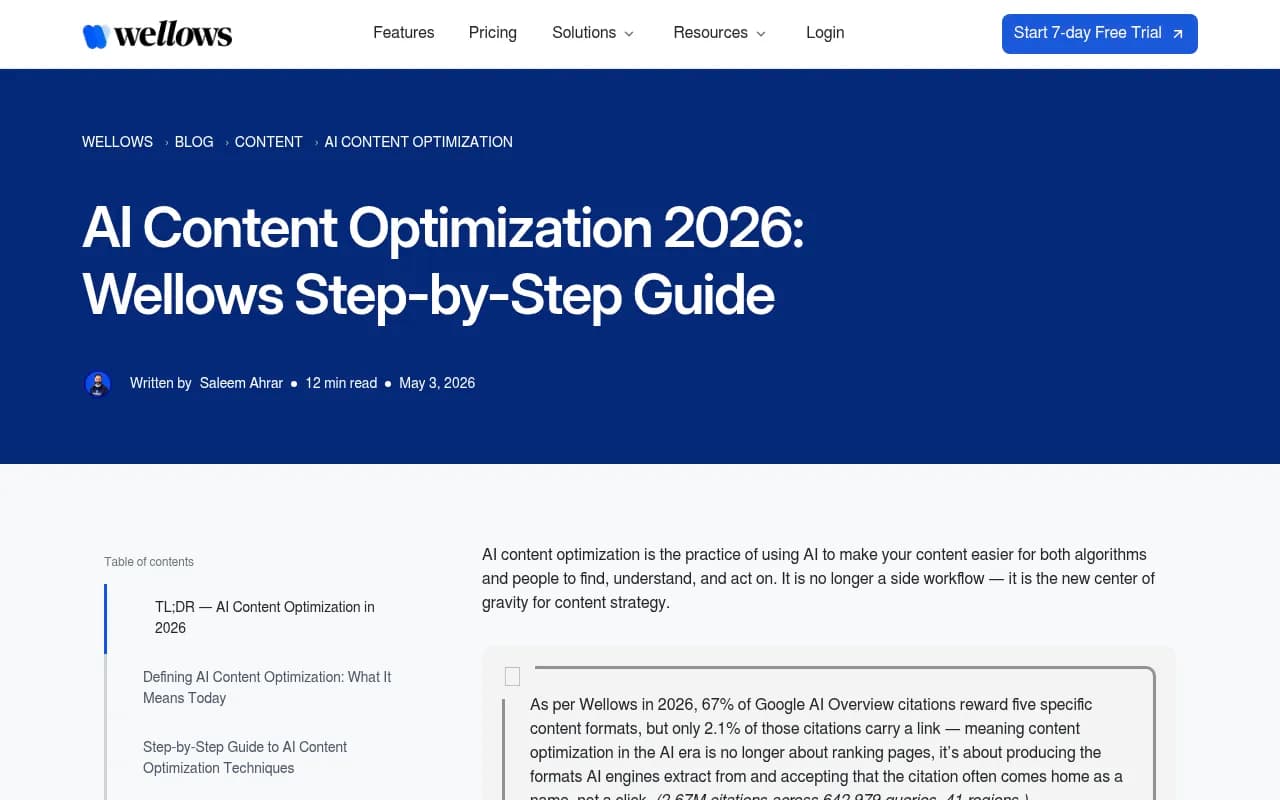
According to Wellows research across 2.67 million citations and 642,979 queries, brands cited in AI Overviews earn 35% more organic clicks and 91% more paid clicks than non-cited competitors. That's not a marginal lift. That's a structural advantage that compounds over time.
The problem is that most teams treat citation monitoring as a reporting exercise. They check a dashboard, see they're not being cited for certain prompts, and move on. The data sits there. Nothing changes.
The teams pulling ahead in 2026 are doing something different. They're using citation data as a production signal -- a continuous feed that tells them exactly what to write next, which formats to use, and which competitors they need to displace. That's the growth loop. And once it's running, it accelerates.
Stage one: finding the gaps that citation data reveals
The loop starts with understanding where you're invisible. Not in a general sense -- specifically, which prompts your competitors are being cited for that you're not.
This is different from traditional keyword gap analysis. You're not looking at search volume for a keyword and guessing whether you can rank. You're looking at actual AI responses, seeing which sources get pulled in, and identifying the exact content your site is missing.
What citation gap analysis actually shows you
When you run a citation gap analysis, you're essentially asking: "For the prompts my target audience is using in ChatGPT, Perplexity, Gemini, and Google AI, which ones return my competitors but not me?"
The answer is usually uncomfortable. Most brands discover they're invisible for a large portion of the prompts that matter most to their business. Not because their content is bad, but because:
- They haven't published content that directly addresses those prompts
- Their existing content isn't structured in a way AI models can extract from
- Competitors have established authority signals on those topics that they haven't matched
Each of these is fixable. But you can't fix what you can't see.
Promptwatch has an Answer Gap Analysis feature built specifically for this -- it shows you the prompts competitors rank for that you don't, along with the specific content topics your site is missing. That's the starting point for the loop.

Tools like Profound and AthenaHQ also surface citation data, though they're more monitoring-focused and don't connect the gap analysis to content generation.


Prioritizing which gaps to close first
Not all citation gaps are equal. Some prompts get asked thousands of times a day. Others are niche. Some are dominated by Wikipedia and Reddit -- nearly impossible to displace. Others have weak incumbent sources that a well-structured article could replace.
Good citation tools give you prompt volume estimates and difficulty scores so you can prioritize. Go after high-volume, winnable prompts first. Build a backlog of the harder ones for later, once your authority baseline has risen.
Stage two: publishing content engineered for AI extraction
Here's where most content strategies fall apart. Teams identify the gaps, then publish content using the same templates they've always used -- long-form blog posts optimized for traditional SEO. That content often doesn't get cited, because AI models extract information differently than Google ranks it.
How AI models actually select sources
AI models don't rank pages the way Google does. They're looking for content they can extract clean, accurate, structured information from. A few things consistently influence whether a source gets cited:
Clarity of entity and topic. AI models need to understand unambiguously what your content is about. Vague, meandering introductions hurt you. Get to the point fast. State the topic, the entity, and the claim in the first paragraph.
Structured formatting. Headers, numbered lists, definition-style answers, and FAQ sections all make content easier for AI to extract. According to Wellows' research, 67% of Google AI Overview citations reward five specific content formats. Structured content isn't just easier to read -- it's easier to cite.
Source authority signals. AI models weight content from sites with established authority on a topic. This means original data, expert attribution, and consistent publishing on a topic area all matter. A single article on a topic you've never covered before is harder to get cited than a tenth article on a topic you've been writing about for two years.
Factual density. Vague, hedged content gets passed over. Specific claims, statistics, and concrete recommendations are what AI models pull into answers. If your content says "many companies find that X helps," that's not citable. If it says "in a survey of 400 marketing teams, 68% reported X," that's citable.
The formats that get cited most
Based on citation pattern research across multiple AI platforms, a few content formats consistently outperform:
| Format | Why AI models cite it | Best for |
|---|---|---|
| Direct answer + supporting detail | Easy to extract, high factual density | "What is X" and "How does X work" prompts |
| Comparison tables | Structured, scannable, unambiguous | "X vs Y" and "best X for Y" prompts |
| Numbered how-to guides | Sequential clarity, easy to excerpt | Process and tutorial prompts |
| FAQ sections | Matches conversational query patterns | Long-tail and question-based prompts |
| Original research / data | High authority signal, unique citable claim | Any prompt where data matters |
The worst-performing format for AI citations is the generic "ultimate guide" that covers everything at 500 words per section. It's too diffuse. AI models can't extract a clean answer from it.
Writing for multiple AI models simultaneously
Different models have different citation tendencies. Perplexity cites more sources per response and tends to favor recent, specific content. Google AI Overviews heavily weight content that already ranks well in traditional search. ChatGPT leans toward established authority and tends to cite fewer sources but with higher confidence.
This means your content strategy shouldn't optimize for one model. It should be structured well enough that multiple models can extract from it -- which mostly means: be specific, be structured, be authoritative.
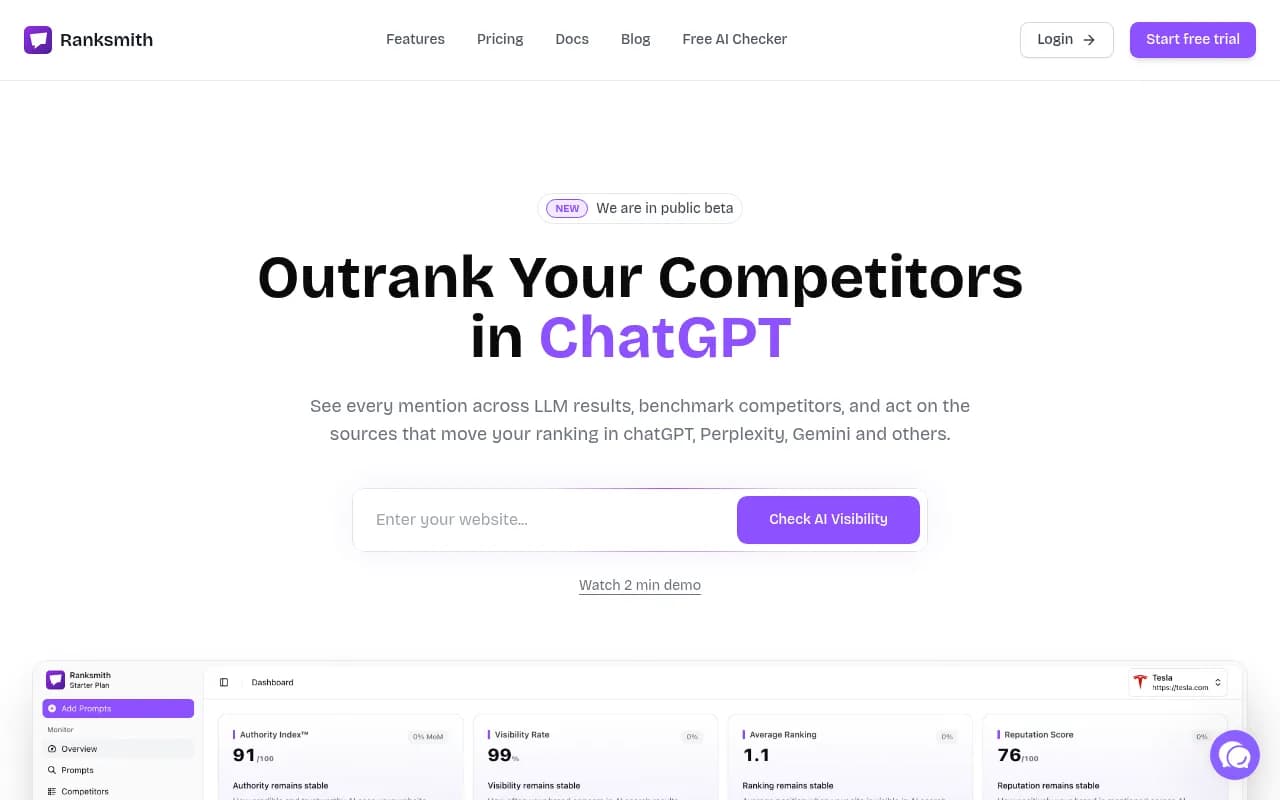
Tools like Wellows and Ranksmith can show you which models are citing your content and which aren't, so you can identify where the gaps are by platform.
Using AI writing tools grounded in citation data
There's a meaningful difference between using an AI writing tool to generate generic content and using one that's grounded in actual citation data. The former produces content that sounds fine but doesn't know what AI models are actually pulling from. The latter generates content specifically shaped around the topics, formats, and angles that are already getting cited.
Promptwatch's built-in writing agent falls into the second category -- it generates articles and comparisons based on 880M+ citations analyzed, prompt volumes, and competitor citation patterns. That's not the same as asking ChatGPT to write a blog post.
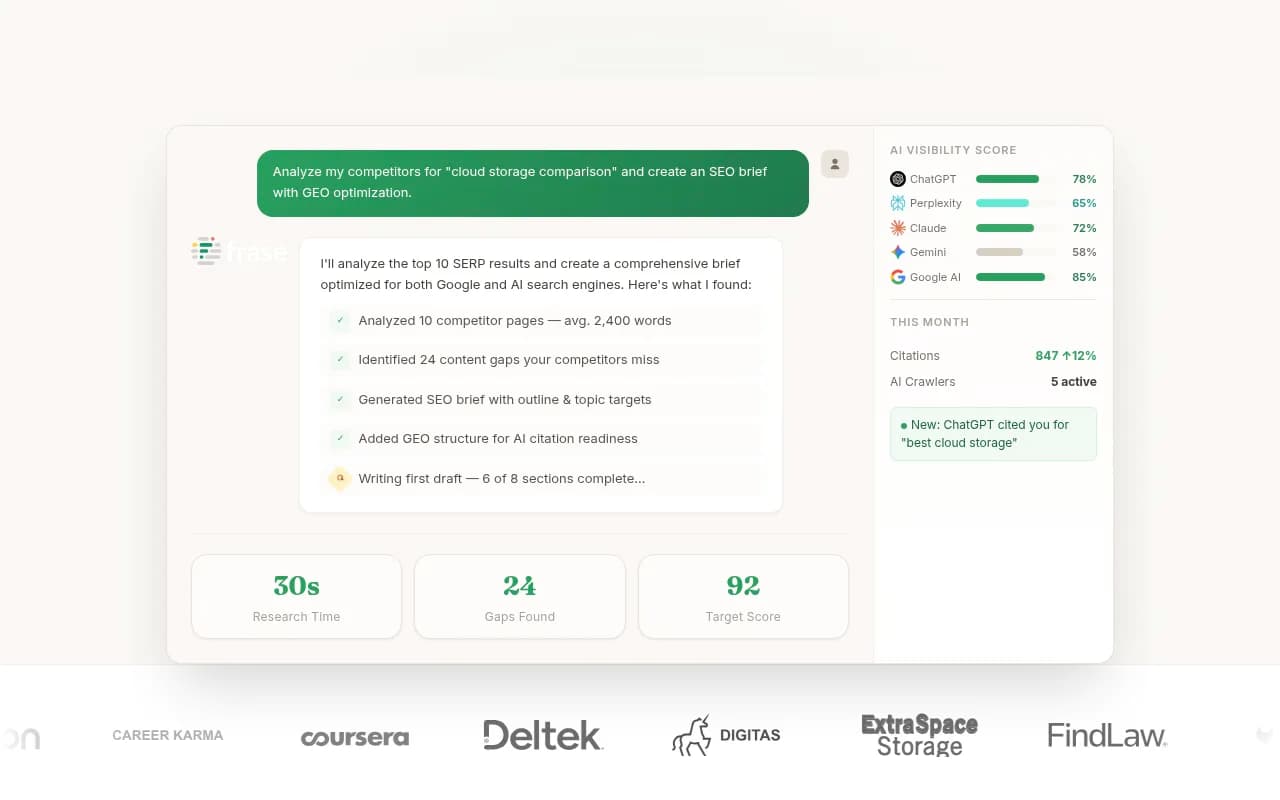
For teams that want to use separate writing tools, Frase and Surfer SEO both do solid content optimization work, though they're more traditional SEO-focused than citation-focused.
Stage three: tracking results and closing the loop
Publishing is not the end of the loop. It's the middle. The loop closes when you can see which new content is getting cited, by which models, and whether those citations are translating into traffic and revenue.
Without this feedback, you're flying blind. You publish, you hope, you check rankings. That's not a loop -- it's a one-way street.
Page-level citation tracking
The most useful tracking isn't brand-level ("are we being cited more?") -- it's page-level ("which specific pages are getting cited, for which prompts, by which models?").
Page-level data tells you what's working so you can do more of it. If your comparison article on project management tools is getting cited by Perplexity 40 times a day but your pricing page is getting zero citations, that's a signal. Publish more comparison content. Optimize the pricing page structure.
Tools like LLM Clicks and Omnia also offer citation tracking at varying levels of granularity.
Connecting citations to actual traffic
Citation tracking is only half the picture. The other half is knowing whether those citations are driving visitors to your site.
This is harder than it sounds. Most AI platforms don't pass referral data cleanly. A user who saw your brand cited in a ChatGPT response and then searched for you directly shows up as organic or direct traffic -- not AI referral. Without proper attribution, you undercount AI's contribution to your growth.
The better platforms handle this through a combination of methods: JavaScript snippet tracking, Google Search Console integration, and server log analysis. Server logs in particular can catch AI crawler activity that other methods miss.
Speaking of crawlers -- knowing which AI crawlers are hitting your site, which pages they're reading, and how often they return is genuinely useful data. If GPTBot is crawling your blog but never your product pages, that's worth knowing. If ClaudeBot keeps hitting a page that returns a 404, that's a fixable problem that's costing you citations.
DarkVisitors is worth knowing about here -- it tracks AI agent and bot activity on your site, which gives you a window into how AI systems are discovering your content.
The compounding effect
Here's why this is a loop and not just a workflow: each piece of cited content raises your domain's authority signal for that topic. The next article you publish on the same topic starts from a higher baseline. AI models that have already cited you once are more likely to cite you again.
This is the compounding effect, and it's why teams that start early have a structural advantage. The gap between a brand with 18 months of citation history and one starting today isn't just 18 months of content -- it's 18 months of authority accumulation that the newcomer has to overcome.
The practical implication: start the loop now, even imperfectly. A few well-structured articles on high-priority prompts, tracked carefully, will teach you more than months of planning.
Monitoring the competitive landscape
The loop isn't just about your own content. It's about understanding the competitive citation landscape -- who's winning for the prompts you care about, and why.
Competitor citation heatmaps
Some platforms let you see a heatmap of citation visibility across competitors and AI models. You can see that Competitor A dominates ChatGPT citations for your category but is weak on Perplexity. Competitor B has strong Google AI Overview presence but nothing on Gemini. These patterns tell you where the opportunities are.
GrowthOS also surfaces competitive citation data in a useful format for teams doing ongoing analysis.
Reddit and YouTube as citation sources
One thing most teams miss: AI models don't only cite brand-owned content. They cite Reddit threads, YouTube videos, forum discussions, and third-party reviews. If a Reddit thread comparing your product to a competitor is being cited by ChatGPT, that thread is shaping how millions of users perceive your brand -- and you probably don't know it exists.
Tracking these third-party citation sources is part of a complete AI visibility strategy. It tells you where to participate in conversations, which communities to engage with, and which external content is helping or hurting your brand's AI representation.
Putting the loop into practice: a starting workflow
If you're building this from scratch, here's a practical sequence:
-
Audit your current citation footprint. Run your domain through a citation tracking tool and see which prompts you're already being cited for. This is your baseline.
-
Run a gap analysis against two or three competitors. Find the prompts they're cited for that you're not. Sort by prompt volume and difficulty. Pick five to ten to target first.
-
Audit the content that's already winning those citations. What format is it? How long? What specific claims does it make? This is your template.
-
Publish structured, factually dense content targeting those prompts. Use headers, tables, and direct answers. Cite specific data. Don't bury the answer.
-
Set up page-level citation tracking. Know within a week whether your new content is getting picked up.
-
Set up crawler log monitoring. Confirm AI crawlers are actually reading your new pages.
-
Review weekly. Iterate monthly. Which pages are gaining citations? Which aren't? Double down on what's working.
The loop doesn't require a massive team or a huge budget. It requires consistency and a willingness to let the data tell you what to write next.
Tools worth knowing for each stage
| Stage | What you need | Tools to consider |
|---|---|---|
| Gap analysis | Prompt-level competitor citation data | Promptwatch, Profound, AthenaHQ |
| Content creation | Citation-grounded writing, format guidance | Promptwatch, Frase, Surfer SEO |
| Citation tracking | Page-level, model-level citation data | Promptwatch, LLM Clicks, Omnia, Ranksmith |
| Traffic attribution | AI referral tracking, server logs | Promptwatch, DarkVisitors |
| Competitive monitoring | Competitor citation heatmaps | Promptwatch, GrowthOS, Wellows |
No single tool does everything perfectly. But the platforms that come closest to covering the full loop -- gap analysis through traffic attribution -- are the ones worth investing in seriously. Monitoring-only tools are fine for awareness, but they don't move the needle on their own.
The shift that makes this urgent
PR strategist Erik Carlson, CEO of Notified, put it plainly in an April 2026 interview: the scoreboard has changed. It's no longer just about how many people visit your content. It's about whether your content is being used -- referenced by AI systems that influence millions of micro-decisions every day.
That shift is already happening. The brands building citation authority now are the ones that will be hardest to displace in 12 months. The ones waiting for the strategy to "mature" before investing are ceding ground that gets harder to reclaim with each passing month.
Citation data tells you exactly where you're losing and exactly what to publish to start winning. The loop is simple. The compounding is real. The only question is when you start running it.